Feeds:
Posts
Comments

Archive for the ‘Drinking’ Category

SOUNDTRACK: PETER BJORN AND JOHN-Falling Over (2005).

This is Peter Bjorn and John’s second album.  I enjoyed Writer’s Block and Living Thing and when I read that their earlier discs were just as good, i had to check them out to be sure.  Their first two discs are less polished, less slick.  Normally I’d say that automatically makes them better, but PB&J’s sound is pretty great with or without the production values.  This disc feels like  a transition disc, like something big is going to be coming soon (which it did).

The opening song is a pop masterpiece in the tradition of The Beatles (or more accurately, The Monkees–who wrote great pop songs with just a little less panache).  It is catchy right out of the block, with some interesting slower parts to add drama.  And Peter’s voice is perfect for this kind of pop convection.  It even opens with a Speak n Spell!  “Money” has a harder riff, but the chorus is trippy and fun.  “It Beats Me Every Time” is a darker song with a melody (and vocal style) that reminds me of Michael Penn (especially the chorus).  [I love Michael Penn and think he is vastly underrated].

“Does It matter Now?” is the first song that isn’t awesome.  It’s a fine song and there’s some great backing vocals in the middle of the track, but it’s not as good as the first three.  But “Big Black Coffin” springs back with a wonderful melody and chorus (and more Michael Penn style).

“Start Making Sense” is 2 minutes long and that’s fine, but it would probably drag if it were longer.  But then “Teen Love” is great, with a cool drum section that bridges to the a great chorus.  “All Those Expectations” is a slow guitar ballad.  It is sweet but a bit too long.  “Tailormade” ends the record on a good note, an interesting keyboard-based song with multiple parts and although the verses seems long the pay off in the chorus is worth it.

Strangely, the disc actually ends with what sounds like a demo, “Goodbye, Again Or.” If it’s not a demo, then it sounds like he’s in the next room. Maybe with the door shut.  I can’t really grasp the song as I’m so distracted by the recording.

My version of the disc has five bonus tracks.  I’m not sure that this is the kind of disc you want bonus tracks for, (my first listen I couldn’t believe this album was so long!) but, really, who says no to free music?

“(I Just Wanna) See Through” has a rock n roll guitar intro.  “The Trap’s My Trip” starts out slowly but adds drums with a wonderful introduction after two minutes and then brings in a  great rocking guitar.  It’s a wonderful b side.   “Punk’s Jump Up” is a fun little jam/practice.  While “Unreleased Backgrounds” is a slow guitar song.  These are nice bonus tracks.  Not essential but enjoyable.

This is a solid record from PB&J.  Even though some of the early songs are really catchy, nothing is as immediate as “Young Folks.”  But it’s still really strong.

[READ: February 15, 2012] “The Silence Here Owns Everything”

Continuing with Narrative magazine’s “30 Below” winners for 2011, this story won second place.  It was deceptively simple and I enjoyed it quite a lot.  The story was broken down into several sections (which I like), although all the action takes place over one  weekend.

It’s written in the first person from the point of view of a high school sophomore (I gather).  She and her best friend Kendra are walking home from school on a Friday afternoon.  Kendra has bruises on her face, which we assume are from her father.  It’s obvious that despite Kendra’s difficulties, the narrator looks up to her quite a lot (she may even have a crush on her, but that’s not really an issue).

The bulk of the story centers on the girls as they walk home, as they hang out at Kendra’s house, as they smoke some weed and as they fall asleep–you know, a typical high school weekend.  And Clodfelter captures the tone and details of the setting perfectly.  It feels completely real.  Especially when Kendra reveals that her boyfriend is coming over in the morning and the narrator wishes (but doesn’t say) that it could be just the two of them instead. (more…)

Read Full Post »

SOUNDTRACK: PAT JORDACHE-Future Songs [CST076] (2011).

I love this Constellation release. It is one of my favorite releases of theirs in a long time.  This album sounds like a kind of TV on the Radio demo/tribute.  I don’t mean that in a knock-off way, but there are many elements about TV on the Radio that I recognize here (voice and musical style).  But the fact that a) Jordache plays all of the instruments himself and b) he keeps things simple, makes this an impressive release.

It opens with “Radio Generation,” which has a really cool bouncy guitar riff and bassline.  It doesn’t quite display the signature sound that I think of this album as having but it certainly points to it. “Get It (I Know You’re Going To) is where I hear the first signs of TV on the Radio.  Jordache sings with two voices at the same time–with his deep voice underpinning his higher voice.  It’s a great effect.  And the fiddly guitar bits are really interesting.

“Salt on the Fields” opens with some “wee ooh” vocals in a fairly high register but when the main vocals come in, they are processed and sound not unlike an old radio (and a singer who I can hear but whose name I can’t place) and then midway through, the song introduces a great guitar riff.  “Phantom Limb” features drums and looping from Merrill Garbus who I didn’t know when I first heard this album but who I now know is tUnEyArDs. And, heh, a little browsing tells me that they are in a band together called Sister Suvi.

“Gold Bound” feels more like a demo than the other tracks, it’s a very simple guitar melody with some echoed vocals.  It’s also the shortest song on here and it’s a nice change of pace.  It also ends with a strange excerpt from something else, a vulgar, rocking little piece advising you to run mother fucker.

“Song for Arthur” returns to that cool high-pitched ooo-ooing.  But “The 2-Step” changes things quite a bit.  An interesting processed guitar and loud echoey drums, but that voice is recognizably his.  There’s also more guitars than on other songs which brings a new texture to this album.

The final song “ukUUU” is a slow meandering piece. There’s some interesting sounds going on (reverse vocals and such) and a lengthy spoken piece about love, but it lacks the punch of the rest of the disc.

Nevertheless, this album is interesting, intriguing and a lot of fun.  I’m looking forward to more from him.

[READ: February 12, 2012] “Liability”

I recently saw that Narrative magazine picked three “30 Below” winners for 2011.  So I thought I’d see just what kind of short stories win their prizes.  This is the third place finisher.

I admit I was a little less than excited when I started reading the story.  It was written in second person, which I liked, but it seemed like a pedestrian story about “you ” and your wife.  How she is so beautiful and you feel you have let her down.  But my misgivings soon gave way.  And I think it was with this little section that won me over:

You crave energy and excitement, and to this end you have bought a beautiful condo downtown in the “bohemian quarter,” as the realtor pitched it, which means that it’s cheap enough for artists and poor black people.  That’s okay.  You love art and hate racism.”

By the middle of the next page, after the explanation of your wife’s job (guidance counselor in a poor school) we get to what turns out to really propel the story: “Although, to be honest, she has a small drinking problem.”  He diffuses this bold statement with a qualifier in the next paragraph: “But the drinking problem is only a problem sometimes, and the drinking problem is not a problem tonight.” (more…)

Read Full Post »

SOUNDTRACK: THE FEELIES-Crazy Rhythms (1980).

Not too many albums start out with clicking blocks and quiet guitars that build for a minute before the actual song kicks in.  Not too many albums sound like early Cure sung by Lou Reed and not too many albums are called Crazy Rhythms when the thing that’s crazy about them is their vocals and guitars.  But that’s what you get with The Feelies debut.

In addition to the blocks, the opening song also features some sh sh sh sounds as a rhythm (techniques used by The Cure on Seventeen Seconds, also 1980).  There’s two guitar solos, each one vying for top spot in different speakers and, yes, the rhythms are a little crazy.

The album feels like it is experimenting with tension–there’s two vocalists often singing at the same time, but not in harmony.  There are oftentimes two guitars solos at the same time, also not in harmony.  The snare drum is very sharp and there’s all manner of weird percussion (all four members are credited with playing percussion).

That early-Cure sound reigns on “Loveless Love” as well, a slow builder with that trebly guitar.  There’s a lot of tension, especially with the interesting percussion that plays in the background.  And there’s that whole Lou Reed vibe in some of the vocals.

But not every song sounds like that, “Fa Cé-La” is a punky upbeat song with two singers trying to out sing the other.  “Original Love” is another short song, it’s fast and frenetic and fairly simple. It’s as if they couldn’t decide if they were going to be The Velvet Underground or New Wave punks.

The next surprise comes from their choice of covers: “Everybody’s Got Something to Hide (Except for Me and My Monkey”).  It goes at breakneck speed with some surprising pace changes after the chorus.  And a wonderful ringing percussion that makes the song sound even more tense than it is.  “Moscow Nights” is a more traditional song (although the backing vocals seem very spartan.

“Raised Eyebrows” is almost an instrumental, until the last-minute when the seemingly random vocals kick in.  And the final track, “Crazy Rhythms” seems to combine the speed of the faster tracks with the insanity of the other tracks.  It’s a pretty amazing debut, really heralding an age of music.

  It’s a shame it took them 6 years to make another (very different sounding) record.

[READ: February 8, 2012] “To Reach Japan”

I love Alice Munro’s stories, but I found this one a bit confusing.  Now, I admit that i read this under poor circumstances (while I was supposed to be attending a company-wide presentation), so that may have led to my confusion. But it felt like there was some questionable juxtapositions of the timeline in this story.

It opens simply enough with Greta and her daughter Katy waving goodbye to Peter (the husband and father) as they pull away from the train station.

The story immediately jumps back to Peter’s mother and how she fled on foot from Soviet Czechoslovakia into Western Europe with baby Peter in tow.  Peter’s mother eventually landed in British Columbia,where she got a job teaching.

The second time jump comes a few paragraphs later.  It seems like we’re back in the present, but the section opens, “It’s hard to explain it to anybody now–the life of women at that time.”  This describes how it was easier for a woman if she was a “poetess” rather than a “poet.”  But I’m not exactly sure when that was.  Presumably when Greta (who is the poet) was younger, but how long ago was that?  In Toronto, even?

The story jumps back to the present to say why Greta and Katy are on the train and Peter isn’t.  They are going to housesit for a month in Toronto while Peter goes to Lund for a summer job.

Then it jumps back to when Greta was a poetess and actually had poems published.  The journal was based in Toronto, but there was a party in Vancouver for the editor.  So she went.  And she had a lousy  time among the local literati.  She gets drunk and sits in a room by herself, but soon enough a man approaches her and offers to take her home. There is the potential for something more to come of it but it never materializes.  But she never forgot the man’s name: Harris Bennett, journalist. (more…)

Read Full Post »

SOUNDTRACK: JIM BRYSON & THE WEAKERTHANS-The Falcon Lake Incident (2010).

I don’t know who Jim Bryson is (he’s a Canadian folk singer, duh), but I do know The Weakerthans.  And since this CD is always listed in The Weakerthans’ discography, I thought it was worth investigating.

All of the songs have a Weakerthans feel, there is no question (I mean, they play all the music).  And while I like the album quite a lot, I feel like without John K. Samson’s voice, the disc is missing something.  Nevertheless, the album is a wonderful folky album, a great mix of upbeat and slow tracks.

“Metal Girls” is a wonderful upbeat folk rocker.  It’s incredibly catchy.  “Fell Off the Dock” is a much slower, sadder song with the final repeated line, “everybody loved it here, but you.”  “Wild Folk” ups the tempo again.  “Constellation” is another slow song, this one with beautiful harmonies.

“Freeways in the Frontyard” has even better harmonies, from Jill Barber–a kind of minor key harmony that works very well.  “Up All Night” is another more uptempo track that could easily be an adult alternative hit.  “Kissing Cousins” is a slight track that seems like it should be funny but isn’t really.  “Decidedly” is one of my favorite tracks on the disc.  It’s boppy with a fun chorus: “Why would you ever grow leaves just to watch ’em fall off again.”

The first and last tracks feel more like filler or intro/outro than real songs.  But that’s okay.  It’s a tidy little album of very pretty songs.  And the tempo changes keep everything interesting for half an hour or so.  You can’t complain about that.

And in case you were wondering, the Falcon Lake Incident is a reported UFO encounter near Falcon Lake, Manitoba, Canada claimed to have occurred on May 20, 1967 (thanks Wikipedia).

[READ: January 19, 2012] “Happy New Year”

Of course, I wish I had read this article earlier in the month, but then I only found out about it a couple of days ago.

This is an article (I assume from the editor of The Lotus Magazine) which bemoans the loss of the New Year’s Day tradition of going to (pretty much) anyone’s house for meals and snacks and drinks and good times.

The article states that it may have been about 35 years ago (circa the 1880s) that the Dutch custom was abandoned.  Before then, people in New York City would throw open their doors and it was:

a breach of etiquette to omit any acquaintance in these annual calls, when old friendships were renewed and family differences amicably settled.  A hearty welcome was extended even to strangers of presentable appearance.

Indeed, it seems that certain houses were known for:

particular forms of entertainment.  At one was eggnog; at another, rum punch; at this one, pickled oysters; at that, boned turkey, or marvelous chocolate, or perfect Mocha coffee, or, for the connoisseur a drop of old madeira, as soft as rainwater and as delicate in flavor as the texture of the glass from which it was sipped. (more…)

Read Full Post »

[LISTENED TO: January 12, 2012] Girl with Curious Hair
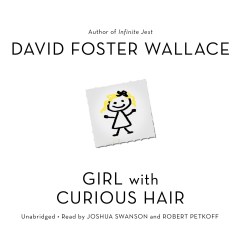
I saw a placeholder on Amazon for this audio book in early 2011.  And then I promptly forgot all about it.  My friend George just asked if anyone had heard it yet, so I decided to check it out.  I downloaded it through Audible.com.

And here’s my two cents about Audible.  Although it was free (for a 30 day trial), it was a lot of work.  The entire book (14 hours) downloaded in two files.  Each was about 7 hours with no breaks or chapters of any kind–just two huge 7 hour files.  Okay, I often download stuff and bring it into Audacity to make my own chapter breaks.  But you can’t import this file into Audacity because it is its own proprietary format and doesn’t want you to put it in MP3 format.  So, I had to burn it to CD (but not in MP3, only in WAV) and then put the CDs back in to iTunes to import them as MP3.  From there I could import them into Audacity and put tracks where I wanted.  That’s a lot of work to save $29.

I’m also going to say that I didn’t want a membership to Audacity because it costs $15/mo and the savings aren’t really that good anyhow.  Even kids books are about $10 each.  Oh, and just see how many hoops they have you go through to try and cancel.   Heavens to Betsy.

And but so on to the actual audiobook.

The book was read by Robert Petkoff (who is Reader A below) and Joshua Swanson (who is reader B below).  I don’t know anything about them, but their websites will give you more info about them.

I found the readings to be simply wonderful.  They were impassioned and articulate and dealt with some of DFW’s tongue twisting word choices with ease.  They also handle DFW’s dialect and accents with ease.  And while Swanson has a much much broader range of voices to play around with (his women voices are far superior to Petkoff’s), Petkoff also pulls of some amazing voices, especially in “John Billy.”  I never questioned what was happening.

Some of these stories are challenging and I admit I found them difficult to read.  But the audio versions seemed to really clarify things.  (There are all kinds of reasons why this could be so, but I’m not going to delve into that, for there lies madness).  Nevertheless, this was a great way to hear these stories.  Especially the ones that had heavy dialect.

“Little Expressionless Animals” [Petkoff] (90 minutes)
Petkoff sounds uncannily like Kyle McLachlan–no bad thing.  Although Petkoff doesn’t work too hard trying to do different voices, he puts in enough distinction to make the characters distinguishable.  (We have been listening to a lot of kid’s audio books, and the narrators of those are amazing with the kind of vocal acrobatics they can do!).  Petkoff is more subtle, but it is also effective–it’s not just a straight voice, which I think might get confusing especially in the dialogue scenes.

There is a hint of Alex Trebek’s voice when doing Alex Trebek, but he’s definitely not trying to mimic the voices of the celebrities.  For the most part, the voices are slight variations of the main narrator.  Indeed, during the later Faye and Julie dialogue section, he does slight differences between their voices to help distinguish the characters.  Which is quite helpful in the story.

This story works very well in audio book format.

One of the things that I loved about this story this time was really piecing together all of the various compnents.  Inclduing things like the revealtion of why Julie does poorly on the subject of animals.  It’s quite obvious when the story ends, but through the whole story you keep wondering, what is it about the animals?  I’m aslo intrigued at the number of gay characters in the book.

And, of course, this story has a major obsession with pop culture, especially TV.  And knowing (from interviews) that DFW sais he would just get sucked in to watching TV all day if it wa svailable, his tone (as is Petkoff’s) is perfect when dealing with the TV issues.

“Luckily the Account Representative Knew CPR” [Petkoff] (18 minutes)
Petkoff sounds slightly differnt than in “LEA.”  Since thist story has no dialogue, there’s not a lot of differentiation in the story.  His deadpan delivery is perfect for all of the details in the story. Although at the end, his “Help”s are quite empassioned, letting you know there’s a little bit more going on.

“Girl with Curious Hair” [Swanson] (50 minutes)
Swanson’s voice is of a much higher timbre, and it’s kind of fun to have two different voices in this book.  This story benefits quite well from an audio format.

The story is deliebrately flat and, I have to admit, is not terribly easy to read.  Swanson handles the flatness very well, he reads it incredibly deadpan and yet he puts enough inflection in it to keep it from being monotone.  I have to assume it wasn’t easy to read this.  I think that he has really made this disturbing character quite real.

Obsevrations about the story.  Hearing this story out loud was more shocking than reading it.  The explicit sex is pretty shocking for DFW and the revelation about what happened to Sick Puppy when he was a kid is prodoundly distrubing, especially when it is read in this non-inflected voice.  It was uncomforatble and very effetcive.

There were times when I wondered about the believability of the charcter.  The use of the word negro, the utter flatness of him. I realize that he is quite damaged, but at times it seemed like maybe this story was too much.  Which is a bit of a surprise, as I find DFW’s charcatersto be very real.

“Lyndon”  [Swanson] [1 hr 45 min]
I didn’t really enjoy “Lyndon” when I read the story.  It’s a little long and had many different things going on.  I kept wondering about Lyndon himself.  About what made DFW write a story based around Lyndon Johnson, around jhis life and politics.

But hearing this story read aloud, with the Swanson’s various voices and accents and newspaper stories all differentiated really brought this to life.  I felt like it was so much more vibrant and alive and passionate in this audio version.  I read in my post that i found the ending quite moving when I read the story, but it felt even more so, with Lady Bird’s quiet, dignified delivery, here.

Observations on the story.  How odd that he chose to make this story that is about a real, and quite famous and well studied person.  I don’t know a thing about Lyndon, so I have no idea how much of this is true (the few LBJ quiotes I looked up seem faked).  I don’t think I spent enough time thinking about the main character when I read the story.  Boyd is so fully realized and amazing that Lyndon is really superflous.  This is awonderfully emotive story.  And Swanson really does an amazing job.

“John Billy” [Petkoff] (1hr 10 min)
I thought “John Billy” was a real challenge to read.  The dialect is pretty crazy.  And the story is not exactly easy to begin with.  But much like Swanson in “Lyndon,” Petkoff’s voices are outstanding here.  The main voice of John Billy is great–he handles the accent and the crazy word choices that John Billy has with ease.  The story flows perfectly.  It’s really impressive.

And while the voice of Glory Joy isn’t wonderful (Petkoff’s women are just softer versions of his voice), he more than makes up for it with the amazing transformation of Simple Ranger.  In the reading, it is clear that Simple Ranger “grows younger” from a quiet, hard to hear older to a youthful loud charcater.  And Petkoff takes that literally so you can really hear him change into a man with a “curious plus haunting voice that was not…of his gravelly, gray-lunged voice somehow, his own, somehow.”  And then, later in the story Ranger’s voice changes again when he “whispered, the big sharp clear new Ranger in a smooth new clear young voice.”   But nothing prepared me for the voice of T Rex Minogue. It is stunning.  It’s an amazingly processed voice that is as malevolent as it is “mechanical.”  It’ s masterful.

As for the story itself, the whole saga of C.Nunn Jr is bizarre and wonderful, a crazy hyperbole of a story.  It also seems crazily over the top hearing it aloud (like in “GwCH”).  The whole story’s end with C Nunn’s eyes is preposterous (what is it with people’s eyes in this book?).  And yet it feels like the nonsense is there as a balance for the heaviness.

The story is funny and silly but by the end it gets incredibly dark and thoughtful.  It’s a challenge to listen to, especially the end, but I think it benefits from an audio version.

“Here and There” [Swanson] (55 min)
I found this story somehow more confusing while listening than when reading.  There’s so much back and forth with voices and the whole conceit that this is some kind of fiction therpay doesn’t really translate easily here.  I also found some of the more academic sections to be kind of dull in his reading.  It’s a challenge to read aloud and keep interesting, I’m sure, but I found this story to be the least successful of the collection.

“My Appearnce” [Petkoff] (58 minutes)
This is written in frist person from a woman.  Petkoff, who has quite a deep voice conveys a woman very well.  This is a great reading for this story.  He does “versions” of David Letterman and Paul Schaffer.  They are not impersonantions by any means, but he has the tone down perfectly.   The male voices whispering in her ear are done in a very simple whisepred voice.  Very effective.

This is a great story and the audio is also wonderful.

“Say Never” [Petkoff and Swanson] (42 minutes)
Petkoff does a very good job with the accents in this story.  Labov’s heavy Jewish accent is very impressive.  And although Mrs Tebof is not very different from Labov, it is different enough to convey the accent and the tone.   He also does Lenny’s voice, which is the bulk of the story.

Swanson also comes in this story as well, doing the voices of Mikey and Louis (two very distinct voices, even if they are both a little Hollywood Gangster from the 40s).  I would have been interesting to hear them interact more in the book somehow.

I was struck by this story more in the listening than the reading.  There’s something about hearing people say these things that makes them more shocking.  Especially the note that he sends to his family (talking about his wife’s lack of sex drive–gasp!).  This is another one of DFW’s stories that ends before something big happens.  It’s funny how many of his stories seem like preludes.

“Everything is Green” [Petkoff] (3 minutes)
It’s also amazing that this whole story is only 3 minutes and thirty seconds long.  Petkoff reads this story in a perfect DFW deadpan style.  He even does May Flys voice with a (slight) accent.

“Westward the Course of Empire Takes it Way”  [Swanson] (6 hours)
Swanson does an amazing job with this difficult story.  There are nearly a dozen charaters in here and he manages to keep them all separate and distinct.  It’s really great.  This is especially true late in the story, when they are in the car on the way to Collison.  He has six people in the car and he manages to make sthem all unique:  J.D. is dark and gravelly while DeHaven has a kind of Midwestern Stoner tone.  Tom Sternberg is neurotic and aggressive at the same time.  D.L. is snotty and presumptuous (although it may be Swanson’s weakest voice, it really conveys the character well).  Magda is exhausted.  And Mark is a solid late teenager.

Let’s not froget the pissed off Fertilizer salesman, the Avis clerk and the bartender.  And the narrator of course.

This story is also fairly complex and hard to follow (when reading).  There so much going on what with the narrator’s interruptions and the metafiction.

What I really noticed this time is how the parts that are not metafictional, the actual narrative of the story is really good, really strong and emotional.  Not to say that the more meta- sections of it are bad, they just don’t have the same kind of impact.  Of course, the whole point of the story is to play around with meta-fiction, so I’m not entirely sure how successful it is in that regard.

Nevertheless, it’s a fascinting look at youth in America.  And I have to say that it really works as a foreshdaowing of issues that he would explore more in his later stories and IJ.

Some things I notice din this listen.  DFW uses the word “plus” instead of “and” a lot.  It’s a fascinating word choice, and one that I think virtually no one uses.  Sometimes it’s effective and other times it’s very clunky.  I never noticed it while reading but it’s very obvious when listening.

I just read my review of the short story collection, which I think was kind of brief.  I feel like I got a lot more out of the book this time around. Of course this is my second reading so that makes sense as well.  It’s also interesting how I enjoyed some stories more and other stories less.

Overall though, this is an excellent audio book.

Read Full Post »

SOUNDTRACK: THE SWELL SEASON-Strict Joy (2009).

I bought this disc for Sarah after it came out.  I didn’t think that I would enjoy it that much because while I loved the movie Once, I wasn’t sure if I needed more from Glen and Marketa.  But then I found a whole slew of free concerts from NPR and I became hooked on the band.

The disc opens with “Low Rising” (what I think of as the “Van Morrison” song).  It gets better with each listen.  It’s a slow ballad which is followed by “Feeling the Pull,” a more up-tempo song that really highlights Marketa’s beautiful harmonies.  “In These Arms” is a gorgeous song.  The verses are downbeat and somber “if you stay…with that asshole…it will only lead to harm” but again the harmonies are gorgeous.  “The Rain” is a more rocking tune (within reason, of course).  It has an interesting middle section that quiets down, but it’s a solid folk rocking song.

“Fantasy Man” is Marketa’s first lead vocal song on the disc.  I like her voice but sometimes I find her lead songs to be a bit too wispy, too quiet.  I like this song, but it feels long (and at 5 minutes, it is).  “Paper Cup” is one of Glen’s quiet ballads.  It’s a pretty song.  “High Horses” is one that I didn’t know from the live sets, I guess it’s not too popular with the band, but I think it’s strong.  It runs a little long but that’s because it has a cool middle section that keeps building and building with more instruments and voices.  “The Verb” is another song that I didn’t know.  It has a cool intensity to it and while it doesn’t stand out as a hit, it’s certainly an enjoyable song.

“I Have Loved You Wrong” is another pretty Marketa song, but again it’s very slow and very long.  I don’t think I could buy her solo album because although her voice is lovely and her melodies are nice, they’re just so ephemeral I can’t really get into them.  “Love That Conquers” is an interesting song.  It sounds nothing like The Swell Season (must be the banjo).  It’s a nice addition to the album and should maybe have been placed a little earlier to break up the sound style a bit more.  “Back Broke” ends the disc very strongly.  Although I think the song works better live (with audience participation), the melody and tone of the song are somberly beautiful.

There are moments of this disc when it turns out to be what I feared the whole disc would be–bland folkiness. But overall this is an enjoyable album for a rainy day.  And Hansard really has an amazing voice.  However, I really like them better live.

[READ: December 26, 2011] Third Reich

I was pretty excited when I heard about this book, although I must admit I was a little concerned by the title.  Bolaño has a kind of weird Nazi fascination.  There is Nazi Literature in America and then a whole section of 2666 is given over to Nazi Germany.  He doesn’t like Nazis or anything but he writes about them a lot and it can be a little exhausting.  So it was with some relief that I learned that Third Reich is the name of a game that the main character plays.  It is a kind of historical reimagining kind of game (I guess like Risk but more specific and with more at stake).  It is set during the time of the Third Reich and the players represent various countries (or perhaps even powers).

I am giving up on explaining the game from here on because a) there’s a lot about the game in the book and b) I’m not sure if it wasn’t explained very thoroughly or if I just missed out on exactly what was happening.  During the book he talks about Hexes 65 through 68 and so on.  So I assume the map of the world is a hex grid.  But he never gives any context (or even a picture!–and this makes sense as it’s written as the diary of a well-regarded player who is not trying to teach us the game).  So while I understand the general tenets and play of the game (there’s a die (or dice) and tokens that reside on the board), the specifics are completely nebulous.  But that’s okay.  Because the game specifics don’t impact the book, but the game overall is at the heart of the book.  I think it’s neat that Bolaño invented a game (and several others games are named, but no details are given).  He is clearly very gifted at inventing people, games, things.

But as I said, the game is only a part of the book and in fact, the game details don’t enter into the book until about half way through. (more…)

Read Full Post »

SOUNDTRACK: LONDON PHILHARMONIC ORCHESTRA-Angry Birds Theme (2011).

My son, Clark, loves Angry Birds.  I’ve played it a few times and found it enjoyable, but he is obsessed.  He is absolutely the target market for this song.  And who knows maybe it will get him to like classical music.

I wasn’t sure if I’d recognize the tune, but it is already ingrained in my head.

This version is wonderful.  It sounds like it might be from a Tim Burton movie. 

The full CD is a collection of video game themes.  We don’t have a console, so I don’t know any of the other songs on the disc. But I do rather like this one.  I can’t wait to see his face when he hears it.

Check it out on NPR!

[READ: December 15, 2011] “What We Talk About When We Talk About Anne Frank”

This story went from being a (rather) funny piece about Hasidic Jews to being a (rather) emotional story about marriage, religion and self-preservation.

As the story opens, Mark and Lauren are visiting the narrator and Deb.  Deb and Lauren grew up together.  But after school Lauren met Mark and they moved to Israel where they became Hasidic (and took the new names Shoshana and Yerucham).  As the story opens, the narrator (a non-observant Jew) is trying to hold his tongue while these religious folks are well, kind of judging  them.  It’s wonderfully summed up by this comment:

“Jewish to you?” I say.  “The hat, the beard, the blocky shoes.  A lot of pressures, I’d venture, to look jewish to you.  Like, say, maybe Ozzy Osbourne or the guys from Kiss, like them telling Paul Simon, ‘You do not look like a musician to me.'”  [Is there a joke in there since the guys from Kiss are indeed Jewish, or no?]

The narrator and Deb has a son, Trevor, who is sixteen.  The scene where he comes into the room to discover the Hasidic couple is hilariously subtle (very well written).  Then we learn that Shoshana and Yerucham (which Deb calls them) have ten children–all girls.  Yikes.  But the narrator continues to refer to them (at least in his story) as Mark and Lauren.  And the more questions he asks the more we find out that although they keep Holy the traditions, they are a bit lax about some of the rules (maybe?)  I actually don’t know the rules so I don’t know if what they’re doing is “wrong” or not.  And, amusingly there’s a bit in the story in which Yerucham complains about non-Jews giving them shit for what they do–“Can you eat in there?” kind of questions.

So, when the narrator asks if they can drink, Yerucham says he can make the whiskey kosher.  And that starts them on their way. (more…)

Read Full Post »

SOUNDTRACK: AUSTIN CITY LIMITS FESTIVAL 2010 (on Palladia TV 2011).

Recently Palladia broadcast some highlights from the Austin City Limits Festival in 2010.  The bands they showed were Phish, The Flaming Lips, Vampire Weekend, Muse, LCD Soundsystem, Sonic Youth, Spoon and Slightly Stoopid.

There were so many good bands at this festival (why is Richard Thompson in such small print?) that I won’t really complain about the inclusion of Slightly Stoopid and LCD Soundsystem on this best of (but they could have included Band of Horses, Yeasayer, Broken Bells, Gogol Bordello (the list goes on!).  (I’d never heard of Slightly Stoopid and although I like LCD Soundsystem, live they were less than stellar).  Although I am glad they didn’t include the Eagles, thank you very much.

I’m trying to get actual set lists of these airings (they mentioned the song titles during the show but I didn’t write them down).

This was a 2-hour broadcast and it was really good.  If they re-air the episode, it’s worth watching.  The quality of the broadcast is excellent (even if the HD format does take up way too much space on a TiVo).

[READ: November 6, 2011] “Beer Cans: A Guide for the Archaeologist”

A while back I read a few old articles that I got from JSTOR, the online archiving resource.  This month, I received some links to three new old articles that are available on JSTOR.  So, since it’s the holiday weekend, I thought it would be fun to mention them now.

And to start of the holidays, I present you with this–a loving history of the beer can (for archaeologists).

This is a fairly fascinating look at the development of the beer can from 1935 to the present.  The selling point of the article is that archeologists could use beer cans to date the timeframe of an excavation.  I agree with this; however, since they only date back to 1935, I’m not entirely convinced of its long-term usefulness.

The problem with the article is that page two shows a chronological timeline.  This in itself is not a problem (although it is odd that it goes from present to 1935 instead of chronologically forward); the problem is that the article itself more or less sates exactly the same thing as the timeline.  For although this article is 20 pages long, there are tons of photos and very little in the way of text beyond what was in that (very thorough) time line.

Nevertheless, you can see the morphing of beer cans from ones that you had to pop open with a can opener to ones that finally had self opening cans.  See the switch from tin to aluminum, and even learn why the tops of cans are a little narrower than the sides (called a neck-in chime, it evidently saves a lot of money). (more…)

Read Full Post »

SOUNDTRACK: SEMISONIC-Feeling Strangely Fine (1998).

In my mind, Feeling Strangely Fine is the pinnacle of Semisonic’s pop greatness.  I mean, it’s got “Closing Time” on it.  And while I am now pretty tired of the song (can it really be 13 years old?), when it came out it was pretty awesome.  And so I tend to think of The Great Divide as being in the shadow of this record.  But in retrospect, I think I have to favor Divide over Fine.  This album has a bit too much polish, a bit too much smoothness for my liking.  And while there are some great songs on it, I’m not entirely sure it matches up to The Great Divide.

“Singing in My Sleep” is a supremely catchy song–a simple riff, mellow verses and an urgent chorus.  It should have been huge too.   And “Never You Mind” has that Semisonic quality in spades–simple accents that make a song catchy (a little guitar riff) and really catchy choruses.  Plus lyrically, it’s rather clever.  “Secret Smile” is one of their few ballads that I really like.  I guess they have just mastered pop hooks for this record.

But to me the rest of the record pales a bit compared  to The Great Divide.  “DND” is a similar slow song although it’s a bit slinkier.  And there’s some very mild funk on “Completely Pleased” which is a welcome return to the rockier songs but which doesn’t quite reach the heights that they have hit before.

“California” is a fun track.  It could use a bit of oomph but it shows off some fun noises at the end.  And the last two tracks just kind of fade the disc out.

Nothing on the album is really bad.  And indeed, in the right frame of mind these songs are all really enjoyable, but i think after comparing them to some of the earlier tracks and even the earlier tracks on this record overall this one comes up a bit short.

[READ: November 6, 2011] “Exorcism”

This is a Eugene O’Neill play that was believed to be lost forever.  He staged the play in 1920 but after a brief run, he destroyed every copy, possibly to assuage his dying father.  But this copy was recently found amongst a friend’s papers.

So that’s pretty exciting that a new Eugene O’Neill one-act play is now available.  I believe the whole thing is printed here–it’s so hard to tell with the New Yorker.  But they also say that Yale University Press will be publishing the play in the spring.  If the whole thing fits onto 7 New Yorker pages, how are  they going to publish it as a book?  Well, that’s Yale’s problem.

I don’t know that I have read many, if any, O’Neill plays.  I’ve never really taken any drama classes, although I know about O’Neill’s mastery of drama.

So this is probably as good a place to start as any.

This is the classic “nothing happens” kind of story which proves to be a powerfully emotional story (especially as it resonates so closely to his own life). (more…)

Read Full Post »

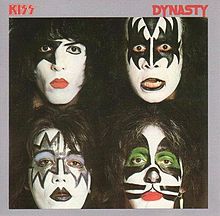
SOUNDTRACK: KISS-Dynasty (1979).

I was pretty excited to buy this album when it came out–a new Kiss album that wasn’t solo albums!  Woo hoo!  And the fact that it was disco?  Well, even though I said I “hated disco,” I didn’t really know what disco sounded like then (and really, aside from the middle “I Was Made for Lovin’ You” it’s not really a disco record) and plus my other favorite band was the Village People (and really, that makes a lot of sense–tw0 bands in over-the-top costumes talking about sexuality that I totally didn’t understand).

So, this album is hard for me to be critical about because it was such an essential part of my childhood, especially “I Was Made for Lovin’ You.”  I love it, and yet I can listen critically and appreciate that it’s really not that good.

But I’ll move on to the other songs.  “Sure Know Something” and “Magic Touch” really don’t seem that out of place chronologically with, say, the Kiss solo albums–they sound an awful lot like something off of Paul’s album.  So, despite the sort of slinky 70’s bass on “Sure Know Something”, they can’t have been that much of a surprise.  The guitar solos are short but have some interesting Ace sounds (I like the harmonics on “Magic Touch”).  It seems that while the other guys were embracing disco, Paul was keeping the Kiss sound alive.

Then there’s the Ace songs.  “2,000 Man” made total sense as an Ace song. I had no idea it was a Rolling Stones cover until fairly recently (and I like Ace’s version much better).  “Hard Times” feels like the sequel to “New York Groove.”  Not the music so much although maybe a little, but the lyrics–now that he’s in the city here’s what happened–the gritty reality. It’s one of Ace’s great, lost songs.  And check it out, Ace sings on three songs here!  (Guess having a #1 hit wasn’t lost on the Kiss powers).  “Save Your Love” has a cool descending chorus and a nice bass feel to it.  Ace certainly wins on this record.

Peter got only one song, “Dirty Livin'”.  In fact, this is the only song that Peter had anything to do with (his drums were re-recorded by Anton Fig).  It reminds me (in retrospect) of the Rolling Stones disco era even more than “2,000 Man,” the backing vocals remind me of something like “Shattered.”  I always liked this guitar solos on this (cool feedback).  Although I liked the song (along with the rest of the album), I don’t think it holds up very well.

Gene only gets two songs.  It amuses me how little he has to do with these late 70s albums even though he is always the leader of the band.  I always liked “Charisma” (I had to look the word up back then) even though it is, admittedly, rather discoey and really not very good.  It is fun to ask “What is my…charisma?”  But “X-Ray Eyes is the better Gene song on this record.  It harkens back to earlier Kiss songs and even has a bit of menace in it.

So, Dynasty was a huge hit for the band.  And they even got to mock it in Detroit Rock City the movie.  Cynical marketing ploy or genuine fondness for disco?  Who would ever know.

[READ: November 1, 2011] “The Brief Wondrous Life of Oscar Wao”

Readers of this blog know that after finding an author I like, I will try to read everything that he or she has written.  Close readers will know that if a writer is reasonably young and reasonably unpublished, I will try to read his or her uncollected work as well.  Well, I really enjoyed Oscar Wao the novel, so I decided to see what else Díaz had written. There’s really not a lot, to be perfectly frank.  There’s his short story collection Drown and a few fiction pieces published here and there (mostly in the New Yorker) and a few non-fiction pieces as well.

So this “short story” from the New Yorker (with the same title as the novel) is in fact an early, mostly the same, version of the Oscar story in the novel.  The thing here is to note the date: 2000(!).  The novel came out in 2007.  So, Junot had been working with this character for easily five years (giving time for the publishing industry to get a book out and all). The remarkable thing the is just how accomplished and polished this piece is and how much of it was used in the novel.

I’m curious to know whether this was written as a short story (it’s quite a long short story) or if it was always intended as a part of a novel.  Interestingly, when you read this story by itself and you realize that it is pretty much all of Oscar’s story in the novel, you realize just how little of Oscar is actually in the novel.  The novel is about Oscar, obviously, but it is really about his family and the fukú that was placed on them by the Trujillo clan.  Oscar is sort of the touchstone for the fukú, and the person whom the narrator knows most intimately but his story is also brief. (more…)

Read Full Post »

« Newer Posts - Older Posts »