Feeds:
Posts
Comments

Archive for the ‘Drinking’ Category

SOUNDTRACKMOLOTOV-¿Dónde Jugarán las Niñas? (1998).
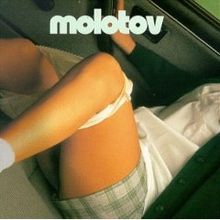
Molotov was the last Rock en Español band that I really bothered to check out.  They were probably most notorious for the cover of the album.  Interestingly, the cover is actually a four sided cover which you can flip to three other far less sexist scenes, so yes, that was pretty much a sales gimmick.  And it certainly attracted attention (and a law suit!).  So they reissued the title with the far less offensive, but very different cover below.

My Spanish is poor at best, but this album is a mix of Spanish and English.  And, of course, I know some bad Spanish words, so I get a sense of what this album is about. But here’s the thing–it rocks really hard and has some really great elements of the metal/rap/funk hybrid genre, regardless of whether you know what they’re talking about (although don’t go singing “Chinga Tu Madre” around the office, capiche?).

The opening song  “Que no te haga bobo Jacobo” has a very Rage Against the Machine vibe–heavy guitars and sound effects with militant rapped lyrics.  The riff is great and the vocals are smoother than Rage’s Zach–“Tito” Fuentes has great flow.  There’s also some good funky bass in the middle section.  “Molotov Cocktail Party” is a mix of English and Spanish, a pretty straightforward rap, not unlike Kid Rock.

“Voto Latino” has a more alt rock vibe in the guitars, although the vocals are pretty straightforward rap style.  The song title means Latino Vote, so perhaps there’s a politics context to it.  And “Gimme Tha Power” is a political song, too.  A rap (in Spanish) over some nice acoustic guitars.

There definitely isn’t in “Chinga Tu Madre” which has more of those cool guitar effects and group chanting, although it’ probably not worth investigating the lyrics much more.  But the chorus is catchy as anything.  “Matata Tete” and “Mas Vale Cholo” return to that Rage Against the Machine style, with vocals that are a bit more cookie monster-y (I’m not sure who sings lead on which songs, actually) although “Mas Vale Cholo” has some fun with the vocal delivery.  And there’s a spirit of early Red Hot Chili Peppers at work, too.

“Use It or Lose It” is rapped in mostly English.  It has a very cool acoutsic-feeling chorus (and a quote of the line, “what cha gonna do rap is not afraid of you.”).  “Puto” is presumably an anti-gay song (I suppose I should find that out before I say so).  “Porque No Te Haces Para Alla?…Al Mas Alla!” has a fun chorus and cool guitar effects once again.  “Cerdo” has a cool 70s vibe, with funky bass and scratchy guitars–it’s got a sexy feel, although the title means “pig,” so who knows.

The final track also rocks very well.  According to Wikipedia, the translated title of “Quitate Que Ma’sturbas (Perro Arrabalera)” is “Stay Away Because You Masturbate (Suburban Bitch)” which seems weird .  But maybe they had nothing better to write about.  Sometimes ignorance of a subject is not a bad thing.

¿Dónde Jugarán las Niñas? is not the classiest album around, but it’s got some really interesting sonics.  And I’m led to believe their later albums are even better.

[READ: Week of April 9] Gravity’s Rainbow 3.16-3.24

Last week ended with sex and this week opens with the way I felt–like a voyeur who can’t look away.  The exhausting orgy was exhausting to read about as well.  And I’m starting to wonder if Pynchon is making a point about sex rather than just enjoying writing about it.

This week’s read also brings back two characters from way way ago.  Well, one from not too long ago, but another from what seems like an eternity.  I assumed we’d see Pirate Prentice again, but I assumed that it wouldn’t be until Section 4. So that was a nice treat, even if it’s a less than happy return for him. (more…)

Read Full Post »

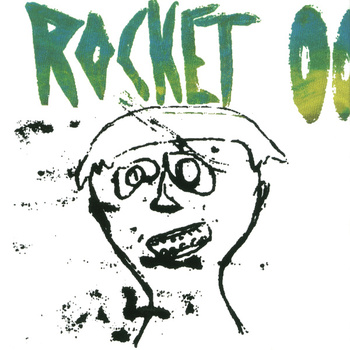
SOUNDTRACK: ROCKET 00000-What Women Want (2010).

This is the second band that I have discovered because of this novel.  I was looking for images to paste in last week’s post for Rocket 00000, and I came across this EP.

Rocket 00000 are a trio from Cincinnati and this is their first (and only) release.   It’s got a kind of 80s punk vibe–I can’t really make out the words, but I like the feel.

There’s something very raw and almost amateurish about the record–but that seems deliberate, because the album sounds very professional–it’s recorded well and the band is very tight.  And since I like the bandcamp site quite alot, I’m going to provide the link with extras here so you can listen to the album, too.

There’s four songs–two are 5 minutes and two are around 3 minutes.  The two longer ones have intros and outros that extend the music to those long (for punk songs) times.  And I really like these instrumental sections. In fact, when I first listened, I thought maybe the whole first track was an instrumental.  Since  I liked the tone of the album I was okay with that.

The “Summer City” part of “Summer City/Conspiracy Theory” has a simple but effective guitar solo as an instrumental.  After about a minute and a half “Conspiracy Theory” kicks in, the vocals bring a new texture and a punk element into the song.  “Lethal Weapon 2 & 4” has a great title, but it doesn’t sound all that different from the other songs (although the lyrics, “We’re not perfect…but neither are you” are pretty clear).

“Signs” has some cool drum breaks and fills, and the end of the song is musically interesting.    “Braveheart: Forever Young” probably combines the music and vocals  best–I like the  upbeat music with the dark words.  The song ends with about 2 and a half minutes of instrumental (with interesting feedback) that works really well together.

It’s not the best punk EP, but it’s got some good qualities and the band has a good name.  I wonder how they “say” it?

[READ: Week of April 2] Gravity’s Rainbow 3.11-3.15

After last week’s breezy read, I figured that this week’s would be a bit rougher.  But for the most part, it wasn’t–aside from the very end which was a little hard to stomach.  There was a lot of technical discussion in this section–which was a  bit hard to comprehend.  There was a also a return of Franz Pökler–where we learned his story and what happened to him.  We assumed that he was killed by a police truncheon, but that turns out to be untrue.  His story is pretty dark and sad.  Sorry, as Marco points out below, it was Peter Sachsa who was killed by truncheon.  My conspiracy has been called out!

Section 3.11 opens uncomfortably with Franz Pökler… copulating with Leni in an aggressive and rough manner.  He has just come back from showing of Alpdrücken and imagines that it’s Margherita underneath him.  He assumes that men all over the country are doing the same thing because of the movie.  He calculates that it was that night that Ilse was conceived–they’d barely had sex around that time.  This flashback brings us forward to the scene of Franz waiting for Ilse to return to Zwölfkinder—a kind of children’s fantasy playground which would prove to be a very significant location for them. (more…)

Read Full Post »

SOUNDTRACK: THE SHINS-“Plenty is Never Enough” from Score! 20 Years of Merge Records: The Covers (2009).

The Shins have taken this song and completely turned it into a Shins song.

It is bouncy and poppy with some nice tempo changes.  It could easily fit onto any Shins album.

The original (I’d never heard of Tenement Halls) is very similar to The Shins’ version.  The big difference is that it doesn’t have The Shins’ vocals and musical sensibilities.  The original feels kind of flat, the highs just aren’t as high.  But it serves as a good stepping off point for the cover.

[READ: March 30, 2012] “Chapter Two”

This story is about A.A.  But, amusingly, Hil is tired of telling her own stories at A.A., so she starts telling the story of her fifty-something alcoholic neighbor (with the wonderful name of), Bergeron Love (the story is set in Houston).

Interestingly, no one at A.A. complains that she is talking about someone else (in fact the blind guy just seems to smile politely).  This is just as well because Bergeron’s story is pretty funny.  Bergeron arrives at Hil’s door, stark naked and invites herself in.  This is not atypical for Bergeron who crashes neighborhood parties and plays ridiculous pranks.  But not everything she does is funny: she also reports overgrown lawns and loose dogs.

Hil lives with her son and a roommate, Janine.  Janine is a very fat woman (see my diatribe about fat characters yesterday).  But Janine is not the victim or the pity-case in this story (well, maybe a little).  Hil figures Janine must eat all day to be as big as she is, but she has never seen her eat.  But then Hil’s son, Jeremy, a shy teenager enjoys playing video games with Janine more than going out with his peers (and more than being with his mom, I believe). (more…)

Read Full Post »

SOUNDTRACK: LES SAVY FAV-“Precision Auto” from Score! 20 Years of Merge Records: The Covers (2009).

This is a cover of a Superchunk song.  The Superchunk song is fast and furious with screamed vocals.  The Les Savy Fav version is faster and more furious with screamed vocals.  It doesn’t sound very different from the original except that they use a high guitar playing a repeating motif which seems to increase the pace and intensity of the song.  They even keep it up through the moody instrumental break

Usually I don’t like a cover that sounds so much like the original, but it’s a great cover.  It basically just intensifies the song, and that’s a good thing.

I don’t know much about Les Savy Fav, so I don’t know if this is why they normally sound like, but it’s pretty darn good.

[READ: April 3, 2012] “P.E.”

Sometimes a title can impact ones desire to read a story.  This title is, well, it’s not bad, it’s just…uninspired.  I can’t see myself saying, “I really want to read, “P.E.”  What’s surprising is that the title is so blah, when the story is so interesting.

I like my short stories to be light and fluffy (even if I read heavy duty novels).  So this one was kind of fun.  In the beginning.  It starts with Freddy waiting for his dad at the airport.

Freddy is fat.  I have to admit right off the start that whenever a character is described as really fat (like really fat, as Freddy is), it irks me.  First off, I always assume that writers are not fat (not really a fair assumption but author photos are often glamorous, right?) so they aren’t writing from a location of truth.  Second, whenever a character is really fat, it always signals that something bad has or will happen to him.  And so it is with this story.

But before we get to that point, we have some more amusing scenarios.

Or, well, really not amusing so much as disturbing (but funny).  Freddy’s mother hanged herself when he was seven.  And his father took it badly (not unusual).  He even took to wearing the noose around his neck like an article of clothing (unusual!). (more…)

Read Full Post »

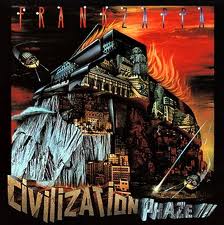
SOUNDTRACK: FRANK ZAPPA-Civilization Phaze III (1994).

There were a number of choices for soundtracks for this week’s read.  I could have chosen the Andrew Sisters (and their wonderful “Don’t Sit Under the Apple Tree”) who get a mention in the book.  And, of course, I could have chosen Elton John’s “Rocket Man.”  But, when I read Trudi tell Magda about her boyfriend Gustav who wants to live inside a piano, well, it was hard not to think of this, Frank Zappa’s final work.

Civilization Phaze III is an opera-pantomime.  According to the libretto, “The speaking characters all wear oversized masks, gloves and shoes.  They live in an abstracted grand piano….”  And musically opens with this introductory spoken passage:

FZ: The audience sits inside of a big piano and they listen to it grow.
Spider: People are going to sit inside of a piano. They’re going to listen to this piano grow.
John: They’re going to listen to the piano grow?

Civilization Phaze III was released posthumously in 1994.  But here’s the weird thing.  Most of the sessions of “piano people” dialogue were recorded in 1967.  Zappa had a bunch of people come into the studio, sit under a piano that was miked and improvise dialogue (sounds like the 60s to me).  He released some of this dialogue on his  late 60s albums, but as far as I can tell, the parts about the piano were never included (in Lumpy Gravy someone talks about wanting to live in a drum).  I’m also not sure how well-known the “piano sessions” were at the time.

So, here’s the question…did Zappa influence Pynchon or did these two people come up with the same idea at roughly  the same time.  The reason Zappa put off using the material recorded in 1966 was because technologies were simply not advanced enough to let him manipulate the dialogue so it would sound decent, much less coherent.  So Civilization Phaze III became his exploration of the past with contemporary technology.

He also recorded new spoken dialogue in 1991 and merged the two.  It’s an interesting idea, but I fear that the new dialogue absolutely misses the vibe of the earlier dialogue.  In the early dialogue, they all sounds like they’re stoned and are talking crazy nonsense about horses, smoke and music.  The later dialogue is much more abrasive (especially Michael Rappaport, the only person who has since gone on to renown).  At the time, Rappaport had been on one TV show as a guest, but by now he is too famous for this.  I find him a distraction (not Zappa’s fault obviously), even more so because he talks as if he is black (he says “Nobody said nothin’ when y’all bought my people, right?”) while he is demonstrably not.  And then ruins it contextually by mentioning Yo MTV Raps, the only thing that places the story in time.  It’s weird that Frank wouldn’t have a black person say these lines, especially since he has so many other races and nationalities represented in his music.  But maybe that’s me intellectualizing that I just don’t like Rappaport.

So, what’s this monstrosity about?  I have no idea.  Improvised stoner dialogue from the 60s is pieced together into a kind of story.  Occasionally Frank’s voice chimes in and prompts them to talk about certain things (which is quite  disorienting).  And the whole “plot” well, I’m not even sure if it can be called a plot, but Frank tries to cobble something together–again, the 1991 dialogue seems to be more pointed, more about conflict, possibly something about overcrowding and racism, and there’s certainly some social criticism at work, but as for a story, well, not so much.

The music, on the other hand, is the culmination of Zappa’s more experimental, atonal “classical” music.  Most of the first disc is performed on the synclavier while most of the second disc contains more actual musicians.  The music is difficult and not to everyone’s tastes, for sure.

Atonal music is far more intellectual than visceral, so it’s hard to “enjoy” this music.   Zappa obviously knew how to write catchy poppy friendly music, so this is a deliberate attempt to write something more challenging.  I like Zappa’s crazy music in small dozes, so listening to this entire thing (over 2 hours) can be a tough in one sitting.  But each piece (especially the two really long pieces “N-Lite” (18 minutes) and “Beat the Reaper” (15 minutes) ) showcases something interesting or satisfying.

The libretto that Zappa includes with the discs explains the story in far more detail and shape than one would ever get from listening to the music.  Without the book, you would know that this is a dark and moody piece, but with the book, you can actually see what the music is showing.  That may be a flaw, or that may be the way of a staged performance.  I have no idea if it was ever staged.

There are certainly easier introductions to Zappa’s music.

[READ: Week of March 26] Gravity’s Rainbow 3.6-3.10

Last week was a bear of a read for me, but this week was so fast (and short) that I just kept going because I was so into the Slothrop story (I won’t go past the spoiler line, I promise).  And yes, it’s (almost) all Slothrop this week.

Section 3.6 begins with Slothrop violently ill.  [I admit I don’t think of novel characters as getting ill very much–unless it’s a plot point–but surely characters get colds and tummy aches just like everyone else, right?].  He drank out of an ornamental pond in the Tiergarten–but, duh, everyone knows to boil water before drinking these days.  This also introduces Slothrop as Rocketman, something we won’t get more details on until later. (more…)

Read Full Post »

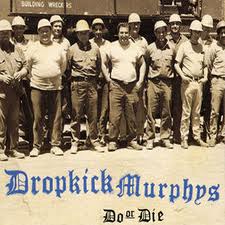
SOUNDTRACK: DROPKICK MURPHYS-“Finnegan’s Wake” (2005).

This song has been around forever and there are dozens of different versions of it.  For your more traditional versions, you want The Dubliners of Christy Moore (if you really want to hear the words).

But The Dropkick Murphys do it the way I like my traditional Irish songs–fast and loud and full of punk.

Although to be honest, The Dubliners’ version has a bit more swagger and fun (it’s hard to beat Ronnie Drew for a hard living singing voice).

Whichever version you choose, be sure to have your favorite ale or lager (or whiskey punch) on hand.

[READ: April 1, 2012] Finnegans Wake

I decided it was time.  How many times have I read the opening line of this book:

riverrun, past Eve and Adam’s, from swerve of shore to bend of bay, brings us by a commodius vicus of recirculation back to Howth Castle and Environs.

And as many times I have read the end of the book:

A way a lone a last a loved a long the

But now it was time to read the other 620-some pages of it.  So I set aside some time this weekend, and, in the spirit of Joyce’s stream of consciousness, I stayed awake until I finished it. And having digested the book, I now get to write all my thoughts about it.

(more…)

Read Full Post »

SOUNDTRACK: FRANK ZAPPA AND THE MOTHERS OF INVENTION-Over-nite Sensation (1973).

When I saw Marvy’s Mothers, it was hard not to pass up the connection to Zappa and his band.  But oh, what album to pick?  (He released like 40). I chose the one released in the same year as Gravity’s Rainbow.

It also happens to be full of all kinds of sex (imagine that).

It opens with “Camarillo Brillo” the kind of simple, catchy song that Zappa seems to whip out very easily.  I assumed that the title was some kind of sexual slang (not a bad assumption), but Wikipedia suggests it has something to do with an insane asylum (Camarillo) and the crazy hair they often had, which makes sense given the crazy lyrics.  It starts kind of trippy with inscrutable lyrics.  And then the bridge, “she was breeding a dwarf” is pretty insane.  It also features a very funny sequence that was oft-quoted in MST3K–“Is that a real poncho or a Sears poncho.”

“I Am the Slime” is a funky (a great Zappa riff) diatribe against TV (because it makes you buy crap you don’t need and makes you listen to the government).  “Dirty Love” is a perverse song with lots of guitar solos.  There’s some kind of bestiality in this song (which also ties in with parts of this section).

“Fifty-Fifty” features the vocals of Ricky Lancelotti (in a screaming style that would later be used a lot by Terry Bozzio).  It’s about an ugly guy who is crazy enough to sing to us.  The songs seem to be more about solos though, as there’s a keyboard solo an electric violin solo (from Jean-Luc Ponty) and some crazy guitar solos.

I don’t know what “Zomby Woof” is about, but it has some wicked guitar soloing and horns playing Zappa’s staccato riffs up and down the scale.

“Dinah-Moe Humm” is a song perfectly suited to this book–it’s a song in which a woman bets the narrator that he can’t make her have an orgasm.  The melody is twinkly and silly.  It’s shockingly explicit. But it’s even funnier to know that the backing vocals are supplied by The Ikettes (Ike and Tina were recording in the next room).  They got paid almost nothing and when Ike heard the song he called it “shit” and asked that their name be removed from the credits.

It also plays around with hippy slang.  “Kiss my aura Dora/It’s real angora/Would you all like some more-a/right here on the floor-a/and how about you fauna/You wanna?”

He also starts talking about Zircon encrusted tweezers, which come back in “Montana.”  “Montana” is about moving to Montana to raise dental floss (really).  It features some wonderful fast pizzicato notes that are more or less Zappa’s signature.  The middle section is  hugely difficult and very impressive for the backing vocalists (Tina apparently was really impressed that one of her girls could do it).

Zappa packs a lot of music into 35 minutes, and this album seems to be a turning point in his desire to cram sex and craziness into his commercial music.  Just about every song on this disc was played a lot live and this album has become something of a classic.

[READ: Week of March 19] Gravity’s Rainbow [3.1-3.5]

This week’s read has been the most challenging for me so far.  I enjoyed Section 2 very much.  The Slothrop scenes were funny and wild and even advanced the plot.  I never expected that Section 3 would introduce a ton of new characters, more or less ignore the old charterers and stay with these new characters so that by not paying close attention to them in the beginning I was just confused by the end.

I do admit that while skimming again for this post, I was able to focus on the new characters more and found it far less confusing.  It’s just that on a first read, suddenly there’s this whole new sequence of people and their histories to deal with!  Wow.

It was especially surprising because Section 3 begins with Slothrop (so it’s not like in 2666 where a new section means a new cast).  But he meets new characters and then we flash all the way back through each person’s life.  And yes, it was quite interesting once I actually paid attention, and the connections were pretty awesome.  But it was still pretty surprising on the first read through.

Section 3 is called In the Zone.  And the Zone is mentioned quite a lot, although I never figured out where it is meant to be exactly. (more…)

Read Full Post »

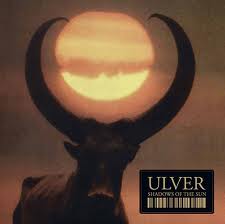
SOUNDTRACK: ULVER-Shadows of the Sun (2007).

I really wanted to like this album because of the cover–which is striking.  I know, I know, never judge…  My initial reaction to the disc was kind of poor.  I’ve followed Ulver’s progress through their many incarnations, and it’s not entirely surprising that they should make an entirely ambient record.  It just strikes me as an odd release–mellow and almost lullaby-ish but also a little creepy (the voice mostly).

But at the same time, musically it’s quite pretty.  And while it wasn’t a very good listen for a car trip to work, it was actually really perfect for listening to at work–where headphones allowed for hearing so many nuances.

There’s not much point in a song by song listing, as the songs are similar–washes of music with slightly distorted, deep vocals.   But there are some interesting musical choices that make each song unique, and consequently better than a lot of ambient in which all of the songs use the same musical palette.  “All the Love” employs piano and come cool electronic sounds near the end.

“Let the Children Go” is a much darker song (with drums!).  “Solitude” is the most melodic song of the bunch.  It reminds me of Black Sabbath’s “War Pigs” (which should tell you something about the overall tone of the album).  It has a noticeable vocal line (and really audible lyrics, which are quite melancholy and more emotional that I would have expected: “You just left when I begged you to stay.  I’ve not stopped crying since you went away.”

Another observation.  At times when he actually sings, the vocals sound a bit like XTC–“Shadows of the Sun” in particular.  And since that song has pianos it’s not inconceivable that this could sound like XTC (although not really).

With the right atmosphere, this record proves to be a very impressive listen.  Kristoffer Rygg’s vocals really suit the mood and, all in all, it does reflect the album cover rather more than I initially thought.

[READ: March 18, 2012] The Marriage Plot

I had put this book on hold a few months ago.  And I was ninety-something on the list, so I didn’t think too much about it.  I looked the other day and I was 10.  Yipes.  How was I going to read this 400 page book  in three weeks while also reading Gravity’s Rainbow??

Well, amazingly, The Marriage Plot worked as a nice foil to GR. It is a supremely easy read.  It is completely uncomplicated.  And, it actually has some unexpected parallels to GR–specifically, two of the characters travel to Europe, one on a pilgrimage the other on a honeymoon, and they travel to Paris, Geneva, Spain, Zürich, and even Nice.  There is literally no connection between these two books (although Mitchell does bring Pynchon’s V along with him), but it was fun to see new people go to the cities that Slothrop has been traveling to for very different reasons.

I powered through the book, reading large chunks and staying up way too late both because I liked the book and because I wanted to get it back on time (beware the library police!).  And there really is something about finishing a book quickly, it really keeps the story and characters fresh and makes the experience more enjoyable.

But on to the book.

This book centers around three people in a kind of lover’s triangle.  The woman at the center is Madeleine (and yes there are wonderful tie-ins to Madeline the children’s book series). The two men are Leonard and Mitchell.  All three of them are graduating from Brown in the mid 80s.

I identified with the book immediately because Madeleine is an English major (as was I).  She studies the Victorian era [and I had just read the piece by Franzen about Edith Wharton] and is on track to write her thesis on this era.  The title of the book comes from this section–novels written at that time were especially focused on marriage–if a woman did not marry, she was more or less doomed, and so the plots centered around her quest to find a suitable mate.  As Franzen noted in the above article, Wharton and some of her predecessors sounded the death knell for the “marriage plot” and Madeleine was going to do her thesis on that.

As the pieces of the triangle fall into place we learn (skeletal at first with much detail added later) that Madeleine and Mitchell were very good friends initially.  So good, in fact, that she invited him back to her parents house for a vacation.  He was head over heels in love with; however, out of fear (mostly) he never acted on the opportunities she gave him, and she thought that he wasn’t interested in anything more than friendship.  Basically, he blew it (although he doesn’t learn this until much later–I can relate to this all too well). As the story opens, she has just woken up, hungover, smelling of a party, with a mysterious stain on her dress.  She knows she did something with someone last night but she’s not sure what.  Not atypical college behavior.  But the kicker is that it is graduation morning and her parents are ringing the doorbell of her dorm right now. (more…)

Read Full Post »

SOUNDTRACK:SUPER MORRISSEY BROS (2012).

This is, as the title implies, a Smiths song done in the musical style of Super Mario Bros.  And, why yes, it certainly is.

This song is especially amusing to me as we just got a Wii for Christmas so I am now far more familiar with the Super Mario Brothers musical style than I ever expected I’d be.  The opening notes are spot on and while it is a bit long for something of a joke, at under 3 minutes it never wears out its joyousness..

The little sound effect of scoring points at about the 2 minute mark is as wonderful of a surprise as when you get the unexpected point in the game and it easily sustains the song until the end.

It doesn’t honestly warrant repeated listens, but two or three will certainly make you smile.

Check it out

[READ: March 6, 2012] The Great Gatsby

I knew I’d be reading Gravity’s Rainbow for a while so I wanted some shorter, easier works that I could use as occasional diversions.  I’d read The Great Gatsby in college and really enjoyed it, but clearly, as I learned by reading it again, I didn’t remember anything about it and what I remembered, I’d remembered wrong.

The other thing I was thinking about is that I didn’t read this in high school.  In fact, I didn’t read many books that I know people are supposed to read in high school.  I don’t think it’s because I didn’t feel like reading it (that;s possible), I think it wasn’t assigned to us.  My high school, as I recall, has a weird selection of texts that we read.  For instance, I recall reading Táin bó Cúailnge (and hating it).  Who is reading The Tain (which is an Irish epic) and not Gatsby?  Kids in Ireland, that’s who!

Anyhow, this book is considered number 2 in The Modern Library’s 100 Best Novels of the 20th Century (Ulysses is #1–that’s a 1 and 2 that couldn’t be much more different!) and, as I said it’s on virtually every high school curriculum.

As I was reading it I wondered how well high school students could relate to this story.  There are two cases of infidelity, there’s murder and suicide, there’s bootlegging alcohol and false identities.  I mean, sure they should love it, but how well can they relate to it?

The novel opens with Nick Carraway reciting advice that his father gave him: “Whenever you feel like criticizing anyone, just remember that all the people in this world haven’t had the advantage that you’ve had.”  This is an interesting quote to open with since the quote both applies and does not apply to the great Gatsby who is Nick’s neighbor. (more…)

Read Full Post »

SOUNDTRACK: MUMFORD & SONS-Sigh No More (2011).

I had assumed that this album was massive until an email sent around to some of my friends revealed that many of them had never even heard of the band.  So I guess it’s massive in my own little world.  Well that’s fine, I’ve always liked rougher folk music.  And there are two or three songs on this album that absolutely deserve to be massive.

If you’re like my friends and you don’t know Mumford & Sons, this album is a kind of rocking folk album (lots of banjos and harmonies).  But it’s less Fleet Foxes and more Waterboys–earnest folk with updates to the traditional sound.  The disc opens kind of slowly with “Sigh No More.” It take about two minutes to get going (and for the banjo to kick in).  In addition to the banjo (seriously, who knew a banjo could be so catchy?–well, bluegrass musicians, for one), the main selling point is main Mumford’s voice–it’s powerful, bellowing and quite emotive.

“The Cave” is the first indication that this album is going to be impressive.  It starts out deceptively simple. Once you get to the second round of the bridge, “and I….” the song soars to the heavens in catchiness, (the singer’s enunciated vowels are weird and fun too).  “Winter Winds” has a bit more Irish feel to it (Irish via The Pogues), but it also has the same kind of soaring qualities as “The Cave.”

“Roll Away the Stone” features the banjo heavily and is all the better for it.  And “White Blank Page” really features the rough-hewn vocals that are the signature of Mumford & Sons.  Never has the word “raaaaage” been so singable!

Some of the slower moments of the album kind of bog the disc down.  Of course you couldn’t play everything at breakneck speed and still have your dynamic parts sound dynamic.  So a song like “I Gave You All” opens slowly but it builds in power.  The break is welcome (although quite a lot of songs start out slow and then get faster).  But the chorus is outstanding.

The pinnacle of the album comes with “Little Lion Man” an amazingly catchy chorus (with a very bad word in it) and more raucous banjo playing.  It’s almost impossible not to stomp your feet along.  “Thistle & Weeds” is another slow builder–you can really hear the angst in his voice by the end.  The end of the album is kind of a denouement.  On my first few listens I didn’t care for the end of the disc so much but by now the album has so won me over that I can just enjoy this folkier ending.

In many ways there’s no major surprises on this disc–it’s rocking folk after all–except for just how damn catchy the band is.

[READ: February 22, 2012] “Corpse”

I wasn’t too keen on reading this story (one of the Walrus‘ longer stories) because of the title (and the accompanying picture of two boys with a deer in their sites).  I didn’t think I would enjoy a hunting story.  And yet, it started out so peaceful and zen that it sucked me right in.

It opens in a very female space.  Maura and Angie are relaxing in Maura’s house.  Well, Maura is doing yoga while Angie is relaxing.  Maura is talking about the yoni, the great universal twat. Angie visualizes a massive latex vulva that she and her boyfriend Gordon enter.  After a few moments, Angie and Maura look at each other and start cracking up.

The female space is penetrated by Malcom, Maura’s 13-year-old son, carrying the beginnings of a bow and arrow.  He wants to know what’s so funny.  They pass of a few lame jokes which he doesn’t fall for until Angie comes up with a really funny one.  One that is especially funny in the printed delivery, in which you’re not entirely sure that  joke is being told (a nice trick!).  So I won’t spoil it here.

Malcolm informs them that he is just going to shoot his arrows at cans with his friend Andrew.  But in fact they have bigger plans.  A deer has been spotted in the local dog park (they live in the city so the deer are a rarity).  After laughing at the joke, he runs off with Andrew to go hunting. (more…)

Read Full Post »

« Newer Posts - Older Posts »