Feeds:
Posts
Comments

Archive for the ‘Death’ Category

SOUNDTRACK: AND THE KIDS-When This Life Is Over (2019).

I’ve seen And the Kids twice and they put on a fantastic live show.  I highly recommend seeing them when live shows start again. 

The core of the band is Hannah Mohan on guitar and vocals and Rebecca Lasaponaro on (fantastic) drums.  For this record they were a four piece (although no names are included on the disc).

“No Way Sit Back” starts the record with a slow swinging song that features the wonderful wordless hook of Mohan singing “oooh oh oh no.” Midway through, the song shifts gears to a kind of glockenspiel melody over the lyrics “the world is never made for us.”  Even though lyrically this album is dark, musically it is really lovely.

“Butterfingers” lopes along at an unusual pace before a really catchy guitar melody kicks in midway through.  There’s some more catchy melodies as the two vocals line intertwine with each other.  Then comes “Champagne Ladies” a remarkably catchy song right from the get go.  The quietly rumbling guitar and the great vocal melody is nicely mimicked by the bass.  It’s a really fantastic song and should have been a big hit, even with the uplifting chorus: “life is a bastard, it wants to kill you don’t let go.”  But if the lyrics are too dark, there’s another fun wordless “ah ah ah” melody near the end.    

“2003” opens with a penny whistle introduction (when I saw them live, Mohan played the whistle and then just tossed it aside before she started singing).  There’s some excellent unusual and complex drumming at the top of this song. 

“The Final Free” has grooving guitars and a cool part in the middle where the guitar follows the vocal line in a quiet but catchy melody.  “When This Life Is Over” has a kind of hawaiian feel to it with guitars and choral vocals.   “Special For Nothing” is a quieter song that builds into a gorgeous soaring chorus. When the song shifts to the middle part and the music all falls back except for the vocals, it’s really quite lovely.  I love when the backing vocals do counterpoint over the refrain

“Get To That Place” is a short song, less than two minutes and sounds like a bedroom recording (lots of hiss) but as the song gets bigger there’s some cool vocal tricks (so much soaring highs) and glockenspiel.  It’s followed by another short song.  The mellow “Somethings (Are) Good” is just over two minutes with more overlapping vocals and a dynamite melody. 

“White Comforters” sounds bigger and more full sized.  It’s much slower with a bouncy guitar melody and a lot of spare playing. It starts a little too quietly but it builds very nicely.  “Religion” brings back the rocking guitars with a loud opening and a simple but catchy guitar melody, the joyous vocals with two layers of oh ho ho s really makes this song soar to glorious heights.

The disc ends with “Basically We Are Dead” a longer song that opens with a quieter guitar melody and vocal.  Atmospheric keys fill in the backing moments along with a bouncy synth melody and some joyful bah bah bahdahs.  But before the song ends, some familiar chugging guitar chords enter the song and they sing the chorus to “Champagne Ladies” one last time before it’s all over.

And the Kids play wonderful indie pop with plenty of unexpected twists.  And they are terrific live, too.

[READ: November 5, 2020] The Divided Earth

This is the final book in the The Nameless City trilogy.

The book opens with the leaders of the city agreeing that their sacred fire, Napatha, must be destroyed, lest it be used by one of the splintering factions.  But one copy of the recipe spared–given to the monks to hide for as long as was necessary.

Then we flash forward.

Kaidu is sitting with Rat and the others, resting up for what’s to come.

We see Mura, the woman who was abandoned by the monks as a little girl, receiving that copy of the book from the monks (they are hesitant).  She has every intention of learning the formula and creating the Napatha again. She imagines giving the formula to all of the other Dao generals for maximum production against the Yisun.  But Ezri, who has forcibly put himself in charge of the Dao people, wants to keep it under wraps.  Being a treacherous person, he anticipates treachery from everyone else as well.

The Yisun army is marching on the city.  Ezri hopes to have the Napataha ready to use against them.  He has just enough to show how powerful it is.  And it has the desired effect.

When Rat and Kaidu see what happened, Kaidu announces that he is going to steal the book from Mura’s clutches.  How?  Well, that’s where most of this book’;s adventure comes in.  It’s clever and stealthy and very exciting with switches and crosses and trouble everywhere.  They even get help from their minstrek friends (it’s always nice to see minor characters come back). 

At the same time, Kaidu’s parents (Kata and Andren) are (unbeknownst to Kadi and Rat) planning to negotiate with the Yisun army to save the city  Kata explains that she is in charge of the Dao tribe Liuvedao and she is no friend to the Dao regime currently ruling.

The soldier in charge of the Yisun army scoffs at this idea.  Until Kata’s secret weapon (which she didn’t know she had) steps forward and explains why the Yisun leader might want to hear them out. Kata proposes an dambush on the city, using an equal amount of Kata’s forces and the Yisum army. 

None of the attacking plans go smoothly.  Rat and Kaidu face very difficult odds (and many soldiers) and the ambush team literally walks into a dead end and needs to be rerouted through a sewer tunnel (ew).

There is a terrific showdown between Rat and Mura, two women whose lives began in a similar way but who took very different paths. And there are many many pages of battle scenes.  Hicks does a great job of keeping the action exciting and clear, with lots of one one one combat as well as an army of warriors.

The story has an epilogue set three years later, which is fun. It’s neat to see Kadi and Rat grows up some, although I could have used a dozen more pages of epilogue to see what things are like now.  And to see them catch up (there’s no Facetime back then). 

But even so, this was a great series, full of excitement and very emotional moments,.

Read Full Post »

SOUNDTRACK: BORIS-präparat (2013).

präparat is Boris’ 18th album.  It contains a huge variety of styles in its 40 some minutes.  It also features a couple of guests.  Michio Kurihara plays guitar on track 3 and 5 and Gisèle Vienne offers spoken word on track 6.

So this album starts with one of the band’s most beautiful instrumentals.  “december” is slow with a cool bassline and gentle drums. The lead guitar perfectly matches the strummed bass.  It’s a lovely post-rock instrumental complete with a section that manipulates the volume knob to bring in extra soft notes.

The pretty guitars continue to ring in on “哀歌 -elegy-” for about 20 seconds before the ominous distortion means an oncoming crash of chords.  But this is a slow crash of chords with some gentle singing (from Takeshi?) in the melodic verses.  About three minutes in the song jumps into a fast rocking section with a great guitar riff and heavy drumming. It’s excellent.

It segues into the 57 second noise fest that is “evil stack 3.”  It’s just distortion and wild soloing, a noisy interlude that is abruptly ended by the gentle “砂時計 -monologue-”  This song is four minutes long complete with gentle drums, and pretty guitars.  About halfway in, it takes off in another postrock spectacle of pretty guitars and a gentle melody.

“method of error” features Michio Kurihara on guitar and starts with some slow heavy thumping chords.  Church bells come echoing in followed by soaring guitars.  The drums interject crashing sounds from time to time.  Two guitars provide an extra wailing solo as the rest of the band jams a heavy chunky riff.  This song runs over 7 minutes.

“bataille sucre” starts off quietly but then brings in a loud ringing guitar.  Then an old school heavy metal riff begins with some screaming lead guitars.  The guest vocals are whispered (presumably in French) and add texture (if you don’t know what she’s saying).

Then comes two songs in under a minute.  “perforated line” is 34 seconds of fast heavy guitar (and synth) that feels like the beginning of song, but it abruptly ends and jumps into the oddball, almost dance stylings of “コップの内側 -castel in the air-” all SEVEN SECONDS of it.  It’s followed by “mirano” which is a warped, carnivalesque waltz with keys and possibly vibes.

“カンヴァス -canvas-” has the tone of a Kim Gordon Sonic Youth song with fuzzy guitars and an almost whispered vocal, although the chorus is pure shoegaze with layers of soft vocals.  About half way through the band add a noisy wall that sounds like it’s going to explode, but it just drops away for some clear crooning from Takeshi.

The disc ends with the eight and a half minute “maeve.”  It opens with skittery percussion and faraway gongs.  Then comes a distorted slow riff.  It’s a slow drone-like song that lumbers along for about six minutes.  The last two are a wave of distortion that sounds like a slow heavy train echoing through your head. 

I love the diversity of this record and the tracks that are not experimental are just dynamite.  I’m really glad this album is no longer hidden away.

[READ: November 12, 2020] The Proof

The Little Buddhist Monk (written 2005) has been bundled with The Proof (written 1989) together in one book.  Both stories were translated by Nick Caistor.

The Proof is about as different from The Little Buddhist Monk as you could get.  It’s also the most visceral story I’ve read by Aira, whose stories tend to be very “of the mind.”

Indeed, you can tell this story is quite different just from the way it starts.

“Wannafuck?”

This question is asked to Marcia (a senior in high school?–she’s “fourth year”) as she is walking down the street.  There are groups of teenagers hanging around,and this question comes from one of the girls.  (more…)

Read Full Post »

SOUNDTRACK: BORIS-“warpath” (2015).

Back in 2015, Boris released three albums on the same day all under the “new noise literacy” banner: “urban dance” “warpath” and “asia” [according to their label numbers, this is the order they go in].

All three records are experiments in abrasive noise.  Despite the adorable child on the covers, these records will scare children.

This album has four songs, all of which are variations on drone.

“Midgard Schlange” is 11 minutes of heavy distorted chords played slowly, as they ring out and rumble.  Its a a sort of seven-note melody but stretched out impossibly long.  At around 5 and a half minutes the electronics start to fade in from far away.  The first time I listened to the song I thought an airplane was flying overhead as these sounds came in.  These sounds eventually resolve into chords that acts as a kind of counterpoint to the guitar drones. It’s relatively fast tempoed for a drone song, but it still long and stretched out.

“Behind the Owl” continues the drone, but in a different way. There aren’t pummeling guitar chords that ring out.  Rather, they are just quietly building distortion waves, pulsing in and out.  It’s rather understated, a low menace that seems to cycle slowly between two notes.

The wonderfully named “Dreamy Eyed Panjandrum”starts with a kind of staticky electronic pulsing with occasional glitchy percussion sounds.  It sounds like somebody doing light construction for about 8 minutes.

The guitars come back on “Voo-vah,” and ominous ten and a half minutes of dark rumbling.  This time, the guitars are low and ringing, with waves of pulsing bass and stretched out chords. Around 8 minutes some higher-pitched notes come in, almost sounding like ghosts in the night.  Closing credits to a nightmare.

The album is credited to: takeshi: guitar, bass / wata: guitar & echo / atsuo: electronics.

[READ: November 5, 2020] “Sitting with the Dead”

I really enjoyed the way this story revealed its details.

It begins with an old, sickly man asking to go out to his barn. It was winter and he wore only his pajamas and a winter coat.  A week later, the doctor assured his wife Emily that that’s not what killed him–it didn’t even hasten the inevitable.

At half past seven on the day he died, the Geraghty sisters knocked on her door.  They were two middle-aged women who sat with the dying.  They were known in the area although Emily didn’t know them personally.  They had heard that her husband was dying and they came to sit with him, but they were too late.

Emily laughed to herself at how much he would not have wanted these two there to sit wit him.  He was not religious and he would have said that their sitting with him had an ulterior motive. (more…)

Read Full Post »

SOUNDTRACK: BORIS-“asia” (2015).

Back in 2015, Boris released three albums on the same day all under the “new noise literacy” banner: “urban dance” “warpath” and “asia” [according to their label numbers, this is the order they go in, but I’m posting them out of sequence].

All three records are experiments in abrasive noise.  Despite the adorable child on the covers, these records will scare children.

This album has three songs.

“Terracotta Warrior” Runs for 20:38.  It opens with quiet, slow rumbling–almost inaudible for the first 30 seconds or so.  Then the pulsing sounds start bubbling up under a hissing, mechanical sound.  Around seven minutes the rumble stays pretty steady, but the higher noises–hissing, clanging, horror movie sounds, start to grow more intense.  At 8 minutes, some discernible guitar chords ring out (heavily distorted, but clearly guitars).  It turns into a lengthy drone with squeaky feedback noises throughout.  At 17 and a half minutes the feedback gets louder and louder until it abruptly cuts off and after moment of silence distance guitars start ringing out again.  There’s even the first sign of drums (a gentle hi-hat).

“Ant Hill” is half as long, but similar is tone.  It is primarily pulsing electronics and high pitched squealing electronic manipulation.  There’s also some digital glitching sounds. After 8 minutes the song fades to a pause only to resume a few seconds later with some more digital glitching and manipulation.  With 30 seconds to go, a drum beat comes in and the distortion takes on a more melodic sound including what sounds like someone sawing in the distance.

“Talkative Lord vs Silent Master” is also ten minutes long and it is the most unpleasant of the three songs.  It is full on static and noise with what sounds like a monstrous voice growling in the distance.  By the end of the song it sounds like being in the middle of a howling winter storm.  And as it closes up there is some serious digital glitching.  Not for the sensitive of hearing.

The album is credited to: takeshi: guitar & bass / wata: guitar & echo / atsuo: drums & electronics.

[READ: January 19, 2017] “The Very Rigid Search”

Jonathan Safran Foer has become something of a more serious writer over the last few years, so I’m alway happy to read one of his earlier funnier works (himm, that sounds familiar).

This story is written from the point of view of a Ukrainian tour guide named Alexander Perchov.  He is writing this tale in English, although his English is slightly off (as the title hints at).  He speaks very good English, but his word choices often eschew idioms for literal translation (and much hilarity ensues).

Alex’s family own a Ukrainian branch of an international travel agency and it is his job to pick up and translator for an American traveller.

Alex refers to the traveler as the “hero” of the story.  And the hero’s name is Jonathan Safran Foer.

Jonathan Safran Foer is not having shit between his brains  He is an ingenious Jew.

JSF was travelling from New York to Lutsk. (more…)

Read Full Post »

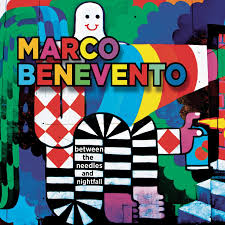
SOUNDTRACK: MARCO BENEVENTO-Between the Needles and Nightfall (2010).

This is the third album by Marco Benevento and his trio: Reed Mathis on bass and Andrew Barr on drums.

It’s hard to put this release into any genre because of how fluid Benevento is.  He has some poppy songs, some jazzy bits and some experimentation.

Most of the songs are pretty long (over 6 minutes) and none of the songs have words (well, one has a aspoken section).

“Greenpoint” flows around a very simple bass line as Marco plays a poppy piano throughout the song.  There’s also some synthy blasts that move the song beyond a simple piano motif.  Around the four minute mark, the song shifts gears, growing a little faster and little more intense as the drums crash through.

“Between the Needles” is a slower song with a pretty bass line and slow piano chords.  After a minute and a half it takes off a bit with bigger piano chords and a more dramatic tone.  But then it all slows down to just piano before building up again, this time with even more evocative lead bass.  “Two of You” is quieter, with a waverly keyboard line that lays under the lead piano  The main piano line acts like a lead vocal line and is really pretty and quite catchy as well.  It builds into a nice bouncy song by the end.

“Numbers” is a slow song with a lead bouncing bass and simple keyboard intro chords.  The song builds in layers until it is a loud, almost-crashing sound with some jazzy piano soloing on top.  “It came from You” is a super catchy piano melody with some complicated electronic drumming. It turns into a bouncy and fun romp by the end.

“Ila Frost” is one of the catchiest things on the album–a lively piano melody both in the repeated background and the main lead line.  It’s followed by the even catchier “RISD.”  In addition to the fun pulsing bass, the main echoing keyboard melody is simple but instantly catchy.

“You Know I’m No Good” is the shortest song on the disc.  It’s a slinky torch song that is actually written by Amy Winehouse. Knowing that, you can hear it in the delivery.  There’s a sort of crashing drum section in the middle.  This song also has the only vocals–worldless “da da daing” toward the end.

“Music Is still secret” is a lovely, slow jazzy ballad. While “Wolf Trap” is the opposite.  There’s some loud clangy drums and a big fuzzed up bass that matches perfectly with the really noisy piano melody.  Once the song starts going, there is some ferocious soloing from Marco as the rest of the band jams behind him.

The disc ends with “Snow Lake” an electronic kind of processed sounding track that mixes some interesting synths and some low ringing bass.  It ends with a wild cacophony of sounds–electric and otherwise–and then abruptly ends.

There’s not a lot of earworms on this disc.  But everything sounds great.  The musicianship is top notch and the songs are all pretty fun.

[READ: September 14, 2010] “Lucky Girls”

In this story, the narrator is an American woman living in India.

As the story opens she says she always imagined what it would be like meeting Arun’s mother for the first time.  She pictured a fancy restaurant with herself looking stunning.

But in reality, Mrs Chawla showed up at the apartment one day, unannounced.  The narrator had been living there for five years and had yet to meet the mother of the man who owned the place.

The narrator was in her painting clothes when Mrs Chawla showed up.  The narrator considered changing, but decided against it.  Mrs Chalwa was shorter than expected; she looked at the narrator as if she too were not what was expected. (more…)

Read Full Post »

SOUNDTRACK: MAGIC SWORD-Endless (2020).

Not long after the release of the Awakening EP, Magic Sword is back to conclude the story arc that the previous albums have created.

The Keeper (red, keyboard, audio-visual), The Seer (blue, guitar), and The Weaver (yellow, drums) are Immortal and they have seen a story like this one unfold many times.  So they are not surprised by the direction it goes in.

“Depths of Power” opens this chapter with a slow pulsing matched with occasional power chords.  “Invincible” adds a new sound palette to the band’s music.  This song sounds a bit more like Tangerine Dream but with some more contemporary techno type sounds.

“Aftermath” adds some swirling uneasy sounds to the album.  It contains curlicues of sound that wiggle around and segue into “Empress” which has a low rumble underneath the propulsive synths.

“Shores of Oblivion” is a more eerie soundscape of wind and slow pulsing waves of emptiness. When the fast melody comes from out of the waves it feels like something sinister heading right for you.

“rophecy” adds some light to the proceedings with an uplifting melody which is eventually corrupted by “Corruption” and turns into a more threatening tone.

“Ritual” introduces a fairly heavy bassline and some more modern sounding synths.  Then “A New Quest” returns to the pulsing sound of old.  “Hope” starts quietly but brings am uplifting melody that continues throughout the song.

“Endless” ends the disc with strings–ominous at first but which move into a more stately melody that fades out slowly over a long time–continuing endlessly

The band also released a single of “Invincible” with a remix by Waveshaper.  I don’t typically like remixes, because mostly they just dump a new drum beat over an old melody, but this one plays around with the song in interesting ways.  It turns it into something different without losing the original.  I rather like the new bass line they add to the song.

In the comic book, Magic Sword says that this ends the cycle.  Does that mean the end of Magic Sword … or the beginning of a new cycle?

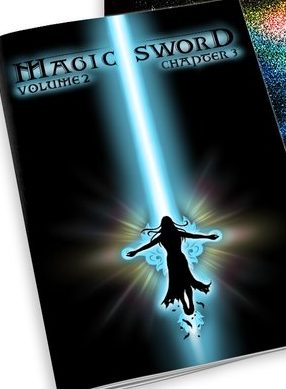
[READ: October 29, 2020] Magic Sword Volume 2, Chapter 3

Chapter 3 concludes this cycle somewhat unexpectedly for me (although it makes perfect sense once it is explained).

When Chapter 2 ended, Nayia came face to face (or more like face to big toe) with The Colossus.  It was the size of a mountain and seemed to be covered in bark.  It quickly grabbed hold of her with its tendrils, trying to burrow into her orifices.

But the power of the Magic Sword was still within her and it fought back where she couldn’t.  With its help she was easily able to best this beast.

But the story doesn’t end there. (more…)

Read Full Post »

SOUNDTRACK: MAGIC SWORD-Awakening EP (2019).

It took three years for Magic Sword, the instrumental band from Boise Idaho, to release chapter two of the second volume of their saga.  In that time, they had released individual songs, but for this entire seven song EP (and comic book), the year of the sword took much longer than expected.

The Keeper (red, keyboard, audio-visual), The Seer (blue, guitar), and The Weaver (yellow, drums) have continued the saga but have expanded their sound a bit.  They still sound like a 1980s movie soundtrack, but it’s a bigger budget movie.

“Herald” opens the EP with a deep-voiced narration of the opening page of volume one, the paragraph that sets up the story of the Magic Sword.  It segues into “Awakening” which sounds bigger than anything they’ve done while still retaining the recognizable retro Magic Sword sound.  Midway through the guitar comes in with a quiet solo that introduces a funky element to the song–there’s even the a kind of bass guitar element.  It is a slow opening that sets the tone of the album as we await “The Harbinger.”

“The Harbinger” is under three minutes and projects an ominous low tone as a distant, distorted voice recites a passage that I can’t make out.  It segues into “Lady of Light” which follows a pretty synth melody that mutates into a middle with a distinctly funky/disco bass.  “Reborn” bursts forth like a big 1980’s synth anthem.  But it quickly changes tone with a pulsing soundtrack and a ripping guitar solo.  It all resolves into the anthemic conclusion.

“Shadow” introduces a more sinister sound–both the harsh higher notes and the menacing low growling synth that works as a perfect segue to the album ending “Colossus.”  It continues like the rest of the album with just a hint more menace in the crashing drums and delays of the loud synths and an absolutely roaring guitar solo to close out the disc.

Magic Sword still sounds like the same trio, but they sound even more assured.

[READ: October 29, 2020] Magic Sword Volume 2, Chapter 2

Chapter 1 introduced us to Tayia, the chosen one.  She is pure of heart and is therefore eligible to wield the Magic Sword and restore balance.

But as The Keeper explained, the Magic Sword will take control of her body–she will become death.

As Chapter 1 ended, The Keeper stopped time and Tayia grabbed the Magic Sword.  As Chapter 2 opens, time resumes and the creature who was about to attack her, a member of the Kihlhi tribe, realizes she is no longer where she was (time did not stop for her).

He crashes to the ground.

Continuing with the parallels between this story and present reality, the Kihlhi was

Spouting vile hatred through slurred speech.

One can only hope that in reality the vile creatures also

had no idea of the mighty change that had overtaken and transformed his prey.

Tayia’s power and will merged with the will of the sword creating beautiful arcs of pink.  She fights effortlessly, including a full page scene of her dance/kick. (more…)

Read Full Post »

SOUNDTRACK: FRANCES CARROLL & HER COQUETTES featuring VIOLA SMITH-“Snake Charmer” (1939).

Drummer Viola Smith died a couple of days ago at the age of 107.  ONE HUNDRED AND SEVEN (a month shy of 108). That’s pretty fascinating in itself.  But even more fascinating is that she was an amazing drummer at a time when women didn’t play drums.  And not “amazing for a woman” or anything patronizing like that, check out the video of her playing “Snake Charmer.”

Check out her drum kit, check out the speed, check out the power.  Check out the arial toms and the way she hits them without it even seeming like she is. Wow, I wish I’d heard of her sooner.

Here’s some relevant quotes from an obituary in The Guardian

Smith took up drumming as a teenager in Wisconsin, when her father assembled the Schmitz Sisters Family Orchestra with his eight daughters. Her showcase was “The Snake Charmer,” a jazzy arabesque with explosive drum-fills.

Because she was the sixth daughter in the family, she said, her older sisters got the strings and brass.  “My dad said, ‘Now, we need a drummer!’ Thank God, I was it.”

In 1938, Smith formed another all-female orchestra, The Coquettes, with her bass playing sister Mildred. The band moved to New York in 1942, where Smith studied under the legendary snare-drum innovator Billy Gladstone.

In the same year, as men were being drafted to war and women taking their place in factories, Viola wrote a now-famous article for Down Beat magazine, arguing for the inclusion of women in the big bands of the day.

“Many of the star instrumentalists of the big name bands are being drafted,” she wrote, under the title Give Girl Musicians A Break! “Instead of replacing them with what may be mediocre talent, why not let some of the great girl musicians of the country take their places?

“We girls have as much stamina as men. There are many girl trumpet players, girl saxophonists and girl drummers who can stand the grind of long tours and exacting one-night stands. The girls of today are not the helpless creatures of an earlier generations.

Smith found it difficult to lead the orchestra from behind the drums, so she turned over those duties to Frances Carroll.  But at the height of her success, Smith performed with Ella Fitzgerald and Chick Webb, as well as at the second inauguration for the 33rd president, Harry Truman, in 1949.

I haven’t even mentioned how good The Coquettes are.  They swing big time and this song is really fun.  The only thing worse than hearing about a great musician after they have died is realizing that there are almost no recordings of her playing.

Here’s another page from The Future Heart with lots of videos and interviews with Viola.

[READ: October 26, 2020] “Nettle”

I really enjoyed the way this story opened.  It is about Willie, who, as the story opens, is a young boy.  Willie’s teacher told the class that she would be guarding them and that “not one of them would be lost, except the one who was destined to be lost.”

When the boy told his mother what Miss Rita said, his mother replied,

That happens to be from the Bible… When people take words from the Bible and repeat them to young children, or to anyone, for that matter, they’re nuts.  Don’t pay any attention to her.”

She says that maybe when he’s older he can leave that school and go to the one his daddy went to.

He would visit his daddy often in his room. His daddy was always playing the same piece to music.  He told his daddy about a book he was reading in class. His daddy replied that he had read that same book when he was younger: rewrite the whole thing. (more…)

Read Full Post »

SOUNDTRACK: PORTUGAL THE MAN-“Who’s Gonna Stop Me” (feat. “Weird Al” Yankovic) (2020).

Portugal. The Man and “Weird Al” (punctuation buddies, clearly) have worked together in various ways in the past.  But here is something totally weird for Weird Al.  He is providing serious verses to a serious song.

Portugal. The Man songs tend to be dancey and fun, but this song is quite serious (and the video is fantastic).

A quiet opening of drums and echoing keyboard notes.  The hook comes when the vocals speed up in the middle of the first verse.

There are some gorgeous “ooohs” and then Al’s verse comes.  Al obviously has a great voice–he can mimic anyone–he is perfectly matched to the original vocal line and his voice sounds great singing “sneaking out, jumping over backyard fences, we’re always looking for freedom.”

After some more of those haunting oohs, a loud drum fill introduces the second half of the song which elevates the song into a slightly more danceable section full of drums and voices.

And then comes the incredible hook of “toooooooo high!”  The vocal range from the deep “too” the soaring “high” is outstanding.

It sounds like Portugal. The Man are taking their music in yet another direction and this one is quite a good one.

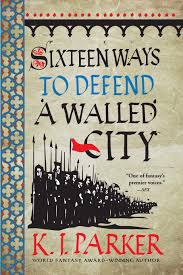
[READ: October 10, 2020] Sixteen Ways to Defend a Walled City

I read a positive review of K.J. Parker’s “follow up” to this book called How to Rule an Empire and Get Away With It.  When I picked up that book, I saw that the back cover said it was the follow up to Sixteen.  I assumed that meant it was a sequel and that I should read Sixteen first.  Well, Sixteen ends pretty definitively.  It turns out that Empire takes place seven years later and while I haven’t read it yet, I think it’s good I read this one first.

Also, K.J. Parker is the pseudonym of Tom Holt, a fantasy author I have not read but whom I gather I would like a lot.  So it was a good thing to read the review of Empire.

Parker has written several trilogies as well as a few stand-alone books.  I bring this up because I’ve read that some of the characteristics of this story reference other parts of his stories (this is a stand alone story, but I guess there might be parts that refer to his other books).

Like, for instance, the blues and the greens. These are two of the dominant races in the book.  I had a hard time telling them apart because there was no real introduction of either group. It was clear they hated each other, but I couldn’t figure out why (which I assumed was the point). At any rate, another reviewer says that the blues and greens are part of his other books, so maybe they are explained elsewhere.

The City appears to also be a thing that Parker likes to play around with.  In this book, the City is run by the Robur, a dominating group who have successfully conquered much of the surrounding lands. (more…)

Read Full Post »

SOUNDTRACK: THE DISTRICTS-You Know I’m Not Going Anywhere (2020).

You Know I’m Not Going Anywhere is a pretty radical departure from their last album and a huge leap from their debut.  There are a lot of moody pieces that play with atmospheric sounds rather than outright melody.  Which is not to say that there isn’t a nice catchiness to the album, just that it comes from a different place.

It opens with the haunting, spooky “My Only Ghost” which would seem very out of place on any other release but really sets the tone for the experimentalism on this album.  It’s a quiet piece with vocals sung in falsetto harmony.  It’s an appropriately spooky opening with backwards guitars and atmospheric sounds.  It’s not even obviously The Districts.  Although the next song, “Hey Jo” certainly is.

“Hey jo” mixes acoustic guitars with that uniquely Districts-sounding guitar tone and a storytelling vibe.  The song feels very restrained with a quietly spoken section at the end and a nearly whispered coda tacked on.

It’s with the third song “Cheap Regrets” that The Districts show what they are really taking chances.  They called this track “nihilistic disco,” and that’s pretty apt.  This song is a great mix of disco sounds and a stellar bass line, with an unexpected amount of keyboard (for them).  It also contains a fantastic lead guitar line after the verses.  It’s one of my favorite songs of the year.

“Velour and Velcro” sounds more like old school Districts but updated and with new polish.  The song is catchy and bouncy with some cool guitar sounds.  “Changing” introduces the slower moodier section of the album with gentle acoustic guitar and somewhat warped sounding electric guitar.  There’s a rollicking chorus, but the song retains a moody element that continues into “Descend.”  The song has a pretty acoustic guitar with an almost sing-along melody.  It ends with a trippy series of keyboard washes as the song drifts away.  It segues, appropriately into “Clouds,” another gentle song.

“Dancer” is a similarly moody number with swirly synths. But that fantastic bass line keeps the song grounded and very interesting.

Things rock out again with “Sidecar.”  The old looseness is back with plenty of doo doo, doo doos and screamed vocals from Grote, but the song never feels like its going to get away from them.

“And the Horses All Go Swimming” starts the end of the disc with some swirling sounds.  It builds slightly before moving on to the delicate “4th of July” with the pretty acoustic guitar and super catchy (if somehow off-sounding) whistle.

It’s great to see The Districts exploring new sides to their music, I just hope they never lose that loose, rocking side.

[READ: October 1, 2020] “Reborn to Run”

This is an excerpt from Bonner’s The Book of Atlantis Black.  The intro comment calls this a memoir, so I’ll assume it is.

This excerpt is 7 numbered short sections.

First we see that the narrator’s older sister Nancy decided to run away by hopping a train (when she was 12).  She was gone for several hours but when she returned she only replied “Wouldn’t you like to know?” when the narrator asked if she had done it.

When she was 13, Nancy climbed out her window in the middle of the night and walked the nine miles to school only to arrive on time for first period.

Section four is written in an interesting way. (more…)

Read Full Post »

« Newer Posts - Older Posts »