Feeds:
Posts
Comments

Archive for the ‘Culture Shock’ Category

SOUNDTRACK: tUnE-yArDs-WHOKILL (2011).

I bought this album because NPR was raving about it back in the summer.  When I first played it I was really disappointed.  rather than the interesting experimental music, it sounded like a kind of unpleasant R&B.  So I put it aside for a while.  And when I listened to it again, I was really blown away by it.

For those of you unfamiliar with tUnE-yArDs, there are three or four different singers in the band.  There’s the raspy voiced R&B singer that opens the album.  There’s the whispering vocalist and the spoken word backing vocalists of “Es-So.”  And there’s the rasta singer of “Gangsta.”  There’s the soulful male who sings “Powa” and the woman who can hit the amazing high notes at the end of “Powa.”  And all of those singers are named Merrill Garbus.  For she is more or less the one woman operation behind the band.  (I’m a little unclear if the rest of the musicians are part of her band or just session folks).

I have deliberately been avoiding reading about Merrill Garbus before writing this because I didn’t want to be influenced by reality.  I honestly had no idea who she was or what she looked like when I started listening to the disc.  I assumed, by her voice, that she was a black woman.  But then the liner notes talk about Jewish grandparents and the disc itself includes samples of them, and they are clearly white.  And then yes I saw a photo of her, and she’s quite white.  None of that is of any consequence except to really highlight the chameleonic nature of the music and how it really transcends genres.  That’s pretty awesome.

 The trick that you will read about ad nauseam about tUnE-yArDs is that Garbus loops her own stuff live.  It’s not screamingly apparent on the disc but you can certainly hear stuffed looped as the disc goes along.

This album made almost every best of year-end list.  And that surprises me somewhat because it’s not always easy listening.  “My Country” has all kinds of screamed parts, a staccato horn solo and a cacophonous ending.   The second song, “Es-So” opens with a some clunking drums and what seems like a slightly out of tune guitar playing a simple, aggressive riff.  The rhythm and tune of the song is infectious and yet so…odd.  “Gangsta” is one of my favorite songs of the year.  It opens with a great bassline and then several “sirens” which I suspect are Merril’s own voice.  It seems to end after 2 minutes but there’s more…a bizarre interlude in which the song seems to have a hard time starting up again.  (“bang bang bang oy, never move to my hood coz danger is crawling out the wood”).

“Powa” is probably my least favorite song on the album although I still like it.  It’s slow and kind of ballady but the vocals are just so wild it keeps it from being dull.  “Riotriot” is strange meandering song full of peculiar percussion.  It’s a bit too long, but there’s some really interesting parts, especially at about 3 minutes when the song suddenly turns into a psychedelic freak out.  “Bizness” opens with Garbus’ crazy distorted voice over some pretty descending notes (which I assume are from Garbus’ pretty singing voice).

“Doorstep” has a bunch of fast sha la las that I normally dislike but which work so well within the song and with Garbus’ amazing, angsty singing near the middle of the song.  “You Yes You” has some great guitar work in the beginning and a very fun segment that ends with a big “Ha!”  “Wooly Wooly Gong” is a cool slow song, minor key with delicate vocals.  The disc ends with “Killa” another great song featuring Garbus’ rough voice and scratchy guitars.

The whole album keeps you on your toes.  There’s something for everyone, but it’s all mashed together so it’s not always clear than anyone will like it.  It’s a really fun release and although it took me several listens to really appreciate it, I simply can’t stop playing it now.

[READ: January 9, 2012] Ghosts

I had planned to read this book a little earlier than I did, but then three holds came in from the library which pushed everything back (those were all new and this book, well, to be fair, I’m not sure it was ever checked out, so I was allowed to renew it).  The only bummer thing about it is that this entire story is set on New Year’s Eve, so it would have been nice to post it then.  Oh well, what’s two weeks?

So, this is the first novel by Aira that I have read.  I really enjoyed his short story recently and, since Roberto Bolaño is a big fan, I wanted to see what he had written.  As I’ve mentioned elsewhere, Aira has written approximately forty-five novels (!) (since 1981 (!!)) He had five in 2005.  Most of them are fairly short (Ghosts is less than 140 pages), so it’s not quite as daunting as it could be.  And for English readers, there are only seven books translated into English.  So now is the time to jump on his bandwagon!

This novel was translated by Chris Andrews, who has translated many of Bolaño’s shorter works as well.  I did notice one or two British/Australian spellings in there (Andrews is Australian).  But I am very impressed with the translation, especially the occasional fifty-cent words that were wonderful choices (I wish I had written them down).

The story itself is fairly simple, although there are waves of complex ideas that come throughout.  As I mentioned, the entire story is set on New Year’s Eve in Argentina (which, North Americans please note, is really really hot–like super crazy hot, which is a little disconcerting to read during a cold January].  It’s also almost entirely set in one building (there’s a quick trip to the market).  And the bulk of the story centers around one (extended) family.

But as it starts, we see something altogether different. The building in question is a condominium.  It was supposed to be finished on January 31, but, of course, it isn’t.  All of the families who have bought into the condo have shown up to see the proceedings.  They are pretty much all there at the same time although some are coming and others are going.  We learn a lot about the building itself, the pool on the roof, the rooms and cabinets, the elevators.  It’s a pretty nice place.  We meet most of the families who will be living there when it is finally finished. The kids love running around in the unfinished house, watching the workmen carting things away and being a mild nuisance.  But it’s basically a holiday so no one cares all that much.

Oh, and there are ghosts all over the building.  (more…)

Read Full Post »

SOUNDTRACK: ULVER-Metamorphosis EP (1999).

After Ulver’s first CD, they jumped around in genres (their second was a kind of folk CD and their third CD was more black metal–I have not heard either one).  Their 4th CD was the William Blake CD of crazed experimental music.  And then they released this EP.  And I can’t think of too many bands who keep their fans guessing as much as these guys do.  This EP is full on electronica.  Dark electronica, yes, but still, it’s all electronic.

There are four songs.  The first one, “Of Wolves and Vibrancy” is like  rocking dance song from the 90s (like The Prodigy).  The drums are quite intense.  While the second song, “Gnosis” is a slower, more ambient track. There are still loud drums, but the pace is slower and less manic. At around the 6 minutes mark vocals come in.  They sound like some of Metallica’s chanting voices on later albums.

Track three, “Limbo Central (Theme from Perdition City)” is less than 4 minutes long.  It’ s another dark electronic soundtrack with more great drums. 

The final song, “Of Wolves and Withdrawal” is almost 9 minutes of very quiet noises that grow louder in pulses. It seems to be three sections of different pulsing sounds.  The first time I listened to it, the opening was so quiet that I thought it was just all silence so I fast forwarded through the whole thing.  But because the pulses are so mechanically timed it didn’t even register as noises while as fast forwarded.  I finally had to turn it up pretty loud before I heard all of it. 

I was tempted to say that going from that first Ulver album to this one is a massive change.  But it seems that every Ulver record is a whiplash of stylistic changes.  Nevertheless, this is about as far from black metal as you can get and still be dark and scary.

[READ: November 4, 2011] “The Sun, The Moon, The Stars”

This is one of Díaz’s short stories that does not appear in Drown (it came out about two years after Drown).  It has been frequently anthologized, however, which makes it a pretty important story.

There’s a reason why I like to read author’s works in chronological order, and reading this story now confirms that for me.  The story, written in 1998, is the fictionalization of the essay, “Homecoming with Turtle” that I reviewed a few weeks ago (the one that I said pertained to Oscar Wao because of the turtle).  Well, there’s no turtle in this story, and there’s no dentists, but the rest of the story is pretty much the same as his nonfiction account.

After saying all of that though, what’s fun about reading this out of order is that since I know what the “truth” is about this situation, it’s fun to see what he has massaged into fiction.

So in this story, Yunior has been dating Magdalena for some time.  Magda is a good girl: wouldn’t sleep with him until they had been dating awhile, took him to church, introduced him to her parents, the whole bit.  And he really loves her.  The problem is that they only see each other once a week.

So, when a hot girl starts working at his office and she tells him that her man doesn’t treat her well and Yunior confides that the sex with Magda isn’t very good, well, things happen.  But they didn’t happen very often or for very long and Yunior tried to forget it.  Until the girl sent Magda a letter.  A very detailed letter. (more…)

Read Full Post »

SOUNDTRACK: THE STILLS-YOUNG BAND: Long May You Run (1976).

I’ve known the song “Long May You Run” for a long time, but I never really realized it came from a non-Neil Young album.  The album is by The Stills-Young Band and the history of the album may be more interesting than the album itself (in sum: CSN&Y broke up, C&N made and album so S&Y made an album.  C&N were supposed to be on the S&Y album but they fought and S&Y removed their vocals).

So what we get is nine songs.  Five written by Neil Young and four by Stephen Stills.  The songs are played by Stills’ solo backing band and while the credits suggest that they played on each others’ songs, it doesn’t really seem like it.  It seems like you get 5 Neil Young solo songs and four Stephen Stills solo songs.

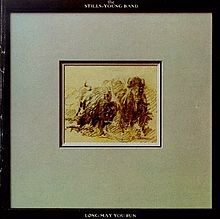
It’s also odd that the cover of the album shows buffalo running in the plains (nod to Buffalo Springfield, I’m sure) but so many of these songs are about water.  Maybe that disconnect feeds the whole thing.

By the way, “Long May You Run” is a catchy little country number that I never realized was about his car until recently.

Stephen Stills’ first song is the utterly unsubtle, possibly seductive in the 70s but hilariously outre in 2001 “Make Love to You.”  It’s full of 70s synths and has a very serious tone (despite the 70s synth).  And the lyrics, hoo boy:

Girl your body said everything and I know you knew/I wanna make love to you, make you feel all right/I wanna make love  to you, yes, it’ll take all night

Which is about as long as the shower you need to take after hearing that song.

“Midnight on the Bay” is a pleasant enough song from Neil.  It’s a bit too much into the 70’s-lite music genre for my liking, but it’s not too terrible.

The thing about Stephen Stills is I like his voice.  It’s unusual and unique and I like hearing him sing.  But man his lyrics are crazy.  I like the opening riff of “Black Coral” with its staccato piano.  Yet it seems like he’s got but one thing on his mind.  The song is ostensibly about being underwater:

Got to move slow/Take it easy down there/You’ve only so much air/When you get a little deeper/If you slow down/You might keep her/The sea, unforgiving and she’s hard/But she’ll make love to you/Show you glimpses of the stars.

But maybe that’s metaphorical.  Because when you go deeper, “I saw Jesus, and it made sense that he was there.”

“Ocean Girl” is sort of Neil’s answer to that song.  It’s got a very 70s wah wah sound and a very easy to sing chorus.  Consider it a catchy but inessential Neil song.  “Let It Shine” is also Neil’s song (and there’s more stuff about his cars here–so you know he’s really into it).  It’s a more substantial song than most of the rest although it has a very easy feel.

“12/8 Blues” (love the title) feels like an Eagles song (“Life in the Fast Lane” to be specific, although they both came out in the same year.  Hmm).  It’s fairly generic (like the title) but I like it (crazy time signatures are my thing, man).

“Fontainebleau” is an interesting angsty Neil song that I think would have done very well with CSN&Y.  I never really paid attention to the lyrics before, but it’s fairly interesting and the guitar solos are soft but cool.

The final song goes to Stills.  “Guardian Angel” feels like a combination of all of his other songs, and it’s probably his best on the disc.   It’s got the slinky 70s vibe of  the first song, the staccato piano and, interestingly a chorus that would sound great with the 4 part harmony of CSN&Y.  It also rocks harder than anything on the record (which isn’t saying all that much).  The end has a cool extended instrumental section which I rather like as well.

So this is a weird little hybrid record.  There’s some good stuff for Neil Young fans, although it’s far from essential.  I actually don’t know much about Stills’ solo work so I don’t know how this compares, but he does seem a little one-track here.

[READ: November 4, 2011] “He’ll Take El Alto”

I don’t read Gourmet magazine.  I’m not a foodie and it seems like it’s just a food magazine.  But here’s the second article in Gourmet by a writer that I really like.  The first of course would be David Foster Wallace’s “Consider the Lobster.”  Is Gourmet more than just recipes?  Does it often have contributions from respected authors?  Am I missing out?

This issue is the Latino issue, so it deals with food from Cuba, El Salvador, Puerto Rico and the Dominican Republic.  And Junot Díaz is our resident Dominican, so he’s given the task of talking up the cuisine.

Unlike Wallace’s essay, which was about a trip to the Maine Lobster Festival, Díaz’s essay is about how upper Manhattan (known as El Alto) has become a hotbed for Dominican food.

Díaz explains how when Dominicans first arrived in New York, there were no restaurants.  Dominicans had to eat Cuban food to approximate their home food.  But now that there are vast enclaves of Dominicans living in El Alto, there are excellent restaurants everywhere (the sure sign that a culture has made it is when you have people from other cultures as your waitstaff).

Díaz revel as his own and his friends’ and acquaintances’ preferences for favorite Dominican restaurants.  As this article is four years old and most of the places seem to be holes in the wall (which everyone knows serves the best food, even if they don’t last very long), I’m not going to bother saying which places they are or checking to see if they are still extant).  Okay, well, Malecon is still around, anyhow. (more…)

Read Full Post »

SOUNDTRACK: SUFJAN STEVENS-The Age of Adz (2010).

Sufjan Stevens has released a bunch of albums of beautiful orchestral rock.  It is multi-layered and complex with classical elements and all kinds of cool instruments.

And this album starts out with a beautiful acoustic guitar melody and Sufjan’s delicate vocals.  Although it is a far more stripped down song than usual, “Futile Devices” seems like it is heading in the standard direction.  But anyone who heard Sufjan’s Christmas album number VIII knows that he has been having some fun with electronics.  And they show up with a vengeance on track two, “Too Much.”

All of the multilayered noise that was once orchestral and (some might say) precious has been replaced by a cacophony of gorgeous electronic noises.  The beginning of the song reminds me of the sounds in Skinny Puppy’s “Stairs and Flowers” (how many Sufjan Stevens reviews mention Skinny Puppy?).  The song is nothing like Skinny Puppy once the vocals kick in–it’s catchy and delicate–but those electronics underpin the whole thing, bringing his pastoralia into the twenty-first century.  When I first reviewed this song I didn’t like it but once you get absorbed by Sufjan’s world, it’s an enticing place to be,

“Age of Adz” takes this electronic nonsense even further with an 8 minute brew of strange sounds and choral voices.  But he always manages to throw in some catchy parts, no matter how strange the song gets.

For me one of the highlights of the disc is “I Walked” it features one of my favorite Sufjan things–falsetto vocals in a beautiful but unexpected melody.  And this song has them in spades.  “Now That I’m Older” has a very disconcerting sound–his voice is slowly warbled and mournful.  It’s a beautiful melody that is alienating at the same time.

“Get Real Get Right” returns to his earlier style somewhat (there’s more layers of music, although the electronica is still in place).   “Vesuvius” is a beautiful song and “All for Myself” is another of those great falsetto tracks that I like so much.

“I Want to Be Well” eventually turns into a manic electronic workout in which he repeats the chorus “I’m not fucking around.”

But nothing compares  to “Impossible Soul” a twenty-five minute (!) multi-part suite of electronic chaos.  It’s a fantastic song complete with autotune (used to very cool effect), repeated swelling choruses (it’s like a Polyphonic Spree tribute), electronic freakouts, and acoustic comedowns.  All in a positive, happy message.  I can’t stop listening to it.  “It’s not so impossible!”

Sufjan continues to impress me.

[READ: November 10, 2011] McSweeney’s #9

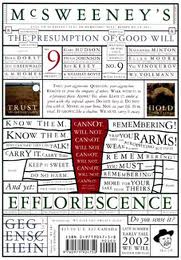
After the excesses of McSweeney’s #8, I was excited to get to the brevity (and urgency) of McSweeney’s #9.  This one is a paperback and looks like the first couple of issues.  The cover is mostly text with a hodgepodge of phrases and pleas.  You get things like: Thankful, Emboldened, The (Hot-Blooded/Life-Saving) Presumption of (Perpetual/Irrational (or More Likely, Irreducibly Rational) Good Will, Efflorescence, Our motto this time: We Give You Sweaty Hugs,” Alternative motto: ” We Are Out Looking,” GEGENSCHEIN (no more), and the promise: “We will Do Four This Year.”

This is the kind of issue that makes me love McSweeney’s.  There are some wonderful short stories, there are some nice essays and there are some dark moments all centered vaguely and tangentially around a theme.  There are some great authors here, too.

The back cover image is called Garden Variety by Scott Greene and it’s a fantastic painting.  You can see it here (navigate through the 2000-2004 paintings, but I have to say I really like the style of all of his work.

There are no letters and no nonsense in this issue.  So let’s get to it. (more…)

Read Full Post »

SOUNDTRACK: ARCADE FIRE-“We Used to Wait” (Saturday Night Live, November 13, 2010) (2010).

I know they played two songs that night but I just watched the rerun and they only showed one song.

I’ve always thought that Arcade Fire were pretty cool live.  And this set from SNL proves me right.  “We Used to Wait” comes from The Suburbs and it’s a pretty mild song on the record.  But live, the band plays with really weird sounds and explores different types of cacophony.

This is especially true from guitarist Richard Reed Perry (who plays all kinds of other instruments too).   He plays some of the more riff-based notes in the song, but he also plays some really loud, unusual chords as well.  Some of them are quite dissonant and they really bring a dramatic noise to the song.

The string section (three violins on this show) in addition to playing the strings also added some really cool dissonance.  In fact, the first time the strings came in, the sound was quite surprising.

I also love the percussive nature of the band.  By the end of the song it seems like half the band are banging on drums (while playing other things as well, no doubt). 

Win Butler is an intimidating frontman–I find his face to be open, almost blank.  He’s kind of hard to read.  He’s also very tall.  When he walks out into the audience in the middle of the song, it’s a little unnerving. 

One thing that I have liked about Arcade Fire from the beginning was their intensity, and this song certainly displays it.

[READ: November 7, 2011] “The Stain”

This is another Tessa Hadley story about a woman who cleans up.  It’s nothing at all like “Friendly Fire,” but I still think it’s interesting that she has another character who opts to do cleaning work.

In this one, Marina is a mother of a young boy, Liam.  To makes extra money she takes on a job as a house cleaner and “companion” to an elderly man.  He’s 89 and from South Africa.  He has recently come to Britain after his daughter (who has lived here for a long time) moved him here.  And the house where he lives is a house not far from where Marina lives.  Indeed, it’s one that she grew up looking at and wondering what it looked like inside (it’s a very big house).

The old man is notorious for making cleaning women go away–he is cantankerous and crotchety.  But Marina soothes him right away and they form a kind of bond.  Marina even brings Liam over a few times and he gets along quite well with the old man. (more…)

Read Full Post »

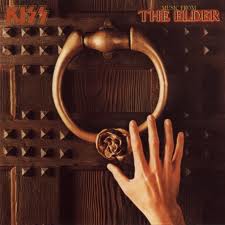
SOUNDTRACK: KISS-Music from The Elder (1981).

Kiss lost me on this one.  I had been a faithful fan for several years, even putting up with all of the haters in fifth grade.  But once I heard that Kiss was releasing an “opera,” well the heck with that noise.

Now, granted, I had no idea it was a rock opera or that Tommy was a rock opera.  I heard the word “opera” (thanks newspaper review that my grandmother showed me) and said, Nope.  Of course, I wasn’t the only one who said Nope.  This record tanked.  It tanked so bad that the band almost went bankrupt.

But the album wasn’t just an album.  It was mean to be a film (there’s even film dialogue on the record!) and Chris Makepeace (Woody the Wabbit from Meatballs) was meant to star in it–I love that the film credit info is left on the record packaging).  What could this film have been like….if only it were made!

At some point I decided to buy the LP (Who even knows where I found it on vinyl) and I was surprised by how much I liked it.  In fact, I find it much more preferable to Dynasty and Unmasked.  It’s less pop oriented, and some of the tracks rock harder than anything since Love Gun.  True, there’s weird pretensions on it, but even those are just experiments.

This album also features Eric Carr on his first Kiss record (what a strange place for such a heavy rocking drummer to start).

So yes the album does open with horns and fanfare (like an opera perhaps?), but the first song, “Just a Boy” is a gentle ballad sung by Paul.  It’s certainly wimpy, but I rather like it (as I’ve said many times, I love Paul and his swelling choruses).  And there’s some nice guitar work from Ace here.

“Odyssey” has strings and strings galore.  It’s a pompous swelling song that harkens to Destroyer, yet goes in a very very very different direction.  As a fan of epic pretentious music, I rather like it, but as a Kiss song it’s a disaster.  Of course, I have always enjoyed the jokey “Once upon….not yet” line.

“Only You” is Gene’s first foray on this album.  And I will state categorically that this period was not good for gene’s songwriting.  His songs are really quite dull and boring (when you think of the crazy, complicated bass lines and things he was throwing on songs just a few years back, dull songs like this are a shock).  What’s also a shock is that this song is a kind of gritty guitar song, again, much less wimpy than anything on Unmasked–fickle fans turned on the band without having heard the songs–sure they weren’t good songs, but they weren’t disco either.

“Under the Rose” is the exception to gene’s malaise.  It begins softly with Gene’s whispered vocals not unlike “Man of 1,00 Faces” but the chorus is heavy and chanted, foreshadowing what they would do on Creatures of the Night (although Creatures was heavier and faster).  The riff is also pretty solid, too.

“Dark Light” is Ace’s contribution to the disc.  It has a pretty heavy opening riff as well.  And the verse reminds me a lot of the kind of verse Ace has been writing for a while–simple chords with lots of words.  The solo is pretty much literally a solo–very little in the way of backing music while Ace wails away. Shame it’s not a very interesting solo.

“A World Without Heroes” is a very gentle ballad by Gene.  There’s a great commercial for this album in which you get to watch Gene sing this song.

The crazy thing of course is that he’s in demon make up.  If this were Kiss without makeup no one would think it was weird, but I mean, look at him, why is he singing songs like this?  It is once again an impressive display of Gene’s range though.  Nice guitar solo, too.

“The Oath” is actually one of my favorite Kiss songs, no irony intended.  I used to laugh at the lyrics, which yes are silly (but this is Kiss, come on).  True, it’s an odd mix of really heavy guitars and pretentious falsettos (along with a bizarre keyboard/swirly third part).  But there’s a bitching guitar solo and as I said, the guitars sound great.  And Paul manages all of those different parts very well.  It’s vastly underrated and worth checking out (especially if you like unexpectedly weird music).

“Mr. Blackwell” feels like a song from a movie.  It tells a bit of a story of a bad guy.  The music is incredibly minimalist (one note bass bits and very sparse guitars during the bridge and chorus).  Lyrically it’s dreadful–“You’re not well/Mr. Blackwell/Why don’t you go to hell”, but at least Gene sounds like a demon delivering it.  The solo is an amazing bit of noise though.

“Escape from the Island” is another high point on the record.  It’s an instrumental, it’s fast and it’s heavy.  And it’s got another great solo from Ace–it’s funny that Ace was dissatisfied with the direction of Kiss at this time because he gets to really show off on this disc.

“I” is another solid anthem from Kiss.  It ends the album in an upbeat way and if it weren’t on this dismissed album it would be on any Kiss anthems collection.  Paul and Gene both take turns singing and the chorus is chantworthy and fist pumpable.  They should release it on a new album.  They’re so into it in the recording that Paul even shouts “you feel it too, don’t you?”

There’s an interesting review of this album at Popdose.  The bad thing is that the site has links to lots of MP3 demos from the album, but they’re all broken links.  I’d like to hear those.

[READ: October 30, 2011] “Homecoming, with Turtle”

This is an amusing piece of non-fiction from Junot Díaz.  I’m grouping it with the Oscar Wao stories because it actually bears an impact on them.  It’s about a visit that Junot took eleven years ago (from 2004) back to his homeland of the Dominican Republic.

He hadn’t been there  in nearly twenty years and he decided to go with his girlfriend.  Of course, like Yunior in the novel, Junot cheated on his girlfriend before their trip and one of her friends told her.  This put some tension on their trip (and one even wonders why he persuaded her to go along after that).

Their trip began with a week volunteering in the DR for a kind of Doctors without Borders (but for Dentists)–they assisted dentists with extracting thousands of teeth.  It’s a strange thing to do and a strange (but generous) way to start a vacation, but the exhaustion and camaraderie at least kept them from killing each other. (more…)

Read Full Post »

SOUNDTRACK: KISS-Unmasked (1980).

It was hard to like Unmasked, but, being an 11-year-old boy, who loved Kiss, I never doubted its awesomeness.  Despite kids in school telling me Kiss sucked and, peculiarly, even the cover of this album telling me they stink (whose idea was that?) I knew in my heart of hearts that Kiss was the best.

In a stroke of marketing genius, this album teased the audience with the idea of finally seeing who was under these “masks” (which is weird since everyone knew they weren’t wearing masks, but whatever).  There’s even a poster that came with my vinyl copy!  Yahoo.

I just recently found out that “Is That You?” is a cover.  I always liked the high-pitched part of the song (“you always get the boys you like”), although in retrospect it’s really not very good–simplistic in a way that Kiss songs weren’t but then became.   I always joke about Kiss doing a tour and playing “Shandi.”  It’s such a cheesy ballad and yet I think it’s really good (for a cheesy ballad–Paul sings this type of song so well).  I constantly have the “there’s another mess I’ve got myself in” line in my head all the time.

I liked “What makes the World Go ‘Round” but even I can acknowledge that the song is pretty poor.  “Tomorrow” sounds like another song off of Paul’s solo album and probably should have been a huge hit.  In fact, they could have re-released it in the 80s and it would have fit right in with their non-makeup success–Paul’s soaring choruses are always a hit.  “Easy as it Seems” is kind of the album encapsulated in one song–very sleek, very soft, lots of choruses vocals and really kind of bland.   There’s even a wimpy keyboard solo (gasp!).

Ace was the star of Dynasty, and he gets three more songs on Unmasked.  “Talk to Me” is one of his repetitive songs that drives me a bit nutty (never liked that “talk to me-e” part).  It’s interesting how much Ace moved into prominence on these albums, especially since he was headed for the door soon.  “Two Sides of the Coin,” is a decent rocker, but listen to those crazy synth drums during the instrumental break.  “Torpedo Girl” is the most interesting track on the disc.  It has the cool opening “man battle stations torpedo,” a really funky (!!) bass line from Gene (who knew he had that in him) and a cool weird riff at the opening.  It’s then got a very catchy chorus (although honestly, “c’mon get your feet wet”?).

Gene has a bit more prominence here.  “Naked City” has a pretty menacing riff to open with, but Gene turns in one of his more melodic turns (with some pretty high notes in the chorus)!  The solo, while not blistering, is pretty great (as with Dynasty, the solos are too short).  “She’s So European” aside from being a really stupid title and lyric is the song that really puts this album over the edge–the twinkly keyboards, the “you ought to see her” falsetto, and, basically the same chord structure as “Living in Sin” on the verses.  Gene ends the disc with “You’re All That I Want,” a rather uninspired song that reminds me of the songs on side 4 of Alive II.

You’ll notice that Peter doesn’t get a vocal turn on this album.  In fact, he didn’t play anything on it at all (Anton Fig on drums again), but he was contractually obligated to appear on the cover (perhaps that’s why they did a cartoon).

No matter how much I listened to it back then, I can still admit that this album isn’t really very good.  Although interestingly, some of the songs and sonmg styles foreshadow the kind of music they’d play on Lick It Up: simple songs without a lot of substance, and that album was huge!

[READ: November 2, 2011] “Wildwood”

After reading “The Brief Wondrous Life of Oscar Wao” in the New Yorker, I saw that they had also published Lola’s “Wildwood” adventure as an excerpt from Oscar Wao the novel.

As you can see, this excerpt came out around the same time as the novel.  And as far as I can tell, this excerpt is exactly the same as the novel except for one line that was in the excerpt but not in the novel (the part in italics):

Hija de Liborio she called you after you picked your tia’s winning numbers for her and when you guessed correctly how old to the day she’d been when she left home for the U.S. (a fact she’d never told anyone).  You assumed….

The only other noticeable difference is that the first section of this excerpt is not really separated from the rest of it.  The first section is told in the second person, while the rest is in the first person.  In the novel, the second person section is set off by itself, so it’s a little less jarring when you jump to first person, but I think any reader could cope with that pretty well. (more…)

Read Full Post »

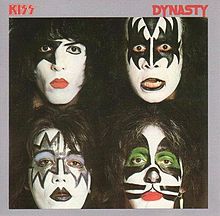
SOUNDTRACK: KISS-Dynasty (1979).

I was pretty excited to buy this album when it came out–a new Kiss album that wasn’t solo albums!  Woo hoo!  And the fact that it was disco?  Well, even though I said I “hated disco,” I didn’t really know what disco sounded like then (and really, aside from the middle “I Was Made for Lovin’ You” it’s not really a disco record) and plus my other favorite band was the Village People (and really, that makes a lot of sense–tw0 bands in over-the-top costumes talking about sexuality that I totally didn’t understand).

So, this album is hard for me to be critical about because it was such an essential part of my childhood, especially “I Was Made for Lovin’ You.”  I love it, and yet I can listen critically and appreciate that it’s really not that good.

But I’ll move on to the other songs.  “Sure Know Something” and “Magic Touch” really don’t seem that out of place chronologically with, say, the Kiss solo albums–they sound an awful lot like something off of Paul’s album.  So, despite the sort of slinky 70’s bass on “Sure Know Something”, they can’t have been that much of a surprise.  The guitar solos are short but have some interesting Ace sounds (I like the harmonics on “Magic Touch”).  It seems that while the other guys were embracing disco, Paul was keeping the Kiss sound alive.

Then there’s the Ace songs.  “2,000 Man” made total sense as an Ace song. I had no idea it was a Rolling Stones cover until fairly recently (and I like Ace’s version much better).  “Hard Times” feels like the sequel to “New York Groove.”  Not the music so much although maybe a little, but the lyrics–now that he’s in the city here’s what happened–the gritty reality. It’s one of Ace’s great, lost songs.  And check it out, Ace sings on three songs here!  (Guess having a #1 hit wasn’t lost on the Kiss powers).  “Save Your Love” has a cool descending chorus and a nice bass feel to it.  Ace certainly wins on this record.

Peter got only one song, “Dirty Livin'”.  In fact, this is the only song that Peter had anything to do with (his drums were re-recorded by Anton Fig).  It reminds me (in retrospect) of the Rolling Stones disco era even more than “2,000 Man,” the backing vocals remind me of something like “Shattered.”  I always liked this guitar solos on this (cool feedback).  Although I liked the song (along with the rest of the album), I don’t think it holds up very well.

Gene only gets two songs.  It amuses me how little he has to do with these late 70s albums even though he is always the leader of the band.  I always liked “Charisma” (I had to look the word up back then) even though it is, admittedly, rather discoey and really not very good.  It is fun to ask “What is my…charisma?”  But “X-Ray Eyes is the better Gene song on this record.  It harkens back to earlier Kiss songs and even has a bit of menace in it.

So, Dynasty was a huge hit for the band.  And they even got to mock it in Detroit Rock City the movie.  Cynical marketing ploy or genuine fondness for disco?  Who would ever know.

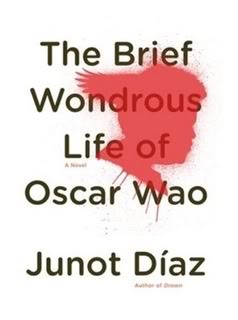
[READ: November 1, 2011] “The Brief Wondrous Life of Oscar Wao”

Readers of this blog know that after finding an author I like, I will try to read everything that he or she has written.  Close readers will know that if a writer is reasonably young and reasonably unpublished, I will try to read his or her uncollected work as well.  Well, I really enjoyed Oscar Wao the novel, so I decided to see what else Díaz had written. There’s really not a lot, to be perfectly frank.  There’s his short story collection Drown and a few fiction pieces published here and there (mostly in the New Yorker) and a few non-fiction pieces as well.

So this “short story” from the New Yorker (with the same title as the novel) is in fact an early, mostly the same, version of the Oscar story in the novel.  The thing here is to note the date: 2000(!).  The novel came out in 2007.  So, Junot had been working with this character for easily five years (giving time for the publishing industry to get a book out and all). The remarkable thing the is just how accomplished and polished this piece is and how much of it was used in the novel.

I’m curious to know whether this was written as a short story (it’s quite a long short story) or if it was always intended as a part of a novel.  Interestingly, when you read this story by itself and you realize that it is pretty much all of Oscar’s story in the novel, you realize just how little of Oscar is actually in the novel.  The novel is about Oscar, obviously, but it is really about his family and the fukú that was placed on them by the Trujillo clan.  Oscar is sort of the touchstone for the fukú, and the person whom the narrator knows most intimately but his story is also brief. (more…)

Read Full Post »

SOUNDTRACK: COLIN STETSON-Live at All Tomorrow’s Parties, October 4, 2011 (2011).

In addition to playing SXSW, Colin Stetson also played All Tomorrow’s Parties, and NPR was there.  Unlike with SXSW, this set appears to be full length (about 50 minutes–which is a pretty amazing amount of time for him to blow that horn).  Like SXSW (and the album) Stetston starts with “Awake on Foreign Shores” and “Judges.”  What I love about this recording is that after Stetson finishes “Judges” a guy in the audience shouts (in a voice of total amazement) “That shit was off the hook!”  And he is right.  It’s not even worth me going into how amazing Steston is once again (check previous posts for  that), but man, just look at the size of that horn he’s playing (seriously, click on the link to see it bigger).

Stetson plays a few more songs from New History Warfare, Vol. 2: Judges like “The Righteous Wrath of an Honorable Man” (which is outstanding) and “A Dream of Water” (which works without Laurie Anderson, although he does say he’s sorry she’s not there).  He also introduces two news songs “Hunted 1” and “Hunted 2” which show new levels and new styles that Stetson employs.

This is a remarkable set, and Steston is clearly in his element (and the crowd is rapt).  The only problem I have is the recording level.  It must be very difficult to maintain recording levels for Stetson’s brand of noise–his louds are really loud–but you can’t hear him talk at all.  And most of the time, the introductions to his songs are worth hearing.  I’m sure if they tried to get the speaking level a little louder the music would have sacrificed though, so I think they made the right choice–I only wish there was a transcript available.

[READ: October 31, 2011] The Brief Wondrous Life of Oscar Wao

Apparently it’s pronounced, “Wow”, by the way.

Because of my new job, I don’t have a  full hour of lunch-time reading like I used to.  And so this book took considerably longer than I intended.  However, once I set aside some time to read it, I flew through the book.

I’m going to get this part out of the way because I was thinking about it throughout the book and I want to mention it without having it bog down the post.  This story reminded me a lot of Roberto Bolaño.  On the surface, sure this is because they are both writers from “Central America” (Diaz is originally from the Dominican Republic but moved to the US, while Bolaño is originally from Chile but moved to Mexico and then Spain).   But I’m not really talking about their origins so much as the style of storytelling.

Without going into a lot of Bolaño here, I’ll just say that Bolaño tends to write very detailed character studies–stories that follow one person throughout his whole life on something of a fruitless quest.  And the details of that person’s life include information about family members and distant relatives.  Further, Bolaño has written about the brutalities of both Chile and Mexico and how a person can survive in such a place.  Similarly, Díaz follows the life of Oscar and his extended family and he talks about the brutalities of the Dominican Republic.

This is in no way to suggest that there is any connection between the two writers. I mean, The Savage Detectives came out in the States in 2007 (same years as Oscar Wao) and while he certainly could have read it in Spanish, I have no evidence that he did (and as I recently found out, the first draft of the Oscar story was written in 2000).  Again, the parallels are only from my reading and have nothing to do with Díaz himself.

Okay, now that that’s out of my system…

This is the story of Oscar de Leon.  But more than that, this is the story of a fukú–a curse that befalls the de Leon family and follows them through several generations.  Oscar is the youngest member of the family and the person whom the narrator knows best.  So we see this fukú as it impacts Oscar.  And although the book is ostensibly about Oscar, it is about much more.

Oscar was born in Paterson, NJ (the town next to where I grew up!) and went to Don Bosco Tech High School (where many of my friends went).  Oscar is Dominican (his mother is from the DR, but he and his sister were born in NJ), but unlike every other Dominican male, Oscar is totally uncool, into geeky sci-fi and D&D and is clearly destined to be a virgin because he is fat with terrible hair and no social skills.

And, (no spoiler), as the title states, his life will be short. (more…)

Read Full Post »

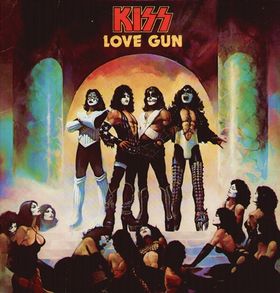
SOUNDTRACK: KISS-Love Gun (1977).

This was the first Kiss album I’d ever heard.  I’ll never forget my cousin bringing it to Long Beach Island in the summer of 1977.  I loved “Christine Sixteen” (of course, I was 8 and had no idea what it was about, I just loved singing it).  And the album has always held a magical mystique for me.

And even now I think the opening guitars of “I Stole you Love” are fantastic–fast and furious.  And the processing (or is that harmonizing) on Paul’s vocals make this song so urgent it’s really amazing.  I also got a kick out of the “guitar!” comment before the solo–certainly not the first band to do it, but surely the first I’d ever heard (they may be the first to say “Listen” at the end of a solo, though).  “Christine Sixteen” is a preposterously poppy song (listen to the bouncy, happy piano!), how could an 8-year-old not love it.  It is, of course, utterly creepy when Gene sings it now, (actually, my calculations show that he was 27 when he wrote the song–still pretty fricking creepy–and in some places, illegal).

The choppiness of “Got Love for Sale” makes the song different from many other Kiss songs, which were all about flow.  The guitars are choppy, the drums are choppy: t’s pretty cool. It’s all hard and heavy (except for the doo wopping “got love for sale” backing vocals).  Ace Frehley finally gets a lead vocal turn on the awesome “Shock Me.”  This has always been one of my favorite Kiss songs although listening to it now it sounds a little weak on this album (really uninspired backing vocals, eh?) but the solo is ripping–and the live versions are much more intense.

My first version of Love Gun had a skip at the beginning of “Tomorrow and Tonight” which made me not like the song very much.  Now I just think of it as a piece of filler–it sounds like it could come from Paul’s solo album (what’s up with the backing singers?).  I assume that they were trying to dip into the anthemic power pop well one too many times with this one.    But all is forgiven with the next song, “Love Gun.”  Yep, sex metaphors abound in Kiss, but this one is pretty awesome.  Beyond that, the sound of the guitars is great: the powerful power chords and the amazingly full chorus are also great.   And the staccato drums (and blistering solo) obviously make the song genius.

The rest of “Side two” is pretty interesting.  “Hooligan” is an odd little number.  It’s Peter’s song and it swings–Peter was always more into older rock than anything else, and this song, if it was stripped of its rougher edges (and cool solo) would fit pretty well on any of Peter’s (not very rocking) solo albums.  Although “dropped out of school when I was 22” is a pretty great line.  “Almost Human” is a weird song with some crazy guitars.  The solo is absolutely insane–I’d love to have seen the recording of it–just noises upon noises, very cool.  And the music itself has an odd eastern feel.  There’s great vocals and effects and all kinds of interesting things going on.  It’s an overlooked gem from this disc. 

Then there’s “Plaster Caster” the song about the woman who makes plaster casts from rock singer’s penises.  I still laugh at the euphemism of “if you want to see my love, just ask her”.   I’ve always loved this song even though listening to it now, it sounds kind of anemic (of course, the guitars were sampled in Tone Loc’s “Funky Cold Medina” so that’s got to mean something, right?) 

The album ends with a cover of “Then She Kissed Me.”  Even though Kiss likes that kind of music, I never did, so this song has always been my least favorite song of all of the first six Kiss albums.  But hey, the album runs 32 minutes in total–without those three minutes, you’re under half an hour.  That’s why I assume it was included.  The solo is nice though.

The album is pretty heavy overall and has some great guitar solos from Ace.  They’re not as anthemic and pretty as on Destroyer but they really show off his guitar skills.  And even though I tend to like Destroyer, Love Gun might be #1 for me on any given day.

[READ: October 4, 2011] “The House on Sand Creek”

This short story was on the surface very funny even though underneath there was exceptional sadness.  The events that set the story in motion are pretty unlikely–a couple rents out a property sight unseen (as if–especially since he is a realtor) and it turns out to hold so much karmic malfeasance that it quickly makes the wife, Monika, flee the god forsaken countryside and fly back to Bosnia. 

The narrator falls into a rhythm with his neighbor Bob (this part of the story reminded me of parts of Wells Towers’ stories–two men, out in the middle of nowhere, bonding despite obvious differences).  But the story quickly moves back out of Tower territory when the narrator gets a call from Monika (about two years after she left).

Her new marriage in Bosnia didn’t work out and she’s moving back in with him and bringing her new son as well.  (Again, it seems unlikely that this could just happen–that she would just call and say she was moving back in with him after two years, but whatever, it moves the plot).  And so, the narrator and his ex-wife move back in together with Monika’s son, Karel.  Karel is the son of an African man and Monika hopes he will grow into a Mandingo (this seems unlikely since the boy’s father is actually a short neurosurgeon from Yoruba–a West African village). (more…)

Read Full Post »

« Newer Posts - Older Posts »