Feeds:
Posts
Comments

Archive for the ‘Communists’ Category

I’ve waited to post this, my wrap up of ideas abut 2666, until I saw what others had to say about it.  Which is kind of a cop out but also kind of understandable.  This book is a giant mess of information, and I’m not entirely sure how to process it all.  So I’ve been looking for help.  And I’ve gotten some, but it’s all kinds of contradictory.  Most people seemed to hate the book.  A few people enjoyed it somewhat, and one or two people really felt moved by it.

I think I fall squarely in that middle camp.  As anyone who has been reading here knows, I became obsessed with Bolaño’s books, and read all of his short fiction (saving Savage Detectives for a read in a few weeks).  And yet I’m not exactly sure WHY I felt compelled to read these stories.  (I’m very glad I did…there will be more on Bolaño himself in a day or two).

I’ve decided to look back over what I wrote to get a sense of what I thought of the book (I knew these posts would come in handy). (more…)

Read Full Post »

SOUNDTRACK: THE DEAD MILKMEN-Chaos Rules: Live at the Trocadero (1994).

It wouldn’t be a complete look at the Dead Milkmen without mentioning their one live release.

Chaos Rules is a surprisingly good live set (taken from two separate concerts).  They had to leave all of the songs from their Hollywood Records discs off this collection, so this comes across more as a classic concert rather than a comprehensive one.

The band sounds great and the songs sound pretty close to the originals.  Not that the originals were hard but it wasn’t always obvious whether the Milkmen were doing what they were doing on purpose.  This set suggests that they were.

As any good live band, they play around with their songs, being surprisingly angry about local politics and changing the (by then twenty year old) “Bitchin Camaro” intro to reflect that.

The only reason it would have been nice if they had been allowed to include some of the Hollywood Records songs (they do sneak one in under a different name) would be to see if they played them any differently.  Since the early tracks are pretty chaotic, I wonder what would happen to the latter, more mellow songs.  Did they stand up under the weight of the nonsense or did they become more ramshackle as well?

I guess I’ll never know.  This is not essential by any means, but it is an interesting artifact for the curious and is totally enjoyable for DM fans.

[READ: April 23, 2010] Distant Star

Because Bolaño never does anything typical, this novella is a spin-off of sorts to Nazi Literature in America.  The introduction states that “in the final chapter of my novel Nazi Literature in America I recounted, in less than twenty pages and perhaps too schematically, the story of Lieutenant Ramirez Hoffman…which I heard from Arturo B.  He was not satisfied with my version…So we took that final chapter and shut ourselves up for a month a half in my house in Blanes, … where we composed the present novel.  My role was limited to preparing refreshments, consulting a few books and discussing the rest of numerous paragraphs with Artuto…”

Okay, there is so much wonderful deception in just this introduction to this book it totally cracks me up.  (Arturo B has long been a stand in for Bolaño himself). In the original, the narrator is named Bolaño (he is the narrator in jail who eventually helps the detective locate the poet).

For yes, the story is the life of a poet who is also a murderer.  And, the story is pretty much the same as the 20 or so pages of Nazi Literature.  It is now an extended meditation on this particular poet.  All of the events that were present in the short version are here, they are all just fleshed out with Bolaño’s wonderful details and full biographies of other characters.

The big, weird thing though is that almost all of the names have been changed (to protect the guilty?).  So even though the poet of this book has the same exact  life story as Lieutenant Ramirez Hoffman, he never has that name in Distant Star (and he goes through several pseudonyms).  There are twins in the short version who now get new names.  Even the poetry teachers have different names.  However, the detective who hunts him down at the end has the same name.  Weird.

The book works as a critical assessment of the Allende administration (which is why the real Bolaño was imprisoned).  But on to the story. (more…)

Read Full Post »

SOUNDTRACK: THE DEAD MILKMEN-Stoney’s Extra Stout (Pig) (1995).

Of course, I can’t forget the Milkmen’s final release!  But, in fact, I had forgotten about it, so much so that when I played it again, I was totally surprised to realize that I knew and liked a number of these songs quite a bit.

This disc was their return to Restless records, and it almost feels like their detour to Hollywood never happened.  Back is the dominace of Rodney Anonymous’ songs andthe more chaortic, frenetic guitar work of thier earlier discs.

It opens with “Peter Bazooka” a dark meandering song that features the one consistent thread on this disc: most of Rodney’s verses are spoken rather than sung.  Which is fine, except the songs somehow feel more noveltyish when they’re delivered this way.  So even if a song like the second track “Train I Ride” is just as silly as any DM song, because it’s sung it feels more like a proper song than a novelty.  “The Girl with the Strong Arm” is even more frenetic than “Joe Bazooka” and it’s another rant (although with a more singable chorus).

But a song like “Helicopter Interiors” sounds like classic DM: simple clever guitar line, raucous guitar, and it’s under 2 minutes long.  And, while the back half of the disc is less exciting than the front, the rocking “Chaos Theory” is good fun: “Study hard and you’ll have a future, oh yeah when the hell was that ever true?”

But Joe Jack Talcum’s songs are not absent from the disc.  He appears first on “I’m Flying Away” a slow, reggae tinged track that feels too anemic to have ever been a hit.  “The Man Who Rides the Bus” is a rocking, more catchy track although again it’s missing anything even resembling a hit.

A couple songs do overstay their welcome: “Blues Song,” a parody of the blues (yawn) is over 4 minutes long (yes, the solo section is pretty funny).  Although even a lesser song like “When I Get to Heaven” is enjoyable enough (the return of odd vocal effects is also welcome).  The only real failure is the horn-fueled pseudo funk of “Crystalline.”  At this point I’m not sure if it’s wise for the DM to bust so far out of their comfort zone.

Joe Jack sings the final three songs.  “Khrissy” is a trebly love song, “Like to be Alone” is a piano ballad that doesn’t really go anywhere, but the final song “Big Deal” is a another negative song package as a humorous uplift anthem.  It concludes the DM’s output on a high note.

I’m not sure if the band should have done more after this.  And of course, there is much sadness that bassist Dave Blood killed himself a few years ago.  But I understand they still tour and they keep their website active.  DM are a wonderful staple from my college days, and I thank them.

[READ: April 16, 2010] Monsieur Pain

It is not lost on me that while I was reading a book called Monsieur Pain, I was stricken with an abscess in my cheek.  It swelled as if there was a softball in my mouth and it hurt like a mother.  And, since this happened while I was on vacation, I had the delight of going to a Virginia Urgent Care center carrying this book around with me (and the medical services were excellent, thank you all).

Of course, the Pain in the title is not a man who inflicts pain or anything, it’s just his name.  I was wondering if, since he is French, if the Pain is to be translated as “bread.”  That is never addressed.

This story exemplifies the fascinating twists and turns that Bolaño puts in his books (this one was one of his first).  In the introductory note to the book, he states that he wrote this story in 1982 and then submitted it to two different fiction contests under different titles.  He won both contests.  (Ha!).  The other fascnating thing about this story is that most of the people are real.  And while yes, that is a conceit he uses in a lot of his stories, in this one the real people are the main people: César Vallejo was a real poet (and did have the hiccups) his wife was real, Pierre Pain was indeed a mesmerist, and of course Madame Curie is real, too.

The story itself was fascinating and sometimes difficult.  (I had to re-read the scene in the movie theater a few times to get the total picture).   It is written from the point of view of Monseuir Pain.  He is contacted by Madame Reynaud (a woman he is sort of in love with, especially now that she is widow) who urgently requests that he go to see someone “profesionally.”  The someone turns out to be the husband of her friend Mrs.Vallejo (who turns out to be the poet César Vallejo–although plotwise that is not important).  She says he is dying from the hiccups. (more…)

Read Full Post »

SOUNDTRACK: PHISH-Joy (2009).

This is basically Phish’s reunion disc (after a 5 year hiatus).  It opens with one of their poppiest songs, “Backwards Down the Number Line” a song that picks up where their least disc left off: with a feeling of driving down a country lane with nowhere to go, windows opens, just happy to be alive.  The second track, “Stealing Time from the Faulty Plan” is a delightful rocker with a supremely catchy chorus “got a blank space where my mind should be….”

The third track, “Joy” starts as a simple piano ballad, but quickly morphs into one of the prettiest songs I’ve heard in ages, an outrageously happy upbeat tender song: “We want you to be happy, cause this is your song, too.”

“Sugar Shack” is a delightfully funky song, recognizable at once as one of Mike’s songs.  It’s a simple, pleasant enough track, but somehow Mike’s voice sounds weaker than usual.

“Ocelot” is a silly track (and one of my favorites) while “Kill Devil Falls” is a bluesy number that will easily be a lengthy jam live.  It’s my least favorite track on the disc, but it is followed by a more upbeat future-jam called “Light” which features delightful multi part harmonies.

The highlights of the disc are the final two songs: the 13 minute “Time Turns Elastic” and the five-minute “Twenty Years Later.”  “Elastic” is a wonderful non-jam, a thoughtfully constructed epic with many parts (although not an elaborate prog rock track or anything).  It’s catchy and moving with sweeping grandeur and easy to sing parts.  And it melds wonderfully into the delicate multipart gorgeous final track.

This is a really strong, mature disc from Phish. There’s not a lot of silliness or nonsense, just some great uplifting gentle rock songs.  It’s quite wonderful.

[READ: Week of April 19, 2010]  2666 [pg 766-830]

This penultimate section of 2666 (the end is nigh!) settles down into an almost pasotral recollection of Archimboldi (the man formerly known as Reiter) as a writer (yes the pronunciation of his name is not lost on me, although I assume it doesn’t have the same connotation in German).  And while it is not all happiness, there is more joy in these 60 some pages than in most of the rest of the book combined.

But before we get there, we have one final moment with a war criminal.

(more…)

Read Full Post »

SOUNDTRACK: VAMPIRE WEEKEND-Contra (2010).

I absolutely loved Vampire Weekend’s debut album (and still do).  It was my favorite record of last summer and always makes me think of summer fun and hijinx.  Critics trotted out the “world/ethno/Paul Simon” vibe when discussing the album.  But I really didn’t hear it.  I mean, yes  I suppose it was there but the album felt more like a punky ska album of fun.

On this, their follow up, it’s as if they took all those critics to heart and decided to make the album that everyone was describing. This disc emphasizes all of the ethnic music sounds,  and downplays the guitars and more rock elements.  I was a little disappointed by this on the first listen or two.  However, subsequent listens showed me that the songwriting was still there and it was just as strong.

There’s still lots of rocking elements, it’s just that they are hidden under the other divergent influences.  But for the most part, the album is still bouncey and full of fun summer tunes.  There are three songs that slow down the pace, “Taxi Cab” and “Diplomat’s Son” (at 6 minutes, it’s a little long).  And the final song “I Think Ur a Contra” is a bit too divorced of beats (it works as an end to the disc, but I’d never listen to it on purpose).

The rest of the disc however, is very enjoyable, and I find that the 7 other songs work just as well as anything off the debut. “Horchata” is a delightfully fun world music treat (I hear Paul Simon, yes, although come on, Graceland came out 24 years ago!).  “White Sky” has delightfully catchy falsetto screams.  “Holiday” is practically classic ska and “Cousins” has a delightfully tricky guitar riff.

This feels like a band who has matured and experimented and yet not lost track of who they are.  I’m really looking forward to their next release.

[READ: Week of April 12, 2010]  2666 [pg 702-765]

Last week I concluded that

It almost seems as though Bolaño is saying that even Nazi Germany is better than Santa Teresa.

Oh how wrong I was.  Despite the fact that I found the bulk of this section enjoyable and fascinating (twisted and dark certainly, but fascinating nonetheless), the ending killed me.  The opening’s entire writers among writers, within writers, with communist party members and secret diaries was completely captivating.  And then it is all shattered by the reality of WWII. (more…)

Read Full Post »

SOUNDTRACK: THE DEAD MILKMEN-Soul Rotation (1992).

And lo, the Milkmen grow up.

This disc is not funny (well maybe, a little funny); mostly it is  “thoughtful” (and sometimes absurd).  But what is most striking about it is how mature (mellow) it is.  For this is the first album by The Dead Milkmen on Hollywood Records (a subsidiary of Disney).  This combination raises far more questions than is worth looking at.  But suffice it to say that even though this disc is the Milkmen, its a very different Milkmen.

The most obvious difference is that the majority (10 out of 13) of the songs are sung by the artist formerly known as Joe Jack Talcum, now known as Butterfly Fairweather (perhaps Hollywood knew that “”Punk Rock Girl” was their big hit?).  Past DM records were mostly sung by Rodney Anonymous (who goes by H.P. Lovecraft on this disc).  And his were the heavier, weirder, funnier, absurdist tracks, for the most part.  So, when the first four songs here are sung by Butterfly, you know something different is afoot.  Oh, there’s horns on the disc as well!

The disc feels like a pretty typical alt-rock band from the 90s.  But it’s missing the sass, it’s missing the vulgarity.  Basically, it’s kind of dull.

That’s not to say there aren’t good songs on here, because there are.  “If I Had a Gun” is a great screamy Butterfly song, and “Wonderfully Colored Plastic War Toys” is full of Lovecraft’s snark. As is “The Conspiracy Song” a lengthy rant of absurdity.

The rest of the songs drift between mellow and alt-rock rockers.  And it works as a product of the alt rock 90s.  It’s just not much of a DM album.

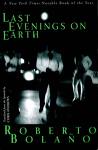
[READ: April 8, 2010] Last Evenings on Earth

I have been reading Bolaño’s short stories for a while now.  And so I have read a couple of the stories in this collection already. The stories in this collection were taken from his two Spanish collections of short stories: Llamadas telefônicas (1997) and Putas aseinas (2001).  And I have looked at about a dozen sources but I can’t find which stories came from which original collection (I like  to know these hings).  I can’t even find a table of contents for the original books.  Anyone want to help out?

I enjoyed these stories more than I expected to.  I have read some of his stories in The New Yorker and elsewhere, and I’ve been okay with them, but this collection blew me away.  Whether it’s being immersed in his writings or just having them all in one place, I was thrilled by this book.

There so many delightful little things that he does in his stories that I find charming or funny or something.  Like that his narrators are usually two or three people removed from the details.  Or if they’re not, they act like its been so long they doesn’t need to get all the details right:  “U insults and challenges him, hits the table (or maybe the wall) with his fist” (“Days of 1978”).

I also get a kick out of all the stories with the protagonist named B.  Which seems a not so subtle way of saying he’s the narrator (even though I ‘m sure these things never happened to him quite like it says (despite all the biographical consistencies with his own life).

The opening story “Sensini” has the narrator working as a night watchman at a campground (much like Enric in The Skating Rink…a bit of biography perhaps?).  A number of his stories are simply biographies of interesting characters (something he went to extremes with in Nazi Litearture in the Americas): “Henri Simon LePrince” a failed writer in Post-WWII France.  “Enrique Martin” a delightfully twisted story about jealousy (aren’t they all, though?) and acting impulsively and foolishly (aren’t they all though?).  This one featured  a riddle that I’m not even sure we’re meant to get:

3860+429777-469993?+51179-588904+966-39146+498207853

which the narrator thinks is a word puzzle. (more…)

Read Full Post »

SOUNDTRACK: THE DEAD MILKMEN-Metaphysical Graffiti (1990).

You know that it would be untrue, you know that I would be a liar if I were to say to you I didn’t set your house on fire.

You don’t have to be a philosopher to appreciate the joke of this album title (actually that may hurt the joke a little). But the “runes” that accompany the disc are quite amusing.

I haven’t listened to this disc in ages, and it turns out that I remembered about half of these songs really well.  And that’s because half of the songs are really good.  And the other half are, well, okay.

It opens with a children’s chorus which morphs into one of their heaviest rocking (although fairly uninspired) songs, “Beige Sunshine.”  The disc comes into focus with track two: “Do the Brown Nose” a funny song that outlines exactly how to do the titular dance (although at nearly 5 minutes, it’s a bit long).

The single (!) “Methodist Coloring Book”: features Joe Jack Talcum singing (clearly his success with “Punk Rock Girl” had an impact on that decision).  But on this track, he sings with a dark and distorted voice (which pales to Rodney’s dark voice) and is less interesting than his whiny normal singing voice. It’s a good song (and amusing) although as a single it’s less than successful.

I’ve always enjoyed the premise of “I Tripped Over the Ottoman” although I’m not sure it’s a very good song.  While “If You Love Somebody Set them on Fire” is funny and catchy (and astonishingly irritating with the screechier higher register notes in the chorus).

“In Praise of Sha Na Na” makes the valid point that they played at Woodstock and aren’t dead.

Joe Jack’s other songs are the very slow ballad “Dollar Signs in Her Eyes” and the rollicking (and more distorted singing) of “I Hate You, I Love You.”  But the ending tracks “Now Everybody’s Me” and “Little Man in My Head” (which is musically quite a good reggae track) just don’t have a lot of oomph.

However, the final track, “Anderson Walkmen, Buttholes and Howl!” (which parodies a short-lived but much talked about prog rock band) is delightfully twisted.

The problem with the disc overall is the four or five “improv pieces”  They all feature the same bassline, and by the end of the disc you start to cringe when you hear it (especially since the last one is 6 minutes long).  Each one is a mildly funny rant (along the lines of “Stuart” from Beelzebubba, but less focused and less interesting).  Some of them are certainly funny (Earl’s maggots and the “chills me to this day” refrain is pretty good), but they feel like comedy skits that you only want to hear once.

Erlenmeyer Flask!

[READ: April 3, 2010] By Night in Chile

In continuing with my Bolaño obsession, I moved onto yet another of his short books (144 pages).  Interestingly, By Night in Chile is written in a complete different style than the other two titles I’ve recently read (Bolaño is nothing if not diverse).

This is a stream of consciousness reminiscence told by Father Sebastián Urrutia Lacroix.  The entire book is one paragraph (actually that’s not true, the final line of the book is its own paragraph).

As the book opens, Father Urrutia is dying.  But worse than that, he has been disparaged by a wizened youth.  And his entire memory/rant is a response to the accusations of this (unseen by us) wizened youth.

And Father Urrutia uses this opportunity to describe the highlights of his life.  When he was very young he decided to join the priesthood against his family’s objections. There’s a running joke about people calling him “father,” I especially enjoyed the scene where his mother calls him father. (more…)

Read Full Post »

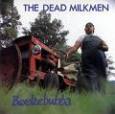
SOUNDTRACK: THE DEAD MILKMEN-Beelzebubba (1988).

Why the hell do you think they call it a burrow owl anyway?

Beelzebubba is pretty close to the pinnacle of The Dead Milkmen’s career.  Of the 17 songs, there’s only one or two that fall flat.  But there are so many that rise to greatness.  The wholly un-PC James Brown-mocking song “RC’s Mom” which is pretty much all about beating your wife is in hugely questionable taste, but the funk is quite funky.

The brilliant “Stuart” is the culmination of all of the white trash mocking/spoken word nonsense songs.  And then there’s the outstanding single “Punk Rock Girl.”  It is simultaneously catchy as all hell and yet whiny and kind of off-key.  It’s really magnificent and was suitably lauded.

The strange thing to me is that the actual released “single” was for “Smokin’ Banana Peels” (an EP with that title was released with an absurd number of dance remixes).

“Sri Lanka Sex Hotel” is an angry rant that references The Killer Inside Me and talks about having sex with everything.  It’s pretty bizarre, but is musically fantastic.

True, the back half of the disc suffers somewhat (“Howard Beware” and “Ringo Buys a Rifle” are just okay), but the disc ends with the sublimely vulgar “Life is Shit” a gospel-tinged song that matches Monty Python’s “Always Look on the Bright Side of Life” for faux uplift.

Future DM discs would feature some good songs, but the band pretty much peaked with this one.  I’m so bored I’m drinking bleach.

[READ: Week of April 5, 2010]  2666 [pg 637-701]

What a difference a week makes.  The style and writing of Part 5 is markedly different from Part 4.  It is far more laid back and focuses primarily on one individual, Hans Reiter (who we know from Part One is Archimboldi).

The Part opens with information about his parents: his father had one leg (he lost the other in WW1) and his mother was blind in one eye.

Hans’ father, after losing his leg, was in the hospital, expounding on the greatness of smoking.  (He even gives a smoke to a man wrapped head to toe in bandages–and smoke pours out from all the cracks).  When he left the hospital, he walked home–for three weeks.  And when he arrived back home he sought the one-eyed girl in the village and asked for her hand in marriage.

Hans Reiter was born in 1920. He proved to be unreasonably tall: (At 3 he was taller than all the 5 year olds etc).  And he was most interested in the seabed.  There is much information from his childhood of his love of the sea (when his mother bathed him, he would slip under the water until rescued).  At six he stole a book, Animals and Plants of the European Coastal Region, which he more or less memorized and was the only book he read.  And then he began diving, investigating the shoreline.

His father evidently hates everyone and thinks all nations are full of swine (except the Prussians).

Hans also enjoyed walking and he would often walk to the surrounding towns: The Village of Red Men (where they sold peat), The Village of Blue Women , The Town of the Fat (animals and butcher shops); or in the other direction, he went to Egg Village or Pig Village.  Or even further along was the Town of Chattering Girls (who went to parties and dances).

He almost drowned twice.  The first time he was initially mistaken for seaweed as he was floating in the water.  (After he had discovered laminaria digitata).  He also began to draw seaweed in his book.  (The seaweed connection is pretty thorough as he was described as looking like seaweed when he was born).  The tourist who saved him was named Vogel.  He believed in the general goodness of humanity, but he felt that he was a bad person for initially mistaking Hans for seaweed.  Vogel also talked endlessly about the virtues of masturbation (citing Kant as an example). (more…)

Read Full Post »

SOUNDTRACK: Make the Load Lighter: Indie Rock for Haiti (2010).

I mentioned this disc a few days ago because it’s a benefit disc for the people of Haiti.  I had encouraged people to order it ($10 to a good cause, eh?) but hadn’t fully listened to it yet.

Well, after playing the disc nonstop for the weekend, it’s time to chime in and say that this is a fantastic disc of indie rock, which spans the indie rock gamut from harder punk songs to beautiful heart-felt passionate tracks.  Each and every track is catchy, and most of them have a cool twist or hook to push it beyond being “just” an indie song

The first three songs are really fast and really heavy.  Footstone opens the disc.  I don’t know a lot by them, but this sounds to me like their heaviest song ever.  It comes across like a really hard edged punk song, but you know there’s a groove too.

Boss Jim Gettys (one of many wonderfully named bands) play a 2 minute punk metal blast that is notable for the cool guitar solo that breaks up the onslaught.  The third heavy song is by Dromedary stalwarts cuppa joe (!?).  “Taniqua” is a fast song with a rocking guitar intro.  It thuds along for 2 and a half minutes and then ends with a wonderfully upbeat chord that leads nicely in to the fourth song.  Moviola’s “Calling on the Line” is a poppy jangly college rock sounding song from the 90s.  It pretty well epitomizes the Dromedary sound.  The band has a bunch of records out which you can see here.

I wasn’t that impressed with Three Blind Wolves at first.  It seemed a little lacking.  But after about three listens I got it, and it’s now one of my favorite songs on the disc.  The singer’s voice is varied and wonderful, warbling over a fairly spare musical intro (the occasional high notes are totally cool).  But the chorus just rocks out wonderfully.  Three Blind Wolves is one of four Scottish bands from what I rather assumed would be a Jersey based compilation.

Paula Corino’s song is okay.  It’s my least favorite track on the disc, but only because it never really grabs me, and, while it’s a totally fine song, it gets a little lost amidst the rest of the tracks.  It’s followed by Wallendas’ “Adrianne” a delightful poppy song like a modern day Byrds.

The next song, The Neutron Drivers’ “All Around the Sun” doesn’t have an original second in it.  And yet it is easily the catchiest song on the whole disc. When you first hear the opening guitars you pretty much know exactly what the whole song (even the obvious guitar solo) will sound like.  It’s like the uber-rocksong.  And yet for all of its sounding familiar, it doesn’t sounds like any specific song. Amazing how they pulled that off.

The Dark Brothers’ “Knee Deep in Sin” is a weird and unsettling song in that it sounds like the singer from Social Distortion with a slide guitar.  It’s got a majorly country feel, until about three minutes in when you get a guitar solo straight outta Teenage Fanclub’s “The Concept” and suddenly this country song is a slow burning rocker.  Very cool.

The next two songs justify the price of the disc.  There Will Be Fireworks’ (Scottish band #2) “Foreign Thoughts” is a fantastic, amazing song.  It builds and builds with tension upon tension as the singer (with a wonderfully aggressive accent) spits the words over more and more instrumentation.  It’s followed by the utterly amazing Gena Rowlands Band’s “Fuckups Of the World Unite.”  This is like the great long lost American Music Club song.  It’s vulgar and yet completely un-profane.  It’s catchy, heartfelt and it blows me away each time I hear it, both lyrically and musically.  The simple guitar paired with the opening couplet is amazing in an of itself but it’s even better when it closes the song.

The Mommyheads come next with a remixed version of “Spiders” from Flying Suit.  I enjoyed the song on that disc, but it takes on a new life in this remixed version.  It feels fuller and even slighty creepier.

On like my third or fourth listen, Scottish band #3, Farewell Singapore’s “Blue” grabbed me and said “HEY THIS SONG IS FUCKING GREAT YA BASTARD.”  And man, is it ever.  I’ve been walking around all weekend singing “Scotland’s as dark as it’s going to be” over and over.  And I’ve no idea what it means.  The sudden breaks in the song sound like there’s something wrong with the track given the propulsive nature of everything else.  And the intense guitar solo that follows the glockenspiel bit is fantastic.  Oh and the male/female vocals sound great together.

Jennifer Convertible (a wonderful band name which gently rips a regional chain store, which seems to have changed its name to the far less inspired Jennifer Sofas and Sofabeds) has a very cool song that opens like a latter R.E.M. track but brings in some wonderfully atmospheric guitar noise to add a real sense of foreboding to the song.  The buzzing guitar solo is a nice touch, too.

lions.chase.tigers (4th and final Scottish band, with a downloadable EP on their website) sound a bit like an early Bob Mould track.  Which is pretty good in itself, but what I love about the song is that it’s a cool jangly indie rock song with a great martial drum sound.  And it bops along, in a minor key until we get a delicate guitar riff and then a rocking chorus.  But the really interesting part is yet to come: the gentle guitars come back but they’re accompanied by a voice screaming its lungs out (and yet mixed way down, so it’s no louder than the guitar).  And the song proceeds as if that isn’t a weird thing to add in.  Man, it takes guts to write a song like that, and it pays off.

The disc ends with Stuyvesant’s song, “Salieri.  It’s another slow builder, but it’s quite catchy and when the harmonies kick in in the last minute, it become quite the great song.  And it ends the disc on a good note.

So, in sum, order the disc.  It’s for a good cause, but even if you’re not into that sort of thing, you get some really great music for your money.  There’s literally not a bad track on the disc, and the bulk of them are outstanding.

Even the liner notes are interesting (and provide a look at why and how this disc came about).  My only complaint is that you get almost no information on the bands!  Now, I realize that in the world of online downloads, you’re lucky enough to get album art (and the photos are sad and beautiful) but I’d love to know more about these bands, where they’re from, who they are, and if any of them are have websites or other discs or whatnot.  But then, I actually read liner notes on discs!

Download the tracks, and the art, here.  Do it!  Now!

[READ: Week of February 15, 2010] 2666 [pg 231-290]

This week’s reading is the first half of the third Part: The Part About Fate.  And I have to say thus far it is easily my favorite part of the book.  I enjoyed it right from the start upon learning that the titular Fate is not an abstract Fate but a person named Fate.  A nice twist right up front.

This section also deals quite directly with matters of race.  Fate is black, and during his travels he is acutely aware of his color.  Plus, many scenes pop up in which race is definitely a factor.

Fate’s real name is Quincy Williams.  He is a 30 year-old reporter for Black Dawn, a magazine out of Harlem.  Quincy is known as Oscar Fate; everyone calls him Fate. (more…)

Read Full Post »

[READ: February 18, 2010] “Vagabonds”

After reading Infinite Jest, I got totally het up about reading all of David Foster Wallace’s works. Of course, I discovered that he had an awful lot of uncollected works (which were all conveniently gathered in one location by a much bigger DFW fan than I). Since I’m reading 2666 as part of an online group, I wondered if I would be similarly obsessed with Bolaño’s output.

Well first, I’m not loving 2666 as much as I did Infinite Jest (but I’m only 1/3 of the way through, so that may change).  But, on a more literal note, there seems to be very few short stories literred around the place. A very cursory search revealed a couple things in Harper’s and a couple things in the New Yorker, but very little else.  Now, I assume that’s primarily because his stories need to be translated first, so there’s possibly a bunch of uncollected Spanish stories, but as for English ones?  Well, let’s just say that scouring the globe for a complete list of short stories in English that are not part of a previously released collections is something of a dificult task.

In fact, further investigation into the stories from The New Yorker and Harper’s shows that these stories are either already released or soon to be published in translated collections.

One of the things I found in my search was this article which is more or less a review of Bolano’s, The Savage Detectives.  However, in true New Yorker fashion, it is also a detailed overview of Bolaño’s life as well. (more…)

Read Full Post »

« Newer Posts