Feeds:
Posts
Comments

Archive for the ‘Cigarettes’ Category

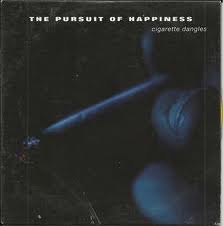
SOUNDTRACK: THE PURSUIT OF HAPPINESS-“Cigarette Dangles” (1993).

TPOH’s “I’m an Adult Now,” (especially the first version) was a favorite song of mine back in the late 1980s.  It was raw and funny and fun to listen to.  TPOH has had a hard time of it over the years, getting bumped from labels and whatnot, but they’ve consistently released decent hits.

By 1993, Moe Berg’s voice is remarkably conventional.  Indeed, there’s not all much that’s alternative about this song at all.  It’s not that it’s a bad song, it’s just kind of blah, the roughness has been smoothed off and despite words like: “Cigarette dangles, makes me hard,” the backing vocals and such make it sound like a poppy B-52s.

Huh, given what I just wrote, why wasn’t this song massive?  Cool guitar sound too.

[READ: August 2, 2012] “Thank You for the Light”

I always like when the New Yorker throws in a “classic” story, although I do wonder if contemporary artists are pissed by their famous elders coming back. In all fairness though I would think this story was chosen for its length (it’s only one page).

This is a straightforward and simple story.  Mrs Hanson is a pretty, forty-year-old divorcee.  She’s a saleswoman and has been given a new contract closer to her home state of Ohio.  When she gets to her new territories, she learns that people frown on smoking: “It’s not that I mind, but it has a bad influence on the employees.”   But man, she really wants a smoke, especially after a long day: “Smoking meant a lot to her sometimes.”  And so, she tries to find a place to light up without anyone seeing her.  And that’s pretty much it.  (more…)

Read Full Post »

SOUNDTRACK: PUBLIC ENEMY-Fear of a Black Planet (1990).

NPR recently broadcast a PE show from the All Tomorrow’s Parties Festival.  I didn’t know that PE was still touring, so that was a surprise to me.  The show was largely a celebration of Fear of a Black Planet, which meant that I had to go back and listen to the original.

Man, is this a solid album.  The lyrics pack a punch even twenty years later and what is perhaps more amazing is that the sound collages that Terminator X created, which were something of an oppressive sonic assault are now fairly mainstream-sounding (forward thinking or what?).

What I like about this (and most PE) albums, is that  they have little skits between songs, but unlike most rap skits they’re not one-not jokes that you listen to once and then skip every future time.  A wonderful skit (for lack of a better word) is “Incident at 66.6 FM” in which we hear an amazing amount of racist epithets thrown at PE apparently on the radio.  Or the rather disturbing “Meet the G That Killed Me.”  “Anti-Nigger Machine” is a great collage of samples like “Think” and James Brown and a dozen more songs.

“Can’t Do Nuttin for Ya, Man!” is a (sort of) comic song from Flav that is catchy as anything. While “Reggie Jax” is a confusingly titled song that has nothing to do with baseball, but everything to do with funk.

Of course, this disc has some of PE’s best songs as well.  From the awesome “911 is a Joke” to one of the best rap songs ever, “Welcome to the Terrordome” (my favorite story of this song is when I was wearing a  Welcome to the Terrordome shirt and my philosophy professor asked me quite pointedly, “What in the hell is a terrordome.”  That was a fun conversation).  “Terrordome” is still amazing–powerful, musically intense and for all of its lyrical acuity, it still has funny moments….boing.

And of course, “Burn Hollywood Burn” is an amazing critique of the movie industry (and it’s catchy too).  I got Black Caesar back at the crib, right Lar?

I’ve always been a little confused by “Pollywannacracker.”  Not lyrically, but vocally, as Chuck’s (is it really Chuck?) voice is treated in a surprisingly tinny way.  I liked the song more on this listen than any other, I guess in the past it just kind of snuck by me.

The album is a little front loaded with greatness.   “Power to the People” is another powerful song, but it’s not quite as memorable as the other tracks.  “Fear of a Black Planet” has some really cool sounds on it (where did they get that “black man, black woman, black baby” sample?).   “Revolutionary Generation” is a great track in which Chuck and Flav stand up for black women: “R-E-S-P-E-C-T, my sister’s not my enemy.”  Not your average rap subject.

And the last couple of proper songs, “B Side Wins Again” and “War at 33 1/3” are fast paced and furious, but they don’t really have much in the way of a hook.  Nevertheless, lyrically they are really great, and I love to hear Chuck D flow that quickly.

The biggest surprise for me is the censored version of “Fight the Power” (the song that got me into PE in the first place, thanks Spike).  It’s really surprising to me that PE allowed their music to be bleeped–unless it was just for a deliberate radio play (which I can accept).  Although they also list a title as “Leave This Off You Fu*Kin Charts” (did I buy a Columbia House version or something?)

This is an amazing album, one that still sounds fresh and sadly, is still relevant.

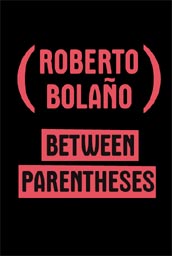
[READ: October 15, 2011] Between Parentheses

I never expected to get so addicted to Roberto Bolaño.  And despite his death, there is no shortage of works coming out in English (that is one of the advantages to reading a translated author–even death doesn’t cease the available materials).  Indeed, this year alone, New Directions is publishing Between Parentheses, and Tres and FSG is publishing The Third Reich (a collection of non fiction, a collection of poetry and a novel respectively).

When I really get into an author, I fall for his or her works, not necessarily him or her as a person (heck, some author are downright jerks).  But there are some authors that I want to know about, personally.  Bolaño is a pretty polarizing figure–he seems obnoxious, his works don’t shy away from very specific opinions, and sometimes it’s unclear what kind of views Bolaño himself has in his works (or if he’s even telling the truth about his so-called truths).  One thing in particular is the constant use of the word “faggot.”  It is used often in 2666 (and I know that is a translator’s choice, but still) and used derogatorily.  Now, clearly the context is everything for something like that.  But it seems to speak badly of Bolaño.  And yet, when reading these essays he is not homophobic in the least.  He is obviously well aware of institutionalized homophobia in Latin America, and he is obviously not supportive of it.

But that’s just one interesting thing about this book.  So let me back up. (more…)

Read Full Post »

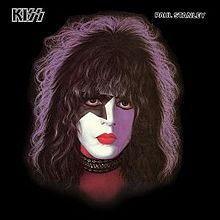
SOUNDTRACK: KISS-Paul Stanley (1978).

For Christmas in 1978 or so, my parents gave me a guitar which was signed from “Paul Stanley.”  I knew it wasn’t (and was a little disappointed that it wasn’t a drum set), but that’s the guitar I learned how to play on.  And Paul Stanley (while not the god that Ace is) is still a charismatic player.  But I didn’t really like this solo album that much when it came out.  My order of preference at the time was Gene>Ace>Paul>>>>>>>>>>Peter.  But sometime in college I reassessed this album and have regraded it as my favorite of the four and it even ranks higher than many of the Kiss albums.  (Seeing him live on a club tour certainly helped).

Paul is in great voice.  And I guess because Paul sang on so many different types of Kiss songs, he doesn’t seem out of his element here.  The chruses are more of him rather than backing vocalists (like the other guys used, although he does use some).  And the production is not too far away from the sound of Kiss at the time (certainly more polished than it should be but not as weirdly polished as Gene’s). 

 The opening of “Tonight You Belong To Me” is a wonderful acoustic intro and the song itself has a great riff and a wonderful solo.  The chorus is intense and strong.  “Move On” is something of a lesser song (it seems too choppy), but I love the quiet break in the middle.  “Ain’t Quite Right” is a cool minor key ballad.  It’s a bit 70’s-sounding, but there’s some interesting stuff going on.  The solo is again quite cool (Bob Kulick, brother of future Kiss guitarist Bruce Kulick does duties here).

“Wouldn’t You Like to Know Me” is a pretty standard upbeat Kiss song.  It’s followed by “Take Me Away (Together As One)” one of the great slow-building ballads that turn into a rocking chorus that Kiss does so well.  Paul practically whispers the verses but he belts out full strength in the loud part (not so much a chorus as just a loud part).  It’s one of my favorite songs.  “Wouldn’t You like to Know Me” is the kind of song that Kiss would play in the late 80s (full of outrageously cocky lyrics like “Girl you know, I’ll be leaving in the morning; you got to get what you can”), but there’s enough grit in this version to make me like much more than say, “Lick It Up.”

“Hold Me Touch Me (Think of Me, When We’re Apart)” is the flip side of Kiss’ cockiness, the sweet sentimental side.  Paul can croon like the best of ’em on this song.  “Love in Chains” also sounds like a typical Kiss rocker (except for the cool drum fill in the chorus).  I think I don’t like Paul’s singing in these stripped down choruses–I like it when his voice soars.  “Goodbye” has a cool typical Kiss riff in the bridge, which I like quite a bit.  And the chorus soars with a very simple guitar riff.  A perfect mid-tempo Paul song–it even has an unexpected third part that sends the song into a brief minor chord phase before returning to the happiness of saying goodbye to someone.

Still my favorite of the solo albums.

[READ: October 8, 2011] “Stealing Fire”

There were four one-page pieces in this week’s New Yorker under the heading “Sticky Fingers.”  Each one was about theft in some way (this being the money issue, that ‘s a nice connection).

As I said for Patti Smith, I felt like the tone of these articles was all set, but Wolff totally changes the concept behind these stories.  He wasn’t the thief–well he was–but  the theft came from a parent not from a store.  When Wolff was growing up, he coveted his father’s gold lighter.  He even took up smoking just so he could use it (there’s a lesson for you). (more…)

Read Full Post »

SOUNDTRACK: MEGAFAUN-“Find Your Mark” (2008).

After listening to the new Megafaun track, I checked the NPR archives.  They have this one song from their debut available for a listen as well.

It’s hard to believe that this is the same band.  Or perhaps I should say that a band can change a lot in three years.  This song begins as a three-part near-a capella barbershop/bar trio.  It reminds me in many ways of a Fleet Foxes track, except they seems more rowdy.  The song merges into a delicate guitar picking section with all of the voices “ba ba ba” ing.  Then, that guitar melody expands to an electric guitar and full band sound.

The introduction to the track (from the NPR DJ says that the album may not be everyone’s cup of tea.  But I like this track so much (even though it is so very different from their 2011 release), that I need to listen to more from this band.  Spotify, here I come. [Actually the album has some pretty crazy noises on it!].

[READ: August 20, 2011] “The Losing End”

This is a strange story about a man named Lamb.  The reason it is strange is because the middle of the story–the exciting part, the part I most enjoyed–is not really the point of the story, at least if the ending is to be believed.

As the story opens, Lamb has just been to his father’s wake.  He is feeling adrift so he goes to a parking lot to sit and think.  In addition to his father, Lamb is also thinking about his wife and his girlfriend.  I’m a little unclear exactly what is happening with his wife (Cathy) but he definitely trying to get time away from her to spend it with Linnie. While he is sitting there lost in thought, a young girl in an ill-fitting tube top approaches him. (more…)

Read Full Post »

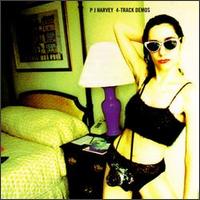
SOUNDTRACK: PJ HARVEY-4-Track Demos (1993).

After the intensity of the Steve Albini produced Rid of Me, Harvey releases this collection of demos.  The amazing thing is that these versions actually seem more intense than the Albini version. Or if not more intense, then certainly more raw.

The songs definitely have an unfinished feel about them, and yet they only vary from the final version in polish (and Albini’s stamp).

“Rid of Me” is just as quiet/loud, and has those high-pitched (and scary) backing vocals.  Speaking of scary vocals, her lead screams in “Legs” are far scarier here than on Rid of Me–like really creepy.  (Which sort of undermines that idea that this was released because Rid of Me was too intense for fans).   “Snake” actually features even creepier vocals–Harvey must have had a field day making these sounds!

I admit that I like the finished version of “50 Ft Queenie” better,”but there’s something about this version of “Yuri-G” that I like better.

The disc also has some tracks unreleased elsewhere.  “Reeling” is an organ-propelled song of female strength with the nice lyric: “Robert DeNiro sit on my face.”  “Hardly Wait” is a slow grinder that is fairly quiet for this time period.  “M-Bike” is a cool angry rocker about a guy and his motorcycle which is one of my favorite tracks on the disc.

It’s a great companion to Rid of Me.

[READ: end of February to early March]  original articles that comprise A Supposedly Fun Thing I’ll Never Do Again

As I mentioned last week, I decided to compare the articles in A Supposedly Fun Thing I’ll Never Do Again with the original publications to see what the differences were.  It quickly became obvious that there were a lot of additions to most of the articles, and it seems rather pointless (well, actually it seems exhausting and really outrageously time-consuming) to mention them all.  But what I did want to note was the things that are in the articles that have been removed from the book.   There’s not a lot but there are a few juicy tidbits (especially in the early articles) that are fun to note for anyone who read only the book and not the original articles.

My process for this was rather unthorough: I read the article and then right afterward I read the book.  If I noticed any changes, I made a note on the article version.  Many of them were surprisingly easy to note as DFW’s writing style (especially his idiosyncratic phrases) really stand out.  This is especially true in the Harper’s articles.  The academic ones were less notable, I believe, and I’m sure I missed a bunch.

I’m not sure in any way how these pieces were dealt with initially by the magazine or DFW.  I assume that DFW handed in the larger article (like we see in the book) and the magazine made suggested edits and DFW edited accordingly.  Then the book copies are probably the originals, bt which have also been updated in some way.

In most cases, it’s not really worth reading the original article, but I’m including links (thanks Howling Fantods), for the curious.

As for length, it’s hard to know exactly what the conversion from magazine article to book is.  The “Tornado Alley” tennis article is 8 pages (more like 4 pages when you take out the ads) and the book is 17.  Perhaps more accurately it seems like one Harper’s column = just under one book page.  I’ll try to figure out what the conversion is if I can.

One last note, whenever I say “article” I mean the original magazine version.  And obviously “book” means ASFTINDA. (more…)

Read Full Post »

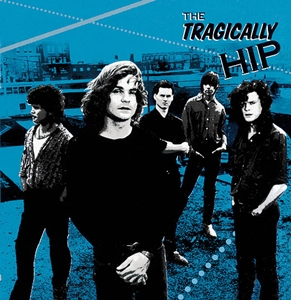
SOUNDTRACK: THE TRAGICALLY HIP-The Tragically Hip (1987).

It’s not really fair to review a successful, long-lived band’s first album over 30 years after the fact.  I mean, Rush’s first album doesn’t show any of the prog tendencies they’d be known for (not to mention a different  drummer/lyricist).  In fact, virtually no bands come out fully formed, which is good for all fans.

Having said that, from this album, you’d have very little indication that the Hip would become as dynamic as they eventually did.

This is a 7 song EP full of rocking tracks with overlays of acoustic guitars.  Unlike later discs, there’s only a minor indication that they’re from Canada (“Last American Exit”) or overly literate.  Mostly they seem like a rocking bar band.  The songs are good, somewhat generic, but solid.  In fact, “Small Town Bringdown” is still played in concert from time to time.

The biggest surprise is Gord Downie’s voice.  By now his voice is pretty distinctive, but on this first disc it seems like he’s still trying to figure out what he’s doing.  On “Killing Time” he’s unrecognizable from the frontman of today.  He seems to be working in a much gruffer range than he would later use.  Lyrically, the songs are also tougher than they would eventually become.

The most memorable song is probably the most embarrassing: “I’m a Werewolf, Baby” is as silly as it sounds, but the riff is really great and it has staying power.  Shame about the lyrics.  This disc is probably not worth getting since “Small Town” is available on their Greatest Hits.  Although if you really want to hear “Werewolf” it’s only available here.

[READ: January 26, 2011] “Live Large”

Just as I settle into the idea of reading 25 back issues of The Walrus for all of the fiction contained therein, I get to this 2004 Summer Reading Issue which features seven stories!  Three of them are short stories and the other four are flash fiction.

This first story was my favorite of the bunch.  It is a fairly simple story about a down-and-out man who longs for one day of joy.  Billy Constable has slowly seen his money evaporate.  He has had to sell off a lot of his luxuries, including the membership  to the Fairview Golf Club.  He has also had a recent medical scare (a minor heart attack) which has made him go straight and clean: no booze or smokes.

Except that things have gotten really bad lately, and who can resist the slide back into temptation.  When he gets a call to play a round of golf, from the very man he sold his golf membership to, he is about to tell him where to go, until he realizes that the man is calling him because he genuinely wants him to play in their foursome.  He decides why the hell not. (more…)

Read Full Post »

SOUNDTRACK: TIJUANA NO!-Transgresores de la Ley (1994).

In the mid 90s, when I was living in Boston, I discovered MTV Latino, and the Rock en Español resurgence.  Since I’m always interested in new music, I bought a few CDs by these Spanish-singing bands.  For most of my life I’ve thought about the rabid Japanese audiences who loved bands that sand in English.  Did they understand the lyrics?  And did it matter?  Well, here was a test for me.

Tijuana No! was the first band I bought and I really liked it (and still do).

The disc opens with a rollicking ska rocker “Goples Bajos” which features a wonderful horn filled breakdown and ends with a blistering guitar solo.  The title track, “Transgresores de la Ley” opens with a military beat and a military sounding flute before taking off with a heavy verse and, more impressively, a punk/shouty chorus.

My favorite song is “Tu y Yo,” it’s funky all over the place and has a super heavy midsection.  And “Borregos Kamikazes” has a wonderful juxtaposition of speedy, almost loco lyrics in the verses with some great group vocals in the chorus.

The first surprise (for me) comes with “La Esquina del Mundo” because suddenly there’s a female vocalist on lead.  She sounds great (her voice has a cool echo on it) and although she doesn’t quite convey the heaviness of the rest of the track, it’s an interesting juxtaposition.

The second surprise is that the track “Conscience Call” is mostly in English (I got so used to not understanding the lyrics that I was quite surprised to hear words I understood).

The final surprise comes with the penultimate track: an excellent cover of The Clash’s “Spanish Bombs.” Again sung by the female vocalist, her voice works wonderfully with the track.  The chorus, sung in Spanish, is really perfect.

So, in answer to the question, do you need to understand the lyrics to enjoy the music?, I’d say no.  Although it is nice once in a while.

[READ: November 20, 2010] The Savage Detectives

This was the Bolaño novel that I had initially wanted to read because the reviews were so glowing (amusingly enough it turns out to be virtually the last book of his that I read).  And now that I have read almost all of his books, it’s obvious how this book fits into his larger scheme of writing (I wonder what I would have thought if I hadn’t read the other books, too.  In fact, I wonder if I would have liked 2666 more at the time if I had read this one first.  As it is, I think I enjoyed this more having read 2666 first).

[DIGRESSION: When I was reading 2666 I found a fantastic review of 2666/The Savage Detectives by Daniel Zalewski, which reviews 2666 and The Savage Detectives in context of Bolaño’s life].

In a previous post I noted how Bolaño doesn’t really write conventional novels.  And this one is no exception.  Part I is the diary of Juan Garcia Madero, a 17-year-old aspiring poet.  It covers from November to December 31, 1975 .

Garcia Madero talks about his introduction to the visceral realists, a group of Mexican poets whose legacy is more or less unknown to us now (in the book–in reality there was no such group).  The two main visceral realists are Arturo Belano and Ulises Lima, and we will follow or look for these two for the rest of the book.

As with other Bolaño books, there is a massive obsession with sex.  At first Garcia Madero is a virgin and thinks about sex a lot.  Then he finally has sex with first one woman and then many women.  And he writes about them in his diary and spares no details.  (Many entries reveal him having sex with one of his girlfriends 5 or 6 times a night).  And there are of course whores and other deviant sexual individuals (including a guy who carries a large knife by which he measures his penis–we never see this, it’s all hearsay, but it’s in there).

And during this time, he is writing poetry as well–a fully welcomed member of the visceral realists.   (more…)

Read Full Post »

SOUNDTRACK: PETER, BJORN & JOHN-Living Thing (2009).

After the raging (relative) success of Writer’s Block, with their crazily catchy whistling song, “Young Folks”, PB&J could have gone in any direction.

And I was quite surprised when the opening song of this follow up (actually, there’s an instrumental disc in between) opened with single note and drum sounds and virtually a capella vocals.  But unlike a typical a capella song, the thudding notes were kind of dissonant and unpleasant.  And there wasn’t much more to the song than that.

Even the second song starts out starkly.  A single piano note plays a simple riff.  The verse kicks in with some simple electronic drums (and again minimal accompaniment).  And this sparseness is the main musical theme on the disc.

And I have to say it took almost a half a dozen listen before I really enjoyed what they were doing.  They are eschewing the pop structure that won them popularity and they’re shifting their melodies to the vocal lines rather than the instruments (I guess).  It’s a risky proposition, but it pays off.

Take “Nothing to Worry About.”   It opens with what sounds like a distorted children’s choir singing the chorus at full volume.  But then it settles down into, again, a simple drum and vocals song with just a hint of instrumentation.  (Did they get all their music out on the instrumental?  I don’t know I’ve not heard it).  Even the title track is sparse guitar noises and clicked drums.  But, man, is it catchy (it reminds me in a weird way of Paul Simon).

And then, continuing my contention that the best and catchiest songs always have curses in them, “Lay It Down” with the chorus, “Hey, shut the fuck up boy, you’re starting to piss me off” will stick in your head for days.

The end of the disc (the last three songs) are considerably mellower.  They’re less catchy, but they use the starkness very well.

Initially I really didn’t like this album.  It had none of the immediacy of the previous disc.  But I found myself really enjoying it.  I wouldn’t want all of their albums to sound like this, but it was an enjoyable twist on a good formula.

[READ: October 7, 2010] Garden State

I mentioned the other day that I just found out about this book when looking up information about Rick Moody.  I was so excited to read a book set in Haledon (two towns from where I grew up) that I checked it out and begin it immediately (it’s only 200 pages, so that helped too).  But I have to say I was really disappointed with the book (even if it did win the Editor’s Book Award).

My first gripe is about the supposed setting in New Jersey.  I have no problem with fictionalizing an area.  Writers do it all the time.  But Moody fictionalizes the area in two ways to suit his thesis, and as a lover of New Jersey and a former resident of the region, I found the lack of reality to be very upsetting.

The first minor, and I have to say really weird thing is that despite the real towns included (Haledon, Paterson, Paramus) he makes up towns nearby–Fleece, Tyre– and he makes up a river–The Dern River.  He also plays around with the names of the highways that run through the state, constantly referring to the non-existent Garden State Thruway.  Now, again, there’s no problem with making things up, but nobody in the story ever goes to Fleece or Tyre, the Dern River doesn’t come into play aside from being a river that people refer to (it’s not a renamed Passaic river, because that’s included in the story, too).  So, why make up random town names?  Why say that you drive from Haledon to the edge of Paterson near Boonton, when that is not geographically correct (or relevant to the story)?  It just seems like he didn’t have access to a map. (more…)

Read Full Post »

SOUNDTRACK: VIOLET ARCHERS-End of Part One (2005).

The Violet Archers are the new(ish) band for Tim Vesely from the Rheostatics.  I’ve conveniently waited until The Rheos completely broke up before really really getting into them.  And it took me some time before deciding that I needed to get The two Violet Arhcers discs.  And then I discovered they were pretty much unavailable.

But the nice folks who used to sell their discs got me in touch with Tim himself, and he very nicely sent me the two CDs (for a most reasonable price).

When a band breaks up it’s always interesting to see what the solo members do…if they try to go very different from the original band or if they stay the same.  Well, the Rheos were a pretty unusual band, and if these two discs are any indication, it seems like Tim may have been the pop song writer.

“End of Part One” starts with a guitar and cool organ opening before the song kicks into a mellow rocker.  “Coordinates” has more interesting keyboard sounds (these sound strange to me because the The Rheos weren’t very keyboardy).  Lyrically, it’s a great collection of rhymed verses that lead to a wonderful na na na chorus.

The middle songs are a nice mixture of slightly fast rockers and almost folky ballads.   Vesely has a great knack for sing along choruses, but he’s also been alt-enough to know when to throw in an unexpected twist, or an interesting sound (the guitar sound in “Saved Me” is great) and the simple melody of “Simple” makes for a beautiful campfire song.

“Time to Kill” is a delightful gentle rock song with a great chorus and instrumentation.  It sounds like an outtake from a fantastic 1960s compilation.  It’s followed by “All that’s Good” which sounds like an awesome long-lost Neil Young song.  The guitar is spot on and the vocals work wonderfully.

“Fools Gold Rope” is a nice ballad with vocals by Ida Nilsen.  And the last four tracks are all shorter pieces.  “Life and Then” features keyboards prominently, while the oddly titled “Track Display” has some nice guitar work.

This is overlooked pop gem. Nothing is overly commercial, and yet it’s all fun and an enjoyable listen.  I’m glad Vesely is still writing great tunes.

[READ: September 28, 2010] “Sifting the Ashes”

This Dept. of Disputation piece is about cigarettes.  I’ve never smoked and I’ve never been much of a fan of cancer sticks.  However, I find myself siding with Franzen on a few points ion this article.

Franzen has evidently quit smoking several times (it’s even unclear from the way this is written if he’s actually smoking now (1996) or not).  But he never blames Philip Morris or RJ Reynolds for his addiction.  He argues correctly that marketing to kids reserves you a place in hell, but that really, parents and pop culture probably got more kids to smoke than Joe Camel ever did.

He makes some funny observations about smoking (getting freaked out about getting lung cancer?  Why not light up to calm down).  But mostly he notes how all of the attempts in the past to curb smoking have resulted in more hegemony for the big players: The ban on TV advertising saved the industry millions of dollars and froze out new competitors.  Even tax increases on smokes in 1982 were a way for the industry to also raise prices (and make more money) all the while blaming the tax.  And what we wind up with is that no plaintiff can realistically claim ignorance of tobacco’s hazards, therefore the companies will never be deemed negligent for selling cigarettes.

(more…)

Read Full Post »

« Newer Posts