Feeds:
Posts
Comments

Archive for the ‘Children’s Books’ Category

pipSOUNDTRACK: DANIEL BACHMAN-Tiny Desk Concert #256 (December 9, 2012).

dan-bach Lars Gotrich, an NPR music dude, loves metal and weird music but also amazing Americana folk guitarists.  Daniel Bachman was an early-twentysomething when he recorded this Tiny Desk Concert.  And he is very impressive indeed.  Lars explains:

His approach to the American Primitive style of acoustic guitar — a sonically vivid fingerpicking technique developed by John Fahey and expanded by the likes of Robbie Basho and, later, Jack Rose and Glenn Jones — is conversational and uplifting, much like the man himself. After a rousing performance of “Honeysuckle Reel” from a forthcoming seven-inch single, however, Bachman turned beet-red in the NPR Music office and said, “I’m not going to lie. I’m pretty nervous.”

He only plays two songs, although each one is about 7 minutes long.  Lars says, “Strap on a pair of heavy boots and “Honeysuckle Reel” becomes an ecstatic dance tune or, at the very least, a foot-stomping good time.”  And he’s right.  It’s really amazing to watch him playing.  He uses a thumb pick and the low notes are constantly going–an incredibly fast rhythm, in contrast to the slower melody he’s playing on the higher strings while finger picking.  It’s a very pretty melody.

The second piece, “Seven Pines,” is slower and more reflective.  It comes from one of two albums he put out in 2012). The simple melody “dives in and out of low-string chord crashes and tumultuous swirls of dizzying fingerpicking.”

The sound he gets from his guitar is really fantastic and while I don’t tend to listen to guitar music like this, I really enjoyed this a lot and would like to hear more from him.

[READ: February 3, 2016] Ava and Pip

Since Tabby and I loved Ava and Tacoocat so much, we knew we had to read the prequel Ava and Pip as well.

This book is set up exactly as Tacocat is (I know that this book came first but since I read the other one first I’m comparing things backwards).

There are diary entries and it starts with Ava on her first day of school.  When she gets home she says that she is the only Ava in her class (which is frankly shocking as there are about 5 in my daughter’s grade).  Then we learn all about the Wren family and their love of palindromes.

Bob and Anna Wren had two daughters named Pip Hannah and Ava Elle.  And her diary entries wind up being chock full of spelled out palindromes (some obvious, others not). (more…)

Read Full Post »

tacocaoSOUNDTRACK: CANADIAN BRASS-Tiny Desk Concert #220 (May 26, 2012).

brass I hadn’t realized that Canadian Brass part of the institution of Canadian Brass.  They’re not only part of it, they are it.  Indeed Canadian Brass

led by its avuncular tuba master (and sole original member) Chuck Daellenbach, essentially put the idea of the brass quintet on the map.  Then there are the recordings — more than 100 of them, selling more than two million albums total.  Daellenbach and his fresh-faced players, each with red-striped sneakers and matching outfits, strolled into the NPR Music offices, took their places behind Bob Boilen’s desk and started blowing as if they’d played this peculiar gig a hundred times.

They began with a version of J.S. Bach’s intricately woven “Little Fugue in G minor,” an impressive staple that stretches back to the band’s first recording. In those days, precious little was available for brass quintet (two trumpets, horn, trombone and tuba), so the band relied on making arrangements of existing music. Since then, Canadian Brass has transcribed and commissioned more than 200 works, including “Tuba Tiger Rag,” Luther Henderson’s lighthearted tribute to Dixieland jazz. It’s a showpiece for Daellenbach, who twirls his tuba (while playing) and lands on a final note of such subterranean depth that you feel it more than hear it.

The players closed with another favorite, Rimsky-Korsakov’s dizzying “Flight of the Bumblebee,” in an arrangement by Canadian Brass trumpeter Brandon Ridenour. Although the music buzzes past in less than two minutes, players get plenty of opportunities to shine — as in the lightning-fast runs negotiated by trombonist Achilles Liarmakopoulos, the newest member of the group.

The band consists of   Christopher Coletti, trumpet; Brandon Ridenour, trumpet; Eric Reed, French horn; Achilles Liarmakopoulos, trombone and Chuck Daellenbach, tuba.

The band sounds amazing playing these familiar songs in a way that is–unexpected–but still right on.

J.S. Bach: “Little Fugue In G minor” is probably one of my favorite classical pieces.  I really enjoy Bach’s fugues a lot and this one is just perfect–and the arrangement here is great–everyone gets a chance to explore the phrasing.  It starts with the tuba and then the trombone and then the horn and finally the tuba.

Luther Henderson: “Tuba Tiger Rag”  Introducing this piece he says that in Bach everyone is equal, but he felt they needed a tuba song.  He says that while this song might be low art for other instruments it is high art for a tuba.  And yes he does spin it around while playing it. He uses that instrument to make roaring sounds and incredibly deep notes.  This is a medley, I think, because while the trombone and tuba play, the other three sing “hold that tiger / tuba tiger.”  How on earth does he reach that super low note?

Before the final song Bob says that his tuba doesn’t look brass.  And Chuck replies that there’s an old joke: “How old do you have to be to play the tuba and the answer is old enough to be able to carry it but young enough to still want to.”  He still wants to so he’s been  so he;s lightening the horn with carbon fiber.

For the final song Nikolai Rimsky-Korsakov: “Flight Of The Bumblebee” he tells us that the two trumpets play very fast–it must be easy for them. But the trombonist Achilles didn’t know what was coming when they had him play along.  Chuck says you’ll never see anyone play this song this fast on this instrument.

And it is amazing.  The song flies past–a blurry of fingers.  And I love that at the end, one of the trumpets sings the triumphant final high note.

You wouldn’t expect a band as old and legendary as Canadian Brass to be so funny and good-natured, but they sure are.  And that makes these familiar songs even more fun.

[READ: February 7, 2016] Ava and Tacocat

Sarah brought this book home, in part because Clark’s reading group called themselves tacocat which is a palindrome.  Turns out that Clark wasn’t interested in the book, so Tabby and I got to read it together, which was really fun.

The whole book is a language lovers’ dream, chock full of big spelling words and all kinds of palindromes littered throughout.

It was a few chapters into the book before we realized that this is actually the second book of a series (the first one is called Ava and Pip) and that this book references things that happened in book one without exactly explaining what happened.  That’s a little annoying for us, but it certainly made us want to read the first book.

The book is set up in diary form with Ava writing in it on most days.  I like that she loves palinromes so much (S-E-N-I-L-E-F-E-L-I-N-E-S) and every time she mentions one in the book, they spell it out like that. (more…)

Read Full Post »

dragonpunchis SOUNDTRACK: JOYCE EL KHOURY AND BRIAN JAGDE-Tiny Desk Concert #196 (February 20, 2012).

joyceI don’t listen to opera, although I don’t dislike it.  I’m amazed at the power of these singers’ voices.  It was interesting to watch this duo up close like this because you could really see them emote the story (especially in the duet).  So even if I had no idea what was going on lyrically (which I didn’t), I could get a sense of how they reacted to each other.

Here’s some background:

Soprano Joyce El-Khoury and tenor Brian Jagde are young, fresh-faced opera singers at the dawn of promising careers. El-Khoury has already appeared at New York’s Metropolitan Opera, while Jagde has sung roles in smaller houses here and in Europe.  Miloš Repickný joined the two singers at our trusty electric piano.

For this Tiny Desk performance, she reprises her role of Lauretta in Gianni Schicchi by singing the hit aria “O mio babbino caro,” in which she pleads with her father to let her marry her boyfriend. Listen for El-Khoury’s immaculate control of dynamics. Her soft, pianissimo notes are silvery and well-supported by the breath.

Jagde steps up next for a number from Puccini’s Tosca — the opening tenor aria, “Recondita armonia” — in which he muses about Tosca, his “dark-eyed mistress.” It takes a lot of work to sing it right, and Jagde produces the requisite drama and decibels.

The two hard-working singers end with the deliciously romantic duet which closes act one of Puccini’s La Bohème. “We’ve just fallen in love,” Jagde notes. “It happens really quickly in the opera.” As their two powerful, love-struck voices intertwine, the sounds of Puccini reverberate off the walls of the entire fifth floor — a good day in the office.

The first piece [Puccini: “O mio babbino caro” (from Gianni Schicchi)] is sung by Joyce and her voice is wonderful.  Its starts a little quiet but really soars by the end.  It is only 2 minutes (which is something of a surprise).  It’s amusing to hear her speak in such a plain American voice after wailing in Italian like that.  Brian then speaks.  He begins with a wonderful Italian pronunciation of the song they will sing and then reveals himself to have a standard American accent as well.  He tells us a bit of the plot of the song [Puccini:” Recondita armonia” (from Tosca)].  He is painting in a church–a beautiful blonde goddess.  And he compares her to Tosca, who is completely the opposite.  And then that quiet voiced guy opens his mouth to sing.  The power in his voice is incredible.  And just before the end, he wails an amazing note.  This piece also lasts only 2 minutes

The final piece [Puccini: “O soave fanciulla” (from La Bohème)] is a duet. He says that they are in love and about to go out together but they have to look at each other one more time. They sing beautifully together.  I can’t imagine his big powerful voice singing right next to her ear (and being romantic at the same time).  They act it out very well.  There’s even a moment where they look about to kiss but she pulls away to keep singing—it’s good convincing acting.

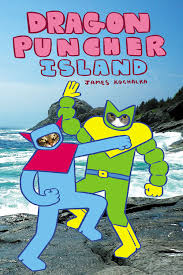
[READ: February 12, 2016] Dragon Puncher Island

This sequel to Dragon Puncher is just as funny as the first.  The Kochalkas got a new cat who takes a starring role.

The story opens up with Dragon Puncher and Spoony-E by the seaside (filmed in Maine).  Spoony-E is bragging about his spoon-wielding abilities (even though his spoon is broken).  Finally Dragon Puncher tells him to be quiet.  And also to stop calling him mister as she is a girl cat.

But when Spoony E stats saying “who’s my pretty little kitty,” Dragon Puncher gets mad and punches Spoony-E!  Spoony is caught by the new kitty, a green bubbly creature called Monster Slapper.  And Monster Slapper doesn’t take kindly to this small, furry and, frankly, smelly creature. (more…)

Read Full Post »

dragonpunch SOUNDTRACK: JOAN SORIANO-Tiny Desk Concert #195 (February 16, 2012).

joanJoan Soriano and his unnamed partners play bachata music (which I’d never heard of before).

Bachata is that sweet, syncopated, lovesick music full of guitar plucks, bongos and güiras that you hear blasting from cars and Latin clubs today. But as recently as the late 1980s, it was frowned upon in its native Dominican Republic for being rustic and vulgar. But it grew anyway, and was championed by Dominican artists like Anthony Santos (one of the first bachateros to go mainstream) and Juan Luis Guerra.

Joan Soriano is a reminder of that. “El Duque De La Bachata” (“The Duke Of Bachata”) is an example of the earthy, unpretentious, undiluted bachata that was forced into a corner so long ago in favor of more “sophisticated” sounds. Whether he’s talking about having his heart broken or about falling out of love, Soriano sounds honest and to the point, and so do his guitar licks. The seventh of 15 kids and an exceptionally talented musician whose music moved him from the countryside to Santo Domingo at 13, Soriano is an essential piece of bachata’s story.

Today, we consume pretty-boy bachata: It’s polished, calculated and, by mainstream standards, photogenic. But when you hear Soriano’s raw interpretation of bachata, you can’t help but wonder how such a beautiful sound was kept quiet for so long, and marvel at its resilience.

They play three songs:

“Me Decidí A Dejarte” Joan sings.  he has a beautiful voice and really interesting and enticing guitar picking style.  I get a kick out of the backing vocals with go “Pero no” “No!” in a rather high, almost girl-group sound.

“Aunque Sea A Escondidas” The woman with his sings lead on this.  She also has a pretty voice and this song is much more mellow than the other two.  Joan stands in the back and sings harmony vocals.

“Cuanto Lloré”  One more shift of locations as the second guitarist moves to the mic.  His voice is a little deeper but just as lovely.  Joan sits next to him.  This song is heavier than the other two.  It has a really catchy happy guitar riff.  The other guitar plays a kind of rapid chugging style.   When he and Joan duet on vocals near the end of the song it sounds really amazing–their voices are in perfect sync.

[READ: February 11, 2016] Dragon Puncher

I love James Kochalka.  I love his deceptively simple artwork. I love that he does his very cartoony style for both his kids books and his highly-inappropriate-for-kids adult books–DO NOT GRAB THE WRONG BOOKS BY MISTAKE!

But I think of all of the things he’s done, the Dragon Puncher series is my favorite.

For this series, he takes photos and integrates them into his story.  But in addition to drawing crazy cartoons on top of wonderful photorealistic backgrounds, he also integrates his family members as characters.

For instance the Dragon Puncher’s face is the face of Spandy, the family cat.  Meanwhile, the other main character, Spoony-E’s face belongs to Kochalka’s son Eli (he was 3 at the time).  And the dragon’s face is that of Kochalka himself.  They are hilarious.

tfaw_dragonpuncherp1Most of Kochalka’s stories veer to the absurd side, and this one is no exception.

Dragon Puncher struts through the landscape seeking the sneaky dragon.  Then he trips over a brown hairy thing whose name is Spoony-E. He carries a wooden spoon everyone (evidently Eli loved spoons at the time).  Dragon Puncher is angry and shouts everything “I WILL DESTROY YOU!” (evidently Spandy was a nasty cat and would hiss at kids, so this makes it even funnier).

Spoony-E is a sweet little creature and he wants to help.  He shows off what a good fighter he is with his spoon (and almost loses to a butterfly).

Dragon Puncher finds some dragon drool and then the ferocious dragon comes along (Kochalka is suitably hilarious as the dragon).  They fight (watch out for the tail).  And the fight only brings our two heroes closer (maybe).

I’ve read this book many times and it never fails to make me laugh.

Read Full Post »

crocs SOUNDTRACKRED BARAAT-Tiny Desk Concert #194 (February 14, 2012).

redbaraatBob Boilen opens his blurb about this band with high praise indeed:

Red Baraat is the best party band I’ve seen in years. The group plays rollicking funk music steeped in Northern India’s wedding celebrations, with a dash of D.C. go-go beats and hip-hop. It’s all driven by Sunny Jain’s dhol, a double-sided barrel drum that hangs down low around his body.

But the music is not all about drumming

If the drum is the messenger, the brass is the message. Uplifting melodies emanate from baritone and soprano saxophones, bass trumpet, trombone and sousaphone. This is a band that jazz lovers can appreciate and rock fans can dance to.

They play three songs.  And the musicians are quite diverse.  Its fun to see a trumpeter (who totally wails) wearing a Sikh turban.

“Chaal Baby”  is really dancey with a simple, bouncy horn melody and all that percussion. In addition to the snare and the dhol, there’ s a percussionist making some great sounds, too.  And all through the song–which really swings–people are shouting “hey ho.” It’s a lot of fun.

“Shruggy Ji” opens slowly but after a few second the whole band kicks in with a kind of minor key feel (and a very Indian sound on the saxophone.  There’s some chanting–although I can’t tell what they’re saying.  The two note melody is great for shaking your hips to.  In the middle of the song there’s a call and response of “oh my may” and then he raps—he’s a little hard to hear (because he’s unmic’d and the rest of the band is so loud) but the gist is there and it’s fun (I believe he name checks Biz Markee).  As this song ends you hear Stephen Thomson shout “can you guys hear in the back?”

On “Dhol ‘n’ Brass” the guy with the dhol opens this song with a fast chanted opening that sounds a lot like the rhythm of the drums.  When the rest of the band jumps in, the song is really fast and a lot of fun

This is indeed a great party band and there’s plenty of diversity in the music to keep it really interesting and unexpected.

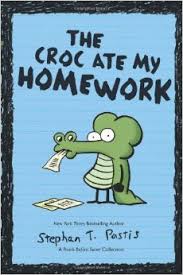
[READ: February 1, 2016] The Croc Ate My Homework

I knew of the comic strip Pearls Before Swine but had never read it before.

This book was published by the same folks who introduced me to Liō and I thought it might be funny.

From what I gather, this collection is actually a collection of the most kid-friendly strips from this series.  This I find very strange indeed, but I see that the actual strip is fairly adult and has been controversial on my occasions (although it is published in newspapers, so it’s never too dark).

I got a kick out of this collection, although I didn’t think it was all that great.  Of course, knowing that these strips are the somewhat watered down strips does make me want to read the real thing to see if these strips ware funnier in context.

The strip centers around a bunch of animals Rat (who is mean–unnecessarily mean, I felt, in this book, but again, without context), Pig who is a good-natured but naive. The Crocs (who are incredibly dumb–and very funny) and the Zebra who outsmarts the crocs–although that’s not very hard. (more…)

Read Full Post »

melvin3-cover_SOUNDTRACKCREOLE CHOIR OF CUBA-Tiny Desk Concert #192 (February 6, 2012).

creoleThis concert was something of a surprise for me.  The blurb seems to think that it should be a surprise, especially if you are familiar with Cuban music.  I’m not, so I’m even more surprised.

Just when you think you know Cuban music, along comes the Creole Choir of Cuba. This group sprang from the ashes of Grupo Vocal Desandann, a small vocal outfit created in the late 1990s to celebrate traces of Haitian culture in eastern Cuba.  That history dates back to the late 18th century, when slaves from Haiti were delivered to Cuba to harvest sugarcane after successful slave revolts in Haiti. A long-lost culture was revitalized by the group through music performed largely a cappella and entirely in Haitian Creole.

As with other forms of music associated with the African diaspora, The Creole Choir of Cuba’s work resonates with songs of resistance and celebration of community life, which offered hope and relief from the bitter realities of slavery.

The choir sings three pieces.  And it’s cool the way it is a choir for certain, but that they throw elements into it that are not normally associated with choirs.  For “Marasa Elu” their voices are beautiful, with a great bass voice underpinning the soaring lead voice.  It’s fairly astonishing that she starts to cry at the end of the song (whether fake or not it’s hard to tell).

“Ayiti Krye” has a different lead singer with a very different voice.–although the rest of the choir still sounds great with her.  It comes as quite a surprise about half way through the song when the drums and percussion come in–it really changes the feel of the song and of this choir.  Suddenly the piece is a more dancey song, especially as the percussion picks up speed.  A guy with a wonderfully raspy voice takes over lead.  And the rest of the group really starts to get into it–dancing and singing a beautiful backing vocal that sounds much less like a choir and more like a Cuban dance song.

For “Lumane Casimir” the first singer is back.  There are quiet congas keeping the beat.  While the backing vocals sound a lot like a choir, the lead singer sounds more like a conventional singer.  By the end, they are having a ton of fun and she invites two of the audience members to dance with her (including Felix, the host).  And as any music like this should, the end of the song introduces a whistle keeping a beat.

This is a very different kind of choir–at once sacred and fun.

[READ: January 22, 2016] Melvin Monster Volume 3

Last year I really enjoyed the Moomin books which Drawn & Quarterly reprinted.  Another artist that D+Q has reprinted is John Stanley.  And they have made the appropriately titled The John Stanley Collection.  This collection is somewhat confusingly labelled because there are collections of different characters (Nancy, Tubby, Melvin) each with multiple volumes, and it seems like maybe they are supposed to go in a certain order.  And really it’s not that hard to figure out once you know the way it works, but it’s a but of puzzle if you see only a few books on the shelf at the library.

These books were originally printed as comic books.  This book contains the final Melvin Monster comics.  The title page says “Collected from the issues seven to nine of the Dell comic book series”  And D+Q has retained that look perfectly.  Even the paper that they have used for this beautiful book looks like comic book paper (although it is very heavy stock).

In the first issue of the book, Baddy tries to get Melvin a job as a babysitter.  The baby is actually a huge giant which leads to all kinds of amusing scenes of Melvin fleeing from the giant.  Although Stanley was never concerned about being PC, the fact that he set his strip in Monsterville certainly allowed him to get a way with a lot of rather un-PC dialogue.

I’m not sure why Stanley only made nine issues (if it was Dell’s decision or his), but there’s a lot of repetition in the premises.  Melvin trying to go to the school and Ms McGargoyle not allowing him in is a very common joke.  Although in fairness, she does think up many new ways to keep Melvin away.

Little Horror is always a fun character.  In this one she does a spell which turns Melvin into a half frog.

There’s a joke about Cleopatra, the family’s alligator, trying to eat him. And the one with Damon constantly giving him bad advice would be funny whether they were monsters or not.

“Blackout” is an interesting strip as it shows Baddy getting ready to watch wrestling –“the first four rows of human bean lady fans armed with cement filled handbags an shish kabob skewers.”

Book 8 opens with “Supermonster” in which a huge monster living nearby is getting ready to destroy Monsterville.  And it’s up to Melvin to help out.

I enjoyed seeing him integrating snow into a few of these strips (although not sequentially in any way).  There’s a good one that involves digging to the school.  There’s a short one that involves Little Horror breaking ice with her high-pitched shriek and another short one with a giant snowball (that I don’t quite get).

Speaking of un-PC, there’s an entire story that involves a Native American totem pole monster–I guess since it’s a monster its okay, although the way it talks is pretty awful.

Book 9 starts with a monster that frightens Baddy.  I enjoy that Baddy is actually quite a coward despite his size and demeanor).

Little Horror returns with a broken magic wand which is pretty fun.  The punchline where a tiny Baddy is afraid of Mummy is outstanding .

I also really enjoyed the way that McGargoyle got rid of Melvin in the final schoolhouse joke–by having him learn C-A-T and B-A-T and then telling him he graduated.  Of course Melvin redefines high school for us all.

The final strip in the book is the one I knew from the D&Q 25th anniversary book.  In it, Melvin drinks a potion that turns him into a normal-looking boy. Which would of course freak out the whole family.

I also like that the final pages of this book include all of the original covers from the Dell comics (12 cents each!)

I’m fascinated at the publishing schedule of these issues

  • Apr-Jun
  • Jul-Sept
  • October
  • December
  • July
  • October
  • January
  • Apr
  • May
  • August

Perhaps the most interesting thing of all though is his biography which states that John Stanley “bitterly left comics sometime in the late 1960s never to return.”  Woah, I want to hear more about that!

Maybe when I read the Nancy books.

Read Full Post »

melvin2-cover_SOUNDTRACK: GLENN JONES-Tiny Desk Concert #188 (January 23, 2012).

glennI’d never heard of Glenn Jones.  The blurb says that he only recently took up the banjo (which I assume means he has played the guitar for a long time?).  Also, how funny is it  that there are two banjo players in a row.

Jones plays 3 instrumental pieces  “Tinka Marie” is a very pretty banjo instrumental (although I can’t help but feel that his high string is slightly out of tune—I find it a little jarring throughout the song).  The banjo also sounds very compressed or tight or something.  It’s unusual especially when compared to the expansive sound of the guitar in the other two songs.

Before “The Great Pacific Northwest,” he says that if he plays it right, “Mt. Rainier should burst right through the floor of this room.” He has a very interesting playing style.  He has capoed the three bass strings, but not the higher strings.  He then plays chords up and down the fretboard (leaving the capo where it is).  The beginning of this song is a series of slowly played chords, which allow each individual string to sound.  Then it picks up as he begins playing fast finger-picked (with a  thumb pick for the bass strings) melodies.

“Of Its Own Kind” continue with that half capo style and finger picking.  It has a really lovely melody, as do all three.

[READ: January 17, 2016] Melvin Monster Volume 2

Last year I really enjoyed the Moomin books which Drawn & Quarterly reprinted.  Another artist that D+Q has reprinted is John Stanley.  And they have made the appropriately titled The John Stanley Collection.  This collection is somewhat confusingly labelled because there are collections of different characters (Nancy, Tubby, Melvin) each with multiple volumes, and it seems like maybe they are supposed to go in a certain order.  And really it’s not that hard to figure out once you know the way it works, but it’s a but of puzzle if you see only a few books on the shelf at the library.

These books were originally printed as comic books.  The title page says “Collected from the issues four to six of the Dell comic book series”  And D+Q has retained that look perfectly.  Even the paper that they have used for this beautiful book looks like comic book paper (although it is very heavy stock).   (more…)

Read Full Post »

melvin1-cover_SOUNDTRACK: DEBASHISH BHATTACHARYA-Tiny Desk Concert #319 (November 12, 2013).

I like how the blurb for this Concert begins:

You’ve probably never seen or heard an instrument like this. The Hindustani slide guitar is the creation of Debashish Bhattacharya, whose creation pairs his first love — a Hawaiian lap steel guitar, a gift from his father when he was only 3 — and the sounds of India. You can see the similarities to a lap steel guitar, as Bhattacharya lays the guitar across his legs, sliding a metal bar to create the fluid, almost vocal melodies. The additional strings (and lack of frets) allow him to slide easily between notes, in the process creating a sound that resonates and drones while remaining attuned to his Calcutta home.

It’s a pretty cool instrument and does evoke Indian sounds without necessarily sounding entirely Indian.

His music incorporates a good deal of North Indian (Hindustani) classical music, but you can also hear the blues pouring out from this stunning creation. I first met Bhattacharya 17 years ago when he was touring with other great slide guitarists, Bob Brozman and Martin Simpson. In those 17 years, his music has become even more astonishing, and his instrument refined even further. This trio includes his daughter (Anandi Bhattacharya) on vocals and his brother (Subhasis Bhattacharjee) on tabla.

He plays two lengthy pieces.  It’s clear that the three of them are totally in synch with each other.  He often plays off of his daughter as she sings and he follows her (or vice versa).  He is constantly kepimg an eye om her to see what will happen next.  It’s cool watching him play the drones throughout as well.

“Raaga Khamaj” She sings beautifully.  I love the way the little finger taps can create such a great expressive sound on the tabla, but then he really wails later.  Two thirds of the way through the song almost stops entirely and then he switches to a really funky riff–its a great transition.  At times he’s almost scratching the strings making even more interesting sounds.

There is some tuning between songs and then “O My Beloved!/Pillusion” begins.  It’s more mellow overall, goalmouth the middle has an absolutely wild guitar solo which has him sliding his slide all over the place.  It’s pretty wild

The current album and some of what’s played here today can be found on two different records, the first with guitarist John McLaughlin and Dobro master Jerry Douglas (titled Beyond the Ragasphere) and the second with his brother and daughter (titled Madeira: If Music Could Intoxicate). These are brilliant recordings — and a good place to start exploring more from this unique artist after his intoxicating Tiny Desk Concert is done causing your jaw to drop.

I really enjoyed this set a lot and would love to check out his studio records to see what those sound like.

[READ: January 19, 2016] Melvin Monster Volume 1

February starts children’s month here.  Partially it’s because we can all use the good messages and kindness that children’s books offer.  But also because some of the books that I’m going to post about have been sitting in queue for over a year.  So let them see the light of day.

Last year I really enjoyed the Moomin books which Drawn & Quarterly reprinted.  Another artist that D+Q has reprinted is John Stanley.  And they have made the appropriately titled The John Stanley Collection.  This collection is somewhat confusingly labelled because there are collections of different characters (Nancy, Tubby, Melvin) each with multiple volumes, and it seems like maybe they are supposed to go in a certain order.  And really it’s not that hard to figure out once you know the way it works, but it’s a but of puzzle if you see only a few books on the shelf at the library.

These books were originally printed as comic books.  The title page says “Collected from the first three issues of the Dell comic book series”  And D+Q has retained that look perfectly.  Even the paper that they have used for this beautiful book looks like comic book paper (although it is very heavy stock).

So the premise of this strip is that Melvin Monster is a nice, good boy.  But he is raised by literal monsters.  Melvin wants to do what normal human kids do, but his parents Baddy and Mummy want him to be more disrespectful and monstrous.

The characters are Melvin Monster, Baddy (his father), Mummy (his mom) and Cleopatra their pet crocodile who wants to eat Melvin.  There are a few other recurring characters as well, like the witch and

Even though these books were first, I read them second.  And I have to say I enjoyed the long form of these stories a bit more than the short stories of the later issues.  Although interestingly the very first strips are short and don’t establish the character at all. They are just thrown right on to the page.  Well, it does actually establish that Melvin is a disappointment to his Baddy because he wants to go to school (his father played hooky for 8 years straight).

The next strip sees him going to school and other monsters trying to beat him up for wanting to go.  That’s when his demon guardian Damon shows up, although he calls him Medwick rather than Melvin–this mixed up identity results in some good jokes later on.  Ultimately Melvin winds up accidentally blowing up the school which makes his parents very proud.

The next strip continues right where the previous one left off, with Melvin sailing through the air after the explosion.  He winds up in Human Being Land where everybody treats him very badly–and he thinks it’s so nice that they want him to feel at home.

The next book focuses on the door in the cellar. His parents get mad at him and send him to the cellar.  They never go there, but milkmen and mailmen love it so much they have never come out.   When Melvin is down there he opens a secret door.  The path leads him to the subway which is pretty funny.  Incidentally in this book it is called Humanbeansville.  Through his good intentions, he breaks up a crime ring and flies home

I enjoyed that the following story introduces us to Little Horror but also continues with Baddy’s adventures in the basement hole.

Some funny scenes include him being captured by a zoo, where a specialist on monsters comes to investigate him.

In the third book Melvin gets in more trouble and Damon is there to rescue him (with a little pain as of course) from a quicksand trap.

He also manages to not die from the witch’s apples–one good one spoils the bad ones.  And then there is short strip about him breaking a window, which is deemed a good bad deed.

The final long story is a weird one about the giant rat who lives in their walls and has opened up a 4 star French restaurant (I kid you not).

There’s a few more short ones and then the final strip is about a rock that has been teetering in place for centuries.  Of course, Melvin bumps into it and then has to think fast.

I’m not sure how people reacted to these strips when they first came out–if they were considered “bad” or whatever, but it’s funny how sweet and innocent the bad behavior ultimately is.

For ease of searching, I include: Bela Bartok

Read Full Post »

6616 SOUNDTRACK: YANN TIERSEN-Tiny Desk Concert #219 (May 21, 2012).

yannYann Tiersen scored the soundtrack to Amélie.  But he also writes and sings lovely chamber-pop music.

The first song “The Gutter”  opens with Tiersen playing a swirling violin melody accompanied by an acoustic guitar, a ukulele and keys.  Tiersen doesn’t sing, but the lead singer’s voice is yearning and delightfully accented as well.  (No names are given for the rest of the band).  I liked the way the song built in intensity even while his voice retained that quiet style of singing.

For the second song, “Monuments” everyone switches around.  Tiersen plays a lead 12 string acoustic guitar, the ukulele player is on keys and all four sing harmony lead.  You can tell that Tiersen is not American because of the way the word “Monuments” is sung “all monYOUments…” which adds an exotic flavor to the song.  The delicate keyboard sounds float nicely over the acoustic guitars.

They stay with this lineup for “Tribulations.”  The singer from the first song and the acoustic guitarist sing lead.  And everyone else joins on harmony.  “The Trial” opens with the four singing a beautiful “ooh” in harmony.  Then the other three sing a complex backing vocal while Tiersen sings lead.

There’s some really lovely melodies in this concert.

[READ: January 12, 2017] “Where is Luckily”

The June 6 & 13, 2016 issue of the New Yorker was the Fiction Issue.  It also contained five one page reflections about “Childhood Reading.” 

Having a child is like rereading your own childhood.

Galchen has a young daughter and that daughter has a some favorite stories.  One is a Moomin (which I love), another is a Piggy & Gerald.  Galchen says that if you read children’s book enough times, “they start to seem like Shakespeare.”

But she says that her daughter doesn’t read in a linear fashion.  “What happens next” doesn’t seem to cross her mind.  She reads them more like eternal landscapes: “In that sense, nothing is happening, and she reads for that nothing.” (more…)

Read Full Post »

 doubledownSOUNDTRACK: JAKE SCHEPPS’ EXPEDITION QUARTET-Tiny Desk Concert #187 (January 19, 2012).

jakeJake Schepps’ Expedition Quartet is a somewhat unusual string quartet in that the instruments are violin and upright bass (normal) but also guitar and banjo.  And so the songs have a classical feel–melodies repeated in a fugue style, but with the prominence of the banjo, it feels more like a folk song.  The violin takes on a kind of fiddle sound.  And that’s interesting enough, but it’s the story of the music that they are playing which makes it even more fascinating:

About 100 years ago, Béla Bartók was traipsing through his native Hungary (Romania and Slovakia, too) with a bulky Edison phonograph, documenting folk songs and dances. There’s a priceless photo of the young composer, his contraption perched on an outside windowsill with a woman singing into the horn while anxious villagers stare at the camera. By 1918, Bartók had amassed almost 9,000 folk tunes. He made transcriptions of some; others he arranged for piano, while elements of still others found their way into his orchestra pieces and chamber music.

This was the country music of Eastern Europe, and its off-kilter rhythms and pungent melodies continue to captivate music lovers and musicians like Colorado-based banjo player Jake Schepps, who has recorded an entire album of Bartok’s folk-inspired music.

For this concert, with fellow members of Expedition Quartet — violinist Enion Pelta-Tiller, guitarist Grant Gordy and bass player Ian Hutchison, they played a Bartók hoe-down of sorts.

They play three pieces:

“Romanian Folk Dances: ‘Stick Game'”  Bartók (arr. Flinner).  This is a quieter piece with moments of bounce.  Indeed, Schepps doesn’t feel like the leader of this group because everyone shares the spotlight.  The guitar takes a lengthy solo–its got a very jazzy feel (which is a little weird on an acoustic guitar).  The violin takes a pizzicato solo, which is neat.  When Schepps finally does do a solo it’s not a showoffy banjo solo, it just fits in well with what everyone else is playing.

“For Children (Hungarian Folk Tunes): ‘Stars, Stars Brightly Shine'” Bartók (arr. Schepps).  This is a slower tune and it is much shorter as well—it doesn’t really lend itself to soloing.  Although the violin takes on the lead melody and it sounds mournful and beautiful.

“Mikrokosmos No. 78 / ‘Cousin Sally Brown'” Bartók / traditional (arr. Schepps).  Before this track, when someone tells Schepps that No 78 is his favorite of the Mikrokosmos, he says that he prefers 79.  The bassist says that 79 has gotten too commercial.  The end of the song has a tag of “Cousin Sally” a rollicking traditional dance number.  The four seems to play somewhat at odds with each other briefly and when they all rejoin for the end—it’s pretty great.

[READ: December 27, 2016] Diary of a Wimpy Kid: Double Down

I keep expecting the quality of the jokes in the Wimpy Kid books to decline.  But rather, this book was not only hilarious, but it worked really well as a book, too.

What I mean is that, I know that the Wimpy Kid series is online and that Kinney does a new story every day (or at least he did , I don’t know if he still does).  These books had always been taken from the online site (and I assume they still are).  But somehow, this book has jokes that circle back to jokes earlier in the book.  There’s at least a half a dozen callbacks which makes this book more than just a collection of diary entries…it’s a perfectly contained unit with a satisfying ending.

(more…)

Read Full Post »

« Newer Posts - Older Posts »