Feeds:
Posts
Comments

Archive for the ‘Cars’ Category

fivedials_no30SOUNDTRACK: Random songs at the roller rink (December 29, 2013)

skateWe went rollerskating on Sunday and they played all kinds of pop hits.  They played “Dancing Queen” and “YMCA,” sure, but they also played a lot of recent big hits.  And I said to myself either I have grown more tolerant of pop songs or pop songs are simply better than they were in the 80s and 90s.

Because I thoroughly enjoyed hearing “Gangnam Style” (perhaps a pop song where you don’t know the words is really the way to go) and “What Does the Fox Say?” (or perhaps when the words are so preposterous).  “Blurred Lines” is incredibly catchy (although it would be better without the offensive lyrics).  I also enjoyed “Call Me Maybe” which is treacly sure, but the melody is super catchy and “Rolling in the Deep” because Adele kicks ass.

Of course when I looked at the list of #1 hits for 2013, I literally didn’t know any of them (except “Blurred Lines” and “Royals,”) so maybe pop is not what I think it is.  Maybe I just like YouTube sensations.

Ring-ding-ding-ding-dingeringeding!  Happy New Year.

[READ: December 27, 2013] Five Dials #30

I was surprised to get this issue of Five Dials just as I was reading the other recent ones.  It allowed me to finish up Five Dials and the year at around the same time.  This issue introduces a new graphics editor: Antonio de Luca and he really changes the look of the magazine.  (He also used to work for The Walrus).  Rather than pictures being centered in the page, they spread from one page to another (which works well online but less so if you print it out).  The illustrations are also much bolder.

This is a short issue (which I appreciated).  And it does what I especially like about Five Dials–focusing tightly on one thing, in this case Albert Camus, who I like but who I have not read much.  It’s his centenary and many things have been said about him, so what else is there to say?  They find two things worth saying.

CRAIG TAYLOR-A Letter from the Editor: On Tony, On Dean, On Camus, On Algiers
Taylor talks about the illustrations of the issue–they were spray painted on walls by an Algerian-French collective known as the Zoo Project.  The new editor took photos and then Photoshopped away the extraneous stuff to leave us with just the graphics–giving them a permanence that they would normally not have.  Taylor also says goodbye to Dean Allen, the outgoing art director.  Then he gets to the heart of this issue: Albert Camus and Algiers (where Camus is from).  Curtis Gillespie decided to go to Algiers to find out how much the people there know and love Camus (and he found it to be a much more difficult trip than he imagined). (more…)

Read Full Post »

ornerSOUNDTRACK: PHISH-Hoist (1994).

hoistI always think of Hoist as a kind of goofy album because of the way they are dressed on it (and the crazy cover).  But it is absolutely not.  Indeed, opener “Julius” sounds like a ZZ Top song.  In fact, every time they’ve played it live I assumed it was a cover.  It is less restrained in the live setting, because this version has more acoustic guitar.  There’s even backing vocalists and horns.  “Down with Disease” has that great watery bass, but the song (which sounds good) here is a little stiffer than the live version.  It also has something of an R&B feel (with backing vocals) even if the guitar is certainly not R&B at all.  It bleeds right into “If I Could” a pretty harmony-voiced mellow song.  The big surprise comes from the Alison Krauss vocals–she gets a solitary line or two and then harmonies.  The song is very pretty but the strings are overkill.

“Riker’s Mailbox” is indeed a reference to the Star Trek character, although the 30 second burst of noise is pretty hard to explain. Nevertheless, the trombone is played Mr Riker himself, Jonathan Frakes.  It jumps into the rocking “Axilla, Pt. 2” which is usually a little faster live (I like the sloppier crazier live version better). There’s some vulgar dialogue in the middle of the song.

“Lifeboy” is a mellow acoustic song that builds from just guitar.  Lyrically it’s interesting: “God never listens to what I say…and you don’t get a refund if you overpray.”  It folds into “Sample in a Jar,” which is just as good here as any live set.  “Wolfman’s Brother” ahs horns thrown on top and some interesting sound effects.  Although overall l don’t like this version nearly as much—I don’t care for the horns or the backing vocals plus in the live version they emphasize the bruh of brother more which is cooler.  (Although I do enjoy the weird “Shirley Temple” line at the end).  “Scent of  Mule” opens so strangely with crazy guitars and a thundering drum.  The singing is very silly (with silly voices) and has a very twangy style (complete with banjo and yeehah).

“Dog Faced Boy” is a sweet (but weird) acoustic guitar number.  “Demand” is a ten minute song which I don’t really know at all.  It has a strange, staccato style riff.  At 2 minutes in, a car starts and after a commercial on the radio the driver pops in “Split Open and Melt” (a nod to “Detroit Rock City,” perhaps?).  This goes on until 9:30 at which time there’s a car crash and choir of angels (sick!).

I don’t car for the horns and R&B flavoring of this album, but the song selection is really quite good.

[READ: September 24, 2013] Last Car Over the Sagamore Bridge

I read about this book in Tom Bissell’s reviews recently.  He really made it sound like an interesting book.  So when I saw that we had just received a copy, I grabbed it and brought it home for the weekend.

There are 52 short stories in the short book (which is less than 200 pages).  Some of the stories are very short (1 page) with a few coming in at 5 or 6.  The 1 page stories are like flash fiction but they seem to be more of snapshots than actual full stories and they seem like they might be diary entries or something. The fact that a number of them are italicized with dates at the end make them seem like a selection from the same person rather than individual stories.

The stories are set all over the world, although they tend to focus on Chicago and Boston.  They are pretty universally dark with themes of death and loss permeating the collection.  And yet despite their overall negative feeling, the stories aren’t really depressing, exactly.  Bissell described the narrators as like someone telling a story about someone telling a story.  And that is true and that distance seems to take some of the edge off the stories.

But what’s impressive is the consistently strong and powerful writing.  The way that Orner is able to convey so much with such few words.  Some stories are just a scene, others are a whole lifetime.  But either way they are all really gripping.

I wasn’t going to write about each story, but it would have nagged at me if I didn’t, so here’s a few words about 52 stories. (more…)

Read Full Post »

5.20SOUNDTRACK: IGGY AND THE STOOGES-“Job” (2013).

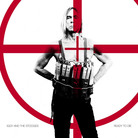
iggyNickelodeon’s favorite dad has just released a new album.  In the lead up to this song on NPR, Bob Boilen said that the live show that NPR streamed from Iggy and the Stooges was a matinée and there were kids as  well as adults there.  Who takes a kid to see Iggy Pop? Even if he was on The Adventures of Pete and Pete?

So this song is a dopey punk song and I love the guitars as the song starts–just classic punk sound and riffage. And then Iggy’s unmistakable voice “I gotta job…but it don’t pay shit.  I gotta job… and I’m sick of it.”  Is there any sentiment less authentic than Iggy Pop singing this?  Probably not.  And yet it’s a fun song for any working class guy to sing along to

And it’s frankly amazing that Iggy and the Stooges are still putting records out.

[READ: May 16, 2013] “Just Drive”

The five brief pieces in this week’s New Yorker are labeled as “Imagined Inventions.”  And in each one, the author is tasked with inventing something.

Shteyngart’s is clearly the most practical and is based on something the he knows already exists. He explains that he is unabashedly a terrible driver: “My greatest failure in life has been my inability to drive a car safely between two locations.”  This is despite the fact that he has always loved cars.  Right from the day that his father bought their first car and he saved up to buy a similar matchbox car (more similar when they painted it the same color), he has loved t he freedom that cars represented.  And I loved the idea that he and his family felt that although America was a large country, the road atlas made it seem like you could drive anywhere.

But Shteyngart’s driving problem seem to be more fundamental—an inability to tell left from right (the way his father tried to teach him is quite funny… if misguided).  And now that Shteyngart lives in the country, he needs to drive more than ever. (more…)

Read Full Post »

PlayerOne_Coupland

SOUNDTRACK: THE TRAGICALLY HIP-Now for Plan A (2012).

hip man

This is the latest Tragically Hip record and it bounces back from the more country feel of We Are the Same and provides eleven solid rocking songs (two of which are actually ballads and not rocking at all but are still good).  “At Transformation” starts with a big bass notes and some feedback, like an alternative indie rocker, but as soon as Gord Downie’s voice comes in it is unmistakably Hip.  This is one of their rockier songs and shows that they are back in fine form.

I recently wrote about “Man Machine” and “Now for Plan A” but I think they both work better in the context of the record.  “Man Machine” contrasts nicely with “At Transformation” and “Plan A” gives the album a chance to relax before the more rocking second half.  “The Lookahead” is the other duet with Sarah Harmer, although I fear she may be a little underutilized here.  It’s a great big chorused song that The Hip do so well.

“We Want To Be It” has a recurring “drip drip” section that I find mesmerizing.  I like the way drip drip turns into click click and then cricket and how it is alternately whispered and screamed.  I’ve never really heard a song where words were used in this way before.

I love the way “About This Map” starts slow but adds a great bridge/chorus that adds a lot of tension.  Take Forever” is a straightforward rocker which along with “The Modern Spirit” and “Streets Ahead” really exemplify the modern sound of the Tragically Hip–simple rockers with big choruses and thoughtful lyrics.  On the other end of the spectrum, “Done and Done” is a simple ballad that works nicely as the song before the closer.  “Goodnight Attawapiskat” (an aboriginal settlement in Northern Ontario) is the kind of amazing minor key, could-be-an epic that Hip fans always love.  It’s scaled down to 4 minutes, but it lets us know that they still have this kind of song in them.

The Hip will never release another record like Fully Completely or Day for Night and while there is something sad about that, it’s nice to see a band evolving and modifying their sound.  This album isn’t going to blow anyone away, but it is a solid collection of great songs.

[READ: May 15, 2013] Player One

I didn’t really understand what a CBC Massey Lecture was.  It was kind of explained, but I was confused how his lecture would have been a full length novel.  And while it is described as a novel in five hours, I doubt his lecture lasted five hours (the story takes place in real time over five hours, but surely no one would have listened to him read for five hours).  Well, thanks to Wikipedia: Each of the book’s five chapters was delivered as a one hour lecture in a different Canadian city: Vancouver on October 12, Regina on October 14, Charlottetown on October 19, Ottawa on October 25 and ending in Toronto on October 29. The lectures were broadcast on CBC Radio One’s Ideas, November 8–12.   Coupland felt that “a narrative seemed like the most efficient and accessible way of putting forth a large number of propositions about life in the year 2010.”

So this turns out to be a story that takes place over five hours, although like many stories with this conceit there are flashbacks (how could there not be).  There are five main characters: Karen, Luke, Rick, Rachel, and Player One.  Although Player One is a confusing character who may or may not really exist.

Karen is a divorced mom and has decided to travel across the country (from Winnipeg to Toronto) to meet a man in an airport bar for a possible fling.  She’s not proud of it but she thinks, why the hell not–she still feels good about herself.  In fact, on the airplane a boy takes some pictures of her with his phone, because she looks pretty hot.  And in the last one she gives him the finger.  (The whole reality of that–that someone may take a picture of you anywhere for any reason is pretty bizarre).  She arrives in the airport bar where she meets Rick, the bartender. (more…)

Read Full Post »

[WATCHED: March 11, 2013] Chitty Chitty Bang Bang

ccbbAfter enjoying the audio book of Chitty Chitty Bang Bang so much we thought it would be fun to watch the movie–it’s one of the first times we’ve watched a movie after reading the book with the kids so we thought it would be fun to compare them.

This proved to be an awesome opportunity to show that books and movies can be a wee bit different.  Holy moley, about the only thing that the movie has in common with the book is (some of) the characters have the same name and that there’s a magical car.  Oh, and there’s candy involved.  Other than that, there’s really no resemblance whatsoever.

The screenplay to the movie was written by Roald Dahl, which explains some of the weirdness (child catcher, anyone?), And yes the movie producer’s real name is Albert Broccoli.  But seriously, someone read the book and said, hey, that car is cool, I’m going to take it and make something totally different with it.  Oh, and I know, it should be a musical!  Oh, and it should be two and a half hours long!   Oh and even though it’s set in England, it will star Dick van Dyke!  Oh, and instead of him having that crazy accent like in Mary Poppins, he’ll be American, even though his children and father will be British.

I was going to talk a bit about the movie, but that only seems doable by comparing it to the book.  In this handy table format. (more…)

Read Full Post »

[LISTENED TO: March 2013] Chitty-Chitty-Bang-Bang

chittyI knew of this movie (although I haven’t seen it in decades) but I didn’t know it was based on a book.  And I had no idea the book was by Ian Fleming!  The creator of James Bond!  Chitty-Chitty-Bang-Bang is his only children’s novel and it was released posthumous;y (he died a few months before it came out).  I’ve never read any James Bond and I don’t love the films all that much so I can’t really compare this to his more famous works.  But it seemed like it was written by a guy who knew from spies and scary villains (I actually guessed that he had written this before the Bond books and it was a kind of lead in).

So the story starts off simply enough.  We meet the Pott family: Caractacus, the father, a former Navy commander and now an inventory of slightly wacky things–known in town as Crack Pott (ha); Mimsie, the mom, sweet and good natured and up for adventure, and the eight year old twins: Jeremy and Jemima.  Most of Crack Pott’s inventions aren’t very good but he eventually makes up a candy that is also a whistle and sells them to Lord Skrumshus and his candy company for a tidy sum (and Fleming goes into the details of the money saying how it’s a small sum up front but since Lord Skrumshus sells billions of candies it’s  good deal–Fleming is full of grown up ideas like that in the book and is clearly trying to impart some wisdom to his audience).

Since they live near the motorway, they decide to buy a car.  But they don’t want one of those black beetles that you see everywhere.  He wrote this book in 1961 so I’m not entirely sure about what kind of car he was talking about there.  The family decides to buy a one of a kind old car from an old man in a garage.  The man raves about the car and wishes he could keep her, but he has to sell it for scrap.  Pott offers him a few quid (everyone loves the car and its license plate read GEN 11 (like Genii)) to have the car delivered to his garage.  He spends the next several months fixing her up.  And when she starts, the noises she makes gives her the name Chitty Chitty Bang Bang.  Their first test drive is a marvel and they get her up to 100 miles per hour!

WHAT??  100MPH?  In Rural England??  Wow.  And who knew they used miles and not kilometers (it’s pointed out much later in the book that they use kilometers on the continent) in the 60s?  (It became mandatory there in 1978).  The car is  marvel!  She even has all kinds of buttons that Pott hadn’t figured out what they do yet.  And on their next venture they decide to go to the seaside on a warm day.  But so do 20,000 other cars, so there is a massive traffic jam.  Chitty Chitty shows what she can do and takes over the controls–she grows wings and a propeller (which all come naturally from the car parts) and she flies over the traffic!

When they fly to the beach it is crowded so Chitty flies the to an island in the middle of the English Channel.  And they have a lovely picnic together and take a nap.  Until the tide starts to come in.  Chitty escapes and they take off.  But they head away from London and towards France!

And here’s where the story turns into a wild Bondian adventure rather than a cute family story about a magical car.
(more…)

Read Full Post »

2013SOUNDTRACK: ARCADE FIRE-The Suburbs (2010).

suburbsWhen The Suburbs came out, it was hailed as a masterpiece and also panned as a hack job (more the former than the latter).  It was impossible to listen to it without hearing raves and rants.  And then Arcade Fire became a kind of punchline or punching bag, the band people loved to hate (although not as much as Nickelback).  I didn’t write about this record then because I wanted to let the air clear.  And then I kind of forgot about it.  I pulled it out again recently and found that I really enjoyed it.  It’s a long album with a lot of different tempos.  It reminds me of the kind of albums I used to listen to as a kid, yes in the suburbs, in which I could absorb an entire hour in one sitting (preferably while driving).

It’s not as indie as their first album nor is it as dark as Neon Bible.  Indeed, with the instrumentation and easy melodies, the album is almost pop (or more like radio friendly AOR music from the 70s and 80s).  There’s orchestration (but Arcade Fire has always had orchestration, that’s why there are eight of them in the band).  There’s heavy piano (which is possibly the most notable difference on this album–the keys have gone acoustic, which definitely makes the album sound more 70s than 2000s.  And there’s big choruses.

“The Suburbs” starts the album, but it’s really hard to deny “Ready to Start”–a bouncy number with a very winning chorus (yes, nominated as song of the year, but deservedly so).  “Empty Room” opens with a violin section that I assume is sampled (its sounds very classical and more as a quote than an introduction to the pumping, rocking song that follows.

“Private Prison” has great backing vocals in the chorus–Wim Butler and Régine Chassagne play off each other so well.  “Suburban War” has a great guitar riff–melodic and pretty in its repetition.  “Wasted Hours” is one of the few folky songs I can think of Arcade Fire playing–but it’s a traditional kind of folk–with la la la las–with a twist.

There are two tracks with a Part I and a Part II.  In both cases the second part complements and surpasses the first part in terms of overall energy and catchiness. “Half Light II” is a beautiful soaring track and “Sprawl II” (the one with Régine singing lead), is one of the best tracks on the album (the way the “mountains beyond mountains” section soars is wonderful).  That honor of best tracks also goes to “We Used to Wait” with its simple piano and cool guitar riff at the end of the verses.

The album feels like a lot of music I grew up with–radio friendly hits that perhaps Butler listened to as a kid, and as he reflects back on them he updates and deconstructs them.  “Modern Man” and “Empty Room” feel this way.  “Month of May” sounds like “Beat on the Brat” while “Deep Blue” opens with a  vibe of “Happy Together” but moves beyond it to a massive (and massively good) chorus.

It’s safe to believe the hype–there’s nothing here that will blow your mind, but  taken together it is a very satisfying collection of songs.  I also just learned that there were 8 different covers created for the album (although they all look vaguely the same).  The one above is the version I happened to get.

[READ: January 4, 2013] “Knowledge”

I didn’t know anything about Gordon Lish when I read this story.  The name sounded vaguely familiar.  Then I looked him up.  Evidently Lish has been writing for a long time, although he hasn’t written much recently.  He is more known for his editing than his writing.

This story is a self-obsessing tale in which the words that the narrator is saying are more important than what the words mean.  So the beginning of the story has the narrator stumbling, repeating, reiterating and then alliterating (which he criticizes himself for doing) without really getting anywhere.  He frets that everyone is watching him–the neighbors, the doorman–and that his sneaky actions were seen by all, especially when the masking tape stuck to him.

Strangely, as the story reaches its midway point we see that the narrator is Gordon Lish himself and he asks rhetorically if the reason he has removed the flyer from the telephone pole (hence the masking tape) is because he himself had something to do with the message on the flyer itself. (more…)

Read Full Post »

SOUNDTRACK: KISHI BASHI-Tiny Desk Concert #215 (May 10, 2012).

A few days after the concert at the 9:30 Club, K Ishibashi stopped in at the NPR offices to record a Tiny Desk concert.  The Tiny Desk  concerts are always fun–incredibly intimate and always well recorded.  He plays three of the five songs that he played at the 9:30 Club, and while they sound quite the same, there are little differences.

I find it very cool how similar they sound–since most of the sounds he makes are with his voice, it’s quite cool that he has that much control.  But I also like that he varies things a bit (although it sounds like a slightly flat note that plagues “Atticus in the Desert”).

What’s interesting is that although he doesn’t play things very differently, the feel of “I am the Antichrist to You” is quite different in the Tiny Desk setting.  I don’t really understand why, but it sounds very different, and equally wonderful.

Watching the Tiny Desk show is also neat–I’ve never seen anyone strum chords on a violin before.   And watching all of the technical adjustments is very cool too.  I’ve definitely become a fan of Kishi Bashi.

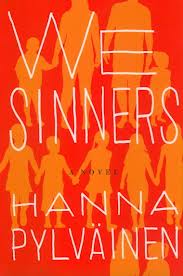
[READ: August 28, 2012] We Sinners

This has got to be the fastest turnover I’ve ever had where I read a short story and then read the author’s novel.  Well, it turns out that “Jonas Chan” was not a short story, but an excerpt from this novel.

The novel is a series of short stories about the same family.  I’m reluctant to brand it one of those connected-short story novels, but I think it really is.  Each chapter has a title and a specific focus and, as the excerpt showed, each chapter can work independently–although having all of the information certainly fills out the story.  (Unless I am mistaken, a few things that really depend upon the rest of the book were left out of the excerpt).

The novel is about the Rovaniemi family.  They are a very traditional Finnish family living in the midwest United States.  More than just Finnish, they practice Laestadianism, a very conservative kind of Lutheranism that is unique to the Finns.  There are nine children in the family (and 11 chapters in the book), and the novel follows them through about 18 years (the youngest, Uppu, is born in the first chapter and the second to last chapter is about her leaving for college.

There’s even a handy family tree:

WARREN  –  PIRJO  (parents)

BRITA  TIINA  NELS  PAULA  SIMON  JULIA  LEENA ANNI  UPPU

There isn’t an overall plot so much as an evaluation of this traditional family and how modern life impacts them.   And wisely, the book opens with the oldest daughter.  This (as opposed to first looking at the parents) allows us to see what kind of difficulties the kids will have with their religion.  We see Brita in school facing a tough decision.  The Laestadian religion doesn’t permit dancing (or TV, or much of anything).  And Brita has to inform her “boyfriend” that she can’t go to the dance because she isn’t allowed.  When Tiina finds out that Brita revealed their religious secret she freaks out that people will know about her too. (more…)

Read Full Post »

SOUNDTRACK: KISS-Creatures of the Night (1982).

In true fair-weather fashion, Music from The Elder ended my Kiss love–and I was a HUGE Kiss fan!  Which is a shame because their follow up album–Creatures of the Night, which I wouldn’t get for many many years is one of their heaviest and strongest albums.  Although there may be just as much fun/controversy about the cover than there is talk about the music.  Ace Frehley was contractually obligated to appear on their album covers, so his face is on the (original) cover even though he didn’t play a note on the record.

The album was re-issued in 1985 in a non-makeup version.  And this album features Bruce Kulick’s photo on the cover because he was then the guitarist in the band.  However, it was actually Vinnie Vincent who played all the guitar on the record and while he is credited, he doesn’t appear on the cover of either version.

This album also features Eric Carr on drums and he pounds the hell out of them.  Carr was on The Elder, but, well, we won’t talk about that.  Peter Criss had a kind of jazzy impact on the drums, but Carr was a heavy metal drummer and it really changes the sound of the album.

“Creatures of the Night” opens with a really heavy title track sung by Paul–he’s got his aggressive vocals down very well here (a song that might normally gone to Gene but which works better with Paul).  The only problem is the little poppy section just before the guitar solo–it’s almost dancey and doesn’t really fit.  “Saint and Sinner” starts off kind of unpromising–an almost poppy song by Gene, but the chorus redeems it.  “Keep Me Comin'” has a pretty typical-by-now Kiss chorus and a fast riff.  “Rock and Roll Hell” opens with almost all bass notes (and Gene’s voice).  It’s a pretty standard rocker for the time, but it still sounded fresh coming from Kiss (and it’s about Ace Frehley who wanted out of the band so badly).

“Danger” has some unexpected chord changes and features some of Paul’s excellent vocals.  It’s also got some genuinely fast guitar work (something that most Kiss song don’t have aside from the solos).  “I Love It Loud” is the anthem that should have been huge.  Slow, ponderous and catchy, this song should be played at every sports event.  It’s followed by the impressive 6-minute sorta ballad “I Still Love You,” the kind of song that Paul shines in–he gets a place to show off his impressive range and his ability to hold long notes (especially live).  Between this and “I Want You” Paul could keep an audience entertained for 20 minutes.  What’s best about the song is that although it opens as a ballad, it gets really heavy with some great drum fills from Carr.

“Killer” opens with a guitar sound like “Makin’ Love” of old.  Simmons’ songs about women are usually pretty uninspired and lyrically this is poor, but the music more than makes up for it.  An album this good can’t possibly end strong though, can it?  Why yes, it can.  “War Machine” is another awesome heavy track.  A great riff and a fantastic chorus.  It’s a shame that this record was lost in the shuffle, it really stands tall as a great heavy metal album.

[READ: August 8, 2012] “Jonas Chan”

I loved looking at the author name and the title of this story and having literally no idea what to expect.  I couldn’t even imagine what nationality the name Pylväinen was.  The first character introduced was named Uppu Rovaniemi (nor could I fathom what nationality that was).  And then the main character is Chinese and is named Jonas.  Woah.

Well, it turns out the story is about Finnish people.  I assume that means that Pylväinen is Finnish, although her website only says she is from suburban Detroit.

I have never read anything about Finnish people, I don’t believe.  So this was a wonderfully unique story for me.  And then to narrow the focus even more, Uppu and her family practice Laestadianism, a kind of Lutheranism that I had never heard of (Wikipedia is pretty informative about its convoluted history).  Her family is pretty lax about her (they have nine kids and she gets lost in the shuffle), but they are very strict about her religious upbringing (her father is a preacher).  And Uppu hates that.

Uppu is the ninth child of the fabled Rovaniems, the well-known family in the community, full of intelligent people, all of whom Uppu intended to show up.  She was confident and smart and seemed immune to everyone.  She flies through her exams.  She even recognizes that Jonas was a violin player who switched to viola (she could tell by the amount of weight he put on his bow).  Cool.

Jonas Chan was new to the school, but of course he knew who Uppu was as well.  He couldn’t imagine ever talking to her.  I love this description of him: “He wasn’t nerdy enough for the nerds, no one cared that he came from California, and there were exactly enough Asians for him to be different without being interesting.”  And yet one day Uppu linked arms with him and said “Let’s be friends.”  And so it was. (more…)

Read Full Post »

SOUNDTRACK: PHISH-Live Bait Vol 6 (2011).

Yesterday was my coworker Jay’s last day here, so I’m writing about this Phish bootleg set in his honor.

So these Live Bootleg Series are fun in that they’re a free sample of live songs–warts and all–from various shows in the band’s touring history.  These shows are primarily 1993-1996, with a 1988 song and two from 2003 thrown in for good measure.  The opening of “The Curtain” into “Tweezer” is from Red Rocks.  In fact, the first 8 songs are from Red Rocks at different times in their career (I like that they meld the shows together like this).  From 1996, “The Curtain” sounds amazing, so it’s really surprising how badly Trey messes up the opening guitar riff of “Tweezer.”  It’s so bad I would have thought he might have considered starting over!  But after an ugly beginning the band settles in for a 17 minute version.  “Split Open and Melt” also comes 1994.  The band sounds great on this song.  This is one of my favorite jam sections–it goes in a really weird direction.  And, there’s great bass and a guitar solo.  “It’s Ice” and “The Wedge” are from 1993 (touring their 4th official release!).  They sound really on for these songs.

Next comes a trio of songs from 1995 that always go together: “Mike’s Song” (everybody’s favorite), “I am Hydrogen” and “Weekapaug Groove.”  The middle of the “Mike’s Song” jam gets a little weird (some of their slow sections can sound very strange especially if people overhear them out of context), but they bring it back very nicely.

“The MOMA Dance’ and “Limb by Limb” are from 2003.  And they are fantastic.  “McGrupp and the Watchful Hosemasters” actually comes from the Colorado ’88 CD, but it’s a fun addition within this set.  It certainly sounds older than the others, but not radically out of place.  It’s followed by “Ghost” from 1997.   “David Bowie” has a lot of fun in the intro–the begin playing several different songs, including “Mike’s Song” and several other intros before finally settling into “DB.”  The jam also gets pretty dark, but I love at the end when the conventional shredding solo keeps getting interrupted by a strange minor key riff.  Similarly, “Wilson” takes a really long time to get going, including a nice little nod to “The Simpsons” in the intro.  And then there’s a really long pause before the “blap boom” part comes in.  It’s a fun version of the song.  The disc ends with a wild version of “Run Like an Antelope” from 1993.

It’s a pretty great set, and not bad for free.  You can download it here.

[READ: May 25, 2012] “The Bank Robbery”

I’ve never read Richard Ford.  I have a copy of Independence Day but I never read it. I hear it’s great.

So, here’s this excerpt from Ford’ new novel called Canada.  As has been said before, you can’t really write a review of  an excerpt.  However, a excerpt can get you excited about a book.

And that’s what this did.  It doesn’t make me want to pre-order Canada or anything, indeed, I’m not even sure how this excerpt can relate to the rest of the story as it’s pretty self-contained, but I loved the way it was written and the tone and pacing that Ford employs.

This excerpt opens with the narrator recollecting what he knows about the bank robbery.  The one that his parents committed.  His parents are pretty normal people, except for one thing—they actually thought they could pull of a bank robbery.  I love this section:

Conceivably many of us think of robbing a bank the same way we lie in bed at night and delicately plot to murder our lifelong enemy….  [details excised].  After which we conclude that though it’s satisfying to think we could murder our enemy in ambush…only a deranged person would carry out such a plan.  That is because the world is set against such acts…At which point we forget about our plan and go to sleep….  But for my parents this kind of thinking didn’t occur. (more…)

Read Full Post »

« Newer Posts - Older Posts »