Feeds:
Posts
Comments

Archive for the ‘Cars’ Category

SOUNDTRACK: PHOSPHORESCENT-NonCOMM 2019 (May 14, 2019).

A couple of years ago I had a pass to NonComm, but ultimately I decided not to go.  I had never been to World Cafe Live and, while it sounded like a fun time, it was just so many mid-week nights and lots of leaving early, that it sounded more exhausting than fun.

I have now been to World Cafe Live and I can imagine that the (less divaish) bands are hanging around talking to people (and radio personalities) which is probably pretty cool.

I love the idea of these sorta personal concerts, too.  But I have since come to see that they are 20-45 minutes tops.  Hardly worth driving 90 minutes (one-way) for.

But since the shows are streaming you can watch them live.  Or you can listen to the recorded version online.

I’ve been aware of Phosphorescent for a number of years but I seem to have him/them confused with another band (Telekinesis–a one word band name that is actually just one person, who also put out a new album this year).  Phosphorescent is the project of Matthew Houck and in this performance it’s just him on the acoustic guitar.  I’m not sure what he normally plays live, but during this set he said, “this is the first time I’ve played an acoustic guitar for a concert in 20 years, probably.  It feels pretty weird up here at the moment.”

Recently, Phosphorescent has had a big single on WXPN called “New Birth in New England” which I love.

He opened with “C’est La Vie No. 2” off his latest album C’est La Vie.  His delicate strumming paired perfectly with his lyrics, which I especially liked;

C’est La Vie they say but i don’t know what it means
I say love’s easy if you let it be

“My Beautiful Boy” has a wonderful guitar melody (clearly it is about his becoming a father).  Even though his lyrics are thoughtful and somewhat serious, he was a charming frontman, staying “this song is about rocks.  It’s called ‘These Rocks.'”

He told us “New Birth in New England” doesn’t go on an acoustic guitar by itself.  But it will tonight.   It sounds wonderful in this stripped down version, although I prefer the recorded version.

The last song of the set was “Song For Zula,” a track from Phosphorescent’s 2013 album Muchacho.  I didn’t realize this was his song which I really liked back when it came out.  It’s really beautiful and, once again I like the way he plays with existing lyrics to make them his own.

and it showcased the strength of his vocals as he belted it out for the crowd before making his way off stage. The hearty applause was fitting for the wholesomely low-key set. Give C’est La Vie a listen now and check out Phosphorescent on tour this summer.

Some say love is a burning thing
That it makes a fiery ring
Oh but I know love as a fading thing
Just as fickle as a feather in a stream
See, honey, I saw love,
You see it came to me.

Now if I can keep his name straight, I’ll have to listen to him a bit more.

[READ: May 3, 2019] “Upholsetry”

The July/August issue of The Walrus is the Summer Reading issue.  This year’s issue had three short stories and three poems as special features.

I loved this story.

I love the dysfunctional families involved in it and I love the way it is circular while still moving forward. Plus it’s darkly comic.

The narrator, Iris, says that when she told her mother (whom she calls Judy, never mom) that she was going marry Thom, Judy didn’t hesitate to say that he was a car crash waiting to happen.  Judy is a psychologist not a fortune-teller.  But her words proved to be literally true–Thom was in a car accident with Iris in the car.  Iris fractured her skull.  Somehow, Thom still wore the T-shirt he was wearing during the accident–and he assures her that the faded pink spot is not blood.

Thom is extremely smart and was rewarded out of college with many luxury job offers.  He turned them all down to teach at McGill College. The accident left Iris with some brain injury, so going back to her job wasn’t really an option.  (more…)

Read Full Post »

SOUNDTRACK: DARLINGSIDE-XPN Fest (June 29, 2018).

There’s no bad way to see Darlingside, although perhaps the worst way is at an outdoor festival.  The band is all about closeness–harmonies, quiet instruments, with them all gathered around one microphone.

The first time I saw them was at XPN Fest in 2016.  And they were amazing.  When we saw them in a small club later, they were doubly amazing.

 Darlingside opened their set with their song “Singularity.” The song perfectly showcases their harmonies, as they all sing around one shared mic. Their soothing vocals are accompanied by an acoustic guitar, and the addition of other instruments throughout the song creates drama, especially the banjo, which adds a new feeling. No voice is ever hidden when they sing together, and they all sound great singing solo.

These four guys can harmonize like no one I’ve heard before.  The song segues via violin into the synth box device that they added for the Extra Life album.  “Eschaton” features just bass and the synth box until the bridge when the violin comes in.

Harris Paseltiner says Hi in his excited way and tells everyone how they were “things got a little loopy on our way down the New Jersey Turnpike today. We got stuck in line waiting for gas at the Molly Pitcher Plaza.  Which is a lovely plaza, I must say.”  Then turning to the festival: “I was discombobulated when I arrived, but they’re giving away shots of mango jalapeno coconut water over there.  I took a good five of those to the face.  I’m still a but discombobulated but in a better way.

“We were here to the first time two years ago, it was 100 degrees.”  [I was there and it was!] “So today is like a nice brisk autumn day.”

“Go Back” is the first older song and it sounds amazing.  After a violin melody while the mandolin tunes up, they launch into a gorgeous “White Horse.”  This song is so delicate, so lovely, that it’s hard to imagine it at a festival (especially when the truck behind the stage starts honking midway through the song–the band doesn’t flinch).

Then Auyon introduces the band:

  • Dave Senft plays kick drum and bass and guitar and Dave enjoys caffeinated coffee.
  • Don Mitchell plays banjo and guitar enjoyed caffeinated coffee however he enjoyed it too much and is now on decaf.
  • Harris Paseltiner play cello and guitar enjoyed caffeine a lot but he became concerned about his health and switched to decaf but decided to re-prioritize and is now now back on caffeine.
  • Auyon Mukharji plays violin and mandolin and I drink decaf.

Harris: I think we all might have had jalapeno coconut water.
Don: I followed it up with a chocolate coconut milk.
Dave: I didn’t see any of this, I don’t know what’s happening.

They then play the wonderful “My Gal, My Guy” which might just be my favorite Darlingside song.  The melody is just dynamite.  And their harmonies are, of course, outstanding.

 “Extralife” brings the the synthy thing back.  It’s interesting to me that their general music style doesn’t change at all–nice melodies and gorgeous harmonies.  This new instrument simply adds a new, modern sound to their setup.

“Blow the House Down” is an older song (on their first album).  Its’ quite different from the others because it has a loud kick drum, mandolin and is mostly sung only by Dave.  It’s neat that the low notes mostly come from the other guys going “bah bah bah.”  One doesn’t really expect Darlingside to rock out but they certainly do here with a ripping guitar solo that segues into a ripping violin solo.

“The God of Loss” returns to the beautiful slower songs.  With harmonies galore.

They end the set with a song from the new album, “Best of the Best of Times.”  It is not a happy song, despite the melody.  But the melody makes it feel happy as the sing us out.

Darlingside always sound great, but must be seen live to fully appreciate them.

[READ: June 15, 2019] “The Saturday Morning Car Wash Club”

This story is set around a car wash.

When you were sixteen, a July Saturday was the best.  You got up early even though you didn’t have to.  Even the unemployed got up early because the unemployment office was closed so no one could tell you to get your ass to it.

Everyone gathered at the semi-automated car wash in Cedar Heights.  The first car arrived at 8 and the drivers got to work, vacuuming wrappers and french fries.  Then more cars would arrive, some driven by girls (they would allow the boys to clean their cars for them).

But this story is about outsiders of the (unofficial) Saturday Morning Car Wash Club.  Chester had a beat up hooptie.  It was an ugly brown rustmobile that the kids at the car wash called “Doo-Doo Brown.”

Chester is proud of his hooptie and believes that he would score a woman with it because, hell, it beat taking the bus. (more…)

Read Full Post »

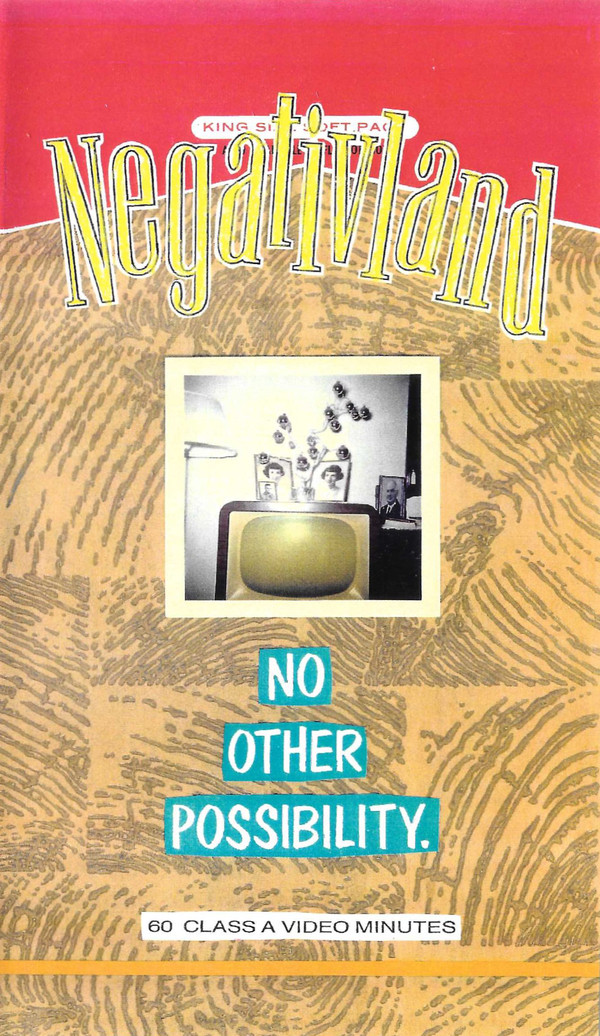
SOUNDTRACK: NEGATIVLAND-No Other Possibility (1989).

In the year that Helter Stupid came out, Negativland released this one hour video.  It is a visual approximation of a Negativland album.  Lots of cuts, lots of snippets of ads and songs and news broadcasts.  It’s mostly nonsense with some reality and some things that may or may not be reality.  Who knows?

It opens with a critical diatribe that scrolls over a test pattern.  The diatribe by Crosley Bendix criticizes everything that is (correctly) poor about the video and making up other things–the death of a stuntman.

After the opening credits, the video opens with David Willis’ mother watching TV.  On the screen is a clip from Dick Vaughn and his Jack-O-Lantern (more below).  Then she asks David for her cigarettes and the song from A Big Ten 8 Place is acted out hilariously.

After some clips from video games and a commercial for Marlboro, there’s a video for “Nesbitt’s Lime Soda Song.”  When the bee comes into the song, it turns into clips of David filming his family talking about bees and more (like his grandma looking in the fridge for potato chips which makes David laugh).

Change channels until The Dick Vaughn Show comes on and he brings out David Willis to light up a Jack-O-Lantern with 700 volts.

After a commercial from ZOTOS and Nation Hairdressers and Cosmetologists Association that tells women they have to look their best in order to get a job.  “Appearance and good grooming are essential.”

Then it’s time for Trick or Treat with David Willis who is dressed as E.T.

He talks about Halloween safety with 5 hand drawn posters.

  1. no fresh fruit–nails razors
  2. looks for holes or tears in wrappers–inject chemicals
  3. avoid homemade treats
  4. avoid weird, strange-looking people.
  5. if you bob for apples make sure your partners are not sick

Then some explosions with cars flipping.  A small video slowly evolves revealing a live performance of David singing the “Very Stupid” song from 10-8.   It is noisier and rocks pretty hard while David yells the lyrics: “1, 2, stupid ; 3, 4 dumb.”  The version slowly comes into focus as David roams the audience.  he even adds new lyrics: “1,2 urinate ; 3, 4 defecate ; 5, 6 fornicate ; 7, 8  seat be sate!”

After a text: “Earlier that same evening,” a car drives into the building under a scroll from Dick Goodbody raving about this beauty, “her name is Monarch Mercury Monarch.”

Followed by a commercial for the Monarch.

Then there’s a video clip of the fire in the Negativland recording building (which I think is true?).  They interview Mark Hosler who grabbed master tapes and studio equipment.  He tours the burned out building.

Then there’s interstitial questions of what people think about TV.

  • An old man complaining about sex on TV.
  • Teenage girls saying they like soap operas because of the sex.
  • A guy saying TV would be improved if they quit showing so many commercials.

Up next is Crosley Bendix (“Director, Stylistic Premonitions” played by Don Joyce) of the Universal Media Netweb has an insane piece about numerology, at the end of which he cries, “Thanks a million!

  • MTV has fine guys on it

Then comes Negativland “Fire Song” with Mark singing in the burnt house.

A series of ads for canned foods: tomatoes, grapes, yams, dog food over a muzak version of “Age of Aquarius.”

Then comes the religion portion of the show.  Another diatribe by Crosley Bendix complains of people always searching for more intense entertainment.  Since Jesus’s time.  In fact, The Last Supper is the crucial link-up of food and show business.

Then comes more live scenes of some crazy music and kids walking around in costumes who start shouting about ice cream and other food.

  • I don’t watch religious TV because I have a personal relationship with Jesus Christ.

Clips of preachers and then Pastor Dick comes out,

He tells some dad jokes like asking for coffee without cream and the waitress saying “you’ll have to have coffee without milk because we are out of cream.”

He brings out a racist ventriloquist dummy Enrico Gomez.  Then has everyone sing along with the Christian Youth Fellowship song from the album How Do You Spell Joy?

He has a Stop sign and asks everyone to clap along. Stop! [clap clap] And let me tell you what the Lord has done do me.  When he turns around the sign is a hand written note “fuck you pastor dick.”

Then comes the 5 eyewitness news team featuring Hal Eisner, with the video of the audio used in side one of the album Helter Stupid.  Don Joyce is interviewed.

As the video ends, there’s one more guy that they interview.  He says

TV is gonna make me famous one day.  When the interviewer asks how, the guy says

“you gotta know how to exploit the media.”

Was he a plant?  Who knows.  There is no other possibility, godammit.

Watch the whole video here.

[READ: April 25, 2019] “Attention Geniuses: Cash Only”

Woody Allen doesn’t seem to write much for the New Yorker these days.  I’ve found over the years that I rather like some of his New Yorker jokes and then others are just ho-hum.  Of all of the short “funny” pieces in the New Yorker, Woody tends to be able to pull off three pages better than others.

Although this one drags and often come across as an excuse to throw out pretentious references.

And yet he’s got some great turns of phrase:

Jogging along Fifth Avenue last summer as part of a fitness program designed to reduce my life expectancy to that of a nineteenth century coal miner

(more…)

Read Full Post »

SOUNDTRACK: GARY CLARK JR.-Tiny Desk Concert #841 (April 16, 2019).

WXPN has been playing “Pearl Cadillac” by Gary Clark Jr. and I quite liked it.  I knew of Gary as a blues guitarist.  But I didn’t really listen to too much by him–I don’t love blues music, generally.  But Gary adds a rocking and Prince-like atmosphere to his blues which elevates his music for me.

But “Pink Cadillac” is unlike the other two songs because he sings in a delicate falsetto (like Prince) whereas the other songs he sings quite gruffly.

The first song, “What About Us” surprised me.  First because he sang with such a deep voice (with a wonderful falsetto at the end) but also because I knew that Gary was supposed to be a great guitar player, but it was Eric Zapata who was playing all the slide guitar parts. The whole band builds the song nicely for the chorus.  They keys flesh things out nicely.

The middle has a cool funky part with great washes of keys and a funky bass sound from Johnny Bradley.

When the song ends, he says, “It’s a little bit warmer than I thought it would be.  But I feel sexy in this jacket so I’m gonna sweat thought it.  This is my life, people.”

Gary Clark Jr. had good reason to sweat. The blues-rock singer and guitarist opted to play his first-ever Tiny Desk concert — in front of a huge crowd that warmed the room considerably — while clad in a thick knit cap and heavy jacket.

I had heard that this new album, This Land, was quite political but he left the albums

more politically incendiary material for louder live shows.  Clark’s set leaned toward some of This Land‘s softer sentiments — “When I’m Gone” is about missing his family on the road, while “Pearl Cadillac” exudes gratitude for his mother’s sacrifices —

He dedicates “When I’m Gone” to his son.

He’d brought his young son on tour with him and had to contend with a traditional parenting dilemma: How do you bring your kid to the office and still get work done?

He says I’m trying to do the dad thing and brig them out here.  I’m tired, people.

“When I’m Gone” sounds like a traditional love song from the fifties with that simple bass line and stabs of guitar.  And it is a love song, only to his son, not a woman.  Clark’s gruff voice works perfectly.  Zapata plays the guitar licks between the first two verses.

He says “Pearl Cadillac” was written for his mother… who I’m gonna ask to babysit for me next time…  damn…”

Jon Deas starts on keys with simple snare and hi-hat from Johnny Radelat.  Gary gets to show off his guitar chops here.  I love the slightly distorted, slightly retro sound of his guitar as he plays all the licks throughout the song.  This song has a total Prince vibe and it works perfectly.

He sings the whole song in his gorgeous falsetto

I remember when I left home in that pearl Cadillac
I was searching for some kinda way to pay you back
For your love, your love, your love

He even handles a guitar solo flub with the ease of a parent who is overworked–a little grunt and then start again.

[READ: April 11, 2019] “The Wish”

One of the reasons I didn’t want to consider reading a lot of Esquire-published short stories is because I assumed they’d all be something like this one.

Full of death and misery and whatnot.  I mean the story starts “Kamon Gilbert woke up on the morning of the last day of his life at 6:19.”

Now, in fairness, this story isn’t about a manly man shot down in a blaze of glory.  Rather, it is a look at racism and violence and how a man’s life can change in an instant (a couple of times).  And as such it is a powerful and affecting story.  It’s still really dark though.

Kamon Gilbert is a black boy in high school school.  He is very smart and very successful.  He does well in his classes and has been selected as the lead in many of the school plays.

But none of the other kids like him: (more…)

Read Full Post »

SOUNDTRACK: LA FORCE-Live at Massey Hall (June 15, 2018).

I’d never heard of La Force.  Turns out La Force is Ariel Engle, vocalist and newest member of Broken Social Scene.  In her pre-show interview she says something that concludes with “life’s a bitch and then you die,” which didn’t bode well, but her sound is interesting (if maybe too much saxophone).

The show starts with “Upside Down Wolf.”  I love the weird square guitar she plays (and the cool sound that comes from it).  There’s also an acoustic guitar, sax and drums.  The drums from Evan Tighe are really dynamic with some great unexpected rhythms (and electronics).

The blurb describes “You Amaze Me” as infectious.  It’s a more dancey song with lots of drum-triggered sounds.  The sax from David French works pretty well here because it adds to the swells of music that are triggered by the drums.  And when the sax does add a solo, it;s a nice deep sax, which is a nice change of sound.

“Lucky One” opens slowly with a great guitar sound–a slow intro that is accented wonderfully by the acoustic guitar (there seems to be a cool echo on Warren Spicer’s sliding his hand up and down the strings).

“The Tide” swings faster.  Both guitarists add some cool sounds while the drums shuffle quickly.  Before the next song she explains she got the name La Force from a tarot card.  The La Force card had a picture of a woman opening a lion’s mouth and she loved the idea of the power that represented.

“Can’t Take” is a moody, slow piece, with some cool lead guitar from Spicer while Engle plays a very pretty minor key melody.

“TBT” opens with a simple two note guitar riff (that’s quite infectious) and a cool tribal drum beat.  The end of the song is a wonderful jam of the guitar, sax and drums totally rocking out.  It’s my favorite moment of the show and a great end.

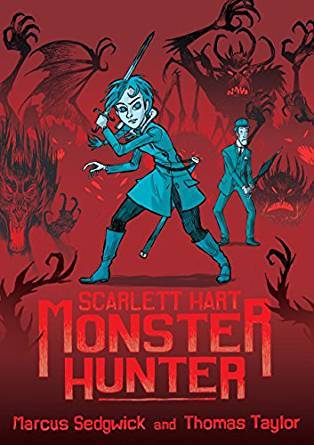
[READ: January 20, 2019] Scarlett Hart: Monster Hunter

I get the feeling that this book may have been initially intended for an older audience and then they brought it down to be more family friendly.  Or maybe it feels more like a pilot episode than a confident story.  It just didn’t feel natural.

I enjoyed a lot of the book, but it felt forced in places.  Especially because Scarlett says all kinds of exclamations that seem odd–Leaping Lizards! or Gaskets! or Piston Heads!  I mean, she’s not a car person, so why would she scream car epithets?

I also didn’t love the darkness of the story.  I realize times are bleak, but the art doesn’t have to be.

The premise is that Scarlett Hart is a monster hunter (duh).  But by law, she is too young to fight monsters (not sure how old she is or what the age of consent is, but she is younger than it).  This seems like a strange law, but many laws are strange.  She has help, though, from her butler Napoleon White and his wife.  They also helped her parents fight monsters.

But her parents were killed several years ago while on the job.  She can’t get revenge against the monsters that killed them but she can become the best monster hunter she can be. (more…)

Read Full Post »

SOUNDTRACK: CLOUD CULT-“That Man Jumped Out the Window” (Field Recordings, September 12, 2012).

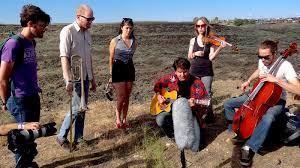
I feel like I know the name Cloud Cult, but this song sounded entirely alien to me.  This was an other Field Recording [Cloud Cult: A Moment Of Serenity] set backstage at Sasquatch! Music Festival.

I love the drama that they set up with this blurb

We were about to call it. The band was running late, our phone service wasn’t working well backstage in the remoteness of the Sasquatch Music Festival in rural Washington state, and the next band was about to begin on the main stage nearby — thus making the prospect of a Field Recording impossible. Then, suddenly, a white van rolled up, straight from the main gate, and out popped six musicians with stringed and brass instruments. Within minutes, they’d set up, sound-checked and performed a jaw-dropping rendition of “That Man Jumped Out the Window” (from 2005’s Advice From the Happy Hippopotamus) with no practice whatsoever.

I enjoy the orchestral nature of this song–reminding me of many other bigger bands that I like quite a lot.

It took me a couple of listens to “get” this song–there’s a lot of different vocal parts, almost as responses to the main part.

It opens with an acoustic guitar and is accompanied by strings and a French horn.  But the main verse is all acoustic guitar and cello (with stark backing vocals–the vocals are not really pretty exactly (they’re not un-pretty either), just powerful).

I’m not sure that this song is all that memorable for me, but I love reading this about the band:

More a family than a band, the Minneapolis collective does everything with purpose, talent and conviction, from its environmentally conscious lifestyle — in which it self-produces and releases albums from its geothermal-powered organic farm — to its charitable efforts to its emotive, even cathartic songwriting.

The song is quite pretty–although I wonder if it would be more so in a fuller setting.  But as It ended, I found myself enjoying it and wanting to hear it again.  Someone asks if they should do another take.

Then, just as the song ended and the band members finally had a chance to view the majestic natural scenery around them — and as we prepared to record another take, just in case — the festival roared back to life. But for those few minutes, we were able to stop, breathe and take in the emotional significance of a moment of serenity. At which point Cloud Cult piled back into the van and rode off to its next gig.

[READ: April 7, 2016] “Indianapolis (Highway 74)”

This story was published in the New Yorker just eight weeks after the previous Sam Shepard story.  I had to look him up and it is the same Shepard who has been writing since forever.  But he is not especially known for his noir books.  His style has changed over the years although he does often write about rootless characters and absurdist ideas.

So this story is about a rootless character, “I’ve been crisscrossing the country again, without much reason.”  This character drives all over the place for long stretches of time.  On this particular night with a blizzard heading into town, he pulls into a Holiday Inn (more for its familiar green logo and predictability than anything else).

But when he asks for a room, they are booked.  There is some kind of hot rod convention in town–which he thinks is odd for the winter, but whatever.

The concierge tells him that there is one room that might be available–the people haven’t shown up and are going to call to confirm whether the weather will prevent them from showing up.

So he waits. (more…)

Read Full Post »

SOUNDTRACK: FILASTINE-“Btalla” and “Dance of the Garbagemen.” (Field Recordings, April 4, 2012).

When I first saw the title of this Field Recording, [Filastine And The Cathedral Of Junk], I assumed it was going to be all found sounds.  So I was surpirsed that there was so much electronic music.

“Btalla” starts with some electronic drums and noises and Grey Filastine playing the hand drum–a very nice organic component. Its also surprising that the other musician is a cellist. She is almost lost in the din, but you can hear her slow notes throughout the piece–until he starts manipulating her sounds in very cool ways.

He’d say he was a radical before he’d say he was a musician — a laptop artist with a love of grit and noise. Grey Filastine, once based in Seattle but now a nomad loosely based in Barcelona, is a creative soul. He seems to also love a good party, a beat and a shopping cart wired for sound.

For the second piece, “Dance of the Garbagemen.”, it’s just him manipulating sounds and then using a shopping cart for added percussion.

With that in mind, we asked Filastine to perform at a junkyard in Austin — not just any junkyard, either, but a place called “The Cathedral of Junk.” It’s a home for more than 60 tons of unwanted consumer has-been items, transformed into art installations by Vince Hannemann.

With a song title like that and the location he’s in, it feels like something of a lost opportunity that he doesn’t use a lot more junk.  But it is fun to see him make music from and amid refuse (and art).

[READ: November 15, 2017] “Riddle”

This was yet another story that I felt was just kind of a big, What?  There’s a lot of action, but the story seems to stay in the mind of the protagonist who has other things to think about.

The whole story is told in this haze of confusion: “I must have been renting a place on H Street.”  “I was an architect.”  He talks about the area being slowly abandoned and his upstairs neighbor walking up a rickety outdoor staircase.  But all of these details seem irrelevant to the story.

He says he went drinking and came out of the bar only to see a “crippled old cowboy” walking the street.  He had seen the man before and he thought there weren’t many people like him left in town.  But then he heard a young boy, an urchin call out Hey Jack!  They seemed to experience pure joy talking to each other.  The narrator was quite taken with it. (more…)

Read Full Post »

SOUNDTRACK: ANTHONY ROTH COSTANZO-Tiny Desk Concert #789 (September 21, 2018).

The first thing you see when you look at this Tiny Desk Concert is the amazing harpsichord–large and decorated like an old-fashioned leather-bound book.  It is stunning.

But you’re only likely to notice it if you haven’t first heard Costanzo’s voice and then had a look at him.

A word about Costanzo’s voice. He is a countertenor, a man who sings in the range of a female alto. The roots of the tradition date way back to the 1500s, when young male singers, called “castrati,” were castrated in order to preserve their high, flexible voices.

“I’ve managed to do it without castration,” Costanzo joked to the audience of NPR staffers. These days, countertenors sing in falsetto, and while as recently as 30 years ago it was considered something of an androgynous novelty, now countertenors are part and parcel of the opera world.

The music is exceptional and is wonderfully modern with that classical feel that opera naturally seems to add.

Costanzo performs songs from his new album, which pairs music by George Frideric Handel with Philip Glass. Strange bedfellows perhaps, and born more than 250 years apart, but somehow Glass’ repetitive, staccato beats and Handel’s long, flowing melodies manage to shake hands across the centuries.

The first piece is by Philip Glass.  And the music sounds like perfect chamber pop.  The flute plays the Glassian up and down melody while the bassoon plays the wonderful, peculiar bass notes.

One obvious common thread is the arrangements, by Nicholas DeMaison, that Costanzo commissioned expressly for this performance, featuring harpsichordist Bryan Wagorn (playing a beautiful double-manual French-styled instrument built by Thomas and Barbara Wolf), along with flutist Alice Teyssier and bassoonist Rebekah Heller.

Glass’ “Liquid Days,” begins with a recitative introduction, similar to a Handel aria. But the lyrics, by David Byrne, depict love, in all its quotidian splendor.

It is somewhat strange to hear a countertenor (or even if he were a female singing alto) singing lyrics in English.  His voice is truly amazing.

It is even more peculiar to hear the word “television.”  But Byrne’s lyrics are pretty awesome:

We are old friends
I offer love a beer
Love watches television

Love needs a bath
Love could use a shave
Love rolls out of the chair and wiggles on the floor
Jumps up
I’m laughing at love

And all the while Costanzo’s voice sounds operatic, serious, significant.

Costanzo’s agile voice, with its polished tone and patrician phrasing, is a singular reminder that we live in a golden age of countertenors – guys who sing high in music both ancient and modern.

Up next is Handel’s “Pena tiranna” (From ‘Amadigi di Gaula’) which means, I have a tyrannous pain in my heart and I can never hope to find peace.  It opens with harpsichord and bassoon, a wonderful combination.  The flute then enters to play a harmony with his voice.

“Pena tiranna,” from Handel’s undervalued Amadigi di Gaula, is a compelling example of how well the composer can spin a gorgeous melody to evoke the deepest anguish.

The final piece is from Glass: “In the Arc of Your Mallet” (from ‘Monsters of Grace’)” which has a text by the 13th-century Persian poet Rumi.  It speaks of longing in sexy undertones.  He says that in this translation brings out the strange, layered longing–sometimes dirty–meaning under the surface.

Anthony Roth Costanzo is a feisty performer who knows a thing or two about busting down barriers in classical music. After all, opera singers don’t normally belt out arias behind office desks, and they don’t insist on lugging harpsichords with them. They also don’t routinely sing in Bronx middle school classrooms and get students talking about emotions. But Costanzo is fearless. (And after seeing this amazing Tiny Desk performance, watch him melt the hearts of distracted sixth-graders.)

[READ: January 9, 2017] “The Driver”

I never anticipated where this story was going.  And the direction it took to get there was really interesting.

It begins with the story of Mrs Quantrill, a respectable woman who managed to get their house listed on the Nation Register of Historic Places.  She and her husband were philanthropists and they threw legendary parties.

There’s an aside that says when their son Spencer inherited the house, he demolished it and replaced it with storage units.

But at the time of this story Spencer is 9 years old.  And Mrs Quantrill has been called into the principal’s office because Spencer is struggling.  Spencer is nervous and doesn’t know what to do with his, feet, his eyes or his hands. (more…)

Read Full Post »

SOUNDTRACK: JESSE BOYKINS III-“4 U 2 B Free” (Field Recordings, October 8, 2014).

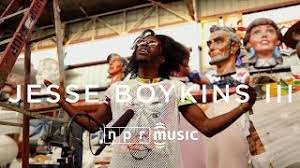
This Field Recording [Jesse Boykins III Breaks It Down] starts with a lot of ambient noise–a giant overhead fan–which I thought might be an interesting component to the song.  But once Boykins starts singing, it’s just his voice. And that’s all–it’s a lovely a capella performance.

The day after playing a set at the Superdome during the Essence Music Festival this summer, eclectic R&B singer Jesse Boykins III wandered into Mardi Gras World — an expansive, airy warehouse packed wall to wall with floats used in New Orleans’ infamous parades. The floats are built from the ground up in-house, so Boykins found himself surrounded by unfinished works and spare parts.

It’s creepy and unsettling to see these giant heads–eyeballs at eyeball height, but just a head–staring at you.  It’s also surreal with the various colors and shapes and the head of Abraham Lincoln looking on as Jesse sings.

He sang one of the most emotional tracks from his latest album a cappella. While singing “4 U 2 B Free,” Boykins pulled back the layers of his own creation, matching his performance to the exposed, oddly vulnerable characters surrounding him.

But Boykins’ performance is really powerful especially at the end as his wonderful high notes as if no no one is watching.

[READ: October 4, 2017] “Enter the Ford: Lost Chapters from A Death in the Family”

I knew nothing about this book, so I had to look it up.

The first chapter sees a young by, Rufus, waking up wearily with his dad.  The boy is very excited and the father seems pretty delighted to be awake with his son so early.  They try their best not to wake the baby girl or the mom.  Of course the mom wakes up and asks for the dad to do some things before he leaves.  The dad makes breakfast–with stern admonitions to the boy not get burnt by the coffee pot, bacon or stove–and then he helps the boy with the difficult buttons.

We don’t know too much about the dad yet, but this exchange is interesting:

“You’re getting pretty good, buttoning yourself.” he said.  Rufus said nothing.
His father thought damn fool thing to tell a child; dumb as a fish.

In the second chapter they head out to Chilhowee Park and the entire chapter is given over to the most exquisite descriptions of this amusement park through the eyes of Rufus.  Everything is amazing and wonderful and the language is of a person taking everything in–from the color of the lake to the swans on the water to the roller coaster and the fairy’s wheel.

And then came the merry-go-round.  We learn how first Rufus rode only on the bench.  And then was allowed to ride the horses that did not go up and down.  And then on the up and down horses only if his dad was holding on.  And finally, today, to ride the up and down one by himself.  The amount of detail about the merry-go round is wonderful.

The only thing more wonderful than the merry-go-round was the little train.  We hear his father’s kind words about how amazing the train is.

Then things go sour a little because there’s also the arcades–where adults play games of chance.  There’s games that one never won–like the seventeen jewel watch.  But the worst was a place where there was “a darky with his head through a hole.”  And the people were meant to, as the carny said, “hit the nigger in the head and you get a cigar.”

Rufus’ mom hated this game.  And Jay wasn’t too keen on it either.  The one time they were there, Jay conceded that the man’s got to make money some way.  Jay tried to ease his wife’s concerns by showing her that the ball wasn’t that hard.  He lifted it up but she refused to even touch it.  The carny got mad at him for touching the ball. And Jay got huffy back.  She calmed him and he walked away.

But on this visit, he did not back down. the carny did. And that made Jay’s day even better.

Chapter 3

This chapter opens with Jay and his wife, Laura, talking about something extravagant.  She wants it, he doesn’t seem to want it and he seems to twist her words against her.

It comes out that he wants to get a car so that they can visit the in-laws once in a while.  She is nervous that cars are dangerous.  He admits they are but sometimes living in a house is dangerous.  But he says that having a wife and kids means he will be even more careful than everyone else out there who has nothing to be careful about.

She agrees to the car.  But in the middle of the night she has a premonition of something bad happening to the family in the car.  He says that they won’t get one.  Then later she gets over the premonition and agrees that they should go ahead and get one.

Chapter Four.

And then daddy drove home in a gas buggy–a new ford  Rufus is thrilled.  Laura can’t believe he drove it there all by himself.  And the neighbors all come out to gawk.

“Course they got an awful name for breaking down… But where Ford’s ahead, he supplies you the parts.”

They go for a before-dinner ride.  Jay drives very well and everyone is enjoying themselves.  Laura is nervous and says so, but he is careful and considerate of them.  He pulls over when another car comes by and he is very cautious around a horse and buggy–the horse is not spooked at all.  But their joy ridge is somewhat ruined by a speed demon who comes buzzing by them scaring them all half to death.

As the excerpt ends, Jay and Rufus take the car out for a spin and Jay really lets the speed fly.  They almost have an accident but Jay is able to handle it and he confides in the boy that they must never tell their mom that they went fast.  He agrees.

I don’t actually know much else about this story.  Between the title and what kind of tension a scene like this builds I expected something bad to happen.  It never did (hooray), but i assume it does),

The writing in this story was exceptional.

Read Full Post »

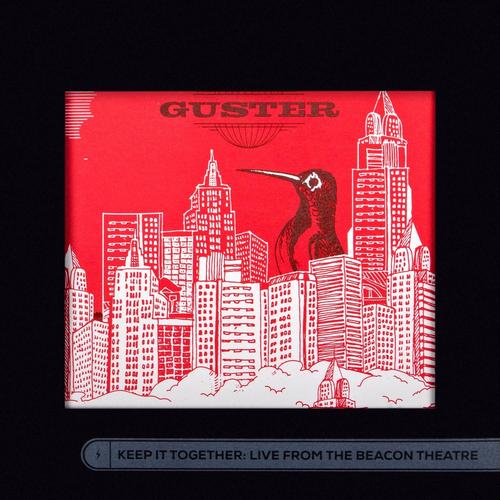
SOUNDTRACK: GUSTER-Keep It Together Live from The Beacon Theatre (2014).

In 2014, Guster released three CDs of them playing their early CDs live in their entirety (excluding for some reason their second disc Goldfly).  This is their fourth CD ‘Keep It Together’ recorded live in concert at The Beacon Theatre on November 30, 2013, ten years after its release.

As the disc opens, Ryan shouts, “Keep It Together starts now.”  This makes me think that they played other songs before it?  It would be great to hear an album in its entirety but not if that’s all they played.

After the first song, “Diane,” Ryan jokes,  “I guess there no real surprises in the setlist from here on out.”

Midway through the show, he comments that as an active band making new music, you want to be careful not to trade in nostalgia.  But he also knows that if one of his favorite bands played one of his favorite albums…it would be magical.

The band sounds great.  And, fortunately, it’s one of those shows where the live recording sounds at times even better than the original.

The only real divergence from the album is that after “Homecoming “King” they play “Chariots of Fire” on piano and strings.  I’m not sure why, but it’s fun.

One of the great moments of any Guster concert is when they play “Come Downstairs and Say Hello” and the Thundergod plays the bongos and smashes the cymbals with his hands.  It’s more fun to see it, but it’s great in this case to hear it.

“Red Oyster Cult” sounds great with the horns as an addition and Ben Kweller comes out and sings lead on the first verse of “I Hope Tomorrow is Like Today” (I had no idea he co-wrote it!).  They even leave a slight pause for the “hidden track” of “Two at a Time.”

This is a great version of this album, and well worth the listen.

[READ: June 2, 2018] “Fungus”

This is a story about carrying on after the unthinkable. But not just carrying on, carrying on with the mundane things that you can’t live without but remind you of exactly what happened.

The story opens with an insurance check and talk of geckos.  But the tone is not lighthearted like Geico commercials.  Andrew has access to Ingrid and Ron’s car, but really, he can only borrow it for so long.  It is time to buy a new one.

So Andrew and his daughter Willa go to the Subaru dealer.

These two scenes are simple enough, but they are fraught with meaning–with the undertone of what happened and how Andrew is allowed and allowing himself to deal with it.   There’s darkly funny thoughts (he’d like a homemade sign around his next that says “I don’t know”).  But the reality is that he has to go on for Willa’s sake, if not his own.

And then there’s this idea which is perfect for the story but works wonders in everyday life: (more…)

Read Full Post »

« Newer Posts - Older Posts »