 SOUNDTRACK: VOIVOD-Nothingface (1989).
 In light of Marathe and the Antitois, and Quebec separatists everywhere, I figured I’d mention my favorite CD by a rocking Quebecker band. When Voivod started they were a rumbling thrash band. They put out an album with the wonderful title of RRRÖÖÖAAARRR. They were very fast, very loud, and their singer had a really peculiar delivery style. I later learned that this was because he’s a Quebecker and French is his first language. Since he sings in English, his stresses and emphases are off-kilter, (and the guitarist seems to play to this particular feature, so the music is off-kilter as well) making for a very surreal experience.
They were probably my first inroduction to really cool French names. Because even though they had stage names (Piggy, Blacky, Snake, and my personal favorite: Away) their real names were foreign and cool like Denis D’Amour and Jean-Yves Theriault.
Nothingface is the pinnacle of their prog-creative energies. It is a fantastic progressive-rock/heavy metal hybrid. There are fascinating time-changes, with cool atmospheric aspects that counterpoint the heavy sections. And the overall theme of the album is technology gone awry.
On their previous records, melody was not really evident. And it’ hard to believe that a disc that is so full of time changes could still be melodious. Yet the bridge of “Nothingface” is quite pretty, which, again, counterbalances the weird chord structures of the solo section. There’s even an awesome cover of Pink Floyd’s “Astronomy Domine” that adds some cool metal guitars to an already trippy song The Floyd version is spacey and psychedelic. Voivod add an element of menace to the song. Very cool.
And then there’s a song like “Missing Sequences” which has 4 different sections in the span of less than two minutes. An opening that is slow and spacey, interrupted by a loud “Now!” which brings to a weirdly chorused verse that morphs into a rough staccato bridge followed by a speedy guitar break and then yet another verse style. By the time we hit the 2:30 mark, the song breaks down into a bass-only sequence. And then it mostly repeats itself. That is, until the ending minute which is something new entirely. It sounds impossible on paper and yet it is done seamlessly and is one of my favorite tracks on the disc.
There’s also the weirdly propelling and compelling “ground and rock and sand come crumble tumble down” sequence of “Pre-Ignition” that throws a cool catchy riff in the midst of a fast charging song. And “Into My Hypercube” has some fantastic riffs, including another really cool bass-only section.
And the whole album works great with headphones.
In the 1990s, metal bands experimented with lots of different genres and effects, but it was this 1989 release that really highlighted what kind of fantastic music you could make within the strictures of heavy metal. Voivod makes some pretty unusual sounds with their instruments (guitar most of all), and the album can be a challenge, especially if you like you music light and easy), but for me, this is one of the best discs around.
[READ: Week of August 2] Infinite Jest (to page 508)
50% through.
Halfway House, er, I mean Half Way Home.
Thoughts:
The rewards are coming quickly now. There seems to be a payoff every few pages. I am totally loving this book and the environment it has created.
Since the Boston Marathon is mentioned in the book, I’ll say that we are currently at the 14 or so mile point (downtown Wellesley). Congratulations, you have just made it through “Screech Tunnel.” [See the Boston Marathon route here.]

I’ve been going on and on about chronological years and when exactly Subsidized years started. I even quoted other people who had calculated the actual year that Subsidized time was set up.
And, of course, all this time, all we had to do was to look at the NAME of the Year of Yushityu 2007 Mimetic-Resolution-Cartridge…. As this clever thread shows, others figured out pretty early in the reading that the 2007 in the year was a pretty big clue as to what year Subsidized Time began.
(Presumably non O.N.A.N. countries do not follow Subsidized Time? And the, again, presumably Japanese made Yushitsu is on numerical-year-time. Or is that a thread that has already been discussed already?).
I am pretty embarrassed to have realized this at this late a date, and I’m delighted that everyone let me figure it out for myself (and that no one was cruel enough to rub it in.)
Now if you wanted to argue against the Yushityu 2007 as a dead giveaway to the year, you could say that, for instance, Microsoft Products don’t always indicate the year that they came out. But for confirmation of Yushityu, we can use a perpetual calendar.
We learned that November 7th is the the day of the exam that Schacht is taking. This is a Saturday class. The perpetual calendar show that Nov 7th falls on a Saturday in 2009. Therefore YDAU=2007. I’ve been trying to use all this logic to puzzle this information out, and here the author basically just TELLS us it from–well, not the get go exactly–but from a pretty early point.
All of this self-flagellation is also because of my own lack of clock-watching in the book. I have somewhat obtusely not been following the chronological dates very carefully. It was only when I consciously realized that Marathe and Steeply are having their mountainside chat in April/May of the YDAU when all of the events at E.T.A. and Ennet House are taking place in November that it dawned on me that the time line was not only present, it was pretty important.
So, I spent some time crafting a general timeline of events–something I haven’t seen anywhere else, (but then I haven’t actively been looking for it because I don’t want to get Spoiled). So at the end of this post I’m going to put my timeline of events thus far. I’ll see how important it is to update it in future posts.
But now on to the book:
This week’s reading jumped back and forth between topics a bit more frequently. (more…)
Read Full Post »
 SOUNDTRACK: SONIC YOUTH-SYR 2: Slaapkamers Met Slagroom (1997).
 The second SYR release is like the other side of the coin from SYR1. The premise is the same, the players are the same, but the result is rather different.
 SOUNDTRACK: SONIC YOUTH -SYR 1 Anagrama (1997).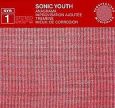


 SOUNDTRACK: THE TRAGICALLY HIP-We Are the Same (2009).
 first heard of The Hip when I saw their video for “
 SOUNDTRACK: RUSH-Retrospective 3 (2009).
 This disc filled a hole that the public had been really clamoring for: a collection of the most popular songs by Rush from the 1990s until today. [cue crickets chirping]. Okay so this period isn’t exactly the best selling Rush era, and many people probably didn’t even know that they were still around (they weren’t for a while, but then they came back with an amazing vengeance).

 SOUNDTRACK: MOXY FRÜVOUS-Live Noise (1998).
 Live albums usually work as a “best of” and so, with Live Noise you get the crème de la crème of the Früvous catalog. But, more than that, Früvous were amazing live. I had the opportunity to see them once, and it was a fantastic show.
 SOUNDTRACK: MOXY FRÜVOUS-the C album (2000).
 Moxy Früvous broke up (or went on indefinite hiatus) almost ten years ago. But they released this final compilation, basically for fans only. I’m not sure if it’s even available anywhere anymore.
 SOUNDTRACK: MOXY FRÜVOUS-Thornhill (1999).
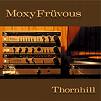 The final “proper” Moxy Früvous disc is something of a return to the days of Wood (see, the cover art isn’t silly at all, and it’s a photo not a drawing). It’s not as dire and claustrophobic as Wood but it also doesn’t really have too many silly moments.
 SOUNDTRACK: MOXY FRÜVOUS-You Will Go to The Moon (1997).
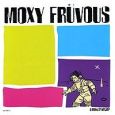 Moxy Früvous’ fourth disc is their most well-rounded. It runs a full gamut of styles from pop to silly to ragga and a capella.
 I Just Read About That...