Feeds:
Posts
Comments

Archive for the ‘Canadian Music’ Category

SOUNDTRACK : BLACK MOUNTAIN-Wilderness Heart (2010).

As the Tea Party showed, it’s never too late to pay tribute to Led Zeppelin.  Of course in 2010, it seems really uncool.  So, why not go whole hog?  The opener, “The Hair Song” sounds uncannily like Led Zeppelin, from chord structure to guitar sound.  And then just wait until after a verse or two and you get the guitar solo which comes straight from a Led Zep song.  And, amusingly enough, the duet vocals of Stephen McBean and Amber Webber combine to sound an awful lot like Robert Plant.

It may not be fair to compare them to their forebears, but they seem so intent upon referencing them.  “Old Fangs” sounds a ton like Buffalo Springfield’s “Mr. Soul” (at least they’re fellow Canadians).  But the wonderfully 70’s-style sound of the keyboards raise the track above any mere copycat.

“Radiant Hearts” is a gorgeous acoustic ballad where you can really appreciate the split vocals of McBean and Webber (and which should make you go back to the first two songs to really listen to how great they sound together.  This is that rare ballad that doesn’t feel like a kind of sell out track.

“Rollercoaster” returns to the 70’s-lovin’ with a monster riff (and a solo) that Tony Iommi would be proud of.  But rather than simply bludgeoning us, the riff stops in its tracks and then slowly builds itself back up.  “Let Spirits Ride” moves out of the 70s and sounds a bit like a Dio riff circa 1983.  But there’s some cool psychedelic vocal processing on the bridge (and a massive organ solo) to really mess with your retro time frame.

“Buried by the Blues” is followed by “The Way to Gone.”  They’re both folkie songs (although “Gone” features a re harder edge).  After the heaviness of the first half of the album , these tracks seem like a bit of surprise but they match the album’s retro feel very nicely.  “The Space of Your Mind” reminds me in many ways of Moxy Fruvous’ “The Drinking Song” (you won’t see that reference too much to this album).  Until the chorus comes in, when it turns into something else entirely.

But it’s not all mellow for the end. The title track has some heavy riffage (and great vocals by Webber–she reminds me of some of the guest vocalists on The Decemberists’ The Hazards of Love, although she really sounds like any number of great 70s rock vocalists).  I love the way the track ends.  The disc ends with “Sadie” another folk song (which makes the album half delicate folk tracks and half heavy rockers). It’s a fine song, but the album is kind of ballad heavy by the end, and the teasing drums and guitars just never bring forth the climax I was looking for.

Despite the obvious homages to classic rock bands, (if you can get past that, the album actually sounds fresh (or maybe preserved is a better word) and strangely original.  Like the preposterous cover, the album is preposterous–over the top and crazy.  Yet unlike the cover, the pieces all work together to form a compelling picture.  Obviously it helps if you like classic rock, but there’s nothing wrong with good classic rock, now is there.

[READ: February 14, 2011] Literary Lapses

Despite the cover picture above, I actually downloaded this book from Google Books (and the cover of that one was boring).

So, obviously, reading the biography of Stephen Leacock made me want to read some of his humorous fiction.  True, I also wanted to read Mordecai Richler, but his books are much longer and I wanted this done by the end of February!

So, according to Margaret MacMillan, it is this book, specifically the first story, “My Financial Career,” that solidified Leacock’s reputation as a humorist.  And I can totally understand what she means (without having read the other books, of course).  “My Financial Career” is indicative of the others stories: not laugh-out-loud funny, but clever, kind of silly and very smile-inducing.  The gist is that the narrator is very nervous about going into a bank with his large amount of cash ($56!).  He asks to speak to the manager who thinks he’s Very Important and then proceeds to embarrass himself further. And further. It’s quite amusing.

“A Christmas Letter” is one of my favorite in the book.  It’s a very snarky look at a friend’s Christmas Party, with a great punchline.  And stories like “How to Make a Million Dollars” or “How to be a Doctor” are wonderfully amusing tales in which the narrator mocks the wealthy and “professionals.”

There are 42 stories in this book, so there’s bound to be a few clunkers.  Some were mildly amusing, some were mere trifles, and some are crazily out of date for a 2011 audience.  This book turned 100 years old last year.  (Neat). (more…)

Read Full Post »

SOUNDTRACK: RHEOSTATICS-Double Live (1997).

After mentioning the two live shows that comprise the majority of this disc, I figured I’d mention the disc itself.  Rheostatics are a great and engaging live band: Dave Bidini has wonderful repartee with the audience and Martin Tielli’s live guitar work is amazing. The band sounds tight but not stiff and there are a number of tracks here that are goofy (but not throwaway) like the acoustic version of “Bread, Meat, Peas & Rice” and the weird and wonderful “People’s Republic of Dave.”

The songs that were taken from the two Bathurst Street concerts have been professionally mixed and mastered (of course) so even if you’ve listened to the bootleg concerts, you’re going to hear a different quality (and mix, as boots tend to be recorded from one side, usually missing some aspect).

My only gripe is something that they’d never really be able to accomplish live anyway.  It’s in “King of the Past” which is one of my favorite Rheos songs.  On the album, after the break, there’s an electric violin (or something) that plays a really cool dramatic melody.  But live they never play it like that, they rely on Tielli’s guitar.  The guitar sounds fine, but that majestic string section provides such a great contrast that the live version lacks just a little.

On the other hand, the live version of “Horses” is stunning.  As are “A Midwinter Night’s Dream,” “Palomar,” and “Christopher.”

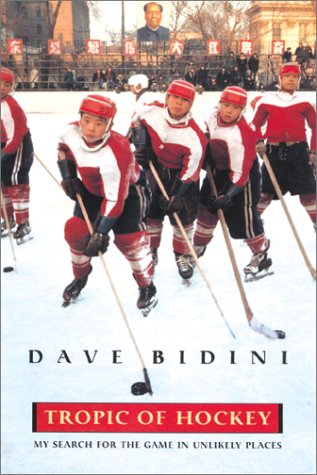
[READ: February 8, 2011] Tropic of Hockey

I bought this book when I was in Toronto sometime in 2001.  I was pretty excited to get another book by Dave Bidini.  And then I proceeded to not read it for a decade.  Hey, these things happen.

But I have to say in many ways I’m glad I waited this long to read it.  The book was written pre 9/11 and as such it has a kind of sweetness about international travel that I miss now.  And I can appreciate it all a lot better with a decade’s distance from everything.  As of 2011, I know that I never want to go to the UAE, but reading Bidini talk about the UAE circa 1999 it sounds like a really fun place to go.

So anyhow, this book, as the subtitle suggests, is Bidini’s attempt to find hockey in weird places around the globe.  Bidini has gotten tired of the NHL: it is bloated, is it full of obnoxious rock anthems during stoppage and the spirit of the game has been overwhelmed by the Almighty dollar (specifically the American dollar).  And so, he wanted to see if he could find people who played hockey the way he and his pickup team play on the weekends: for the love of hockey.  And he was amazed to find hockey fans in these four unexpected places: Hong Kong, China, The United Arab Emirates and Transylvania.

The book is really three things though: it is the story of hockey in different places, it is a chance for Bidini to play hockey in these places and write about the experience and it is a history of Canadian hockey. (more…)

Read Full Post »

SOUNDTRACK: RHEOSTATICS-Live at the Bathurst Street Theatre, Toronto ON, April 5, 1997 (1997).

This is the second of two nights that The Rheostatics played at The Bathurst Theatre.  It is also available for free on their live site.

This concert also features a lot on their Double Live album.  There are seven tracks that come from this show: “Feed Yourself,” “Shaved Head,” “Dead is the Drunkest You Can Get,” “Bees,” “A Midwinter Night’s Dream” “Stolen Car,” and “Good Canadian.”

This recording is a lot better (sound wise) that the previous night’s and the band seems a lot more “on.”  And, the band interacts with the audience a lot.  “Feed Yourself” is great and “Mid-Winter” is stunning (both understandably picked for the live album).  There’s an amusing “drum solo” during “Legal Age Life.”  It’s a great set.

Some interesting notes: this is the first time the band has played “Stolen Car” live (and it hadn’t been released yet). It’s the same version as on Double Live, but here you hear a lengthy pause in which “Martin left the lyrics in his bag” and Dave has to entertain the crowd.  “Good Canadian” also on Double Live, was a spontaneous little ditty that Martin made up.  Also, during the show, they encourage people to listen to Nightlines, because it is danger of losing its funding.  Fans will know that Nightlines went off the air not too long after that and the Rheos played the final show (and released an album of it).

Of the two shows, this one is definitely preferred.  And even if you have Double Live, it’s worth downloading this entire show..

[READ: February 7, 2010] “Axis”

Alice Munro has another great, subtle story here.  This one mixes things up a little bit in the storytelling, which I found intriguing and more than a little fun.

It opens with Grace and Avie, two farmers daughters who are at university.  They are studying intellectual subjects, with the hope (let’s be honest) of finding intellectual boys to marry eventually.  They are obviously not sorority material (just look at their coats), but they don’t really want boys who like sorority girls anyhow.

After we follow them for a bit, we narrow the focus to just Grace.  Her boyfriend Hugo is on his way to visit her at the farm (and to meet her parents).  He does not make a very good impression, and he is not to fond of them either.  And, worse yet, they won’t leave them any time to be alone.  Until Grace hatches a plan for them to be alone, which, if you’ve read any fiction, you know won’t turn out too well (but that’s not the climax of the story, don’t worry). (more…)

Read Full Post »

SOUNDTRACK: RHEOSTATICS-Live at the Bathurst Street Theatre, Toronto ON, April 4, 1997 (1997).

This concert is free as a download on the Rheostatics Live website.  According to the on-stage banter, the band had just finished a string of live dates with the Inbreds that were recorded for their amazing Double Live album.  They even say that this night’s show is also being recorded for the disc.  And the set list is pretty amazing.

Which is why this show is such a disappointment.  Part of the problem is obviously the quality of the recording, and you can’t fault anyone for that…a bootleg is a bootleg after all.  But the band makes some really odd flubs and some of the songs seem really lackluster.  This is all the more surprising because the band seems in really good spirits –making jokes with each other and with the crowd (they make someone take off a Mr. Bean T-shirt!).

The biggest gaff comes in “King of the Past” where (I think Dave) begins the chorus a measure early (yipes!).  “Fan Letter to Michael Jackson” for some reason removes the loud rocking “Michael!” and “Jackson!” sections and replaces them with whispers.  It’s an interesting change, but the intensity is completely lost.  Something is also missing from “Sweet Rich Beautiful Mine,” there’s no oomph to it.  And, my favorite song “Claire” sounds off to me (I think it’s the recording though).

On the plus side, “My First Rock Concert” is great and well-received.  Dave introduces it as if it was the first time they’ve played it, which is very exciting.  The end of the show picks things up and the band sounds better.  In fact the last two songs are really great (and you can really hear Neil Young’s influence on the guitar).  I’m willing to blame some of my disappointment on the sound quality…it’s missing a fullness that you really need to appreciate the band, but this is not an A+ show.  They played another show the following night there (also available online).

Heh, I just learned that they used a number of recordings from this show on Double Live.  They used “Torque, Torque,” “Claire,” “Bread Meat Peas & Rice” and “Feed Yourself.”  Listening back, “Torque” and “Peas” sound great in the set and “Jesus Was Once a Teenager, Too” is a fun, light version.  “Claire” still sounds funny to me (even on Double Live), but it’s definitely worse on this bootleg.  The mixing is so much better on Double Live (of course!), that it really accentuates the guitar solo and backing vocals much more.

[READ: February 1, 2011] Shampoo Planet

On the inside cover of my copy of Shampoo Planet, I scribbled my name and “December 1992.”  I was in a phase of putting my name on all my books (which is kind of cool looking back, but really rather silly).  This is Douglas Coupland’s second book, and I remember being very excited when it came out.

I’m sure I read it then, but upon re-reading it (admittedly almost twenty years later), I didn’t remember anything from it.  Does that mean I didn’t read it, or that the book was just ephemeral?  Well, in some ways it is ephemeral, because it’s such a document of its time.  It also seems to me that either Coupland is (or was) unique in his writing style, or that very few writers dealt with 90’s culture as directly as he did.  Off the top of my head, I can’t think of another writer who approached 90s culture in the same way

In many ways, this book is all about dealing with the wealth of the 90s, when money was everywhere and people felt free to experiment with their lives.  And, yes reading this now the story feels so light and free and I wish that I had the problems that these kids deal with.  I also wondered if anyone could write a story like this now, with youth culture being so very different.

The inside front and back cover are (different) periodic tables that he has personalized with 103 elements of the 90s.  (Lu=Moon, A=Ambition, Dd=The Dead).  This is the only nod to unconventional book tropes here (where Gen X had all of those definitions that he footnoted).  In fact, the novel is fairly straightforward and conventional.

The main character, Tyler, is a twenty year old who cares more for his hair (he has a vast array of products–my favorite observation: “always better to buy well-advertised products–preferably those products endorsed by a celebrity” (133)).  He was raised in a hippie commune off on Vancouver Island (the only real nod to Canada in the book), but when his parents divorced, his mother Jasmine took the kids to Lancaster, a suburb of Seattle.  And, as seems to happen, the children of hippies became proto-yuppies. (more…)

Read Full Post »

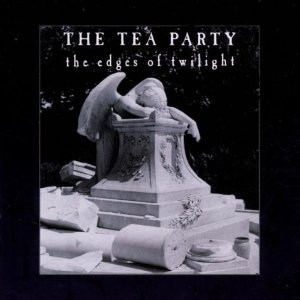
SOUNDTRACK: THE TEA PARTY-The Edge of Twilight (1995).

In the way that Ian Astbury of The Cult reminded everyone of Jim Morrison, so does Jeff Martin, singer of The Tea Party.  He looks a bit like him and he sings in a baritone voice that, while all his own, sounds like perhaps a 1990s Jim Morrison.

This, their third album, is full of what I think of as their trademark sound: all manner of exotic instrumentation laid over heavy Zeppelinesque riffs.  Opener “Fire in the Head’ is not unlike “Kashmir” in its riff, and what’s funny is that the exotic instrumentation makes it sound even more like “Kashmir” than “Kashmir” does.  Zep didn’t use instruments like the sitar and sarod to make their sound more authentic.  Indeed, authenticity seems to be what the band is going for, as later albums describe them spending time in the middle east where they learned to play these instruments more proficiently.

“The Grand Bazaar” takes that concept further with some really Eastern sounding music within a very heavy rocking track.  And “Ianna,” although not my favorite track, really showcases the Middle Eastern instrumentation in this cool, twisty track.  There’s also a more traditional rock number, “Drawing Down the Moon” which features lengthy blues-guitar solos over a fairly conventional track.

It’s not all heaviness though, as “Correspondences” is a seven minute piano based ballad in which Martin’s voice is right in your ears.  It’s on this track that you decide whether you love his voice or think he’s preposterous.  If the latter, well, then there’s the beautiful instrumental “The Badger.”  And “Shadows on the Mountainside” is a quieter acoustic number in which Martin sings in his much more delicate range.

But perhaps the most over-the-top, and consequently, best track on the disc is “Sister Awake” which features 12-string guitar, sitar, sarod, harmonium and goblet drums.  It starts slowly and quietly and builds into multiple climaxes (complete with loudly whispered “Sister!”).

Whether or not this confers any kind of approval on The Tea Party or not, Roy Harper (as in “Hats Off to Roy”) does a spoken word bonus track at the end of the disc.  I don’t know much about Roy Harper or what he was up to in 1995 (perhaps he’d do anything for a buck?) but it give an air of legitimacy, no?

The Tea Party is a band that splits people into love it or hate it groups.  They have sold millions of copies and yet there are those who despise them.  Their next album Transmission found some success in the U.S. because it was a bit more industrial sounding (with samples and loops), but they never really broke through down here.

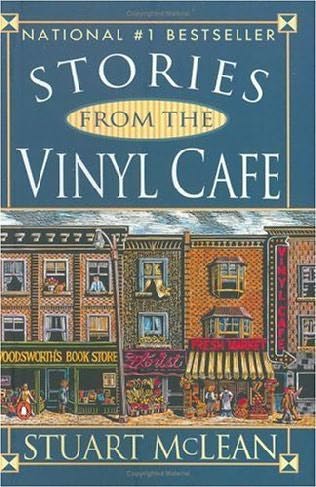
[READ: February 4, 2011] Stories from the Vinyl Cafe

I’m not sure how I found out about this book.  I know I bought it in a Chapters in Toronto.  I wonder if it was on a display and I was intrigued by the title.  Or, more likely, I had heard a bit about him in my preparations for my trip and decided to buy his book.   Whatever the case, I didn’t read it until now.

McLean is described in one of the (practically a dozen) pages of praise and advertisements for his other books as a Canadian Garrison Keillor.  And, as lazy as that seems, it’s fairly accurate.  Especially because although McLean is a humorist (he won the Stephen Leacock Memorial Medal for Humor), like Keillor, who is mostly funny, McLean also deals a lot with serious matters.  Indeed, some of the stories in this collection are utterly unfunny: ending with a dead dog or a dead grandmother.

And here’s the thing.  These stories are slices of people’s lives.  They are incidents that impact them and are worth recollecting, but that don’t cause anyone to change.  They’re like perfect little anecdotes, and I imagine they are excellent to hear aloud. (more…)

Read Full Post »

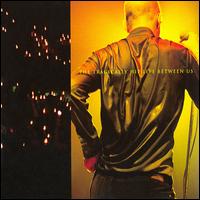
SOUNDTRACK: THE TRAGICALLY HIP-Live Between Us (1996).

This show was recorded live November 23, 1996 in Detroit.  It’s kind of odd that these Canadian favorites would record their live album in the U.S.

In the intro to the album Downie thanks The Rheostatics for opening (you can hear the Rheos’ sets from other days on the tour, but not this night, at their Live site).

This concert is a great, strong set of songs, and an excellent way to experience the Hip live.  Downie is practically a loose cannon with his extemporaneous ramblings…he’s funy, weird and clever and he’s a charismatic front man.  And the band sounds great (no overdubs on the disc, and none are needed).

The set list is a wonderful selection of tracks from all five of their albums (none from the first EP).  Two each from the first two, Three from Fully & Day and the first four tracks from Trouble (which is probably why I like the beginning of Trouble so much more than the end).

True, any fan will complain about the lack of certain songs on here (no “38 Years Old,” no “Little Bones” no “Unplucked Gems” no “Hundred Meridian” or “Fifty Mission Cap” no “Fire in the Hole”–wow, that’s a lot of great songs to leave off, shows just how many great songs the Hip have).  But with only 14 songs to choose from, they made a great set list and you don’t even miss those songs until you realize they’re not there.

The audience is very responsive and the band seems to feed off it.  If you’re new to the Hip, this is a great place to start.  It’s sort of like a greatest hits of the early years, but it will leave you wanting more too.

[READ: January 26, 2011] “Summer Plum (Winter Version)”

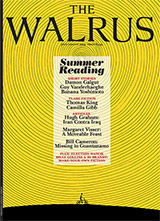
This was the final of seven stories in The Walrus‘ Summer Reading Issue 2004, and it was the final flash fiction.  This story is a bizarre whirlwind from the get go.

It opens with a belief that shredded coconut can make you fly and ends with a paean to a plum.  In between Keds are glued to a driveway and there’s a lot of repetition of “plump plum plump plum.”

I admit I have no idea what this story was supposed to be saying.  It seemed more like a sort of evocative poem, relishing the textures of life.  And yet there’s that whole thing about being glued to the driveway which kind of throws a wrench into that interpretation. (more…)

Read Full Post »


SOUNDTRACK
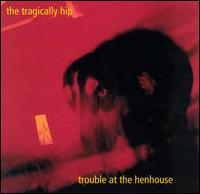
: THE TRAGICALLY HIP-Trouble at the Henhouse (1996).

After the major high of Day for Night, The Hip followed it up with Trouble in the Henhouse.

It opens with “Giftshop” which sounds like it could have come straight from Day for Night.  “Springtime in Vienna” is a marvel.  The opening is quiet with Downie’s almost whispered voice telling a compelling story until it blasts out with a wonderful chorus.  “Ahead by a Century” opens with a catchy acoustic intro.  Again, the harmony vocals add wonders to the verses.

But overall the album feels like the Hip exhausted their angst and anger on Day for Night and have chosen to go with a more mellow sound here.  It almost seems like Day for Lite.  Songs like the final track, “Put It Off” dabble with intensity, but have more atmospherics than powerful guitar and verses.  It’s like the come down after a big party.

The most peculiar song on the disc is “Butts Wigglin” which was used on the Kids in the Hall Brain Candy soundtrack.  It doesn’t really fit on this disc, but it’s such a great song that I understand them not leaving it off.  It’s very silly and musically groovy with  almost no guitars and all keyboards.  It’s a goof, but nice to see the lighter side of the band.

I find Trouble to be really enjoyable in itself, but it kind of pales in comparison to the previous two.  Nevertheless, these three albums are a wonderful trio of discs released by a great Canadian band.

They celebrated this era of the band with a live album the following year.

[READ: January 26, 2011] “An African Sermon”

Of all the stories in this Summer Reading Issue of The Walrus, this one was the most powerful.  (It wasn’t my favorite because it was rather distrubing) but it had a strong impact on me.

The bulk of the stoiry is set on a train in Africa.  Two white men introduce themselves to each other; the older one confides that he hopes no Blacks come into thier car.  Of course a Black does come into thier car and the younger man, who is a preacher, tries to embarass the racist man but immediately shaking the black man’s hand.

The black man is hostile to the young man’s advances, more or less shutting him out entirely.  Indeed, when the young man follows him to the dining car to talk (he is genuinely sympathetic to people, but he’s also very curious about the man and wants to pry a bit) the black man (whose name is Leonard Sagatwa) listens briefly and then, claiming a headche, returns to the cabin  room and goes to sleep.

During the night, the train stops because of a malfunction and it will be some time before it is fixed.  The priest goes out to the landing to find something to occupy himself when Leonard comes down.  He says to the priest that he wants to tell his story.  He wants to tell it once, to a complete stranger so that he can unburden himself and then be done with it.  The priest is tickled to hear the story.

But the story is one of Rwandan genocide:  Hutu vs Tutsi, brothers who turn  against each other; Leonard’s brother turning on him and his family.  Killing family members slowly, cruelly, calling them cockroaches.  It is harrowing and the priest is taken aback by the brutality.

But at the end of the story, the priest is resilient and insists that Leonard can forgive his brother.  Never, says Leonard.

The priest is able to use this story for his very first sermon in Africa.  He pretties up the story somewhat and makes it moral, and it works.  The new congregation accepts him and he feels welcomed to Africa.

When, several months later, the priest sees Leonard again, everything has been turned upside down.  And I’ll just leave it at that.

It is a great story.  Wonderfully powerful.

Read Full Post »

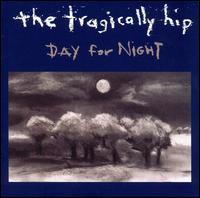
SOUNDTRACK: THE TRAGICALLY HIP-Day for Night (1995).

This is the first Hip album that I bought.  In fact, I first learned about them when I saw a video for “Nautical Disaster” on Much Music when I lived in Boston.  That was my first exposure to The Hip–and to another cool Canadian band, The Tea Party–and I’ve loved Much Music ever since (even if I can’t get it anymore).

For me, Day for Night takes the greatness of Fully Completely and ramps it up a notch further.  In part this is probably because the album is almost 60 minutes long instead of just 40, but I think the intensity that The Hip found on Fully is fully matured all over this disc.

The album opens with a great bass intro on “Grace, Too.”  And with Downie’s intensity in the breakdown it’s an amazing opening to a great disc.  “Yawning or Snarling” has even more intensity, with practically snarled verses and a strangely catchy chorus (and great lyrics).  It’s followed by the blistering rocker “Fire in the Hole” which really captures the anger that seems to be brooding under the surface of this disc.

“Thugs” follows, it’s a catchy, quiet song; I love the chorus: “I do the rolling, you do the detail.”  ANd there’s another great opening , with an unexpected twist for “Inevitability of Death.”  Which is followed by “Scared,” another mellow, minor-chord song which is a great lead in to “An Itch an Hour.”

Normally a disc this long can’t hold the listener’s attention for the whole disc.  But the penultimate song, “Titanic Terrarium,” an atmospheric brooding song with a quirky verse melody draws you in to its claustrophobic subject of life in a biosphere.

The Hip had a minor buzz in America with this album and even played Saturday Night Live, where they shaved a minute off of Nautical Disaster, but keep all five minutes of “Grace Too.” Watch it here:

This is a great album, perennially one of my favorites.  It’s only a shame that it never broke through to U.S. audiences, leaving The Hip as one of Canada’s biggest cult bands (in the U.S.).

[READ: January 26, 2010] “Questions Surrounding My Disappearance”

This was the third flash fiction in this 2004 Summer Reading issue of The Walrus.  And of the four, this was my favorite.  It was weird and kind of silly but underneath it had some real angst.

The story opens with a kind of generic dismissal of the Canadian Film and Television Industry (“who should give a shit who wrote or lit or recorded the sound for a television show or a movie….”).  But nevertheless, he’s not too dismissive of it (“There have been…awards”).

As with the other flash fictions in the issue, the set-up is quite long, but unlike the other stories this sort of casual tone continues throughout the story.  And we learn a bit more and more about the narrator and about his opinions of the CBC.

The title obviously comes into play, as we soon learn that when he was, in fact, missing, very few people seemed to be up in arms about it (including his family).  Perhaps the most surprising aspect being that during the time he was reported missing he was interviewed on the radio (true, it was a program dedicated to the arts, but still). (more…)

Read Full Post »

SOUNDTRACK: THE TRAGICALLY HIP-Fully Completely (1993).

Even thought Road Apples was good, Fully Completely is amazing.  The band has traded in some rawness for textural complexity and yet they haven’t lost the rocking groove of their earlier sound.

This album has some of my favorite Hip songs: “Courage” (the Sarah Polley cover in The Sweet Hereafter is also beautiful in a very different way). “At the Hundredth Meridian” (a title which should tell you that the lyrics of the song aren’t going to be typical rock fodder), and “Fifty Mission Cap.”   “Fifty Mission Cap” is about the fascinating story of Toronto Maple Leaf Bill Barilko, another atypical lyrical concept and an amazing song from start to finish (although, honestly the opening chords make it sound like it’s going to be a lame 80′ metal anthem…maturation as a band made this song brilliant instead).

The duel guitar opening of “Pigeon Camera” is also gorgeous, as are the wonderful vocal harmonies on the bridge.  And the rawness isn’t all gone either.  “Locked in the Trunk of a Car” rocks as hard as anything on Road Apples.  There’s also a mellow folk song in “Wheat Kings.”  It slows the disc down a bit after the intensity of the amazing “Fully Completely,” and “Fifty Mission Cap,” but the last two songs are a string ending to an already great disc.

Even though I think that Fully is an amazing record, I think that mostly it’s preparation for the even more amazing Day for Night which came out two years later.

[READ: January 26, 2011] “Platanus”

Anyone playing along might have noticed that February is Canada month here.  All of the authors this month have been from the Great White North.  This story breaks with that, but I feel that it still counts because it came in a Canadian magazine.  But Banana Yoshimoto is Japanese (no, really!).  With a name like “Banana” (which is a pseudonym), it’s hard to forget this author.  I even bought Kitchen (her first translated book) when it came out (although I haven’t read it yet).

This story is translated from the Japanese by Michael Emmerich.  It is set in Mexico, specifically in the village of Mendoza.  The narrator (aged 35) and her husband (aged 60) enjoy escaping Tokyo and spending time in this sleepy village.

The story provides some interesting familial background of the two characters (both of their families disapprove of the marriage) and the kinds of things that they get up to in Mendoza.  And really that’s all there is to the story. (more…)

Read Full Post »

SOUNDTRACK: THE TRAGICALLY HIP-Road Apples (1991).

A cleverly designed cover signals an amazing album inside. After the vast improvements of Up to Here, Road Apples rocks and is the first of the Hip’s most great and cohesive records from this period.

The one-two punch of the opening rockers “Little Bones” and “Twist My Arm” is sublime.  And Downie has really found his voice at this point.  Those initial two songs show the kind of complexities the band will add on future discs.

The rest of the disc is really successful raw, bluesy rock.  The guitar solos are longer and more substantial (songs like “Bring It All Back” showcases Rob Baker soloing skills).  And the bulk of the rest are songs that could be staples of any classic rock station.

But they mix up the styles a bit as well.  “Cordelia” is a brooding, intense song, that builds from a quiet intro into a rocking chorus, the kind of song which later albums will showcase.  “Long Time Running” is a grooving ballad.   And “Fiddlers Green” is a pretty acoustic number.  The final track, “The Last of the Unplucked Gems” is another mellow acoustic track, but it foreshadows some of the great songs the band would write in the future.

Road Apples is a hugely successful disc, although for my tastes it’s on the next two albums that The Hip really hit their excellence.

[READ: January 26, 2011] “Not Enough Horses”

This second flash fiction of The Walrus’ 2004 Summer Reading Issue has a similar “problem” as the first one. It actually feels too long to be flash fiction.  True it is only one page and, since it is mostly conversation, it is very brief.  But the story is actually rather detailed, something which I feel doesn’t quite belong in flash fiction.

Indeed, it is a simple enough story:  a young man would like to marry a Native woman.  He goes to the woman’s father and begins offering him gifts for his blessing.  The father says that in the past the gift would have been horses, although the boy’s first gift is kittens. (more…)

Read Full Post »

« Newer Posts - Older Posts »