Feeds:
Posts
Comments

Archive for the ‘Canadian Music’ Category

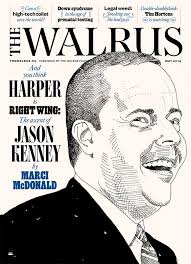
walrus maySOUNDTRACK: POLMO POLPO-Like Hearts Swelling [CST026] (2003).

polmo“Swelling” is the operative word for this disc from Sandro Perri (who is the only person in the band).  Perri layers waves of music.
The album is comprised of drones and loops and is largely ambient in nature.   There’s five songs in 46 minutes. Opening track “Romeo Heart” builds from silence to super loud punk noise.   The 11 minute “Requiem For A Fox” introduces a kind of  underwater heartbeat pulse and detuned sounds.  By around 7 minutes the drums kick in bringing the song to a faster beat until it concludes with an acoustic guitar section and a wild slide solo at song’s end.  “Farewell” builds slowly over 5 minutes with interesting drums sounds.

At 13 minutes, “Sky Histoire” adds a tambourine, which brings in an interesting (albeit minor) percussive element that the other songs didn’t have. By the end, the song is totally intense.  It even has bells and chimes.  The final track, “Like Hearts Swelling” feels like real instruments rather than samples and keyboards.  It features Genevieve Heistek from Hangedup looping and weaving her viola.

Regardless of how great this album is (which it is), if you don;t like ambient music this is not for you.  But if you can get absorbed in the sound, it is a great collection of songs.

[READ: May 1, 2014] “Juno Pluvia”

As this story opens, the narrator, whose name is Hero, is protesting about her cousin Nile.  She tells us to forget about him because a dead body has recently washed up on the beach and that is what we should be worried about.  The man (clad in speedos and nothing else) has been dead for five years–the cold water of Lake Michigan preserved him.  And it was Nile who found him.

When she questions Nile about what he was doing when he found him, Nile says he was fishin’, which she doesn’t believe for a second.  And then she allows us to consider Nile after all: “grease incarnate…did he ever wash?”  And all the while, her mother warned her about him…to never ever get into his van.

Hero relates sadly that she was never invited.  He was never to be her first, she was never to be one of his girlfriends, who were all cross-eyed and bucktoothed anyway.

And thus, the remainder of the story focuses on what she told us to ignore–her cousin Nile. (more…)

Read Full Post »

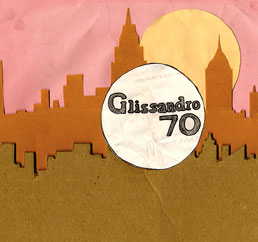
harpoctSOUNDTRACK: GLISSANDRO 70-Glissandro 70 [CST037] (2006)

glissThis peculiarly named band comes from the two members of it.  Craig Dunsmuir is in a band called Kanada 70 and Sandro Perri has stuck his name on the end of the word “glissando” which is a musical term for gliding from one pitch to another.

Interestingly the music doesn’t glide so much.  “Something” opens with a simple, pretty repetitive guitar pattern that keeps getting bigger and bigger. And then bird sounds flow over and around.  It’ a very beautiful introduction.  When it starts getting faster and more complex, it’s actually quite a musical feat.   “Analogue Shantytown” follows with an unusual opening.  Someone singing the word “shantytown” into a harmonica. It’s a weird and interesting sound.   When the guitar begins it sounds very 80s King Crimson-like with wild staccato guitar  Then the chords come in, with a simple repetitive rhythm. And then more and more voices start singing different phrases over the top. Like a rocking fugue.

“Bolan Muppets” has another simple, pretty rhythm and simple but lovely guitar line. More layers of voices (who knows what they are saying) propel this song along.  By around 5 minutes (of the 7 minute song) the songs settles down into a simple guitar progression with very nice vocals (in English).  “Portugal Rua Rua” opens with some more nonsense words (unless he’s singing in Portuguese). Then a single guitar plays along with the rhythm. Then some vocals come in English and the song fleshes out a bit more. By the end they start chanting lyrics from Model 500’s “No UFOs”) which gets a little crazy but is quite fun.

The final song is 13 minutes long. It opens with a baritone guitar playing a fast riff. The song starts to add layers of music—drums, percussion, guitar squalls. By 4 minutes it kind of settles into a repeated guitar rhythm with chanting in the background. That stays in a kind of holding pattern for a bit until around 8 minutes when they start messing with the sounds.  It ends with more chanting in a decidedly Talking Heads feel (and indeed they start using a chant from the Talking Heads at the end).

So this proves to be a wild and raucous record.  It has a decidedly dancey sensibility, but is not a dance record.

[READ: April 25, 2014] “Sic Transit”

I really enjoyed this T.C. Boyle story quite a lot.  So much in fact that not only have I been thinking about it all day, but I could easily see him fleshing out the story into a novel.

It’s a simple enough story on the surface.  In a pleasant suburban town, there’s a house that is overgrown and–out of place.  So it’s no surprise to find out that the owner is dead.  But it is disturbing to think that he was dead for eight days before anyone noticed and that they only noticed because of the smell.

That’s when the narrator learns that the mysterious neighbor, the one whose house you couldn’t even see from the street because of the overgrowth of bushes was a singer for a band from the late 70s and early 80s called Metalavoxx.  (I have to say that I feel this band is not quite right for the time they are depicted as having played–I feel like they are about five years ahead of their time with their name and their look).  At any rate, Carey Fortunoff, the singer, is dead.  And the narrator feels strangely compelled to learn more about a man he doesn’t actually care about and never heard of.

Mostly this is because the narrator has just turned fifty and is thinking about mortality.  What must your life be like to die and not be found for eight days? What kind of strange life did this guy live?  So, on a Sunday morning he decides to at least peek in the man’s house.  And when he finds a door unlocked, he decides to go in. (more…)

Read Full Post »

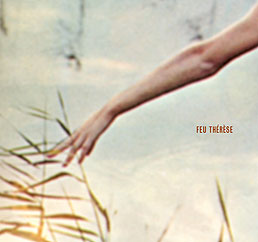
half pastSOUNDTRACK: FEU THÉRÈSE-Feu Thérèse [CST040] (2006).

feu1Feu Thérèse is a band created because of the hiatus of Le Fly Pan Am.  They offer a melange of styles, as befits the visual arts origins of several of the members.  And yet, there is a solid rhythm section that grounds the band in a wonderful way.

“Ferrari en Feu” opens with 3 minutes of pulsing waves of synths and electronic bird-call-like sounds. It’s unclear exactly what you’re listening to and it seems like the whole album will be a kind of ambient collection.  Then a proper rock song kicks in with chords and notes and drums–it has a cool psychedelic vibe and feels very late 60s.  “Mademoiselle Gentleman” has pulsing bass notes and staccato guitars with a layers of distorted laughing throughout (there’s no “singing” on the first two songs). At around 4 minutes (out of 6) the feedback squalls too and a simple steady beat.

“Tu n’avais qu’une oreille” seems like a traditional song–with singing (in the Serge Gainsbourg, dirty old man style of whisper/singing) which has a middle section that is quite conventional (with ahh ahhs) but again at 4 minutes, the song shifts into a faster drumming section (with more spoken words).  But then a lengthy trippy guitar solo shatters the mellowness.  “L’homme avec couer avec elle” starts with what sounds like horns.  At around 4 minutes in turns into a kind of western but with a crazy clarinet solo accompanied by sped up noises that sound like Pink Floyd’s Ummagumma.  There’s more psychedelic Pink Floyd styles on the final track, “Ce n’est pas les jardins du Luxembourg.”  The song opens with “drips” that sound like “Echoes.”  And then there’s more Ummagumma birds/animals (possibly distorted seagulls?).   At (yes) 4 minutes it turns into a trippy psychedelic organ based song (with Indian music as well).  The song is 12 minutes and leaves no sound unheard.

The music is experimental but it is not terribly “difficult.”  It’s actually quite a fun album which demands multiple listens.

[READ: April 24, 2014] Half Past Danger

The tagline for this book (which is presented like a movie in a number of ways) is Dames. Dinosaurs. Danger.  And the cover features a giant Nazi flag in flames.  Sounds like pulp genius to me.

And so it is.  Stephen Mooney has been an artist for some great graphic novels over the years and this is his first book that he wrote on his own, based on a labor of love–having Nazis fight dinosaurs.  Like a dream come true.

So obviously, this is a story of an alternate past.  Set in 1943 in the South Pacific, an Army battalion is tracking an area when they discover a secret Nazi base.  There are not supposed to be any Nazis this far east, and yet there they are.   Sergeant Tommy “Irish” Flynn is surprised but he gets his team ready to take pictures and prepare a report.  But that loud rumble sounds like the biggest tank they have ever heard.  And then out steps a T-Rex (in a great reveal).  The T-Rex wipes out all of Irish’s company.  Irish escapes with a few photos and little else.

We jump cut to two months later where Irish is drinking in a bar in New York City.  In walks General Noble of the USMC and Elizabeth Huntington-Moss of British MI6.  They request his service.  He tells them to fuck off.  Actually no, he doesn’t.  This is a PG13 story, there’s a few “shite”s and an occasional “damn” but it is squarely in the realm of comics–implied sex, a lot of blood and a few mild words.  A brawl ensues, in which a Japanese fighter helps out Noble & Moss.  And soon Irish is recovering and being told what’s going on.  After some string reluctance, Irish agrees to go back to the island.

Noble proves to be a supremely tough and string fellow.  The Japanese soldier has defected to the U.S. after the non-respectful attack on Pearl Harbor.  And Moss is an enigma.  As they approach the island, there is plane trouble and a wonderfully cool scene in the water (which I won’t spoil but the art and graphics are terrifying and wonderfully drawn and colored–Mooney did the colors for the first chapter, while Jordie Bellaire did the other five).  (more…)

Read Full Post »

karlove1SOUNDTRACKWHITEHORSE-“Pins and Needles” and Kickstarter campaign (2014).

photo-mainI really enjoyed seeing Whitehorse live.  I would absolutely see them live again.  I was delighted then that their album was also fantastic (I didn’t think it could match their live show…and it doesn’t but it is great in a different way).  In a very short time I became a big fan of the band.

THey havea  new song, “Pins and Needles” and a Kickstarter campaign.  The song begins with Melissa McClelland’s voice singing in it beautiful way–there’s guitar in the right ear and bass in the left ear.  Then Luke Doucet comes in for verse two.  And when their voices fill the bridge it feels so complete.  Until they get to the chorus when they push it even further and it sounds amazing.

  They sing so well together.  Her voice has a slight country twang, and his is a low baritone.  Their harmonies are superb as they sing the compelling chorus: “Fake Your Death and I’ll Fake Mine”

Lyrics are certainly interesting for the band.  How many times do you hear a woman singing a line like: “I’m the villain in this piece  And back when I was a thief, I broke hearts like they were teeth.”

I love this song.  And it may or may not end up on the new album for which there is a Kickstarter campaign.

And I’m in.  I’m a little unclear about exactly what they aim to do with the money they raise.  They say quite plainly that there will be an album regardless of whether they raise the funds.  And their label, Six Shooter, is totally behind the band.

Rather seems to be a way to raise some money and some attention for the band.  And, apparently it will give fans a glimpse of the album as it is being made–a sort of behind the scenes featurette that comes before the disc itself.  The prizes are varied and moderate–from a download, to the CD, to a T shirt, to sheet music (all for reasonable donations), all the way to the grand prize–for $8,000 they will play a private show for you.

I’m in for a CD, and I’m happy to pay regular ticket price when they come around again.

Check out the Kickstarter campaign for more details where you can also hear “Pins and Needles.”

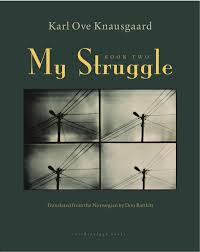
[READ: April 24, 2014] My Struggle Book Two

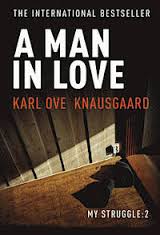
maninloveI read an excerpt of Book Two in Harper’s well over a year ago So when I got to that section again (it’s the end of the book) I was trying to remember why it sounded so familiar–an accident during a soccer match that leaves Karl Ove with a broken collarbone and an unhappy girlfriend (who will be looking after three kids without him), and then I remembered the excerpt that started it all.

The translation of Book Two by Don Bartlett is fantastic, just as in the first book–I can only assume the original Norwegian is just as compelling.  Book one was 430 pages and now book two was 573, so I’m in to Karl Ove’s life for 1003 pages, and there’s four more books due (Book Three comes out next month).

As I mentioned for Book One, this series has caused some controversy because it is given the same title as Hitler’s Mein Kampf (Min Kamp in Norwegian), and also because he says some pretty mean stuff about people who are still alive.  Book One was about the death of his father.  It was pretty dark.  Book Two is about his first daughter and about falling in love with Linda, his children’s mom (although not yet his wife).  And it is also pretty dark.

I was trying to figure out why I like this series so much.  Not a lot happens, Karl Ove is not a very nice person and he seems to be pissed off most of the time.  And I think what I realized is that I share a lot of opinions as him, but he takes everything to the extreme.  And he is kind of an asshole.  I mean, anyone who writes a six part autobiography called “My Struggle” (okay, really it’s called My Head) is kind of an asshole.  But so when I see things that I would only think in my deepest recesses of my mind printed on a page, it’s strangely visceral to me.  I realize this means that I’m kind of an asshole too, but the key difference is that I don’t act on the things that I think, nor do I write 4,000 pages about them.

I told Sarah that she might laugh at some of the opinions that he lists but that she would not enjoy reading the books.  Indeed, this book, this series, is not for many, I’m sure.  But to me there is something strangely engaging about him and his strange life and his writing style.  And I really flew through this book, finishing it in about a week.

So this book begins (started in July 2008) with Karl Ove being pissed off.  He talks about finishing the first part of the novel (which I have to assume is Book One, given when this was written and how this book ends) just last month (in other words he is really churning this stuff out!).  He and Linda have been fighting (as the book opens they have three children, Vanja, Heidi and John–it’s also hard to believe that his children are young enough to not really know much about this series). The tension is high between them–glares, comments, nasty sniping.  Karl Ove says that he is afraid to say things around her because he knows how she’ll react.  But at the same time, some of things he desires are simply not defensible in a relationship or when you are parent.  And the main conflict seems to be that Karl Ove is selfish and Linda is (at least according to him) mildly suicidal and possibly bipolar).  And mind you, at the time of his writing this, I think they are still together….  (I could look that up, but it seems kind of fun not exactly knowing). (more…)

Read Full Post »
harpoctSOUNDTRACK: FRANKIE SPARO-My Red Scare [CST013] (2000).

sparo1Speaking of early Constellation Records releases, Frankie Sparo was everywhere in the early stages of the label.  And then he just disappeared.  That proves to be quite literal as he was the pseudonym of Chad Jones (who i don’t know from anywhere else).  Frankie released two albums and an EP and then Chad retired him.

This debut is perhaps the most deconstructed and un-musical album of songs that I can think of.  It’s as if Sparo wrote songs and then decided to take four of every five notes out of the song.  And then he sings in a style that accompanies that spareness.  It’s actually too much of such littleness.  If Sparo’s voice filled the song the minimal accompaniment would be interesting.  If there was more music, his slow singing wouldn’t sound quite so… flat?  There’s talk of his lyrics being good, but I honestly find his singing to be so slow that I can’t really follows any of the songs.

And it’s a shame because his voice is plaintive and longing and the construction is very interesting, it just doesn’t really pan out for me.

The final two songs start to add more to them and I like them better.  I especially like the final tack “The Night That We Stayed In” which has without a doubt the slowest rendition of the oft cited phrase “throw your hands up in the air and wave them like you just don’t care” (imagine falling asleep while saying that).  But the music is fuller, bringing in a new and interesting style to the end of the album .

I suppose that in the right frame of mind this would be exquisite, I just hope I’m never in that frame of mind.

[READ: April 18, 2014] “Near-Death in the Afternoon”

I’m not  huge fan of Ernest Hemingway–I just don’t like his macho schtick.  But this piece–which is a comic story (I don’t know who the person he’s talking about is) is not only quite funny, it seems to be turning his macho image on its head.  Although perhaps I am oversimplifying Hemingway.

Anyhow, this comes from a collection of his letters, although it is considered a story and what submitted to (and rejected by) Vanity Fair in 1924.  The full title is “My Life in the Bull Ring with Donald Ogden Stewart” which implies to me that it is a longer piece, although it feels full to me.

It begins with Hemingway saying that he often encounters Donald Stewart in the bull ring (which make me laugh).  But he’d often ignored him.  Yet on this occasion the crowd is going crazy for him: “Don Stewart!” they chant.  Ernest wants to get into the ring but the crowd is insistent and, indeed, someone even throws a tomato at him (and hits him right in the face). (more…)

Read Full Post »

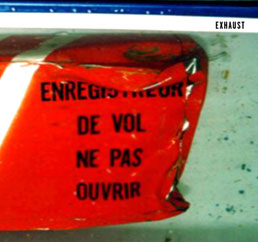
may20014SOUNDTRACK: EXHAUST-Enregistreur [CST021] (2002).

exhaust2While Exhaust’s debut was a mixed affair, their follow up really showed some great improvement.  The band feels more unified, there aren’t any single songs that were remixed (which stand out in a bad way), rather the remixing was done throughout the songs.  And, best of all there’s a lot more of that spooky bass clarinet.

The album feels more organic, “Gauss” opens with waves of music setting a mood until about a minute into track 2 “Behind The Water Tower” when the drums kick in the atmospherics gains urgency. “Voiceboxed” has a feeling of contemporary Portsihead which is neat from an album that came out almost a decade earlier.  This one has some samples of commercials , but they’re a little low in the mix so its hard to make them out. Although the spoken word part that swirls around your head is very cool and a little startling. (Headphones are a must for this album). There’s also a funny standup routine (yes, in the middle of the song)—wonder who it is.

“Ice Storm” opens with a sampled piano & a lot of static.  It morphs into a lengthy play/commercial/PSA by Heathrow Wimbledon and is called “The Maternal Habitat.”  I can’t find anything else about it online.  It’s rather fun to listen to, although when the skit is done, the music becomes strangely slow and the last two minutes (of 9) go on too long.  It bleeds into “Dither” which is mostly sampled voices and more commercials.  I love this Negativland kind of pastiche

“Behind the Paint Factory” mirrors “Water Tower” in that the drums kick in after 2 minutes and the song sounds great.  “My Country is Winter” is mostly tape manipulations including a screaming guitar solo that runs around your head.  “Silence Sur la Plateau” returns to that sort of ominous Portishead vibe with the sound of loud crinkling plastic as its main “music.”  There’ also a lengthy silence in the track which seems rather pointless to me.  The album ends much like it began with “Degauss” which is mostly clarinet solo and atmospheric sounds

It’s much better than their debut but still feels like they could have made a tighter album if they’d gotten rid of some (but not all) of the nonsense.

[READ: December 1, 2012] “The There There”

I have enjoyed Nelson’s stories in the past, and I feel like it’s time to find a collection of hers (and I see she has a lot, too).

What I especially enjoyed about this one was the way the title was used in the story and also the way it encompassed the main character in a way that was unrelated to the way it was used in the story.  In the first instance, the family is on vacation and they overhear some tourists asking “Where the hell are we?” while standing in front of the Colosseum.  The son explains that’s “like not seeing the Grand Canyon until you fell in it, like it’s the there there.”

The story is about a family–a mother, a father, and two sons.   It opens with the sons and the mother discussing the perfect murder.  The husband disapproves of the discussion but only indicates this with a cleared throat.  We see that Caroline, the mother, was imagining her husband when she was describing her murder.

While the story is basically about the mother (although told in third person), it flits back and forth to the other family members and how their behavior affects her.  First we see that their oldest son, having gone off to college, has fallen in love with his landlady–a woman with children older than him.  Caroline is appalled at this especially when Drew reveals that she’s not all that pretty, that he would have chosen one of those daughters. (more…)

Read Full Post »

relishSOUNDTRACK:RHEOSTATICS-World Next Door Festival, Winnipeg, MB (September 5, 1998).

wndI was pretty excited to hear this outdoor festival version of the Rheostatics.  I knew the show would be short (and it is at about 45 minutes), but i imagined the entire feel of the show would be different in this setting.  What surprised me is that the recording is taken from a CBC radio broadcast of the show (which in and of itself is pretty cool).  But the recording is terrible!  The sound is bad and there are dozens of stops in the tape.  Bummer (especially when Aliens gets cut off).

Perhaps the most enjoyable part is when Dave says there’s going to be a double neck guitar war between Martin and Gordie Johnson (he was the front man for Big Sugar, a band I don’t know.  They apparently headlined the festival and he plays a mean double neck guitar).

Strangely enough I can’t find out anything about this festival which apparently doesn’t exist anymore.

[READ: March 5, 2014] Relish

Sarah read and really enjoyed this graphic novel. She said I would like it too and she was right.

This is a collection of memories from Knisley.  She writes about growing up in a family of foodies and how at a very young age she at anything.  She even began to crave unusual foods (in one short piece, she says that as a child she craved sautéed mushrooms).  But what’s cool about the story is that although she was raised in a snobby food way (you she see her father’s reaction to McDonald’s and her mother’s reaction to ketchup) she still appreciated junk food. She says, “Anyone who can fail to rejoice in the enticing squish/crunch of a fast food French fry or the delight of a warmed piece of grocery-store donut, is living half a life.”

At the end of each chapter is a recipe for something from the book.  The recipes are pretty simple, although some of them have extravagant ingredients (like her Chai Tea which sounds amazing, but is frankly too full of expensive ingredients for me to ever make–cardamom pods, star anise? No way.).  However, her recipe for marinated lamb sounds delicious and uses only the most basic ingredients. (more…)

Read Full Post »

bidiniSOUNDTRACK: RHEOSTATICS-Bathurst Street Theatre, Toronto, ON (April 4 & 5 1997).

215px-Bathurst_St_Theatre The Rheos played two nights at the Bathurst Theatre and as I was looking at the setlists I was really impressed that in the two nights the band played 44 songs.  Of those 44 only 9 were played both nights.  So they played 26 different songs between the two nights.  That’s cool especially compared to some bands, like Rush, who play literally the same set list every night.  Of course it’s possibly more fair for a fan who can only go to one show, but for fans who will go to both, what a treat.  The first night was a bit more “hit” heavy with “Claire” and “Horses” and “All the Same Eyes.”  Whereas the second night had some other great songs like “Christopher” and “Soul Glue” and a great version of “Shaved Head.”

I have already written about these shows, but in going over them I found that I was very harsh about the April 4th show.  Unfairly so.  I complained about the quality of the sound (which is actually not that bad).  And I complained about the lack of violin in King of the Past which, come on Paul, lighten up, how are they going to play that?  I also accused Dave of being early on the  “King of the Past” first chorus, but it was actually Martin.  Oh well.

In the April 4th show they tell the audience that they are recording a live album  And they engage with a guy in the front row who I wearing a Mr Bean shirt and tell him to take it off.  They say he has an “umber 31” shirt under it I think—no idea what that is.

This is the first mention I’ve heard of Harmelodia, the kids album.  And “Easy to Be with You”‘s lyrics are not settled yet—with California being in place of Harmelodia.  “Dope Fiends” has a drum solo but sadly it is cut off.

I mentioned in the original post that the April 5 show has a lot of tracks that made it to Double Live.  Like “Good Canadian,” the improv piece—man the band was big into smoking, eh?  They also mention the demise of the CBC Radio show Nightlines (which they’d record an album for soon).

They play “Public Square” from their debut album, which sadly gets cut off.  And a fun acoustic version of “Legal Age Life.”

The band is having fun and are so nice–they seem genuinely pleased that people came from a long way to hear them.

Between the two nights, 11 songs made it onto Double Live (there are 29 on the album in total).  They sound pretty different here (mixing and all) so it’s worth checking these out too.

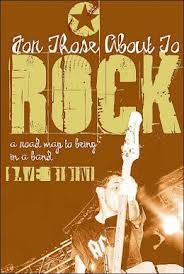
[READ: February 24, 2014] For Those About to Rock

In addition to his hockey books, Dave Bidini has written a number of books about being in a band.  On a Cold Road was his memoir of touring with the Rheostatics and The Tragically Hip.  Since he likes to write and since he’s a musician, it seemed to make sense to have him write a guide for beginning rockers.  This book explicitly states in the first few pages that if you are as old as Bidini, the book is not for you.  I am not quite that old, but I got the point.  But what’s more rock n roll than not listening to the man?  So I pressed on.

The book contains some real-world practical experiences for those who may be just starting out in a band.  He says there was no book like this when he was a kid, so he hopes it’s useful.  And the book ranges roughly between being a fun guide to rocking out and being a cautionary tale about how tedious and unfun being in a band can be (and how many people may try to take advantage of you).  This book is also very specific about being in a touring Canadian band.  He talks about slogging it through cold winters across the Trans Canada Highway, something that young bands from Florida certainly don’t have to deal with.  But his specifics really help to shape the overall completeness of the book, so take his examples and make them your own.

So I play guitar, have never been in a band and while I always thought it would be fun to rock with others, never had any real desire to “tour.”  Is this book still for me?  Why yes, it is.  Because Bidini has been playing music since the early 80s and he has some wonderful stories. (more…)

Read Full Post »

wildstabSOUNDTRACK:RHEOSTATICS-The Nightlines Sessions (1998).

nightlinesI have mentioned this disc before, but having listened to some live shows from around this time, it made me want to check out this disc again.  I’ve always thought it was kind of a silly goof of a record without a lot to fully enjoy.  And while the goofy tracks stand out, there’s also a lot of really good music on it.

“The Pooby Song” opens the song and while it is a slight and silly song, it is a fun folky introduction.  What its title means is a mystery to me.  The second song is the first version of “The Junction Foil Ball,” a great track that would later get re-recorded for The Night of the Shooting Stars.  “Frank” is another interesting song with some cool scratchy guitars and a good riff. It doesn’t get played much live, but it could easily fit into their set.

“Majorca” is a pretty song from Tim, although it is very strange (to me) that these Canadians are singing about Majorca (a song they would play live in a few bootlegs).  Another vaguely silly song is the sitar (?) based “Ugly Manhattan,” which makes fun of Wall Street.  Perhaps the most unexpected song is “Trans Jam” a rap which features Farm Fresh and The Subliminal Kid.  It’s quite good, too.

And yes, there is a lot of really silly stuff.   “Henry’s Musical Beard” is a weird 27 second toss off. “Alien Boy” is a goof commercial about mysteries of the unknown.  “Baby, I love You” is introduced as being by MC Vanilli  and the Sedaka Prince.  It’s an absurdly goofy “pop” song which reflects some pop song stylings rather well.  “This is Nightlines” is a profane rambling by Dave about the radio show that’s going off the air.

And yet just as you think the end of the disc is going to be nothing but silly, they play a fantastic version of “Stolen Car” (click track notwithstanding).

It really makes me want to hear the some Nightlines shows.  And, ta da, I recently found Network Effects, a site where a kind soul has been digitizing his taped copied of Nightlines sessions.  That’s pretty cool–more radio stations should take chances like this.

[READ: February 24, 2014] A Wild Stab for It

I found a bunch of Dave Bidini’s smaller books online.  And after reading his book about Keon, it seemed complementary to read this book about Game Eight.

Now, if you’re not Canadian or Russian, Game Eight might be meaningless to you.  You might even somehow think that a game of Canada vs the USSR is an Olympic event.  But it wasn’t.  It was the Summit Series.  Bidini assumes you know what the Summit Series is–this book is pretty explicitly for Canadian hockey fans (meaning pretty much every Canadian) who were alive in the 1970s.  They would all know what Game Eight was and why it was so important.  So, here’s some context from Wikipedia, because again, they summarize it better than I could:

The series was played at the height of the Cold War, and intense feelings of nationalism were aroused in both Canada and the Soviet Union, as well as on the ice.  Known at the time simply as the Canada–USSR Series, it was an eight-game series of ice hockey between the Soviet Union and Canada, held in September 1972.  It was the first competition between the Soviet national team and a Canadian team represented by professional players of the National Hockey League (NHL), known as Team Canada. It was the first international ice hockey competition for Canada after Canada had withdrawn from international ice hockey competitions in a dispute with the International Ice Hockey Federation (IIHF). The series was organized with the intention to create a true best-on-best competition in the sport of ice hockey. (more…)

Read Full Post »

keonSOUNDTRACK: RHEOSTATICS-Alt House, University of Western Ontario, London, ON (January 23 1997).

 westernThis show takes place at the University of Western Ontario, an unusual location for the band, but they had an appreciative crowd.  There’s a long introduction in which Don Kerr is late to get to the drums.  They say that he’s sick and, in fact, they’re all sick, but they don’t sound sick when they play.

 The college atmosphere seems to relax them.  Indeed, Martin tells a very lengthy story about a painter near his home town in Italy (as an introduction to “Motorino”).  He rarely talks much on stage so this banter is a rarity.  Dave asks if the fans like the banter.  He takes a poll.  Songs and banter?  Much cheering.  No banter.  Apparently one vote.  Upon hearing that one vote, Dave says, that guy, security!  Some fans shout “only banter no music,” but the band doesn’t acknowledge that.

They once again mention martin’s new Chickadee banner and they even throw in some jokes about chickadees in “Four Little Songs.”

This show they explain that they get a little bored playing older songs so they like to mix them up a little.  “Record Body Count” sounds rather different and it has a very pretty guitar outro by martin that leads into the intro of “Michael Jackson.”

The opening band was People From Earth, the band that Martin’s brothers were in.  I can’t find out much about them and I can’t find any music from them, but I’m very curious to know what they sound like.

This is a really enjoyable show.  The recording level is a little too quiet at times, but the sound is quite good.

[READ: February 24, 2014] Keon and Me

This rush of Rheostatics music has had me investigating what the band has been up to since they split up.  They have all released some solo records, and Dave Bidini seems to have devoted a lot of his time to writing as well.  In addition to his column at the National Post, he has written a dozen or so books.  I’ve already read his two earliest books (which were about touring and hockey respectively) and thought I’d read some of his other books too (about baseball, hockey, touring, hockey, hockey, music etc).  I thought about reading his third book, but then–amazingly coincidentally–his newest book, Keon and Me was staring at me from a pile of new books at work.

How exciting!  Sure it was out of sequence, but that was fine.

The only problem (and the reason I wasn’t too too excited to read it in the first place) was that I had no idea who Keon was.  I had gleaned that he was Dave Keon, a hockey player.  But I’d never heard of him.  It turns out he was the captain of the Toronto maple Leafs in the 70s, during the Leafs’ heyday.  Aside from his achievements, which were quite impressive, what was most impressive about Keon was that he only got into one fight in his entire career–and that was in his last game with the Leafs–which garnered him a 2 minute penalty.  That’s pretty impressive given that it was the era of goons and thugs when fighting was often more important than hockey.

But this book isn’t really a biography of Keon.  Rather, it is a memoir of Bidini growing up and loving Keon.  And of his fanaticism to the Leafs (who have sucked ever since Keon left).  It is also the story of young Dave Bidini, grade schooler, who was bullied by the classroom thug (and biggest Flyers fan). (more…)

Read Full Post »

« Newer Posts - Older Posts »