Feeds:
Posts
Comments

Archive for the ‘Boredom’ Category

school spiritSOUNDTRACK: PINK FLOYD-Live BBC 1970-1971 (1970/1971).

pink-floyd-paris-theatre-london-bbc-archives-back-cover-17638Since I am delving deeply into early Pink Floyd, I came across this bootleg of Floyd on the John Peel show.

The first show is Live at Paris Cinema, London 07-16-1970, just before the release of the album Atom Heart Mother (which we know because Peel says the song will be on their forthcoming album).  The first set includes “Embryo” (which only ever appeared on their compilation Works, in a much shorter version), “Fat Old Sun” (from AHM), “Green is the Colour” (from the More soundtrack), “Careful with that Axe, Eugene” (available on Relics and in live formats), “If” (from AHM) and “Atom Heart Mother.”

The version of “AHM” here is interesting  because the cello solo is played by a horn instead.  The reason for this is because it allowed them to have fewer musicians on tour.  It’s the same theme but the horn brings a very different feel than the cello did.  It’s also interesting to hear that the horn players are nowhere near as polished as they might be.  (In Geesin’s book he does talk about the lack of rehearsal the orchestra had for their live shows).

The second show is Live at Paris Cinema 09-30-1971, just over a year later.  They once again do “Fat Old Sun” but in 1970 it was 6 minutes and in 1971 it is now 15 minutes long with a lot of jamming and keyboard stuff thrown on top.  Next up is “One of These Days” (from the forthcoming Meddle) a favorite of mine. From this set I learned that the distorted voice that says “one of these days I’m going to cut  you in to little pieces” is actually that of Nick Mason (and interestingly, in this version, the quote comes at the end of the song rather than the middle).  Then they play “Embryo” again (it was clearly a concert favorite even if it never got a proper release (same length for each show and not drastically different).  Then comes “Echoes,” the big side long epic from Meddle.  And the set ends with “Blues,” which is indeed a blues.  I don’t really expect to hear a blues from Pink Floyd, but here it is, and it’s a good one (Gilmour clearly can jam to anything).

The video below contains the two complete shows running at over 2 hours.

[READ: September 29, 2013] School Spirit

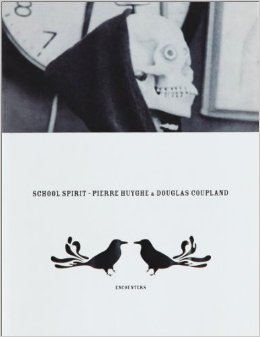
This is the final obscure Douglas Coupland book that I’m aware of and will be the final DC book that I need to hunt down for this blog (I have three other proper novels that I haven’t posted about, but those are proper books and will be dealt with in turn).

This book has about the least amount of information about it that I’ve seen in a book.

The (I assume) official description of the book (which I get from Amazon and Google Books) says

Dis Voir’s Encounters series invites a well-known contemporary artist to choose a subject for a book. The artist also selects a person with “elective affinities”–someone with whom he or she would like to share this exchange. The resulting collaborative volumes serve as an artistic and political laboratory of the present. For this first installment, French artist Pierre Huyghe choose Canadian writer Douglas Coupland, author of Generation X, for the influence that Coupland has had on his generation, and on Huyghe’s own work. Using a high school yearbook as scaffolding for their meditations, they discuss the construction of character, narrative techniques based on chance and the political dimensions of Coupland’s work–themes that are also fundamental questions for Huyghe’s projects.  Using a high school yearbook as the framework for a meditation on memory.

But my copy (which has a different cover and limited publication information so may possibly be a different version) does not have anything to say at all about “the construction of character, narrative techniques based on chance and the political dimensions of Coupland’s work.” (more…)

Read Full Post »

CV1_TNY_08_12_13RussoGate.inddSOUNDTRACK: KATHLEEN EDWARDS-Live from Mountain Stage (April 16, 2013).

Kkedsathleen Edwards is one of my favorite country/folkie performers.  I love her song craft and the beautiful way she sings.  And I’d love to see her live if she ever comes around.  Although she explains during this Mountain Stage show that it was near the end of her tour and she sounds….tired. Or perhaps just mellow.

I love the five  songs she plays “Asking for Flowers,” “Change the Sheets,” “House Full of Empty Rooms,” “Chameleon/Comedian,” and “Soft Place to Land,” but they all seem so…quiet.  I think of Edwards as kind of a rowdy performer—she can wail with them all, but everything seems dialed back here somewhat.  “Empty Rooms” is so quiet (and it is a mellow song, but even more so here).  But even  “Change the Sheets” which has a bridge and chorus that just blows me away the way it rocks and “Comedian” which ends with such wonderful anguish on the record, are both much more mellow here.

She has a very funny sequence talking about female singers and how she wants to create a Canadian ladies band called Modern Beaver (and she is apparently serious about it, and even has songs for them (as of summer 2013), but no time or energy to get it done.  Maybe for Xmas?

Any Kathleen Edwards is good Kathleen Edwards, but I’m looking forward to the next rowdy set I get to hear from her.

[READ: August 28, 2013] “Meet the President”

This is a most unexpected story from Zadie Smith.  It is set in the future and features a technology that allows the wearer to be fully absorbed into a virtual space.

It opens with a boy, Bill Peek, standing on a barren beach in England.  While his family may have once come from this area, that was immaterial, he considers himself a global child, accompanying his father on inspections.  But this part of England is a wasteland and only those who could not afford to leave England were still there.

Bill is pleased to have the beach to himself so he can plug in.  But then he is approached by an old lady with a young girl.  The girl, Agatha, is simple.  And both of the women talk to Bill even though he is doing his best to ignore them while he interacts with his virtual goggles.

Bill is deep in his world, creating his avatar (which has breasts and a tail) and by arming himself with grenades and knives.  He is trying to create the landscape.  Other users wondered whether you should augment the area around you or use a more or less barren world as your basis.  Bill has chosen the barren world and learns that it is three miles to the White House. (more…)

Read Full Post »

walrusjulySOUNDTRACK: POND-“Giant Tortoise” (2013).

pondWhen I first listened to this song I wasn’t all that excited by it.  In part I’ll admit it’s because I was listening with only one earbud (a work hazard).  When I was finally able to listen with both earbuds, the song grew exponentially, turning it from a kind of mundane classic rocker into a trippy psychedelic classic rocker.

There’s not much strikingly original about this song–the sound is totally retro, the riffs are pretty simple, even the recording technique is nothing all that exciting.  And yet when you put it all together in this big soundscape, the song is much more than the sum of its parts.

The guitars are big and expansive like their native Australia, the vocals are soft and processed, and the ending instrumental section is very trippy.  Oh, and three of the members of Pond are also in Tame Impala.  Not a bad side project at all.

[READ: July 15, 2013] “When We Went Against the Universe”

In this story, two girls play a game in which they ask the universe questions and do whatever the universe dictates.  The game, which they call Fate Papers, is very simple.  They take two scraps of paper and write Yes on one and No on the other.  One of the girls holds out her hands and lets the scraps drop.  Whichever lands first is what they do.  And they never go against the universe.

The girls live in Mississauga (which they call Misery Saga) and they have done everything that young teens can do that summer–they’ve eaten all the snacks, hung out at all the places, even talked about everything they could ever want to talk about.

The girls go to McDonald’s and get McFlurrys.  When they are about to leave, Mel, the more daring of the two, says that the three businessmen sitting at the other table were checking her out.  She says she has been emanating sex all day and these men responded.  And so Mel proposes that they should offer to suck off the men for money–at least $50 each.  The narrator goes along assuming that nothing will come of it.  But Mel is serious.  She imagines just how much they could get from each of them (even more because they are virgins).  And she drags the narrator to the bathroom so they can make sure they look good and to see if they guys checked them out as they walked past.

When the narrator realizes that Mel is serious, she says it’s time to do Fate Papers.  The papers say Yes. (more…)

Read Full Post »

38SOUNDTRACK: SAN FERMIN-“Crueler Kind” (2013).
sanfermin-91f624c3b893c51669028614cc4bbf4973704a7c-s1

This was the final song that NPR played in their summer new music collection.  It was a band that Bob didn’t know, but he liked the song and then saw them live and put the song here.

It opens very simply, quietly with beautiful harmonies over a simple synth.  After about 45 seconds, the drums and horns (!) kick in and the backing harmony vocals take on more of a choral sound (AHHHH!) that punctuates rather than accompanies the vocals.

The main riff stems from that horn—a bass saxophone?  And yet during the verses, everything resorts to that pretty, mellow sound.

It’s a very interesting mix of musics, and it reminds me of some of the more experimental bands of the 1990s.  I’ll bet they would be fun to see live.  And I’d like to hear more from this album.

[READ: June 20, 2013] McSweeney’s #38

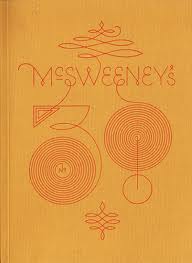
And with this book, I have now read all of the McSweeney’s issues (except that Mammoth Treasury which I will get to, probably by the end of the year).  This one was a great collection of fiction and non-fiction, it also had an inserted comic.  The book itself was paperback, with a nice, textured cover and a cool design for the numbers. In looking for a picture I learned that it came in two colors (the yellow that I received and a black cover with white lines).

It continues with the later issues’ less frivolous style (in that there’s nothing weird about the book) and throughout, the quality of the work is great.  I really enjoyed this book.  It opens with letters and contains color pictures, too.

Letters (more…)

Read Full Post »

CV1_TNY_04_08_13Ulriksen.inddSOUNDTRACK: THE POSTAL SERVICE-“A Tattered Line of String” (2013).

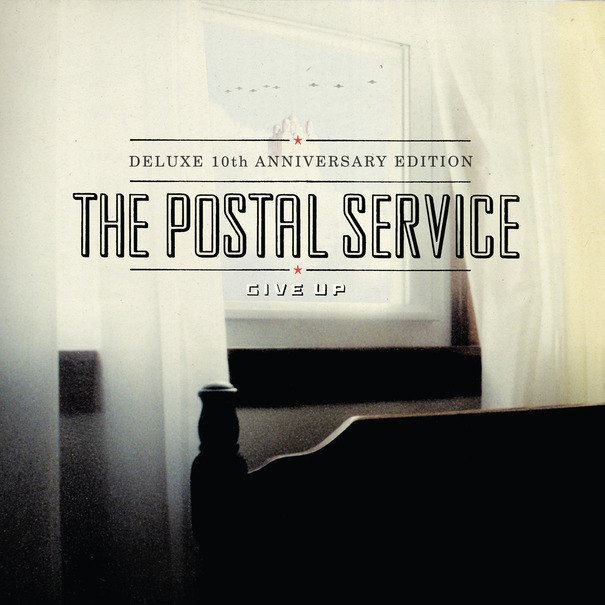
postalI enjoyed The Postal Service record but I wasn’t as big of a Death Cab for Cutie fan at the time.  Now, having enjoyed DCFC so much in the last couple of years, this song sounds much more like a DCFC song but with keyboards (Ben’s voice is so distinctive).

This song has been released with the reissue of the Postal Service album.  It’s not on the original but it also sounds like it might be a remix (the skittery backing vocals make me think remix).

Either way this is a supremely catchy song (Gibbard knows from melody) and when you throw the keyboards and dancey beats on it, it’s even more poppy than DCFC’s stuff.  I wonder why the album wasn’t bigger when it came out.

[READ: April 21, 2013] “Valentine”

Tessa Hadley has written another story that I enjoyed–with that same quaint feeling of love in 1970s England.

The story opens with the narrator Stella and her friend Madeleine waiting at the bus stop.  They are fifteen, have never kissed boys, and think about nothing else (especially since they go to an all girls school).   Madeleine is willowy with long curls a “kitten face” and “luscious breasts” while Stella is small, plump and shapeless.

As they wait for the bus, Valentine approaches (yes I though the title was about the day not a person).  He is in school as well but he is new to them.  Valentine has just moved to the area from Malaya.  And, as he sizes them up, offering them each a smoke, when it comes down to it, amazingly, he chooses Stella.

She likes him because he is different as she is different–they are clearly soulmates.  While her parents (well, Gerry is her stepdad) don’t ‘t approve of him (his hair, his dress, his attitude).  He barely talks to her parents when they interrogate him and then he imitates their voices when they are alone.  Regardless of what others thought or really, because if it, they are soon hanging out all the time.  And soon he is her boyfriend.  And soon enough she had lost weight (because all they did was talk and smoke), they died their hair black (a proto-goth in the hippie 70s) and they basically began to look alike. (more…)

Read Full Post »

220px-The_Invention_of_Morel_1940_Dust_JacketSOUNDTRACK: RODRIGUEZ-“Sugar Man” (1971).

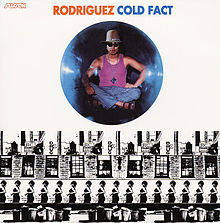
RodriguezcoldfactThis song was played a lot on WXPN, and when I first heard it I couldn’t imagine what new artist was talking about “sweet Mary Jane.”  So it turned out that this song was over 40 years old but it had been resurrected for a movie called Searching for Sugar Man, which is a documentary about Sixto Rodriguez and how he released two albums and then disappeared.

There’s something extremely catchy about this song–the loud down strums that stand out over the quieter strumming, the crazy high frequency sound that sails throughout the song and that hint of horns that gives more depth to this simple folk song.   All of these elements make this song more complex than it might have been.  In fact, the song seems like it’s going to end after about two minutes but there’s the instrumental section full of crazy sounds and electronics.

And even though it seems over after that there’s one more verse and chorus to go.  And then the song just drifts away echoing into nothingness.  It’s quite a catchy little number.

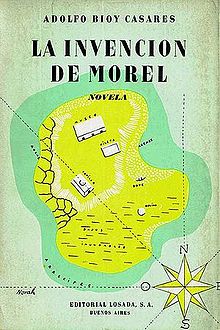
[READ: June 4, 2013] The Invention of Morel and Other Stories

Roberto Bolaño recommended this main story (the other ones as well, I assume).  He’s a big fan of Bioy Casaraes.  But also, Jorge Luis Borges has a prologue to the story in which he states of “The Invention of Morel”

“I have discussed with the author the details of his plot.  I have reread it.  To classify it as perfect is neither an imprecision nor a hyperbole.”

Holy crap.

I can’t say exactly that it I perfect although it is quite fine.  It deals with all kinds of interesting issues and is inspired by (maybe that’s not exactly the right word) The Island of Dr Moreau.  The funny thing is that Morel is neither the main character, nor even a major character for half the book.

The story starts on an island with the narrator writing this book down to leave a  record of “the adverse miracle.”   We learn that the narrator is a fugitive and he was told by an Italian rug seller in Calcutta that the only possible place for a fugitive like him is an uninhabited island.  And on this particular island in 1924 a group of white men built a museum, a chapel and a swimming pool.  But no one dares to go there—not Chinese pirates, not even the Rockefeller Institute because there is a fatal disease located on the island—anyone who has visited there has been found later dessicated. (more…)

Read Full Post »

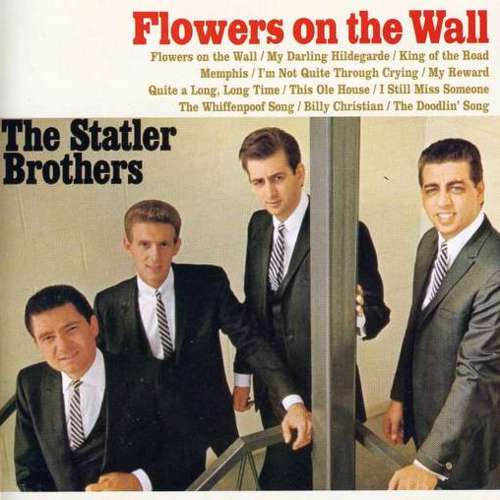
200px-FatesWorseThanDeathSOUNDTRACK: THE STATLER BROTHERS-“Flowers on the Wall” (1965).

flowersonthe Vonnegut mentions this Statler Brothers song in Palm Sunday as well.  I know this from Pulp Fiction–a song that I found very amusing and never would have guessed was a classic country song.  Country music was very different in 1965 than it is now.  I don’t even know if there was a folk or bluegrass category back then, and this song, with its banjo and bouncey acoustic guitar is a great example of the kind of country music I like.  And those harmonies!

This song certainly seems to be about insanity–about a man counting flowers on the wall, playing solitaire with a deck of 51 cards, smoking cigarettes and watching Captain KAN Kangaroo.  Don’t tell him he’s nothing to do.  What a weird little song.  And man is it catchy.  No wonder it was a #1 hit.

[READ: May 31, 2013] Fates Worse Than Death

After reading Palm Sunday I learned that Fates Worse Than Death was a kind of autobiographical sequel to that non fiction book.  I also learned that the two essays that make up Nothing is Lost Save Honor which is impossible to find (and for which I can’t even find a cover) are available in FwtD.  However, since there is no real contents or index, you do have to read the whole thing to find out which chapters contain the essays.  Or you can just look here and see that “The Worst Addiction of Them All” (which was published in The Nation) is in Chapter XIV and “Fates Worse Than Death” appears in Chapter XV.

The last time I read a bunch of Vonnegut together I got a bit burnt out on him and the same thing happened here.  The problem with Vonnegut’s nonfiction is that he tends to repeat himself.  A lot.  And while this book is ostensibly about the 1980s, he talks an awful lot about his family and his friends from the war and his other literary acquaintances., like he did in Palm Sunday.  In a number of places, he says that he doesn’t like to read himself in English, and it would seem that he doesn’t proofread to see if he said something already either.

This is not to say that the book is not worth reading.  Indeed, if you read Palm Sunday in the 80s and then this one in the 90s, you might not remember all of the details that pop up again, but when you read them days apart…well. (more…)

Read Full Post »

PalmSundayFrontandBackSOUNDTRACK: THE STATLER BROTHERS-“Class of ’57” (1972).

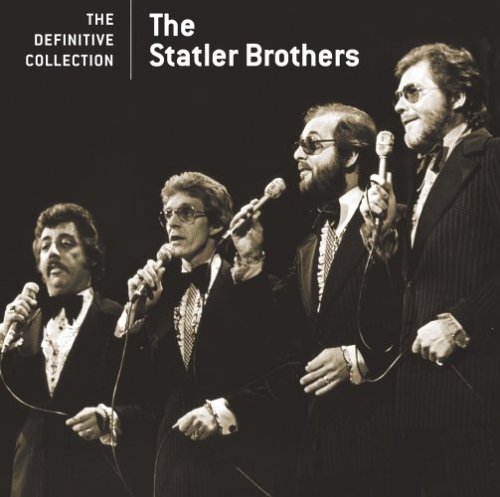
stalerI don’t know much about The Statler Brothers.  They are considered country, although this song is hardly country–it’s more folk with some bluegrass and, the real selling point–great harmonies (especially the bass singer with the big mustache).

The song is a wonderful coming of age song, sad and funny with a list of what happened to everyone in the class of ’57.  Like:

Betty runs a trailer park, Jan sells Tupperware,
Randy’s on an insane ward, Mary’s on welfare.
Charlie took a job with Ford, Joe took Freddie’s wife,
Charlotte took a millionaire, and Freddie took his life.

John is big in cattle, Ray is deep in debt,
Where Mavis finally wound up is anybody’s bet.

But the kicker comes at the chorus:

And the class of ’57 had its dreams,
Oh, we all thought we’d change the world with our great words and deeds.
Or maybe we just thought the world would change to fit our needs,
The class of ’57 had its dreams.

And then at the end:

And the class of ’57 had its dreams,
But living life from day to day is never like it seems.
Things get complicated when you get past eighteen,
But the class of ’57 had its dreams.

Vonnegut quotes the entirety of this song in the book and I’m glad he did, it’s a very moving song and really captures American life.

[READ: May 26, 2013] Palm Sunday

After writing several successful novels, Vonnegut paused to collect his thoughts.  And Palm Sunday begins: “This is a very great book by an American genius.”  It is also a “marvelous new literary form which combines the tidal power of a major novel with the bone-rattling immediacy of front-line journalism.”  After all the self praise, he decides that this collage–a collection of essays and speeches as well as a short story and a play which is all tied together with new pieces (in TV they would call this a clip show)–this new idea of a book should have a new name and he chooses: blivit (during his adolescence, this word was defined as “two pounds of shit in a one-pound bag.”  He proposes that all books combining facts and fiction be called blivits (which would even lead to a new category on the best seller list).  Until then, this great book should go on both lists.

This book is a collection of all manner of speeches and essays, but they are not arranged chronologically.  rather they are given a kind of narrative context.  What’s nice is that the table of contents lists what each of the items in the book is (or more specifically, what each small piece is when gathered under a certain topic).

Chapter 1 is The First Amendment in which he talks about Slaughterhouse Five being burned and how outraged he was by that–especially since the people so anxious to burn it hadn’t even read it (and the only “bad” thing is the word motherfucker).  The first speeches included are “Dear Mr. McCarthy” to the head of the school board where his books were burned and “Un-American Nonsense” an essay for the New York Times about his book being banned in New York State.  The next two are “God’s Law” for an A.C.L.U. fund raiser–it includes his confusion as to why people don’t support the A.C.L.U. which is working for all of our own civil liberties. (more…)

Read Full Post »

#16SOUNDTRACK: SUGAR-Beaster EP (1993).

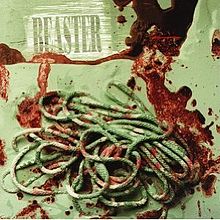
beasterI didn’t know that Beaster, the Sugar EP was recorded at the same time as Copper Blue.  Mould’s biography was very helpful in explaining all the details of the timing and styling behind these two recording.  As well as how the super pop of Copper Blue could be followed right on the heels with the very very dark EP of Beaster.

I have often thought of this disc as being really dark and insular and Mould confirmed as much—he was really airing out some demons with this disc.  But they thought it would be better to put them all in one place rather having them bounce around the poppier full length.  What must fans (like myself) have thought to hear this dark album after the pop of Copper Blue.  I mean just look at the cover!

I hadn’t listened to this in a long time, so I was surprised by how cool “Come Around” sounds—Mould’s acoustic guitar high in the mix with some appropriately grungey guitars in the background.  There are lyrics but for the most part I think of it as just Mould making sounds with his mouth.

It’s followed by the blistering “Tilting.”  It’s got superfast drumming with aggressive guitars, it’s like we’re back to the early Hüsker Dü punk sound (with a little more clarity).  The drumming is great in this track.  The song ends with a preacher being interrupted by dissonance and what sounds like electronic interference. And this song morphs into “Judas Cradle” one of Mould’s darkest songs.  It’s very claustrophobic-feeling with echoed vocals, lots of feedback and lots of compression on the overall sound—quite different from the big open sound of Copper Blue.  And yet for all of that, the chorus, “Have you seen the Judas Cradle, ah”is really quite catchy.

“JC Auto” has some buzzsaw guitars which make it seem like it’s going to be quite an angry song and yet the bridge is quite welcoming (all this talk of holidays) and then the chorus is amazingly fun to sing along to (Mould always finds pop in anger): “Passing judgment on my life you never really got it right/I can’t believe in anything / I don’t believe in / Do you believe in anything / Do you believe me now…  Look like Jesus Christ / act like Jesus Christ I Know I Know I Know Here’s Your Jesus Christ I’m Your Jesus Christ I Know I Know I Know.”  And, as always, I love when Mould repeats his lyrics in the background (the “I Know I Know” surfaces throughout the end of the song).

“Feeling Better” has weird synth blasts that kind of works in the song but sounds out of place on this record.  This song flips between really aggressive guitars and a very bright poppy chorus.   At 6 minutes this song is a little long (because it’s primarily repeating itself by the end), whereas Judas Cradle and JC Autos’ 6 minutes are well justified.

The final song “Walking Away” is a strange one. It is comprised entirely of organs (church organ it sounds like) with Mould delicately singing “I’m walking away back to you”  The end starts to wobble giving a bit of a nauseous feeling but then it’s over.  So even in his most downtrodden and questioning, Mould still has the chops to write some great music.  Down be put off by the cover, Beaster is a great album.

[READ: March 28, 2013] McSweeney’s #16

After the fairly straightforward Issue 15, McSweeney’s was back to fun with Issue #16.  The issue opens up into a kind of quad gatefold which has , in order–a comb, a book, another book and a deck of cards.

The main book contains nine stories, by the typical McSweeney’s roster at the time.  The other booklet contains a lengthy story by Ann Beattie.  The deck of cards is for Robert Coover’s “Heart Suite” and the comb is a comb.  It’s a nice one, although it has never touched my hair.

The MAIN BOOKLET (more…)

Read Full Post »

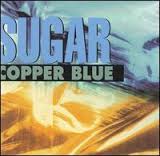
#15SOUNDTRACK: SUGAR-Copper Blue (1992).

copperblueAfter Bob Mould made some solo albums, he created another band.  Another trio, this one called Sugar.  Sugar seems to take Mould’s poppiest elements and wrap them in a big 90s grunge sound–a sound that Mould pretty much invented in Hüsker Dü.  And in many ways Sugar is not all that different from Hüsker Dü–maybe a bit less experimental and a little more commercial.

One thing I noticed about this album that, once I noticed it I couldn’t avoid it, was that when the drummer plays the cymbal (it might even be a hi hat with a tambourine on it), which he plays a lot, the tinny shimmer of that sound is so pervasive, I find it rather distracting.  Or should I say it adds an almost minute level of static over the proceedings.

The disc opens with “The Act We Act,” where big grungy guitars and a simple chugga chugga riff burst out of the speakers. I love the Pixies feeling of “A Good Idea” both that up front bass and the buggy sounding guitars provide an almost false introduction to the catchy verse and chorus that’s to come.  I also enjoy the unexpected break after the chorus.

It’s followed by the ringing guitars that introduce “Changes” a classic poppy rock song that is unmistakably Mould.  The uneasy almost nauseating sounds at the end of the song are again like a feint in the wrong direction as “Helpless” easily the most pop song Mould has ever written comes out.  Of course, as with Mould, this outrageously poppy song is all about feeling helpless.

Keyboards open the next song, “Hoover Dam” (something of a surprise for this album), which proves to be yet another big Mould single.  The song is so open with multiple acoustic guitars (and that cool synth solo) and a really wild reverse guitar solo.  It’s one of my favorite Mould  songs and yet another example of why this album was such a huge hit.

“The Slim” brings back the darker songs that Mould is also known for.  And just when you think that Mould can’t pull out another huge big single, he gives us “If I Can’t Change Your Mind,” one of his great big bouncy acoustic guitar songs.  It is almost obscene how catchy this song is, right down to the simple scale solo at the end.  Mould has this little technique that I find irresistible where he plays a song normally and then plays two fast chord changes segueing into another section.  It’s so cool.

“Fortune Teller” is a fast rocker with Mould’s trebly guitar taking the lead.  “Slick” is the only song I’m not crazy about. There’s something about it that kind of slows the momentum down, which is odd for a song about a car.  It’s got a real middle-period-Who feel to it, which I do like (and I really like the bridge) it just feels odd in this place in the disc.  The end of the song has some snippets of chatter that could have been edited out but lend an amusing air to the final track, “Man on the Moon” which ends the disc with that same air that the rest of the album has—big guitars and Mould’s slightly distorted vocals.  The solo is weirdly processed and kind of fun.  The end of the track with its repeated half step has a very Beatles feel to it. And the very end of the disc has the sound of tape rewinding, an amusing nod to the digital era.

Copper Blue was Mould’s first huge success and in his book he talks about not realizing quite how huge it was until he was in the middle of it.

[READ: March 20, 2013] McSweeney’s #15

I was a little disappointed with McSweeney’s #14, but #15 was once again fantastic.  This issue is a smallish hardcover (I like when their books are this size).  The bottom half of the cover features a cool 2 color painting by Leif Parsons.  The issue is known as the Icelandic Issue because of a few things.  The first half of the book features stories by the usual suspects.  Each of these stories is accompanied by an illustration of a Scandinavian rune that dates to the Viking era.  The stories in the second half of the book have illustrations that are taken from Icelandic grimoires–magician’s handbooks.  It is these second half stories that are all from Scandinavian authors.  It’s a fascinating peek into a culture few of us probably get to read.

There’s no letters in this book, which removes some of the levity, but that’s okay.  The front page has a brief story that it was being written on November 2, 2004 in New Mexico, hoping to bring some voting power to “the good guys “in this “completely fucking terrifying election.”  (The bad guy eked out a victory 49.8 to 49.1).  They went canvassing door to door with an Iraqi veteran named Joey (who was 21).  He was very pro-Kerry and may have even convinced a young girl to vote (she thought her vote didn’t count because she was poor (!)).  It really evokes the feeling on that dark night in 2004 when the iota of hope was snuffed out. (more…)

Read Full Post »

« Newer Posts - Older Posts »