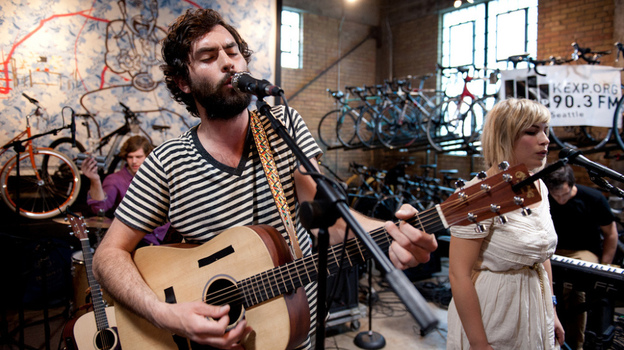
While trolling around NPR’s Favorite Sessions Pages (an amazing place to look for live music!), I found this Vampire Weekend in-studio session from KEXP in Seattle (whose site features some amazing shows that you can listen to (but I don’t think any are downloadable). This interview and performance was before the band’s debut album had come out (and they had only been playing live for about six months).
So the set has four songs. All will appear on the debut album, but they sound a little different. Perhaps it’s the in-studio sound recording or perhaps they play them a tad bit slower, but you can hear the words more clearly (which is cool) and some of the beats are sustained a bit longer. It’s a wonderful set.
The interview is also fun. The interviewer is pretty well gushing all over the band. But he asks interesting questions–it’s amazing to be reminded just how young the guys are. The DJ also asks about their influences and that’s kind of an interesting discussion, although thy don’t really admit to any specific influences (rats).
It’s a wonderful (if not too brief) session, and well worth a listen.
[READ: March 27, 2011] “The Man on the Island”
I really enjoyed the way this story was constructed. It went through several different teasers before settling down into what the story would ultimately be about.
It opens with a taxi driving through Bridgetown in Barbardos. The passenger, a reporter from Canada, asks the driver, Calvin Braithwaite, to drive him all over the island on a special commission. Braithwaite agrees, and they spend the reporter’s few days in Barbados together. When the reporter leaves, he asks for Calvin’s email address and phone number, for possible follow-up.
This introduction leads us to assume that the story is about the reporter. And also that Calvin is “the man on the island.” (more…)
SOUNDTRACK: THE HEAD AND THE HEART-SXSW, March 18, 2011 (2011).
Just months after their in-studio session, The Head and the Heart played South by Southwest. This set seems somehow louder than the in-studio (which seems a very common phenomenon–the bands just seems to be quieter in-studio somehow, even if they are playing hard, it still seems subdued, which isn’t bad at all, just odd). So here, the band really lets loose (or maybe it’s because they’ve been playing no for six extra months?) and they sound like they’re really having fun.
Their sound is loud and (somewhat) chaotic, and it really suits them. The set list is similar to the in-studio (they also play “Cats and Dogs” which segues into “Coeur d’Alene”). “Ghosts” and “Lost in My Mind” are also here (“Lost” sounds great in this rambling, somewhat shambolic format). They also play “Down in the Valley.” Added to the set are “Winter Song” and “River and Roads.” These two songs feature vocals by violinist Charity Thielin, and I have to admit I don’t love her voice. Perhaps it’s in this context or that she is mixed a wee bit to loud (because I didn’t dislike her voice in the in-studio). As I said, I haven’t heard the studio version yet, so I’ll chalk it up to a very large crowd.
But otherwise the set is outstanding, and I’m becoming a huge fan of the band.
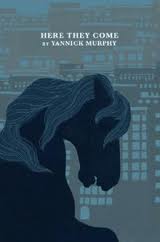
[READ: March 28, 2011] Here They Come
I had been thinking about reading this book for a while (the blurbs on the back are quiet compelling) but I kept putting other McSweeney’s books in front of them (I had hoped to finish an entire stack of McSweeney’s novels before The Pale King came. But it shipped two weeks early and threw off my plan).
I have read two pieces by Murphy in previous McSweeney’s issues, but looking back they didn’t prepare me for this strange story. And the strangest thing is the point of view of the narrator (but more on that later).
This is actually a simple enough story. Set in New York over an unspecified time period (there’s a couple of winters and a couple of summers, but I’m not sure if it’s new seasons or flashbacks), the (as far as can tell) unnamed narrator girl leads a pretty crap existence.
Firs there is John, the hot dog vendor. He’s a married man from a middle eastern country (his family is back there). And basically the narrator lets him feel her up (for what it’s worth on a flat chested 13-year-old) for free hot dogs and candy bars. She doesn’t seem to upset by the groping and keeps going back to pass the time with him.
Then there is her brother, an obnoxious boy who walks around in a silk dragon bathrobe all the time. When he is not smashing things with his guitar when he walks past the furniture, he is smashing things in his room or threatening to shoot himself with their old, unloaded gun.
Her mother works all the time but really can’t afford to take care of them or feed them. And she says “Merde” night and day (she is French). But worse is her mother’s mother, la mere, who stays with them from time to time. la Mere seems like she has money but she never gives them any. (more…)
SOUNDTRACK: KANYE WEST-My Beautiful Dark Twisted Fantasy (2010).
Before buying this album I really only knew of Kanye West as a loudmouthed guy who tweeted a lot and told off George Bush. But then everyone was raving about this album (Pitchfork gave it a 10 out of 10!). So I decided to check it out. And I can’t get over how great an album it is.
Now I’m going to start this review by mentioning a few things I dislike about rap as a genre. 1) I dislike all of the “guests” that appear on a record–I bought the album because for you, not your friends. 2) I dislike excessive use of “unh” and “yeah” at the beginning of a track; when you have nothing to say–let the backing music flow, save your voice for actual words. 3) Rap is still terribly misogynist and vulgar–I’ve nothing against vulgarity per se (I do have something against misogyny) but excessive use is lazy, and it stands out much more in a rap song since you’re saying the words not singing them.
The Kanye West album is guilty of all three of these things, and yet I still think it’s fantastic. The first reason is because it goes beyond a lot of rap by introducing real musical content into the songs. This is not an “all rap is just a beatbox” dismissal of rap, it’s an observation that rap tends to be more about the lyrics and the musical accompaniment can get kind of lazy. West’s songs have (beautiful) choruses, strings, and samples that augment the rest of the song, as opposed to samples that ARE the song. And Kanye West’s voice is great. His delivery is weird and twisted, a little cocky but more funny, with a twisted attitude that is really cool–and to my rather limited palate of rappers, it’s original.
The opening of the disc “Dark Fantasy” has a chorus singing “Can we get much higher” which is catchy and cool (and is used in the promo for The Hangover 2). The switch from this opening to the rapping works well (aside from the FOUR “yea”s). Although I don’t love the yeahs, I love his delivery, and that he occasionally ends lines with these weird “hunh” sounds, that are wonderfully emphatic.
The guests start showing up on track 2, but even the guests can’t detract from the excellent guitars of the song (and the cool solo). And I’ll say about the guests that I like some of them, but for the most part I’d rather hear Kanye.
“Power” samples King Crimson’s, “21st Century Schizoid Man”; anyone who samples King Crimson is alright with me. But to use it so perfectly, to make it part of your song is real genius. It works musically as well as within the overall concept of the album.
“All of the Lights” (with the pretty piano intro) features scads of guests including John Legend, The-Dream, Elly Jackson, Alicia Keys, Fergie, Kid Cudi, Elton John (!), and Rihanna. I can hear some of these people but not Elton John (why would he agree to be on a track where you can’t even hear him?). It is a beautiful pop track nevertheless.
“Monster” is a monster of tracks with yet more guests (I like that some of these guests break with the typical guest, like Bon Iver (!)). And I really like Nicki Minaj’s verse. [I’m not familiar with her work at all (in fact I keep wanting to say Minja instead of Minaj) but her verse with the wonderfully crazy vocal styling she displays is weird and cool and very powerful–I would like to check out her solo album, but the samples I heard weren’t that interesting]. It also has a great repeated chorus of being a “motherfucking monster.”
It’s followed by the even more catchy “So Appalled” (with FIVE guest rappers–some of whom I’ve never heard of but who do a good job. I love Cyhi da Prince’s lyrics: “I am so outrageous, I wear my pride on my sleeve like a bracelet, if God had an iPod, I’d be on his playlist” or “So call my lady Rosa Parks/I am nothing like them niggas baby those are marks/I met this girl on Valentine’s Day/fucked her in May/she found out about April so she chose to March” or this line, “y’all just some major haters and some math minors.”
“Devil in a New Dress” opens with a bunch of “unhs” (which I dislike) but this is nice ballad in the midst of all of the noise (and it has some clever lyrics). It morphs right into “Runaway” one of the more audacious singles I can think of. The piano melody is so simple (a single note to start) and the lyrics show Kanye as a loser in relationships. It’s a surprisingly thoughtful song for a song with a chorus that goes: “Lets have a toast for the douchebags, let’s have a toast for the asshole; a toast for the scumbags every one of them that I know. You been putting up with my shit for way too long…runaway fast as you can.” It gets even more audacious when you realize the last 4 minutes of the song are a solo with distorted voice. And the video…the video is 35 minutes long!
The sentiment of that song is erased by the next one, “Hell of a Life”. It opens with a great distorted guitar riff and lyrics about sex with a porn star. “Blame Game” is a surprisingly honest song about being nasty to your girlfriend (“I’d rather argue with you than be with someone else”). It features a sample of Aphex Twin’s (!) “Avril 14th”. And it’s quite a sad but lovely track. It ends with a very long skit by Chris Rock. I like Chris Rock, but this dialogue is kind of creepy because the woman who Rock is talking to (about the great sex she gave him) seems to be a robotic sample–why not have an actual woman talk to him?
The final track, “Lost in the World” has a lengthy intro by an auto-tuned Bon Iver. It’s one of my favorite tracks on the disc, especially the end, where the processed vocals get even weirder but accent the beat wonderfully. This track morphs into what is the actual final track, “Who Will Survive in America” which is basically a long recitation from Gil-Scot Heron. It works great as an album closer.
So, despite several things I don’t like about the disc, overall, it’s really an amazing release. And I can overlook the few things I dislike because the rest is so solid. I can’t decide if it’s worth looking for his earlier releases. How can they live up to this one?
[READ: May 6, 2011] McSweeney’s #37
This is the first McSweeney’s book where I’ve had to complain about the binding. The glue peeled off pretty quickly from the center cover. Fortunately, the back cover held up well. I’m guessing it’s because there’s an extra book tucked into the front cover which prevents the book from closing nicely when it’s removed.
But aside from that, the design of the cover is very cool. It is meant to look like a book (duh), but actually like a 3-D book, so the bottom right and top left corners are cut on diagonals (this makes for a very disconcerting-looking book inside–with triangles cut across the top). The artwork inside is also cool. In keeping with this appearance, each two page spread looks like a book with a spine drawing in the gutter of the pages). And the bottom of each page has lines making it look like the bottom of a book. (The illustrated margins are by SOPHIA CARA FRYDMAN and HENRY JAMES and there are interior paintings by JONATHAN RUNCIO).
The front matter is wonderful. Although it gives the usual publishing information, the bulk of this small print section is devoted to counteracting all the claims that the book is dead. It offers plenty of statistics to show that not only are the public reading, they are reading more than ever. The introduction also goes a long way towards arguing against the idea that people are reading less now than in the past. When was this “golden age” of readers? There’s also the wonderfully encouraging news that 98% of American are considered literate.
Wu Man is considered the master of the pipa. If that sentence was complete gibberish, the pipa is a 4 stringed lute-like instrument and Wu Man is a Chinese virtuosi of the instrument. This Tiny Desk Concert shows Wu Man playing three songs, solo.
The songs are, if not traditional Chinese songs, then at least traditional in style. Needless to say they are not for everyone (and really, they’re not even my cup of tea–I’m not downloading it, just watching it), but watching her fingers move on this instrument and really paying attention to the kind of things she’s doing with four strings, it’s quite an impressive feat.
She doesn’t sing, and the songs do not follow western musical structure at all. But it’s an interesting look into Chinese musical culture.
Even if you only watch the first song, it’s worth the time.
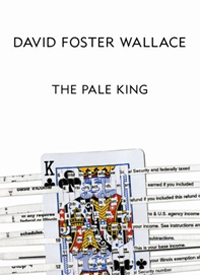
[READ: April 29, 2011] The Pale King
[Note: this review is pretty much free from spoilers–some details are given but I don;t think they ruin anything–but it is full of speculation and imaginings of what could have been]
I finished The Pale King today. It took about a month, but that was because I only read it at lunch hour. And I was surprised to find that, unlike with other books, I didn’t always feel up to pushing my lunch hour a few extra minutes to get some extra pages in. Not because I didn’t like the book, but I think it was just really dense and often quite intense.
I’ll also state that I hadn’t been making any kind of notations when I started. Then, a bit of the way through, when I realized there were a lot of characters, I started jotting down some names and characteristics. But then I stopped again, because it was interfering with my absorption of the story as a story (such as it is). So, this review is based on an initial read (yes, I’ll be reading it again in the not too distant future, that’s for sure), without any real note taking.
Is note taking necessary? Well, yes, at least to keep the characters straight. There are many many characters and most of them do not interact (or at least not explicitly) so it’s not always easy to know who is who or which person’s weird characteristics are showing up in any given chapter. Plus, there are dozens of chapters in which unnamed people are described. It’s hard to know how deliberate that was or how much of it is just the fact that book was unfinished.
The other thing is the ending, of course. DFW fiction is notorious for its “lack” of endings. Broom of the System ends mid-sentence, Infinite Jest ends in the middle of a scene, so who can imagine what The Pale King would have ended. As such, we have only to go by editor Michael Pietsch’s placement of chapters.
So, in many respects, this book is very much Pietsch’s project. Sure, DFW wrote all the words, but it was Pietsch’s job to piece them together. Who is to say that DFW would have wanted §50 to end the book? Pietsch also includes about ten pages of notes at the end of the book all showing ideas that DFW had asked himself about the nature of the finished product. Some of these questions are minor, but others are quite significant, and would effect not only connections in the novel, but also the overall shape of the book. It also implies that there could have been as much as another 500 pages coming.
The book feels like a kind of culmination of all of the things that he has been putting into his work for the past few collections. There are character sketches based on interviews (Brief Interviews), there are lengthy sections of bureaucratic minutiae, lovingly rendered (“Mr Squishy”), there are scenes of conformist office work (“The Soul is Not a Smithy”) and there is redemption in the everyday (“This is Water”). The mind reels at what this could have been had it been finished.
So this book is obviously, radically unfinished (and yet it’s still over 500 pages long). So, why bother reading it?
SOUNDTRACK: WORM OUROBOROS-Live at Le Pousson Rouge, March 22, 2011 (2011).
I had never heard of Worm Ouroboros before this concert. They opened up for black metal guys Agalloch. I was very intrigued by their name, because I love the word ouroboros, and then I learned that their name comes specifically from a novel by Eric Rücker Eddison called The Worm Ouroboros.
Now Agalloch is a heavy, fast, scary kind of band, so I expected that WO would be too, but they are almost exactly the opposite. A trio (bass, guitar/flute (!)/keyboards, and drums), the band plays very ethereal music. It has a kind of sinister edge to it, but for the most part it never really has a beat or anything. The sounds drift and flow over each other. This is all held together by the gorgeous vocals of bassist Lorraine Rath and the even more gorgeous harmonies of guitarist Jessica Wray. Their voices are reminiscent of Jarboe from Swans.
The most amazing part of the show comes on the occasional ends of songs when the band seems to come down to earth and they play a loud and aggressive doom metal stomp. It only last for a minute or two and it doesn’t happen on every song, but it’s amazing and really surprising when it does.
I don’t know what the band sounds like on record, but they make an exquisite noise live. And you can tell how intense they must be because the rowdy crowd is quiet and respectful for their entire set. You can get a free download (or listen online) at NPR.
This is a video of “Winter” (a song that gets really heavy at the end) from the show.
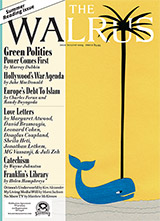
[READ: March 26, 2011] “Catechism”
Although I have been posting past stories from The Walrus on Saturdays, the July/August 2005 issue was a Summer Reading Issue complete with 5 pieces of fiction. So, it seemed like a good time (the week after the release of The Pale King, when I will be otherwise occupied) to go through thee five pieces.
This story uses a scene that I think is used an awful lot in fiction–that of the car sitting on a frozen lake with people taking bets as to when it will sink. It’s not central to the story by any means, but this is I think the third time I’ve read it. Of course I gather that if you have a community that is frozen most of the time, it’s a reasonable thing to see there.
Anyhow, this is the tale of an East Coaster moving out to Regina to be writer-in-residence at the Regina Public Library. He finds that there isn’t all that much to do (in the year he’s there, two people ask him for help with their novels in progress. [Frankly, I would love to hear THAT story instead. A story where the writer in residence helps these misfits with their novels. It sounds great. So, I enjoyed that aspect of the story very much]. In fact I enjoyed it more than what would eventually develop as the plot. (more…)
This is a brief session (only three songs) but as with the interview with Thurston Moore, David Dye does another great interviewing the band here. Although it must be said that saying the band is once again a four piece (when clearly there are five people in the picture and in the studio and when he later says two guitars, two basses and drums–which I also think is incorrect, as I’m pretty sure Kim switched to guitars at this point, although I don’t know if she did during this set) is not a great way to start the interview.
Facts aside, the interview is informative and interesting and provides a glimpse into the band’s psyche all these years into their career.
The set is also good (although Thurston’s voice sounds a little off on the opener “Incinerate”). The surprising thing about the set is that even with the five of them, the feeling is one of restraint. True, the songs on Rather Ripped are not as noisy as previous records, but this feels like they are trying not to wake anybody up the NPR folks. It’s a weird feeling for a Sonic Youth set, but the plus side to it is that you can really hear everything clearly.
The other two songs are sung by Kim: “Jams Run Free” and “What a Waste” (why do they never promote any of Lee’s songs??). And there’s the very amusing comment that the first time they played “What a Waste” Thurston and Kim’s daughter said it sounded like the theme from Friends. Ha!
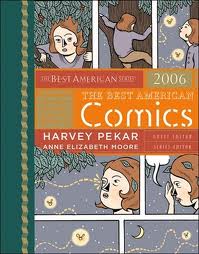
[READ: April 15, 2011] The Best American Comics 2006
I just recently learned about this series from The Best American line of books. I had known about the Best American Short Stories and Essays and even Non-Required Reading (which I have not yet read). But once I found out about the best comics, I knew I had to check it out.
The first issue came out in 2006. The series editor is Anne Elizabeth Moore and the Guest Editor for this volume was Harvey Pekar. Each of them has an introductory essay in the book. To me the amazing thing about Pekar”s essay is how aggressively defensive he sounds (a sort of, “you may not like this one, but try this one” attitude) about these comics and comics in general. I don’t know much about Pekar’s work. I know he’s a kind of underground icon, but I seem to have missed him. My impression of him is that this sort of antagonistic/defensive attitude seems to go along quite well with his comics, so I guess that makes sense, but I didn’t find it very welcoming.
But that’s okay, because I really enjoyed the comics. And quite a few were by artists that I had never read before, which is even better! (more…)
I recently rediscovered the band Angst. They were part of the second wave of SST bands (the ones who never went anywhere and were summarily dropped with no forwarding address). I know of Angst from their song on The Blasting Concept Volume II (which I love). I decided to investigate Angst a little further and my good friends at YouTube came through with a number of Angst tracks that I’d never heard.
Like this one.
Angst is a kind of jangly pop band. This song in particular would not be out of place on the radio in 1992 or indeed now. It has an early R.E.M. feel, but I think what makes it stand out somewhat is that the chorus feels kind of short–you kind of expect Peter Buck to sing a second part of the chorus, but that never materializes.
Angst is a band that could have been huge (SST was not much for marketing). And as far as I can tell all of their discs are utterly out of print. Pity. This is some good stuff.
Tap your feet along!
[READ: March 22, 2011] The Meowmorphosis
I received this book as an Advance Reader’s Copy. I absolutely loved Pride & Prejudice & Zombies. I didn’t read Quirk Classics’ other mash-ups: Sense & Sensibility & Sea Monsters or Android Karenina (although I love the title of that one). Nor did I read any of the other mash-ups that Quirk Press did not print. It became rather passe after one great idea.
But this one seemed different somehow…. In part, Kafka. But also, it’s not a classic novel plus horror. It’s more horror plus…cats. And the opening line is wonderful:
One morning, as Gregor Samsa was waking up from anxious dreams, he discovered that he had been changed into an adorable kitten.
Anyone who has read The Metamorphosis knows that it’s about 85 pages long. So, how did Coleridge Cook (which is a pseudonym, FYI) get 200 pages out of it? Well, it’s not simply The Metamorphosis. It incorporates aspects of The Trial and the short story “Little Woman” (and quite possible some other things as well).
And in that respect, it’s pretty neat. He takes these three separate Kafka stories and interweaves them, all keeping with the same basic structure of The Metamorphosis with Gregor as a cat.
And so, as in the original, Gregor is abused by his family. But unlike the original, he eventually escapes outside where he meets Josef K. and is put on trial. He is eventually let go and returns home where he imagines the tearful return he will have with his sister.
But here’s the problem. Unlike P&P&Z which made a whole new plot and added so much excitement to the original story, all that this mash-up does is to change him from a cockroach into a kitten. So really, the story is exactly the same but instead of scenes with creepy, gross cockroach detail, we get scenes with cute and cuddly kitten details. And as such, it’s hard to understand exactly why the family is so creeped out by him. (more…)
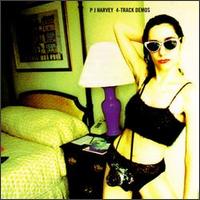
After the intensity of the Steve Albini produced Rid of Me, Harvey releases this collection of demos. The amazing thing is that these versions actually seem more intense than the Albini version. Or if not more intense, then certainly more raw.
The songs definitely have an unfinished feel about them, and yet they only vary from the final version in polish (and Albini’s stamp).
“Rid of Me” is just as quiet/loud, and has those high-pitched (and scary) backing vocals. Speaking of scary vocals, her lead screams in “Legs” are far scarier here than on Rid of Me–like really creepy. (Which sort of undermines that idea that this was released because Rid of Me was too intense for fans). “Snake” actually features even creepier vocals–Harvey must have had a field day making these sounds!
I admit that I like the finished version of “50 Ft Queenie” better,”but there’s something about this version of “Yuri-G” that I like better.
The disc also has some tracks unreleased elsewhere. “Reeling” is an organ-propelled song of female strength with the nice lyric: “Robert DeNiro sit on my face.” “Hardly Wait” is a slow grinder that is fairly quiet for this time period. “M-Bike” is a cool angry rocker about a guy and his motorcycle which is one of my favorite tracks on the disc.
It’s a great companion to Rid of Me.
[READ: end of February to early March] original articles that comprise A Supposedly Fun Thing I’ll Never Do Again
As I mentioned last week, I decided to compare the articles in A Supposedly Fun Thing I’ll Never Do Again with the original publications to see what the differences were. It quickly became obvious that there were a lot of additions to most of the articles, and it seems rather pointless (well, actually it seems exhausting and really outrageously time-consuming) to mention them all. But what I did want to note was the things that are in the articles that have been removed from the book. There’s not a lot but there are a few juicy tidbits (especially in the early articles) that are fun to note for anyone who read only the book and not the original articles.
My process for this was rather unthorough: I read the article and then right afterward I read the book. If I noticed any changes, I made a note on the article version. Many of them were surprisingly easy to note as DFW’s writing style (especially his idiosyncratic phrases) really stand out. This is especially true in the Harper’s articles. The academic ones were less notable, I believe, and I’m sure I missed a bunch.
I’m not sure in any way how these pieces were dealt with initially by the magazine or DFW. I assume that DFW handed in the larger article (like we see in the book) and the magazine made suggested edits and DFW edited accordingly. Then the book copies are probably the originals, bt which have also been updated in some way.
In most cases, it’s not really worth reading the original article, but I’m including links (thanks Howling Fantods), for the curious.
As for length, it’s hard to know exactly what the conversion from magazine article to book is. The “Tornado Alley” tennis article is 8 pages (more like 4 pages when you take out the ads) and the book is 17. Perhaps more accurately it seems like one Harper’s column = just under one book page. I’ll try to figure out what the conversion is if I can.
One last note, whenever I say “article” I mean the original magazine version. And obviously “book” means ASFTINDA. (more…)
Wavves’ King of the Beach CD made many Top Ten of 2010 lists. I listened to a track somewhere and wasn’t all that impressed. Right now there’s a live show on NPR, which I listened to a bit (and which made me investigate them further).
They have a few songs on their My Space page and I really like this one. It is short and fuzzy and catchy and cool. It’s a fast blast of punk nonsense. I have no idea what it’s about (and I rather like the weird break in the song where the singer can barely get words out).
I’m not sure if I’d listen to a whole record of them (although I love their hair). But this was sure a fun track.
[READ: February 17, 2011] Arkansas
John Brandon did a pretty amazing thing with this book. He took two rather unlikable characters and made them sympathetic and, eventually, compelling. The unlikability may have come from the detached style of their introduction. Each of the main characters is introduced separately with a brief anecdote that seems to end abruptly. In fact, I wondered if it was going to be a series of brief character sketches and nothing more. I’m thankful that that wasn’t the case since, each character’s “section” could have been a complete (but very unsatisfying) story. When I saw more of Swin, I was pleased, even though I didn’t really “like” him.
First we meet Swin Ruiz, a very intelligent guy who makes it to college. While in college a foolish mistake (resubmitting an essay to a teacher) costs him his scholarship, which essentially means he’s out of school. He scams some money from the rich students and then takes off, leaving his family and his beloved younger sisters with their jerk of a stepfather. From there, he drifts aimlessly until he meets a bartender who sets him up with someone to help “break the laws of the land.”
Kyle Ribb is the other main character. He’s a harder man, something of a bastard. He tries to go legit by working in a bike store. When that doesn’t pan out (the story of that is pretty funny) he reverts back to his “no boss” ways. He eventually meets a guy who introduces him to Colin, a man with criminal connections.
The third character we meet differs from these two. First, a date is given as an introduction (1974). Second, the whole section is written in second person (“You are Ken Hovan”). We learn about his life and his background and how, eventually, he took the nickname Frog and became a shop owner, a dealer of unusual merchandise (which begins with bootleg tapes and, naturally, transforms into drugs).
The story of Frog’s life from 1974 to the present intersperses the main story (which is really about Swin and Kyle). And each time frame jump ties together some of the mysteries of the book (Frog, being the boss, ties the thread together). And there are many mysteries.
Kyle and Swin move up the ranks of the ne’er-do-well scale, until they land a job in an underused state park in Little Rock, Ark. They get a “legit” job manning the booth, checking visitors in and out, and cleaning up the brush, but their “real” job is to deliver packages to random locations in different states. They drive a car to a parking lot, wait for a person to get in and then drive off in a different car with a package for the other end. And that’s pretty much it. It’s obvious they’re doing illegal work, but they don’t ask questions and don’t know too many details.
Their boss at the park is Bright, a man who seems to really enjoy the park and genuinely likes to take care of it. He is a middleman for Frog, but a rather benevolent one. There are some other characters as well. The first is Her, (that’s the only name she gives out), she gives Bright the details about the packages. Bright’s boss at the park is Wendy, she knows what they do and receives a cut. She only wears pink and wishes to be a painter. She recites a quotes from a different painter before she leaves. (more…)
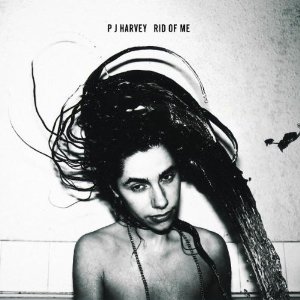
For Rid of Me, PJ Harvey jumped to the big leagues (relatively) by enlisting maniac Steve Albini as a producer. And he takes the rawness of Dry one step further into a sound that is both raw and sharp. He really highlights the differences between the highs and lows, the louds and quiets. And man, when this came out I loved it.
Like NIN’s “March of the Pigs,” the opening of “Rid Of Me” is so quiet that you have to crank up the song really loud. And then it simply blasts out of the speakers after two quiet verses.
“Legs” turns Harvey’s moan into a voice of distress, really accentuating the hurt in her voice. And Harvey hasn’t lightened up her attitudes since Dry, especially in the song “Dry” which has the wonderfully disparaging chorus: “You leave me dry.”
“Rub Til It Bleeds” is a simple song that opens with a few guitars and drums but in true Albini fashion it turns into a noisy rocker. “Man Size Quartet” is a creepy string version of the later song “Man Size” (I’ll bet the two together would sound great). And the wonderful “Me Jane” is a great mix of rocking guitars and crazy guitar skronk. Albini really highlights the high-pitched (male) backing vocals, which add an element of creepiness that is very cool.
For me the highlight is “50 Foot Queenie”. It just absolutely rocks the house from start to finish. The song is amazing, from the powerful…well…everything including the amazing guitar solo. “Snake” is a fast rocker (all of 90 seconds long) and “Ecstasy” is a song that feels wrung out, stretched to capacity, like they’ve got nothing left.
It’s not an easy record by any means, but it is very rewarding. This is a CD that really calls for reamastering. Because it is too quiet by half, and could really use–not a change in production–just an aural boost.
[READ: end of February and beginning of March] A Supposedly Fun Thing I’ll Never Do Again
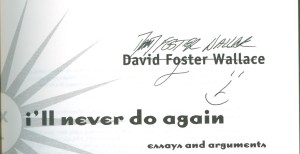
This is a collection of 7 essays that DFW wrote from 1990-1996. Three were published in Harper’s, two in academic journals, one in Esquire and the last in Premiere. I devoured this book when it came out (I had adored “Shipping Out” when it was published in Harper’s) and even saw DFW read in Boston (where he signed my copy!).
click to see larger
[Does anyone who was at the reading in Harvard Square…in the Brattle Theater I THINK…remember what excerpts he read?]
The epigram about these articles states: “The following essays have appeared previously (in somewhat different [and sometimes way shorter] forms:)” It was the “way shorter” that intrigued me enough to check out the originals and compare them to the book versions. Next week, I’ll be writing a post that compares the two versions, especially focusing on things that are in the articles but NOT in the book (WHA??).
But today I’m just taking about the book itself. (more…)
 SOUNDTRACK: VAMPIRE WEEKEND-KEXP performance & interview (2008)
 While trolling around NPR’s Favorite Sessions Pages (an amazing place to look for live music!), I found this Vampire Weekend in-studio session from KEXP in Seattle (whose site features some amazing shows that you can listen to (but I don’t think any are downloadable). This interview and performance was before the band’s debut album had come out (and they had only been playing live for about six months).











 I Just Read About That...