Feeds:
Posts
Comments

Archive for the ‘Books about writers’ Category

SOUNDTRACK: RHEOSTATICS-The Cabana Room, Spadina Hotel, Toronto, ON (December 23 1983).

This is “Rheostatics and Trans Canada Soul Patrol 1983 at The Cabana Room – Spadina Hotel Christmas Party show. Amazing sounding recording considering it is from 1983.”

As far as I can see it is the only recording of the band with the Trans-Canada Soul Patrol.  And that basically means that it’s a lot of these early songs only with saxophone–lots of saxophone (it seems like only one member sof The TCSP is there).  According to a cassette recorded in 1984, the band was:

  • Drums – Dave Clark
  • Guitar – Dave Bidini
  • Tenor Saxophone – Charlie Huntley, Dave Rodenburg
  • Trumpet, Flugelhorn – Ray Podhornik
  • Voice, Bass – Tim Vesely

So it seems likely that it was a similar e lineup in Dec 1983.  I only hear guitar bass and drums, but I can only hear one sax.  And does that mean that Tim was the main singer back then?

This show is loose, dare I say sloppy.  There’s a total drunken party vibe going on, as befits a Christmas Party.  But the most notable thing is that sax–soloing all over the place.  Dave Clark gets a lot of shout outs during the set–trying to get him to do a solo or “lay the groove.”  Before “Thank You” (the Sly and the Family Stone song), Dave tunes his guitar with harmonics and someone “sings” Rush’s “Xanadu” briefly.  The band puts a massive echo on the first chorus–it’s pretty obnoxious.  And in the middle of the song Dace Clark starts chanting songs: “Fly Robin Fly,” “You Should Be Dancin'” and “Convoy.”

During “Chemical World” someone asks “What do you think Ronald, am I better off dead?” and then there’s a shout out: “show us your teeth, Paul.”  (None of these guys are in the band, right?).  Someone jokes that Clark is still playing drums even though his mom said that playing drums is not a career.

It’s unclear what’s happening or how serious the band is but they tell people “watch out, guys, you broke a fuckin’ beer bottle, okay.”  They introduce “The Midnight Hour” by saying it’s a song written by Wilson Pickett called, “Go Fuckin’ Nuts, no I don’t know what it’s called.”

This is the only recording I know of with “Big in Business,” which they describe as “something marketable.”  And after two shows where “Man of Action” gets cut off, we finally get to hear it to the end.

By the time they do “Louie Louie” the whole thing is a drunken mess.  There’s shouts of Merry Christmas, comments about it being the last  time they’ll play in 1983, calling people up on stage.  It sounds like Clark is looking for his girlfriend.  “Louie” is a massive party jam with all kinds of people singing along, including a woman with a very high singing voice, and someone going “shock” like Peter Gabriel’s “Shock the Monkey” after each “Louie Louie” line.

The set seems to be over but then some one encourages them to sing “Shake Yer Body Thang,” which they do with lots of screaming and shouting and letting it all hang out.

It’s nice seeing a relatively young band acting so cool and comfortable and fun on stage, even if I’m really glad they got rid of the horns (and their whole sound).

[READ: August 28, 2016] In Short

Manguso’s book review of four books of aphorisms is fun because she (an aphoristic writer herself) breaks it down into 36 paragraph-sized chunks.  Including that “Hippocrates coined the word aphorism to describe his brief medical teachings.”

A few interesting things: She says that she doesn’t so much read prose as “root through it for sentences in need of rescue.”

John Gross, in his introduction to the Oxford Book of Aphorisms, says the word aphorism took on a moral sand philosophical tone after the Renaissance.  By the 17th century the definition included witticisms.

James Geary wrote The World in a Phrase: A History of Aphorisms and offered a five part definition of aphorisms: it must be brief, it must be personal, it must be philosophical and it must have twist.  But the best thing that Geary has said is: (more…)

Read Full Post »

SOUNDTRACK: TASH SULTANA-Tiny Desk Concert #610 (April 7, 2017).

Tash Sultana is a force of nature.  I’d heard her song “Jungle” a bunch of times on the radio before seeing this.  I thought it was interesting and kind of catchy with some cool guitar work.  But it never occurred to me that Sultana was doing the whole thing BY HERSELF!

For this Tiny Desk, she recreates that song (and two others) entirely by herself with loops and loops and effects and all kinds of good stuff.

As “Jungle” opens, Tash plays the guitar chords and loops them.  And then she plays the opening riff.  And loops it.  And then more riffs on top and loops them.  She creates a huge sound for about a minute and a half.  Then when all that sounds good, she starts playing the drum machine.

It’s so much fum watching her dance around her little area (barefoot, mind you) tapping pedals and setting effects on and off.  And when she starts soloing, she’s got a perpetually big smile on her face just really enjoying all of the work she;s doing and the sounds she’s making.

She finally starts singing and she’s got two microphones–the chorus gets the second microphone which has a processor and echo to totally change her sounds.

And then towards the end of the song she starts messing around with a solo and has all kinds of effects at hand for whichever part of the solo she’s doing, including a wild, ass-kicking, classic-rock style solo that all mellows out into  sweetly echoed section and a gentle guitar ending.  The song itself isn’t that complicated, but holy cow she packs so much into its 7 minutes.

So who the hell is Tash Sultana?

This 21-year-old Maltese-Australian got a guitar from her grandfather when she was three, she says, and has played it every day since. It’s astonishing to watch Sultana’s fluidity on her instrument, like a natural extension of her body. (She also plays bass, saxophone, trumpet, flute and more, but kept it “simple” at the Tiny Desk.) I thought I had a lot of energy — watching her bounce from guitar to drum machine to two separate microphones — and then hopping barefoot from looping pedal to effect pedal as she builds her songs was exhilarating and exhausting.

She says she wrote “Notion” when she was having a difficult time with myself… and someone else.

It opens with that her singing “oohs” into that processed mic and it sounds otherworldly.  And then again she jumps around from guitar to drum machine looping more and more.  Although it’s interesting that most of the song stays kind of mellow.  Her melody is very pretty and her voice is great.  The only trouble is it’s kind of hard to understand what she;s singing.  But its fun that she’s singing some of the song without playing anything else (it’s all being looped) and how intensely she sings it.

After playing the song for some 9 minutes, she hits some pedals and the just takes off on a wailing guitar solo.

“Blackbird” is very different–it’s all played on acoustic guitar.  There’s no looping.  She says she wrote this while in New Zealand.  She was wandering and got lost in a cave.

But acoustic doesn’t mean simple folk song.  She plays some great riffs with her right hand while hammering-on with her left hand. The part around 19:15 is just fascinating to watch.  She must have an alternate tuning as well because when she plays opens strings it sounds great (and it’s 12 string as well, so it sounds even more full).

After singing a few verses she plays an incredibly fast section.

There’s just so much going on, and I have no idea if all of that is part of the songs or if she’s just going off into her own world.

I was so impressed by this set that I just got tickets to her when she comes to the area in a few weeks.

[READ: January 31, 2017] “Mo Willems’s Funny Failures”

I have never really written about Mo Willems, even though my family loves his books (I’ve even got an autographed copy of one of them).

The Piggy and Gerald books are wonderful first readers (and are fun for adults too) and Pigeon is the best bad-tempered character around.

Since I like Rivka Galchen and post about just about everything she writes, I wanted to include this here.  It is a biographical essay based on a few interviews she had with Willems. (more…)

Read Full Post »

agathaSOUNDTRACK: VALERIE JUNE-Tiny Desk Concert #310 (October 12, 2013).

I enjoyed Valerie June’s —I found her voice to be unusual but enjoyable.   But I find her sound here to be kind of flat and disappointing.  Her guitar choice feels too quiet or something and her voice sounds too tinny—almost childlike.  I have a love hate relationship with singers with this kind of voice, and I’m afraid she comes down on the bad side.

But maybe it was something with the location, because the blurb says I’m wrong.

Valerie June is a singular performer with an array of singing styles. Sometimes she’s channeling an old male voice; at other times, she channels a younger woman or even a child. Her music is steeped in tradition. The striking Tennessee singer — on its own, her hair could pass for sculpture — can sing the blues or gospel or country or a blend that sounds like nothing else. She learned how to sing during 18 years of church, but the “old man’s voice” comes from deep inside in unexpected ways. Prepare to be surprised, and to become Valerie June’s newest fan.

During “Workin’ Woman Blues” I couldn’t get the melody of Steely Dan’s Do It Again out my head.  It’s something about her vocal delivery–although clearly the music is very different.  It’s unusual that the first line of “Rain Dance” is the same as Bad Company’s “Feel Like Making Love”—intentional I’m sure.  And the way she sings the lyrics very differently than the original also unexpected.  But the whole presentation of her voice and guitar sounds like an old timey black and white cartoon–Popeye or the like.

She’s very chatty before the final song.  She talks about love and then says there’s a lot of cute babies here today.  This is my cute baby: a tiny banjo made in Memphis.  It is a very tiny banjo.

Of the three, “Somebody To Love” is my favorite song, although she does get a little crazy on the chorus.  I’m most intrigued by the electric foot pedal that appears to simply be an electronic drum stomping thing.

[READ: August 15, 2016] Agatha

In high school I had to read And Then There Were None.  I really liked it, but I never read anything else by Agatha Christie.  I’m a snob who doesn’t read mysteries, true.

But I’ve always been intrigued by Christie.  So I was thrilled that I found this graphic novel biography at work.

As many of these graphic novels tend to be, this one was French and recently translated to English (by Edward Gauvin).  I was fairly certain that I had seen the work of the artist in a previous comic, but Alexandre Franc is new to me.  As are the writers Anne Martinetti and Guillaume Lebeau.

This is a great biography–it is told with flair and excitement and throws in a lot of details about the creation of her most famous novels (without spoiling any of them). And, in a very clever conceit she “talks” to Hercule Poirot throughout the book–allowing her to narrate things without it seeming strange or flat.  And, even better, Poirot is a jerk to her–perpetually jealous and unhappy with her.  It’s a great technique. (more…)

Read Full Post »

SOUNDTRACK: HEM-Tiny Desk Concert #306 (September 28, 2013).

Hem is one of All Songs Considered‘s earliest discoveries. Back in 2002, we received a beautiful and unique album called Rabbit Songs. It was a homey, fireside kind of record, with a sound that could be called country or Americana, and the arrangements by Dan Messé made it feel quaint and warm. To top it off, there was singer Sally Ellyson, an untrained natural talent with an effortless yet breathtaking voice. Hem has gone on to make five more albums since Rabbit Songs; their latest, Departure and Farewell, finds the group still writing songs that feel as if they’ve always been there.

Bob is quite right about the feel of this band, the drums are actually foot stomping and piano tapping, and that makes the band sound like they are siting around cozy room with friends.   And then there’s her voice.  There’s nothing specific about it that stands out, and yet it really does.  Her voice feels incredibly warm and welcoming, making you want to stop and listen.  And perhaps it’s something about the recording which makes everything feel soft (but not muddy) and warm.

And even in the songs themselves, it feels like friends hanging out.  During “Walking Past The Graveyard, Not Breathing” they say “go George” as the intro to the bass solo and then “go Heather” for the violin solo.   “Tourniquet” has some great lyrics, between the alliteration at the beginning and the great metaphor of the song, I was so taken with the lyrics that I didn’t even realize how pretty the melody was:

Brooklyn, I’m broken — I’m breaking apart
Oh Brooklyn, your bridges are bound up in light —
Every artery’s clogged as you pull the belt tight —
And this tourniquet turns even tighter until
Traffic comes to a standstill

When the song suddenly takes off near the end (but only briefly) it really elevates the song which was already delightful.  Introducing the final song, “Seven Angels” she says they are excited to be there, playing in this format.  She says the song can be seen as a lullaby–she likes to sing it for her sister.  She says she doesn’t write the songs but she can pretend this one is hers.

It’s hard to imagine this band playing a venue much larger than this one–they seems right at home in a small space.

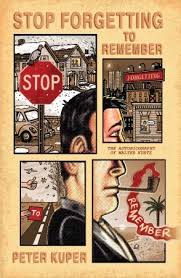
[READ: July 31, 2016] Stop Forgetting to Remember

This is a fascinating story about the comics artist Walter Kurtz.  I know very little about Peter Kuper, but I gather that this is sort of his life but written as an autobiography of somebody else.  (For instance, Kurtz was born on the same day as Kuper).

The back cover blurb also states how daring it was for Kurtz to write all of this –showing the embarrassing details, etc.: “My spouse would have killed me!”

This book is a collection of “stories” (not sure if they were ever published separately) that are joined by the narrative thread of Kurtz telling us about his life.  And the “occasion” for this reflection is the pending birth of his first child.  He is freaking out a bit–when he was young he never wanted kids, and then maybe he was cool with it, but recently he’s become terrified again.  He’s particularly afraid because he’s engaged with the world and he sees that as each month goes by, things get worse: AIDS, global warming, overpopulation, famine, wars (and that’s just 1996). (more…)

Read Full Post »


SOUNDTRACK
: BATHS-Tiny Desk Concert 300 (September 4, 2013).

I was unfamiliar with Baths and I am impressed by their busy-ness in this set.  There are only two guys playing, both play with various computer gadgets and then switch to keyboards and guitars.  They layer more and more music on this fairly dancey and very electronic sound.

Baths, a.k.a. Will Wiesenfeld, plays mysterious and textured electronic music. When Wiesenfeld came to the Tiny Desk, I expected contemplative tones and a laid-back performance; he does, after all, call his project Baths. But what sets him apart from the vast majority of like-minded performers is that his music doesn’t get buried behind the buttons or lost in a hypnotic glaze.

Wiesenfeld is an extrovert live, and at the Tiny Desk, he sounds vibrant and compelling as he performs songs from this year’s Obsidian. His partner Morgan Greenwood, an accomplished music-maker in his own right, keeps the music dense but frees up Wiesenfeld to sing with few distractions; there’s a mind-meld between the two that’s undeniable. They’re not accustomed to playing in the light of day, but they enchant in this perfect introduction to their work.

Wisenfeld’s vocals are a lot of wordless sounds (ba ba ba, na na na) that get looped and mixed around.  He sings in a rather high register, especially when making the looped sounds.

“Miasma Sky” builds with layers upon layers of sounds and vocals.  The sounds are manipulated in great ways with those little knobs and sliders. And just as you think it’s going to end with a series of delicate synth and guitar notes, he begins looping them which create the building blocks for the rest of the song.   It’s primarily keyboards and glitchy drums until the end.

“Phaedra” begins with some heavy drums and them playing around with all their gadgets.  This is a fast, pumping, dancing song.  Greenwood sings backing vocals in an equally high register.

“Ocean Death” has deep thumping drums and an opening with lots of na na nas and la la las in a textually rich soundscape.  It all fades down o just drums before building back up again.

[READ: July 9, 2016] Ruins

Seven years ago I read a book called Diario de Oaxaca, a sketchbook by Peter Kuper that I really enjoyed.  When I grabbed this book of the shelf the other day I didn’t realize it was the same guy.  But I can see that that sketchbook informed this excellent graphic novel.

The Diario covered his two-year stay in Oaxaca where he drew a lot, studied insects (and saw the monarch butterflies) and experienced both chaos and contentment.

This fictionalized account of the story places two characters into a situation that sounds similar to what he experienced, but with enough difference to keep it purely fictional. (more…)

Read Full Post »

SOUNDTRACK: STEVE GUNN-Tiny Desk Concert #299 (August 31, 2013).

Steve Gunn is a fascinating guitar player:

his work mostly stems from a bushy, overgrown definition of what we often call “Americana,” with a healthy understanding of the La Monte Young drone.

Grateful Dead and J.J. Cale certainly reside in the rubber-band bounce of “Old Strange,” a song that keeps the groove mellow, but will suddenly pop with water-drop elasticity. “The Lurker” comes from a much longer solo guitar version that originally sounded like one of Roy Harper’s acoustic epics, but with Gunn’s trio, it becomes a back-porch barn-burner.

For this concert, Gunn and his band play two 9-minutes songs.  They center around his guitar work which yes, has a drone, but the main focus are the Americana riffs that he plays with precision.

“Old Strange” opens with a lengthy guitar passage that shifts after 2 and a half minutes to a slow folky kind of style.  The song seems like it will be an instrumental but 3 and a half minutes in he begins singing. His voice is deep and he sings a kind of narrative story.  It’s quite mesmerizing.   “The Lurker” is a slower, more mellow jam.

[READ: September 3, 2016]: Beatrice

I have read a couple of books from Dixon through McSweeney’s.  I didn’t know much about him then and I still don’t, but I recalled liking his stuff pretty well.  And this book was short so I thought I’d give it a look.

This book is told in a fascinating style–a kind of stream of consciousness in the mind of the main character, but through really close third person.

The book details the encounter of the main character Professor Philip Seidel (there’s a joke about this name, as Seidel means mug) and a woman named Beatrice.  Beatrice was a student of his some 25 years earlier.  She has stopped at his house to deliver some food in condolence for the recent passing of his wife.  She knows about this because she is now a professor where he taught her, although he had retired a few years back.

She brought some food and also wanted to tell him that he was her favorite teacher back then.  She had studied German and wasn’t allowed to take fiction courses until she completed her requirements.  She loved his teaching method and loved how encouraging he had always been.  She has clearly been keeping tabs on him–she has read some interviews he gave–and she definitely knows a lot about his life.

When she leaves he briefly wonders if maybe she’s interested in him now that the are older.  But he puts that out of his mind. (more…)

Read Full Post »

SOUNDTRACK: JOSHUA BELL & JEREMY DENK-Tiny Desk Concert #568 (September 30, 2016).

After hearing a pianist and then a violinist, it was fun to hear a duet of the two.

Joshua Bell and Jeremy Denk are masters of their crafts.  Although I did not know that:

Bell and Denk have been chamber-music partners for 10 years, and they’re a bit wound up on Brahms these days. They’ve released a new album, For the Love of Brahms, and they’re performing the music, along with that of Brahms’ friend Robert Schumann, in concerts.

They play three pieces, two Brahms, and one Schumann.  And they all sound spectacular.

Brahms: Violin Sonata No. 3, IV. Presto agitato
“You gotta love Brahms,” Joshua Bell says, a little short of breath. He’s wiping sweat from his brow after the big rock ‘n’ roll conclusion to the composer’s D minor Violin Sonata. Bell and the astute pianist Jeremy Denk play it with all the turbulence and tenderness Brahms demands, and it’s an invigorating way to open this Tiny Desk concert. [I love that the focus jumps back and forth from violin to piano, with interesting riffs and trills from one then the other.  I also love the way the melodies seem to creep around and sneak up on us].

Schumann: Romance, Op. 94, No. 2
Contrasting with the fiery Brahms, Schumann’s Romance, Op. 94, No. 2 unfolds like a song without words. Bell makes his 1713 Stradivarius sing, capturing the bittersweet tone of the music. When the theme comes around for the second time, he lightens bow pressure for a more intimate, almost whispered disclosure.

Brahms (arr. Joachim): Hungarian Dance No. 1
Another of Brahms’ close friends figures prominently in Bell and Denk’s final offering. Violinist Joseph Joachim was something like the Joshua Bell of Brahms’ day, as well as the man for whom the composer wrote his Violin Concerto. Joachim’s gift to Brahms was creating piano and violin arrangements of the composer’s Hungarian Dances.  Brahms’ Hungarian Dance No. 1, powered by a sweeping theme and chugging piano topped with pearly descending runs, whisks you to a smoky café where gypsy fiddlers battle for supremacy. Starting off on the low G string, Bell’s tone is as rich as dark chocolate, the feeling a touch wistful.  [I really love Hungarian dances.  It seems like every composer’s take on Hungarian music is excellent.  I love how the violin plays a very simple yet dark melody and the piano sprinkles in all of these descending notes in a fairly dramatic scale.  And then of course as all the dances do, it speeds up, careening around in wild abandon and fun.  Wonder what made Hungary such a lively place].

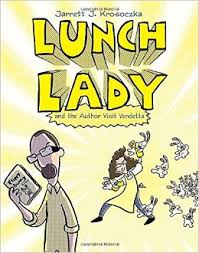
[READ: June 13, 2016] Lunch Lady and the Author Visit Vendetta

I rather like that the Lunch Lady books are sequential and mildly dependent on each other. Of course you can read them in any order you like, but reading them in the proper order allows you to see some continuity between books.

In the previous book, Dee mentioned that the author of the Flippy Bunny series was coming to the school. And in this book he does.

The kids are super excited that Mr Scribson is going to be there to read and sign books.  He is something of a primadonna though as he is upset that the reading will be taking place in the gym.  After his presentation, he signs books, but when Hector brings him a very old copy of the book Scribson says “I don’t sign opened books.”  Hector who has always love the Flippy Bunny books is devastated). (more…)

Read Full Post »

jan2017SOUNDTRACK: DECLAN McKENNA-Tiny Desk Concert #589 (January 3, 2017).

declanI only know Declan McKenna from NPR’s coverage of SXSW last year.  He played a SOUTH X Lullaby of the third song in this set.

And although he looks a little different, his singing style hasn’t changed.  He has an interesting delivery–with notes that sound like they crack as he sings.  But he is in total control.

The blurb notes:

It’d be easy to look and listen to this young English singer and think he’s just another sensitive songwriter with a guitar, singing about his troubles. But Declan McKenna writes about a much bigger world than you or I might expect from a singer who only recently turned 18. He came to NPR this past summer, a bit nervous but passionate. He stripped down three of his songs to their musical essence, and the power of their words eclipsed the hooks for which they’re equally known. “Bethlehem” tackles religion:

Because I’m in Bethlehem
I’ve got a seat in heaven
And though I’m heaven sent
I can do as I want and you don’t have the right to choose

McKenna’s most famous tune, “Brazil,” is a song about football, money and poverty that also touches on religion.

But even without the blurb, his music pretty well speaks for itself.  “Bethlehem” begins slowly, with him singing in a deeper voice but when he gets to the chorus his voice starts to break in his trademark way.  And as the song moves on he shows off a strong falsetto as well.  He opens “Brazil” with a little guitar flub which makes him laugh before he starts again.  The song sounds very much like other versions I’ve heard—his vocal style is all deliberate.  The chorus is so catchy (whatever it’s about):

I heard he lives down a river somewhere
With 6 cars and a grizzly bear
He got eyes, but he can’t see
Well, he talks like an angel
but he looks like me.

And I love how after all of this catchy stuff, he throws in a third section that is even catchier than the rest:

I wanna play the beautiful game while I’m in Brazil
Cause everybody plays the beautiful game while in Brazil
It’s all you’ve ever wanted, and it’s all that you want still
Don’t you wanna play the beautiful game out in Brazil?.

It’s practically a different song.  But so good.

This is the first I’ve heard “Isombard” (which I looked up afterward and is much more synthy).  He says he’s never done this acoustic before. He describes the song as being “somewhere between baroque pop and riff rock so it doesn’t translate easily.”  It’s got a very pretty melody and his slower singing style.  The song is also catchy and I’m surprised he hasn’t caught on a bit more yet.

[READ: January 17, 2017] “A Window to the World”

The narrator tells us that there were two writes at the Yiddish Writers’ Club in Warsaw.  Each of these men had talent and earned a reputation but then seem to have been silenced forever.

The two men were Menahem Roshbom (who had written three novels before he was 30) and the other was Zimel Hesheles (who had written one long poem at the ages of 23).  Since then, nothing–Roshbom was now in his 50s and Hesheles in his late 40s.  The two played chess and although Roshbom was a better player, he would always lose patience near the end which would cost him the match.

Roshbom had taken to journalism.  He was a chain-smoker and he carried on with women, mostly from the Yiddish theater.  He had divorced three times and was currently with another man’s wife.  By contrast Hesheles was small, reserved and silent.  He was poor but came to the club every day at noon and left at 2 when others came for lunch. (more…)

Read Full Post »

manner SOUNDTRACK: BEN GIBBARD-Tiny Desk Concert #251 (November 19, 2012).

benBen Gibbard is the voice of Death Cab for Cutie.  His voice is instantly recognizable and his melodies are surprisingly catchy.

This Tiny Desk Concert (they say it’s number 250, but I count 251) is just him and his acoustic guitar.  I didn’t know he did solo work, but apparently he does (in addition to being in The Postal Service and All-Time Quarterback).

Gibbard just released a solo album, Former Lives, which he’s said is a repository for material that didn’t work as Death Cab for Cutie songs; from that record, only “Teardrop Windows” pops up in his Tiny Desk Concert. For the rest, he draws from Death Cab’s most recent album (“St. Peter’s Cathedral,” from Codes and Keys) and, of all places, last year’s Arthur soundtrack (“When the Sun Goes Down on Your Street”).

As mentioned he plays three songs and his voice is so warm and familiar I felt like I knew these songs even if I didn’t.

I knew “St. Peter’s Cathedral.” It is a lovely song with very little in the way of chord changes.  But the melody is gentle and pretty.  And the song appears to be entirely about this church.  Which is interesting because the second song is also about a building in Seattle.  “Teardrop Windows” is a surprisingly sad song about an inanimate object.  It’s written from the building’s point of view as he mourns that no one uses him anymore.  And such beautiful lyrics too:

Once built in boast as the tallest on the coast he was once the city’s only toast / In old postcards was positioned as the star, he was looked up to with fond regard / But in 1962 the Needle made its big debut and everybody forgot what it outgrew

The final song “When the Sun Goes Down on Your Street” was indeed for the Russel Brand movie Arthur.  Somehow I can’t picture those two together.  It’s a lovely song, too.

I prefer Gibbard’s more upbeat and fleshed out music, but it’s great to hear him stripped down as well.

[READ: January 2017] “My Writing Education: A Time Line,” “The Bravery of E.L. Doctorow,” “Remembering Updike,” and “Offloading for Mrs. Schwartz” 

I had been planning to have my entire month of February dedicated to children’s books.  I have a whole bunch that I read last year and never had an opportunity to post them.  So I thought why not make February all about children’s books.  But there is just too much bullshit going on in our country right now–so much hatred and ugliness–that I felt like I had to get this post full of good vibes out there before I fall completely into bad feelings myself. It;s important to show that adults can be kind and loving, despite what our leaders demonstrate.  Fortunately most children’s books are all about that too, so the them holds for February.

George Saunders is a wonderful writer, but he is also a very kind human being.  Despite his oftentimes funny, sarcastic humor, he is a great humanitarian and is always very generous with praise where it is warranted.

The other day I mentioned an interview with Saunders at the New York Times.  Amid a lot of talk with and about Saunders, there is this gem:

Junot Díaz described the Saunders’s effect to me this way: “There’s no one who has a better eye for the absurd and dehumanizing parameters of our current culture of capital. But then the other side is how the cool rigor of his fiction is counterbalanced by this enormous compassion. Just how capacious his moral vision is sometimes gets lost, because few people cut as hard or deep as Saunders does.”

These first three pieces are all examples of his love and respect for other writers–both for their skill and for their generosity.

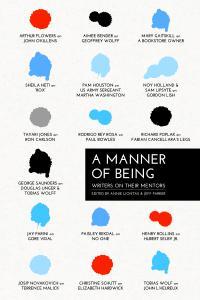
“My Writing Education: A Time Line”

“My Writing Education” comes from a book called A Manner of Being: Writers on Their Mentors.  Saunders’ mentor was Tobias Wolff.  And for this essay, his admiration takes the form of a diary.  (more…)

Read Full Post »

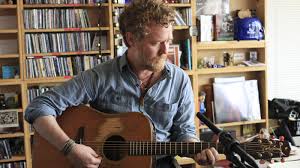
6616 SOUNDTRACK: GLEN HANSARD-Tiny Desk Concert #225  (June 17, 2012).

glenWhat can I say about Glen Hansard that I haven’t said already—he’s a powerful singer and a great storyteller.  This is his second appearance on Tiny Desk (although his first solo) and his fourth or fifth concert on NPR.

With The Swell Season, they played for 34 minutes (a Tiny Desk Record).  And this Concert is no shortie either at nearly 22 minutes.

He’s playing songs from his solo album (on that same beat up guitar).   Although he is distinctly himself, without the band(s), he sounds a bit like Cat Stevens and sometimes like Van Morrison (and he looks like Gordon Lightfoot).

He sings rather quietly and then impressively loudly–powerful and passionate.  He is clearly into what he does.

“Love Don’t Leave Me Waiting” is rocking folk song (he throws a coda of RESPECT at the end) in which he really belts out a few parts.  He’s got a delightful “La la la” middle section, and the overall melody is great.

“Bird of Sorrow” is  much more mellow song.  It builds through some verses and allows him to belt out a few lines near the end.

“Come Way to the Water” has him on a 4 string tenor guitar.  Although it is quite clearly a Glen Hansard song, the guitar is much more timid sounding compared to his voice.  And it really does give the song a very different (darker) feeling.  In fact when it’s over, he says, “that was kind of depressing wasn’t it?”

“Lucia” is a “song he hasn’t finished yet” but he’s going to play it because “it’s a little bit happier.”  Although the lyrics are “Lucia, you’re letting me down again / Lucia, your heart’s not in it babe…. And if your heart’s not in it, then your heart’s not in it, babe.”  Not exactly a happy song.  But very pretty.

“The Song of Good Hope” is slower with no big powerful singing, but it’s really heartfelt and intense.

And as always, he is unfailingly polite and thanks everyone for listening.

My friend Jonathan says that he will always try to see Hansard live, and it seems like I should be doing the same next time he comes around.

[READ: January 12, 2017] “At Home in the Past”

The June 6 & 13, 2016 issue of the New Yorker was the Fiction Issue.  It also contained five one page reflections about “Childhood Reading.” 

As soon as I started reading this, I knew that Sarah would want to read it as well.  For although I have not, Sarah has read The Secret Garden, which is what Tessa Hadley is writing about here.

Tessa says that she didn’t own many books as a child–mostly she borrowed from the library.  But the ones she did own she read over and over and “some of them soaked in deep under my skin, composing my private mythology and shaping my mind.”

She says she had a Puffin paperback of Frances Hodgson Burnett’s The Secret Garden.  The cover picture of a dark-haired girl in a white coat standing among thorny bare rose bushes looks just like Mary Lennox is described in the book.

Although it was published in 1911, she felt no separation from the Edwardians.  She felt at home in the past and often preferred it to modernity, which seemed somehow inferior. (more…)

Read Full Post »

« Newer Posts - Older Posts »