Feeds:
Posts
Comments

Archive for the ‘Books about writers’ Category

SOUNDTRACK: WEAKERTHANS-World Cafe Live, December 5, 2007 (2007).

I really like the Weakerthans, and they are surprisingly unknown here in the States.  I say surprisingly because they write exceptionally catchy (almost absurdly poppy) songs which would fit on many radio stations’ playlists.  But what sets them apart is John K. Samson’s lyrics which are clever and interesting and about people and loss (maybe that’s why they never made it down here).

This World Cafe set came about shortly after the release of their last studio album, Reunion Tour.  David Dye asks some great questions (I’ve never really seen/heard any interviews with them, so it’s all new to me) and the band plays three songs from the album.

We learn that Reunion Tour was initially inspired by Edward Hopper paintings (and the whole album was going to be devoted to Hopper until Samson grew sensible again).  We also learn the official pronunciation of the recurring cat on the Weakerthans albums is Virtute (Vir-too-tay) which comes from the city of Winnipeg’s crest.

They play “Night Windows,” “Civil Twilight” (and talk about the video, which I watched and it’s very cool), and “Virtute the Cat Explains Her Departure.”  The interesting things about the Weakerthans is that they don’t sound all that different live than on record.  So, these songs aren’t terribly revelatory.  There are some effects that are changed, and the tempos feel slightly different as well.  But nevertheless, the songs sound great.  The only problem is that the set seems mixed rather loudly, so there’s distortion (unintended, I assume) on some of the tracks.

Nevertheless, this is a great introduction to a relatively unknown band.

[READ: April 19, 2011] Five Dials Number 2

After just one issue, Five Dials has already lied to us.  In Number One, they said that all of the artwork would be black and white, but here is Number 2, and we have a host of beautiful color pictures (perhaps they only meant that Number 1 would be in black and white).   Of course, I’m only teasing them because the color pictures are really nice, and they really bring a new aspect to the magazine.

Number Two is a bit larger than Number 1 (twenty pages).  This issue has a vague sort of theme as well (it’s unclear if the issues will be thematic in the future), but this one has a general theme of adventure/nature/environmentalism. (more…)

Read Full Post »

SOUNDTRACK: BEST COAST-Live at the 9:30 Club, Washington DC (2010).

Best Coast made Carrie Brownstein’s best album of the year accolades, but when I listened to the track she selected for the post, I wasn’t all that impressed.

But I have to say that live, Best Coast blew me away.  Bethany Cosentino, the lead singer and guitarist has an amazing stage presence.  She is charming and funny and very silly (and I guess she loves cats).  The band sounded tight and impressive and even though the songs are kind of dopey bubblegum pop, they are drenched in enough noise and rock to make them really wonderful

They seem like they should have come around during the 90s, when all those rocking female bands were all over the map.  And so this is like a wonderful blast from the past.  Best Coast is sort of like The Muffs (except they write love songs) and other bands that play really catchy pop but bury it under a layer of fuzz and rock.  This is a great set available on NPR, and will definitely get me to check out their album a little more.

[READ: March 28, 2011] “Seven Love Letters”

Six of the seven letters here were later collected in the book Four Letter Word which I reviewed in September 2009.  When I reviewed the book, I didn’t give very much in the way of detail, I just summarized the letters.  I’m going to copy what I wrote then (since my thoughts didn’t change all that much), and I’m going to include a few more lines about some of the pieces (original stuff is in italics).  I’m also including titles which (for some reason) were not given in the book.

I’m also not sure why Sheila Heti’s story did not appear in the book.  (It’s only 4 paragraphs and is, indeed, a letter so why not include it?)  If you enjoyed the book, think of this story as a Bonus Feature. (more…)

Read Full Post »

SOUNDTRACK: WORM OUROBOROS-Live at Le Pousson Rouge, March 22, 2011 (2011).

I had never heard of Worm Ouroboros before this concert. They opened up for black metal guys Agalloch.  I was very intrigued by their name, because I love the word ouroboros, and then I learned that their name comes specifically from a novel by Eric Rücker Eddison called The Worm Ouroboros.

Now Agalloch is a heavy, fast, scary kind of band, so I expected that WO would be too, but they are almost exactly the opposite.  A trio (bass, guitar/flute (!)/keyboards, and drums), the band plays very ethereal music.  It has a kind of sinister edge to it, but for the most part it never really has a beat or anything.  The sounds drift and flow over each other.  This is all held together by the gorgeous vocals of bassist Lorraine Rath and the even more gorgeous harmonies of guitarist Jessica Wray.  Their voices are reminiscent of Jarboe from Swans.

The most amazing part of the show comes on the occasional ends of songs when the band seems to come down to earth  and they play a loud and aggressive doom metal stomp. It only last for a minute or two and it doesn’t happen on every song, but it’s amazing and really surprising when it does.

I don’t know what the band sounds like on record, but they make an exquisite noise live.  And you can tell how intense they must be because the rowdy crowd is quiet and respectful for their entire set.  You can get a free download (or listen online) at NPR.

Worm Ouroboros – Winter from (((unartig))) on Vimeo.

This is a video of “Winter” (a song that gets really heavy at the end) from the show.

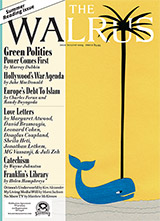
[READ: March 26, 2011] “Catechism”

Although I have been posting past stories from The Walrus on Saturdays, the July/August 2005 issue was a Summer Reading Issue complete with 5 pieces of fiction.  So, it seemed like a good time (the week after the release of The Pale King, when I will be otherwise occupied) to go through thee five pieces.

This story uses a scene that I think is used an awful lot in fiction–that of the car sitting on a frozen lake with people taking bets as to when it will sink.  It’s not central to the story by any means, but this is I think the third time I’ve read it.  Of course I gather that if you have a  community that is frozen most of the time, it’s a reasonable thing to see there.

Anyhow, this is the tale of an East Coaster moving out to Regina to be writer-in-residence at the Regina Public Library. He finds that there isn’t all that much to do (in the year he’s there, two people ask him for help with their novels in progress.  [Frankly, I would love to hear THAT story instead.  A story where the writer in residence helps these misfits with their novels.  It sounds great.  So, I enjoyed that aspect of the story very much].  In fact I enjoyed it more than what would eventually develop as the plot. (more…)

Read Full Post »

SOUNDTRACK: PETER BJORN AND JOHN-SXSW May 26, 2009 (2009).

This brief set at SXSW (available from NPR & KEXP) showcases the band’s (then) new record Living Thing.  The album was just about to be released, so these are all previews of the album (“New music is the best music”).  The album itself is very sparse and these live songs are equally sparse, but are slightly different in construction (some songs have different instrumentation live than on record).

The crowd is very responsive, and the band is really funny.  During “Just the Past” there’s a section where the song sounds like it ends, but it is just a pause, and the band tsk tsks the audience for applauding too early.  There’s also a joke about John being Joaquin Phoenix and taking up a career in rap.

It’s a wonderfully lively set, even if it is a bit short (the gripe with almost every SXSW download).  It’s a good introduction to the album and a great introduction to a band who has been around for ten years and just started making inroads into American consciousness a few years ago.

[READ: April 16, 2011] Five Dials #1

Five Dials is an online magazine.  It is free to subscribe (and to download).  All previous issues are available on the site in PDF format.  I learned about it because they printed the eulogies for David Foster Wallace in Issue 10.  But the magazine looked interesting in itself, so I decided to go back and read the whole run (the most recent issue is #18).

The only real complaint I have with the magazine is that they don’t put a publication date anywhere on it.  Which is a shame if you’re anal retentive like me. According to Wikipedia, the inaugural issue came out in June of 2008.   It’s a monthly (ish) publication and, although I originally thought it would be a literary magazine, it proves to be very much of a magazine-magazine.  And a good one at that.

There’s a letter from the editor, there’s Current-ish Events, there’s essays, reviews and even fiction.  There’s also a “classic” letter from a “classic” author.  The magazine also has some very cool black and white art in it.  The style is very crisp and one that I find quite agreeable. (more…)

Read Full Post »

SOUNDTRACK: SONIC YOUTH on World Cafe, August 21, 2006 (2006).

Travelling back even further on the NPR timeline, Sonic Youth appeared on World Cafe in 2006 to promote Rather Ripped.

This is a brief session (only three songs) but as with the interview with Thurston Moore, David Dye does another great interviewing the band here.  Although it must be said that saying the band is once again a four piece (when clearly there are five people in the picture and in the studio and when he later says two guitars, two basses and drums–which I also think is incorrect, as I’m pretty sure Kim switched to guitars at this point, although I don’t know if she did during this set) is not a great way to start the interview.

Facts aside, the interview is informative and interesting and provides a glimpse into the band’s psyche all these years into their career.

The set is also good (although Thurston’s voice sounds a little off on the opener “Incinerate”).  The surprising thing about the set is that even with the five of them, the feeling is one of restraint. True, the songs on Rather Ripped are not as noisy as previous records, but this feels like they are trying not to wake anybody up the NPR folks.  It’s a weird feeling for a Sonic Youth set, but the plus side to it is that you can really hear everything clearly.

The other two songs are sung by Kim: “Jams Run Free” and “What a Waste” (why do they never promote any of Lee’s songs??).  And there’s the very amusing comment that the first time they played “What a Waste” Thurston and Kim’s daughter said it sounded like the theme from Friends.  Ha!

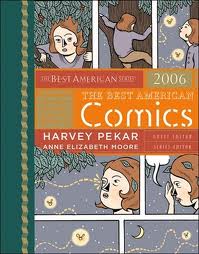
[READ: April 15, 2011] The Best American Comics 2006

I just recently learned about this series from The Best American line of books.  I had known about the Best American Short Stories and Essays and even Non-Required Reading (which I have not yet read).  But once I found out about the best comics, I knew I had to check it out.

The first issue came out in 2006.  The series editor is Anne Elizabeth Moore and the Guest Editor for this volume was Harvey Pekar.  Each of them has an introductory essay in the book.  To me the amazing thing about Pekar”s essay is how aggressively defensive he sounds (a sort of, “you may not like this one, but try this one” attitude) about these comics and comics in general.  I don’t know much about Pekar’s work.  I know he’s a kind of underground icon, but I seem to have missed him.  My impression of him is that this sort of antagonistic/defensive attitude seems to go along quite well with his comics, so I guess that makes sense, but I didn’t find it very welcoming.

But that’s okay, because I really enjoyed the comics.  And quite a few were by artists that I had never read before, which is even better! (more…)

Read Full Post »

SOUNDTRACK: THURSTON MOORE-in studio at KEXP, March 11, 2008 (2008).

This interview was headlined ‘Thurston Moore: Not a “Real Guitar Player”?’ which is pretty funny.  The Sonic Youth guys have been defying conventional guitar playing for years.  And then in 2008 Thurston put out a solo album called Trees Outside the Academy, a beautiful delicate album of acoustic guitar songs.

The interview covers this very subject and concludes that maybe back when they started he wasn’t a guitar player, but now, 25 years later, he certainly is.  Moore is charming and funny and relates a very amusing story about being on the cover of Guitar Player and then embarrassing himself in front of one of his idols.

But this download is all about the songs.  Thurston (and violinist Samara Lubelski–who plays great accompaniment, but doesn’t really get any on air time to speak) play four songs from Trees: “Sliver>Blue,” “The Shape is in a Trance,” “Frozen Gtr” and “Fri/End.”  He sounds great in this setting, especially under close scrutiny.  I’d always assumed that there was a lot of improv in the SY guitar world, so to hear him play these (admittedly not difficult) songs flawlessly is pretty cool.  I actually wondered if he’d be hesitant (he admits the acoustic guitar is a fairly new thing for him), but not at all (although he says he screwed up on a chorus, but I never heard it.

It’s a great set and its fun to hear Thurston so casual.

[READ: April 14, 2011] “Farther Away”

The subtitle of this essay is “‘Robinson Crusoe,’ David Foster Wallace, and the island of solitude.”  As with Franzen’s other recent essays, this one is also about birding.

Franzen explains that he is hot off the work of a book tour (for Freedom) and is looking for some solitude.  He decides to travel by himself to the island of Alejandro Selkirk, a volcanic mass off the coast of Chile.  The island is named after Alexander Selkirk, the Scottish explorer who is considered the basis for Robinson Crusoe.  As such, Franzen decides to travel to the remote island, decompress and read Robinson Crusoe while he’s at it.  The locals call the island Masafuera.

I haven’t read Robinson Crusoe as an adult, so I don’t know the ins and outs of the story.  Franzen has a personal resonance with the story because it was the only novel that meant anything to his father (which must say something about Franzen’s father, no?).  The upshot of what it meant to Franzen’s father was that his father took him and his brother camping a lot as a way to get away from everything.

However, for Franzen, on his first experience of being away from home for a few days (at 16 with a camping group), he had terrible homesickness.  He was only able to deal with the homesickness by writing letters.

When he arrives on Masafuera, Franzen’s writing really takes off.  He has some wonderful prose about this treacherous space.  Although he comes off as something of a yutz for relying on a Google map to learn about the terrain and for bringing an old GPS which has more or less run out of battery. (more…)

Read Full Post »

SOUNDTRACK: MOGWAI & MAGOO-Do The Rock Boogaloo (2002).

This split CD features a song each by Magoo and Mogwai.  Both songs are Black Sabbath covers, with Magoo doing “Black Sabbath” and Mogwai doing “Sweet Leaf.”  This was released by Fierce Panda records and it’s clearly kind of a joke (the top of the disc says: two sonic scratches of the big bad rock arse”).

And yet despite the jokey nature of the project, the covers are actually quite faithful.  I’ve never heard of Magoo in any other context so I don’t know anything about them.  But their version of “Black Sabbath” is pretty right on.  The big difference is that it seems like Magoo have no bass in their band.  Everything from guitars to vocals is much more tinny than anything Black Sabbath put out.  In fact, when the really fast part at the end comes up, you can hear the bass, but it sounds like perhaps just more guitar notes.  The vocalist is also far less than scary.  And yet for all of that, the song isn’t really jokey, it just doesn’t sound scary like the original.

Mogwai’s cover of “Sweet Leaf” seems even more jokey.  It opens with a pretty heavy sounding riff and then stops after a few seconds so someone can say “give me the microphone.”  There’s also a lengthy conversation going on throughout the background of the song.  The vocals are quite fascinating.  They are utterly understated, bordering on spoken.  As such, there is a notable Scottish accent for the verses.

After the main body of the song, they never quite get to the heavy drum part at the end, in fact, the song kind of just fades out while the lengthy (drunken?) conversation (and burping) continues for over a minute.

No one is going to say this is an essential recording, although it’s good for a laugh, I suppose.

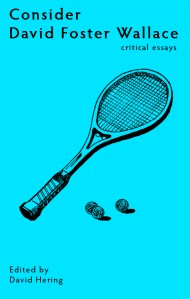
[READ: February 28, 2011] Consider David Foster Wallace [essays 10-12]

More than half way through the essays, we’re moving away from infinite Jest era and into the Brief Interviews era.  These articles look at sincerity, love and footnotes.

Because I don’t have a lot to say about the pieces (I’m not an academic anymore), I’m only going to mention things that I found puzzling/confusing.  But be assured that if I don’t mention the vast majority of the article it’s because I found it interesting/compelling/believable.  I don’t feel comfortable paraphrasing the articles’ argument, so I won’t really summarize. (more…)

Read Full Post »

SOUNDTRACK: MOGWAI-Kicking a Dead Pig + Mogwai Fear Satan Remixes (1998).

This release came out soon after Young Team, when it seemed like Mogwai was just flooding the market.  It’s a remix album of a number of tracks from Young Team. And, when it was re-released it contained several mixes of the track “Fear Satan” as a bonus disc.

In general, I’m not a fan of remixes.  There, I’ve said it. Back in the flush 90s, when I used to buy a lot of import singles, I enjoyed the B-sides, but was always disappointed when there was a remix rack.  Some are fine.  Indeed, some are pretty good.  But for the most part you get a very long song that is mostly drum machine and sounds and noises.  And I know that they are designed for dancing, but I’m not a dancer, so despite how much techno I own, I’m very rarely thrilled to ge a remix.

Which is  as good a way as any to say that this is a pretty inessential disc, even for Mogwai fans. Even though Mogwai themselves throw a couple of remixes on there.  And for the most part, what we get are washes of sound.  Since Mogwai don’t really do lyrics, it’s not always very obvious what song the remixers are remixing.

  • Hood: “Like Herod” has some interesting staccato, which Mogawi typically doesn’t have.
  • Max Tundra: “Helicon 2” is primarily ride cymbal although a guitar motif does come in (with some pretty harmonics) eventually.
  • Klute: “Summer” (Weird Winter Remix). There’s nothing distinctive about this.
  • Arab Strap: “Gwai on 45.”  I actually expected a lot from this mix because Arab Strap are a weirdly wonderful band and the guys have worked with Mogwai.  But then, they’re not an exciting band–they’re very good, just understated.  And as a result, this remix is okay but nothing too exciting.
  • Third Eye Foundation: “A Cheery Wave from Stranded Youngsters” (Tet Offensive Remix) is also okay.
  • Alec Empire: “Like Herod” (Face the Future Remix).  Alec Empire usually turns all of his remixes into super fast like 500 bpm noise explosions (just like Atari Teenage Riot). He doesn’t do that here, and the song just kind of melds in with the rest.
  • DJ Q: “R U Still In 2 It” has a vocal, but it is mostly one word repeated over and over.
  • Kid Loco: “Tracy.”  I liked this track more than many others.
  • Mogwai: “Fear Satan.”  It’s weird to me that you would remix one of your own songs, although I guess it’s fun.  I still like the original better.  And I’m fairly certain this one is different from the one on the next disc.

The four “Fear Satan” remixes are by:

  • Mogwai: delicate, the washes of sound are quiet and warm, and it really features the flute quite a lot. Although by the end, the feedback does come in.
  • μ-Ziq: remix is much more staccato. The washes have been removed.  There’s very little connection to the original.
  • Surgeon: remix begins electronically and builds as a slow wave.  It’s pretty much one note getting louder and louder until about a minute left when it changes tone.  It’s hard to imagine even calling this a remix.
  • My Bloody Valentine: at 16 minutes,  the MBV remix stands out for length. After about five minutes of interesting feedback squalls it shifts to a high-pitched noise, almost like a drill. After a few minutes of this it shifts into a very pretty electronic song.  By the end it’s a pounding heavy drum fill rocker.  Any resemblance to “Fear Satan” seems purely coincidental, but it’s a wild ride.

[READ: March 11, 2011] The Revolution Will Be Accessorized

I only heard about this anthology when I read the Sam Lipsyte piece from it.  I didn’t really like his piece, but the rest of the anthology sounded intriguing.  It was put out by BlackBook magazine, which I have a sort of vague awareness of, but couldn’t really say anything about (it’s some kind of counter-cultural fashion magazine or something).  But it seems like the counter-cultural aspect really lends sway here.

This anthology is a collection of short stories, essays and interviews.  There’s also an introduction by Jay McInerney

JAY McINERNEY-Introduction
He talks about BlackBook and the essays contained here. (more…)

Read Full Post »

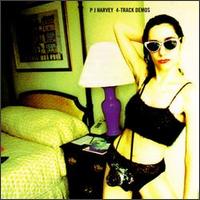
SOUNDTRACK: PJ HARVEY-4-Track Demos (1993).

After the intensity of the Steve Albini produced Rid of Me, Harvey releases this collection of demos.  The amazing thing is that these versions actually seem more intense than the Albini version. Or if not more intense, then certainly more raw.

The songs definitely have an unfinished feel about them, and yet they only vary from the final version in polish (and Albini’s stamp).

“Rid of Me” is just as quiet/loud, and has those high-pitched (and scary) backing vocals.  Speaking of scary vocals, her lead screams in “Legs” are far scarier here than on Rid of Me–like really creepy.  (Which sort of undermines that idea that this was released because Rid of Me was too intense for fans).   “Snake” actually features even creepier vocals–Harvey must have had a field day making these sounds!

I admit that I like the finished version of “50 Ft Queenie” better,”but there’s something about this version of “Yuri-G” that I like better.

The disc also has some tracks unreleased elsewhere.  “Reeling” is an organ-propelled song of female strength with the nice lyric: “Robert DeNiro sit on my face.”  “Hardly Wait” is a slow grinder that is fairly quiet for this time period.  “M-Bike” is a cool angry rocker about a guy and his motorcycle which is one of my favorite tracks on the disc.

It’s a great companion to Rid of Me.

[READ: end of February to early March]  original articles that comprise A Supposedly Fun Thing I’ll Never Do Again

As I mentioned last week, I decided to compare the articles in A Supposedly Fun Thing I’ll Never Do Again with the original publications to see what the differences were.  It quickly became obvious that there were a lot of additions to most of the articles, and it seems rather pointless (well, actually it seems exhausting and really outrageously time-consuming) to mention them all.  But what I did want to note was the things that are in the articles that have been removed from the book.   There’s not a lot but there are a few juicy tidbits (especially in the early articles) that are fun to note for anyone who read only the book and not the original articles.

My process for this was rather unthorough: I read the article and then right afterward I read the book.  If I noticed any changes, I made a note on the article version.  Many of them were surprisingly easy to note as DFW’s writing style (especially his idiosyncratic phrases) really stand out.  This is especially true in the Harper’s articles.  The academic ones were less notable, I believe, and I’m sure I missed a bunch.

I’m not sure in any way how these pieces were dealt with initially by the magazine or DFW.  I assume that DFW handed in the larger article (like we see in the book) and the magazine made suggested edits and DFW edited accordingly.  Then the book copies are probably the originals, bt which have also been updated in some way.

In most cases, it’s not really worth reading the original article, but I’m including links (thanks Howling Fantods), for the curious.

As for length, it’s hard to know exactly what the conversion from magazine article to book is.  The “Tornado Alley” tennis article is 8 pages (more like 4 pages when you take out the ads) and the book is 17.  Perhaps more accurately it seems like one Harper’s column = just under one book page.  I’ll try to figure out what the conversion is if I can.

One last note, whenever I say “article” I mean the original magazine version.  And obviously “book” means ASFTINDA. (more…)

Read Full Post »

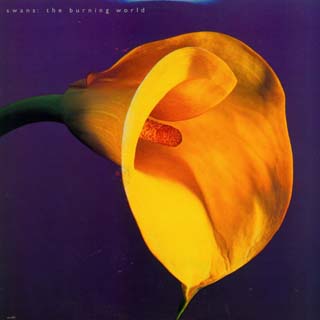
SOUNDTRACK: SWANS-“Can’t Find My Way Home” (1989).

In the Swans review yesterday, I mentioned this as a song that was as far afield from early Swans as was imaginable.  This is a cover of the Blind Faith song and it is surprisingly faithful.  In fact, the original song features a voice that is so falsetto’d it’s almost higher than Jarboe’s.

The big difference here is that Jarboe is an unusual lady and her voice has a weird almost strangled quality to it which adds an air of longing to the song that the original doesn’t.   There’s also an ethereal quality to the music which contrasts with the original’s folk styling.  Not to mention that the production on this version is better.

I also happen to think that the Swan’s guitar intro (while less technically accomplished) is more intriguing.  Not bad for an industrial band.

[READ: February 20, 2011] Consider David Foster Wallace [essays 7-9]

The group read of this book seems to have come to a halt.  Coincidentally, so had my reading of it.  So, I decided to finish up the last few essays of the book to have it done in time for the April 15th release of The Pale King (yay!).

It’s been three months since I last posted about this book so I’ll give my disclaimer:  because I don’t have a lot to say about the pieces (I’m not an academic anymore), I’m only going to mention things that I found puzzling/confusing.  But be assured that if I don’t mention the vast majority of the article it’s because I found it interesting/compelling/believable.  I don’t feel comfortable paraphrasing the articles’ argument, so I won’t really summarize. (more…)

Read Full Post »

« Newer Posts - Older Posts »