Feeds:
Posts
Comments

Archive for the ‘Books about writers’ Category

SOUNDTRACK: PHISH-Live Bait (2010-2011).

If you’re a fan of Phish, you no-doubt know about their live concert releases.  Phish has always encouraged bootlegging of their shows.  And people traded the shows all around the country.  Back about twelve years ago, they started releasing some of these concerts officially–soundboard quality recordings.  There was no indication that they would release every concert they had played, but they selected a very interesting mix of recent and early shows as well as Halloween shows (where they cover an entire album from another band) and shows from unusual places.

Starting in 2009 (after their hiatus), the band started making (almost) all of their concerts available for download (for a fee) on their site.  You can get any show–you can even get them in CD format, for a quite sizable fee–soundboard quality.  One thing that I really like about their site if you go to a concert, you can redeem the bar code on your ticket for free MP3 of the show, usually within 48 hours.  Back when I used to go to concerts, I would have loved to have copies of a lot of the shows I saw.  This is a cool service for their fans.

And speaking of cool services, this post is about Live Bait.  I love the title of the series, which is obviously a pun about places where you can buy live bait (the covers all have pictures of bait stands), but it’s also a wonderful way to bait users into buying more music–crass and clever.  Anyhow, the Live Bait downloads (up to #6 right now) are a collection of live recordings taken from various shows.  (Live Bait #5 has songs from 2009 and songs from all the way aback to 1989).  They’re assembled together into a kind of seamless show and they are all available for free. 

Okay, big deal.  But it is a big deal because, while the first couple were 80 or so minutes of music (not too shabby in and of itself), Live Bait #3 features a 58-minute version of a song (!); Live Bait #4 contains almost 4 hours of free music and Live Bait #5 contains over 6 hours of free music.  So if you’re curious about why people like Phish so much, here’s several opportunities to listen to some of their live songs for free.  

Their most recent download is from their Benefit for Vermont Flood Recovery–if you’re going to buy a show, it’s a good place to start

[READ: September 25, 2011] “Radisson Confidential”

For a time (I wish I could remember exactly when this was) it seemed like all the young hip writers were named Jonathan: Ames, Lethem, Franzen, Safran Foer, and I wasn’t sure what to make of it.  I think I grew weary of the whole episode and decided not to read any of them.  That has since changed, and I have now read (and enjoyed) all of them–but each for very different reasons.  The funny thing to me though is that they were all lumped together and yet they are all so very different, especially now that Safran Foer has been writing nonfiction and Franzen has proven himself to be a writer of occasional big books that get lots of attention. (more…)


Read Full Post »

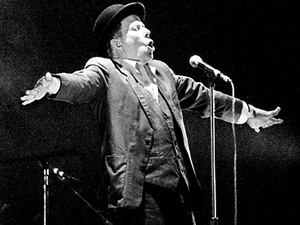
SOUNDTRACK: TOM WAITS-Live Glitter and Doom tour, Atlanta GA, July 5, 2008 (2008).

I downloaded this concert–which was recorded at the Fox Theater in Atlanta Georgia from NPR.  In the introduction, Bob Boilen says the concert is over two hours, but the page says (and the download comes in) at about 1 hour and 45 minutes, which is still plenty of Tom Waits.

This is a great show.  Although it focuses on the more recent albums, the show covers quite a span of his career: from Real Gone (“Hoist That Rag”) and Bone Machine (the album that introduced me to Mr Waits), all the way back to Heartattack and Vine (“On the Nickel”) and even three songs from Rain Dogs.

His band sounds great, tight as a drum, even playing Waits’ off musical assortments with no problem (is Casey Waits on drums Tom’s son?). There’s clearly some visual stuff going on that we are not privvy to here–the band has a good time towards the end of the set with some musical jokes.  And there’s some fun vamping and a number of good Waits stories (including the “pastika” one from the live album, see below).  He doesn’t play “Day After Tomorrow,” one of the most moving war songs I’ve ever heard, which I think is good.  It is so emotionally charged (unlike his other ballads which are moving but not quite so powerful) that I thin it would bring the whole set down.  Rather, this is more of a rumpus-filled show.  And we’re all the better for it. 

All in all, this is a great document of Waits’ live shows.  His voice sounds great and the band (including a few special guests) is fantastic. 

Later in 2009, Waits released Glitter and Doom Live, a document from this tour.  What’s nice in terms of this show is that the setlist is different for this show than it is for the album.  The album has songs from various venues on the tour, so you get different performances anyhow, but quite a lot of the songs are new here.  So even if you have the album, this is a unique experience.

Also, check out this amusing video interview:

[READ: September 20, 2011] “Dear Life”

This kind of piece is one of the reasons I don’t write about nonfiction that much.  How do you review someone ‘s life?  More specifically, how do you review a short excerpt about someone’s childhood (is this leading to a full length memoir?).  Nevertheless, I love Alice Munro, and this look into her childhood in Wingham, Ontario is fascinating.  I never really conceptualized that Munro is 80 years old.  She grew up with an outhouse and what seems like a one room schoolhouse.

What’s more interesting is that the town where she grew up more or less disappeared once people started building houses on the other side of the river (higher up the hill).  All but the poorest people moved to the new higher elevations, thereby evacuating the town and leaving only the tiny school left (the school she was so excited to get away from!).  Munro remembers many of the bad things in her life–getting whipped by her father for disobeying, walking to school and being teased and even not being allowed to go to a new friend’s house because the friend’s mother was prostitute!  But unlike in a full length memoir, Munro is able to skip past these memories pretty quickly by talking about how when she got older things were smoother (and the room where the whippings took place was converted into something else). (more…)

Read Full Post »

SOUNDTRACK:  MY MORNING JACKET-“Touch Me, I’m Going to Scream (Part 2)” (From the Basement) (2009).

As I mentioned, My Morning Jacket is one of the few bands that has two videos up on the From the Basement site.  So here is Part 2 of the song from yesterday.  While Part 1 is a beautiful, smooth, folkie kind of song, Part 2 delves into a more electronic sound.  It starts with some keyboard noodlings, morphs into a loud rocker and then ends with more keyboards noodlings. 

I enjoyed watching this because Jim James is playing the keyboardy parts on a very small contraption the size of an iPad.  It’s one of those new fangled instruments that make me show my age.  I gather it’s a sampler, but even looking at the buttons I have no idea what he’s doing with it.  About midway through the song, James puts down the keyboard object and pulls on the Flying V guitar for some good loud guitars. 

Again, the harmonies are fantastic and it’s cool to see the whole band sing along.  I also enjoyed watching the other guitarist play the slide on his guitar.  

By the end of the video, it’s amusing to see them all sink lower and lower to the ground as the music fades and regresses into tiny quiet twinklings.  Until, that is, the surprising (and unannounced) addition of the 6 second “Good Intentions.”

Jim James does not wear a cape during this song, by the way.

[READ: September 1, 2011] “Trading Stories”

I have still yet to read much Lahiri, a woman whom I know I should be reading.  And now that I just learned she won a Pulitzer, it seems even more egregious that I haven’t. 

This personal history is about growing up without books.  Her father was a librarian so they borrowed a lot of books; however, but she never really owned any.  [My wife and I are not that kind of librarian–books litter our house]. 

The story reveals Jhumpa as a child writing stories with a friend in school (even during recess).  They were immensely creative and inventive and they loved it.  But she slowly began losing interest in writing.  (more…)

Read Full Post »

SOUNDTRACK:THEM CROOKED VULTURES-Live on Austin City Limits, Feb 13, 2010 (2010).

This set from Them Crooked Vultures is outstanding. I really like the album, but in a live setting these three (technically 4) guys are on fire.  They extend the songs a bit but are always tight as a drum.  Josh Homme is a great front man, even if he’s not that animated.  He shares guitar duties with Alain Johannes who is not on the album, but who gets some great sounds out of his guitar.

Dave Grohl is in his drum-pounding glory back there.  Man, he hits the drums hard.  And he seems to be really enjoying himself .

 And the biggest surprise (sort of, but not really) is John Paul Jones.  He fits in perfectly with the two younguns, and he really shows them how it’s done.  His bass work is phenomenal: fast, furious and accurate to a fault.  He also plays keyboards, an LED pulsing 12-(at least) string bass and a fascinating purple electric slide guitar contraption on “Nobody Loves Me and Neither Do I”.   Matt Rosoff from cnet explains this guitar here:

It looked like some sort of slide guitar with an electronic screen. I’d never seen anything like it before, so I did a little digging and found out from a March interview in Bass Player that it’s a custom-made axe created by Hugh Manson, who has been Jones’ tech for some time and who owns a renowned guitar shop in England. It’s essentially laid out like a lap slide guitar, modified so Jones can sling it over his shoulder and carry it around on stage, and with two extra bass strings at the bottom.

So what about that rectangular screen? According to a forum post on the EMG pickups site, it’s a MIDI controller that Jones can use to trigger stage lights. I imagine it could also be used to trigger various effects, similar to the modified Korg Kaoss controller that Manson built into a guitar for Muse’s Matt Bellamy.

If you’re already a fan of the band, you really need to check out this live show; they are amazing.  And if you’re not a fan, you will be after this show.  This is how I first heard  them and I was blown away.

You can watch the show online on PBS.

[READ: July 27, 2011] Five Dials Number 20

I didn’t expect to get caught up to Five Dials issues so quickly (has it really been 20 weeks already?).  This is the most recently releases issue!  They aren’t getting published as often as I expected.  Which is fine.  But the funny thing with this issue is that there were several printing errors in the initial run of this issue.  I don’t know if this has happened before, but it seemed so noticeable to me, that I had to wonder how it slipped by everyone.  The most obvious was that the front page had many ƒƒƒƒ characters (these were also evident in the Word Cloud later on).  There’s a word missing from the fiction “the thin cold stillness you got [  ] this part of the country” and there’s a crazy typo in the Fiction story later on. The errors have now been fixed.  But, the letter to the editor (and this has not been fixed) promises us a picture which isn’t there. “Here’s a photo of Doni at the reading – he did a brilliant job.”  I’ll assume they were partying too hard at the Port Eliot Festival to make sure  the issue was launch-ready

CRAIG TAYLOR-A Letter from the Editor: On Cable Street and General Interests
There were some serious race riots on Cable Street back in 1936.  Indeed,the head of the British Union of Fascists, Mosley, and his aggressive supporters were turned back by a noisy crowd (Irish women throwing fishy potatoes at them).  The rest of the magazine he says is general Interest, an anachronistic term from the 20th century before all magazines had to specialize in something.  I mentioned in my introduction that there was a photo error here.  Doni Gewirtzman performed a reading at the launch of Five Dials 19.  They couldn’t out the picture there, so they added it here.  Perhaps in Issue 21? (more…)

Read Full Post »

SOUNDTRACK: NEIL YOUNG-Trans (1982).

By most standards this Neil Young album is a disaster.  It’s so bad that despite updating his entire catalog and releasing all kinds of bootleg concerts, he has never issued this disc on CD in the States.  So, just what’s so awful about this disc?

Well, mostly it’s awful as a Neil Young disc.  Meaning, if you like Neil Young (either flavor: country/folk or hard rock/grunge) this disc is a big fat HUH??  Neil Young has gone all synthy?  And not just synth but computerized synthy–sometimes his voice is utterly like a computer.  It’s a travesty, it’s a shame, it’s an incredible surprise.  Unless you listen to it without thinking of it as a Neil Young record.

But after all that introduction, the biggest surprise is the first song.  You’ve been prepped for this weird album full of computer nonsense and you get the fairly standard (if a little dull) rockabilly type music of “A Little Thing Called Love.”  It’s a pretty standard Neil Young song for the time.  Hmm, maybe the album isn’t that weird.

Well, then comes “Computer Age” and the keyboards kick in.  Interestingly, to me anyhow, this is the year that Rush released Signals.  Signals was the album where Rush fans said Woah, what’s with the keyboards guys.  Similarly, “Computer Age” makes you say, geez, was there a sale on keyboards in Canada?  The keyboards are kind of thin and wheedly, but the real surprise comes in the processed vocals (Rush never went that far).  The vocals are basically the 1980s equivalent of auto-tune (no idea how they did this back then).  Because the song is all about the computer age it kind of makes sense that he would use this weird robotic voice.  Sometimes it’s the only voice, although he also uses the computer voice as a high-pitched harmony over his normal singing voice.

“We R in Control” sounds like it might be a heavy rocker (anemic production notwithstanding) until we get more computer vocals.  Again, conceptually it works (its all about the dominance of CCTV), but it is pretty weird as a Neil Young song.

And then comes yet another shock, “Transformer Man.”  Yes, THAT “Transformer Man,” except not.  This original version of the song is sung entirely in a processed super high pitched computer voice that is almost hard to understand).  The only “normal’ part of the song is the occasional chorus and the “do do do dos.”  It sounds like a weird cover.  Sarah, who loves Neil Young, practically ran out of the room when she heard this version.

“Computer Cowboy (aka Syscrusher)” continues in that same vein.  Musically it’s a bit more experimental (and the computer vocals are in a much lower register).  Although I think it’s probably the least interesting of these songs.

Just to confuse the listener further, “Hold On to Your Love” is a conventional poppy song–no computer anything (aside from occasional keyboard notes).  Then comes the 8 minute “Sample and Hold” the most computerized song of the bunch and one of the weirder, cooler songs on the disc.  It really feels like a complete song–all vocodered out with multiple layers of vocals, not thin and lacking substance like some of the tracks.  It opens with personal stats (hair: blonde, eyes: blue) and proceeds through a litany of repeated “new design, new design” motifs.

This is followed by a remake of “Mr Soul” previously only on Decade.  This is a new vocodered-harmonies version of the song.

The biggest failure of the disc to me is “Like an Inca” it’s nine minutes of virtually the same guitar riff.  The chorus is pretty wonderful, but it’s a very minor part of the song itself.  It is fairly traditional Neil song, I just wish it were much shorter.

So, this travesty of a disc is actually pretty interesting and, for me, pretty enjoyable.  Most of these synthy songs sound kind of weak but I think that has more to do with the production of the time. I’d love to hear newly recorded versions of these songs (with or without the vocoder) to see what he could do with a great production team behind him.

Trans is not a Neil Young disc in any conventional sense, but as an experiment, as a document of early 80s synth music, it not only holds up, it actually pushes a lot of envelopes.   I’m not saying he was trying to out Kraftwerk Kraftwerk or anything like that, but for a folk/rock singer to take chances like this was pretty admirable.  Shame everybody hated it.

[READ: July 5, 2011] Five Dials 19

Five Dials 19 is the Parenting Issue.  But rather than offering parenting advice, the writers simply talk about what it’s like to be a parent, or to have a parent.  It was one of the most enjoyable Five Dials issues I have read so far.

CRAIG TAYLOR & DIEDRE DOLAN-On Foreign Bureuas and Parenting Issues
I enjoyed Taylor’s introduction, in which he explains that he is not very useful for a parenting issue   That most of the duties will be taken on by Diedre Dolan in NYC.  They are currently in her house working while her daughter plays in the next room.  His ending comment was hilarious:

Also, as is traditional at most newsweeklies, someone just put a plastic tiara on my head and then ran away laughing at me.

I resist Parenting magazines, from Parents to Parenting to Fretful Mother, they all offer some sound advice but only after they offer heaps and heaps of guilt and impossible standards.  So I was delighted to see that Five Dials would take an approach to parenting that I fully approve of.  Dolan writes:

Nobody knows what works. Most people just make some choices and defend them for the next 18 to 50 years – claiming nurture (good manners) or nature (crippling shyness) when it suits them best.

And indeed, the magazine made me feel a lot better about my skills (or lack) as a parent. (more…)

Read Full Post »

SOUNDTRACK: STARS-Live at the 9:30 Club, Washington DC, October 20, 2007 (2007).

Thanks NPR for this unexpected concert.  Unexpected because Stars is a wonderful band but I think they’re largely unknown (I could be wrong about that, but it’s not like you hear them on the radio or anything). 

This show was during a tour for In Our Bedrooms After the War, which was one of the best albums of the year as far as I’m concerned.  

It’s an intimate album, with all kinds of styles in it: whispered confessions, dancey pop songs, synthy tracks and also some solid alternative rock.  The unifying theme for Stars is beautiful, often super catchy songs that are filled with melancholy and sadness (and occasionally, hope: “at least…the war is over”).  But the key to their beauty is the wonderful harmonies that the singers give us.

Musically the things that surprised me most during this show were the singers’ speaking voices.  Torquil Campbell’s speaking voice is quite a high register and yet his singing voice is low and soothing.  The opposite is true for the other singer, Amy Millan who has a kind of gruff peaking voice but whose singing voice soars to the heavens.  It’s fascinating.  Torquil is also a gushing frontman, thanking the audience so much for coming and even asking “Don’t your friends have bands that are playing whose shows you should be at right now?”  He also thanks Ben and the rest of Death Cab for Cutie for being so very nice to them.  A very nice chap it seems.

The bands sounds quite good live, but my only problem with the show is that as i mentioned, Stars’ music is very intimate, sometime whisper-quiet, and it doesn’t always translate very well in a live setting (even a relatively small club like the 9:30 Club).  Sometimes it feels like they’re singing too loudly to match the music.  Now, it’s entirely possibly that this doesn’t come across when you see them live, that this soundboard recording picks up every flaw. 

Despite that, there’s undeniable energy here and some really great moments where the bands switches direction at the drop of a hat.  And, overall, this is an excellent introduction to the wonder that is Stars’ music (or a big treat for established fans).

[READ: July 25, 2011] Five Dials 18

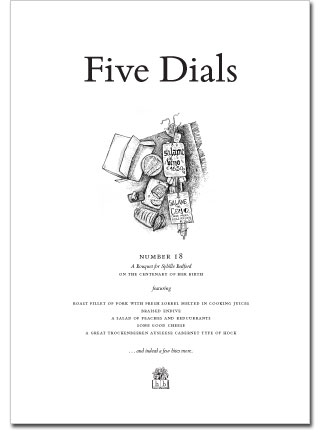
Five Dials 18 is unique in the history of the journal.  This entire issue is given over to the memory of SYBILLE BEDFORD.  It is written by ALIETTE MARTIN (there’s not even a Letter for the Editor).

Martin writes about Bedford’s love of wine and fine food.  It was pretty funny to read about her detailed love of meat after reading all of the vegetarianism promoted in the Five Dials news pages (Jonathan Safran Foer’s Eating Animals was just published by Hamish Hamilton). (more…)

Read Full Post »

SOUNDTRACK: TORI AMOS-Live from the Artist’s Den (2010).

I think my relationship with Tori Amos has come to an end.  I haven’t enjoyed her more recent albums all that much lately, but I was excited to see that this live and intimate set was on PBS.  After all, it was just her with a piano and what turned out to be a really cheesy organ.

I was pretty thrilled by the setlist, which goes all the way back to her debut album (with “Girl” and “China”).  I was even more excited to hear “Bells for Her” one of my favorite songs by her and even “Concertina” one of her more mellow tracks that worked well for this show which was primarily mellow songs.

There were a lot of newer songs which I don’t know that well, and a few newer songs which I know okay.   I don’t love her newer stuff, but I was even disappointed with the presentation of her older songs.  She has definitely taken on a new technique where she reeeeeaaaaaalllllllllyyyyy streeeeeeeeeeeetches the songs out. And, as I’ve complained on other recent posts, she mis-pronounces or mis-enunciates words that she used to say perfectly fine.  I find it maddening.

It took me two days to watch this 50 minute show because I kept falling asleep.  Gadzooks.

Now I totally respect an artist’s desire to change her songs.  Indeed, there are some live versions of her songs that I have enjoyed more than the originals.  But there’s something about the way these are drawn out that it feels like the life has been sucked from them.  The melody of “Ruby Through the Looking Glass” loses its impact when it is slowed down so much.

I’m also really disappointed with the synth that she chose.  Synthesizers can make any sound in the world, so why did they program this keyboard to play utterly anemic strings?  The conclusion of “Girl” which is so dramatic on record actually sounds worse with the thin washes than it would if it were played on just piano.

And as for the way she sings words now…  “Bells for Her” to give just one example, has her mangling the word “you” so that when she sings “not even you” we get something like “not even yaow” which I don’t understand.  I mean, listen to the awesome live version on To Venus and Back–she didn’t used to do that.  So wha happa?

I used to think that I liked her solo better.  I always enjoyed the little quiet time section of the concerts when she would play a song or two by herself.  But I feel like now, when she’s by herself, she loses any sense of editing.  The band seemed to keep her on pace.  And it’s a shame to see her drift so much.

Because Tori was an important part of my music youth, I’ll give her one more chance–she has a new album due out reasonably soon, but I’m not holding out much hope for it.   I think we may just be on very different planes of existence anymore.

[READ: July 19, 2011] Five Dials Number 17

The brevity of the Christmas issue is followed up by the somewhat longer Five Dials Number 17.  (This issue also has 7 pages of photos at the end of the issue).  I admit I didn’t know where Jaipur was (it’s sort of north west-ish in India, not terribly far from New Delhi).

This is also the first issue of 2011 (I’m nearly caught up!).  So the issue opens with New Year’s Resolutions.  The letter is also from editors, plural, for a change.

CRAIG TAYLOR & SIMON PROSSER-Letter from the Editors
The letter opens with some enjoyably self-deprecating comments about resolutions (and how they made theirs now, instead of at the end of the year).  But what I enjoyed most was the collective list of resolutions that the entire staff made.  They are listed as one person, which makes for wonderfully contradictory resolutions.  I was particularly pleased by: “stop making that face when my brother makes a suggestion.” (more…)

Read Full Post »

SOUNDTRACK: COHEED AND CAMBRIA-“A Rush and a Push and This Land is Ours” (2010).

This AV Club Undercover is from last year.  Coheed and Cambria came in and covered this Smiths song.

As I mentioned the other day I liked just about every Smiths song.  So when I hear a song by them I pretty much automatically think, “Oh I love this song.”  And that’s true with this one.  This is a more obscure track of theirs, but since I was never one for just the hits, I know it and like it very much.  There’s something about the propulsive beat and the cool way Morrissey sings “oooohrush” that is really compelling.

But Coheed and Cambria covering it?  Coheed are a fascinating band in that they play beautiful acoustic melodies but also heavy fast metal.  Who knows what they’ll do with this song.

Well, they play it surprisingly delicate , and quite beautiful.  It’s actually a pretty straightforward cover as well.  But he brings a wonderful yearning to the vocals that the original is lacking (probably because of the tempo of the song).  This is a great cover.

[READ: July 19, 2011] “Shacks”

I didn’t know who Jones was before I read this.  Of the 5 Starting Out pieces this was the least inspiring.  (I’m not sure if any of them were meant to be inspiring, actually).  I guess what I mean is it focused pretty on one thing and stuck with it.  There wasn’t any “moving forward” feeling.

When he went away to college he wrote letters to the girl he loved who did not love him back.  That’s pretty much it.

The thing I didn’t get om the piece was his use (twice) of the, to my ear, awkward phrase “little shacks of life we can build”. I understand what he means, I just don’t think it really flows very well.  I’m not even sure if it works within the confines of the piece.  Like is a shack a shelter or a compartment? (more…)

Read Full Post »

SOUNDTRACK: SHARON VAN ETTEN-“She Drives Me Crazy” (2011).

Sharon Van Etten (man, she is everyhwere!) went to the AV Club studios and did a cover of The Fine Young Cannibals’ “She Drives Me Crazy.”

The first time I heard the Fine Young Cannibals song was on MTV.   There was pretty loud guitar and then Roland Gift walked up to the screen and sing in a prposterous falsetto.  And I laughed really hard because I thought it was some kind of joke.  Over the years I’ve grown to really like the song.  I also really like Sharon Van Etten, who sounds nothing like Roland Gift.

This cover demolishes the oirginal.  Van Etten makes it her own–slowing it down outrageously.  She makes it twangy and more creepy sounding.  And obviouly, she removes those big crashing guitars and sharp angles of the original. There’s some backing vocalists (and a full band) so the song had breadth.  And it is fairly recognizable once you can follow the lyrics (it’s much slower, so it takes a good 45 seconds before you fully recognize the song.  But it is so very different. 

I enjoy the original more, bit this is a cool interpretation.

[READ: July 20, 2011] “Where I Learned to Read”

I don’t know who Scibona is.  As such, I’m wasn’t sure how interested I was in his past.  I mean, did I really need to care about him in this piece (by that token, should I really care about any of  the authors in the Starting Out series?). 

Anyhow, it’s an interesting introduction to the author.  This story talks of how Scibona deliberately tried to fail out of school.  He was happily making $3.85/hr at KFC and new he could get transferred anywhere in the country to another KFC.  It would be an easy way to travel.  So who cared about school.  Who cared about reading?

Well, he did, actually. As long as it wasn’t assigned, he very happily read everything he could get his hands on. But then senior year, a girl showed him a brochure for St. John’s College which offered a Great Books program.  It was just reading. Reaing great books.  Not books about Aristitle, but by Aristitle.  And it was in New Mexico.  He was hooked. (more…)

Read Full Post »

SOUNDTRACK: PARTS & LABOR-“Runaway” (2011).

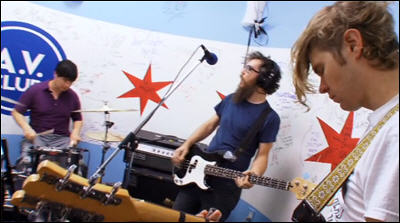
Parts & Labor cover Kanye West’s “Runaway” at the AV Club

I didn’t know Parts & Labor when I played this, but I was really curious to see how any band of non-rappers would perform this awesome Kanye West track.  It’s a testament to how great the song is that Parts & Labor (who totally kick ass) can play around with it as much as they do (they wisely don’t rap) and retain the greatness of the song. 

Parts & Labor seem like a pretty standard punk-type outfit: guitars, bass, drums and keys (although some of their studio albums belie that simplicity).  But the keyboardist (who opens the song) is playing notes while manipulating effects pedals on top of the keyboard.  It’s a great introduction.  The bassist (with his amazing beard) sings in a couple of different registers that work out the angst of the song wonderfully. 

But for me the guy I can’t stop watching is the drummer. He opens the track with his snare drum on his lap.  While keeping the beat with one finger on a floor tom he is clearly playing the snares of his snare drum with a guitar pick.   When the song breaks half way through and he puts his snare back, he is a maniac of intensity and cacophony. It is amazing.  The second half of the song is a cathartic release for the noisy beginning. 

This is a wonderful cover.  And I’ll be checking out Parts & Labor on Spotify to see what I’ve been missing.  Watch it here.

[READ: July 20, 2011] “High School Confidential”

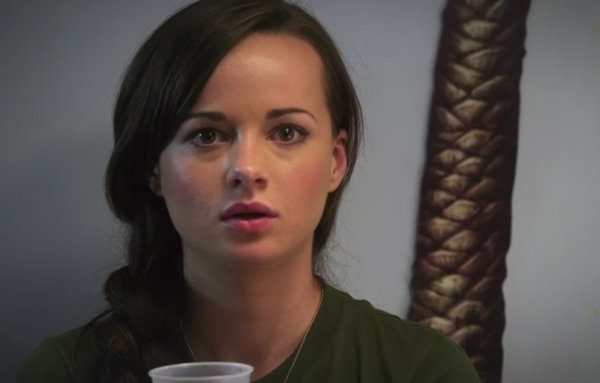
Continuing with the New Yorker’s Fiction Issue, we get this Starting Out essay from Téa Obreht.  Now, Obreht’s story was the least believable of the five for me.  As you can see by this photo, Obreht is adorable.  Now we all know people who blossomed from an ugly childhood or had a youthful gangly phase or grew into beauty or whatever.  But the introduction of her essay, when she describes herself in quite unflattering terms seems like it may be, if not over the top, then at least wishful thinking.

Téa

She claims she was awkward, tall, gangly with coke bottle glasses a huge gap in her teeth from one that never came in.  In reading it again I guess it’s not as dramatic as I though the first time, and corrective work could fix those things, but still.  It seemed a bit like that MTV show Awkward (second mention in a few days–it’s been a slow summer, TVwise), in which the main character is way too cute to be considered an outcast.

Too cute to be that awkward

But hey, maybe cute people have problems too. 

It’s when Obreht moves past that and talks about being made fun of for what she wanted to be that things get interesting.  

Obreht has always wanted to be a writer and when she let her classmates known that, they picked on her (oh are you going to write about that).  But she pressed on.  She was most devastated when the stories she gave to a boy in confidence were soon being read, aloud, by a girl who hated her.

Maybe cute girls are unpopular too. (more…)

Read Full Post »

« Newer Posts - Older Posts »