Feeds:
Posts
Comments

Archive for the ‘Books about writers’ Category

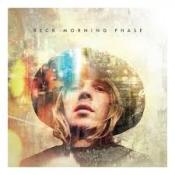
salSOUNDTRACK: BECK-Morning Phase (2014).

morningThe release of Beck’s latest album is what got me investigating Beck’s back catalog–just to see how Beck arrived at this mellow chillout place.

I read a lot about this album when it came out and, even hearing Beck discuss it, I feared it would be a little too slow and mopey for my tastes.  It is slow, but it’s not really mopey.  It’s quite pretty, in fact.  And as I’ve come to learn by going through Beck’s back catalog, he likes to experiment in all sorts of ways, but at his core, he is just a really good songwriter.

So it opens with 40 seconds of strings that act as  nice introduction to the tone of the album, but don’t prepare you for the pretty acoustic song “Morning.”  Lyrically it’s pretty dark, although with his falsetto, it’s kind of hard to realize that.  The melody and vocal line are really lovely (especially the weird echo they put on his voice).  And it has a surprisingly big sounding chorus–redemption even in sadness.  “Heart is a Drum” has piano and an acoustic guitar with swelling strings–once again, the chorus is big and (relatively) fun.  “Say Goodbye” is a sad song, and yet it is still catchy (which is nice), with a simple acoustic guitar.   “Blue Moon” has a wonderfully catchy verse structure and it picks up the tempo somewhat with beautiful swells of music.  And the chorus is dynamite too–it is a worthy single.

“Unforgiven” slows things down even more, making one of the moodiest Beck songs.  And then comes “Wave,” perhaps Beck’s darkest and moodiest song–just waves of strings with no drums and Beck’s longing voice over the top.  “Don’t Let It Go” has some very nice singing from Beck.  His voice has always been good, but he sounds like his voice is maturing somewhat here.

“Blackbird Chain” is the prettiest melody on the record, and it feels especially light after the downcast last few songs.  It has a great chorus and really strong verse melodies. My only gripe is the very brief string accompaniment in the middle of the song which feels like overkill–the piano solo is nice, bit the strings are too much.  But they’re very brief and don’t ruin the song.  “Phase” is a 1 minute instrumental that leads into “Turn Away.”  “Turn” has Beck’s layered vocals and a wonderful easy guitar sound.  The whole song has a sixties acoustic vibe, an again, the melody is great.  “Country Down” has a, yes, country feel (including harmonica solo ala Neil Young), and Beck’s lower, more powerful voice.  It’s a strange turn on this album, but it keeps with the mellow vibe.  The disc ends with “Waking Light” a slow, building song with more great vocals and a wonderful chorus, that makes good use of loud and soft.  It’s a very strong ending to an album.

Unlike other Beck albums this one is definitely a “have to be in the mood” for it.  There’s no pop singles, no dancey hits.  It’s all very mellow.  But it’s very pretty.

[READ: April 2, 2014] The People of Paper

An excerpt from this book was published in McSweeney’s #12.   Here’s what I thought of the excerpt:

This is an excerpt from Plascencia’s novel of the same name, a novel that I own but have not read yet.  And wow is this crazy.  There is, indeed a person made of paper and there are people made of meat, and there are different narrators.  Federico de la Fe is a grown man who wets the bed–as the story begins he and his wife (who tolerates the wet spot) are going to the water’s edge to fill it with new straw.  His wife has gotten used to it (ew), but once their young daughter is potty trained and her husband isn’t, she gets quite cross.  It is only after his wife has died that he learns of a cure–sticking his hand in the fire.  See, crazy–and we haven’t even gotten to the lady of paper yet.  I’m assuming that actually reading the full novel will bring some clarity to this story.

I included this as an introduction because this story is very very unusual, even after reading the whole thing.

In addition to the story being unusual (and, as it turns out, completely metafictional), even the physical product is unusual.

The story is broken into several styles, which are distinguished at the front of each chapter by either three lines, three dots or one dot.  In the three lines chapters, each page is broken into 3 columns–each column is about a character.  In the three dots section, the chapter is formatted normally, but different characters are written about.  And in the one dot section, the small chapter is about one person (you can read more about this in the interviews below). (more…)

Read Full Post »

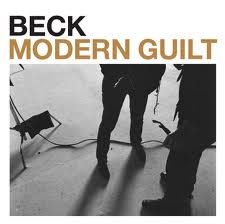
shoppingSOUNDTRACK: BECK-Modern Guilt (2008).

modern guil;As I mentioned, I missed Modern Guilt when it came out.  I guess I had burnt out on Beck after The Information.  But man, I have recently gotten into it big time.  It may be my favorite Beck album of all.  It is brief and simple but with enough going on to keep iot more than just interesting.  The feel is consistently retro by Beck but Danger Mouse throws in enough modern elements to keep it totally fresh (at least six years after the fact).

“Orphans” opens with a hyper drum beat and keyboards, but once the chords and Beck’s vocals come in it has a very sixties folk/psychedelic vibe.  But those drums keep coming it, making it sound very modern.  This has one of the catchiest verses that Beck has sung in addition to a great unexpectedly poppy bridge.  The song is unmistakably Beck, but the flourishes are very Danger Mouse.  “Gamma Ray” opens with a surf rock sound and backwards backing vocals.  It sounds very “future”, but future from the 60s.  This song ends abruptly just under 3 minutes, it’s especially abrupt after the length of some of his more recent albums.  “Chemtrails” opens like mid 70s Pink Floyd–synths and falsetto vocals.  But when the drums come crashing in it totally changes the song to a more modern sound–and yet that bass is still very Pink Floyd.  “Modern Guilt” has a very simple beat and seems like a simple catchy song.  Then the keyboards come along top and it feels kind of spacey.  Then the second guitar riff comes in underneath the song and it’s grounded again.  There’s so much going on in this little poppy gem.

“Youthless” is another straight ahead simple rocker, this one has disco synth lines over the top.  It reminds me of “Cellphone’s Dead” from The Information (I keep waiting to hear “One by One, gonna knock you out”).  It’s the only song on here that reminds me of another of his songs. “Walls” has a cool vocal melody that plays off of the music very well.  It also ends abruptly–a very cool two and a half-minute song.  “Replica” has very contemporary chaotic drumming that pins this floating song.  “Soul of a Man” makes me think of Deep Purple’s “Hush” for some reason.  But I love the way the guitars and noises just seems to come and go leaving the classic rock rhythm pulsing underneath it all.  “Profanity Prayers” has a very punk feel–buzzy guitars and a fast beat, and yet it’s also smoothed over somewhat with an interesting backing vocal line.  “Volcano” is a slow song that anchors the album nicely.  It runs a little long, but this brief album earns a longer coda like that.

I just can’t stop playing this.

[READ: April 2, 2014] “Shopping in Jail”

Just when I thought I had caught up with everything that Douglas Coupland had published, I came across this book, a collection of his recent essays.  I enjoy the very unartistic cover that Sternberg Press has put on this.  It looks extremely slapdash–look at the size of the print and that the contents are on the inside front cover.  But the essays contained within are pure Coupland and are really enjoyable.

I have read a number of his older essays in recent years.  And here’s the thing: reading old Coupland essays just makes you think, ho hum, he knew some things.  But you don’t really think that he was on the forefront of whatever he was thinking.  So to read these essays almost concurrently is really fascinating.

His thoughts are science fiction, but just on the cusp of being very possible, even probable.  He also looks at things in ways that the average person does not–he notices that on 9/11 people didn’t have picture phones–imagine how more highly documented it would have been.  These essays are largely about technology, but they’re also about the maturation and development of people and how they relate to things.  Coupland can often seem very ponderous, and yet with these essays he seems prescient without actually trying to predict anything.  I enjoyed this collection very much. (more…)

Read Full Post »

hiltonSOUNDTRACK: BECK/RECORD CLUB-SKIP SPENCE: Oar (2010).

skipOf the four Record Club discs, this is the only one I don’t own.  Although I do have a different covers collection called More Oar (which Beck also appears on). I may have never heard any of the original songs on this disc, so I can’t even compare them.

For those who don’t know (as I didn’t), Skip Spence was one of the founders of Moby Grape, a band who was vaguely successful in the late 60s and then sort of fell apart (especially when Spence tried to kill his bandmates and was put in an asylum for a year).

Beck doesn’t have anything special to say about why they picked this album.  But he must have been very excited that Wilco and Feist were around to play on it.  He says

This one took place last June when Wilco was in town for the release of their new eponymous album. They came by after a long day filming a TV appearance and still managed to put down 8 songs with us. Jamie Lidell was in the studio with me working on his new record. Leslie Feist happened to be in town editing her documentary and heard we were all getting together. Recording took place at Sunset Sound Studios in the room where the Stones did a lot of Exile On Main Street (and looking at the records on the walls it appeared that the Doobie Brothers recorded most of their output there too). Sitting in on drums, we had James Gadson, who’s played on most of the Bill Withers records and on songs like ‘Express Yourself’ and ‘I Will Survive.’ Jeff Tweedy’s son Spencer played played additional drums. Also, Brian Lebarton, from the last two Record Club sessions is back.

And if you don’t know what Record Club is, see the summary on yesterday’s post.

Wilco plays on 8 tracks (of 12) and they sound great.  Indeed, overall this is the most “professional” sounding recording.  Which is not to say that they don’t have fun. It sure sounds like they do.

Little Hands (2:59).  This has a traditional folk band sound.  It’s a great recording.
Cripple Creek (4:14).  This is not THAT “Cripple Creek,” by the way.  “Jamie takes the lead and Gadson gets behind the kit, while Beck and Brian back them.”  There’s a funky drum breakdown in the middle.
Diana (3:48).  Another good sounding song.
Margaret/Tiger Rug (2:27). This song is a little boppy and slightly silly sounding, but not really that silly.
Weighted Down (The Prison Song) (4:58) “Feist takes the lead this week with Nels Cline arpeggiating some ridiculous 64th notes on a toy guitar.”  Feist adds some beautiful vocals to this song.
War In Peace (5:04).  This begins a little slow and shambolic but it soon builds into a full band that gets even crazier when they start playing “Sunshine of Your Love.”  It was fun to hear them let loose.
Broken Heart (3:39).  This sounds like a traditional song.  A little drunken and fun–a nice duet with Feist.
All Come To Meet Her (2:02).  This is a simply beautiful harmonized a capella rendition.
Books Of Moses (7:21) “Gadson lays down the heaviest RC beat ever, while Jamie loops his voice into a voice army and Brian plays some kind of octagon shaped synth.”  This had a kind of Primus-y weird synth opening.  But as Jamie loops his voice over and over it sounds really good, although it is too long.
Dixie Peach Promenade (Yin For Yang) (3:56).  This is a synthy bouncy song.  It’s a little silly, especially with th Ace of Base coda at the end.  But it sounds good.
Lawrence of Euphoria (5:17).  The lyrics of this song are very silly. This version has a fake cowbell and  funky bass but is otherwise just electronic drums and vocals.
Grey/Afro (7:35).  This has echoed vocals and noisy bass.  It’s hard to figure out what’s going on here, especially at the chaotic ending. But it’s nice to hear them all let loose a bit.

As I said, I don’t know how this compares to the original, but I really enjoyed it.

[READ: March 23, 2014] White Girls

This book was madly hyped and I was pretty excited to read it (even though to be honest I didn’t know if it was fiction or non-fiction–and wasn’t even entirely sure as much as half way through the first piece).  I knew Als’ name from the New Yorker, although I wasn’t really conscious of having read anything by him.  It turns out I read one of these essays in McSweeney’s 35 about four years ago.  The fact that I didn’t remember reading that essay does not speak all that well about it.  But overall I enjoyed most of the essays in the book quite a lot; however, the two longest ones I found, well, way too long.  And I honestly don’t understand the title.

Overall the book is a collection of essays (often told from an interesting perspective, like from the dead person’s first point of view).  The problem with pretty much every essay in the book at least for me was that Als presupposes a base knowledge of these people.  Without that, the essays can be frustratingly vague and unclear.  But again, these people are all famous enough that it seems likely that one would have that base knowledge (even if I don’t).  I do wish there was a small bio or even a photo with these essays (as there was with the Truman Capote one) as I feel that grounded me nicely.

I was a lot more confused by his essays that were more personal.  I didn’t really understand the context for what he was talking about, since i know very little about him.  And as you’ll see from the first essay, he covered a lot in a very un-straight way. (more…)

Read Full Post »

univSOUNDTRACK: BECK-Mutations (1998).

mutationsThis is the first album that shows a wholly different side to Beck. It is pretty much an entirely traditional album.  There’s no samples, just consistently strong songwriting.  The overall feel is mellow and it comes as quite a shock after the chaos of Odelay!

Although the album has a very consistent vibe, it’s not all samey.  There’s a lot of different instrumentation like the harpsichord on “Lazy Flies,” and the old-timey piano and slide guitar on “Canceled Check” which has a very country feel.  It’s not all simple and normal though, as “Check” ends with a strange musical breakdown that keeps it from being a smooth song.  “We Live Again” is a very mellow track with Beck singing sweetly over the waves of music.

As befits the name “Tropicalia” has a very tropical feel, it’s totally danceable and was a very wise choice as a sample.  “Dead Melodies” has a classical music feel (with vocals of course).  “Bottle of Blues” is, unsurprisingly, a somewhat rowdy blues song.  “O Maria” is a slow but upbeat piano song that also feels old timey.  “Sing It Again” has a melody that is similar to “Norwegian Wood,” but the song is nothing like that Beatles classic.  This is gently sung and played acoustic guitar number.  And “Static” is a quiet disc ender.

This disc also feature a “bonus” track, and this is the first one that is actually enjoyable.  It is a fleshed out song (and a good one at that). It is comparatively rambunctious and noisy and quite different from anything else on the disc.  It’s called “Diamond Bollocks” and has a great bass line and cool backing vocals.  This song could easily have been a hit if it weren’t tucked away at the end of the disc.  (Well, and there are some weird moments to, but overall, easily a hit).

Despite all that Beck is known for his crazy songs and samples, Mutations is an extremely cohesive record with enough diversity to keep it from ever getting dull.  It’s a great record and is somewhat overlooked in his catalog.

[READ: March 16, 2014] The Unknown University

This is a collection of almost all of Roberto Bolaño’s poetry.  Some (but not all) of the poems from his collection The Romantic Dogs are included here, although some of those are apparently modified a little.  It also includes what was earlier released as Antwerp but is here called “People Walking Away.”  (I found Antwerp and “People” to be quite unusual and would never remember what is the same in the two.  But translator Laura Healy says that she more or less uses Natasha Wimmer’s translation of Antwerp for the parts that are the same (a task which must have been harder than it sounds if the two pieces weren’t exactly the same).

This book is 830 pages with facing pages of Spanish and English.  According to the publisher’s note, this collection was found on Bolaño’s computer as is—a collection of all of his poems from throughout his career.

Most of the early poems were written when Bolaño was young (in his 20s).  Even at such a young age, he writes powerfully.  Not all of his poems are great of course (how could they be when there are so many) but there are dozens and dozens of poems that I thought were fantastic.  I’m going to include some below, but I also wanted to get some criticisms out of the way too.

He tends to revisit ideas quite a lot, which is normal for a poet, but it seems weird to revisit an idea in subsequent poems (especially when the poems are just a few lines long each).  It almost feels like he fixated on a subject and thought of a number of ways to work with it and rather than make one long poem, he made several short ones.  Like this strange occurrence: (more…)

Read Full Post »

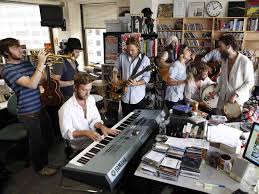
   judySOUNDTRACK: EDWARD SHARPE AND THE MAGNETIC ZEROS-Tiny Desk Concert #32 (October 26, 2009).

I haedve recently begun to really enjoy Edward Sharpe and the Magnetic Zeros (watch those e’s people).  Interestingly, I have gotten into their song “Home” which is actually from 2009 and is included in this Tiny Desk Concert.

There is no Edward Sharpe. Sharpe is the alter ego of singer Alex Ebert.  Ebert and Jade Castrinos form the core of this expansive ensemble.  There are ten people in the band making this the largest (and judging from their appearance, smelliest) Tiny Desk Concert to happen yet.  There are a few guitars, accordion, bongos, drums, keyboards and lots and lots of singing

Everyone seems very happy in the band, especially Castrinos, whose bliss is either delightful or disturbing to watch here.

“Janglin'” opens with the whole lot of them bopping along to the janglin song.  Alex Ebert has a folky, husky voice.  There’s lots of shouted “heys” and a fun, nearly-bass vocal section where they all sing “Mag-ne-tic-zeros.”  “Home” is a wonderful song with a catchy whistle and a fun horn section.  The catchiness of the chorus is undeniable.  And this live version is infectious.  The final song, “40 Day Daydream” is a big rambling piece.  There’s a moment near the end that allows Ebert to sing unaccompanied and you can hear that his voice is quite nice.

I always enjoy seeing performers having fun and it’s clear that these Zeros are doing just that.

[READ: January 3, 2014] Judy Blume and Lena Dunham In Conversation

I considered the idea of writing only about tiny books in February.  (I have a number of tiny books that have come along recently and I thought February would be a good time to read them all).  Of course, it’s already the 11th, so there goes that.  But I can still do some, right?

So this little book (6.5 x 4.5 inches, 77 pages) is the full (and enhanced) interview with Judy Blume and Lena Dunham.  The excerpted version appeared in the January 2014 issue of The Believer.  For this book we have the full interview (I assume) and the authors were given a chance to add comments to the interview afterward.

What we get here is Dunham, more or less a fangirl of Judy Blume, talking to her idol.  But Dunham is not just fawning, she is direct and inquisitive and they seem to hit it off immediately, which makes for a great interview.  Blume talks about her phobias (thunder, loud noises).  And their fear of the blank page.  And we also learn of Blume’s writing and daily routines (which are very different from Dunham’s). (more…)

Read Full Post »

  grantland8SOUNDTRACK: RALPH STANLEY-Tiny Desk Concert #31 (October 13, 2009).

ralpRalph Stanley is apparently a living bluegrass legend, although I’ve never heard of him.  He plays a clawhammer banjo (and apparently has for 63 years).

The concert lasted only 6 minutes, but in that time he sang three a capella songs: “Gloryland,” “Turn Back, Turn Back” and “Amazing Grace.”

It’s hard to assess a legend based on this performance.  I’ve no idea how good his voice was back in the day.  He sounds fine here, albeit understandably quite old.  I’d have liked to hear his banjo.

[READ: January 3, 2014] Grantland #8

It is becoming apparent to me that Grantland loves basketball.  Like, a lot more than any other sport.  This issue had a ton of basketball in it.  And, I have to admit I was a little tired of it by the end–there was a lot less pop culture stuff, too.  So, it felt especially basketball heavy.  I realize of course that the time frame covered was the playoffs, but still.

BILL SIMMONS-“Searching for a Superman”
A lengthy article about Dwight Howard, discussing the pros and cons of signing him again.

MARK TITUS-“How Did He Get So Good?”
A look at Paul George and Danny Green doing better than expected in the NCAA playoffs.

CHARLES P. PIERCE-“A Dark Day in Boston
Pierce wonders about Boston after the Boston Marathon bombing–he says the city will come back stronger. (more…)

Read Full Post »

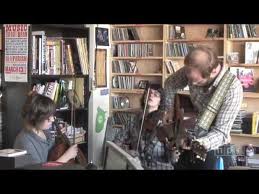
CV1_TNY_10_14_13McCall.inddSOUNDTRACK: HORSE FEATHERS-Tiny Desk Concert #14 (May 8, 2009).

horseI’d never heard of Horse Feathers before this Tiny Desk Concert.  Justin Ringle is the lead singer and guitarist of the band (which in this incarnation includes a violin and cello).  Ringle’s voice is soft and kind of high-pitched.  They seem very well suited to the Tiny Desk, (and are in stark contrast to Tom Jones!).

They play three songs, “Working Poor,” and “Curs in the Weeds” are beautiful with the wonderful strings accenting his voice and guitar.

In their interview they talk a little about their instruments (all of which are very old!).  Indeed the guitar is old, but the violin (one of only 4 made) is even older and the cello is nearly 100 years old.  Very impressive.

For the final song, “Heathen’s Kiss, ” the violinist busts out singing saw.  It’s awesome.

I really enjoyed this simple and beautiful set.

[READ: January 7, 2014] “Caught Napping”

This New Yorker has several small essays about work.  They are primarily from people who I wasn’t familiar with–only Amy Poehler saved the five from being unread.  When after reading all of them I enjoyed them enough to include them all here.

The pieces are labelled under “Work for Hire” and each talks about a humiliating job.

Nicole Holofcenter is a filmmaker.  She has directed a number of films that I have liked (including Walking and Talking) and most recently James Gandolfini’s last movie (which I haven’t seen), Enough Said.

In this essay she talks about a job working for “Mr. Stone” (which I’m not sure if we’re supposed to assume is Oliver Stone or not).  At any rate the job paid a fortune at the time ($500/wk) and all she had to do was answer the phone. (more…)

Read Full Post »

CV1_TNY_10_07_13Kalman.inddSOUNDTRACK: DAVID DONDERO-Tiny Desk Concert #10 (December 5, 2008).

donderoBob and Robin at NPR love David Dondero.  I have never heard of him outside of their show (where they play his new songs when they come out).  Apparently he has some kind of connection to Conor Oberst (their voices sound similar—although I gather that Dondero came first).  I don’t care for Oberst in general, although I find that Dondero’s voice is more palatable to me.

He plays four songs on acoustic guitar.  And they’re all enjoyable.  They are simple folks songs “We’re All Just Babies in Our Mama’s Eyes,” is a little fast.  While “Rothko Chapel” is probably my favorite of the four.  I was really intrigued by the Chapel (which is real and which I’d never heard of) and which sounds cool—his song is an interesting look at it. “In Love With the Living and the Dead” and “It’s Peaceful Here” round out the set.

I feel that more than his music (which is good but not especially memorable), it’s his lyrics that Dondero is known for.  his songs are thoughtful and interesting and look at a variety of subjects.

[READ: January 6, 2014] “I’m the Meat, You’re the Knife”

This is an interesting story constructed in a way that lets you know that something big has happened between two people.  But we are never told exactly what happened, we are simply given a lot of stories with which to construct the event ourselves.

Jay is walking home—his father has just died—and he is greeted by an old friend, Ed Hankey.  Jay doesn’t feel like talking to Ed about his father, especially when Ed tells him that Murray Cutler is currently in hospice.  Murray was their English teacher–Jay has become a writer—with Ed emphasizing how important Murray was to them.

The story bounces back and forth between the preparations for Jay’s father’s funeral and his visits to Murray in hospice.  The differences are pronounced but not emphasized: Jay’s family is there to make arrangements, to plan for all of the details.  Meanwhile, Murray has no family, no one to visit him in hospice.  Indeed, when Jay visits him, a volunteer is reading to him. (more…)

Read Full Post »

fivedials_no30SOUNDTRACK: Random songs at the roller rink (December 29, 2013)

skateWe went rollerskating on Sunday and they played all kinds of pop hits.  They played “Dancing Queen” and “YMCA,” sure, but they also played a lot of recent big hits.  And I said to myself either I have grown more tolerant of pop songs or pop songs are simply better than they were in the 80s and 90s.

Because I thoroughly enjoyed hearing “Gangnam Style” (perhaps a pop song where you don’t know the words is really the way to go) and “What Does the Fox Say?” (or perhaps when the words are so preposterous).  “Blurred Lines” is incredibly catchy (although it would be better without the offensive lyrics).  I also enjoyed “Call Me Maybe” which is treacly sure, but the melody is super catchy and “Rolling in the Deep” because Adele kicks ass.

Of course when I looked at the list of #1 hits for 2013, I literally didn’t know any of them (except “Blurred Lines” and “Royals,”) so maybe pop is not what I think it is.  Maybe I just like YouTube sensations.

Ring-ding-ding-ding-dingeringeding!  Happy New Year.

[READ: December 27, 2013] Five Dials #30

I was surprised to get this issue of Five Dials just as I was reading the other recent ones.  It allowed me to finish up Five Dials and the year at around the same time.  This issue introduces a new graphics editor: Antonio de Luca and he really changes the look of the magazine.  (He also used to work for The Walrus).  Rather than pictures being centered in the page, they spread from one page to another (which works well online but less so if you print it out).  The illustrations are also much bolder.

This is a short issue (which I appreciated).  And it does what I especially like about Five Dials–focusing tightly on one thing, in this case Albert Camus, who I like but who I have not read much.  It’s his centenary and many things have been said about him, so what else is there to say?  They find two things worth saying.

CRAIG TAYLOR-A Letter from the Editor: On Tony, On Dean, On Camus, On Algiers
Taylor talks about the illustrations of the issue–they were spray painted on walls by an Algerian-French collective known as the Zoo Project.  The new editor took photos and then Photoshopped away the extraneous stuff to leave us with just the graphics–giving them a permanence that they would normally not have.  Taylor also says goodbye to Dean Allen, the outgoing art director.  Then he gets to the heart of this issue: Albert Camus and Algiers (where Camus is from).  Curtis Gillespie decided to go to Algiers to find out how much the people there know and love Camus (and he found it to be a much more difficult trip than he imagined). (more…)

Read Full Post »

tny6.16&23.03 cvrSOUNDTRACK: SIGUR RÓS-Ba Ba Ti Ki Di Do (2004).

babaI didn’t realize that this was a soundtrack to Merce Cunningham’s dance piece Split Sides.  That doesn’t really change my opinion of the music, although it does make me wonder just what kind of dance this would have been.

There are three tracks on this short EP.  The primary instrument seems to be the music box.  There are no real vocals on the album, except for what sounds like sampled children and a few spoken words in the final track (the words are the title of the EP sampled and thrown around, apparently spoken by Cunningham).  Of course, it’s not all music box, there are synths and interesting percussive sounds (what sounds like the winding up of said music boxes).  The first two songs are quite similar, with the second being a bit more fleshed out.

The final track, with the sampled words, sounds much different and feel a bit more aggressive, although that is all relative of course.  The whole EP is about 20 minutes long.  Of all of Sigur Rós’ varied output (singles and EPs) this is probably the least essential one that is all new music.

[READ: November 8, 2013] “City of Clowns”

I had printed out all of the New Yorker stories that Alarcón had written because I enjoyed his previous ones so much. This was the first and I was blown away by how good it was.

It is a long and somewhat complicated story.

It opens with Oscarcito going to the hospital because his father died the night before.  He finds his mother mopping floors because his father’s bill was unpaid.  And in that very first paragraph, she introduces her son to Carmela—the woman whom his father left them for.  She was mopping the floor with Oscarcito’s  mother.  He is confused and enraged by this.

His half brothers are also there.  He had never met them before, preferring to stay away from his father’s other life.  But he saw them in front of him and clearly saw that they were related to him.  But the most galling thing was that although he was the oldest of all the children, they were clearly the chosen children—after all, his father stayed with them.

Then we learn about his father’s life.  He was born in Cerro de Pasco and moved to Lima when his young family was still young.  He worked hard in semi legitimate businesses and then brought his family to the city.  Young Oscarcito, age 8, loved it.  But his mother hated missing her family in Cerro de Pasco.  And now they we reliving with his father who was practically a stranger. His father worked hard and succeeded, but he was rarely home (more…)

Read Full Post »

« Newer Posts - Older Posts »