Feeds:
Posts
Comments

Archive for the ‘Book Reviews’ Category

SOUNDTRACK: SANDRO PERRI-Impossible Spaces [CST085] (2011).

This album has become one of my favorite releases of the year.  I simply can’t stop listening to it.  And the funny thing is that on first listen I thought it was too treacly, too “sweet,” especially for Constellation Records (home to the over-the-top Godspeed You Black Emperor amongst other wonderful bands).  But after a listen or two, I heard all of the genius that is present in this record–so many different layers of music, and so many interesting instrumental choices. Indeed, it does come off as sweet, but there’s really nothing wrong with that.

This album gives me a happy pick me up without being cloying in any way.  That’s a great accomplishment.

“Changes” opens kind of all over the place, with some noisey guitars and really high bass notes.  But once the shk shk of the shakers comes in, the sing settles into a great groove (and there’s a cool bassline that really holds the song together).  After about 3 minutes, it turns into a cool light funk jam, with retro keyboards, buzzed out guitar solos and some funky drums.  It’s unlike anything you’ll hear anywhere else.  “Love & Light” is one of the shorter pieces at just under 4 minutes.  It’s different from the other tracks, in that Perri’s vocals seem to be the dominant motif, rather than the cool music.  I like the song, but it’s probably my least favorite here.  “How Will I?” uses a similar multi-tracked vocal style but it has some wonderful flute moments (yes flute) that make the song bubbly and happy.  The song kind of drifts around the ether in a kind of jazzy world until about 5 minutes in, when the bassier notes anchor the song with great contrasting notes.  And the electronic ending is as cool as it is disconcerting.

“Futureactive Kid (Part 1)” is a shuffling minor key number that’s just over 3 minutes, it features a cool bass clarinet and backwards guitars to propel the song.  The backwards guitar solo segues into the uplifting (literally, the keyboards just go higher and higher into space. “Futureactive Kid (Part 2)” features fretless bass, a flute solo and My Bloody Valentine-esque sound effects (although radically simplified from MBV’s standards).  It fades out only to introduce my favorite song in forever–“Wolfman.”  I can’t get enough of this song.  It’s a simple structure, but at ten minutes long, it deviates in amazingly complex ways.  It has so many cool aspects that I love–I love the chord changes at the end of each verse.  I totally love the guitar solo that goes up and down the scale for an impossibly long run–well over 100 notes by my count.  I also love that the end of each section features a different guitar style playing the simple chord progression–from acoustic to loud solo to full band playing those same notes–so by the end of the ten minutes you ‘re not sure what to expect.   By the time the flute solo comes in at nearly 7 minutes, I’m totally committed to the song and wherever it’s going to take me.  So when it gets a bit of an electronic ending, I’m ready to go there with it.  Oh and lyrically the song is just as curious as the music.

The final song “Impossible Spaces” is a beautiful, quiet guitar song which is actually easy to sing along to.  It quiet a departure from the rest of the record, but it ties things together very nicely.  I have listened to this record so much lately, I just can’t get enough of it.

You can stream the whole thing here.

[READ: May 10, 2012] Conversations with David Foster Wallace

This is a book that collects interviews with David Foster Wallace.  Although DFW was reticent about d0ing interviews (as the introduction states), he did do quite a lot of them–often at the same haunts.  This book contains 22 interviews that span from 1987-2008.

The conversations are in chronological order, which is really a treat because you get to see DFW’s opinion (and his addiction to nicotine) evolve over the years.  You also get to see the topics that he was really focused on at one time and whether or not they stayed with him until the final interview.  DFW was outspoken about certain things, especially entertainment, which is unsurprising.  But he was also a big advocate of truth, honesty, realness.  It’s amazing seeing him when he lets his guard down. Although his honesty is there for all to see in his work, he is better known for his difficulty with language or his humor.  So seeing him without the multiple revision is quite enlightening.

The first pieces, “David Foster Wallace: A Profile” published after his first novel The Broom of the System launched Viking’s paperback imprint actually looks into his classroom a little bit and shows him interacting with a student (I wonder if she knows she is in this book?).  It seems sweet and almost naive compared to what is to come next.  And, for anyone who is familiar with him from later in, it’s a wonderful look behind the scenes.  There’s also a number of pieces from The Wall Street Journal.  Like the second piece in the book, the worryingly named, “A Whiz Kid and His Wacky First Novel.”  It’s not a bad piece at all, but man, headlines can be delicate matters. (more…)

Read Full Post »

SOUNDTRACK: LAMBCHOP- “2B2” (2012).

I don’t have much exposure to Lambchop.  I know of  them mostly as a slow, country-type band.  And that’s why I haven’t listened to them much.  So I picked one song from their latest album, Mr. M, to talk about (because they are associated with Five Dials, see below).

And, indeed, they are slow.  I wouldn’t say country so much as roots, maybe, traditional folk or something.  It’s certainly slow.  This song reminds me in someways of Tindersticks, although a very stripped down Tindertsicks.  Of course, what I like about Tindertsicks is that they are not stripped down.  So this song kind of leaves me a little flat.  I like it, but I’ve already got music that’s like this ti listen to.

I’ll bet though, that it would make great background music to an engaging story (see below).  I wonder what song they chose to remix.  It’s be crazy if I picked it.

[READ: May 3, 2012] Five Dials 23

Five Dials 23 was recently released with quite little fanfare.  That may be because it is like an appetizer for the soon to be released Issue 24 which promises to be very large.

Five Dials 23 contains only one piece (and an Letter from the Editor).  The piece is by Javier Marías, whom I’ve read and enjoyed and have put on my list of authors to explore more.

CRAIG TAYLOR-“On That Fiction Feeling and Lambchop”

Craig Taylor’s introduction wonderfully encapsulates why I prefer to read fiction to non-fiction.  I have friends who say they only like to read non-fiction because at least they’re learning something (or some variant of that).  And while it’s compelling to argue that you learn stuff from fiction too, it’s not always easy to prove.  So Taylor’s Letter from the Editor is where I can point people in the future:

I remember it happened when I read part of Runaway by Alice Munro, specifically the three linked short stories ‘Chance’, ‘Soon’ and ‘Silence’. I remember the names of the North London streets I was compelled to walk – from Messina Avenue to Woodchurch Road to Greencroft Gardens – just to free myself from the sensation that had blossomed within me after I set down the book. During that walk, the neighbourhood seemed raw and responsive. I was unsettled, but in the best possible way; I was in the midst of experiencing the kind of sadness that can only be induced by fiction, which is more potent sadness than most. Also in this jumble of sensation brought on by Munro was a vow to live better, to somehow dodge the mistakes of her characters. There was a bit of a ‘what the hell am I doing with my life?’; a bit of a ‘pay attention to the details’; a bit of an ‘appreciate life more’. In short, the great inner churning that comes at the end of a few extraordinary pieces of fiction.

The details aren’t relevant, it’s the overall mood and idea that he conjures that is.  Although he mentioned Munro, he begins to talk about The Leopard by Tomasi di Lampedusa.  How this debut (and only) novel has left a strong impact not only on him and many more who have read it but also on Marías.  And that that it was Marías’ essay is about: The Leopard.

The second half of his introduction talks about the next issue and that a 10″ vinyl album will be released with it.  It will feature a double A side with author Hollis Hampton-Jones reading from her novel Comes the Night, while backed by Lambchop.  The other side features a remix of a song by Lambchop from their Mr. M album.  The end of the Letter from the Editot is given over to Hampton-Jones and her remembrance of the recording session.  (It’s very cool).

EMILY ROBERTSON and TUCKER NICHOLS drew the cool pictures of leopards.

JAVIER MARÍAS-“Hating The Leopard

This essay, translated by Margaret Jull Costa,talks about the novel The Leopard and how as a novelist, Marías hates it, even though as a reader, he loves it.

I love the surprising way he opens this: There is no such thing as the indispensable author or novel.”  Because even if the best novelist in the world never wrote, the world woul dnot be different.  I also love this insight, which I actually used recently when talking about Ulysses to someone (yes, I’m that guy) that books which “aspired to being ‘modern’ or ‘original’… leads inevitably to an early senescence or, as others might say, they become ‘dated.’  …. They can sometimes seem slightly old-fashioned or, if you prefer, dated, precisely because they were so innovative, bold, confident, original and ambitious.”  But he quickly points out that The Leopard does not fall into this dated category.

Before explaining why The Leopard has stayed with him, he gives some basic background about its publication and near lack of publication.  Indeed, Tomasi di Lampedusa (how do you say that last name?) died before it was published (but not before receiving several rejection letters).  What’s especially surprising is why he wrote the novel in the first place: “the relative late success of his cousin, the poet Lucio Piccolo…led Lampedusa to make the following comment in a letter: ‘Being absolutely certain that I was no more of a fool than he, I sat down at my desk and wrote a novel.'”  Nothing inspires like jealousy!  He also wrote because he was a solitary person.  He was married, but he seems to spend a lot of time alone.  He wanted the book published but not at the expense of his heirs (that’s nice).

Marías talks a bit about why he finds the book so extraordinary (although he says that so much has been written about the novel that he is reluctant to add more).  But one thing that impressed upon him was how the book is about preparing for death, but how, “Death stalks the book not in any insistent way, but tenuously, respectfully, modestly, almost as part of life and not necessarily the most important part either.”  As far as hating the book, Marías feels that perhaps some novelists have earned the right to hate it.

I always enjoy Five Dials.  I can only hope that my posting about it here can get more people to check it out.  Now to see why my library doesn’t have a  copy of The Leopard.

For ease of searching I include: Javier Marias.

Read Full Post »

SOUNDTRACK: CLINIC-Funf (2007).

I received this disc when it was donated to our library.  Clinic is an art-punk band from Liverpool.  This is a collection of B-Sides (that’s an unusual place to start when you’ve never heard a band before). As such, it’s hard to tell if this is what the band sounds like or if these are crazy experiments (because the songs are pretty crazy).  Even if they are experiments, they’ve got me very interested in hearing what the rest of their stuff sounds like.  And since these songs are all over the map I’m still not sure what their albums may sound like.

There are twelve songs on the record: only three are over 3 minutes long, the rest are just over 2 minutes (with a couple under 2 minutes).  This whole collection is under half an hour.  And yet it feels like they take you all over the place, music-wise.  The collection covers from 1999-2007, but they’re not in chronological order, so you can’t even tell if any of this is a progression in musical styles or just a bunch of experiments.  The willful obscurity is quite exciting.

“The Majestic” is a grand, building monstrosity.  It is full of pomp, which is immediately deflated by the slightly off-key organ.  “Nicht” is a 180 degree turn—a blistering hardcore song. It’s played very fast and yet it is not sloppy (and it’s 90 seconds long).  “Christmas” flips the sound again, with a delicate, slow song about, yes, Christmas.  “The Castle” has a lot of organ sounds, which reminds me of early weirder Who songs and even Stereolab.  “You Can’t Hurt You Anymore” is an instrumental (with cowbell!).  “Dissolution” has a distorted guitar and tribal drums.  It breaks after a few riffs to showcase some bizarre distorted spoken words.

Speaking of lyrics.  A lyric sheet is included which is very helpful because the lyrics are utter nonsense: “Pork pie had to know uncle now you can elope” “Diktat no fat fun eyebrow shhhh for the one and the one with horrors”  “Cheat the bored, cheat thee sup at the toast.”  I suspect they are just making sounds while they play and then figuring out what the words might be later.

“Magic Boots” returns to that punk sound with distorted guitar solos at the front (and distorted vocals in the back).  “The Scythe” has a kind of western guitar feel (simple, but interesting).  “Lee Shan” is the slowest song on the disc (spoken/chanting vocals are low in the mix).  “J.O.” is a slow keyboard song.  “Circle I” is another blistering noisy punk song. The collection ends with “Golden Rectangle” which is a slowish surf-sounding song, but with keyboards.

It amazes me that this band has so many full length records out.  They must have a cult following, even though I’d never heard of them before.  I’d really like to check out what their main releases sound like.

[READ: March 11, 2012] “A Rooting Interest”

Hot on the heels of Jonathan Fraznen saying he hates Twitter, I get to read how much he loves Edith Wharton.

It’s no secret that Franzen is a curmudgeon–he is an emotional guy who believes in authenticity; there is absolutely no surprise that he would hate Twitter.  And, while I think Twitter is good for some things, he is absolutely correct when he says, “Twitter stands for everything I oppose…it’s hard to cite facts or create an argument in 140 characters…it’s like if Kafka had decided to make a video semaphoring The Metamorphosis.”  [Actually I’m not sure that that simile is apt, but I get the point.]

He may be a little overstepping with the rest: “Or it’s like writing a novel without the letter ‘P’…It’s the ultimate irresponsible medium … People I care about are readers…particularly serious readers and writers, these are my people. And we do not like to yak about ourselves.”  I think there is some fun to be had yakking about ourselves, but the point is well taken.

It also seems quite appropriate for this article in The New Yorker in which he lauds a writer who wrote almost one hundred years ago. (more…)

Read Full Post »

SOUNDTRACK: MR. DREAM-“Holy Name” (2011).

The cool site Bob Dylan Wrote Protest Songs created a Top 20 list of 2011 albums.  It was an interesting mix of stuff other people liked (PJ Harvey, St. Vincent, Bon Iver) and a whole bunch of stuff that I’d never heard of (like this band).

BDWPS explains that the two guys in Mr. Dream met in college and are music critics (with Pitchfork in common among their employers).  And we all reflexively gag at the thought of music critics making music. 

This song opens as a direct rip off of Nirvana’s “Lithium.”  I mean, it’s unavoidable–same quiet guitar playing virtually the same chords.  It infuritaed me.

But on a second listen, I heard the differences.  They are the same chords as “Lithium” except that the final chord in the sequence goes in a different direction, as does the rest of the song.  It’s rawer than Nirvana (at least than Nevermind), but it has the same feel and attitude.  Maybe with a hint of Slint thrown in. 

I was prepared to write this off as a Nirvana rip off, but of course, Nevermind is twenty years old.  I think their music is just part of punk consciousness now.  And it’s nice that Mr. Dream makes good use of it.  Raw and angry.  Very nice.  I can’t wait to hear the rest of the album.

[READ: December 30, 2011] “Max reviews the classics”

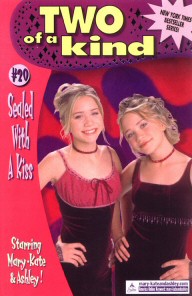
May-Kate and Ashley Olsen are a really really easy target, and I’m a little embarassed for Max that he went after them with this review, but it is still pretty funny (and it’s not like they can’t take it).  The “review” is not as fish-in-a-barrel as it might be. 

The introduction is funny: “Last night I took a break from re-reading Cryptonomicon to pick up a book roughly as long as one of its paragraphs: Sealed with a Kiss” (with links provided for each).

He is clearly setting out to mock the book, I mean how could he not.  But the things he points out are interesting not so much from a Kate and Ashley standpoint as from a book standpoint.  Indeed, he spends a lot of time on just the first sentence: “‘We’re going home to Chicago for only two weeks!’ Mary-Kate Burker told her sister Ashley.”  Max points out, “who, exactly reads the 20th book in the Mary-Kate and Ashley series without realizing they’re sisters?  …If you’re worried about readers that stupid, you probably need to point out that they’re twins too.”  That’s a little harsh to the series as, yes, it is obvious, but the series is clearly written for young kids, and frankly in terms of exposition, that’s pretty brief.

A more salient (and funnier observation): “I can’t help but wonder what percentage of Mary-Kate and Ashley books contain an excalamtion point in the first sentence.  I haven’t checked, but I get the feeling it’s a high number.”  Hilarious. (more…)

Read Full Post »

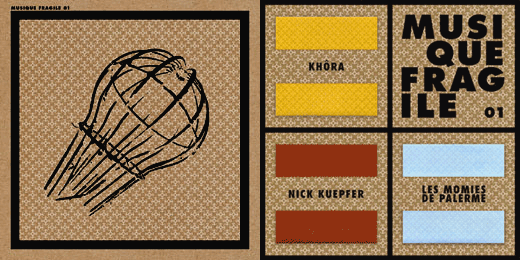
SOUNDTRACK: MUSIQUE FRAGILE 01 (2011).

Constellation Records released this 3 volume set of unsigned Montreal-based musicians in 2011.  It comes in a package of three LPs or 3 CDs (the CD package is the same shape as the vinyl, with the 3 discs inserted into the front–see picture).  Both version come complete with all kinds of cool artwork–posters and postcards–that really set the tone for each album.  You can see the contents here.

Presumably if they have an 01, they’re planning on an 02, but in the meantime, we have this collection.  The artists are Les Momies De Palerme, Khôra and Nick Kuepfer.  I’ve been listening to the discs over the holiday break and I’ll write about each one individually over the next couple of days.

But in the meantime, you can hear a sample at the link above.

[READ: December 30, 2011] “Things Critics Do That Piss Me Off”

I said that I’d be writing about a whole bunch of Max Barry things from his website.  I was going to focus on just the short stories, but there were only three.  So I figured I’d write about all of the things he had posted on this page (assuming they were his favorite).  He doesn’t write very often on the website/blog.  A cursory view of the front page shows a post every month or so.  So it’s not like he culled these posts from thousands.  But that’s okay.  They’re still interesting.  And they’re a nice corollary while I read his new book Machine Man.

Of course, not every post will blow your mind.  “Things Critics Do That Piss Me Off” is, as the title says, a little rant.  Now since, ostensibly I am a critic (sad fact must be faced) I actually get to read this as the target of his rant rather than the audience for the rant.  Of course, I always imagined I would write fiction myself, so I can also look at it from that point of view too.

Regardless of which side of  the coin you find yourself, these are pretty good things to hear from a writer.  And I’ll look at it as a kind of resolutions for 2012.

1) Reads my mind (his example is of a critic saying that Barry got bored at some point while writing the book).  I think I have done this once in a while (not the bored part, just tried to guess the author’s mindset).  It’s kind of fun to try to imagine what the writer is going through.  But I don’t do it very often and I shall try to do it less.

2) Spots Plot Holes That Aren’t There (his example is of a critic misunderstanding when something happened in the story).  This one is hard to know when you are guilty.  I would never do this on purpose (who would?), but if I make a mistake, I always correct it.

3) Spots Plot Holes That Are There (his example: shut the fuck up).  I admit I don’t often find plot holes unless they are glaringly obvious.  I like to give the writer the benefit of the doubt. (more…)

Read Full Post »

Stop the presses…  I just received an email that I was given a Versatile Blogger Award!

The super cool folks at tripsfor2 ranked me as one of 15 bloggers deserving this award.  And just as I was fearing I would have to reduce my output, they rave about my output!

The rules of the award state that I must write some details about myself and also pass along this award to fifteen other bloggers.  Since I just found that out, that will have to wait until probably next week, when I have a moment to think about it.

But in the meantime, I want to thank Hadi and Kathleen who have really wonderful posts about traveling (I swear, they’ve been everywhere) including, but not limited to some wonderful posts about aboriginal art.  And the photos are really great.  They are (just about) all by Hadi.  I mean, check out the birds here and the hummingbird that attracted me to his photos in the first place (on a different site but the same folks).

This was a delightful way to start of 2012.  As was a wonderful selection of short story recommendations from Karen Carlson over at A Just Recompense.  She has given me a selection of really intriguing stories to read and I’m quite grateful for them.  I hope to start those this week.  Oh, and just when I thought that Karen was only about the books, a quick browse over to her site shows that she’s also a Project Runway fan.  I’ll be checking in with her as the year progresses.

A final note, my wife has been taking beautiful pictures for over two years now.  She posts a picture every day at her site The Fair View.  For her end of the year post at her other blog Sew Buttons, she posted her favorite photos of the year.  And while I’m biased (and even more because there’s several of my kids), I think she takes some really stunning pictures. So, if you like nature photos (and photos of other people’s kids, pop on over.  And if you like what you see, spread the word.  I know there’s a million photographers out there, but I happen to think she’s terribly under-recognized (she needs some work on the shameless self promotion side of things). (more…)

Read Full Post »

SOUNDTRACK: ULVER-A Quick Fix of Melancholy (2005).

This EP came two years after Teachings in Silence (with a movie soundtrack and “greatest hits” collection in between).  This first track, “Little Blue Bird” is a simple soundscape with echoey keyboards.  When Garm starts singing, his most emotional side comes through (even if I really can’t understand him most of the time).

“Doom Sticks” belies its name and the EP title by being somewhat upbeat.  There are kind of squeaky keyboards that pulsate through the track.  After about a minute and a half, distorted drums keep a martial beat.  But it quickly morphs into a twinkly section that makes me think of the Nutcracker or some other kind of Christmas special.

“Vowels” is similarly upbeat (the music on both of these two tracks has a vaguely Christmastime feel somewhere in there–not that anyone would think these were in any way Christmas songs, or maybe it’s because I’m listening in mid-December).  For this, we get a return of Garm’s choral voice: deep, resonant and hard to understand (although I undertsand the lyrics are from a poem by Christian Bok).   But the poem quickly makes way for some dramatic staccato strings. 

“Eitttlane” begins with some menacing keybaords and staccato notes, creating a feel of a noir movie.  But when the vocal choir comes in, it gets even more sinister.

These Ulver EPs are really true EPs–stopgap recordings for fans.  Their larger works tend to be more substantial, but these EPs allow them to play around with different styles.

[READ: December 1, 2011] “Laureate of Terror”

Two authors I admire in one article, how about that!  In this book review, Martin Amis reviews Don DeLillo’s first collection of short stories and gives a summary of DeLillo’s work.

Amis opens the article by undermining my plans for this blog.  He states point blank than when we say we love an author’s works, we “really mean…that we love about half of it.”  He gives an example of how people who love Joyce pretty much only love Ulysses, that George Eliot gave us one readable book and that “every page of Dickens contains a paragraph to warm to and a paragraph to veer back from.”  Also, Janeites will “never admit that three of the six novels are comparative weaklings (Sense and Sensibility, Mansfield Park and Persusaion).  [I still hope to read all of the books by the authors I like].

Amis says he loves DeLillo (by which he means, End Zone, Running Dog, White Noise, Libra, Mao II and the first and last section of Underworld).  And he also seems to really like The Angel Esmeralda: Nine Stories,(well, much of it anyway), DeLillo’s first (!) short story collection

His main assement is that these pieces are a vital addition to DeLillo’s corpus.  (more…)

Read Full Post »

I have been getting The Washington Spectator for years and years.  I was delighted with it in the beginning when the editor had the wonderful name of Ben Franklin.  I am delighted now that publisher’s name is Hamilton Fish.  But aside from these two fascinating details, I have always enjoyed the content.  It was thoroughly researched and detailed.  And the little 4 page leaflet always looked like a newspaper in design and style, and it gave it a kind of gravitas–no flashy colors or pictures.

Well, here it is, Vol 37, Issue No 21 and they have finally changed the format.  And not only that, they have created a website and have a Facebook presence!  Welcome to the 20th century!

I say that jokingly because despite these changes (which look great by the way), The Spectator has not abandoned its old school journalism practice.  21st century news is pretty much all flash and brash–style over substance–quick reporting with no concern for accuracy and very little attention brought to retractions (can anyone say “climategate” (I wish they wouldn’t call it that)).  But The Spectator is exactly the opposite, and I am delighted to say that although they are now a lot more accessible, they have not lost any of their tenacity or thoroughness.

The redesign is quite nice.  There’s an image on the front page and now there are pull quotes in red, which stand out nicely on the pale paper.  Although I always liked the pull quote box in the middle off the front page, this new format allows for a couple of different pull quotes as well as an opportunity to mix things up a bit.  (more…)

Read Full Post »

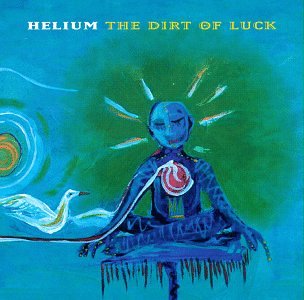
SOUNDTRACK: HELIUM-The Dirt of Luck (1995).

Mary Timony fronted Helium for a few years.  In that time she was recognized as something of a guitar wizard–not in her speed and flash, but in the weird sounds she conjured from the instrument.

She also had very peculiar musical sensibilities (these songs are quite odd) and a cool feminist attitude.  This album features the amazing song “Superball” (one of the best songs of the mid 90s–check out the video and watch the guitarist playing the strings with a screwdriver!  Man I miss the 90s) as well as a number of unpolished gems like “Medusa” and “Pat’s Trick” (the dual vocals are very cool and the dispassionate “oh oh oh” is very interesting, plus I love the lyric about “long-ass curly hair”).

Her singing style is often quite slacker-y, like in the opening of “Medusa”–she’s not always audible, and she often seems like a kind of buzzy sound more than a voice.   She sounds like she’s singing from very far away–seemingly powerful and yet quiet at the same time.

But combine that with the cool scratchy/noisy guitar sounds she gets and she’s pulling off a very cool combination (think Dino Jr without the hooks and killer solos).

Like “Baby’s Going Underground” features some crazy shoegazer guitar washes for most of its 6 minutes which really changes the pacing of the record.  There’s also the great “Skeleton,” a riff so cool that Sonic Youth used it for “Sunday.”

She also has a way with haunting melodies as on the piano  instrumental “Comet #9” and on “All the X’s Have Wings” which sounds very medieval. I think of Timony as a guitarist and yet there is there are lots of keyboards on the album too–mystical keyboards that are fascinating and seem out of character with the guitars, but actually work quite well.   But the prettiest song is “Honeycomb.’  It’s a sweet song with a wonderful melody.  It is followed by the ender “Flower of the Apocalypse” a guitar-based instrumental that is mostly feedback but is also surprisingly melodic.

Helium had mild accolades back in the 90s.  They released a couple of albums and then Mary Timony went solo.  It’s nice to have her playing now with Wild Flag.

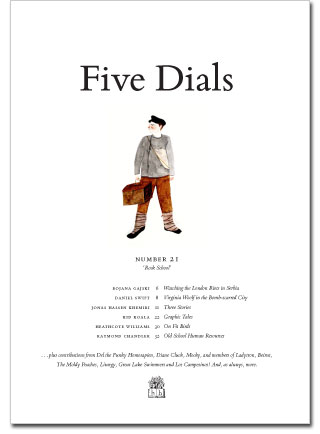
[READ: November 11, 2011] Five Dials Number 21

This is the first issue of Five Dials that I was ready to read when it was sent to me (I’ve been all caught up for a while now).  So that’s pretty exciting!

I was tempted to say that i enjoyed this issue more than other issues, but I have enjoyed most Five Dials issues equally.  But this one is definitely a favorite.

CRAIG TAYLOR–A Letter from the Editor: On Turning 21 and Thinking About Rock Stars and Greece.
The magazine introduction jokes about them now being legal to drink in the U.S. and also about now being old enough to run for M.P. in England.  He also tells us about their “new” section Our Town, which has vastly expanded in this issue.  He also explains that there are many rock stars on hand to give the magazine tutelage (authors that the rock stars enjoy) and three short stories.  He ends with a notice that they have gone to Greece where they are gathering material for Issue 22. (more…)

Read Full Post »

SOUNDTRACK: PUBLIC ENEMY-Fear of a Black Planet (1990).

NPR recently broadcast a PE show from the All Tomorrow’s Parties Festival.  I didn’t know that PE was still touring, so that was a surprise to me.  The show was largely a celebration of Fear of a Black Planet, which meant that I had to go back and listen to the original.

Man, is this a solid album.  The lyrics pack a punch even twenty years later and what is perhaps more amazing is that the sound collages that Terminator X created, which were something of an oppressive sonic assault are now fairly mainstream-sounding (forward thinking or what?).

What I like about this (and most PE) albums, is that  they have little skits between songs, but unlike most rap skits they’re not one-not jokes that you listen to once and then skip every future time.  A wonderful skit (for lack of a better word) is “Incident at 66.6 FM” in which we hear an amazing amount of racist epithets thrown at PE apparently on the radio.  Or the rather disturbing “Meet the G That Killed Me.”  “Anti-Nigger Machine” is a great collage of samples like “Think” and James Brown and a dozen more songs.

“Can’t Do Nuttin for Ya, Man!” is a (sort of) comic song from Flav that is catchy as anything. While “Reggie Jax” is a confusingly titled song that has nothing to do with baseball, but everything to do with funk.

Of course, this disc has some of PE’s best songs as well.  From the awesome “911 is a Joke” to one of the best rap songs ever, “Welcome to the Terrordome” (my favorite story of this song is when I was wearing a  Welcome to the Terrordome shirt and my philosophy professor asked me quite pointedly, “What in the hell is a terrordome.”  That was a fun conversation).  “Terrordome” is still amazing–powerful, musically intense and for all of its lyrical acuity, it still has funny moments….boing.

And of course, “Burn Hollywood Burn” is an amazing critique of the movie industry (and it’s catchy too).  I got Black Caesar back at the crib, right Lar?

I’ve always been a little confused by “Pollywannacracker.”  Not lyrically, but vocally, as Chuck’s (is it really Chuck?) voice is treated in a surprisingly tinny way.  I liked the song more on this listen than any other, I guess in the past it just kind of snuck by me.

The album is a little front loaded with greatness.   “Power to the People” is another powerful song, but it’s not quite as memorable as the other tracks.  “Fear of a Black Planet” has some really cool sounds on it (where did they get that “black man, black woman, black baby” sample?).   “Revolutionary Generation” is a great track in which Chuck and Flav stand up for black women: “R-E-S-P-E-C-T, my sister’s not my enemy.”  Not your average rap subject.

And the last couple of proper songs, “B Side Wins Again” and “War at 33 1/3” are fast paced and furious, but they don’t really have much in the way of a hook.  Nevertheless, lyrically they are really great, and I love to hear Chuck D flow that quickly.

The biggest surprise for me is the censored version of “Fight the Power” (the song that got me into PE in the first place, thanks Spike).  It’s really surprising to me that PE allowed their music to be bleeped–unless it was just for a deliberate radio play (which I can accept).  Although they also list a title as “Leave This Off You Fu*Kin Charts” (did I buy a Columbia House version or something?)

This is an amazing album, one that still sounds fresh and sadly, is still relevant.

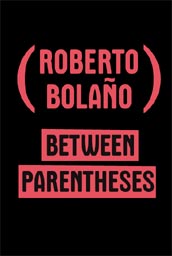
[READ: October 15, 2011] Between Parentheses

I never expected to get so addicted to Roberto Bolaño.  And despite his death, there is no shortage of works coming out in English (that is one of the advantages to reading a translated author–even death doesn’t cease the available materials).  Indeed, this year alone, New Directions is publishing Between Parentheses, and Tres and FSG is publishing The Third Reich (a collection of non fiction, a collection of poetry and a novel respectively).

When I really get into an author, I fall for his or her works, not necessarily him or her as a person (heck, some author are downright jerks).  But there are some authors that I want to know about, personally.  Bolaño is a pretty polarizing figure–he seems obnoxious, his works don’t shy away from very specific opinions, and sometimes it’s unclear what kind of views Bolaño himself has in his works (or if he’s even telling the truth about his so-called truths).  One thing in particular is the constant use of the word “faggot.”  It is used often in 2666 (and I know that is a translator’s choice, but still) and used derogatorily.  Now, clearly the context is everything for something like that.  But it seems to speak badly of Bolaño.  And yet, when reading these essays he is not homophobic in the least.  He is obviously well aware of institutionalized homophobia in Latin America, and he is obviously not supportive of it.

But that’s just one interesting thing about this book.  So let me back up. (more…)

Read Full Post »

« Newer Posts - Older Posts »