Feeds:
Posts
Comments

Archive for the ‘Biography’ Category

flamingSOUNDTRACK: RON GEESIN & L’ORCHESTRE PHILHARMONIQUE DE RADIO FRANCE-“Atom Heart Mother Suite” (2012).
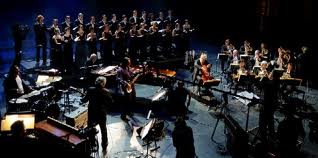
geesin“Atom Heart Mother” is one of my favorite prog rock songs.  And it’s amazing how much I didn’t know about it (which is what this book is for).  This recording of the “Suite” is an extended version that Ron Geesin created for Radio France.

I’m fascinated by this version of the song because while it is basically the same (Geesin added a few extra measures for the cello solo), it sounds so “professional.”  The original (as the book points out) was kind of slapdash and it has a very loose feel.  This version is almost too perfect (although it’s not perfect as you can tell by the guitar solos).  Nevertheless, I love that this song has broken free of an obscure Pink Floyd album with a cow on the cover.

You can see and hear the extended 2012 version here:

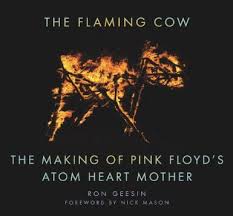
[READ: September 27, 2013] The Flaming Cow

Big news (to me) is that Ron Geesin created the orchestral score for Pink Floyd’s “Atom heart Mother.”  He had nothing to do with side two of the album Atom Heart Mother (although he does say where the album title came from, and shows the proof–the first woman with an atomic pacemaker was in the news that day), but he was instrumental (ha) in creating the 23 minute epic.

I actually knew of Geesin from his score with Roger Waters for The Body (a vinyl album I own from when I was really into Floyd, but which I haven’t listened to in decades).  But so here is the full explanation of how the crazy beast (which my high school friend Kevin deemed the number one “seriously drug induced” song) came to be.

Except that Geesin has a lot to say about himself first.  The book is 120 pages (about half of those pages are pictures) and he doesn’t get to the song until Chapter III.  At first I wasn’t all that interested in his biography, but it actually pays off when you see what his musical background was and how it was ideal for him to create the score for “AHM.”  His musical background is interesting in his DIY approach and “one man band” esthetic.  But really, we got this book to hear about this Epic (which is what it was called first).

And on that front, well, he doesn’t have a ton to say, believe it or not.  We learn that Nick Mason (who was friends with Geesin and who wrote the Foreword to this book) and Waters had created the basic structure of the song.  And they called on Geesin to flesh it out.  So Geesin used his understanding of writing scores to create some really unexpected tones for this otherwise fairly simple song.  It also turns out that (for me) recounting someone else’s recounting of recording a song is kind of boring, especially since there were no astonishing revelations.

I did enjoy reading that the band would make more money if the suite was broken up into various parts rather than one 20 minute song, so that’s where the arbitrary section names came from.  And Geesin does give a fairly detailed explanation of why he did what he did in the score, but it only last for about three pages.  Suffice it to say that although it was a very hectic schedule (and Geesin almost did come to blows with a horn player) the recording was not too dissimilar to other recording sessions that I’ve read about.

What was interesting was that the band had gone from really liking it to dismissing it.  And that the band seemed to want to distance themselves from it because they wanted to go in a different direction (Meddle, their next record, also has a 23 minute song (the awesome “Echoes”) but it is very different from AHM).

Perhaps the most interesting thing to me was the life that the song has taken since the recording.  In 2008 Geesin wrote an extended version of the suite for the Chelsea festival.  The song was performed on two nights and on Sunday,  June 15 2008, David Gilmour played guitar for the piece (he wasn’t able to make the Saturday night show).

There is a lengthy video from this concert as well (just below).  For the first 20 minutes Geesin introduces the piece (which is basically a prelude to the book).  The introduction is a little more dramatic than the book (but not all that much).  In this video, the audio is quiet (and not that great) and there’s no actual video (just stills), but it is still entertaining.  Then there’s the song itself.  And it includes a reprise (with more Gilmour slide guitar) of the end of the song.

Someone also nicely recorded the Gilmour version (and included some video at the end of the piece)

The Radio France version above was commissioned for an entire evening of Geesin works.  As I said above I only have his “music from The Body” which he recorded in 1970 and which was his second album.  I have no idea what the rest of his work sounds like.  But he was on hand to play the piano for “Atom Heart Mother” and the rest is history.

This book proves to be more about Geesin than “AHM,” but it’s still an interesting read.

Read Full Post »

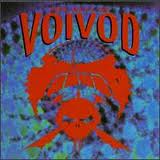
2013-10SOUNDTRACK: VOIVOD-The Best of Voivod (1992).

bestvoivodMost Best of records promise you a selection of popular songs from a band.  Voivod never really had any popular songs, so this is an interesting choice to start with.  This may also be the only Best of compilation of a band where people who like some of the songs almost assuredly will not like other songs.

As my posts about the band have indicated, Voivod changed drastically over their first six records (which is the  period this collection covers).  And so in twelve tracks and 50 some minutes you get the very diverse history of this very unusual band.  I’m not going to talk about each track (already done that), but I will list the songs

  • Voivod [War and Pain] classic screaming metal.

  • Ripping Headaches [Rrröööaaarrr] brutal, but I must say sounds a ton better than the original CD.  I wonder if this was remastered for the compilation).

  • Korgull the Exterminator [Rrröööaaarrr] hard to believe they used two songs from this album.

  • Tornado [Killing Technology] heavy but quite catchy.

  • Ravenous Medicine [Killing Technology] signs of complexity enter the heaviness.

  • Cockroaches [EP] a strange inclusion, almost a rarity.

  • Tribal Convictions [Dimension Hätross] very complex with some heaviness.

  • Psychic Vacuum  [Dimension Hätross] I’m surprised they didn’t pick other songs though from this album.

  • Astronomy Domine [Nothingface] their hit.

  • The Unknown Knows [Nothingface] very hard to choose just two songs from this masterpiece.

  • Panorama [Angel Rat] Their newest single and quite a departure from everything that has come before.

  • The Prow [Angel Rat] their prettiest number ever.  If you buy this CD for this song you’ll hate the early stuff.

Although Voivod fans (like Dave Grohl)

are diehard, anyone who would buy only a Best of record from the band is sure to be disappointed. There are so many phases of the band and they are so radically different from “Voivod” to “The Prow” that it’s almost not even the same band.  I’m very curious as to what sales for this album were like.  (Even the cover isn’t that inspired)

[READ: September 2013] The Walrus: Tenth Anniversary Issue

It’s hard for me to believe that The Walrus has been around for ten years (even they seem a bit surprised).  I still remember hearing about the magazine on Book TV from some Canadian channel that I just happened upon.

When I heard about it The Walrus seemed interesting–kind of like Harper’s and elements of the New Yorker but all about Canada.  I’ve been a Canuckophile for decades now, so it seemed like an interesting prospect.  And over the ten years of the magazine, while I haven’t written about every issue, I have read every article.  I have written about all of the short stories that they’ve published.

This issue eschews some of my favorite elements (the short articles in the front and the arts section in the back), but they make up for it with an oversized issue (twice as long as usual and the articles are all packed with content) and some fascinating articles.

And while there are none of the short articles from the front, there are “Time Capsules,” one page articles about things that have happened in the last ten years: The iPhone, Sports Concussions, Armed Drones, The Residential School Apology, Justin Bieber, Foodies, Hand Sanitizer and Cyberbullying.  It’s interesting to read about these phenomena from a slightly different perspective.  We know that Canada and the U.S. share many similarities but there are, at heart some core differences.  And it’s these differences that make you rethink a subject.  (more…)

Read Full Post »

julySOUNDTRACK: PEARL JAM-“Mind Your Manners” (2013).

mannersAfter Eddie Vedder released an album of ukulele songs, it seemed like perhaps he was putting aside his heavier ways.  Well, nothing could be further from the truth.

This new song (album out in October) plays up their faster side, with short fast chords (think “Spin the Black Circle”).  It starts out heavy, and when the verse proper starts the band really kicks in.  The chords are heavy, but the bridge is fairly light and breezy.

The end features some chanted vocals (seldom used by Pearl Jam but effective here).  But to me the real standout moment comes from Mike McCready’s solo.  It is noisy and weird–he seems to be experimenting with all kinds of sounds in these 20 seconds or so.  It’s unexpected from him and very interesting.

I do not like how the song ends, which seems almost abrupt by accident.  Perhaps the released version gets cut off a few seconds early.  Nevertheless, I’m pretty excited about the new album (and tour).

[READ: July 11, 2013] “Other Types of Poison”

This is credited as memoir.  It is three short “stories.”  All of which I enjoyed immensely–but especially the first.

The first is called The Ink.  In this tale, Makkai’s  ancestors were hiding out in a little lake house when soldiers came to the door.  I loved that no one can remember the details of whether the soldiers were German or Russian or if that even mattered.  The important part is that the soldiers hung around and made themselves at home.  (The old lady was too old and scary to try anything with and the boy was too young).

Then they ran out of booze and one of the soldiers, noticing an inkwell, said he would drink that.  The inkwell was a gift to the boy, because the old woman was a writer.  And although the cost was dear, the soldier drank the whole thing.  Then he stumbled out of the house, face completely blackened.  From then on, the old woman claimed that had she killed a soldier with ink.

I love Makkai’s ending: She says she doesn’t of the details are correct, but “If this were your family legacy—this ridiculous assertion of the might and violence o ink , this blatant and beautiful falsehood—could you change it? Would you dare?” (more…)

Read Full Post »

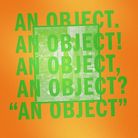
hpl;oveSOUNDTRACK: NO AGE-“No Ground” (2013).

An ObjectI’ve been hearing a lot about No Age lately, but I don’t really know much about them.  I keep thinking they are a different, older band (although I can’t think of which one for some reason).  Anyhow, this new song from their new album is a simple, propulsive rocker.  It starts out with some echoing guitar notes until the fast, fast bass comes in.

It’s followed by some quickly strummed guitars and low sung, almost chanted vocals.

The song feels like it builds speed throughout, although I don’t think it actually does.  I didn’t realize that there were only two guys in the band—and that explains their limited musical sound.  But unlike a number of other two person bands that I’ve really enjoyed as of late, this song feels a little flat.  There is some appeal to it, but overall I want a little bit more.

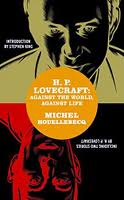
[READ: June 16, 2013] H.P. Lovecraft: Against the World, Against Life

I have been “into” H.P. Lovecraft for about thirty years.  Interestingly, I had never read anything by him in that time.  I got into him via Dungeons and Dragons which had a whole selection of monsters from the Cthulhu mythos.  And then Metallica did a song called “The Call of Cthulhu” and even though I bought several of his paperback collections and proudly displayed them, I never read them.  When McSweeney’s imprint Believer Books published this little title by the practically Lovecraftianly named Michel Houellebecq, I was excited to read it, too (because at this time I had assumed that I had actually read some Lovecraft).  But like my Lovecraft books, it languished on the shelf.

Until now.

I decided that it was time to finish off some of those McSweeney’s books that have been sitting on my shelf for years.  And this was on the top of my list. (more…)

Read Full Post »

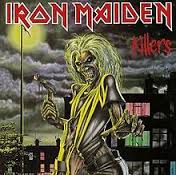
43SOUNDTRACK: IRON MAIDEN-Killers (1981).

killersKillers picks up right where Iron Maiden left off–indeed many of these songs were written at the same time as the first album.  The difference is new guitarist Adrian Smith.

It opens with the great (but simple) instrumental “Ides of March” which segues into the blistering “Wrathchild.”  And it’s on this song that you can tell some of the rawness has been removed from the recording.  The guitars sound a wee bit more polished.

And you can tell the band are getting a bit more symphonic with the bass harmonics that intro the wonderful “Murders in the Rue Morgue” a song that feels long but actually isn’t.  It has several parts that all seem to signal the end until Clive Burrs drums come pounding in to restart the song.  Very cool.  “Another Life” is another fast punky song, and while I like it, it is probably one of the weaker songs on the album.  But that’s okay because it is followed by one of Maidens greatest instrumentals–“Genghis Khan” which has beautiful symphonic soaring solos over a cool propulsive beat.

“Innocent Exile” opens with another great noisy slappy bass riff that only Harris was doing at the time.  “Killers” is a classic track: fast and yet complex, with a very cool riff.   “Twilight Zone” sees Di’Anno reaching for higher more operatic notes.  He makes it, but you can just tell that the band needs more from their vocalist.  “Prodigal Son” opens with a pretty acoustic guitar intro.  I used to like this song quite a bit (whatever Lamia is), but I can see that it’s actually quite long and meandering (maybe this one is more like “War Pigs”).  It’s pretty but could probably be a bit shorter.  “Purgatory” sounds like track off the first album–fast raw and punky with screaming riffs.  “Drifter” ends the disc with a cool bass line and some more thrashing.  It’s a solid ending for an album that overall works pretty well, but which kind of shows that the band had to either do something big on the next album or get stuck in a rut.

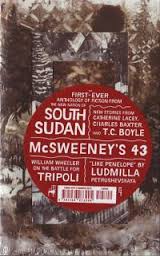
[READ: June 1, 2013] McSweeney’s #43

And with this issue I am almost all caught up with my McSweeney’s.  More impressively, I read this one only a few days after receiving it!

This issues comes with two small books.  And each book has a very cool fold-out/die cut cover (which is rather hard to close and which I was sure would get caught and therefore ripped on something but which hasn’t yet).  The first is a standard collection of letters and stories and the second is a collection of fiction from South Sudan.  Jointly they are a great collection of fiction and nonfiction, another solid effort from McSweeney’s.

Letters (more…)

Read Full Post »

mystrugglSOUNDTRACK: TRICKY-“Christiansands” (1996).

christiansandsThis book is set in Kristiansands, and so naturally this song was ringing through my head the whole while I was reading it.  I’ve known this song for ages, but had no idea that Chirstiansands was an actual place in Norway.

This song is dark and tense.  Over a slinky beat, a spare guitar riff introduces Tricky’s voice as he rasps (his voice is slightly modified to give him a weird echo).  And while he’s reciting his verses, the gorgeous voice of Martina Topley-Bird, repeats what he’s saying in a whispered voice until she sings out the chorus “I met a Christian in Christiansands.”

The verses repeat with Tricky emphasizing, “master your language and in the meantime I create my own.  It means we’ll manage.”

I honestly don’t know what the song is about, and it feels like it never properly ends–that riff, at once menacing and gripping never seems to conclude.  It’s a masterful track and hard to forget once you’ve heard it.

[READ: May 11, 2013] My Struggle Book One

I read an excerpt of Book Two from this series in Harper’s.  And despite the fact that nothing really happened in it, I was drawn in by the writing style.  This first novel is very similar in that not a lot happens but the voice is very captivating.  The translation is by Don Bartlett and it is fantastic–I can only assume the original Norwegian is just as compelling.  So, despite the fact that this autobiographical series contain six books (six!) and totals over 4,000 pages (how could this be if Book one is a mere 400?  Books 4-6 are over 1,000 pages each), I decided to give it a try.  (Incidentally, Book Two has just been translated into English this month).

This series has caused some controversy because it is given the same title as Hitler’s Mein Kampf (Min Kamp in Norwegian), and also because he says some pretty means stuff about people who are still alive (like his ex-wife).  Although there isn’t much of that in Book One.

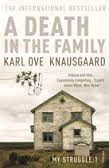
death in the familyIndeed, Book One basically talks about two things–a New Year’s Eve party when Karl Ove was youngish and, as the bracketed title indicates, the death of his father.  (The title A Death in the Family is the same book as My Struggle Book One–from a different publisher.  It has a totally different cover but is the same translation.  I don’t quite get that).  But indeed, these two events take 430 pages to write about.

How is this possible?  Because Karl Ove writes about every single detail.  (I assume this why the books are considered novels, because there is no way he could remember so much detail about every event).  I’m going to quote a lengthy section from a New Yorker review (by James Wood) because he really captures the feeling of reading the book:

There is a flatness and a prolixity to the prose; the long sentences have about them an almost careless avant-gardism, with their conversational additions and splayed run-ons. The writer seems not to be selecting or shaping anything, or even pausing to draw breath….  There is something ceaselessly compelling about Knausgaard’s book: even when I was bored, I was interested. This striking readability has something to do with the unconventionality of “My Struggle.” It looks, at first sight, familiar enough: one of those highly personal modern or postmodern works, narrated by a writer, usually having the form if not the veracity of memoir and thus plotted somewhat accidentally, concerned with the writing of a book that turns out to be the text we are reading.  But there is also a simplicity, an openness, and an innocence in his relation to life, and thus in his relation to the reader. Where many contemporary writers would reflexively turn to irony, Knausgaard is intense and utterly honest, unafraid to voice universal anxieties, unafraid to appear naïve or awkward. Although his sentences are long and loose, they are not cutely or aimlessly digressive: truth is repeatedly being struck at, not chatted up.

That idea of being bored but interested is really right on–and it may sound like a bad thing, but it’s not.  You can read along thinking that there’s no way he is going to give so much unimportant detail.  But you get this description of drinking a cup of tea: (more…)

Read Full Post »

bartelbySOUNDTRACKOS MUTANTES-” Picadilly Willie” (2013).

Iosmut enjoyed this album so much (thanks NPR for the stream) that I had to talk about this song and how radically different it was from yesterday’s track.  “Picadilly Willie” is this wonderful old-sounding rock song.  It’s got a very classic rock riff, but there’s something slightly off-kilter which makes it sounds more like Frank Zappa classic than radio classic.  And when the vocals come in (with a sinister laugh) it sounds more like Mr Bungle than anything else (I wouldn’t be surprised if Mike Patton was a fan of Os Mutantes).

The song ends with what sounds to me like Middle Eastern sitar music and echoed chants of “Bra-zil!”

And these are just two of the styles of music on this wonderfully wild and diverse CD.  I can’t wait for its release.

[READ: April 22, 2013] Bartelby & Co.

I read about this book in the Bolaño interview book.  Vila-Matas was one of many authors that Bolaño highly recommended–this book in particular.  And, it was one of the few books on that extensive list that has been translated into English.

This book follows in the rich tradition of books that are more or less lists about people and not really novels at all. (This seems like a peculiarly Latin American pastime, at least in my experience, as there are nearly a half dozen books that seem to do this, including several by Bolaño).

The key to this book is in the title: Bartelby.  The narrator is a hunchbacked loner, and he decides to catalog all of the instances of writers who have in the grand tradition of Herman Melville’s Bartelby the Scrivener said “no, I would prefer not to” write anymore.  And so this book becomes a series of notes without a text.  The glorious list includes many famous and not so famous writers (the most famous being Salinger) who whether famous or not, decided to write no more.  And thus we have 86 “sections” in which the narrator writes about writers who stopped writing.  For most of the he gives their reason for no longer writing, for others he simply likes talking about how they stopped writing or what their circumstances were before they stopped. (more…)

Read Full Post »

bolano

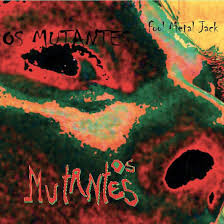
SOUNDTRACK: OS MUTANTES-“Fool Metal Jack” (2013).

Iosmut have known about Os Mutantes for years.  I never knew anything about them (and never really understood their name–although now that I have been working with Brazilian books at work I realize that their name is Portuguese for The Mutants (it was the Os that always threw me off).  I had no idea that a) they’d been around since the 60s and were part of the psychedelic scene or b) that they were still around (after some breakups and with a largely new lineup) or c) that they sang in English (which they do on several songs on this album) or d) that their new album kicked so much ass.

The album is called Fool Metal Jack and it is a fantastic mixture of fast heavy rock, Brazilian traditional sounds, what I assume are Native Brazilian chants and a heavy dose of weirdness.  All wrapped up in an anti-war stance, like on this track “Fool Metal Jack.”

A creepy, distorted  bassline introduces this song which sounds like the guy from Gogol Bordello singing a Tom Waits march.  It’s about a soldier in the middle of a war.  The bridge means more voices come in, bringing in an even more disorienting sound.  And the chorus chanted “Yes.  No More War” completes the song.  By the time the wailing guitar solo comes in the chants of “This is the war of hell” have even more impact.

This stomping song was a great introduction to this band who I now need to explore further.

[READ: April 18. 2013] The Last Interview

I enjoyed Kurt Vonnegut’s “Last Interview” and since I had always intended to read Bolaño’s I was delighted to see that our library had it.  Bolaño is a fascinating interview subject because you never really know what he is going to say.  There are even serious questions about the veracity of his life story which many people believe he fabricated for more dramatic effect.

But the one thing that is absolutely consistent about Bolaño is that he always praises writers whom he respects (and will trash those he doesn’t, although that seems to come more from the interviewer’s  instigation (not that he needs a lot).    So the last interview that he did is the one from Mexican Playboy which has been collected in Between Parentheses.  But the other three are earlier and, it seems, a little more “truthful” or at least less naughty-seeming.

What’s fascinating about this book is that the introduction by Marcela Valdes (“Alone Among the Ghosts”) is over 30 pages long!  The article originally appeared in The Nation on Dec 8, 2008 (read it here).  As such it’s not an introduction to this book, it’s introduction for English readers to Bolaño circa 2666.  And it’s a great read.  It is primarily about 2666, which Valdes has read many times.  She goes into interesting depth about the story but mostly she relates it to Bolaño’s own experiences while writing the book.  It focuses especially on his research about the real murders.  His interest was genuine and he sought help from a reporter who was doing genuinely decent work (ie. not accepting the word of the state about what was going on).

Bolaño has said he wished he was a detective rather than a writer, which explains The Savage Detectives and Woes of the True Policeman.  But Valdes also points out how almost all of his shorter novels have some kind of detective work involved–seeking someone who is lost or hiding.  The article was really great and is worth a read for anyone interested in Bolaño, whether you have read him or not. (more…)

Read Full Post »

[LISTENED TO: March 30, 2013] Knucklehead

knuckleheadWe were looking for a good audio book for the kids and I stumbled upon this, an autobiography from Jon Scieszka.  We love Scieszka’s books (Stinky Cheese Man and the Time Warp Trio among others) and figured that this autobiography had to be good for a few laughs too.  And we were very much correct.

This is a funny book about what it was like to grow up as the second oldest of six brothers in Flint, Michigan.  It’s not really about being an author (although he does talk about where he gets ideas), it’s really about his childhood.  Most of the anecdotes in the book are things that he and his brothers got up to and how his father used to affectionately call all six of them knuckleheads.

The book has almost 40 chapters, all of them very short (as befitting the author of books for reluctant readers).  And each one has a pretty good set up and punchline.  Like how the older brothers used to tease the youngest ones or how Jon and his brother burnt a dry cleaning bag because it dropped little plastic bombs onto a battlefield–in the basement.  Or how he and his brother peed on the space heater because they thought that would put it out (that seems suspect, but it could have happened. (more…)

Read Full Post »

vonlastintSOUNDTRACKSURFER BLOOD-“Demon Dance” (Live at SXSW, March 27, 2013).

surfer blood

I’ve liked Surfer Blood since I first heard them.  They write catchy, mostly short, poppy songs.  And usually after a few listens, the hooks really grab you.  The strange thing about the band is that the hooks aren’t always readily apparent, which makes their songs sound kind of samey sometimes.

Of course, samey isn’t a bad thing, necessarily.  Surfer Blood is quite distinctive and I tend to enjoy everything they do.  This new song sounds like their other stuff, which is fine.  But the most distinctive thing about the band of probably their singer who sounds like a less-affected Morrissey.

Having also listened to the song from the album I can say that the singer is far harder to understand live, so maybe live is not the best way to hear a new song from them, but for an old favorite, Surfer Blood has a great energy live.

Watch the show here and hear the studio version here.

[READ: March 27, 2013] The Last Interview and Other Conversations

Melville House has published a number of these “Last Interview” books, and as a completist I feel compelled to read them.  I have read criticisms of the series primarily because what the books are are collections of interviews including the last interview that the writer gave.  They don’t have anything new or proprietary.  The last interview just happens to be the last one he gave.   So it seems a little disingenuous, but is not technically wrong.

There’s so far five books in the series, and I figured I’d read at least three (Vonnegut, David Foster Wallace and Roberto Bolaño–the other two turned out to be Jorge Luis Borges–who I would be interested in reading about and Jacques Derrida (!) who I have always loved–I guess this series was tailor made for me).

At any rate, these interviews are from various times and locations in Vonnegut’s career.  There are six in total.  I don’t know if the titles they give here were the titles in the original publications but here’s what’s inside:

  • “Kurt Vonnegut: The Art of Fiction” from The Paris Review, Spring 1977 (by David Hayman, David Michaelis, George Plimpton, Richard Rhodes)
  • “There Must be More to Love Than Death” from The Nation, August 1980 (by Robert K. Musil)
  • “The Joe & Kurt Show” from Playboy, May 1982 (by Joseph Heller and Carole Mallory)
  • “The Melancholia of Everything Completed” from Stop Smiling, August 2006 (by J.C. Gabel)
  • “God Bless You, Mr. Vonnegut” from U.S. Airways Magazine (!!!), June 2007 (by J. Rentilly)
  • “The Last Interview” from In These Times May 9, 2007 (by Heather Augustyn) (more…)

Read Full Post »

« Newer Posts - Older Posts »