 SOUNDTRACK: ATERCIOPELADOS-Live at Bumbershoot, September 5, 2010 (2010).
 A rock en Español band who have returned after a brief hiatus, Aterciopelados have changed a bit since their early more punk days. Their last album Rio came out in 2008, I knew them back in the mid nineties. This brief set (7 songs) at Bumbershoot showcases their more mellow tracks (there’s pan pipes) on “El Estuche.” The Colombian band has always been political, but it seems like they are much more explicit about it on this record. As singer Andrea Echeverri introduces a number of song, she talks about how they are “important” and are meant to bring attention to the troubles of Colombia.
“Ataque de Risa” has a wonderfully catchy melody (and I believe she says her daughter is singing with them on it). The song “Bandera” (which means “Flag”) is pointedly directed at Arizona’s anti-immigrant law. She introduces it as saying that all peoples are together under a rainbow flag. It’s a more angry sound for Echeverri’s voice, but she does a great job. Her voice is really impressive. “Rompe Cabezas” has a rollicking chorus that’s a lot of fun and “Bolero Falaz” ends the set with a very cool and catchy song.
Here’s a video of El Estcuhe
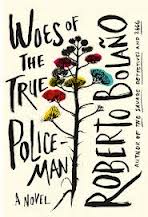
[READ: December 2, 2012] Woes of the True Policeman
This is yet another unfinished novel from Roberto Bolaño. Bolaño knew that he was dying and he created a lot of work in anticipation of his legacy. The afterword of the novel says that they found all of the various parts of this novel in various locations among his work–hand written and computer drafted. And they all mention this titles, so they are pretty certain about the order and that it is as finished as it could be.
Unlike some of his other posthumous releases, this one must be deemed pretty significant since it was published by Farrar, Straus and Giroux instead of New Directions (publisher of most of Roberto Bolaño’s other smaller works).
And really what it reads like is a kind of prelude to 2666. For this is the same Amalfitano as in 2666. But it is his story from before he moves to Sonora, Mexico–before all of the murders started. Indeed, there are parts of 2666 which make Amalfitano’s past seem like it is unknown but this story fills in the gaps quite well. One of the details in 2666 is that Amalfitano’s teaching contract had expired at the University of Barcelona, although this book gives the behind the scenes reason why it expired.
Bolaño has many many stories in which he explores the past of a character from a different story. Typically, it is a novella in which a minor character from a bigger novel gets his or her own story told. And that seems to be the case with this as well.
The story is set up in five sections (just like 2666). Section I of this story (part of which was as excerpted in Harper’s recently) is called The Fall of the Berlin Wall and tells how Amalfitano, a professor, fell for a young poet named Padilla. He wound up having an affair with him, which ended his career (I’m unclear whether it is because he is a student or because the affair was homosexual that the University wanted him out). Amalfitano had never had homosexual desires before, and he was a proud husband and father, but he found that Padilla really affected him.
And so Amalfitano and Rosa, his daughter, moved to Sonora and the only school that would have him. (more…)





















 I Just Read About That...