Feeds:
Posts
Comments

Archive for the ‘Thomas Pynchon’ Category

SOUNDTRACK: ARMY OF LOVERS-Massive Luxury Overdose (1991).

The only way that I, and I suspect any American, knows this band is because they were  mocked on Beavis and Butthead for their video “Crucified.”  In the video, which I have thoughtfully tacked on at the end here,  the three members of the  band are dressed up like extras from a  Duran Duran by way of Adam and the Ants music video (and maybe that’s not over the top enough).  This, by the way, seems to be their regular costumery (a French-seeming design despite their Swedish origins).

Beavis and Butthead cheer for the (impressive) cleavage and then gag at the lead singer’s  largely naked hairy body dancing in a bathtub.  It’s  pretty confusing.  But it’s also super catchy in a really over the top Europop way.

I have learned over the years that while I don’t really like pop music, I like Europpop a lot more than Ameripop.   It’s much crazier and outlandish, hence: Army of Lovers.

“Crucified” is a really fun, over the top bit of nonsense.  The chorus is incredibly catchy with a wonderful choral voice singing, and the verses are catchy too, they are spoken and in part French.   It’s good campy fun.

Having said that, the rest of the album is a mix of songs that aren’t quite as good as “Crucified” and songs that are just really bad.

The opening of “Candyman Messiah” is dreadful.  “Obsession” features a very mousey-voiced guy singing.  It’s a change and an interesting one, although like a lot of Europop, there’s not a lot of substance to it.

But it’s clear that the Army are not taking themselves seriously, “Dynasty of Planet Chromada” anyone.  The band has some really catchy choruses and I’ll bet it ‘s a hell of a lot of fun to dance to.  Especially if you have a pencil thin mustache.

Believe it or not, Army of Lovers were not just a one-hit wonder .  They released four albums.  And although their website seems to be updated often, I’m fairly certain the band broke up in 1995.  Well, why should that stop anyone?

[READ: Week of March 5, 2012] Gravity’s Rainbow Sections 1.19-2.3

I postulated that Section 1 (called Beyond the Zero) was a mostly expository set up (in one way or another).  And that seems to have been true.  Yes there was some plot development, but it was a lot of setting up new people.  New people are introduced in Section 2, but it is primarily about Slothrop (so far).  These first three sections don’t do a lot to advance the “plot” (I don’t really know what the plot is exactly but it must have something t o do with the war, right?)  Section 2 zooms in on Slothrop.  And while we do learn about the monitoring that goes on with him, for me, Section 2 is all about providing character depth and sympathy for Slothrop.

I found this week’s read to be the easiest so far, with only a few moments of stream of consciousness or reverie to get lost in.   And there were a lot of farcical moments–moments that were practically like a sitcom, which were fun to read and enjoyably insubstantial.

Towards the end of the reading, when Katje ultimately leaves Slothrop, she uses a metaphor comparing the rockets to sex.  And I wondered if maybe that’s why there is so much sex in the book–is it a physical manifestation of the theoretical idea?  Or does he just like using the word cock?

(more…)

Read Full Post »

SOUNDTRACK: ROCKWELL KNUCKLES-You’re Fucking Out I’m Fucking In (2011).

I downloaded this disc a while ago because I really liked “Silly Human

I listened to it again recently and realized just how much I like the whole disc.  Rockwell Knuckles has a great delivery style—a basso profundo voice—and a great sense of melody both in his delivery and his backing music.  He captures the best of Chuck D and Ice T.  “Bullet Train Army” has such a cool melody line—and the fact that he raps along with it is fantastic.  Apparently the Bullet Train Army is his posse or something, because it appears a lot on the disc.

“Silly Human” is a fantastic song—a wispy futuristic keyboard riff fizzes away behind Rockwell’s super fast delivery and funny (but not really) lyrics.  The chorus is delivered super quickly in a cool descending melody line.  And I love that someone in the background is shouting Yes Yes! YES! as he deliveries his lines.  It reminds me in strange way of The Flaming Lips.  “Play Catch” shows off his diversity of styles with this more gentle song.  I like the way the verses end with a repeated word which seems like it’s going faster because the beasts speed up,  It’s a cool trick.

“Baking Soda” has a guest rapper (I really don’t like guest rappers, I’m here for Rockwell not Tef Poe, who immediately lost my respect by having his first rhyme end with bitch—lazy!).  I don’t really care for the music behind this one either—cheesy sax and horns.   It’s made up for with “Point of No Return.”  This song has a sung chorus with a weird sci-fi-sounding melody and some great lyrics.  I haven’t really mentioned the lyrics yet but they stand out here “the early bird catches the worm, but the first sponge catches the germs) and a reference to Sojourner Truth.

The lyrics are even better on “Unstoppable” (which has a cool synthy sound over the chorus): “My competition ‘s delayed I’m rocking digital/
Ive been around the world in a day not in the physical/Artistic freedom in what I say y’all are to literal.”

The simple riff behind “Intergalactic” is also cool.  At first I wasn’t sold on Theresa Payne’s backing vocals but I think it works quite well.  I particularly love the chorus of “Supercalifragilisticexpiala-futuristic”

There’s another great delivery melody on “Motto of Today” with more cool sci-fi backing music.  “You Got It” has the great fast beats and delivery that I love out of Atlanta, even though Rockwell is from St. Louis.  There’s even a cool binary joke in the lyrics (1001001).  Guest rapper Vandalyzm fares better, although there’s more curses than actual lyrics in his verse, I think.

“Nomanisan Island” also features Tef Poe, but I like him better on this track.  But maybe that’s because the chorus is great: “No man is an island and we are never stranded”  I’m not sure though that Tef Poe should be singing the line “black tea party, we’re coming to impeach” with Obama in the white house.

“Controlled” I assume has a sample for a chorus, it slows things down nicely and the sound of the drums is fantastic.  I’m partial to the lines “Stone cold like Medusa” and  “Shows about to start, I don’t know when it will end, son/ Puppet on a string controlled by Jim Henson” (whatever that means, I like it).

“Every Angle” has a groovy chorus that I like despite itself.  Rockwell makes it flow wonderfully.  And the final track, “Natural Born Leader” opens with a simple rocking guitar riff.  When the lyrics kick in, the song soars with 70s keyboards and big guitars.

This album is really fantastic.  And while there are plenty of deserving artists out there, Rockwell Knuckles is amazing and should be huge.  Don’t be put off by the album title or the cover, this album is more about melody than a cursing.

You can download the whole album here for free.

Oh, and the reason I chose this is because of a note I had written in the margins of GR, which I thought had read No Man is an Island, but which didn’t.  Oops.

[READ: Week of February 27] Gravity’s Rainbow 1.13-1.18

I found a few of this week’s sections to be more challenging to get through.  There are a lot of long passages that are meandering–often with an unclear narrator (although the narrator usually becomes apparent by the end).  During these section, it feels like the book is just drifting of into a reverie for a while before snapping out of it and getting back to the business at hand.  And that seem apt given all of the crazy stuff that happens in the book (all of the mental/psychological ideas).

After reading a few of the posts at Infinite Zombies this week, I have new eyes for the book.  When I first read all of the sex in the book, I thought again about Joyce’s Ulysses and all of the sex that he described (shockingly for the time) and how modern writers seem to revel in writing about sex–not pornographically, just “real.”  But now, after reading Christine’s post, I had to rethink this attitude on sex.  I’ve been surprised by Pynchon’s frequent use of the words “cock” and “cunt” as anatomical names.  “Cock” in particular is a word I don’t hear used all that often in fiction and it has (to my ear) a kind of crass/vulgar connotation. And what more needs to be said about “cunt.”  I wondered if this was a Pynchon thing or a 70s thing or an I’m-too-uptight thing, but in Christine’s post she writes: “One of the things I most loathe about the other Pynchon books I’ve read is the latent, creepy, old-man sex fetish” and “the constant phallic status updates (noted in my paperback as I.P.R.s [infantile penis reference]” (which is hilarious, by the way).  This has made me even more aware of all the sex in the book–although to what end I’m not sure yet.

Jeff’s post at Infinite Zombies focuses on Roger and Jessica (I know that wasn’t the point of the post, but the mind takes what it will) and makes me think of Roger as more of a protagonist of the story.  Even more than Pirate (who, coming first, I assumed was the focus).  And  this week’s reading reveals more importance for Roger.

So on to the read: (more…)

Read Full Post »

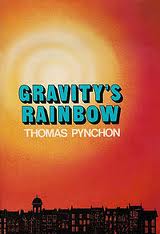
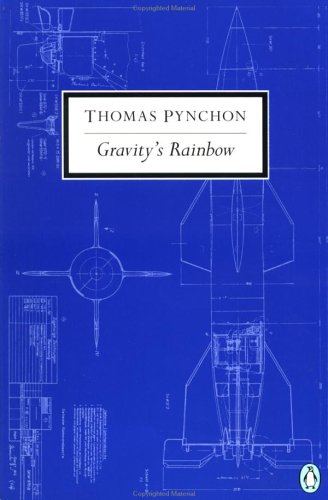
The edition I’m using.

SOUNDTRACK: KINCH-The Incandenza (2011).

I like this album more than I have any right to like an album that I bought purely for the name.  The album name is The Incandenza which is named after the main family in David Foster Wallace’s Infinite Jest.  The band name is Kinch which is named after what Buck Mulligan calls Stephen Dedalus in The Odyssey. That’s pretty high literary tributes.  So who cared if the music sucked.  But the thing is is that it doesn’t.  And I’ve been having a hard time writing about it because I like it so much and yet I don’t know what it is that grips me about the disc so intensely.  It’s not staggeringly original.  It’s more of an alt rock take on classic rock.  But even that doesn’t work because they use pianos prominently and the classic rock is more sound styles than sounds themselves.  Yet at the same time I hear a number of different band in the mix (and only a few of them use pianos).

“When I was Young” opens the disc with a great loud piano sound and a strong vocal line.  When the chorus comes in, the song picks up tempo and strings add intensity to what is already a catchy song.

“Evelyn” has a great stomping rock guitar sound.  At two and half minutes, it’s an amazing potential single with, again, a great chorus.  “45 Minutes” opens with screaming guitars and a great bass line that sounds like a classic song from The Jam.  “That’s Just the Mess That We’re In” features some horns that accentuate the chorus nicely.

“Once I was a Mainsail” starts like a pretty normal piano based rocker but the screaming chorus adds a great punk feel to the song.  “Tea Party Bomba” unravels its beginning into a great prog rock riff, with shades of Queen via Muse everywhere.  The same is true in “Bye Bye Bye Bye” which has a bombastic bridge (really showcasing the singer’s voice) until we get to the great shift to the quiet “I don’t think he ever knew.”  It’s a wonderful change of pace. It’s followed by the punky buzzy guitars and a simple melody of “Ocean”

“VHS” is another song that is just over 2 and a half minutes.  It begins quietly and (again) simply, this time with some gentle keyboard washes as the song build and builds adding drums and guitars.  It bleeds into “The Incandenza,” the longest song on the disc at just over 5 minutes.  It never feels like it’s 5 minutes long–another great bride with more sing along bits (and a great tempo change after the bridge) and a guitar and whistling solo make the song ever-interesting.  even if I don’t think it has anything to do with the Infinite Jest.

Kinch have a few other short albums out and I’m looking to get them as well, but in the meantime all of these great music can be streamed at their bandcamp site.

[READ: Week of February 20] Gravity’s Rainbow 1.1-1.12

This is my first time reading Gravity’s Rainbow.  And I know literally nothing about it.   I have always felt like I should read it (being a good modernist and a fan of Joyce and David Foster Wallace), but I never bothered to find out even a basic plot.  And it’s kind of fun going into this thing completely blind.  I had no idea even that it was set in England just Post WWII (1945).  So that was a surprise.  [Interestingly, having just read The Apothecary which was set in London right after WWII, it is cool to read another story set just around WWII and to hear similar things about the living conditions.]

But back to GR.  The only thing I have read before writing this post (aside from a few thoughts over at Infinite Zombies) was a comment (again, on IZ) that you will be confused while reading this book and that’s okay.  Phew.

Having said that I didn’t find it as confusing as I imagined.  (I’ve been intimidated by reading this book for fear of its difficulty).  I admit there are several scenes with pronouns that are somewhat elusive to me, and there’s a few other scenes where characters seem to be there without being fully introduced until later, but overall it’s not that bad.

The first section of the book seems like a lot of exposition–good, thorough exposition, which is also funny—but by section 1.12 we’re still meeting new characters.  It feels like serious plot things will happen later.   The book opens with a more or less famous line (Okay, I knew about that line before reading the book, but that doesn’t give any context).

And so, the screaming comes across the sky and the city is in the midst of an evacuation, but it is too late.  At least for some.  And the opening is a little confusing, as an evacuation might be.  It certainly seems like the end of everything, but then we also find out that some people are sleeping through it.  That this bomb is a localized attack.

Section 1.1 also introduces us to Lt. Capt. Geoffrey (“Pirate”) Prentice.  Pirate is just waking up when he notices that his flatmate Teddy Bloat is about to fall off of the minstrels’ gallery but Pirate manages to shove a cot in the way just as Teddy falls off the balcony.  Pirate is famous for his Banana Breakfasts (he’s the only person in England who has bananas).  And at this point the story settles down into a rather enjoyable domestic scene.  I mention in a post at Infinite Zombies that this opening scene of Pirate on the roof is reminiscent of the opening scene of Ulysses (I won’t go into that here).

The next scene is a raucous affair with a bunch of locals clamoring for their Breakfast plates.  The scene feels like a college dorm, although the participants are (I assume) older—Pirate himself is in his early 40s.

It’s time to mention Pynchon’s astonishing character names. I love them all, they are so weird and evocative without (always) being obvious.  So Teddy Bloat is a good name, but what about Coryson Throsp, the designer of their building.  And with the Breakfast comes names out of the woodwork:  Osbie Feel, Bartley Gobbitch, DeCoverley Fox, Maurice “Saxophone” Reed, Joaquin Stick.  I’m not going to go speculating about names in these posts, but I am sure going to highlight my favorites. (more…)

Read Full Post »

[TO READ: Through May 7, 2012] Gravity’s Rainbow

Starting next week, I’m doing weekly posts about Gravity’s Rainbow.

Date Part. Section
Feb. 27 1.12
March 5 1.18
March 12 2.3
March 19 2.8
March 26 3.5
April 2 3.10
April 9 3.15
April 16 3.24
April 23 3.32
April 30 4.6
May 7 4.12

I’ve been meaning to read more Thomas Pynchon for years, and Gravity’s Rainbow always seemed like the place to start.  I’ve always felt daunted by the task (which is funny since I loved Infinite Jest (which is a lot bigger), but I have this idea that Pynchon is a lot harder to digest.

I will soon find out because the great folks over at Infinite Zombies are running a Gravity’s rainbow read.  And I’m in!

Unlike with some other books where I contributed to the main page, I won’t have much to say over at the IZ site.  I don’t even really have a sense for how much I’ll be able to integrate with IZ.  This is primarily because my work schedule doesn’t permit as much free blog time.  It’s also because I don’t really know what I’m in for.  But I will be posting weekly updates here. (more…)

Read Full Post »

SOUNDTRACKPEARL JAM-Austin City Limits (2009).

Pearl Jam records (and sells) most of their shows and they occasionally videotape them as well.  But they don’t do TV all that much (excepting the recent Late Late Show episodes).  There seemed to be something special, or at least different, about Pearl Jam on Austin City Limits.  Think of it almost like Unplugged Updated.

It opens slow with Eddie on an acoustic guitar and strings behind him.  In fact, the whole set seems less heavy than many of their sets.  But that’s not to say that the band doesn’t rock out, because they do.

The first six songs of the set come from Backspacer.   And then they bust out “Army Reserve” (which makes sense given who is in the audience, see below).  Then there’s a wonderfully raucous version of “Do the Evolution” (one of my favorite PJ songs).

After that riotous track, they bring the strings out for one more song.  It’s a rather funny little joke because it’s just the strings and Eddie on acoustic guitar playing “Lukin,” the 80-second song that is so fast you can barely hear the words.

For an extra treat, touring mate Ben Harper comes out to play slide guitar on “Red Mosquito” (which is always a treat).  And the set ends with an amazing version of “Porch” with a super long guitar solo in which Mike McCready really shows off his chops.  There’s even a moment where Mike and Stone are riffing off each other, classic rock style.
The set ends the Eddie talking about playing for the wounded veterans in the audience and how it was quite moving for him given all they have done for us.  Over the closing credits you see the band mingling with the veterans (including a guy who has lost a leg).  It’s all surprisingly touching for a rock show.

[READ: November 20, 2011] “Perchance to Dream”

A while back I read all of the Jonathan Franzen articles that were published in The New Yorker.  I thought I had read everything he’d published until I realized I had forgotten to read this piece (possibly his most famous) that was published in Harper’s.  It fits in well with this weekend’s theme because it was mentioned in Evan Hughes’ article that I talked about yesterday and because David Foster Wallace is mentioned in it.

As with most of Franzen’s non-fiction, it’s not easy to write about critically unless I want to argue with him, which I don’t necessarily want to do.  So instead, I’ll try to summarize.  Of course, this is a long and somewhat difficult article, so let’s see what we can do with it.

The first surreal thing is when you see the byline: “Jonathan Franzen is the author of two novels, The Twenty-Seventh City and Strong Motion, and is writing a third.”  It’s hard to imagine he got a huge article in Harper’s before he wrote The Corrections.

The second surreal thing comes in the text: It opens with “The country was preparing for war ecstatically, whipped on by William Safire (for whom Saddam Hussein was ‘this generation’s Hitler’) and George Bush, whose approval stood at 89 percent.”  And it is only a few paragraphs later when he mentions Patriot missiles that it clicked that this was written in 1996 and not 2001 and that he was talking about the 1991 Iraq invasion.  He mentions this as a prelude, saying that he was trying to sequester himself in order to start writing again.

Then he talks about Paula Fox’s novel Desperate Characters as a benchmark in terms of insight and personal conflict, even if it is so crazily outdated (that someone would throw an inkwell!).   He talks about this book quite a bit. I’m, not sure I found it compelling enough to want to read, but it’s always interesting to hear a fan write about a book I’ve never heard of.  He will return to this book throughout the essay. (more…)

Read Full Post »

SOUNDTRACK: THERAPY?-Lonely, Cryin’ Only [single] (1998).
I have a few Therapy? singles, but I wanted to mention this one specifically because it has two “new” recordings on it.  The first is of “Diane” the Hüsker Dü song that they first recorded on Infernal Love.  The second is of “Teethgrinder” their first “hit” off of Nurse.

I’m always intrigued when bands reinterpret their own songs, but I have to say that these two remakes are disappointing.  “Diane” is slowed down quite a lot and is very very crisp.  But it rather removes some of the creepiness of the original (and it’s a very creepy song).

As for “Teethgrinder,” the original of that song is stellar.  Any changes can only be for the worst.  And that’s the case here.  There’s so many great, weird sounds from the original (and those sounds make it wonderful) that without them, the song is fine, but nothing awesome.

Fortunately these tracks are b-sides and not really official or anything.

[READ: May 4, 2010] The Review of Contemporary Fiction

This is my first exposure to this journal.  The only reason I bought it was for the main (and only) title in the book–Damion Searls’ ; Or The Whale (which I’m reading now and will review shortly).

The rest of the journal contains Book Reviews and ads for forthcoming publications.  Since I didn’t plan to talk about that back matter in ; Or The Whale, I ‘ll do it here.

There are 22 book reviews in the back of this journal (which itself is 368 pages and only costs $8.00!).  Each book is not quite an academic book, but certainly not popular fiction or non-fiction.  There are a lot of French writers (either in translation, or of books about them).  There’s also some reviews of books that were long out of print (Robert Walser’s The Tanners and two works by Breyten Breytenbach).

The one surprise is the inclusion of a sort of meta-science fiction title by Christopher Miller called The Cardboard Universe.  It’s an encyclopedic guide to a sci-fi author whose initials are PKD. (Phoebus K. Dank–although Dank does have a fictional character called Phillip K. Dick).  It sounds great and yet it is an encyclopedic-style book of over 500 pages.  I’m just not sure if I’m up for it.

I’ll probably never read any of the books reviewed (I barely have time for the stuff I really want to read), but they all sounded interesting in one way or another.   For the entire list of books reviewed and more info on the journal, click here.

After the Book Reviews, there’s a Books Received list.  I assume this is all of the books that they were asked to review.  I wonder if they’ll review all of them?   The only author I recognized in the list was A.S. Byatt.

There’s then a few ads for like-minded publications: n+1, Chicago Review, Trickhouse, which looks fascinating, and Absinthe (new European writing).  There’s also a listing for new books from University of Delaware Press about Don DeLillo’s Underworld, Thomas Pynchons’ Mason & Dixon and William Gass’s The Tunnel (which I really ought to read as that book was a mystery to me).  There’s even critics I recognize in these essays!

The final pages are ads for forthcoming books from Dalkey Archive Press (the publishers of The Review of Contemporay Fiction).  I know Dalkey for a few obscure titles (mostly from Flann O’Brien, but others as well).  The books in this list are from the Dalkey Archive Scholarly Series and include titles like Phantasms of Matter in Gogol (and Gombrowicz); Reading Games: An Aesthetics of Play in Flann O’Brien, Samuel Beckett, and Georges Perec (which I admit sounds really interesting, but which I will likely never read).  The final title in the list is called Don’t Ever Get Famous: Essays on New York Writing after the New York School.  I’m curious about this one.  The book blurb mentions a number of writers that I’ve never heard of, so I can’t decide how to take that title.  I only wish the blurb explained it.

If I were more studious, if I worked in academics, if I didn’t read so many other things, I would definitely subscribe to this journal.  But as it stands, I’ll be just getting just this one (and maybe an occasional other one if the mood strikes me).

Read Full Post »

geniusSOUNDTRACK: CAPTAIN BEEFHEART AND HIS MAGIC BAND-Trout Mask Replica (1968).

trout–Fast and Bulbous.
–Bulbous yes, but also tapered.

This is an infamous disc in the history of music.  Which surprises me, as I can’t imagine many people have ever listened to it in its entirety.  I learned about it though my Frank Zappa fascination (he produced the record).

This disc also holds some kind of fascination for fiction writers.  I recall an episode of Beverly Hills 90210 (yes, of course I watched it) in which a new character was introduced.  He was a cool hip indie guy and I thought he was finally a cool character on a show I was getting rather sick of.  But because he was different, he was of course mocked.

He is first mocked for keeping his records in alphabetical order (and come on, anyone with more than 50 discs has to, it’s not a sign of weirdness, just common sense).  And second he was mocked for owning this album (picture a 90210er say Captain Beefheart?).  Of course, later on, he goes on to commit murder or arson or some other thing, thereby proving that alternative music is only for psychopaths, but heck, when has TV ever lied to us?

And now, this disc is a favorite of the hero of this book (which is what prompted me to bust out the disc and give it a listen).

And so wow, what a weird album.  Even 41 years later this record is still waaay out there.   The disc opens with “Frownland.”  And how to describe it?  The left speaker is playing sort of free jazz guitar chords.  The right speaker is playing a wild atonal guitar solo with a thumping bass.  In both speakers you get all over the place (but rather quiet) drums and the good Captain himself singing in a voice that could have inspired Tom Waits.  And the Captain’s song would be a very catchy melody if it had anything to do with what everyone else was playing (which it doesn’t).  And the whole things lasts for under 2 minutes.  There’s 28 songs not unlike this one, for a total of about 75 minutes.

Some other treats: a wild skronking horn solo on one song.  There’s also a song about the Holocaust.  And there’s even several music-free spoken word “poetry” readings.  And of course, the aforementioned bulbous quote.

Amidst this chaos are three songs that are more or less songs in the conventional sense, “Moonlight on Vermont,” “Veteran’s Day Poppy” and “Sugar ‘n Spikes,” meaning they have verses and choruses and whatnot.  But even those are still pretty far out and won’t be (and haven’t been) on the radio anytime soon.

Word is that this is a hugely influential disc and it lands on all kinds of Best Album Of All Time lists.  I can see that it has influenced a few people over the years (Devandra Banhart comes to mind), but still.  This is the kind of music you put on at a party when you want everyone to go home.

[READ: November 6, 2009] I am a Genius of Unspeakable Evil and I Want to be Your Class President

I heard about this book when Jon Stewart gave it a big plug on The Daily Show (the author is one of the writers for the show).  After many of the “heavy” titles that I’d been reading, it was a delight to read something that was purely comic.

And it was very funny indeed.

The book reminded me in many ways of Artemis Fowl (if Aretmis hadn’t turned over a new leaf–and without the fairies, of course).  In fact, I’m not entirely sure what the age group for the book is.  The main character is in seventh grade (and the language is very mild, certainly suitable for kids).  But when I found it in the book store, it was in the adult section.  So, I’m not entirely sure where to place it.

Anyhow, the premise here is that Oliver Watson is an evil genius.  Evil here doesn’t mean psychotic or sociopathic, he doesn’t want to kill people.  He just wants things to go the way he wants.  All the time.  And he is usually quite successful.  He is, after all, one of the top 5 wealthiest people in the world.  And he’s only in 7th Grade. (more…)

Read Full Post »

dfwshelfSOUNDTRACK: LAND OF KUSH-Against the Day [CST058] (2008).

kushLand of Kush is a huge orchestra created by Sam Shalibi.  Shalibi is a maniac of independent releases, creating everything from orchestral pieces to solo records all with his unique blend of middle eastern tinged music (featuring his oud playing).

This album is inspired by Thomas Pynchon’s Against the Day, a book I have not read.  As such, I can’t say if the music works with the book, or indeed if the songs with lyrics have anything to do with the book at all.  The liner notes essay that Shalibi wrote reveal his deep appreciation for the book and how it made him hear this music.  Pretty neat.  Against the Day the book is over 1,000 pages, so I won’t be getting to it anytime soon.

The CD has 5 tracks: three of them about 8 minutes, one at 14 minutes and the centerpiece comes in at 21 minutes.  To read more than I’m going to say about this band and the album, check out the Constellation Records page.

In general, I find Shalibi’s music to be fascinating, but sometimes a bit much.  He is not afraid to pull out all the stops.  And I think that’s to his credit.  He does free jazz, psychedelic and middle eastern phrasing, often within one song.  And while it’s often very enjoyable, it can also be exhausting.

And that is the case with this disc. The 21 minute “Bilocations” is such a brilliant piece of music.  The main musical line is just fantastic: middle eastern instruments playing a sort of James Bond type suspense theme.  And the vocals are simply amazing.  The singer (and I regret to say I’m not sure which one she is) is snarling and sexy and brings the whole piece to life.  I’ve never heard anyone say “economics” with such emotion before.  And I enjoy probably the first 15 or 16 minutes of it.  The last five drifts into a sort of solo for voice which gets a bit tiresome, actually, especially after the intensity of the first part.

And yet it is then followed up by the last two songs, each about 8 minutes long, again with fantastic motifs that propel these weird and wild pieces beyond the middle eastern psychedelic soundscapes into actual songs.

Despite my amorphous criticisms (I think that the disc is just too long to appreciate in one sitting (and I find middle eastern music is hard for me to digest in more than small doses)) this is my favorite of Shalibi’s releases.  And some day I hope to read the book, too.

[READ: September 19th ish 2009] short uncollected pieces

This is my second (and final, I think) review of multiple DFW uncollected pieces.  There are a few uncollected pieces left that I’m going to read, but they’re all longer and will likely deserve their own post.  Most of these pieces are very short, and I don’t have all that much to say about them.  But, heck, I’m a pseudo-complestist, so I want to have them all here.

All the text in bold, including the links comes from (where else?) The Howling Fantods.  Thanks! (more…)

Read Full Post »

« Newer Posts