Feeds:
Posts
Comments

Archive for the ‘T.C. Boyle’ Category

SOUNDTRACKTHE WOODEN SKY-Live at Massey Hall (June 23, 2017).

I don’t know this band at all.  I’m fascinated that he lead singer Gavin Gardiner and the keyboardist Simon Walker have the same haircut and glasses but are not related.  The band has a kind of folk-rock vibe.  Nothing really stands out about them to me, but I did enjoy the songs while they were playing them.

For The Wooden Sky, getting to Massey Hall always seemed unreachable.  But they say that getting here you can feel the history and see that the place opened in 1894.  Its pretty surreal.  Just looking out on stage you can feel–holy shit, this is cool.

“Life is Pain, Pain is Beauty” is a six-minute song that opens with a nifty guitar riff.  The keys and violins act as a kind of drone underneath.  The middle has a cool rollicking section with big drums and groovy keyboard solo.  There’s a nice jam element to the song, too with Jason Haberman on bass.

Gardiner has a kind of drawl or something.  His delivery is unique without being especially noteworthy.  On some of the later songs he puts on a strange vibrato that I find a bit unsettling.

“Our Hearts Were Young” has a cool violin part that runs through the song.  The backing vocals during the chorus are amazingly catchy.

It’s weird that they interrupt this song to talk about them making their record.  They miss a verse and a solo of the song to talk about them recording in their own studio.

He introduces “Deadhorse Creek” by saying that his parents are celebrating their 40th anniversary in a couple of days so this if or them.  It’s about living and growing up in Manitoba.

This song is also interrupted so they can talk more about working in the studio, how they recorded this song three different times.

There a wild harmonica solo from Gardiner mid song.

He invites his best friend Andrew Wyatt to the stage to play banjo–you know the passion he brings to the stage.  HE is listed as a member of the band, so this is a weird moment with him on stage.  They play “The Wooden Sky,” a mellows darker song where Gardiner introduces that vibrato singing. There’s a more mellow harmonica solo.

“Swimming in Strange Waters” is the most fun song. It rocks with some wild singing by the end.

“Angelina” ends the show quietly with Gardiner singing solo with acoustic guitar.  He says it is dedicated to his friend Aaron who passed away in 2010.  The rest of the band gathers around behind him as he plays.  Midway through the song Edwin Huzinga introduces a fiddle melody and Andrew Kekewich plays a kick drum as the song builds.   They all gather round to sing backing vocals.

[READ: January 24, 2018] “Question 62”

This short story has two plots running parallel.  It involves two sisters and wild cats.

How’s this for an opening line:

She was out in the flower bed, crushing snails–and more on them later–when she happened to glance up into the burning eyes of an optical illusion.

Until recently Mae had lived with her sister Anita in Waunakee, Wisconsin.  She now lived in Southern California where it never rained, except that it had been raining all week.  The snails loved this rain and were destroying her garden.  Which is why she was destroying them–despite being a vegetarian and wishing no harm to come to animals, really.  She and Anita made a vow to become vegetarian in junior high school.

But it was while she was crushing snails that she looked up and saw…could it be?  A tiger? She was startled, obviously.  She quietly cried for her husband (he was asleep inside). The tiger didn’t seem aggressive, it just seemed inquisitive at the sound of her voice. (more…)

Read Full Post »

SOUNDTRACK: PJ MORTON-Tiny Desk Concert (July 2, 2018).

I have never heard of PJ Morton.  So the opening of this show made me smile a little

So many people didn’t want me to be myself.  But I decided I was going to be PJ not natter what people told me.

Commendable, to be sure, but I had a hard time believing anybody cared what he did.  But I absolutely love the way this became the chorus:

They’d say PJ you’re not mainstream enough /Would you considers us changing some stuff or everything about who you are / No offense but were just trying to make you a star.

And then this awesome chorus:

But I must admit I’m claustrophobic / I have a hard time trying to fit into your small mind.

That’s fantastic (the song is called “Claustrophobic”).

Staying true to his own musical vision has always come first for PJ Morton. So when he expressed his desire to squeeze a 10-piece string section behind the Tiny Desk for his three-song performance, we were more than happy to oblige him.

Morton showed off the soulful Fender Rhodes chops that helped him earn a mentor in Stevie Wonder and membership to Maroon 5, while backed by percussion, bass and the same Matt Jones Orchestra that accompanies him on his soulful solo releases, Gumboand Gumbo Unplugged.  That’s: Matt Jones (Matt Jones Orchestra Conductor), Clayton Penrose-Whitmore (Violin), Arianne Urban (Violin), Olya Prohorova (Violin), Alexandria Hill (Violin), Danielle Taylor (Violin), Istvan Loga (Viola), Caitlin Adamson (Viola), Seth Woods (Cello), Malik Johnson (Cello), Victor Ray Holms (Bass),

That’s all well and good but who is he?

Well,

The preacher’s kid with the gospel roots wound up collecting two 2018 Grammy nominations for music from Gumbo, his fourth studio LP. Ironically, those industry accolades came as a direct result of Morton choosing to go his own way.

And what did people want him to do that was un PJ?

One record exec interested in signing him even suggested pairing Morton with popular West Coast hip-hop producer DJ Mustard. “It was so far off base,” he told NPR’s Michel Martin last January. Instead, he started his independent music label, Morton Records, with the vision of creating a new Motown in his hometown.

“Go Thru Your Phone” has a real Stevie Wonder vibes, particularly in the way he sings the end.  For this invites his girls The Amours (Jakiya Ayanna, Shaina Aisha) to sing with him.  In addition, we get Brian Cockerham (bass) and Ed Clark (percussion) playing some groovy funk.

He says the song is about “going through phones.”  It also has gentle pizzicato strings.  I don;t love his singing voice, but there is a great melody in the chorus.

He ends with “First Began.”  Again I don’t love his voice (there’s a Stevie Wonder thing going on again) in the verses but the sounds when the orchestra kick in are wonderful (including that low note and the wood block).   And yes, his Fender Rhodes is right on.

I am certainly interested in hearing his studio album.

[READ: January 8, 2017] “The Fugitive”

I have recently come around completely to Boyle’s writing  I’ve really enjoyed just about everything that I’ve read from him (and he gets published a lot).

But this one reminded me a lot of Rachel Kushner’s “Fifty-Seven” in that the main character does some horrible things.  He makes terrible decisions that impact other people. And while the circumstances of his initial trouble are unfortunate, I can’t feel bad for him and I’m not sure if I’m supposed to.

This is the story of a (legal) Mexican immigrant with little English (perfect for July 4th). He had contracted a very strong strain of tuberculosis.  He was told to take pills every day and come in for shots–that was the only way to cure it.  This could have gone on for up to 3 years.  But after three months, he was feeling better and quit taking the medicine.

Now he’s back, with Health Services.  They tell him that his condition has gotten worse and he is heavily contagious.  He must wear a mask in public as well as take medicine every day and come in for a daily injection.  This could also last for three years.  He agrees to it.  But the moment he gets off the bus, he goes into a bar, takes off his mask and drinks several beers, coughing all the while.

He has a job–doing gardening work–and he is treated fairly well on the job. But the medicine is wearing him down.

There’s an interesting parallel in the story in that part of his gardening job was to catch critters that damage the lawns. The first time he caught a live raccoon (the homeowners didn’t want to use poison), it was up to him to kill it.  “What are you going to do, take it home and train it to walk on a leash?”  And, yes, he is not unlike a trapped animal as well.

But still, if he follows the procedures he has a chance of getting better.  If he doesn’t, he could infect the rest of the population.  So, when he deliberately doesn’t do what he’s supposed to do and then fights back against the agents when they try to bring him in again, it’s hard to have sympathy–even if you feel bad for what happened.

If I was supposed to feel sympathy for him, it failed.


Read Full Post »

McSweeney’s 49: Cover Stories: Contemporary writers reimagining classic tales (2017)

SOUNDTRACKBIG K.R.I.T.-Tiny Desk Concert #714 (March 5, 2018).

A while back I downloaded one of Big K.R.I.T.’s mixtapes and rather liked it.  Since then he seems to have become pretty huge and I feel like he has really expanded on his style.

K.R.I.T. sings/raps three songs from his new album.

4eva Is a Mighty Long Time, a double album in which he covers everything from blessings to depression while plumbing the carnal and spiritual depths of his own duality. All three songs performed here come from side two, titled after his birth name Justin Scott.

The first song “Mixed Messages” is really thoughtful.  He sings and raps

I gotta whole lotta mixed messages / in my songs am I wrong / to feel this way
I got me a lover but I still wanna cheat / I wanna be saved but its fuck the police
i never really liked the fake shit / but I’m attracted to the fake ass and fake tits
i really wanna sing but id better rap

K.R.I.T.’s backing band, which includes Burniss Travis II on bass and Justin Tyson on drums, also features on keys Bryan Michael Cox — the hitmaking producer and songwriter behind a slew of Billboard chart-toppers. Together, the trio delivers stripped-down versions of the latest thought-provoking material in Big K.R.I.T.’s catalog.

Introducing the second song, “Keep The Devil Off” he says his grandmother introduced him to gospel.  She brought him to church and “she would wake me up when i fell asleep saying wake up you gotta hear this.”  He sings beautifully.  And then the rapped verses are really well structured.

And when he stops to pay homage to his church-going grandmother before performing “Keep The Devil Off,” it’s clear that everything she instilled in him is keeping him alive, too.

Definitely in these times we need to keep the negativity away–keep the devil off.

His grandmother was clearly very important to him.

Big K.R.I.T. has kept her spirit alive through his music since his breakout mixtape, K.R.I.T. Wuz Here, which he released in 2010, the same year she died.  So it only makes sense that he would bring her with him for his Tiny Desk concert.

Halfway through his three-song set at NPR Music headquarters, K.R.I.T. stops to pull out an old-school tape recorder — the same one his grandmother would use to record him singing and reciting poetry as a child. “I have to feel like my grandmother was my first mix engineer,” he says before pressing play to reveal him and his brother as kids singing a duet of R&B crooner Donell Jones’ 1999 slow burner, “Where I Wanna Be.”

He plays the tape and cracks up listening to it.  He gets the audience to sing the refrain with his younger sell.  And then his grandmother introduces he and his brother as an R&B singer, “but I’m sticking with the rap thing.”

It’s a sublime interlude — one that resonated so strongly with K.R.I.T. that he had to start his last song, “Bury Me In Gold,” over to catch the proper beat. “I’m super emotional from this, too,” he says, laughing in a moment so genuine it was only right to leave it unedited.

He says “Bury Me in Gold” is not about gold really, it’s about having something so that in the event he gets to heaven he’ll give everything away.

He tells us to remember that peace of mind and your soul are more important than gold.

I’ve always enjoyed thought provoking rap and K.R.I.T.’s lyrics combined with his voice really work wonders.

[READ: May 29, 2017] McSweeney’s 49

It has been a long time (three years or so) since the previous McSweeney’s volume.  During that silence, the publishing house went non-profit and that seems to have taken up a lot of their resources.  They even address this a bit in the interdiction to this book.

But regardless of the reasons why, it is great to have them back.

As the subtitle says, this is a book of “cover stories.” What that means is a little vague–the contemporary writers model their story after a classic story.  I try to compare it to music covers, although in music covers the music and words are typically the same with some kind of variations.  Typically, the words are the same but the music is different.  I liked to flip this idea on its head for describing these stories in that the words are different by the music is the same.

Since I don’t know most of the original stories here I don’t know how similar these are to the originals–same character names?  Same ideas?  Same plot?  I don’t know.  And perhaps it would affect the way I read these stories if I was familiar with theory original pieces.  But without knowing them, these just turned out to be good stories from good writers.

Interspersed between the stories were poems and, in a wonderful commentary on our current shitty president and the cowardly house of representatives who on the day I finished this voted to strip 24 million people of health care, are comparisons of classic historical figures’ speeches with the petty garbled tweets of out current crap in chief.  Can we impeach this motherfucker already?  And send the whole lot of them to jail, please.  #ITMFA

As many McSweeney’s do, this one opens with letters.  And of course they aren’t really letters at all, even if they are addressed to McSweeney’s.  Many deal with cover songs, but a few are much more serious, political and right on.

WAJAHAT ALI writes from Camp FDR in Washington DC where he and his fellow prisoners were finally able to cobble together WiFi.  Ali explains that the Executive Order was inevitable the ban, the vetting, the registry were all just prelude. The need to protect against terrorism outweighs the individual rights and the rights of American Muslims…read the Supreme Court decision.

NICK JAINA writes about the Sept 23, 1970 episode of The Johnny Cash Show in which Ray Charles appears and plays “Walk the Line” and then “Ring of Fire.”  The letter states that the creator of “Ring of Fire” is actually mis-attributed.  The story is that June Carter wrote it after seeing a page in her uncle’s book of Elizabethan poetry.  But Johnny first wife claims that Johnny wrote it while drunk about a certain female body part: “all those years of her claiming she wrote it and she probably never knew what the song was really about.”  Then it reverts back to Ray Charles’ performance with an unseen band playing behind him–especially a great baseline–and as the song ends he lets out one last shudder and cackle like he just invented the orgasm.  “Johnny returns to the stage looking like a man who just watched someone have sex with his wife but was so in awe of how good he was at it that he could only thank him.”

ROBIN TERRELL talks about trumpmania in the Czech Republic from the perspective of a black woman, lesbian, child of civil rights activists, mother of a black man living in Prague.  The look in the eyes of people after the election: The U.S. is going to fuck us over again.  It stunned Europeans that the U.S. could generate someone fouler than Europe’s own crop of white male extremists.  She is now a refugee from her own country.  #RESIST #ITMFA

KIMBERLY HARRINGTON says she always believed that even in the darkest times humor has its place.  But lately she’s been bursting into tears rather than cracking a smile.  She hopes she can find things to laugh at–even death in these horrible times.

MARY MILLER says that for the longest time she thought her uncles wrote “Stagger Lee.”  Her uncles were musicians who wrote songs but also threw some covers into their shows.  She believed that “Stagger Lee” was one of theirs. She realizes that they are not famous and that no one will remember them–but she promises them that she will remember them.

RICK MOODY writes at length about Elektra’s 1990 tribute album Rubaiyat: Elektra’s 40th Anniversary.  I remember it coming out and I remember not getting it because it was too expensive. But Moody talks about what a great conceit this collection was to have contemporary artists cover classic songs.  He also talks about how the tribute album was quite popular in the 1990s (was it ever).  Some thought: He loves Bjork, but he thinks of the Sugarcubes as a cheeseball imitation of the B-52s (and that their “Motorcycle Mama” is pretty bad.  He mentions a few great tracks, like Kronos Quartet covering “Marquee Moon,” Metallica doing “Stone Cold Crazy,” and even a Howard Jones cover of “Road to Cairo” by the cult hero David Ackles.   But he says fully half of the collection is bad, some of it even awful–not worth its list price at the time but it has a great number of masterpieces on it.

Will Buttler (from Arcade Fire) wishes to make some amusing corrections: some errors during concerts, and apologizing for singing “I’m So Bored” with the USA because he is not.

ARIEL S. WINTER-This is an interesting philosophical question wondering whether or not Marty McFly actually created “Johnny B. Goode.”  How could he cover it before Chuck Berry had released the original.  As a child this blew her mind.  This facile beginning then goes on to say that before recorded music the notion of a cover didn’t really exist.  And indeed in the 1950s people recorded songs without concern for copyright.  It’s also true that when Chuck Berry plays Johnny B. Goode live, it’s not considered a cover of his original.  She concludes by that the Back to the Future is probably the first time she ever heard Johnny B. Goode.  So Marty McFly’s is the original to her (as it is to all the kids at the dance).  So in addition to a song having an original for the performer there is also an original for the listener.  Anyone who has loved a song for years before finding out that it’s a cover has had that experience.

INTRODUCTION BY THE EDITORS

This introduction talks about how the first time they did a “cover story” was in 1999 in issue 4.  Rick Moody covered Sherwood Anderson’s “The Egg.”  They had been planning to do an entire issue of covers as far back as two years ago and then things happened in the McSweeney’s universe to delay it.  And now : this issue is being born in a moment of racial, social and economic reckoning and imminent fascism…into a country that looks much different from the one in which it began, fronted now by a mean and disingenuous imitation of a president.   As such: Tucked between these thirteen beautiful renditions of thirteen classic stories are instances when a cover is not an homage but rather a perversion of its predecessor”  And by that they offer examples of eloquent speeches by former leaders and then tweets from our pervert in chief.

GARY BURDEN-excerpt from Nobody Knows (an autobiography)

Gary Burden created the cover images for this issue.  I had no idea who he was, but this autobiography tells me just how interesting a fellow he was.  He has been responsible for some of the most iconic album covers of the last 60 years!

These excerpt shows his origin story–he was 8 on December 7, 1941 and he has had vivid memories of WWII.  When he was 16 he joined the Marines.  But he was restless, got involved in bad things, was dishonorably discharged and got mixed up with even worse people (he says he can’t believe the things he did back then).  In 1964 he met “Mama” Cass Elliot. They spent a lot of time together and this opened him up to meeting all kinds of people: David Crosby, Stephen Stills, Graham Nash.  Eventually he met and hung out with Jim Morrison and designed Morrison Hotel (a fascinating story that).  In one of the nicer things I’ve heard someone say he says that Jim was a real poet, someone who was unafraid of delving deeply into life irrespective of the personal cost.  Then he met Neil Young. He says that Buffalo Springfield has been his favorite band and then one day Neil came to Mama Cass’ house in his 1948 Buick Hearse.  He was also hanging around when CSN decided to become CSN&Y and then he and Neil became friends. and Neil sold him his house in Topanga.  Eventually he made the cover art for After the Gold Rush (and he gives a little story about the old lady there on the cover).  I’m kind of curious to read this whole book now, especially if it includes album covers.

EMILY RABOTEAU-“The Babysitter” after “Some Women” by Alice Munro
This is the story of a babysitter for Mrs Fagan.  She is a young girl and her employer is very rich and locally famous.  And quite eccentric (she went to East Africa and allegedly witness the Ark of the Covenant and then wrote a controversial book about it).  But in their town she was known as the white lady with black kids (Maya 3, Eddie 10 months old).  The story reflects back on the babysitter as child (she is now the same age as Mrs Fagan was when the babysitting began.  The babysitter’s mother is kind of jerk and is very sarcastic about this babysitting arrangement.  She is also a very strict Jehovah’s Witness, so when the narrator gets her first period rather than tell her mom, she just takes products from Mrs Fagan.  As the story opens Mrs Fagan’s son has just arrived and that changes the dynamic in the house.  How will Mrs Fagan take it when the narrator accidentally sets fire to the kitchen? I really enjoyed the way the end of the story plays on the notions of memories and the impact people have on others.

MEGAN MAYHEW BERGMAN-“The Lottery, Redux” after “The Lottery” by Shirley Jackson
“The Lottery” seems like a pretty easy story to cover–I think everyone knows everything about it and it has been covered in things like The Hunger Games in their own ways.  I don’t know if this story references the original (with the redux),  for this story the people of the island of Timothy were exiled from America fifty years earlier for crimes against the environment.  They were gathering on July 27th, the day of the lottery.  And indeed the lottery is a death sentence, although it’s not entirely clear why.  Interestingly, the story is more about the girl chosen and what her life up to that point has been like.

ANTHONY MARRA-“The Tell-Tale Heart” after “The Tell Tale Heart” by Edgar Allan Poe
This story doesn’t diverge all that much from the original except for the wonderful modern twist on the beating heart.  It’s hard to say more without giving things away but I loved the modernization.

JESS WALTER-“Falling Faintly” after “The Dead” by James Joyce
I didn’t know all that many stories before hand, but I knew this one very well and this is wonderful homage.  It is not in any way rewriting the story–it’s a very different story, but it alludes to the Joyce story and directly mentions it and it is quite clear where the connection between them is.
Michael is a writer.  He is married with kids but has moved temporarily out to New York to write for this new police procedural.  The show is doing well and the female star is quite beautiful.  They bond over cigarettes–she is foreign and smokes like a European, he recently started again.  As stories like this tend to go, Micheal gets the wrong idea about this young, hot actress.  And given that she is not American she misunderstands the subtleties of his behavior (which isn’t very subtle admittedly).  But he wants her to know that his story is a tribute to Joyce’s “The Dead.”  When he talks about the dead she thinks he means real dead people and is pretty freaked out.  This leads to a restraining order and a police intervention–not how he thought his life in New York would go.  What doe sit have to do with “The Dead”?  Well they are standing smoking in the snow as it gently floats to the ground falling through the universe, faintly falling.

LAUREN GROFF-“Once” after “Wants” by Grace Paley
I loved the way this story started.  I saw my enemy at the beach.  With that as a groundwork we slowly learn just how this woman has an enemy (it’s an old boyfriend’s mother) and how they have grudgingly begun to respect each other decades after the two broke up. I really enjoyed this short piece.

ROXANE GAY-“Men on Bikes” after “Rape Fantasies” by Margaret Atwood
I can’t imagine what the original of this story is.  The actual story of this is pretty peculiar itself.  Basically, the men in town have all started riding bicycles everywhere.  It started when one of them was arrested for drunk driving.  He didn’t lose his license but his wife took it away from him.  He dug out a bike and began riding it.  She thought he looked ridiculous, but when another man had his license taken away, they began riding together.  It was quite a sight, although I’m not sure what the point of it was.

NAMWALI SERPELL-“Company” after “Company” by Samuel Beckett
I like Beckett, and I know that he can be confusing.  I don’t know what “Company” is about so I have no idea how it relates to it, but man I did not get this at all.

It was confusing and really long.  It is broken into many small sections which might be connected.  The first is about the brightening which happened although many people missed it. Then we learn about the ship which is electro epidermal, which is cool but not really explained  and then the story turns into a quest for melanin and just when you think it’s a sci-fi story, it becomes a story about race.  There is a pale man tied to a tree hitting a sack (pound pound).  There’s a lot of vomit.  If the white man inseminates even one person, finding pure stem cells is impossible.  Dark skin marked you as  lucky when the darkening came.  But then she says the mission is over.  There’s more vomiting.  A fellow is supposed to be invisible in the village but Pound sees him.  There’s more vomit, a section titled rape, where Pound rapes Lila every once in a while and then who the hell knows what happens at he end.

KIESE LAYMON-“And So On” after “Hills Like White Elephants” by Ernest Hemingway
Weeks ago 64 black folks changed the world.  You are the 11th.  Aside from the direct address to the reader the story is pretty straightforward and interesting.  Chanda Stewart was 8th, the narrators research assistant was 9th and Doug E., Chandra’s boyfriend was 1st.  They are at a fancy restaurant, Chandra, the narrator and you.  She swears that Doug is a porn star, but the narrator argues that having 1089 twitter followers and awkward consensual sex with a few white women filmed on an iPhone 2 in his fake Timberlands, blue knee brace and yellow wrist bands makes you a porn participant, not a star.  The story comes down to which side the narrator is going to choose.   sides or run for our lives.  Because while they were talking, Doug E. and about sixty young black kids were marching down the street.  To the school.  They each had an ax and a shovel.

MEG WOLITZER-“If You’re Happy and You Know It” after “A Perfect Day for Bananafish” By J.D. Salinger
I haven’t read this Salinger story in a long time, so I don’t really know how it connects to this, but I really enjoyed it.  I enjoyed the way that it was written which was a little confusing but in an intriguing way.  Set in a hotel on Miami there is the young woman in 609 who arrived with her new husband.  She’d sent him off to the beach.  We see her telling her parents that he is taking it easy, but they want to know if he is taking the Klonopin.  Later that night in the lobby, a four year old girl, Chloe, is in the lobby of that hotel watching a man play piano.  The man is a guest also and he is playing and really getting into it.  Another boy asks if he can play This Old Man and the player jokes about the boy calling him old.  But Chloe asks if he can play “If You’re Happy and You Know It.”  He says he might be happy but he may not know it. She is puzzled by that.  He says she is breaking his heart.  We soon realize that the pianist is the Klonopin man, and while things don’t get dark exactly, they certainly get strange.  And Chole’s parents have foisted her off on a poor babysitter the whole time.  This was one of my favorites in the book.

T.C. BOYLE-“The Argentine Ant” after “The Argentine Ant” by Italo Calvino
I can’t imagine what the original story is like, but this one from Boyle was really icky and really fantastic.  Its’ a fairly simple premise–a family moves to a rental property in Argentina, only to find that it is swarming with ants.  The ants are everywhere–even crawling all over their baby.  They run to the next door neighbor’s house only to see that they know about the ants and might have a secret weapon.  But mostly they just seem to be putting their furniture in jugs of water–presumably as a deterrent.  There is also an Ant Man who might be fighting the ants or who might actually be bringing more.  What is great about the way Boyle writes this is that the guy renting the house is working on an academic theorem that his wife thinks is rather frivolous.  And that tension underpins everything.

ALICE SOLA KIM-“One Hour, Every Seven Years” after “All Summer in a Day” by Ray Bradbury
Again I don’t know the original, but this story was great, and also weird. The weird part is that the story seems to start over multiple times. And that’s because there is a kind of time travel component to it.  The title refers to how often the sun comes out on Venus.  There is a girl, the main character, named Nargit. She was born on Earth and so she saw the sun.  The other kids are pretty angry at her for it (as if it’s her fault).  They are abusive to her, and the time travelling is the girl’s attempt to protect her younger self.  Many things go wrong but they bring about different results.

CHRIS ABANI-“Sleepy” after “Sleepy” by Anton Chekhov
This story was pretty horrific.  Kemi, a sixteen year old black girl who is now an orphan is working for a white family.  The family has two little children, one of whom is a baby.   The family is horrible to Kemi.  Pretty unrelentingly horrible.  Kemi is tired and never gets a break and the baby cries all the time.  She can’t soothe the baby and the family blames her for her failures.  Her exhaustion builds and builds until you pretty much know the ending several pages before it happens.

TOM DRURY-“The Yellow Wallpaper” after “The Yellow Wallpaper” by Charlotte Perkins Gilman
I know the original story although not super well.  But this version feels almost exactly the same. I honestly can’t tell what the difference is (without having re-read the original again to compare).   Jane and John are renting a place on an island for the summer.  John thinks Jane is not strong and keeps her hidden away in a room with yellow wallpaper.  He more or less runs everything in her life until she starts seeing people through the wallpaper.  You know things can’t go well from there.

POETRY:

REBECCA LINDENBERG-“Having a Coke with You” after “Having a Coke with You” by Frank O’Hara

MATTHEW ZAPRUDER-“Poem for Keats” after “Ode to a Nightingale” by John Keats

STEPHEN BURT-“A Nickel on Top of a Penny” after “Piedra Negra Sobre Una Piedra Blanca” by César Vallejo

BRIAN TURNER-“The Metaphor Program” after “The Red Wheelbarrow” by William Carlos Williams

STEPHEN BURT-“Roofers” after “The Armadillo” by Elizabeth Bishop

MATTHEW ZAPRUDER-“Poem on the Occasion of a Weekly Staff Meeting” [the first two lines are taken from “A Poem on the Occasion of the Consecration of Sandford and Shippon Churches” by Rev. F. Wilson Kittermaster, 1855]

STEPHEN BURT-“Suspense” after “To Brooklyn Bridge” by Hart Crane

KEVIN MOFFETT-“Second Wonder”-a monologue that will air on The Organist.
I found this puzzling at best.

PATTY YUMI COTTRELL-excerpt from Sorry to Disrupt the Peace
I read this book not too long ago.
This except was about two young children who invented a game called “Confession” in which the boy confesses his real or imagined sins to his sister.

~~~~~

The comparison quotes are called Great Speeches from History vs. the Tweets of Donald J. Trump:  I can’t bring myself to write any of the jerks tweets.

Mahatma Gandhi from the “Quit India” speech, 1942 vs. a Feb 4 2017 tweet

Abraham Lincoln’s “The Gettysburg Address” 1863 vs. a Feb 18 217 tweet (about fake news)

Martin Luther King Jr from “Letter from Birmingham Jail” vs. Feb 21 2017 (crowds planted by liberal activists)

Frederick Douglass from “The Hypocrisy of American Slavery” 1852 vs. Feb 6 2017 (negative polls are fake news).

Franklin D. Roosevelt, inauguration speech 1933 vs. Jan 22, 2017 (including all my enemies)


The bad thing about this issue is that the last four or five stories were all real downers, making it a pretty tough slog.  But I loved the idea, and I liked that they found the time and space to point out how stupid trump sounds and looks and is.

For ease of searching, I include: Cesar Vallejo

Read Full Post »
july7 SOUNDTRACK: NICKEL CREEK-Tiny Desk Concert #385 (August 26, 2014).

nickelI have listened to this Tiny Desk Concert so many times I can’t believe I never posted about it. This was my first exposure to Chris Thile, and in the two years since I watched this I have become a huge fan of his (and of singer Sara Watkins).

“Destination” was probably my favorite song from 2014 and is still amazingly catchy.  Nickel Creek’s harmonies are superb-lead by Sara and accompaniment by the other three, this song speeds along at a great clip with all kinds of fun instrumentation.

In addition to Thile on mandolin and Sara on violin, there’s Sean Watkins on guitar and Mark Schatz on upright bass.

I liked the way the players shifted positions to let Chris sing lead on “Rest of My Life.”  He introduced this song by saying, “this is the first day that I will be singing with my new braces.  I am 12 years old.”  With his new singing impediment he says this song is “Sung not as a its hungover protagonist but by its be-brace-ed protagonist.”   The melody is done on guitar and upright bass with Thile’s mandolin playing most of the higher notes and occasional grace notes from Watkins’ violin.  There’s also a delightful “lullaby” sounding  section in the middle.

“21s of May” is sung by Sean.  He introduces this jaunty song with “Remember when the rapture almost happened three years ago?”  May 21st was supposed to be judgement day so he thought he should write one more song and so he did.  He plays a great lead guitar melody on this song with great harmonies.

At the end of the song Thile bangs the gong and then asks if they want one more short song.  Then he admits that its longer than the other three.  It’s an instrumental song called “Elephant in the Corn.”  When the crowd cheers, Sean says it’s “Huge in Washington DC.”

I love that Chris and Sean get some fast solo and then Sara take as really slow violin leads that leads to a cool bass slide.  The song picks up again with Thile playing some amazingly fast mandolin licks.  And just when you think it’s all over, there’s a coda tacked on as well–and not just a “this is the end coda” either.

Nickel Creek has been around forever, and I’m only bummed that it took me until 2014 to actually hear them.

[READ: February 26, 2016] “Thirteen Hundred Rats”

Somehow I didn’t expect the title of this story to be taken literally.  And yet, it most certainly was.

I really enjoyed the way this story was constructed.  It is told by a man who is somewhat proud of himself.  He talks about the small village that they live in–a small village of 50 or so houses created by industrialist B.P. Newhouse (who hoped it would be a model of utopian living).  The narrator and his wife live there although they tend to travel the world now that they are older.

He tells the story of a village resident named Gerard.  He and Gerard had been friends and had congratulated themselves on not having any children.  Gerard’s wife had recently died and Gerard took it hard.  He wasn’t eating, wasn’t going out.  And people began to worry about him.

Villagers suggested that he should get a pet.  Even the narrator’s wife suggested it.  So the narrator trudged down to Gerard’s house, with his two dogs in tow to talk to Gerard. (more…)

Read Full Post »

TNY 4.14.08 cvr.indd SOUNDTRACK: HAMILTON LEITHAUSER-Tiny Desk Concert #375 (July 21, 2014).

hamleitHamilton Leithause was the lead singer of The Walkmen.  When they went on hiatus, the guys in the band made solo records.  For this set, Leithauser is accompanied by The Walkmen’s Paul Maroon on guitar and Hugh McIntosh, who played drums in Leithauser’s old band The Recoys.

Leithauser has a big voice and these songs allow him to really wail (in a restrained and tasteful way).  “11 O’Clock Friday Night” has a very folkie feel to it with a big chorus of “you and me and everybody else.”

“Alexandra” is a bit more uptempo and rocking with a cool rumbling bass line provided by the electric guitar (he really gets to belt out the chorus and the bridge in this song).

“5AM” is a moody ballad which shows he can play mellow as well as big.

Incidentally perhaps it was back in 2014, but Leithauser was doing some kind of concert in Philly and they must have advertised it ten times a day for months.  I was rather tired of hearing his name (I didn’t know who he was at the time). I had to look him up and he was fine.  About the same as I felt during this show.

[READ: February 18, 2016] “The Lie”

I have really been enjoying Boyle’s stories.  He has a way of making his protagonists unlikable and yet somehow sympathetic.  But this time, I felt like his protagonist was just too much of an asshole.  He went too far.

Lonnie is a new dad.  He’s a young guy who has married a woman whose nighttime sleepwear is a Cramps shirt and nothing else.  Her name is Clover, but she hates that her hippie parents named her that and wants to change it to Cloris.  He says that Cloris sounds like a detergent and she hates him for that.

Anyway, he wakes up and doesn’t feel like going to his editing job (I may have been more sympathetic if the job were harder).  He is tired of hearing the same people recite the same dialogue every day.  He says he’s not rally an editor, he’s a logger. (more…)

Read Full Post »

S2008_01_21OUNDTRACK: BASIA BULAT-Tiny Desk Concert #106 (January 24, 2011).

basiaFor some sad reason, this video cuts off about half way through the second song, so you need to watch it on YouTube instead.  Basia Bulat is a Canadian singer of Polish descent.  She’s adorable and plays weird instruments.  What’s not to like?

The first song “The Shore” is done entirely on a pianoette–she may be the only singer to play one.  The pianoette is a zither-like instrument with a strummed section and a hammered section.  Her voice is low and breathy.  And when, during the second verse, her backing band’s harmonies come in, it’s quite breathtaking.

The second song is done on guitar. It’s a Polish folks song–she says it was a big hit in the 60s in communist Poland.  She sings it in Polish and says it was a great way to learn her Polish words and pronunciations.  “W Zielonym Zoo” means “In The Green Zoo.”  It’s cute how happy and smiley she is as she explains this song.  It begins with just her on guitar and it’s quite a delight when Holly Coish on ukulele, Allison Stewart on viola and Ben Whiteley on bass join in.

pianoetteHer brother Bobby Bulat joins her on percussion for “Heart Of My Own.”  This song is louder and more dramatic and a lot of fun. The final song  “In The Night” is one she normally plays on the autoharp (see, unusual instruments) but she didn’t have it so she plays a rollicking guitar version with the full band (there’s some great violin solos in it).  Just before it starts she says that if it sucks, don’t use it.  It doesn’t suck at all.

I really like Bulat’s music a lot and this is a great way to witness it up close.  And here’s a picture of a pianoette.

[READ: January 8, 2015] “Ash Monday”

I wasn’t sure how much I would like this story (same old intro from me) because I didn’t like the main character (or one of the two main characters).  Dill is a delinquent.  He’s 13 and with a car (well, he has the car, he just cant drive it).  And hes loves the smell of gasoline.

When his mother tells him to goes outside to light the grill (as he does most nights–his mom doesn’t cook in the house apparently), he puts gasoline in it to light it up.  On this night he discovers a rat in the grill, so he takes the opportunity to dose the rat with the gasoline and set it on fire.  (If you’re squeamish, there is also the death of hundreds of chinchillas although that is from natural causes).

We don’t learn much about Dill’s mother except that her husband is gone and she is looking to date someone new.

The scene cuts to the next door neighbor, Sanjuro Ishiguro (Dill calls him “Itchy-goro” and once called him a motherfucking gook).  Ishiguro is a respectable businessman.  He works long hours often getting to work before everyone else.  And although he gets along with his workmates, he is definitely not one of them.  They like to ask him about sports when they know he knows nothing about it. (more…)

Read Full Post »

harp marchSOUNDTRACK: RHEOSTATICS-Call the Office London, On (August 11, 2000).

calltheofficeCall the Office sounds like a great live venue.  It sounds small and intimate and, for this recording anyway, the sound quality is great.

The band is in great form with a ten minute version of “Fat.”   Then there’s a bunch of new songs: “In It Now” (the first time I’m aware of them playing it), “CCYPA” and a great version of “The Fire.”

Then they jump back to an old song and play “Torque Torque” with a very funny introduction about how they wrote this back in the early 60s and that it out-dorks the Doors (the Doors had no bass player).  Dave also says they’ll never play Full Moon Over Russia because it’s too hard.

There’s a lengthy introduction to “Satan is the Whistler” in which Martin tells about writing it–how it was originally going to be about Bigfoot (he used to read Bigfoot books as a kid) and the scariest thing about the Bigfoot stories was when people heard whistling.  The intro devolves into some funny talk about Whistler, the city, and extreme sports.  Someone eventually winds up describing the song as Ian Anderson skiing.

There’s a sadly aborted “Junction Foil Ball.”  Not sure if they just never played it or if there’s a problem with the recording.

There’s also an “off color” joke about Michael Jackson and Bubbles and Dave teases the jokester (Don Kerr?) saying that a guy with neck beard shouldn’t make off color jokes.

“Feed Yourself” a song they don’t play often enough sounds great here with some awesome soloing chords and effects in the middle.  And “Legal Age Life” also has some funny silly parts in the solos.

“Horses” (which the fans have been cheering for all night) sounds fantastic–a great version of it.  The middle section has Dave talking and ranting (all with his voice echoed).  It’s quite intense.  As is the final “Moon” high note at the end of “Dope Fiends and Booze Hounds” which they cap off with another fast run through “Satan.”

As I said this is a great sounding bootleg (and the notes on the site agree: “This is one of the best sounding Rheos boots I have heard. Listen to Don’s drumming. It is awesome. I loved seeing him play.”

[READ: March 2, 2015] “No Slant to the Sun”

I have read so many stories by Boyle, and they are all so very different that I never really know what to expect–or even where they will go.

This story begins with the title–“there as no slant to the sun–it was just there, overhead.”  It is about a man, Sten, and his wife Carolee on vacation.  They are on a cruise and are currently taking a day trip to an island garden path (although he seems unsure where they are–not Mexico or Guatemala or Belize–somewhere with a lot of rum where they listen to reggae).

They, along with everyone else, are on a bus, being driven maniacally by a man wearing earbuds (listening to reggae) as he flies over potholes and around harsh left and right turns.

Sten refuses to drink the water here even though everyone else does. And despite his thirst he sticks only to the rum based drinks (and so is a bit drunk and parched).  He will only drink bottled water, but he forgot his bottle.  When Carolee falls asleep he roots through her purse for her water (which he then drops and it rolls under another seat).

All the people on the bus (mostly older retirees) are unhappy with the driving.  Finally Sten gets up to say something to man and even flicks out his ear buds.  But the man ignores him, clearly disgusted by the white people on the bus.  He grudgingly says they can have a restroom break in five minutes, although it’s more like 15 before they get to the site of their hike–something that Sten now regrets given the heat and his thirst.

As soon as they settle in, a car roars up next to them and some local boys get out.  One has a gun.  And the boys start demanding everybody’s wallets and jewels.

It’s then that we learn that Sten was once in the military.   And he has to decide if he should react to this insolence.

The story went in a direction I absolutely did not expect.  I enjoyed it, especially the way the ancillary characters react to what happens.  I never intentionally seek out Boyle, but I always enjoy his stories (and I am astonished at how prolific he is).

Read Full Post »

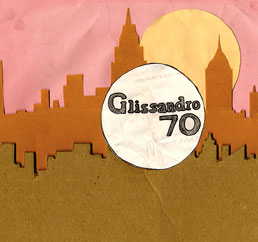
harpoctSOUNDTRACK: GLISSANDRO 70-Glissandro 70 [CST037] (2006)

glissThis peculiarly named band comes from the two members of it.  Craig Dunsmuir is in a band called Kanada 70 and Sandro Perri has stuck his name on the end of the word “glissando” which is a musical term for gliding from one pitch to another.

Interestingly the music doesn’t glide so much.  “Something” opens with a simple, pretty repetitive guitar pattern that keeps getting bigger and bigger. And then bird sounds flow over and around.  It’ a very beautiful introduction.  When it starts getting faster and more complex, it’s actually quite a musical feat.   “Analogue Shantytown” follows with an unusual opening.  Someone singing the word “shantytown” into a harmonica. It’s a weird and interesting sound.   When the guitar begins it sounds very 80s King Crimson-like with wild staccato guitar  Then the chords come in, with a simple repetitive rhythm. And then more and more voices start singing different phrases over the top. Like a rocking fugue.

“Bolan Muppets” has another simple, pretty rhythm and simple but lovely guitar line. More layers of voices (who knows what they are saying) propel this song along.  By around 5 minutes (of the 7 minute song) the songs settles down into a simple guitar progression with very nice vocals (in English).  “Portugal Rua Rua” opens with some more nonsense words (unless he’s singing in Portuguese). Then a single guitar plays along with the rhythm. Then some vocals come in English and the song fleshes out a bit more. By the end they start chanting lyrics from Model 500’s “No UFOs”) which gets a little crazy but is quite fun.

The final song is 13 minutes long. It opens with a baritone guitar playing a fast riff. The song starts to add layers of music—drums, percussion, guitar squalls. By 4 minutes it kind of settles into a repeated guitar rhythm with chanting in the background. That stays in a kind of holding pattern for a bit until around 8 minutes when they start messing with the sounds.  It ends with more chanting in a decidedly Talking Heads feel (and indeed they start using a chant from the Talking Heads at the end).

So this proves to be a wild and raucous record.  It has a decidedly dancey sensibility, but is not a dance record.

[READ: April 25, 2014] “Sic Transit”

I really enjoyed this T.C. Boyle story quite a lot.  So much in fact that not only have I been thinking about it all day, but I could easily see him fleshing out the story into a novel.

It’s a simple enough story on the surface.  In a pleasant suburban town, there’s a house that is overgrown and–out of place.  So it’s no surprise to find out that the owner is dead.  But it is disturbing to think that he was dead for eight days before anyone noticed and that they only noticed because of the smell.

That’s when the narrator learns that the mysterious neighbor, the one whose house you couldn’t even see from the street because of the overgrowth of bushes was a singer for a band from the late 70s and early 80s called Metalavoxx.  (I have to say that I feel this band is not quite right for the time they are depicted as having played–I feel like they are about five years ahead of their time with their name and their look).  At any rate, Carey Fortunoff, the singer, is dead.  And the narrator feels strangely compelled to learn more about a man he doesn’t actually care about and never heard of.

Mostly this is because the narrator has just turned fifty and is thinking about mortality.  What must your life be like to die and not be found for eight days? What kind of strange life did this guy live?  So, on a Sunday morning he decides to at least peek in the man’s house.  And when he finds a door unlocked, he decides to go in. (more…)

Read Full Post »

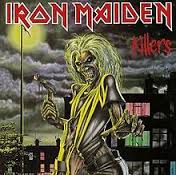
43SOUNDTRACK: IRON MAIDEN-Killers (1981).

killersKillers picks up right where Iron Maiden left off–indeed many of these songs were written at the same time as the first album.  The difference is new guitarist Adrian Smith.

It opens with the great (but simple) instrumental “Ides of March” which segues into the blistering “Wrathchild.”  And it’s on this song that you can tell some of the rawness has been removed from the recording.  The guitars sound a wee bit more polished.

And you can tell the band are getting a bit more symphonic with the bass harmonics that intro the wonderful “Murders in the Rue Morgue” a song that feels long but actually isn’t.  It has several parts that all seem to signal the end until Clive Burrs drums come pounding in to restart the song.  Very cool.  “Another Life” is another fast punky song, and while I like it, it is probably one of the weaker songs on the album.  But that’s okay because it is followed by one of Maidens greatest instrumentals–“Genghis Khan” which has beautiful symphonic soaring solos over a cool propulsive beat.

“Innocent Exile” opens with another great noisy slappy bass riff that only Harris was doing at the time.  “Killers” is a classic track: fast and yet complex, with a very cool riff.   “Twilight Zone” sees Di’Anno reaching for higher more operatic notes.  He makes it, but you can just tell that the band needs more from their vocalist.  “Prodigal Son” opens with a pretty acoustic guitar intro.  I used to like this song quite a bit (whatever Lamia is), but I can see that it’s actually quite long and meandering (maybe this one is more like “War Pigs”).  It’s pretty but could probably be a bit shorter.  “Purgatory” sounds like track off the first album–fast raw and punky with screaming riffs.  “Drifter” ends the disc with a cool bass line and some more thrashing.  It’s a solid ending for an album that overall works pretty well, but which kind of shows that the band had to either do something big on the next album or get stuck in a rut.

[READ: June 1, 2013] McSweeney’s #43

And with this issue I am almost all caught up with my McSweeney’s.  More impressively, I read this one only a few days after receiving it!

This issues comes with two small books.  And each book has a very cool fold-out/die cut cover (which is rather hard to close and which I was sure would get caught and therefore ripped on something but which hasn’t yet).  The first is a standard collection of letters and stories and the second is a collection of fiction from South Sudan.  Jointly they are a great collection of fiction and nonfiction, another solid effort from McSweeney’s.

Letters (more…)

Read Full Post »

CV1_TNY_04_15_13Sorel.inddSOUNDTRACK: AKRON/FAMILY-“Sand Talk” (2013).

akronfamThe folks on NPR played this song as part of a “new songs” segment and I couldn’t get over how noisy and chaotic it was.  I had always thought of Akron/Family as being kind of an indie folk outfit (I know they were on Swans’ label, but I still thought of them as more folkie than noisy).  So I was surprised by just how chaotic and wild this song was.

It opens with a distorted, echoey guitar that settles into a ringing sound which reminds me of Fucked Up.  Then the drums come in (tribal and various) until it all settles down into a thumping song with a kind of spastic guitar riff.  Then the vocals come in–full bodied and sounding like more than one person.  And after the first verse, it seems like everything that happened before happens again–this time all at once.  But now, the music occasionally pauses to let the vocals come to the fore.  And at one point everything stops and a chorus of voices sings a nice melody as the band slowly resumes playing.   And this echoing fugue-like music continues apace until it all kind of slows down and then ends.

It’s quite a challenging song and one that I found rewarding after just a few listens.  I have to reevaluate what I think this band sounds like, and I definitely have to listen to the rest of this album.

[READ: May 1, 2013] “The Night of the Satellite”

What I really liked about this story was the way that Boyle plays with two ideas of randomness.  The first is the possibility of a piece of a satellite falling out of the sky and landing on you.  The second is of running into a couple in several different and unrelated locations.

As the story starts, a couple (graduate-school aged) are excited that the summer is upon them.  They plan to take a trip to visit some friends (with their dog) to get away from it all.  En route they see a car pulled over at the side of the road facing the wrong way.  The young man is sitting on the hood, the young woman is crying near the road.  Mallory tells him to stop the car.  He is reluctant but does so (childlocking the doors).  The girl says that her boyfriend is a jerk.  She is crying but says she is not hurt.  The boyfriend is yelling across the road that she should just get in the car and leave with them.  But after a few minutes, she decides not too.  So he drives on despite Mallory’s protests. (more…)

Read Full Post »

« Newer Posts - Older Posts »