Feeds:
Posts
Comments

Archive for the ‘Authors’ Category

SOUNDTRACK: EVERYTHING BUT THE GIRL-“Ballad of the Times” (1985).

In Stuart David’s book, In The All-Night Café, he lists the songs on a mixtape that Stuart Murdoch gave to him when they first met.

Although I’ve been a fan of Belle & Sebastian for a long time, I knew almost none of the songs on this mixtape.  So, much like Stuart David, I’m listening to them for the first time trying to see how they inspire Stuart Murdoch.

In the book, David writes how much he does not like “rock,” especially music based around bluesy rock.  Most of these songs, accordingly, do not do that.  In fact, most of these songs are (unsurprisingly) soft and delicate.

Of course I know of Everything But the Girl, they really took off a few years after this album came out.  Indeed, their sound changed quite a lot since this first album.

But I never really listened to them.  Of course, I knew their song “Missing” (“like the deserts miss the rain”) which was pretty ubiquitous in mid 1990s.  But in the mid 1980s, the band’s sound was very different–characterized by jangly guitars and a more upbeat feel.

Love Not Money was the band’ second album.  The first song on the album “When All’s Well” has a very distinctive feel like The Smiths–with the picked echoing guitars and louder grooving bass.  But “Ballad of the Time” is a bit more downbeat (as a ballad should be).  There’s some big overdubbed guitars on top of the pretty picked melody.  It’s catchy in a very “of its time” way.

Interestingly, this album apparently sounds unlike anything else in their collection, which makes me think Stuart wouldn’t have pit a later song on the mix.

[READ: December 29, 2020] Solutions and Other Problems

Seven years ago I read and loved Hyperbole and a Half, Allie Brosh’s first book.  So I was pretty excited that Allie Brosh had a new book out. Apparently she has gone through some stuff in the last seven years which I won’t go into.

Instead, I want to talk about how freaking funny this book is.

I hadn’t considered or realized that her art style had changed much since the last book.  Although comparing the covers, I see that her drawings do seem more sophisticated–which somehow makes her characters look even crazier.  I love that that yellow oval on her head is her hair.  And the massive eyes.  And that crazy smile.  It’s bonkers and hilarious.

This book starts out with a bang–a very funny story about a young Allie getting stuck in a bucket. But the best part is that she was in the bucket because she felt the need to get her whole body into the bucket.  She looked at the bucket and looked at her body and decided that one needed to be in the other.  The look on her face (and then later on her parents’ faces when they find her in the bucket) makes me laugh just thinking about it.

“Richard” is all about a person who lives next door.  Young Allie couldn’t quite grasp the idea that someone lived not in their house.  She never even thought about the next door house until Richard walked out of it one day.  So she snuck in through the cat door and started investigating the neighbor,  She would also steal trinkets on each trip.  And occasionally leave a “gift” (like a creepy drawing).  When her parents found some things, they asked her about it and she said she was “hanging out” with Richard.  This obviously made her parents…uneasy.  Poor Richard.  She went too far when she stole Richard’s cat. (more…)

Read Full Post »

SOUNDTRACK: FELT-“Hours of Darkness Have changed My Mind” (1985).

In Stuart David’s book, In The All-Night Café, he lists the songs on a mixtape that Stuart Murdoch gave to him when they first met.

Although I’ve been a fan of Belle & Sebastian for a long time, I knew almost none of the songs on this mixtape.  So, much like Stuart David, I’m listening to them for the first time trying to see how they inspire Stuart Murdoch.

In the book, David writes how much he does not like “rock,” especially music based around bluesy rock.  Most of these songs, accordingly, do not do that.  In fact, most of these songs are (unsurprisingly) soft and delicate.

Felt is another band I’ve never heard of.  This is especially surprising since they were together for over ten years.  Much like with The Blue Aeroplanes, this song has a kind of spoken vocal delivery–although it’s more akin to Lou Reed’s sing-speaking than say a spoken delivery.

The band emphasized jangly guitars and this song has a very old fashioned organ solo (which must have been especially jarring in the 1980s indie rock scene.

The mixture of organ and guitar and lead singer (the mononymed) Lawrence’s very British delivery really make this band stand out.  This song has a chorus melody that is quite subtle and you need to listen a few times before it grabs you.  In fact, the first song on the album Forever Breathes the Lonely Word, “Rain of Crystal Spires” is much more immediate and catchy and relishes that VU feel.

[READ: January 21, 2021] “The Old Man in the Piazza”

I enjoyed the way this story seemed to be about one thing but turned into something much bigger, much grander.

Every day at four o’clock an old man goes to the piazza.  He sits at the cafe and orders a coffee.  At 6PM he orders a beer and a sandwich.  At 8PM he shuffles home–no one knows where he lives.

During those four hours he watches the piazza as it gets busier and nouisier and people start to argue very intensely.

The arguments are varied and loud.  They range from the teleological, to the eschatological to the mundane.  Anything that there is to argue about, the people in the piazza will argue about it.  They will honk horns and rev engines just to prove their points.

The piazza has been like this–“ever since the end of the so called time of the ‘yes.'”

About forty years ago it was made illegal to argue.  Everyone was obliged to agree all the time–regardless of the proposition, one was to nod and agree.  The language itself was altered.  The word no was no longer permitted only “yes” or “for sure” or “absolutely.”

Then things get more abstract. (more…)

Read Full Post »

SOUNDTRACK: THE BLUE AEROPLANES-“Veils of Colour” (1987).

In Stuart David’s book, In The All-Night Café, he lists the songs on a mixtape that Stuart Murdoch gave to him when they first met.

Although I’ve been a fan of Belle & Sebastian for a long time, I knew almost none of the songs on this mixtape.  So, much like Stuart David, I’m listening to them for the first time trying to see how they inspire Stuart Murdoch.

In the book, David writes how much he does not like “rock,” especially music based around bluesy rock.  Most of these songs, accordingly, do not do that.  In fact, most of these songs are (unsurprisingly) soft and delicate.

The Blue Aeroplanes have been around forever, forming in 1981 and releasing their most recent album in 2017.  I feel like I’ve heard of them, but I’m not sure now.  I guess I’ve never actually heard them as this didn’t sound familiar at all.   Nor does the core lineup: the mainstays are Gerard Langley, brother John Langley, and dancer Wojtek Dmochowski.  Their wikipedia pages lists about 90 other people who have played on their records.

“Veils of Colour” opens with a quiet guitar riff that, surprisingly, progresses rather than repeats.  It’s a quiet song and when the lyrics come in, they’re mostly spoken in an almost excitable whisper.  You can certainly see why they appealed to Stuart Murdoch.

The chorus is almost sung, but the addition of horns makes the it swell beyond what you’d expect from the verses.  Indeed, the song has a kind of understated urgency, but never gets very intense.

[READ: January 24 2021] “Hansa and Gretyl and Piece of Shit”

This story was peculiar for many reasons.  Obviously the title shows that this is a twist on a familiar story.  But, wow, does it veer off form what you might expect (just as the title does).

Gretyl is a girl in high school.  She wakes with terrible stomach cramps–not the “normal” cramps a girl might feel, but something far worse.  Her mother believes she is faking because she feels like a loser at school.

She walks to school and sees a man at the bottom of the hill.  His car seems to be constantly broken and he regularly asks Gretyl for help–a scrunchie to fix his carburetor, a paper clip to connect his fan belt (she gave him one from her paper, and her teacher changed her grade from an A to a B- because it had no fastener).  Today he asks her to steer while he pushes.  When his car is free, he gives her a whistle. If you need help, blow it, maybe we’ll come.

Gretyl’s family is strapped for cash. Although her father has a yacht and her mother has expensive jewelry–they don’t seem to have money to buy new things.

Gretyl’s mother resents her: Gestating you destroyed my metabolism.  Now I can’t practice medicine (she does not mention that the mother bore Gretyl at forty). (more…)

Read Full Post »

SOUNDTRACK: YOUNG MARBLE GIANTS-“Salad Days” (1980).

In Stuart David’s book, In The All-Night Café, he lists the songs on a mixtape that Stuart Murdoch gave to him when they first met.

Although I’ve been a fan of Belle & Sebastian for a long time, I knew almost none of the songs on this mixtape.  So, much like Stuart David, I’m listening to them for the first time trying to see how they inspire Stuart Murdoch.

In the book, David writes how much he does not like “rock,” especially music based around bluesy rock.  Most of these songs, accordingly, do not do that.  In fact, most of these songs are (unsurprisingly) soft and delicate.

I’ve been aware of the Young Marble Giants forever, and yet I apparently knew nothing about them.  Like that they only put out one album (how are the so influential?) or that they were from Wales.

Young Marble Giants were a trio: Philip Moxham on bass, Stuart Moxham on guitar and organ, Alison Statton on vocals.  Yup no drums.

The songs on the record are short and seem to focus around the basslines primarily.  It’s really quite an unusual presentation–quite lo-fi and very engaging.

This song (the 12th of 15 on the album) is 2 minutes long.  It features a simple guitar riff, with a some extra detailed notes sprinkled at the end of the main riff.  Then comes a four note bass riff, with a little hammer on at the end of the riff.  After a minute, Alison quietly sings along with the melody:

Think of salad days
They were folly and fun
They were good, they were young

She sings for 15 seconds and then it’s all music until the end.  The bass drops out with 30 seconds left and the guitar plays that same melody with a few picked notes to the end.

It’s simple and delightful.  And as the start of a mix tape, it speaks volumes.

[READ: January 21, 2021] “Find and Replace” 

This story is written as a true story.  But there are plenty of little comments in the story that show how easy it is to change something in a story–maybe make it untrue?

The narrator, Ann, says her father died in hospice on Christmas Day–the day that she had left the country.  Her family was not the kind who communicated every day.

Her mother was not demanding.  She was a friendly person and had a million friends (she still wrote cards to a maid who cleaned their hotel room fifteen years ago).

Ann flew to Florida, rented a car and drove to her mother’s house.  Her mother showed her letters that she hoped Ann would help her make decisions about.  The last one was from a neighbor named Drake who asked her to move in with him.

Ann assumed it was a joke.  Then assumed her mother would laugh it off.  But indeed, she had said yes.  They might even move to Tucson. (more…)

Read Full Post »

SOUNDTRACK: BELLE AND SEBASTIAN-“Pocketbook Angel” (1994).

It’s not often that you get to hear a pretty complete story about how an early (unreleased) song was made.  “Pocket Book Angel” is a song that Stuart Murdoch wrote when he was signed on for a class about music production.  Stuart David was in the same class and so he was there when they recorded this song.

Stuart David describes the origins and recording process:

The song we recorded was called “Pocket Book Angels” something Stuart had written a few days earlier while he was busking on Ashton lane.  It was all about busking on Ashton Lane.  Almost everyone who was around that day [in the Beatbox recording studio where the classes were held] played something on it.  I played bass, Gerry Campbell, the songwriting tutor played drums, “London” a Pink Floyd addict played lead guitar, soloing wherever he could find the tiniest gap to fill.  It was a great pop song, probably all but beaten to death by having instrument after instrument overdubbed on it…  But Stuart just let the arrangement develop out of the loose parts everyone played.  [Unlike later songs when he was very particular], he didn’t have any overall vision for how he wanted the recording to turn out, and it was a haphazard collaboration.

One evening I let my dad hear the finished recording and he said, “You should stick with that band.  I like that. they’ll go places.”
“It’s not really a band,” I told him. “It was just a one-off thing.”
“They’ll go far,” he said.  “Stick with them them.”

It is pretty impressive that Stuart Murdoch made this song pretty quickly and had it fleshed out into a recordable idea.  Sure, this song sounds like it was recorded on a tape player, but the song is super catchy.

[READ: January 23, 2021] In the All-Night Café

Every time I read a non-fiction book about music, I feel compelled to say that I don’t read a lot of non-fiction books about music.  Given the number of bands that I like, the number of books I read about music is fairly low.  Indeed, most bands that I really like I don’t care that much about their history or what they have to say.

But I enjoyed Stuard David’s novel and I imagined that his take on the formation of Belle & Sebastian would be pretty interesting.  Because they are from Scotland and are a low-key band to begin with.  Plus Stuart David isn’t the “main” guy (and isn’t even in the band anymore), but he doesn’t seem like the kind of guy who would write a mean-spirited book either.

And their origin story is really fascinating.

But this book isn’t just about the band.  It’s about Stuart David’s life in his mid-twenties in Scotland.  It’s also about what it was like to be young in a country that didn’t have a lot if opportunity for youth.  It’s also about music and is even about love. (more…)

Read Full Post »

SOUNDTRACK: RACHELE ANDRIOLI-GlobalFEST Tiny Desk (Home) Concert #135/153 (January 13, 2021).

Rachele AndrioliGlobalFEST is an annual event, held in New York City, in which bands from all over the world have an opportunity to showcase their music to an American audience.  I’ve never been, and it sounds a little exhausting, but it also sounds really fun.
The Tiny Desk is teaming up with globalFEST this year for a thrilling virtual music festival: Tiny Desk Meets globalFEST. The online fest includes four nights of concerts featuring 16 bands from all over the world. 

Given the pandemic’s challenges and the hardening of international borders, NPR Music and globalFEST is moving from the nightclub to your screen of choice and sharing this festival with the world. Each night, we’ll present four artists in intimate settings (often behind desks donning globes), and it’s all hosted by African superstar Angélique Kidjo, who performed at the inaugural edition of globalFEST in 2004.

The third artist of the third night is Rachele Andrioli from Italy.  She is (almost) a one-woman band and makes amazing music with her voice and a loop pedal.

Recording from southern Italy, Rachele Andrioli’s performance highlights her mix of old and new, of traditional music and modern technology. Her trance vocals and loop pedals create a sound all her own, mixing music from Italian, Indian, Lebanese, Albanian and Romani cultures and traditions.

She plays three songs.  For the first, “Te Spettu” (“I Respect You”) she loops a jaw harp (who would have thought that that could be the basis for a song).  Then she loops her voice crooning.  She picks up a hand drum that looks like a tambourine (and gets an amazingly robust sound from it).  Her vocal style feels Middle Eastern.  It’s a really impressive piece of music.

“Pranvera Filloi Me Ardh” (“Spring Started with the Coming”) is in Albanian.  As the song starts, her accompanists come out.  Redi Hasa picks up a cello and plays a harmonic note (looped) followed by a gentle plucked melody.  Then Rocco Negro plays the accordion.  The mournful accordion solo sounds very Italian.  Hasa plays a mournful melody and she sings gently with them both.

The men leave and it’s just her for  “Ederlezi.”   She loops her voice singing a single note and then accompaniments herself including a distortion on her voice making it a very deep harmony.  She plays another small hand drum which gets an amazing sound.

This is a wonderfully unique set that I really enjoyed.

[READ: January 22, 2021] Snapdragon

For a while, I was reading every single First Second book that was published.  Once the pandemic hit, I fell behind and have not really been able to catch up just yet.  But S. brought this book home and I thought it looked interesting even before I saw that it was from First Second.

The cover is a little disconcerting.  Snapdragon, the girl in the picture, has hair up in pig tails.  But with a ghostly deer behind her, the way her har is drawn, it almost looks like some kind of antler (probably not intended).  But there’s a lot of things that are confusing in this story at first (and even second and third) glance.  I assume that these other decisions are deliberate.

Many of the characters in this story are African-American, including Snapdragon.  But her skin coloring is very different from all of the other characters.  I don’t think it matters for the story, whether she is or not (until the very end anyhow).  But it was very nice to see so many characters of color in the book.  In a strangely similar way, a main character, Jacks, I was sure was a man, but indeed, she is not.  Snap recognizes her as a woman right away, but I wasn’t sure if that made a difference either.  In fact, Jacks’ masculine appearance is important in the story, but I’m not sure if the reader is supposed to think that Jacks is a man as well?

None of that matters, of course, because once you learn the reality, you can just move on.

So just what the heck is this story about?

Snapdragon is a girl (all the women in her family are named after flowers).  She’s a little odd and the other kids are happy to let her know that.  The only kid who is nice to her is her neighbor Louis.  Louis thinks Snap is weird, but Louis is also pretty unconventional. (more…)

Read Full Post »

SOUNDTRACKADITYA PRAKASH ENSEMBLE-GlobalFEST Tiny Desk (Home) Concert #135 (January 13, 2021).

Aditya Prakash EnsembleGlobalFEST is an annual event, held in New York City, in which bands from all over the world have an opportunity to showcase their music to an American audience.  I’ve never been, and it sounds a little exhausting, but it also sounds really fun.

The Tiny Desk is teaming up with globalFEST this year for a thrilling virtual music festival: Tiny Desk Meets globalFEST. The online fest includes four nights of concerts featuring 16 bands from all over the world. 

Given the pandemic’s challenges and the hardening of international borders, NPR Music and globalFEST is moving from the nightclub to your screen of choice and sharing this festival with the world. Each night, we’ll present four artists in intimate settings (often behind desks donning globes), and it’s all hosted by African superstar Angélique Kidjo, who performed at the inaugural edition of globalFEST in 2004.

The second band on the third night is the Aditya Prakash Ensemble.

Performing from their home base in Los Angeles, Aditya Prakash Ensemble highlights songs borne from South India’s Carnatic tradition. Prakash uses his voice as an instrument to tell powerful, emotive stories — which he reimagines in a fresh, dynamic way. Aditya Prakash Ensemble’s modern take on traditional music mixes in jazz and hip-hop and features a diverse L.A. ensemble.

The Ensemble is a quintet.  With Julian Le on piano, Owen Clapp on Bass, Brijesh Pandya on drums and Jonah Levine on trombone and guitar.

As “Greenwood” starts, I can’t quite tell if he’s actually singing words (in Hindi or some other language) or if he is just making sounds and melodies.  It sounds great either way.  He sings a melody and then the upright bass joins in along with the trombone.  He displays a more traditional singing and then Le plays a jumping piano solo which is followed by a trombone solo.  The ending is great as he sings along to the fast melody.

“Vasheebava” is a song about seduction.  Levine plays the guitar on this song.  It starts with gentle effects on the cymbals (he rubs his fingers on them).  Prakash sings in a more traditional Indian style and Levine adds a really nice guitar solo.

“Payoji” is a traditional devotional song and Prakash sings in a very traditional style.  But musically it’s almost a kind of pop jazz.  It’s very catchy with a nice trombone solo.

This conflation of Indian music with jazz is really cool.

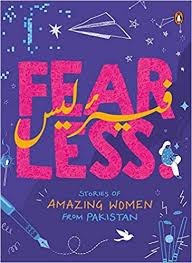
[READ: January 11, 2021] Fearless.

“If one man can destroy everything, why can’t one girl change it?”-Malala Yousafzai

This book begins with this wonderful sentiment:

Not long ago, a wave of exciting books uncovered stories of women through history, known and unknown, for young dreamers around the world.  Women who had been warriors, artists and scientists.  Women like Ada Lovelace, Joan of Arc and Frida Kahlo, whose stories changed the narrative for girls everywhere. Readers around us were thrilled to discover this treasure trove. But there was something missing. They rarely saw women of color and even fewer South Asian women in the works they were reading.

It’s a great impetus for this book which opens with a timeline of Pakistani accomplishments (and setbacks) for women.  The timeline is chronological in order of the birth years of the woman in the book.  Interspersed with their births are important events and the year they happened.

Like in 1940 when women mobilized and were arrested or in 1943 when the Women’s National Guard was formed. In 1948, a law passed recognizing women’s right to inherit property.  In 1950, the Democratic Women’s Association formed to demand equal pay for equal work (it doesn’t say if it was successful).

In 1973 the Constitution declared there could be no discetrmaton on the basis of race, religion, caste or sex.

But in a setback in 1979, the Hudood Ordinance passed which conflated adultery with rape, making it near impossible to prove the latter–and the punishment was often death.

And yet for all of the explicit sexism in Pakistan, the country accomplished something that America has been unable to do–elect a woman as leader. In 1988 Benazir Bhutto became the first female Prime Minister of Pakistan.

The woman in this book are given a one-page biography and a cool drawing (illustrations by Aziza Ahmad).  They range from the 16th century to today.  (more…)

Read Full Post »

SOUNDTRACKVOX SAMBOU-GlobalFEST Tiny Desk (Home) Concert #135/151 (January 13, 2021).

Vox SambouGlobalFEST is an annual event, held in New York City, in which bands from all over the world have an opportunity to showcase their music to an American audience.  I’ve never been, and it sounds a little exhausting, but it also sounds really fun.
The Tiny Desk is teaming up with globalFEST this year for a thrilling virtual music festival: Tiny Desk Meets globalFEST. The online fest includes four nights of concerts featuring 16 bands from all over the world. 

Given the pandemic’s challenges and the hardening of international borders, NPR Music and globalFEST is moving from the nightclub to your screen of choice and sharing this festival with the world. Each night, we’ll present four artists in intimate settings (often behind desks donning globes), and it’s all hosted by African superstar Angélique Kidjo, who performed at the inaugural edition of globalFEST in 2004.

The first band on the third night is Vox Sambou a Haitian band recording in Montreal.

There are few performers as “alive” as Vox Sambou, whose energy and soul transcends the virtual space. He starts his performance at Tiny Desk Meets globalFEST with a short moment between himself and his son, overseen by a painting of his mother, highlighting the ways we pass down traditions from generation to generation. Based in Montreal, Quebec, Vox Sambou writes and performs in Hatian-Creole, French, English, Spanish and Portuguese. His music is a joyous fusion of Haitian funk, reggae and hip-hop.

He starts with a call and response with his adorable son.  Then the music starts and doesn’t let up  There’s intense trumpet, lots of percussion and some fantastic dancing from he co-singer.  He introduces everyone, but between his accent and their very French names, I couldn’t pick out a single one.

“African Diaspora” has fast intense and fun rapping and singing in French.  The joyousness of the music is infectious, and i love watching everyone dance.

“My Rhythm” is slower with a pronounced beat.  It’s great watching them all move in synch to that rhythm.  The song pauses for a few seconds until another dancer comes out.  There’s a ripping trumpet solo followed by a cool sax solo with all three up front dancing.  There’s even a brief time to show off the conga players.

“Everyone” ends the set fast and intense.  So much drumming, so many horns. It’s pretty wonderful.

These guys must be exhausted!

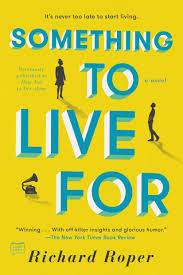
[READ: December 16, 2020] Something to Live For

S. read this book last year when it was called How Not to Die Alone.  In her post about it, she comments about what a great title it was.  I agree with that and am not sure why they changed it to the more generic Something to Live For. Although it was the cover/title that grabbed me when I saw it at work, so I guess this new title is good to.  But I think the Die title is better.

Compared to some of the more complicated stories that I’ve been reading lately–where I feel like a lot of background information needs to be filled in–this story was delightfully straightforward.  It was an enjoyably fast-paced read and resonated in a surprisingly powerful way.

Andrew is a middle aged British man.  He had worked in a public service role for many years until his position was terminated.  His boss helped him find a new job in the public service field.

This new job is absolutely fascinating to me and I have to wonder if we have such a job in the States.  Andrew’s job is to go to the house of a recently deceased person.  These are people who died alone and apparently have no contacts.  Andrew’s job is to determine if the deceased has someone to contact to come to (and pay for) the funeral or if the deceased has enough money in their apartment to pay for the funeral themselves. (more…)

Read Full Post »

SOUNDTRACKEMEL-GlobalFEST Tiny Desk (Home) Concert #134/145 (January 12, 2021).

EmelGlobalFEST is an annual event, held in New York City, in which bands from all over the world have an opportunity to showcase their music to an American audience.  I’ve never been, and it sounds a little exhausting, but it also sounds really fun.

The Tiny Desk is teaming up with globalFEST this year for a thrilling virtual music festival: Tiny Desk Meets globalFEST. The online fest includes four nights of concerts featuring 16 bands from all over the world. 

Given the pandemic’s challenges and the hardening of international borders, NPR Music and globalFEST is moving from the nightclub to your screen of choice and sharing this festival with the world. Each night, we’ll present four artists in intimate settings (often behind desks donning globes), and it’s all hosted by African superstar Angélique Kidjo, who performed at the inaugural edition of globalFEST in 2004.

The fourth band on the second night is Emel from Tunisia.

Tunisia-born singer Emel first performed at globalFEST in 2015, the same year she performed her song of Tunisian Revolution, “Kelmti Horra,” at the Nobel Peace Prize Concert. Emel was hailed by NPR as a “21st century catalyst for change.” She created her latest album, The Tunis Diaries, equipped with only a laptop, tape recorder and a crowdsourced guitar after she was unexpectedly quarantined in her childhood home in Tunis last spring.

Emel plays only two songs.  It’s just her and her co-guitarist Kareem.  The songs are spare but very full and quite powerful.

“Holm” (A Dream) is a pretty, quiet song with soaring vocal melodies over the restrained lead guitar from Kareem.

“Everywhere We Looked Was Burning” is sung in English.  The spare and lushly echoed guitars make her voice sound especially raw and passionate.

[READ: January 14, 2021] “Drawing from Life”

I found this story to be a little confusing as it started.

Without really referring to the narrator specifically, the story starts with talk of being called out of retirement and away from Netflix, etc.

It wasn’t until the third paragraph when things started to get explained that it made sense.

Harold is a 70-plus year-old-man.  He was one of the first people in his neighborhood to get the Coronavirus.  His son had thought to get him an oxygen tank and so he didn’t need the hospital.  Two weeks later he had survived the virus and was more or less immune.

It was sometime a month or so later that the local rabbi called up.  He explained that people could no longer sit with the dying, with the deceased, as their faith prescribed.  Perhaps, since he was now immune, he would be willing to do so.  And, more to the point, perhaps he would be willing to paint the deceased for their family–as a last gesture.

Harold was an excellent painter–former teacher, exemplary artist who sold paintings to raise money–and often made a lot.

And so, Harold found himself in the hospital, often overnight, by himself, painting. (more…)

Read Full Post »

SOUNDTRACKNATU CAMARA-GlobalFEST Tiny Desk (Home) Concert #134/143 (January 12, 2021).

Natu CamaraGlobalFEST is an annual event, held in New York City, in which bands from all over the world have an opportunity to showcase their music to an American audience.  I’ve never been, and it sounds a little exhausting, but it also sounds really fun.

The Tiny Desk is teaming up with globalFEST this year for a thrilling virtual music festival: Tiny Desk Meets globalFEST. The online fest includes four nights of concerts featuring 16 bands from all over the world. 

Given the pandemic’s challenges and the hardening of international borders, NPR Music and globalFEST is moving from the nightclub to your screen of choice and sharing this festival with the world. Each night, we’ll present four artists in intimate settings (often behind desks donning globes), and it’s all hosted by African superstar Angélique Kidjo, who performed at the inaugural edition of globalFEST in 2004.

The third artist on the second night is Natu Camara from Guinea.

Natu and her band play four songs.
From a studio space in Brooklyn, Guinean native Natu Camara mixes West African soul, rock and pop music. As a builder of inter-cultural bridges, Camara uses her songs to bring people together, weaving a tapestry of musical stories and visions of her beloved home.

“Ka Hirdé” is a short introductory piece. The “boombastic” Kayode Kuti on bass and Matthew Albeck on guitar set the melody going while percussionist Gary Phes and drummer Oscar Debe propel it forward.  Camara and her backing singer Lindsey Wilson sound great together while Camara plays a percussive stick.

It’s a short introduction before the funky “Waa” which means “crying for your soul.”  There’s some great bass work behind this simple catchy song.  I love the way it builds with the sung “waa, waa”  until a grooving keyboard solo makes the song feel like a jam.

“Dimedi” means “child” and is dedicated to all the children around the world.  She says, “Let’s take care of the children so we can change the future.  We may not be here when the world is better but at least if we train them well maybe they will do better than our generation.”

The song is slow and mellow with just Camara singing and playing guitar and keyboard washes from John F. Adam.  Until the whole band joins in to flesh out the song.

“Arabama di” ends the set in a really fun way.  It has a kind of reggae intro with some super funky drums and a wild bass line.   By the end, the song has turned into a wild jam with everyone dancing (in their seats) and a wailing solo from Albeck.

[READ: January 14, 2021] “Christmas in Cochinchina”

This story comes from a collection called A Very German Christmas: The Greatest Austrian, Swiss and German Holiday Stories of All Time.  I don’t know if the whole collection was translated by Michael Z. Wise, but this story was.

This was a very simple story, full of memories of childhood.

The narrator’s class went to the World Panorama.  It was a small class trip and cost five pfennings.  The narrator didn’t have the money so the school paid for him.

Once you went inside and the darkness cleared, you could see a large cabinet. It was illuminated from within and has holes that you could look in.

After being told to sit, he saw the show begin.  There were scenes from Cochinchina (Vietnam).

The sky was an intense blue and the sun was radiant–the narrator quickly forgot it was December in Germany..

There were palm trees and men in pith helmets.  There were women with arousing breasts and loincloths

that certainly would have fallen off if one could have stopped the pictures.

There was a British man teaching naked children.  There were fishermen and swimmers.

And then a gong sounded and it was over. (more…)

Read Full Post »

« Newer Posts - Older Posts »