Feeds:
Posts
Comments

Archive for the ‘Authors’ Category

SOUNDTRACK: FUGAZI-Steady Diet of Nothing (1991).

Jangly noisy guitars open the track (and then a lengthy silence after a minute or so).  And this loud/soft dynamic is pretty dramatic on this disc.

There’s a slot of really cool sounds (within the framework of loud noisy alterna-punk).  “Reclamation” opens with some harsh guitar harmonics over a kind of spoken verse, but it bursts into a great chorus.  “Nice New Outfit” is quite catchy (even if lyrically it’s very dark).  But by the middle of the disc, it feels like some of the songs aren’t quite as interesting.

Of course, the instrumental “Steady Diet” is noisy and wonderful.  And “Runaway Return” has a catchy noisiness to it.  But the band comes back to a high point with “Polish” and the thoughtful “Justice Letter” (written about favored  Supreme Court Justice William Brennan who retired in 1990).

This record is a cool departure from the first disc.  To me it’s not quite as immeiate as Repeater, and yet it still has some really powerful songs.  I find that no matter how many times I listen to it there’s a few tracks that never grab me, but overall, this is another great release from Fugazi.

[READ: Week of April 26, 2010]  2666 [pg 831-893]

Wow.

The book is over and I am blown away.  I don’t know if it was the set up, or my utterly lowered expectations or the complete lack of connections previous to this, but I had assumed that this story would end (well, actually exactly as it did, with him going to Mexico) but the 30 pages before the end blew me away.  I can’t get over how nicely he tied so much together and in such an unexpected way.  I could not tear myself away from the end.  Wow.

I’m still not sure how I feel about the whole book.  I’ll do a final thoughts post after I digest, but the ending of the book was immensely satisfying. (more…)

Read Full Post »

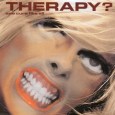
SOUNDTRACK: THERAPY?–One Cure Fits All (2006).

I’ve always liked Therapy?’s brand of aggro-alt metal/whatever you call it.  Their earlier stuff was harsh and dark. During their middle years they grew surprisingly commercial (although they’ve always had a bit of a commercial side to them, even at their harshest).

The last album I got from them was 2003’s High Anxiety (the first in a series of grotesque and unpalatable CD covers which culminates with this horrorshow).  I think the band must have lost any kind of distribution deal in the States, because it is still very hard to find these later discs (without paying way too much for them).

I was delighted to find this one on Lala.  And it stands as a pretty solid Therapy? disc.  They have always had guitars that sounded very sharp, almost electronic, which I thought really exemplified their take on angry literate metal.  And this disc opens up with it (after the 30 second “Outro”)

Their earlier tracks (like the awesome “Teethgrinder”) employed sonic tricks that really propelled the songs onto genius territory.  These songs are a bit more conventional, and yet they’re hardly commercial.  The most likely single would be the “ballad” (which also rocks pretty hard near the end) “Dopamine, Seratonin, Adrenaline.”

The back half of the disc is more melodic and catchy (a sort of reversion back to their middle period?). The only song that veers too far into pop territory is the closer, “Walk Through Darkness.”  It’s almost a bit cheesey, especially after all the heaviness of the earlier tracks.

It’s a fun disc, and a shame that it (and those BBC Sessions, which I am drooling about!) have yet to get a proper release in the states.

[READ: April 28, 2010] “Austerity Program”

In one of the letters to The Believer this month a reader suggests that they start printing fiction.  No reply is given to the letter.  At the same time, here is a piece that is certainly fiction.  There is no comment or explanation attached (which is surprising as The Believer usually tells us everything that’s going on in the magazine.

So, I’m going to treat this as a short story.  Tucker Nichols is responsible for the art direction, while David Khoury wrote it.  It is printed as a series of letters on official letterhead (with a logo but no name) stationary.

Much like with the novel Ella Minnow Pea, the “austerity” is a cost saving measure in which letters are removed from general use. (more…)

Read Full Post »

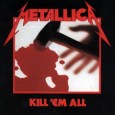
SOUNDTRACK: METALLICA-Kill ‘Em All (1983).

Although I don’t think I remember exactly when this disc came out, I was pretty big into heavy metal (the heavier the better) back in 1983.  I can remember this was my freshman year of high school, and I’m fairly certain I bought this LP pretty soon after it came out (thanks to the awesome radio show mu-mu-mu-mu-mu-metal shop).

Kill ‘Em All has always been a touchstone for thrash metal.  And listening to it now, it’s hard to believe that the Metallica of 2010 is the same band.  Or, more to the point that this bunch of kids would have grown into this same bunch of adults.

Kill ‘Em All is raw. Really raw.  And yet it sounds (even at this stage) well mixed and very professional (no mean feat given the rather silly cover art).  The guitars, even though the distortion is cranked up, do not sound muddy.   The vocals are mixed perfectly so you can actually understand (most of) the growly lyrics (this is before James Hetfield learned how to sing).  The drums are really fast (possibly one of the fastest bpm at the time).  And of course, Cliff Burton kept wonderful rhythm while Kirk Hammett was soloing all over the place.  And while “Anesthesia–Pulling Teeth” is kind of a silly addition on a thrash album, it does showcase Cliff’s bass work.

The amazing thing is that this twenty-seven year old album still sounds relevant in the metal world.  And no doubt it will continue to influence young metal bands in the future.  And for a fantastic review of this disc (and an awesome selection of best-of-1983 releases), check out wallnernotweller.  This is what my site would look like if it were only about music.

[READ: April 22, 2010] “Edgemont Drive”

I haven’t read much E.L. Doctorow, but I’ve liked what I read.  And it was nice to read someone who writes so differently from the kind of things I’ve been reading lately (Bolaño etc).  It was especially nice because I was fairly certain where I the story was going to go and it didn’t go anywhere near where I expected. (more…)

Read Full Post »

Bolaño’s poems had a pretty powerful effect on me.  Not the content so much, but just how powerful and not precious they could be.  This is not to say that Bolaño is the only one who writes like this at all–I had just locked poetry out of my life for so long, that this was a nice wake up call.

And so, I have written this poem as a thank you.

(more…)

Read Full Post »

SOUNDTRACK: BEN FOLDS-University A Capella (2009).

The story goes that Ben Folds heard some a capella bands and decided to give them some airtime.  So he had them record a bunch of his songs.

I have been surprised at how much I enjoy some kinds of a capella music.  Ed Helms’ stuff on The Office is certain fun, but on a more serious level, it’s amazing what these singers can do with their voices in terms of diversity, range and even sounds.

But at the same time, it’s the lead vocalist on most a capella tracks that sell the song.  And, on this disc there are a lot of lead singers I don’t like. Part of it is because I don’t like R&B vocal stylings, which I find too over the top at times.  Although I do admit that there;s one or two on here that work very well.

Overall, I enjoy this disc.  It’s fun to hear different interpretations of songs that I know and like.  Although I think realistically its the songs that Ben himself sings that I enjoy the most.

[READ: April 25, 2010] Romantic Dogs

This is the final Bolaño book that I’m going to read before finishing 2666 (Savage Detectives you’re next).  And it happens to be a collection of Bolaño’s poetry.

I have a complicated relationship with poetry.  I have written (and had published) a few poems.  I dated a woman who was (and I suppose still is?) an excellent poet (hi, Paula).   When I worked for a literary magazine, I learned how to judge poetry.  And yet, I don’t really read it.  And I think the reason for that is that, in my head, poetry deserves more attention than I’m usually willing to give it.  I feel like a poem should be pored over, read and re-read and, if good enough, memorized.

I have memorized about two poems in my life.  And since I often don’t feel like devoting a ton of time to poems,  I just don’t really read them.  And that’s a shame for me, because while poetry does demand a closer look, it’s not a precious item that should be put on a pedestal and looked at only when company comes over.

And Bolaño is as good a poet as anyone to demonstrate that. (more…)

Read Full Post »

SOUNDTRACK: THE DEAD MILKMEN-Chaos Rules: Live at the Trocadero (1994).

It wouldn’t be a complete look at the Dead Milkmen without mentioning their one live release.

Chaos Rules is a surprisingly good live set (taken from two separate concerts).  They had to leave all of the songs from their Hollywood Records discs off this collection, so this comes across more as a classic concert rather than a comprehensive one.

The band sounds great and the songs sound pretty close to the originals.  Not that the originals were hard but it wasn’t always obvious whether the Milkmen were doing what they were doing on purpose.  This set suggests that they were.

As any good live band, they play around with their songs, being surprisingly angry about local politics and changing the (by then twenty year old) “Bitchin Camaro” intro to reflect that.

The only reason it would have been nice if they had been allowed to include some of the Hollywood Records songs (they do sneak one in under a different name) would be to see if they played them any differently.  Since the early tracks are pretty chaotic, I wonder what would happen to the latter, more mellow songs.  Did they stand up under the weight of the nonsense or did they become more ramshackle as well?

I guess I’ll never know.  This is not essential by any means, but it is an interesting artifact for the curious and is totally enjoyable for DM fans.

[READ: April 23, 2010] Distant Star

Because Bolaño never does anything typical, this novella is a spin-off of sorts to Nazi Literature in America.  The introduction states that “in the final chapter of my novel Nazi Literature in America I recounted, in less than twenty pages and perhaps too schematically, the story of Lieutenant Ramirez Hoffman…which I heard from Arturo B.  He was not satisfied with my version…So we took that final chapter and shut ourselves up for a month a half in my house in Blanes, … where we composed the present novel.  My role was limited to preparing refreshments, consulting a few books and discussing the rest of numerous paragraphs with Artuto…”

Okay, there is so much wonderful deception in just this introduction to this book it totally cracks me up.  (Arturo B has long been a stand in for Bolaño himself). In the original, the narrator is named Bolaño (he is the narrator in jail who eventually helps the detective locate the poet).

For yes, the story is the life of a poet who is also a murderer.  And, the story is pretty much the same as the 20 or so pages of Nazi Literature.  It is now an extended meditation on this particular poet.  All of the events that were present in the short version are here, they are all just fleshed out with Bolaño’s wonderful details and full biographies of other characters.

The big, weird thing though is that almost all of the names have been changed (to protect the guilty?).  So even though the poet of this book has the same exact  life story as Lieutenant Ramirez Hoffman, he never has that name in Distant Star (and he goes through several pseudonyms).  There are twins in the short version who now get new names.  Even the poetry teachers have different names.  However, the detective who hunts him down at the end has the same name.  Weird.

The book works as a critical assessment of the Allende administration (which is why the real Bolaño was imprisoned).  But on to the story. (more…)

Read Full Post »

SOUNDTRACK: THE DEAD MILKMEN-Stoney’s Extra Stout (Pig) (1995).
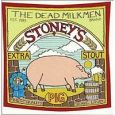
Of course, I can’t forget the Milkmen’s final release!  But, in fact, I had forgotten about it, so much so that when I played it again, I was totally surprised to realize that I knew and liked a number of these songs quite a bit.

This disc was their return to Restless records, and it almost feels like their detour to Hollywood never happened.  Back is the dominace of Rodney Anonymous’ songs andthe more chaortic, frenetic guitar work of thier earlier discs.

It opens with “Peter Bazooka” a dark meandering song that features the one consistent thread on this disc: most of Rodney’s verses are spoken rather than sung.  Which is fine, except the songs somehow feel more noveltyish when they’re delivered this way.  So even if a song like the second track “Train I Ride” is just as silly as any DM song, because it’s sung it feels more like a proper song than a novelty.  “The Girl with the Strong Arm” is even more frenetic than “Joe Bazooka” and it’s another rant (although with a more singable chorus).

But a song like “Helicopter Interiors” sounds like classic DM: simple clever guitar line, raucous guitar, and it’s under 2 minutes long.  And, while the back half of the disc is less exciting than the front, the rocking “Chaos Theory” is good fun: “Study hard and you’ll have a future, oh yeah when the hell was that ever true?”

But Joe Jack Talcum’s songs are not absent from the disc.  He appears first on “I’m Flying Away” a slow, reggae tinged track that feels too anemic to have ever been a hit.  “The Man Who Rides the Bus” is a rocking, more catchy track although again it’s missing anything even resembling a hit.

A couple songs do overstay their welcome: “Blues Song,” a parody of the blues (yawn) is over 4 minutes long (yes, the solo section is pretty funny).  Although even a lesser song like “When I Get to Heaven” is enjoyable enough (the return of odd vocal effects is also welcome).  The only real failure is the horn-fueled pseudo funk of “Crystalline.”  At this point I’m not sure if it’s wise for the DM to bust so far out of their comfort zone.

Joe Jack sings the final three songs.  “Khrissy” is a trebly love song, “Like to be Alone” is a piano ballad that doesn’t really go anywhere, but the final song “Big Deal” is a another negative song package as a humorous uplift anthem.  It concludes the DM’s output on a high note.

I’m not sure if the band should have done more after this.  And of course, there is much sadness that bassist Dave Blood killed himself a few years ago.  But I understand they still tour and they keep their website active.  DM are a wonderful staple from my college days, and I thank them.

[READ: April 16, 2010] Monsieur Pain

It is not lost on me that while I was reading a book called Monsieur Pain, I was stricken with an abscess in my cheek.  It swelled as if there was a softball in my mouth and it hurt like a mother.  And, since this happened while I was on vacation, I had the delight of going to a Virginia Urgent Care center carrying this book around with me (and the medical services were excellent, thank you all).

Of course, the Pain in the title is not a man who inflicts pain or anything, it’s just his name.  I was wondering if, since he is French, if the Pain is to be translated as “bread.”  That is never addressed.

This story exemplifies the fascinating twists and turns that Bolaño puts in his books (this one was one of his first).  In the introductory note to the book, he states that he wrote this story in 1982 and then submitted it to two different fiction contests under different titles.  He won both contests.  (Ha!).  The other fascnating thing about this story is that most of the people are real.  And while yes, that is a conceit he uses in a lot of his stories, in this one the real people are the main people: César Vallejo was a real poet (and did have the hiccups) his wife was real, Pierre Pain was indeed a mesmerist, and of course Madame Curie is real, too.

The story itself was fascinating and sometimes difficult.  (I had to re-read the scene in the movie theater a few times to get the total picture).   It is written from the point of view of Monseuir Pain.  He is contacted by Madame Reynaud (a woman he is sort of in love with, especially now that she is widow) who urgently requests that he go to see someone “profesionally.”  The someone turns out to be the husband of her friend Mrs.Vallejo (who turns out to be the poet César Vallejo–although plotwise that is not important).  She says he is dying from the hiccups. (more…)

Read Full Post »

SOUNDTRACK: PHISH-Joy (2009).

This is basically Phish’s reunion disc (after a 5 year hiatus).  It opens with one of their poppiest songs, “Backwards Down the Number Line” a song that picks up where their least disc left off: with a feeling of driving down a country lane with nowhere to go, windows opens, just happy to be alive.  The second track, “Stealing Time from the Faulty Plan” is a delightful rocker with a supremely catchy chorus “got a blank space where my mind should be….”

The third track, “Joy” starts as a simple piano ballad, but quickly morphs into one of the prettiest songs I’ve heard in ages, an outrageously happy upbeat tender song: “We want you to be happy, cause this is your song, too.”

“Sugar Shack” is a delightfully funky song, recognizable at once as one of Mike’s songs.  It’s a simple, pleasant enough track, but somehow Mike’s voice sounds weaker than usual.

“Ocelot” is a silly track (and one of my favorites) while “Kill Devil Falls” is a bluesy number that will easily be a lengthy jam live.  It’s my least favorite track on the disc, but it is followed by a more upbeat future-jam called “Light” which features delightful multi part harmonies.

The highlights of the disc are the final two songs: the 13 minute “Time Turns Elastic” and the five-minute “Twenty Years Later.”  “Elastic” is a wonderful non-jam, a thoughtfully constructed epic with many parts (although not an elaborate prog rock track or anything).  It’s catchy and moving with sweeping grandeur and easy to sing parts.  And it melds wonderfully into the delicate multipart gorgeous final track.

This is a really strong, mature disc from Phish. There’s not a lot of silliness or nonsense, just some great uplifting gentle rock songs.  It’s quite wonderful.

[READ: Week of April 19, 2010]  2666 [pg 766-830]

This penultimate section of 2666 (the end is nigh!) settles down into an almost pasotral recollection of Archimboldi (the man formerly known as Reiter) as a writer (yes the pronunciation of his name is not lost on me, although I assume it doesn’t have the same connotation in German).  And while it is not all happiness, there is more joy in these 60 some pages than in most of the rest of the book combined.

But before we get there, we have one final moment with a war criminal.

(more…)

Read Full Post »

SOUNDTRACK: FUGAZI-13 Songs (1990).

I was so blown away by that first Fugazi disc that I immediately ran out and got this collection of their first two EPs.

The strange thing to me is that even though I enjoy the disc, nothing on it really stands out as all that memorable.  I feel like Repeater was such a strong release that these earlier tracks pale somewhat.

I’ve listened to this disc a number of times over the last few days and nothing really stands up and grabs me like Repeater still does.

I wound up buying two more Fugazi discs after this, but I’m pretty sure the reason I stopped buying their music was from this same feeling: the songs were all good, rocking, indie music, but there was nothing terribly memorable about them.

[READ: April 15, 2010] Stephen Fry in America

I first heard about this book when Stephen Fry appeared on The Late Late Show.  This book was very casually plugged as Fry’s attempt to visit every State in the U.S.  It turns out that this book is the companion piece to a six part BBC TV series of the same title (which I have not seen).  Although the TV series makes the existence of this document much more understandable.  Because although everyone wants to travel to every state in the union, the only way it would ever be accomplished in the fashion is for a TV show (even a book wouldn’t get quite this treatment if there were no TV show).

Stephen Fry was almost born in America (in New Jersey, in fact, where he believes he would have been Steve, rather than Stephen).  And he has always felt a connection to the States.  So, Stephen Fry, (in my head the quintessential Brit) brings a film crew and his classic British Big Black Taxi to see all of the States.  He begins in Maine and travels in an interesting manner, zig-zagging across the country.   He tends to visit the places/events/sites that each state is known for.  And, like any good TV show, he participates in the activities (he lobsters, he rides horses, his deals blackjack) and makes a tit of himself. (more…)

Read Full Post »

SOUNDTRACK: New Moon Original Motion Picture Soundtrack (2010).

Back in the 90s, it seemed like every week there was a new soundtrack featuring an unreleased song from some great alt rock band.  This meant huge sales for soundtracks, even if for the most part they weren’t solid start to finish.  In fact, mostly you got three great new songs, three pieces of rubbish, one great song by a band you’d never heard before and two or three okay tracks.

The inclusion of a new Death Cab for Cutie song was the big news about this soundtrack.  And overall, the reviews were positive.  And I’m pleased to say there aren’t really any horrible songs here.  (I have no idea how the soundtrack fits in with the movie as I haven’t seen it and probably never will).

But as with that old soundtrack formula: we get a few good songs by reasonably well-known bands: Death Cab for Cutie, Thom Yorke, Bon Iver & St, Vincent, Muse, Grizzly Bear.  And then there’s a whole bunch of good rock songs.  The disc plays as something of a sampler of downcast, mellow alt rock. In fact, the back half of the disc sounds like a pretty decent alt rock radio station from the last decade or so.

Some of the tracks even sound like 90s alt tracks (Hurricane Bells, that song is 16 years old right?  And Sea Wolf, you’re channeling Peter Murphy, I know.)  The final two tracks are okay.  The Editors is kind of a Nick Cave via Joy Division sorta spoken word ballad.  And I admit I’m a little disappointed in the Lykke Li track–they got hyped beyond their ability.  The final track is a piano score, which is fine.

The biggest surprise to me is how much that Death Cab for Cutie songs sounds like a Rush song.  I’ve never considered that the bands sound anything alike before, and yet from the moment the song opens, that could be Geddy Lee singing, and that whole guitar structure is very Rush-like.  Maybe they should do a cover of it.

[READ: April 20, 2010] Maps and Legends

This is a collection of 17 non-fiction pieces by Michael Chabon.  The pieces cover everything from book reviews, essays about reading and writing, comic book and comic book artists and golems.

The opening essay is about the modern short story and it sets the tone for the entire book.  Interestingly, this essay talks about the state of entertainment and how “Entertainment has a bad name.  Serious people learn to mistrust and revile it.  The word wears spandex, pasties, a leisure suit studded with blinking lights. (13).  This very topic is at the heart of the David Lipsky/David Foster Wallace book (and in fact Chabon is mentioned in that book as well.)  Ah, serendipity. (more…)

Read Full Post »

« Newer Posts - Older Posts »