 SOUNDTRACK: THE DEAD MILKMEN-Stoney’s Extra Stout (Pig) (1995).
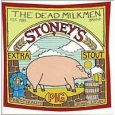 Of course, I can’t forget the Milkmen’s final release! But, in fact, I had forgotten about it, so much so that when I played it again, I was totally surprised to realize that I knew and liked a number of these songs quite a bit.
This disc was their return to Restless records, and it almost feels like their detour to Hollywood never happened. Back is the dominace of Rodney Anonymous’ songs andthe more chaortic, frenetic guitar work of thier earlier discs.
It opens with “Peter Bazooka” a dark meandering song that features the one consistent thread on this disc: most of Rodney’s verses are spoken rather than sung. Which is fine, except the songs somehow feel more noveltyish when they’re delivered this way. So even if a song like the second track “Train I Ride” is just as silly as any DM song, because it’s sung it feels more like a proper song than a novelty. “The Girl with the Strong Arm” is even more frenetic than “Joe Bazooka” and it’s another rant (although with a more singable chorus).
But a song like “Helicopter Interiors” sounds like classic DM: simple clever guitar line, raucous guitar, and it’s under 2 minutes long. And, while the back half of the disc is less exciting than the front, the rocking “Chaos Theory” is good fun: “Study hard and you’ll have a future, oh yeah when the hell was that ever true?”
But Joe Jack Talcum’s songs are not absent from the disc. He appears first on “I’m Flying Away” a slow, reggae tinged track that feels too anemic to have ever been a hit. “The Man Who Rides the Bus” is a rocking, more catchy track although again it’s missing anything even resembling a hit.
A couple songs do overstay their welcome: “Blues Song,” a parody of the blues (yawn) is over 4 minutes long (yes, the solo section is pretty funny). Although even a lesser song like “When I Get to Heaven” is enjoyable enough (the return of odd vocal effects is also welcome). The only real failure is the horn-fueled pseudo funk of “Crystalline.” At this point I’m not sure if it’s wise for the DM to bust so far out of their comfort zone.
Joe Jack sings the final three songs. “Khrissy” is a trebly love song, “Like to be Alone” is a piano ballad that doesn’t really go anywhere, but the final song “Big Deal” is a another negative song package as a humorous uplift anthem. It concludes the DM’s output on a high note.
I’m not sure if the band should have done more after this. And of course, there is much sadness that bassist Dave Blood killed himself a few years ago. But I understand they still tour and they keep their website active. DM are a wonderful staple from my college days, and I thank them.
[READ: April 16, 2010] Monsieur Pain
It is not lost on me that while I was reading a book called Monsieur Pain, I was stricken with an abscess in my cheek. It swelled as if there was a softball in my mouth and it hurt like a mother. And, since this happened while I was on vacation, I had the delight of going to a Virginia Urgent Care center carrying this book around with me (and the medical services were excellent, thank you all).
Of course, the Pain in the title is not a man who inflicts pain or anything, it’s just his name. I was wondering if, since he is French, if the Pain is to be translated as “bread.” That is never addressed.
This story exemplifies the fascinating twists and turns that Bolaño puts in his books (this one was one of his first). In the introductory note to the book, he states that he wrote this story in 1982 and then submitted it to two different fiction contests under different titles. He won both contests. (Ha!). The other fascnating thing about this story is that most of the people are real. And while yes, that is a conceit he uses in a lot of his stories, in this one the real people are the main people: César Vallejo was a real poet (and did have the hiccups) his wife was real, Pierre Pain was indeed a mesmerist, and of course Madame Curie is real, too.
The story itself was fascinating and sometimes difficult. (I had to re-read the scene in the movie theater a few times to get the total picture). It is written from the point of view of Monseuir Pain. He is contacted by Madame Reynaud (a woman he is sort of in love with, especially now that she is widow) who urgently requests that he go to see someone “profesionally.” The someone turns out to be the husband of her friend Mrs.Vallejo (who turns out to be the poet César Vallejo–although plotwise that is not important). She says he is dying from the hiccups. (more…)
Read Full Post »
 SOUNDTRACK: THERAPY?-High Anxiety (2003).
 I hadn’t listened to this disc in a long time, and I was delighted by how much I remembered (and liked) it. This was the last Therapy? album that received a release in the U.S. And it is a solid collection of heavy alternative metal with some seriously catchy bits thrown in for good measure.
 SOUNDTRACK: THERAPY?-Never Apologise Never Explain (2004).
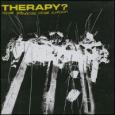 This album is the prior release to One Cure Fits All. It’s not true that Therapy? works on a harsh release/melodic release kind of schedule, although judging by these two discs it sure seems that way. Never Apologise begins with a blistering, noisy “Rise Up.” The really notable difference with this disc and other Therapy? releases is the amount of noise in the track. One of Therapy?’s most notable sounds has been a guitar that is so clean it sounds almost unreal.
 SOUNDTRACK: FUGAZI-Steady Diet of Nothing (1991).
 Jangly noisy guitars open the track (and then a lengthy silence after a minute or so). And this loud/soft dynamic is pretty dramatic on this disc.
 SOUNDTRACK: THERAPY?–One Cure Fits All (2006).
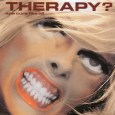 I’ve always liked Therapy?’s brand of aggro-alt metal/whatever you call it. Their earlier stuff was harsh and dark. During their middle years they grew surprisingly commercial (although they’ve always had a bit of a commercial side to them, even at their harshest).
 SOUNDTRACK: METALLICA-Kill ‘Em All (1983).
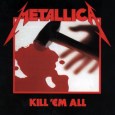 Although I don’t think I remember exactly when this disc came out, I was pretty big into heavy metal (the heavier the better) back in 1983. I can remember this was my freshman year of high school, and I’m fairly certain I bought this LP pretty soon after it came out (thanks to the awesome radio show mu-mu-mu-mu-mu-metal shop).

 SOUNDTRACK: BEN FOLDS-University A Capella (2009).
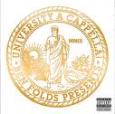 The story goes that Ben Folds heard some a capella bands and decided to give them some airtime. So he had them record a bunch of his songs.
 SOUNDTRACK: THE DEAD MILKMEN-Chaos Rules: Live at the Trocadero (1994).
 It wouldn’t be a complete look at the Dead Milkmen without mentioning their one live release.

 SOUNDTRACK: PHISH-Joy (2009).
 This is basically Phish’s reunion disc (after a 5 year hiatus). It opens with one of their poppiest songs, “Backwards Down the Number Line” a song that picks up where their least disc left off: with a feeling of driving down a country lane with nowhere to go, windows opens, just happy to be alive. The second track, “Stealing Time from the Faulty Plan” is a delightful rocker with a supremely catchy chorus “got a blank space where my mind should be….”
 I Just Read About That...