Feeds:
Posts
Comments

Archive for the ‘Authors’ Category

SOUNDTRACK: COLIN STETSON: “Horn of Plenty” (interview, NPR’s All Things Considered) (2011).

I’ll be mentioning some recordings by Stetson shortly, but as an introduction to this man and his bass saxophone, this ten minute piece from NPR is absolutely essential.  I had listened to his recent album and NPR has two concerts from him that are downloadable.  I enjoyed the music, but after listening to this interview it gave me so much more appreciation for what the man is doing.

For a lot of classical and jazz, knowing what the author “meant” can help.  Knowing that The Moldau is a river makes Bedřich Smetana’s piece all the more interesting and moving.  Similarly, knowing that “Judges” is about horses… well, holy crap yes it is.

More importantly, knowing how he does what he does–circular breathing: taking air in through your nose while breathing out through your mouth (try it…it’s not possible) allows Stetson to essentially never have to stop playing.  (Tenacious D has a very funny version of this called “Inward Singing,” although it lacks the gravitas of Stetson.)

Also, the bass saxophone weighs twenty pounds nad is almost as tall as him.  The picture is preposterous.  Who even thinks of making music with such a thing.  And yet he does.  Unsettling music, sure, but music nonetheless.   Listen to this interview and be amazed.

[READ: 2010-2011 and beyond] Natasha Wimmer

Many readers don’t read anything that was written in a different language.  And those of us who do probably give little thought to the translator.  Until recently I didn’t give much thought about them either.  Often I assumed that if I didn’t like a book, it was the author not the translator.  And that could be true, but it may also not be so easy a judgment.

Natasha Wimmer has translated many of Roberto Bolaño’s English publications (she has not translated them all–see below–and, she has also translated other writers).  But she has famously translated The Savage Detectives which rocketed her to prominence, and then she managed his unwieldy 2666.  She has also recently translated Between Parentheses, the book I am currently reading.

Between Parentheses is a collection of newspaper columns, essays and pseudo-fictions.  It is a far cry from the convoluted masterwork that is 2666 and yet Wimmer has made this collection of essays utterly readable (I’ll review the book proper when I finish it).  Again, obviously the work is Bolaño’s and he deserves the credit.  But as I’m reading these newspaper articles, I am aware that they were written in Spanish.  And yet the word choices that Wimmer uses, from idioms to real seventy-five-cent words make the essays flow, give them real impact and really convey the kind of writer that Bolaño was.  Let’s take just one example picked not at random but because it uses a real seventy-five-cent word and it mentions David Foster Wallace (can I go a week without mentioning him?).  In “All Subjects with Fresán”, Bolaño states that he and Rodrigo Fresán spend much of their time talking about various subjects;  he lists 30.  Number 22 is “David Lynch and the prolixity of David Foster Wallace.”  I have no idea what word Bolaño used in Spanish (he has an amazing vocabulary, so I’m sure it was a Spanish 75 cent word) but how many translations would have used the word prolixity?  [Okay I had to look it up, he uses “palabrerío” which Collins translated as “verbiage, hot air.”  How much more outstanding is “prolixity”!–Oh, and as if Bolaño wasn’t prone to palabrerío himself]. (more…)

Read Full Post »

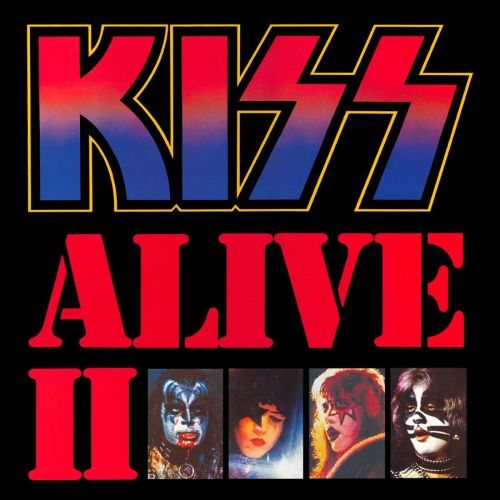
SOUNDTRACK: KISS-Alive II (1978).

There’s not too many million-selling albums that have a man covered in blood on the cover.  And yet here is one.  (I’ve always been confused why Paul and Ace both look like they are not wearing the white makeup in these photos).  I must have listened to this 4 sided LP a thousand times as a kid (my poor mother–what did she do while I monopolized the only stereo in the house and made her listen to Paul Stanley rambling on and on? 

“Detroit Rock City” and “King of the Night Time World” open the concert just like they open Destroyer.  But unlike on Destroyer, the next songs keep up the fast pace with “Ladies Room” and “Makin’ Love.”  All four of these songs are a bit faster, a bit louder a but more intense than the album versions (especially the Destroyer tracks, which have all of the bombast removed).  This first side ends with an energy-packed “Love Gun.”  I mean, holy cow, what an opening, it’s all nonstop heavy rock.  Even though I like, nay, love the originals, these version have so much energy, so much presence (they would have it even without the crazed fans screaming–which is practically like static it is so continuous) that they blow away the studio versions.

“Calling Dr. Love” is a much faster tempo (with a wonderful intro about “rock and roll pneumonia”) and “Christine Sixteen” loses the piano (which I admit I liked, but it works great without it), and it’s far creepier here.  “Shock Me” picks up some rock from the studio version, but more importantly, it picks up a crazy guitar solo (which is yes, much better seen than heard).  “Hard Luck Woman” to me sounds funny in this setting.  Don’t get me wrong, I love it, but it’s hard to imagine them playing it amidst all the chaos of the rest of the show.  And then “Tomorrow and Tonight” is fine in this context, but you can kind of feel the fans wishing for “Rock and Roll All Nite.” 

Side three opens with “I Stole Your Love” which rocks equally as hard live.  It’s followed by “Beth” perhaps the strangest thing on a live album.  From what I’ve seen, Peter comes down from behind the drums, sits in the front of the stage and sings his mega-hit to piped-in piano music.  I guess it was something of a break for the rest of the band.  It’s followed by a truly intense version of “God of Thunder”–faster and heavier than the original and very cool.  The only surprise is that it contains a drum solo–the solo is not the surprise (it is the 70s after all), the surprise is that “God of Thunder” is so obviously Gene’s song, it seems odd that they would break it up with a drum solo (although if memory serves, he uses the time to clean off all the blood from his face and guitar).  “I Want You” sounds really great in this version (the guitars are wicked) and it gives Paul a chance to show some vocal acrobatics.

The LP version featured this awesome gatefold inner photo which I have to say may have really set the bar high for other bands in terms of concert awesomeness.  My vinyl copy has pencil lines etched into the cardboard from the number of times I traced the picture.  (Thanks to Porcelain Theology, a blog I am enjoying very much, for this picture).  The live portion of the show ends with “Shout It out Loud” which works as a very solid anthem to end the concert.

The fourth side of the LP always confused me.  When I was young and didn’t really understand how to read credits, I assumed that whoever’s name was after the song was the person who sang it (generally true, but not always).  So, when side four featured covers and songs written by people not in the band, it blew my mind.  I also didn’t understand why there were five non-live, indeed, brand new songs on this live album (they didn’t want to release any songs that were also on Alive!–perhaps the last time they didn’t reissue music).  I respect this decision, but at the same time, how much cooler would this concert be with “100,000 Years” or “Deuce” included? 

The five songs actually aren’t bad, but they don’t really have all that much excitement to them.  “All American Man” is a surprisingly gritty song from Paul and “Larger Than Life” is pretty interesting musically (and I just realized that love means penis in this song too and that it’s actually a pretty funny brag song).  “Rocket Ride” is probably the best song on this side.  Ace didn’t contribute to any of the other songs on this side, but he goes out with a blaze!  The chorus is a little cheesy but the verses are really cool, and the solo rocks. 

How I miss the excess of the 70s.

[READ: October 1, 2011] “Flick Chicks”

Mindy Kaling is a writer for and actor on The Office.  She is very funny.  I’m not sure if she has written for the New Yorker before, but I like her and wanted to include her here (just to get some of her magic mojo to appear on my blog).  This piece is labelled an “L.A. Postcard” and it is more or less broken into two parts. 

The introduction shows Mindy sitting down to pitch a new movie.  She claims that all TV writers want to write for movies because “At the Oscars, the most famous person there is, like, Angelina Jolie.  At the Emmys the huge, exciting celebrity is Bethenny Frankel.”  [I actually don’t even know if Bethenny Frankel is a real person, so I guess that proves the point].  Although this year there has been a lot of chatter about the movies stars who are now on TV shows–see the New Yorker event Bravura Television.  William H. Macy and Jeremy Irons  may not be Angelina Jolie, but they’re still pretty awesome.

Anyhow, the joke of her movie pitch is that she wants to write a romantic comedy, but the studio is now focusing solely on making movies based on board games (see the existence of Battleship: The Movie).  Pretty darn funny. (more…)

Read Full Post »

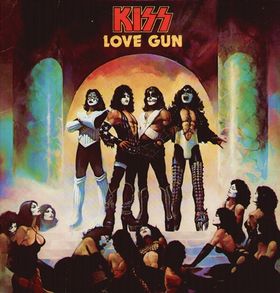
SOUNDTRACK: KISS-Love Gun (1977).

This was the first Kiss album I’d ever heard.  I’ll never forget my cousin bringing it to Long Beach Island in the summer of 1977.  I loved “Christine Sixteen” (of course, I was 8 and had no idea what it was about, I just loved singing it).  And the album has always held a magical mystique for me.

And even now I think the opening guitars of “I Stole you Love” are fantastic–fast and furious.  And the processing (or is that harmonizing) on Paul’s vocals make this song so urgent it’s really amazing.  I also got a kick out of the “guitar!” comment before the solo–certainly not the first band to do it, but surely the first I’d ever heard (they may be the first to say “Listen” at the end of a solo, though).  “Christine Sixteen” is a preposterously poppy song (listen to the bouncy, happy piano!), how could an 8-year-old not love it.  It is, of course, utterly creepy when Gene sings it now, (actually, my calculations show that he was 27 when he wrote the song–still pretty fricking creepy–and in some places, illegal).

The choppiness of “Got Love for Sale” makes the song different from many other Kiss songs, which were all about flow.  The guitars are choppy, the drums are choppy: t’s pretty cool. It’s all hard and heavy (except for the doo wopping “got love for sale” backing vocals).  Ace Frehley finally gets a lead vocal turn on the awesome “Shock Me.”  This has always been one of my favorite Kiss songs although listening to it now it sounds a little weak on this album (really uninspired backing vocals, eh?) but the solo is ripping–and the live versions are much more intense.

My first version of Love Gun had a skip at the beginning of “Tomorrow and Tonight” which made me not like the song very much.  Now I just think of it as a piece of filler–it sounds like it could come from Paul’s solo album (what’s up with the backing singers?).  I assume that they were trying to dip into the anthemic power pop well one too many times with this one.    But all is forgiven with the next song, “Love Gun.”  Yep, sex metaphors abound in Kiss, but this one is pretty awesome.  Beyond that, the sound of the guitars is great: the powerful power chords and the amazingly full chorus are also great.   And the staccato drums (and blistering solo) obviously make the song genius.

The rest of “Side two” is pretty interesting.  “Hooligan” is an odd little number.  It’s Peter’s song and it swings–Peter was always more into older rock than anything else, and this song, if it was stripped of its rougher edges (and cool solo) would fit pretty well on any of Peter’s (not very rocking) solo albums.  Although “dropped out of school when I was 22” is a pretty great line.  “Almost Human” is a weird song with some crazy guitars.  The solo is absolutely insane–I’d love to have seen the recording of it–just noises upon noises, very cool.  And the music itself has an odd eastern feel.  There’s great vocals and effects and all kinds of interesting things going on.  It’s an overlooked gem from this disc. 

Then there’s “Plaster Caster” the song about the woman who makes plaster casts from rock singer’s penises.  I still laugh at the euphemism of “if you want to see my love, just ask her”.   I’ve always loved this song even though listening to it now, it sounds kind of anemic (of course, the guitars were sampled in Tone Loc’s “Funky Cold Medina” so that’s got to mean something, right?) 

The album ends with a cover of “Then She Kissed Me.”  Even though Kiss likes that kind of music, I never did, so this song has always been my least favorite song of all of the first six Kiss albums.  But hey, the album runs 32 minutes in total–without those three minutes, you’re under half an hour.  That’s why I assume it was included.  The solo is nice though.

The album is pretty heavy overall and has some great guitar solos from Ace.  They’re not as anthemic and pretty as on Destroyer but they really show off his guitar skills.  And even though I tend to like Destroyer, Love Gun might be #1 for me on any given day.

[READ: October 4, 2011] “The House on Sand Creek”

This short story was on the surface very funny even though underneath there was exceptional sadness.  The events that set the story in motion are pretty unlikely–a couple rents out a property sight unseen (as if–especially since he is a realtor) and it turns out to hold so much karmic malfeasance that it quickly makes the wife, Monika, flee the god forsaken countryside and fly back to Bosnia. 

The narrator falls into a rhythm with his neighbor Bob (this part of the story reminded me of parts of Wells Towers’ stories–two men, out in the middle of nowhere, bonding despite obvious differences).  But the story quickly moves back out of Tower territory when the narrator gets a call from Monika (about two years after she left).

Her new marriage in Bosnia didn’t work out and she’s moving back in with him and bringing her new son as well.  (Again, it seems unlikely that this could just happen–that she would just call and say she was moving back in with him after two years, but whatever, it moves the plot).  And so, the narrator and his ex-wife move back in together with Monika’s son, Karel.  Karel is the son of an African man and Monika hopes he will grow into a Mandingo (this seems unlikely since the boy’s father is actually a short neurosurgeon from Yoruba–a West African village). (more…)

Read Full Post »

SOUNDTRACK: KISS-Rock and Roll Over (1976).

After Alive!, Kiss released what I think of as the cartoon albums.  These next three discs all had cartoon covers, which also coincides with their huge ascent into fame.  I tend to think of Destroyer and Love Gun more than this one (maybe full-bodied pictures are more memorable than just their faces), even though this one has a huge share of important Kiss songs like “I Want You” (which has an amazingly long version on Alive II). 

I never really liked “Take Me,” there’s something about the chanting backing vocals that irks me (although “Put your hand in my pocket, grab onto my rocket” is one of my favorite Kiss couplets).  But “Calling Dr. Love” is a wonderful twisted song (the falsetto backing vocals are so doo wop, it’s funny to contemplate the band’s musical direction at this point).  I loved this song so much it even features in one of my first short stories

As an eight year old, I could never figure out what Gene would be doing in the “Ladies Room”–since he was a boy and all.  Naiveté is a wonderful thing to have as a young person listening to Kiss–I had no idea what was going on in most of the songs–I wonder if my parents bothered to listen to the lyrics at all.

I also never really liked “Baby Driver” all that much–I don’t know if it’s Peter’s voice, or that I can’t figure out what the hell this song is about but it’s still just okay to me–although I like the guitars at the end.   I love the solo in “Love ‘Em Leave ‘Em”–although the sentiment is not the best.  Of course, the sentiment in “Mr. Speed” cracks me up: “I’m so fast, that’s why the ladies call me Mr. Speed.”  Did that mean something different in 1976?

“See You in Your Dreams” was covered by Gene on his solo album, and I think I like that version better (it’s more theatrical).  Although this one has very interesting use of Beatlesesque harmonies.  “Hard Luck Woman” is wonderful song, and I do like Peter’s voice here, yes.  But who the hell is Rhett?  “Making Love” ends the disc.  I like the break in the middle and the awesome guitar solo.  Also, Paul’s vocals have some cool effects on them. 

This is a fun album.  Even the songs I don’t love are still songs that I like quite a bit.  It’s a nice contrast from the bombast of Destroyer.  The amazing thing is that both this album and Destroyer are barely over 30 minutes long.  Were they making albums so frequently that they didn’t have any more songs, or were they just following the Beatles model: make an album every 7 months to stay in the public’s eye?

[READ: October 2, 2011] Dogwalker

I can’t believe how quickly I read this book.  I wasn’t even planning on reading the whole thing just yet, but I started the first story and it was so quick to read and so enjoyable that I couldn’t stop.  I finished the whole book in a couple of hours (it helps that a number of stories are barely 4 pages and that it’s barely 150 pages).  The title of the book is something of a mystery as there are a lot of dogs in the stories, but walking is about the furthest thing from what happens to them.  I was also somewhat surprised to see how many of these pieces I had already read (Bradford was in five of the first six McSweeney’s issues). 

This collection is certainly not for everyone.  In fact when I recounted the story “Dogs,” Sarah was disgusted and said she would never read the story.  Bradford definitely pushes some boundaries, but they’re mostly in an attempt to find humor, so I think that’s cool. Sarah even admitted that the end of “Dogs” sounded funny (although she was still disgusted).  The two things I found odd about the stories were that two of them featured a three-legged dog, which seems a little lazy to me–although I don’t know what the dog might signify.  And two of them featured someone or something singing unexpectedly and the narrator getting a tape recorder to surreptitiously save this special recording.  Again, it’s a really unusual thing to happen at all, but to have that happen in two stories?

Aside from those little complaints, the stories were fun, funny and certainly weird. (more…)

Read Full Post »

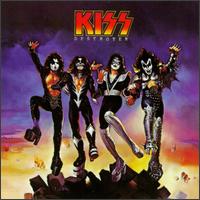
SOUNDTRACK: KISS-Destroyer (1976).

Although this is not the first Kiss album I heard (that would be Love Gun) it was probably the one I listened to most (it had “Beth” on it after all).  It is also full of some of the most over the top theatrical music of any heavy metal band at the time (is it any wonder that I also enjoy Meat Loaf and other over the top bands if I was raised on this?)  Kiss has always been about theater, and how much more theatrical do you need? (How about a cartoon of the band standing on a pile of ruins?).  But this album is such a classic, it’s hard to even think critically of it

“Detroit Rock City” is, well, it’s “Detroit Rock City.”  An amazing, iconic (albeit simple) guitar solo, great effects in the beginning (with Paul (I always assumed) singing along to other Kiss hits on the radio) and an awesome crash at the end.  Fill it out with an amazing riff and great work from the whole band.  What more need be said?  How about the way it leads perfectly into “King of the Night Time World.”  This song is overlooked despite its greatness.  It opens so loud and full then the verses get awesomely tinny until the galloping chorus kicks back in (Petter Criss plays drum rolls mid-song like no one else).  It also has great riffs and a memorable solo.  Oh and then a little song called “God of Thunder.”  Awesome bombast, creepy kids’ voices (I remember some kind of rumors about who the kids were and how they were held captive by the band or something).  It’s a wonderfully memorable song.

“Great Expectations” slows things down but adds the bombast.  I’ve always enjoyed this egocentric song, even as a kid singing along in a mirror.  Although the extra musical notes (keyboards and such) are kind of wimpy.  But it’s followed by the electrifying “Flaming Youth,” a hard-edged guitar song that is pretty simple, but pretty potent.  Again, the keyboard bits undermine the heaviness, but the repeated “higher and higher and higher” is pretty bad ass.

“Sweet Pain” is a great dark Gene-sung song (evidently about S&M, although I never knew that quite so specifically–I never understood the first two lines until I looked them up just now: “My leathers fit tight around me/My whip is always beside me”).  “Shout It Out Loud” is one of the great Kiss anthems.  I actually prefer it to “Rock and Roll All Nite” although that could be just because of the over exposure of “RaRAN.”  Of course, “Beth” is next and it is impossible for any Kiss fan to say anything about “Beth”.  This was the first song I ever memorized the lyrics to, and I sang it to my no doubt confused grandmother when I was 9 years old–my first and only live performance until college.

I always liked “Do You Love Me” (I think these Kiss fantasy songs were pretty big for me).  I was always confused by the tinny voice in the final verse of the song.  It was very strange to my young mind, but it really stands out in the song–as does Paul’s ending rant.  The overall sentiment of the song  is kind of funny coming from the guys who would soon be singing “Love Em Leave Em” but it is nice that they feel insecure once in a while too.

My LP of this album (or maybe it was an 8 track?) did not have the “bonus” track, which is just 90 seconds of a crazily processed version of “Great Expectations” with some lifted vocals of Paul in concert.  Apparently even though it is untitled, it is called “Rock and Roll Party” by most fans.  It appears to be a joke about all of the backwards masking that was supposedly on Kiss records.  Huh.

This is still one of my favorite albums of all time.

[READ: September 30, 2011] “The Russian professor

Nabokov did not secure the teaching position at Wellesley where he had been creative writing professor the year before (Lolita would not come out for a nother 13 years, so he was working via his Russian book reputation).  So instead, he went on a several-month speaking tour of Unites States colleges, many of them in the South.  These (excerpts from) letters to his wife detail some of the indignities that he suffered and reiterate his love for her and his son.

On his way to Coker University in South Carolina, his train car was double booked, his taxi didn’t show up and he wound up going to the wrong hotel.  When he finally was picked up: “Feeling that I wouldn’t have time to shave before the lecture…I went in search of a barber” [what kind of time management is that??].  Nabokov writes of the shave:

He shaved me horribly, leaving my Adam’s apple all bristly, and since in the next chair a wildly screaming five-year-old child was grappling with the barber who was trying to touch up the back of his head with the clippers, the old man shaving me was nervous, hushed the child, and finally cut me slightly under the nose.

(more…)

Read Full Post »

SOUNDTRACK: HELLBENDER-Hellbender (1993).

Hellbender is a band that Wells Tower was in before he became a professional writer.  He played guitar and sang backing vocals (and wrote some lyrics, but not on this album).  The drummer, Harrison Hayes is now the drummer for Les Savy Fav and the bassist and singer Al Burian is most notable for his zine Burn Collector (for a time he was the most famous former Hellbender, although I’d never heard of him).  They were always pretty small time, although their third album did receive some attention.

This first album is pretty rough–quickly made and cheaply mastered and yet there are good dynamics, cool breaks and a whole lot of punk.  Al Burian’s voice is in shouty punk mode (lyrics are not all decipherable) and although his voice works it’s a bit samey throughout the disc.  The drums don’t always sound great, but there are often cool drum breaks.  And the guitars are quite assured.  Despite the punk attitude, it’s not all flat out speed.

There are some dynamic breaks, like in the second track “Housebroken,” which has some cool moments when the drums highlight an unexpected tempo changed.  “Clocked Out” was the single they released prior to the CD and it has some real production values (and a very funny intro from a local DJ).  The guitar highlights the trebly end in a kind of ska riff which is quite different from the rest; there’s also some discernable bass lines and a cool bass/guitar solo (punk, yes, but branching out a bit).  It’s a great track.

“Two Twenty Two” made it onto a couple of local compilations.  It has a slightly less heavy feel, with some interesting guitar lines.  “Aisle Ten” has verses that end with some really heavy (reminding me of Metallica) riffs that really punctuate the vocals.  “Peeling” has some cool backing vocal chanting (as well as what sounds like an answering machine message) that sets it apart from the other songs.  “Clarence” has a really long instrumental opening (1 minute out of a 2 and a half-minute song) that shows of more of Burian’s bass lines.

“Couch” was the B-side to “Two Twenty Two” and it has better production values as well–and lots more dynamic parts.  The final song, Retread” is a sorta political song, “Do you remember when we were young–revolution seemed like fun.  I thought I could get things done by yelling at the top of my lungs.”  Not mind-blowing lyrically but a good sentiment nonetheless.

The band is very tight–their breaks and starts and stops are right on–many of their songs end suddenly and the band pulls it off very well.  When I first listened to the album, I thought it was kind of pedestrian, but after really listening, I realized this is a very well-formed debut. It’s an interesting addition to any punk fan’s collection and an interesting footnote for any fan of Wells Tower.  You can find a copy of the disc at Metro/Sea.

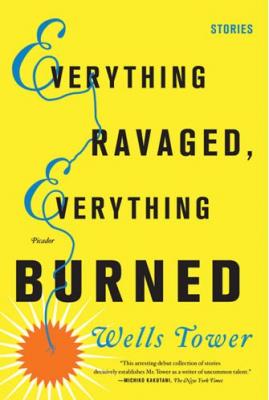
[READ: September 30, 2011] Everything Ravaged, Everything Burned

After talking about Wells Tower for a while and reading all of his uncollected stories and nonfiction, I finally got around to reading his short story collection.  And I think I have an interesting perspective on the book because at least two of the stories were totally reworked from their original release.  Not simply updating a thing or two, but totally revamped.  In my experience, aside from the David Foster Wallace essays that were truncated in their original form, this is the only book I know where the stories inside were totally rewritten for the compilation.

There are nine stories in the collection.  And I have to say as an overview to this book, I can’t get over how much I enjoyed them.  I mean, I knew I liked Tower from what I had read before, but I didn’t expect to enjoy this book quite so much because Tower writes a very manly kind of story.  He usually writes about tough guys and men who have a hard time interacting with their fathers and other situations that are out of my ken.  But Tower upends many conventions in his stories and his prose is tight and succinct and his stories are very quick to read and really enjoyable. (more…)

Read Full Post »

SOUNDTRACK: PHISH-Live Phish Downloads 07.06.98 Lucerna Theatre, Prague Czech Republic (2008).

This live release is fascinating to me because there’s some major mistakes during the show.  It’s interesting to me that when I read other people talking about this show, they rarely speak of the mistakes.  I know that any band that plays as often and for as long as Phish does is bound to make mistakes, and of course, mistakes are part of the live experience.  Nevertheless, they are often jarring. 

And there are three pretty big ones in this show.  The first comes in “AC/DC Bag.”  This one is particularly noticeable because it comes after a brief pause in the song.  The band comes back in after the break and whonk–wrong chord.  A similar thing happens in their cover of “Cities,” it’s a staggered musical section and whonk–they’ve missed it.  But by far the most egregious is in one of my favorite songs, “Golgi Apparatus.”  There’s a really wonderful musical interlude in the middle of the song.  And in this version, holy cow.  Trey misses the notes to start the instrumental and he just cannot find them again, so the wrongness continues for almost a full minute.  It’s incredible.  Trey is a pretty mellow guy, I’d love to see his reaction during all of that.

But aside from these errors, the set is otherwise really good.  They come to a dead halt in the middle of a jamming, really blistering guitar solo section of “Maze” to thank the audience for coming and to apologize for not thanking them last night.  It’s a weird, quirky thing to do, but it’s amazing that they then pick up the song right where they left off, blistering away to the end. 

The version of “Ghost” is really fantastic with an amazing solo in the jam.  There’s a funny interlude near the end of “Makisupa Policeman” in which there are John Fishman, the drummer takes a solo audience is invited to whistle when the solo has gone on too long.  Amusingly, the solo is very simply a high hat and snare–no indulgences at all.  The crowd starts whistling and the song ends.  But the two highlights for me are the amazing 20 minute version of “Piper” with, again, an absolutely ripping guitar solo and “David Bowie, ” another great song with a cool guitar riff.

When live albums used to come out, they were polished and perfect–sometimes fixed up, or entirely recorded in the studio.  In these days when bands release full concerts all the time, it’s more common to hear mistakes.  But this was an offical release, one of but a handful of CD live releases, and I applaud Phish for not shying a way from a concert with some incredible highs and some major lows.   

[READ: September 25, 2011] 4 books reviewed

I’m including this other book review because I like William H. Gass and I labor under the mistaken belief that I will read all of his books some day.  In the case of this review I was totally fascinated by its construct and its length (Gass is not afraid to be long-winded).  The subject is Elizabeth Bishop, an author whom I know nothing about.  He talks about four books by or about her, her two collections: Prose and Poems, as well as Elizabeth Bishop and the New Yorker: The Complete Correspondence and Words in Air: The Complete Correspondence Between Elizabeth Bishop and Robert Lowell.

The review opens with Gass’ serious criticism of one of Bishop’s poems (he really seems to be laying into it).  He proceeds to say that back in the day (when Wallace Shawn was editor and earlier) that the New Yorker was quite different about the kind of things it accepted (wonderful examples include them not wanting to publish a poem at a certain time of year because it didn’t fit the season (!) or that the editors were uneasy about printing a poem that contained a clause about dirty underpants (!!–they published the poem but removed the clause).  The prissy nature of the rejections is hilarious, especially given the kind of explicit stuff they publish now. (more…)

Read Full Post »

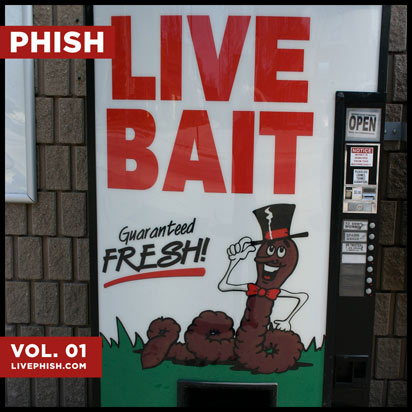
SOUNDTRACK: PHISH-Live Bait, Vol 1 (2010).

This first Live Bait release contained songs from Phish’s 2010 tour.  It was a good way to see how the band sounded these days and, as the title suggests, it was a good way to bait the fans into buying full shows.  The sampler covers shows from NJ, NY, GA and MA and it runs about 80 minutes.

Although it features primarily older tracks (a great version of “Tweezer” and a lengthy “Slave to the Traffic Light”) it also includes my first exposure to a live version of one of their new songs: “Backwards Down the Number Line.”  It also contains “Show of Life” a song that’s really a Trey Anastasio solo song–although frankly it doesn’t sound any different from a Phish song here.

The band sounds great–the hiatus did them wonders and it’s an auspicious beginning to a whole bunch of free music.

[READ: September 25, 2011] 3 Book Reviews

When I first discovered that Zadie was going to be writing the New Books column at Harper’s I deliberated about whether or not to write about each one here.  I mean, first off, it’s book reviews, how much can you say about someone else’s book reviews?  But second off, would I be writing about her reviews forever?  I mean, it’s a monthly column, it would be exhausting.

Well, it was exhausting–for her anyhow.  At the end of the column she admits that she can’t keep up the schedule (and frankly, reading that many books a month would be exhausting for me, but she’s also trying to write a novel, teach classes and “bring up a kid.”)  So this is her last one.  She had a pretty decent run from March-October 2011.

And she ends unexpectedly (for me anyhow) by talking about science fiction! (more…)

Read Full Post »

SOUNDTRACK: PHISH-Live Bait (2010-2011).

If you’re a fan of Phish, you no-doubt know about their live concert releases.  Phish has always encouraged bootlegging of their shows.  And people traded the shows all around the country.  Back about twelve years ago, they started releasing some of these concerts officially–soundboard quality recordings.  There was no indication that they would release every concert they had played, but they selected a very interesting mix of recent and early shows as well as Halloween shows (where they cover an entire album from another band) and shows from unusual places.

Starting in 2009 (after their hiatus), the band started making (almost) all of their concerts available for download (for a fee) on their site.  You can get any show–you can even get them in CD format, for a quite sizable fee–soundboard quality.  One thing that I really like about their site if you go to a concert, you can redeem the bar code on your ticket for free MP3 of the show, usually within 48 hours.  Back when I used to go to concerts, I would have loved to have copies of a lot of the shows I saw.  This is a cool service for their fans.

And speaking of cool services, this post is about Live Bait.  I love the title of the series, which is obviously a pun about places where you can buy live bait (the covers all have pictures of bait stands), but it’s also a wonderful way to bait users into buying more music–crass and clever.  Anyhow, the Live Bait downloads (up to #6 right now) are a collection of live recordings taken from various shows.  (Live Bait #5 has songs from 2009 and songs from all the way aback to 1989).  They’re assembled together into a kind of seamless show and they are all available for free. 

Okay, big deal.  But it is a big deal because, while the first couple were 80 or so minutes of music (not too shabby in and of itself), Live Bait #3 features a 58-minute version of a song (!); Live Bait #4 contains almost 4 hours of free music and Live Bait #5 contains over 6 hours of free music.  So if you’re curious about why people like Phish so much, here’s several opportunities to listen to some of their live songs for free.  

Their most recent download is from their Benefit for Vermont Flood Recovery–if you’re going to buy a show, it’s a good place to start

[READ: September 25, 2011] “Radisson Confidential”

For a time (I wish I could remember exactly when this was) it seemed like all the young hip writers were named Jonathan: Ames, Lethem, Franzen, Safran Foer, and I wasn’t sure what to make of it.  I think I grew weary of the whole episode and decided not to read any of them.  That has since changed, and I have now read (and enjoyed) all of them–but each for very different reasons.  The funny thing to me though is that they were all lumped together and yet they are all so very different, especially now that Safran Foer has been writing nonfiction and Franzen has proven himself to be a writer of occasional big books that get lots of attention. (more…)

Read Full Post »

SOUNDTRACK: TOM WAITS-Heartattack and Vine (1980).

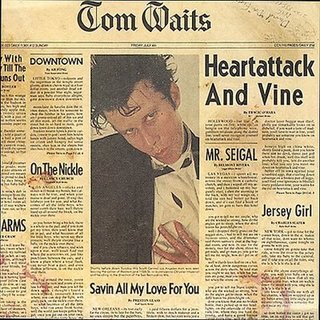
This is the final album Waits made before switching labels and starting over as a new, far more artsy artist.  The album cover is crazy, it looks like a newspaper (with all the lyrics to printed like articles on the cover).  And there’s a picture of Waits in a tux, hair askew, looking like the most stricken man alive.  It’s not a pretty cover, but it sure conveys a lot.

“Heartattack and Vine” is agreat noisy bluesy song.  It’s very simple and focuses on Wait’s lyrics and delivery: “I bet she’s still a virgin, but its only 20 after nine”).  Oddly, after that great vocal delivery song, we get the instrumental “In Shades.”  This has a lot of organ (which is a fairly new instrument in his repertoire) that he shows off his skills on, but it’s nothing that spectacular (and it’s recorded live apparently).

“Saving All My Love for You” is a sloppy kind of ballad (not as nice as most of his ballads), but then judging by the cover image, this is not going to be a sweet album.  See also “Downtown,” another rough track like the title song.

Of course, all of the talk of gruff nastiness is rendered false by the beauty of “Jersey Girl.”  Most people know the Springsteen version of this song, but (aside from the strings, which may be a bit much) I think this version exudes more real emotion.   “Jersey Girl” is a really wonderful song (especially if you’re married to a Jersey girl).  But what’s really great about it is that despite all of the sappy emotion (“My little girl gives me everything, I know that some day she’ll wear my ring,” there’s some great reality as well: “I see you on the street and you look so tired, I know that job you got leaves you so uninspired, When I come by to take you out to eat, You’re lyin’ all dressed up on the bed baby fast asleep, Go in the bathroom and put your makeup on, We’re gonna take that little brat of yours and drop her off at your mom’s.”

Sonically the shift from the guitar based blues noise of “‘Til the Money Runs Out” to the string laden ballad “On the Nickel” is pretty jarring. “On the Nickel” is one of Waits’ lullabies that’s not quite a lullaby.  But it’s got that mournful permanence that is hard to beat from Waits (he even performed it in the 2009 concert from NPR).  “Mr Siegel” is a barsy blues song (although it doesn’t sound like his earlier albums at all) and the album ends with the mournful ballad “Ruby’s Arms,”  which Waits sings in his best downtrodden voice. 

This album really showcases the breadth of his talents at this stage of his career.

[READ: September 24, 2o11] “The Ring Bin”

Who could even imagine what the title of this story means?  It’s weird, and it has so many possibilities.  By the time the answer is revealed, the story has gone in so many directions, you almost forget that you cared what the title meant in the first place.

First off, the tone of the story is bizarrely cool.  After a brief, confusing introduction (we’re at a celebrity gala of some sort), the story gives us this: “That’s when our heroine’s cellphone rings.”  It’s a kind of jarring intrusion by the narrator.  But before we can muse on this, the crowd is appalled at her break in etiquette.  And the story continues, “If these people knew the whole truth, they’d be more than annoyed.”  What is going on here?

And then the narrator gives up any pretense of disinterestedness: “I should step back a moment and describe for you the big picture.”  By now, as a reader you are reeling from all oft he broken rules.  

And then we find that this wonderful setting, this gala, is attended only by white people (which makes them all a little uncomfortable) but that the people onstage are a veritable United Nations and that the topic of the gala is tolerance.  Well, who knows what to think. (more…)

Read Full Post »

« Newer Posts - Older Posts »