Feeds:
Posts
Comments

Archive for the ‘Authors’ Category

SOUNDTRACK: NADA SURF-Plays Covers on World Cafe (May 13, 2010).

I didn’t even know that Nada Surf had released a covers album (sometimes things slip through the cracks), but when NPR previewed their new song, I learned that they played some covers for World Cafe (not downloadable, sadly) to promote the album. 

So I’m going to be investigating that covers album shortly.  In the meantime, we get this very enjoyable four-song set (three covers and one of their own tracks). 

The band chats with David Dye briefly (about 5 minutes) before busting into the songs (a wonderful explanation of Bill Fox and a mention of reading about him in The Believer).  Their own track is “Whose Authority” one of their many wonderful songs.

The three covers are “Love Goes On” (by the Go-Betweens), “Enjoy the Silence” (by Depeche Mode) and “Electrocution” (by Bill Fox).  I didn’t recognize the first song until the Ba-ba-ba chorus kicked in, although I admit I’m not terribly familiar with it.  Similarly, the final song by Bill Fox is very obscure (as is Fox himself).  Both of these two songs are played with jangly guitars and are poppy and quite enjoyable.

The Depeche Mode song is the one that I already really knew well.  And boy do they make it their own.  They turn it from a somber dirge (catchy but somber) into a more upbeat almost poppy folk song.  It will probably be a polarizing cover (if anyone cares enough about Nada Surf to listen) and while I don’t think it’s as good as the original, it works so well in the context of a Nada Surf show, that it’ hard to argue with it.

Nada Surf is one of the great unsung bands and it’s hard to believe they aren’t more successful.

[READ: October 21, 2011] Mission Street Food

With Lucky Peach, McSweeney’s entered into the world of food publishing.  I was surprised by how much I enjoyed Lucky Peach.  But when I received Mission Street Food, I was no longer in the frame of mind to get excited to read this book, which, as the subtitle says, promises recipes and ideas.  And when I first flipped through it, I got to the recipes pages and said, well, when will I ever read this?

Then one night recently I couldn’t sleep and Mission Street Food was there, so I read the Preface.  And Anthony Myint has a great writing style, a great flair for telling a story and a wonderful story to tell.  Needless  to say, I read almost the whole first section before falling asleep.  And I was excited to tackle the rest of the book.

I hate to sound like I think that McSweeney’s has changed the way food book publishing is done, because that would be unfair.  I don’t read food publishing as a rule.  I can’t even enjoy looking in my wife’s cooking magazines.  Seeing names of foods and recipes for preparing them just doesn’t do anything for me.  But maybe the narrative of those books is more interesting than I give them credit.  Maybe I should sit down with another foodie book and see what it’s all about. (more…)

Read Full Post »

SOUNDTRACK: NADA SURF-“When I Was Young” (2011).

This is a new song from Nada Surf’s new album (due out in January 2012).  Nada Surf aren’t changing much from their tried and true sense of pop hooks, but this is a slower, statelier song (with strings!).  It features a challenging-to-sing-along-with chorus (“I wonder what was that world I was dreaming of”).

It’s a bit longer and slower than my preferred Surf songs, although I can see it working well in the middle of an album.  About two minutes in, the guitars kick in and the song really comes to life.  It’s catchy and fun and has me excited for their new disc.

[READ: October 23, 2011] “Memory Laps”

This article came around the same time that our tickets for Sedaris’ upcoming performance at Raritan Valley Community College arrived in our mailbox (nicely timed, that).

It did make me wonder if I shouldn’t be reading anymore of these pieces, since I don’t want to spoil the humor of Sedaris live (although I think Sedaris is funniest when delivering his pieces–his monotone is just wonderful–even if I have heard them before).  And plus, the show is not until April, so chances are I’ll have forgotten about it by then.

This essay is all about young David when he was on the swim team (this guy has done so much in his life–who knew he was a swimmer too?).  The crux of the essay is that David’s father never praised him for his swimming; instead, he heaped tons of praise on David’s teammate Greg Sakas (I wonder if names have been changed in these essays). 

True, Sakas was pretty great, and he won every meet, but even when, on that one freakish instance when David beat Greg, David’s father was unimpressed, saying that Greg must have been ill or something. (more…)

Read Full Post »

SOUNDTRACK: YEASAYER-Odd Blood (2010).

Sometimes albums have a single that is nothing like the rest of the album.  So you buy the album and hate everything but that one song.  This album is almost the exact opposite.  It opens with a song that is so odd–noisy and with massively manipulated vocals, that you would never guess the rest of the album is like some of the best Depeche Mode-friendly pop in the last thirty years.

That opening song, “Children” is creepy, with lots of percussion and atmosphere.  And it gives you no expectation for what comes next: “Ambling Alp” a bouncy track with a super catchy chorus.  This track reminds me of Erasure at their heyday.

“Madder Red” seems to be comprised mostly of (rather nice) backing vocals) with lead vocals done in a mellow Depeche Mode style.  “O.N.E.” sounds pretty much exactly like a keyboard-heavy alt-radio hit from 1991 (it’s fantastic).  And “Love Me Girl” with its tremendous dual-vocals sounds like one of the best pre-guitar Depeche Mode songs ever.  It’s amazing. 

And yet for all of  this talk of sounding like mid 80s alt rock, Yeasayer adds enough new ideas–recording techniques, fullness of sound and current studio tricks that they don’t sound dated.  Or like a rip off.

The frantic keyboard lines of “Rome” propel that song, while “Strange Reunions” slows things down considerably.  Things pick up again with the chanting and the cool keyboards (and great post chorus riff) of “Mondegreen.” 

The disc ends with “Grizelda.”  It continues with this current groove.  Not the best song, but a decent ending to a great disc.  Just don’t let that first song scare you off of what’s inside.

[READ:  October 21, 2011] “Sez Ner

Sez Ner is evidently a place.  And this story is a snapshot of a day or two of that place. 

Sez Ner has a swineherd, a cowherd, some other farmhands and a priest.  This snapshot shows the men in their daily lives: accepting the fate of the dying animals, pushing the living animals to the edges of abuse and/or not really caring that much about them.  Some animals escape.  Some die.

The priest blesses everyone, takes his bounty and leaves. (more…)

Read Full Post »

SOUNDTRACK: PUBLIC ENEMY-Fear of a Black Planet (1990).

NPR recently broadcast a PE show from the All Tomorrow’s Parties Festival.  I didn’t know that PE was still touring, so that was a surprise to me.  The show was largely a celebration of Fear of a Black Planet, which meant that I had to go back and listen to the original.

Man, is this a solid album.  The lyrics pack a punch even twenty years later and what is perhaps more amazing is that the sound collages that Terminator X created, which were something of an oppressive sonic assault are now fairly mainstream-sounding (forward thinking or what?).

What I like about this (and most PE) albums, is that  they have little skits between songs, but unlike most rap skits they’re not one-not jokes that you listen to once and then skip every future time.  A wonderful skit (for lack of a better word) is “Incident at 66.6 FM” in which we hear an amazing amount of racist epithets thrown at PE apparently on the radio.  Or the rather disturbing “Meet the G That Killed Me.”  “Anti-Nigger Machine” is a great collage of samples like “Think” and James Brown and a dozen more songs.

“Can’t Do Nuttin for Ya, Man!” is a (sort of) comic song from Flav that is catchy as anything. While “Reggie Jax” is a confusingly titled song that has nothing to do with baseball, but everything to do with funk.

Of course, this disc has some of PE’s best songs as well.  From the awesome “911 is a Joke” to one of the best rap songs ever, “Welcome to the Terrordome” (my favorite story of this song is when I was wearing a  Welcome to the Terrordome shirt and my philosophy professor asked me quite pointedly, “What in the hell is a terrordome.”  That was a fun conversation).  “Terrordome” is still amazing–powerful, musically intense and for all of its lyrical acuity, it still has funny moments….boing.

And of course, “Burn Hollywood Burn” is an amazing critique of the movie industry (and it’s catchy too).  I got Black Caesar back at the crib, right Lar?

I’ve always been a little confused by “Pollywannacracker.”  Not lyrically, but vocally, as Chuck’s (is it really Chuck?) voice is treated in a surprisingly tinny way.  I liked the song more on this listen than any other, I guess in the past it just kind of snuck by me.

The album is a little front loaded with greatness.   “Power to the People” is another powerful song, but it’s not quite as memorable as the other tracks.  “Fear of a Black Planet” has some really cool sounds on it (where did they get that “black man, black woman, black baby” sample?).   “Revolutionary Generation” is a great track in which Chuck and Flav stand up for black women: “R-E-S-P-E-C-T, my sister’s not my enemy.”  Not your average rap subject.

And the last couple of proper songs, “B Side Wins Again” and “War at 33 1/3” are fast paced and furious, but they don’t really have much in the way of a hook.  Nevertheless, lyrically they are really great, and I love to hear Chuck D flow that quickly.

The biggest surprise for me is the censored version of “Fight the Power” (the song that got me into PE in the first place, thanks Spike).  It’s really surprising to me that PE allowed their music to be bleeped–unless it was just for a deliberate radio play (which I can accept).  Although they also list a title as “Leave This Off You Fu*Kin Charts” (did I buy a Columbia House version or something?)

This is an amazing album, one that still sounds fresh and sadly, is still relevant.

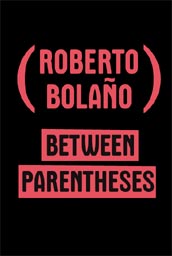
[READ: October 15, 2011] Between Parentheses

I never expected to get so addicted to Roberto Bolaño.  And despite his death, there is no shortage of works coming out in English (that is one of the advantages to reading a translated author–even death doesn’t cease the available materials).  Indeed, this year alone, New Directions is publishing Between Parentheses, and Tres and FSG is publishing The Third Reich (a collection of non fiction, a collection of poetry and a novel respectively).

When I really get into an author, I fall for his or her works, not necessarily him or her as a person (heck, some author are downright jerks).  But there are some authors that I want to know about, personally.  Bolaño is a pretty polarizing figure–he seems obnoxious, his works don’t shy away from very specific opinions, and sometimes it’s unclear what kind of views Bolaño himself has in his works (or if he’s even telling the truth about his so-called truths).  One thing in particular is the constant use of the word “faggot.”  It is used often in 2666 (and I know that is a translator’s choice, but still) and used derogatorily.  Now, clearly the context is everything for something like that.  But it seems to speak badly of Bolaño.  And yet, when reading these essays he is not homophobic in the least.  He is obviously well aware of institutionalized homophobia in Latin America, and he is obviously not supportive of it.

But that’s just one interesting thing about this book.  So let me back up. (more…)

Read Full Post »

SOUNDTRACK: SISKIYOU-Siskiyou [CST067] (2010).

Siskiyou is a fascinating band whose debut album was released on Constellation last year.  The main guy in Siskiyou is Eric Huebert, who was drummer for the Great Lake Swimmers.  He quit the band and moved to an organic farm in British Columbia. And while farming he created this album (which is named for the California mountain range and is not, as a I imagined, a play of the phrase Sick of You (which I will still think regardless of the truth).

There’s a wonderful article at Paste about this album, where I learned a lot about the disc.  The disc was recorded in stairwells (which seems so cool) and at field recordings on the beach.  It was made on the cheap and very independently.  And I love it.

It feels very much like a small solo project (although he is quick to point out that he had help from another Great Lake Swimmer, Erik Arensen, as well as his wife and some friends.  But really, it feels like a vulnerable man singing in his wavering voice over some stark acoustic songs.

But unlike a poppy folk album, this one feels awkward.  The melodies are beautiful, but the lack of polish and production makes the recordings feel more fragile than they might otherwise be.

Indeed, Huebert’s voice, while always on pitch, threatens to just collapse under the strain of recording that first song, the gorgeous “Funeral Song.”  But it’s the second song that tells you this isn’t just a home recording.  “Everything I Have” feels like a great Lou Barlow/Sentridoh song–recorded on lo-fi equipment, until you hear the gorgeous horns come in a play the simple yet very winning melody over the loud folk guitars.  Again, if this had been over-produced it might have veered in cheesy, but the lo fi sound (and the cool lyrics) make this one of the best folk songs I’ve heard in ages (and it’s only 2 minutes long, too).

This is followed by two delicate songs: simple melodies, on either banjo or piano and shuffle drums.  My favorite song is “It’s All Going to End.”  Horns give it a kind of mariachi feel, but lyrically it’s wonderful: “I don’t like you one little bit, keep that shit up man, you’re gonna get hit.” All sung in his delicate wavery voice (and again, under 2 minutes long).

Another highlight is the “cover” of “This Land is Your Land.”  Called “This Land,” it opens with a slow piano melody that doesn’t sound anything like the original.  And then he begins whispering the lyrics–once again totally unlike the original.  But mid way through he changes the lyrics, to a new type of song about how he is never going home.  It turns the song mournful and rather powerful.

“Never Ever Ever Ever Again” is a wonderful song of repetition.  And the two short (just over a minute) tracks, “Inside of the Ocean,” and “We All Fall Down” are charming interludes before the lengthy “Big Sur.”  “Big Sur” starts with an upbeat banjo riff but then settles down into a slow (slightly out of tune) guitar piece.  The slow pace is particularly amusing given the incredibly slowly sung lyrics “So let’s party.  Let’s party.  Let’s party.  Party all night long.”

The disc ends with “Brevity and Insult” a song of static and banjos.

Typically I don’t like slow music, but this album adds so many interesting aspects that it doesn’t actually feel slow to me, it feels interesting and challenging  and strangely uplifting.  And I’m looking forward to their next release.

[READ: October 19, 2011] “Snake

This (surprisingly short) story packs so many different ideas into it that it really jostles the reader’s emotions.   It opens with a woman in a car. She’s in the parking lot of a supermarket waiting for her boyfriend, when she begins watching two boys.  They are playing with something on the ground, although she can’t quite tell what it is.

After seeing them lifting a stick, she realizes that it is a mostly-dead snake that they are playing with.  They don’t see her and she watches them decide what to do with the creature.  They decide to play a prank.  The boys test all of the cars in the parking lot and when they find an unlocked door they drop the snake in. (more…)

Read Full Post »

SOUNDTRACK: KISS-Gene Simmons (1978).

Even all these year later I feel like there is something very “polished” about this album.  It feels different from the others for an intangible reason.  I like it quite a bit,and yet it doesn’t sound like a record from a demon with blood leaking out of his mouth.  Maybe it’s the surprisingly faithful (and delicate) cover of “When You Wish Upon a Star”?  Maybe it’s the cameo by Cher?  Maybe it’s the weird effects on “Radioactive”?  The whole things just seems different to me.

It starts out menacing enough with the creepy laughing and the crazy strings (like a Disney nightmare) and the chanting (what is that chanting–its sounds demonic but they seem to be saying Hosannah?).  And it all swirls into a…disco sounding guitar?  “Radioactive” is a wonderful ditty and shows that Gene, while not exactly a good singer, has more range than the God of Thunder would have suggested.   (That’s Aerosmith’s Joe Perry on guitar).  “Burning Up with Fever” opens with a bizarre, really out of tune guitar intro (that’s two songs with crazy intros).  This feels much more Kiss than anything else on the album, although again, it’s very slick feeling.  And surprisingly, I like the backing vocals on this track–especially the solo that the woman takes–hey is that Katey Segal?  No evidently it is Donna Summer (!!).  I guess Katey was one of the backing chorus on some other songs.  (And that’s Steely Dan’s Jeff “Skunk” Baxter on guitar).

Musically, I rather like “See You Tonite,” but I find his vocals a little weird on this one.  It’s such a sweet song…again, unusual for the demon (Skunk Baxter on guitar, again).  “Tunnel of Love” seems quite sinister in the beginning with a great bass line.  And then the chorus kicks in with these delicate la las (Skunk Baxter on guitars again–Katey Sagal must be in there somewhere).  “True Confessions” has a pretty hilarious choir in the middle of the song.  My mom felt that “Living in Sin” was bad publicity for the Holiday Inn.  Although I thought it was a very funny line (and yes, Cher is the squeaking fangirl and Joe Perry is on guitar again).  “Always Near You/Nowhere to Hide” is a really slick track in which Gene shows of his more delicate singing style.  The first half is a gentle acoustic track but it builds into a high concept highly produced track–and let’s not forget the amazing high notes he hits (is that really him?).

“Man of 1,000 Faces” is another song with sinister sounds in the verses (cool strings, and is that french horn?) and then a gentle, swelling chorus.  “Mr Make Believe” begins the delicate ending of the album (Skunk Baxter, again).  This is a sweet ballad, showing a very gentle side of Gene.  There’s a little diversion in his cover of Kiss’ “See You in Your Dreams.”  This version rocks harder than the Kiss version, and the backing vocals lend a weird edge to the song which is why I like it better than the one on Rock and Roll Over (that’s Cheap Trick’s Rick Nielsen on guitar).  And then yes, “When You Wish Upon a Star.”  My dad laughed about as hard at the demon guy singing this song as he did about the butch biker guy singing “Oh Danny Boy” in the Village People movie Can’t Stop the Music (which we watched as a family.

Gene’s solo album charted the highest when they were released, although now Ace’s has sold more.  It’s pretty great.

[READ: October 8, 2011] “To Catch a Beat”

There were four one-page pieces in this week’s New Yorker under the heading “Sticky Fingers.”  Each one was about theft in some way (this being the money issue, that ‘s a nice connection).

Lethem, who now appears here twice in just a few short days, also breaks the mould set up by Miranda July (so I guess 2 of four stories about shoplifting is not so much a mould as a half).  Indeed, Lethem goes against all the conventions of the other pieces, for in this story, Lethem is not the thief at all.  There is hardly any thieving going on here.

This story is about Lethem working in used book stores in Brooklyn as a kid.  He mentions several different places where he worked, nut the story focuses on one in particular.  The name isn’t important to the story (in fact it doesn’t exist anymore).  But what happens there is the crux of the story.  It’s basically about a friend of Allan Ginsberg’s armed Herbert Huncke (who I’ve never heard of).  Huncke was a major fixture for the Beats, and is written about (in disguised form) by Burroughs and Kerouac.   But he was also a junkie and an ex-con.  And he came into this bookstore regularly. (more…)

Read Full Post »

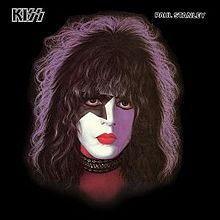
SOUNDTRACK: KISS-Paul Stanley (1978).

For Christmas in 1978 or so, my parents gave me a guitar which was signed from “Paul Stanley.”  I knew it wasn’t (and was a little disappointed that it wasn’t a drum set), but that’s the guitar I learned how to play on.  And Paul Stanley (while not the god that Ace is) is still a charismatic player.  But I didn’t really like this solo album that much when it came out.  My order of preference at the time was Gene>Ace>Paul>>>>>>>>>>Peter.  But sometime in college I reassessed this album and have regraded it as my favorite of the four and it even ranks higher than many of the Kiss albums.  (Seeing him live on a club tour certainly helped).

Paul is in great voice.  And I guess because Paul sang on so many different types of Kiss songs, he doesn’t seem out of his element here.  The chruses are more of him rather than backing vocalists (like the other guys used, although he does use some).  And the production is not too far away from the sound of Kiss at the time (certainly more polished than it should be but not as weirdly polished as Gene’s). 

 The opening of “Tonight You Belong To Me” is a wonderful acoustic intro and the song itself has a great riff and a wonderful solo.  The chorus is intense and strong.  “Move On” is something of a lesser song (it seems too choppy), but I love the quiet break in the middle.  “Ain’t Quite Right” is a cool minor key ballad.  It’s a bit 70’s-sounding, but there’s some interesting stuff going on.  The solo is again quite cool (Bob Kulick, brother of future Kiss guitarist Bruce Kulick does duties here).

“Wouldn’t You Like to Know Me” is a pretty standard upbeat Kiss song.  It’s followed by “Take Me Away (Together As One)” one of the great slow-building ballads that turn into a rocking chorus that Kiss does so well.  Paul practically whispers the verses but he belts out full strength in the loud part (not so much a chorus as just a loud part).  It’s one of my favorite songs.  “Wouldn’t You like to Know Me” is the kind of song that Kiss would play in the late 80s (full of outrageously cocky lyrics like “Girl you know, I’ll be leaving in the morning; you got to get what you can”), but there’s enough grit in this version to make me like much more than say, “Lick It Up.”

“Hold Me Touch Me (Think of Me, When We’re Apart)” is the flip side of Kiss’ cockiness, the sweet sentimental side.  Paul can croon like the best of ’em on this song.  “Love in Chains” also sounds like a typical Kiss rocker (except for the cool drum fill in the chorus).  I think I don’t like Paul’s singing in these stripped down choruses–I like it when his voice soars.  “Goodbye” has a cool typical Kiss riff in the bridge, which I like quite a bit.  And the chorus soars with a very simple guitar riff.  A perfect mid-tempo Paul song–it even has an unexpected third part that sends the song into a brief minor chord phase before returning to the happiness of saying goodbye to someone.

Still my favorite of the solo albums.

[READ: October 8, 2011] “Stealing Fire”

There were four one-page pieces in this week’s New Yorker under the heading “Sticky Fingers.”  Each one was about theft in some way (this being the money issue, that ‘s a nice connection).

As I said for Patti Smith, I felt like the tone of these articles was all set, but Wolff totally changes the concept behind these stories.  He wasn’t the thief–well he was–but  the theft came from a parent not from a store.  When Wolff was growing up, he coveted his father’s gold lighter.  He even took up smoking just so he could use it (there’s a lesson for you). (more…)

Read Full Post »

SOUNDTRACK: KISS-Peter Criss (1978).

After Alive II, Kiss shocked the world by announcing that they would be releasing 4 solo albums at the same time.  The band WAS NOT breaking up; rather, all four members wanted to express themselves in their own way–four Kiss albums on the same day!  Holy cow.  Unheard of!  And as it turns out, this was probably the first step their money-making schemes.  [I assume that Gene is behind all of the money-inhaling schemes, but I feel like he may not have been savvy enough to think of this one back then.  Am I not giving him enough credit?]

So since you never bought four albums on the same day, that meant that you bought your favorite Kiss guy’s record first, right?  Well, my favorite Kiss guy was Peter Criss.  He was a cat after all.  And as the charts reflect, I chose poorly. 

Peter was the least rocking of the group (despite his great vocal turns in some really great Kiss rockers).  Appropriately, his solo album is a mix of old school rock and roll, ballads and a brief excursion into disco.  Because at the time I loved everything Kiss did, I didn’t discern that I hated these songs.  In fact, I listened to them and I still know all of them quite well.  But as an adult I can see what a crazy release this is from Kiss.  True, Kiss’ other records flirted with old school rock n roll (“Tomorrow and Tonight”), and Peter had had a hit with “Beth.”  But wow, who knew he would go this far?  I mean, “Don’t You Let me Down” is a very delicate weepy ball and “Kiss the Girl Goodbye” is a falsetto’d folk ballad.  My heavens.   And for pity’s sake, “You Matter to Me” out-discos even Kiss’ attempt at disco on Dynasty.  (That keyboard, zoinks!).

My friend Matt and I have always liked a few of these songs more for personal in-jokes than for the songs themselves.  “That’s the Kind of Sugar Papa Likes” is one (and actually of all the songs on the disc, this one has the best groove).  And I’ve always like “Hooked on Rock n Roll’s” preposterous lyric “I was/vaccinated by a Victrola needle” because it not only is antiquated and weird, it doesn’t even fit the rhythm of the chorus (who tries to fit the word “vaccinated” into a two-syllable space?). 

The funny thing is that the album is pretty solid rock n roll.  “I’m Gonna Love You” is an old school rock n’ roll song.  “Tossin’ and Turnin'” is standard old rocker, complete with backing vocals and horns.  It could come straight out of Grease.

But I can’t imagine anyone who likes this kind of music buying this album with the Kiss connection or with him in makeup on the cover.  It may have introduced Kiss fans to doo wop, but I think mostly it just collects dust.

My mom liked this album best of all the Kiss albums, but I distinctly remember she did not like “I Can’t Stop the Rain” because despite the pretty melody (and strings) he said “Goddamn” in the song and she didn’t approve of that sort of thing.  Kiss fans didn’t like this album, and moms didn’t like it either.  Poor Peter.

[READ: October 8, 2011] “Free Everything”

There were four one-page pieces in this week’s New Yorker under the heading “Sticky Fingers.”  Each one was about theft in some way (this being the money issue, that ‘s a nice connection).

Miranda July’s piece was all about herself.  She talks about how she first started shoplifting when she was little.  The first time she got caught was for slipping Neosporin in her sock.  But then she got more clever.

She talks about how the shoplifting really became a part of her life.  I’m fascinated that the majority of shoplifters seem to be women and I wonder why (she doesn’t address this issue).  July talks about all the places from which she stole and she speaks of it passively, with little room for regret (even when she stole from the Salvation Army where she worked).  [Let’s hope the statute of limitations is up for her]. (more…)

Read Full Post »

SOUNDTRACK: COLIN STETSON-Live at SXSW (2011).

NPR has made available three songs from Stetson’s SXSW performance.  I’m not sure why there’s only three songs as surely his set was longer than 15 minutes.

He opens with the first two songs of New History Warfare Vol. 2: Judges, “Awake on Foreign Shores” which segues into the masterful, noisy “Judges.”  It’s a wonderful 7-minutes of music. True, it is not as dynamic as the album (how could it be?), but hearing him play this stuff live, unaccompanied, is amazing.

The final track, “The Righteous Wrath of an Honorable Man” is a beautiful short piece that really shows off his ability to keep these riffs going more or less continuously.  Unlike the other songs, this one is more tenor than bass-sounding (although I believe it is all the same instrument) and it sounds equally impressive.

This is just a taste of what Colin can do, and I do wish there was more from this show available online (the sound is pristine, and you can actually hear him talking, which you can’t do at the All Tomorrow’s Parties show).  The NPR page says that there were four songs.  I’m not sure why the fourth isn’t here, but I’m happy to get at least these three.

[READ: October 10, 2011] “Oubliette”

This was a strange story for me because, really, nothing happened.  Well, that’s not true.  Something happened, but it was told in such a straightforward manner, in such a non-inflected way, that it seemed more like a news account than a story.

It is the brief account of a girl whose mother began treating her worse and worse as she got older.  It seems like a fairly natural deterioration of the relationship between mother and daughter, but then her mother’s behavior becomes more erratic and more violent.  Then one incident causes everything to change.  Her mother is diagnosed with Huntington’s. 

Both the girl and her father visit their mother, knowing that there’s very little they can do for her except to try to keep her calm.  So they hold their tongue and try to be nice.  (more…)

Read Full Post »

SOUNDTRACK: COLIN STETSON-New History Warfare, Vol. 2: Judges [CST075] (2011).

When you learn that Stetson played saxophone for Tom Waits, it makes perfect sense.  The middle of the second song, “Judges” sounds like the instrumental break for any of Waits’ newer songs.  Of course, once Stetson starts really wailing you realize that Stetson doesn’t need Waits’ lyrics to tell a story. With just one big-assed bass saxophone, Steston can say quite a lot.  He plays with circular breathing, meaning that he doesn’t have to stop to take a breath, he breathes in through his nose and out through his mouth at the same time (this is of course impossible).  The bass saxophone weighs some 20 pounds and is massive and Stetson makes it sound like everything from an oil tanker to a field of runaway horses.  Oh, and he also has pretty melodies and songs that sound longing.

This disc is part two of a trilogy, but this is the first of his records that I bought (thanks to a release via the folks at Constellation–I wonder if they will redistribute Pt 1).  There is a story that runs through these discs, although honestly, I’m not entirely sure what it is.  But that doesn’t matter to me, what matters is Steston’s amazing skills.

There are evidently a couple of overdubs on this disc, but for the most part it is just him and his saxophone (and 24 microphones).  The microphones were placed all over the room, on the instrument itself (to pick up the clacking of the keys) and even on his throat (when he makes those “voices muffled by a pillow” sound, that’s the throat mike picking up voice–singing while he is playing (which is impossible)).

The album features a couple of spoken word sections by Laurie Anderson, whose clipped, non-inflected voice gives this otherworldy music an even more otherworldy feel.  And there’s two songs sung by Shara Worden.  Other than that, it’s just the man himself.

Prepare to be amazed by this man’s talent.  But also prepare to be a little frightened by what you hear.  This is not timid music by any stretch.  There’s some scary stuff on this record, especially if you listen in the dark.  More especially if you listen loud (which you absolutely must do to hear all the nuances).  On first listen, this may sound like a noisy jazz record, but the more you get into it, the more amazing it becomes.

[READ: October 11, 2011] Moby Dick-in Pictures

Matt Kish has accomplished an amazing thing.  He has drawn a picture a day (more or less) to accompany every page of the 552 page paperback version of Moby-Dick.  He takes a small passage from each page and renders an image for it.  One thing this book is not is an illustrated version of Moby-Dick.  It doesn’t purport to be.  You won’t get the whole story from this book.  It’s not a cheat sheet for high school students.  If you haven’t readMoby-Dick, this will give you a taste for the story–almost like a preview for a movie.  And hopefully it will compel people to read the original.  If you have read Moby-Dick, this is a wonderful companion.  Not only will the pictures give you fascinating insights into the story (and into Kish, of course), but seeing sentences excised from the book to stand alone makes you aware of the book in ways you just aren’t when you’re reading it as a novel.

Kish admits he is not an artist, which while not false modesty, is certainly selling himself short.  He has an awesome style of illustration.  I am especially excited by his vast pictures with small details (lots of pages where there are small circles with lines in them or, for instance, the details on Queequeg’s face) and when he uses bold lines to create vast, weighty iconic pictures.  Here’s one example of his awesome use of multiple straight lines.  I mean, it’s gorgeous.

But I also love the whole conceit that an artistic shortcoming for him has turned out to be an absolute boon.  Kish says he cannot render the human form and so he made the conscious decision to make the seamen more like avatars than people.  It’s daring and a little odd, but it works wonders.  I admit that I was a little less than excited by the very first page of the book–I was disconcerted by Ishmael and his utter lack of features. (I actually like the way he is rendered later in the book better–call it an artistic growth).  But by the time her gets to Queequeg, or the  gorgeous Tashtego  it’s obvious that his decision was genius.  Just take a look at the marvel that is is Ahab (left).  First off, the colors are amazing.  As are the details of the whale in the corners.  But look at him–he’s a metal machine–shiny and tough–part ship, part whale.  Look at the awesome shading and detailing of the blue “coat” that he’s wearing.  He’s even got the badge of Moby-Dick on his belt!  And then there’s the pegleg–the most beautifully drawn pegleg ever.  It’s really stunning.

Now you’re also noticing that there’s all kinds of diagrams behind Ahab.  Kish used to work at a bookstore and he hated seeing old pages of books thrown away (he has since become a librarian, which makes sense–although as I librarian I learned that librarians are actually quite cavalier about throwing away old books once they are beyond use).  So he brought these pages home.  And, given the density of the layers of meaning in Moby-Dick, he decided to draw his pictures on these old pages.  So on virtually every page you can see something in the background.  Most of the time they are these circuital diagrams, which are wonderful. But there are several drawings where the found pages are pages of text from books.  And I have to say if these were serendipitous findings then he has amazing fortune.  Some of the pages tie in so perfectly it is wonderful.

Like the page that is headed “Cetology” and is from what, a textbook on whales?  Or several other pages that I wish I had taken notes on, because they were really wonderfully chosen.  He even has a drawing on a title page of Moby-Dick. I have to ask, did he really find that or did he buy it for the project? (more…)

Read Full Post »

« Newer Posts - Older Posts »