Feeds:
Posts
Comments

Archive for the ‘Authors’ Category

harpoctSOUNDTRACK: THE DECEMBERISTS, LAND HO!, BOBBY KNIGHT RANGER, LETTERS TO CLEO and more on PARKS AND RECREATION (April 24, 2014).

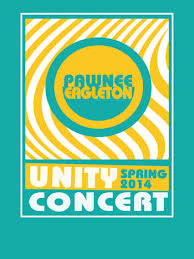
unityLast night, in the season finale of Parks and Recreation, the Pawnee/Eagleton Unity concert finally happened.  And, despite them never talking about who would be at the concert, the final show list was surprising and maybe not so surprising.

To see the Decemberists play live was a huge surprise and was totally wonderful (and to see Jenny Conley on keyboards looking healthy was very nice) especially since they have been more or less on hiatus for a time.  Although maybe it shouldn’t have been such a surprise since Michael Schur directed a Decemberists video a few years back.

Ginuwine played a song as well (I don’t actually know him), and it shouldn’t have been a surprise because in a past episode it was revealed that character Donna is actually Ginuwine’s cousin.

Then came Letters to Cleo.  This was a surprise because they’ve been broken up for years and, aside from a hit were never really all that big (I was huge fan and saw them live once).  Although it was not a real surprise because Ben has been seen wearing an LtC shirt from time to time on the show.  Seeing him sing along to the chorus (off stage) was great.  I also just read that the drummer from LtC is the drummer in Andy’s band Mouse Rat.

Next was Bobby Knight Ranger, a hilarious visual joke of three members dressed like Bobby Knight (with really fake white wigs) who, played nothing but “Sister Christian” for their set.  At the end of their set they threw chairs.  It was a weird throwaway joke that was very funny.  It was made even funnier when during the credits it became clear that Bobby Knight Ranger was actually Yo La Tengo.  This is just surprising as I don’t know any connection there, but in my experience Yo La Tengo are game for anything.

Land Ho! finished the night.  Land Ho!, if you follow the show is Pawnee’s biggest band (fronted by Wilco dude Jeff Tweedy (!)).  They played a song and then Mouse Rate (and others) jammed with them for a holographic tribute to Li’l Sebastian (a running joke that I think is way overplayed and yet which makes me laugh every single time)..

I was so delighted to not know who was playing before hand because every band was a fun surprise.  But seriously, did these bands all fly in just to play one song?   Surely they must have done a few songs for the crowd.  And if so, I think it would behoove Parks and Rec to get a CD out of songs from the Unity Concert (including some solo Johnny Karate songs as well.

The episode itself was also quite good.  While I didn’t care too much for the Tom’s Bistro segment (most of the jokes were pretty obvious from the get go), it was nice to see so many old characters make a cameo.  In fact, with the concert and the old characters and the tidy wrap up, it felt more like a series finale than a season finale.

And, SPOILER ALERT UNTIL THE VIDEO CLIP OF LETTERS TO CLEO PASTED BELOW: I though that their meld from the scene in the office on the third floor with the sly tag of three years later was a stroke of genius.  I have been a little down on this season because I thought it was getting a bit overdone with Leslie’s failures and whatnot. I actually wanted her to get the hell out of Pawnee.  But the compromise of how she stayed made sense for the show (if she didn’t take that job I was done with the show).  I was also not looking forward to a year of Leslie being pregnant (the triplets thing was also lame to begin with).  So the fact that it was all utterly skipped over–the pregnancy, the baby problems, the sleepless nights, even the fact that we didn’t have any awkward transitions in the job and that Leslie is just settled into her new job was excellent.

I also loved that Ben and Leslie were off to do something interesting (with Ben in a tux) with no explanation–what a great cliffhanger.  Kudos for one of the best season enders I’ve seen in a long time.

[READ: April 24, 2014] “The Gifts of Anna Speight”

This was a confusing story.  Well that is because it is an excerpt from a novel and therefore doesn’t stand on its own.  But I don;t know if it was just the excerpt they chose, but I found it not very compelling at all.

The story is told in second person, with Sylvie telling “us” what she knows about the Wibletts Institution.  Sylvie knew someone whose son resided there.  He suffered from PKU, a recessive disorder associated with seizures, mental retardation and blue-green urine.

There are so many layers of storytelling involved here that I was quite confused as to just who was who when Jess was suddenly interested in the story of Bob Germen.  Germen’s son is the above mentioned resident.  She wants to know about Bob’s son.  First we learn that Jess knew a lot about literary figures with disabled or retarded siblings or children and later we learn that she has a special needs daughter, Anna.

But most of the excerpt talks about the literary figures. (more…)

Read Full Post »

karlove1SOUNDTRACKWHITEHORSE-“Pins and Needles” and Kickstarter campaign (2014).

photo-mainI really enjoyed seeing Whitehorse live.  I would absolutely see them live again.  I was delighted then that their album was also fantastic (I didn’t think it could match their live show…and it doesn’t but it is great in a different way).  In a very short time I became a big fan of the band.

THey havea  new song, “Pins and Needles” and a Kickstarter campaign.  The song begins with Melissa McClelland’s voice singing in it beautiful way–there’s guitar in the right ear and bass in the left ear.  Then Luke Doucet comes in for verse two.  And when their voices fill the bridge it feels so complete.  Until they get to the chorus when they push it even further and it sounds amazing.

  They sing so well together.  Her voice has a slight country twang, and his is a low baritone.  Their harmonies are superb as they sing the compelling chorus: “Fake Your Death and I’ll Fake Mine”

Lyrics are certainly interesting for the band.  How many times do you hear a woman singing a line like: “I’m the villain in this piece  And back when I was a thief, I broke hearts like they were teeth.”

I love this song.  And it may or may not end up on the new album for which there is a Kickstarter campaign.

And I’m in.  I’m a little unclear about exactly what they aim to do with the money they raise.  They say quite plainly that there will be an album regardless of whether they raise the funds.  And their label, Six Shooter, is totally behind the band.

Rather seems to be a way to raise some money and some attention for the band.  And, apparently it will give fans a glimpse of the album as it is being made–a sort of behind the scenes featurette that comes before the disc itself.  The prizes are varied and moderate–from a download, to the CD, to a T shirt, to sheet music (all for reasonable donations), all the way to the grand prize–for $8,000 they will play a private show for you.

I’m in for a CD, and I’m happy to pay regular ticket price when they come around again.

Check out the Kickstarter campaign for more details where you can also hear “Pins and Needles.”

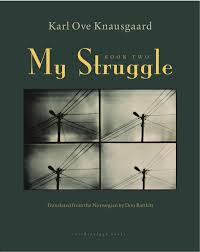
[READ: April 24, 2014] My Struggle Book Two

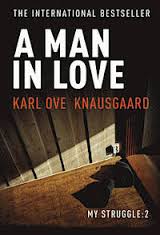
maninloveI read an excerpt of Book Two in Harper’s well over a year ago So when I got to that section again (it’s the end of the book) I was trying to remember why it sounded so familiar–an accident during a soccer match that leaves Karl Ove with a broken collarbone and an unhappy girlfriend (who will be looking after three kids without him), and then I remembered the excerpt that started it all.

The translation of Book Two by Don Bartlett is fantastic, just as in the first book–I can only assume the original Norwegian is just as compelling.  Book one was 430 pages and now book two was 573, so I’m in to Karl Ove’s life for 1003 pages, and there’s four more books due (Book Three comes out next month).

As I mentioned for Book One, this series has caused some controversy because it is given the same title as Hitler’s Mein Kampf (Min Kamp in Norwegian), and also because he says some pretty mean stuff about people who are still alive.  Book One was about the death of his father.  It was pretty dark.  Book Two is about his first daughter and about falling in love with Linda, his children’s mom (although not yet his wife).  And it is also pretty dark.

I was trying to figure out why I like this series so much.  Not a lot happens, Karl Ove is not a very nice person and he seems to be pissed off most of the time.  And I think what I realized is that I share a lot of opinions as him, but he takes everything to the extreme.  And he is kind of an asshole.  I mean, anyone who writes a six part autobiography called “My Struggle” (okay, really it’s called My Head) is kind of an asshole.  But so when I see things that I would only think in my deepest recesses of my mind printed on a page, it’s strangely visceral to me.  I realize this means that I’m kind of an asshole too, but the key difference is that I don’t act on the things that I think, nor do I write 4,000 pages about them.

I told Sarah that she might laugh at some of the opinions that he lists but that she would not enjoy reading the books.  Indeed, this book, this series, is not for many, I’m sure.  But to me there is something strangely engaging about him and his strange life and his writing style.  And I really flew through this book, finishing it in about a week.

So this book begins (started in July 2008) with Karl Ove being pissed off.  He talks about finishing the first part of the novel (which I have to assume is Book One, given when this was written and how this book ends) just last month (in other words he is really churning this stuff out!).  He and Linda have been fighting (as the book opens they have three children, Vanja, Heidi and John–it’s also hard to believe that his children are young enough to not really know much about this series). The tension is high between them–glares, comments, nasty sniping.  Karl Ove says that he is afraid to say things around her because he knows how she’ll react.  But at the same time, some of things he desires are simply not defensible in a relationship or when you are parent.  And the main conflict seems to be that Karl Ove is selfish and Linda is (at least according to him) mildly suicidal and possibly bipolar).  And mind you, at the time of his writing this, I think they are still together….  (I could look that up, but it seems kind of fun not exactly knowing). (more…)

Read Full Post »

dec20133SOUNDTRACK: FRANKIE SPARO-Welcome Crummy Mystics [CST023] (2003).

sparo3It’s a shame that Welcome Crummy Mystics proved to be Sparo’s last album, because it is by far his best.

This album has more sounds, sounds that accentuate the simplicity that Sparo has constructed.  So there are all kinds of unexpected instruments on th opener “Hospitalville” including horns and bass, And the whole thing has a noir feel that pervades much of the disc.  It was was completely absent on the debut (intentionally obviously).  There are harmony vocals on “Sleds to Moderne” and “Akzidenz Grotesk” has electric guitar and Sparo’s voice mixed a bit louder.  There’s more rocking out on “Back on Speed.”

But it’s not all uptempo.  “Bright Angel Park” is a pretty  instrumental with lots of piano while “My Sistr” is a menacing slow piece that begins with just bass and voice.  Although as more instruments are added the menace is replaced by a kind of jazz feel.

“Camera” is sung in French and has interesting electronics throughout and “City as it Might Have Been” has beautiful strings layered on top of each other as it builds to an epic conclusion.  “This Lie” ends the disc with piano and organ an excellent accompaniment to his lyrics.  And on this album you can really hear what a great lyricist he is.

It’s amazing what a change this is from the debut and that he packs all of this great music in to a mere 37 minutes.

[READ: April 15, 2014] “Loving Las Vegas

I felt like I had read something else from Whitehead about gambling and it turns out he wrote an article for Grantland about the World Series of Poker in Atlantic City.  This essay is an excerpt from the upcoming book that he is writing about said World Series.

This is a story about Whitehead’s appreciation for Vegas from when he was young and dumb (well, not so dumb, really).  His friend Darren got a job writing for Let’s Go, the funky travel guide.  And the assignment was Vegas.  In 1991.  They were Gen X and they were going on a great road trip.  So naturally, the first thing to do was get new speakers for the crappy car.  [I have often felt a strong connection to Whitehead, feeling that we could have been soul mates if I were a little more daring and had lived in NY instead of NJ].

They go on a great road trip (Colson hadn’t gotten a license yet so he was a navigator).  They went to Chicago and saw the Sears Tower, they went to New Orleans to visit an old friend whose frat buddies wanted to know why he was “bringing niggers and Jews” into their chill-space (yikes).  Then they got out of there and went to the Grand Canyon and Lake Mead (which they wrote about).   And then it was on to Vegas. (more…)

Read Full Post »

dec20133SOUNDTRACK: FRANKIE SPARO-Arena Hostile (VPRO Radio Recordings) [CST017] (2001).

sparo2I didn’t love Sparo’s debut album, but a year later while on tour with A Silver Mt. Zion (whom I do love) he went into a studio in Amsterdam to re-record some of those songs.  I’ll let the Constellation site tell you what this EP is and why I like it so very very much,

In January 2001, Frankie Sparo toured Europe with a Silver Mt Zion. Musicians from the latter group worked on new arrangements of songs from Sparo’s debut record My Red Scare, adding strings, organ and electronics to Frankie’s guitar and beatbox compositions. Some of the results were captured in a live studio performance recorded live to 2-track at VPRO radio in Amsterdam, where a feverish flu found Sparo in a ravaged, hallucinatory state – which only added to the dark magic of these recordings. The four songs on this EP are all first takes, beautifully recorded by the good people at VPRO. Along with 3 songs reworked from the debut album, the EP also includes a heartbreaking cover of the Rolling Stones’ “I Am Waiting”, which Sparo performed solo a number of times in concert.

“Diminish Me NYC” is great in this version with an off-kilter electronic arrangement and strings. “The Night That We Stayed In” which I singled out on the debut album has two violins, turning the song into an even cooler number (although the “throw your hands in the air” line seems moderately less comical now).  “Here Comes The Future” has an almost dance beat—a slow dance mind you, but still, a good one and ends with some organ waves.  And the cover of “I am Waiting” must be the slowest cover of a Stones song ever.  I don’t know the original, but I bet it sounds nothing like this.

I really like this EP a lot and it makes me want to like the debut album even more–if I had more patience with it.

[READ: April 15, 2014] 3 book reviews

noveltyThis month Bissell reviewed non-fiction three books.

The first is Novelty: A History of the New by Michael North.  In this book North argues that newness, that novelty, has always been a problem: “one of the very first ideas to trouble the consciousness of humankind.”  This dates all the way back to Aristotle who argued that nothing came from nothing; that everything came from something else.  Even the Renaissance, that period of great exploration and creativity was really just mimicking classics (hence the word renaissance).  The new tends to be looked at askance, so we get terms like “novelty act.”

North says that one thing which is genuinely new is our proclivity to turn everything into information as gigabits or as abstract knowledge.

I’m intrigued by the premise of this book but not enough to want to read it and frankly, Bissell doesn’t make it sound that compelling.

Bissell connects this attitude about newness and novelty to the rock world (and rightly so).  Where we (well, some people) value novelty and criticize anything that is derivative.  Which leads to the second book (another one I don’t want to read but for different reasons).  Beatles vs. Stones by John McMillian.  The Beatles were arguably the most original band ever since no one did what they did before them.  And then, bvssarguably, the Rolling Stones came along and did just what the Beatles did a little bit afterwards.

Some easy examples:

  • The cover of the Rollings Stones’ first album is compositionally similar to the cover of The Beatles’ second album.
  • A few months after the Beatles released their ballad “Yesterday,” the Stones released their ballad “As Tears Go By.”  (The song was recorded earlier but was initially dismissed as not Stones enough).
  • After the Beatles used a sitar in “Norwegian Wood,” the Stones used one (in a different way) in “Paint It Black.”
  • And quotemaster himself, John Lennon, once said, “Everything we do, the Stones do four months later.”  [The Stones did still released some great music after The Beatles broke up, of course, even if now they play nothing they wrote after 1981 on tour anymore].

And this Lennon quote is typical of this book which is a gossipy casual look at the differences between the Beatles and Stones [Beatles when you’re writing, Stones when you’re jogging; Beatles when you’re alone, Stones when you’re with people).  But in addition to comparisons, he includes scenes like when the Beatles attended a Stones show and when Jagger and Richards were at Shea Stadium for The Beatles’ arrival.

There are many similarities between the bands, although the biggest different seems to be that the Stones never really became friends, while The Beatles were friends till the end.

Of course, the Stones has always been cooler than the Beatles, which is a nice segue into Bissell’s third book: The Cool School: Writing from America’s Hip Underground by Glenn O’Brien.

coolschoolO’Brien’s thesis is the seemingly obvious one that “cool” is not a new thing–that early tribes doing war dances had cool people playing syncopated drums in the corner.  But he is not arguing about coolness, he is collecting “a louche amuse bouche [that must have been fun to write]…a primer and inspiration for future thought crime.”  The book includes works by the likes of Henry Miller, Delmore Schwartz, LeRoi Jones and Eric Bogosian.  I like some of these guys, but as soon as I see them assembled together, I know I’m not going to be going anywhere near this book.

Bissell says that there is some cool stuff here: Miles Davis writing about Charlie Parker for example, but most of the cool seems to be trying too hard.  Like the “charmlessly dated” Norman Mailer piece, “The White Negro.”

I appreciate the way Bissell sums up what comes through from the book: “to be cool…is to make the conscious choice, every step of the way through life, to care about the wrong damn thing.”

It is comforting to come away from one of these book reviews without wanting to read anything.


Read Full Post »

harpoctSOUNDTRACK: FRANKIE SPARO-My Red Scare [CST013] (2000).

sparo1Speaking of early Constellation Records releases, Frankie Sparo was everywhere in the early stages of the label.  And then he just disappeared.  That proves to be quite literal as he was the pseudonym of Chad Jones (who i don’t know from anywhere else).  Frankie released two albums and an EP and then Chad retired him.

This debut is perhaps the most deconstructed and un-musical album of songs that I can think of.  It’s as if Sparo wrote songs and then decided to take four of every five notes out of the song.  And then he sings in a style that accompanies that spareness.  It’s actually too much of such littleness.  If Sparo’s voice filled the song the minimal accompaniment would be interesting.  If there was more music, his slow singing wouldn’t sound quite so… flat?  There’s talk of his lyrics being good, but I honestly find his singing to be so slow that I can’t really follows any of the songs.

And it’s a shame because his voice is plaintive and longing and the construction is very interesting, it just doesn’t really pan out for me.

The final two songs start to add more to them and I like them better.  I especially like the final tack “The Night That We Stayed In” which has without a doubt the slowest rendition of the oft cited phrase “throw your hands up in the air and wave them like you just don’t care” (imagine falling asleep while saying that).  But the music is fuller, bringing in a new and interesting style to the end of the album .

I suppose that in the right frame of mind this would be exquisite, I just hope I’m never in that frame of mind.

[READ: April 18, 2014] “Near-Death in the Afternoon”

I’m not  huge fan of Ernest Hemingway–I just don’t like his macho schtick.  But this piece–which is a comic story (I don’t know who the person he’s talking about is) is not only quite funny, it seems to be turning his macho image on its head.  Although perhaps I am oversimplifying Hemingway.

Anyhow, this comes from a collection of his letters, although it is considered a story and what submitted to (and rejected by) Vanity Fair in 1924.  The full title is “My Life in the Bull Ring with Donald Ogden Stewart” which implies to me that it is a longer piece, although it feels full to me.

It begins with Hemingway saying that he often encounters Donald Stewart in the bull ring (which make me laugh).  But he’d often ignored him.  Yet on this occasion the crowd is going crazy for him: “Don Stewart!” they chant.  Ernest wants to get into the ring but the crowd is insistent and, indeed, someone even throws a tomato at him (and hits him right in the face). (more…)

Read Full Post »

kissSOUNDTRACK: WICKED LESTER-The Original Wicked Lester Sessions (1972).

wicked Wicked Lester was the band that Gene Simmons and Paul Stanley started before they created Kiss. They recorded, but never released, an album (given Gene’s money grubbing needs, I can’t believe he hasn’t released this yet).  This demo version which floats around the internet may or may not be the album.  I’d be surprised if it were because there are four cover songs.  But whatever.

It’s a fun archive.  It has a very 70s vibe (including flutes and keyboards) and is much less heavy than what they would be releasing in just a year’s time.  Two of the songs from the demo made it onto Kiss records (strangely, one not until their third release).

“Love Her All I Can” sounds not too different from the Kiss version.  Paul’s voice is much deeper. The solo is lame and it’s funny to hear “do dooo” backing vocals (and a keyboard section).  “Sweet Ophelia” has a groovy 70s vibe and a feeling that is not too dissimilar to the sound of The Elder.  I love “Keep Me Waiting” has a what, tuba sound? for the riff.  The song also has an entirely new middle section, which is very early Kiss–they liked showing off creative chops back then.  I love this song.   “Simple Type” (the version I heard is lousy qality) is a rock and roll number with (I think) Gene on vocals.  It’s got a lot less of the psychedelic elements that the other songs have.  “She” (one of my favorite Kiss songs) has a wonderfully weird vibe here, (not to mention a flue solo which is very Jethro Tull).

“Too Many Mondays” has Gene on vocals and it is a very delicate song with gentle backing oohs.  It is probably the least Kiss sounding song of the bunch because they didn’t write it.  This is the first of several covers.   “What Happens in the Darkness” has a kind of disco sound (in the backing vocals) and Paul’s lead vocals have an interesting edge to them.  It’s fairly psychedelic, including the middle section sung by Gene and the slide guitar solo.  A band called Griffin has also recorded it (and their version is better).  “When the Bell Rings” is another cover.  Gene seems to be straining a lot on falsetto vocals.  “Molly” is a gentle acoustic ballad by Paul with falsetto and everything,  “Wanna Shout It Out Loud” is another Gene falsetto song.  It’s a cover of the Hollies song and not the “Shout It Out Loud” that Kiss would later record.

I can see them not wanting this released during their heyday or during their heavier moments, but it’s not an embarrassing collection by any means.  Definitely of its time, but some interesting stuff nevertheless.  Check it out:

[https://www.youtube.com/watch?v=busyMPHjKMA&list=PL2B518729242D8887]

[READ: April 9, 2014] “The Definitive, One-Size-Fits- All, Accept-No Substitutes, Massively Comprehensive Guide to the Life and Times of Kiss”

I’ve liked most of Klosterman’s writing.  I especially like his writing about music (although I have never read any of his books–some day).  But imagine my delight when Klosterman decided to write a huge article defending Kiss for all of the right reasons while at the same time loathing them for all the right reasons, too.

Kiss are very easy to dislike if you don’t know them–they are silly, they were costumes, they sing dopey pop metal about sex, and they just keep going even though they are ancient.  Kiss are even easier to dislike if you do know them–Gene Simmons is a greedy bastard who is intent upon taking as much money from his fans as he can (and is proud of that).  They keep releasing greatest hits albums with an extra song or two, they even keep making albums that are nowhere near as good as their best stuff.  As Klosterman puts it:

They inoculate themselves from every avenue of revisionism, forever undercutting anything that could be reimagined as charming. They economically punish the people who care about them most: In the course of my lifetime, I’ve purchased commercial recordings of the song “Rock and Roll All Nite” at least 15 times.

And yet…  And yet… (more…)

Read Full Post »

may20014SOUNDTRACK: CRYPTOPSY-“Slit Your Guts” (1996).

cryptI had never heard of this band until I saw the song mentioned in the article.  The song is impossibly fast with speeding guitars, super fast (inhuman) drums and an indecipherable growl as vocal.  In other words, a typical cookie monster metal song.  And yet, there is a lot more to it and, indeed it took me several listens before I could even figure out what was happening here, by which time I had really fallen for the song.

There’s a middle section which is just as punishing and fast but which is basically an instrumental break–not for showing off exactly but for showcasing more than the bands pummel.  It has a short guitar solo followed by a faster more traditional solo (each for one measure, each in a different ear). Then the tempo picks up for an extended instrumental section.  The melody is slightly more sinister, but it sounds great.  There’s even a (very short) bass solo that sticks out as a totally unexpected (and fun) surprise.

Then the growls come back in, staying with the new melody.  The vocals are so low and growly that they are almost another distorted instrument rather than a voice.

After that there’s a lengthy proper guitar solo.  As the song comes to a close,  it repeats some previous sections before suddenly halting.  It’s quite a trip. And it definitely makes me want to hear more from them (whatever their name means).

[READ: April 14, 2014] “Destroy Your Safe and Happy Lives”

Robbins, who is a poet, but about whom I know little else, takes us on a sort of literary tour of heavy metal.  His tone is interesting–he is clearly into metal, like in a big way (at the end of the article he talks about taking his writing students to see Converge (although he doesn’t exactly say why)), but he’s also not afraid to make fun of the preposterousness of, well, most of the bands–even the ones he likes.  It’s a kind of warts and all appreciation for what metal is and isn’t.  many people have written about metal from many different angles, so there’s not a lot “new” here, but it is interesting to hear the different bands discussed in such a thoughtful (and not just in a fanboy) way.

His first footnote is interesting both for metal followers and metal disdainers: “Genre classification doesn’t interest me.  Listen to Poison Idea’s Feel the Darkness followed by Repulsion’s Horrified and tell me the main difference between hardcore punk and metal isn’t that one has a bullshit positive message and one has a bullshit negative message.”

But since Robbins is a poet, he is interested in metal’s connection to poetry.  And in the article he cites William Blake (of course), but also Rilke and John Ashbery and (naturally) Milton’s Paradise Lost, as well as Shelley, Lord Byron and Charles Baudelaire.  He talks about them not because they are cool poets, but because they have also talked about because of metal’s “most familiar trope…duh, Satanism, which might be silly–okay, its’ definitely silly, but has a distinguished literary pedigree”.  Besides, he notes that Satan has the best lines in Paradise Lost (and I note that just as Judas has the best songs in Jesus Christ Superstar).

But sometimes this Satanism turns into a  form of paganism which then turns into nature worship.  From Voivod’s “Killing Technology” to black metal’s romanticism of nature (sometimes to crazy extremes–but that’s what a band needs to do to stand out sometimes).  Metal is all about the dark and primordial, a”rebuke to our soft lives.”

And yet, as a poet, Robbins has some quibbles with metal: (more…)

Read Full Post »

may20014SOUNDTRACK: “Elementary, My Dear” (1973).

elemYou have to have a particularly cruel heart if you don’t love School House Rock.

All of the songs, well, most of the songs, are super catchy and by golly if you don’t learn a lot.

And they attack problems in an interesting way.  The premise of using Noah’s Ark to show how to multiply by 2 is genius.

You’ll get that “elementary, my dear” section stuck in your head.  But I’m also impressed at the way the song goes into unexpected chords for “you get an even number.” And I love the way Bob Dorough really gets into it (whooping it up at the end).

Few people would think that the 2 times table is hard, but man is it fun to sing along to.

This song is not as popular as some of the other ones, but it’s still great

[READ: April 14, 2014] “A Study in Sherlock”

A while back I wrote a post about Sherlock Holmes on TV (Sherlock and Elementary) and in the movies (Sherlock Holmes).  I had read a few stories and so I did a brief comparison of the shows.  Since then while I have continued to believe that Sherlock is the better show, I have really grown to appreciate Elementary a lot more.  They almost seem incomparable because they are so very different in structure and intent.  Elementary has actually been a little more satisfying lately because it has so many more episodes that it allows the characters to develop and fail in interesting ways–something that the three episodes of Sherlock simply won’t do.

Laura Miller has done a similar thing with this article.  Although in fairness she did a lot more research than I did and talks a lot more about the original books and stage and early film adaptations, and she talks a lot less about the TV shows.  And no she doesn’t cite my post.

This was an enjoyable piece because it goes beyond the commonly known elements of Conan Doyle–how he did not like Holmes and tried to kill him off twice, that he wanted to write more important fiction–and into what Holmes was like after Doyle was finished with him.  Holmes has entered the public domain in both England and America, and so he is basically free for everyone to use, much like a classic myth or a fairy tale.  The big difference is that we know his origins.

What I especially enjoyed was that so many things that we think of as quintessential Holmes are actually not from Doyle.  His deerstalker hat was added by a book illustrator but is never mentioned in the text.  The calabash pipe came a decade later when a stage actor used it so that the audience could still see his face.  Conan Doyle was still alive while these changes were being made.  Indeed, when a play of Sherlock Holmes was written, the playwrite called and asked if he could give the man a love interest and Conan Doyle replied, “Marry him, murder him or do what you like with him.” (more…)

Read Full Post »

may20014SOUNDTRACK: EXHAUST-Enregistreur [CST021] (2002).

exhaust2While Exhaust’s debut was a mixed affair, their follow up really showed some great improvement.  The band feels more unified, there aren’t any single songs that were remixed (which stand out in a bad way), rather the remixing was done throughout the songs.  And, best of all there’s a lot more of that spooky bass clarinet.

The album feels more organic, “Gauss” opens with waves of music setting a mood until about a minute into track 2 “Behind The Water Tower” when the drums kick in the atmospherics gains urgency. “Voiceboxed” has a feeling of contemporary Portsihead which is neat from an album that came out almost a decade earlier.  This one has some samples of commercials , but they’re a little low in the mix so its hard to make them out. Although the spoken word part that swirls around your head is very cool and a little startling. (Headphones are a must for this album). There’s also a funny standup routine (yes, in the middle of the song)—wonder who it is.

“Ice Storm” opens with a sampled piano & a lot of static.  It morphs into a lengthy play/commercial/PSA by Heathrow Wimbledon and is called “The Maternal Habitat.”  I can’t find anything else about it online.  It’s rather fun to listen to, although when the skit is done, the music becomes strangely slow and the last two minutes (of 9) go on too long.  It bleeds into “Dither” which is mostly sampled voices and more commercials.  I love this Negativland kind of pastiche

“Behind the Paint Factory” mirrors “Water Tower” in that the drums kick in after 2 minutes and the song sounds great.  “My Country is Winter” is mostly tape manipulations including a screaming guitar solo that runs around your head.  “Silence Sur la Plateau” returns to that sort of ominous Portishead vibe with the sound of loud crinkling plastic as its main “music.”  There’ also a lengthy silence in the track which seems rather pointless to me.  The album ends much like it began with “Degauss” which is mostly clarinet solo and atmospheric sounds

It’s much better than their debut but still feels like they could have made a tighter album if they’d gotten rid of some (but not all) of the nonsense.

[READ: December 1, 2012] “The There There”

I have enjoyed Nelson’s stories in the past, and I feel like it’s time to find a collection of hers (and I see she has a lot, too).

What I especially enjoyed about this one was the way the title was used in the story and also the way it encompassed the main character in a way that was unrelated to the way it was used in the story.  In the first instance, the family is on vacation and they overhear some tourists asking “Where the hell are we?” while standing in front of the Colosseum.  The son explains that’s “like not seeing the Grand Canyon until you fell in it, like it’s the there there.”

The story is about a family–a mother, a father, and two sons.   It opens with the sons and the mother discussing the perfect murder.  The husband disapproves of the discussion but only indicates this with a cleared throat.  We see that Caroline, the mother, was imagining her husband when she was describing her murder.

While the story is basically about the mother (although told in third person), it flits back and forth to the other family members and how their behavior affects her.  First we see that their oldest son, having gone off to college, has fallen in love with his landlady–a woman with children older than him.  Caroline is appalled at this especially when Drew reveals that she’s not all that pretty, that he would have chosen one of those daughters. (more…)

Read Full Post »

may20014SOUNDTRACK: EXHAUST-Exhaust [CST004] (1998).

exhaustExhaust’s self titled album was another early release from Constellation (disc number 4).  At this point Godspeed You Black Emperor had not defined the label’s sound yet (correctly or incorrectly), so we get Exhaust.  Aidan, who is 1-Speed Bike, which did not have very good drums, is the drummer for Exhaust.  And man, the drums are awesome here.  The drums are again, loud, and they have a great live feel to them–the beats are funky and different and while they anchor what’s going on they in no way keep things settled.

The rest of the band includes a bass, a guitar, a bass clarinet and samples.  The samples just aren’t loud enough anywhere on the album.  It’s a shame–you simply can’t really hear them, which I guess is the point, but then what’s the point of having them?  So the first song, “A History of Guerrilla Warfare” is interesting (again, those drums!), but it’s in song two “Metro Mile End” when that bass clarinet comes out that it totally rules. The third song “Homemade Maggot Beer” is a 20 second hardcore song with just drums and feedback.  Song 4 “We Support Iran in Their Bid to Win the 1998 World Cup” is a remix by 1-Speed Bike, and after listening to the full length 1-Speed Bike, it sounds like it– a little dull, a little slow and nowhere near as dynamic as the album.  And it has such a good title too.

“Two Years On Welfare” has louder samples–you can hear a kind of political rant going on, but it seems like it could have been used better.  But around 1;30 the sounds get really interesting.  Track six, “This Is Our (Borrowed) Equipment” is another 1-Speed Bike remix, and it is mostly drums again.  “Wool Fever” makes good use of harmonics and drums although it goes on a bit too long.  The 8th song, “A Medley Of Late Night Buffet Commercials” is the final 1-Speed Bike remix.  Unlike the others I really like this one.  True, I wish the song was more akin to what the title says, but the drums are funky and hammering and sound great.  “Winterlude” is 40 seconds of squealing radio sounds before the final track reintroduces us to that great clarinet.  “The Black Horns Of H2T” reminds us how good this album can sound.

So it’s a mixed bag, but the highs are definitely high.

[READ: April 14, 2014] “Humor”

This article appeared in the December 1958 issue of Harper’s magazine.  Mark Twain made over 100 contributions to the magazine (geez).  I have often thought that Twain is an author I need to read more of.  But when I hear he has contributed over 100 articles to Harper’s alone, my mind reels at the output.

Anyhow, this is an article about repetition in the art of humor.  Interestingly, he relates a story that happened forty years before writing this.  So the occasions of the joke he tells was in 1918!  Woah.

The article talks about the first and second lectures that he ever gave.  The first was a success but he was concerned about the second as he had very little in the way of humor to warm up the audience.  He decided to make use of an anecdote that everyone in San Francisco had heard many times and were undoubtedly sick of.  It had been overdone as long as five years ago.  But he decided that he would simply tells the very overdone story over and over until people started to laugh (the precursor of Saturday Night Live, obviously). (more…)

Read Full Post »

« Newer Posts - Older Posts »