Feeds:
Posts
Comments

Archive for the ‘Junot Díaz’ Category

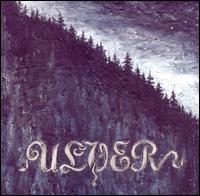
SOUNDTRACK: ULVER-Bergtatt (1994).

Ulver has some music in the soundtrack to Until the Light Takes Us and my friend Lar pointed me to a location where you could download a bunch of their music (this was before Spotify of course). 

So I grabbed a few of their albums expecting to hear some brutal death metal.  And I kind of did, but I also heard classical guitar, flute solos and chanting.   So this album’s full title is Bergtatt – Et eeventyr i 5 capitler (“Taken into the Mountain – An Adventure in 5 Chapters”) and it comes in at a whopping 35 minutes–not bad for an epic.

The opening track (“I Troldskog faren vild” (“Lost in the Forest of Trolls”)) is fascinating–a kind of chanting vocals over a quietly-mixed-in-the-background black metal.  The music is so quiet (and yet clearly black metal) that it almost comes across as ambient noise, especially over the multilayered chanting (I have no idea what language they are singing in).  It ends with a pretty acoustic guitar passage that segues into a very traditional sounding heavy metal section–with a catchy solo that takes us to the end.

“Soelen gaaer bag Aase need” (“The Sun Sets Behind Hills”) opens with, of course, a flute solo.  It’s a minute long and quite melancholy before blasting into the fastest of heavy black metal complete with growling vocals and nonstop pummeling.  But after a minute of that it’s back to the layered chanting like in the first song.  The song ends with a conflation of the two–the chanting metal with the growling black metal underneath.  It’s quite a sound.

Track three “Graablick blev hun vaer” (“Graablick Watches Her Closely”)opens with a lengthy acoustic guitar intro–not complicated, but quite pretty and unlike the poor recording quality of the metal, it seems to be recorded with high quality equipment.  After about 45 seconds that gives way to more black metal.  In a strange twist, the black metal section just fades out, replaced by more acoustic guitar and what seems like the end of the song.  But instead, there is a strange quiet section–not music, but sounds–like someone walking around in the cold forest with crunchy noises and little else.  For almost two minutes.  Until the black metal comes back with a vengeance.

Slow guitar with slow chanting opens track 4 “Een Stemme locker” (“A Voice Beckons”) (the shortest at only 4 minutes).  And the amazing thing is that it doesn’t change into something else.  It is a nice folk song.

The final song “Bergtatt – Ind i Fjeldkamrene” (“Bergtatt – Into the Mountain Chambers”) has a blistering opening followed by some of the most intricate acoustic guitars on the record.  It morphs into a very urgent-sounding black metal section which lasts about 5 minutes.   But just to keep us on our toes, the song (and the disc) end with more classic acoustic guitar.

There is a story here (allmusic says it is a Norse legend about maidens being abducted by denizens of the underworld) and that might help explain the music madness.  But as a musical composition it works quite well.  The chanting over the black metal is really effective and the acoustic instruments bring a nice sonic change from the pounding metal. 

This is not for everyone obviously, but the diversity makes this an interesting introduction into the black metal scene.  Baby steps. 

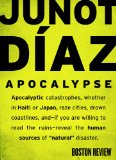
[READ: November 4, 2011] “Apocalypse”

This is the final non-fiction essay of Junot Díaz that I could find online.  The other one comes from GQ and is called “Summer Love”, but there’s no access to it online. 

In this essay, Díaz looks at the impact of the earthquake that devastated Haiti now that it has been over a year.  Díaz was born in the Dominican Republic which has a long and very brutal history with the people of Haiti–they share a land mass after all.  But rather than looking only at Haiti and how it was devastated, Díaz takes this as an opportunity to see what the earthquake reveals about our country and the state of the world.

The essay is broken down into eight parts.  The first revisits what happened.  The second discusses the meanings of apocalypse, which sets up the “theme” of this essay.  The First: the actual end of the world (which for the thousands of people who died, the earthquake was); Second: the catastrophes that resemble the end of the world (given the destruction of Haiti and the devastation that still lingers, this is certainly applicable); Third: a disruptive event that provokes revelation.

Díaz is going to explore this third option to see what this earthquake reveals. 

What Díaz uncovers is that the earthquake was not so much a natural disaster as a social disaster–a disaster of our creating.  The tsunami that hit Asia in 2004 was a social disaster because the coral reefs that might have protected the coasts were decimated to encourage shipping.  Hurricane Katrina was also a social disaster–years of neglect, the Bush administration’s selling of the wetlands to developers and the decimation of the New Orleans Corp of Engineers budget by 80 percent all contributed to a situation where Katrina could be so devastating.

Then he talks looks at the history of Haiti.  I had known some of this story, but not as much as he provides here–the constant abuse of the citizens, the constant abuse of their finances (both from simple theft and from French and American planning that changed their economy).  There’s also the story of “Papa Doc” Duvalier.  Basically Haiti was a disaster waiting to happen. 

Díaz goes into great detail about the global economy and how it impacted the poor in Haiti and he shows that it doesn’t take a lot of extrapolation to see it reflected in the rest of the world as well.  With the constant rise in standards for the wealthy and the constant abuse that the poor take, it’s not hard to see that Haiti could easily happen here.  If not in our lifetime, then certainly in our childrens’.

But Díaz has hope.  (more…)

Read Full Post »

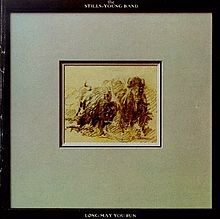
SOUNDTRACK: THE STILLS-YOUNG BAND: Long May You Run (1976).

I’ve known the song “Long May You Run” for a long time, but I never really realized it came from a non-Neil Young album.  The album is by The Stills-Young Band and the history of the album may be more interesting than the album itself (in sum: CSN&Y broke up, C&N made and album so S&Y made an album.  C&N were supposed to be on the S&Y album but they fought and S&Y removed their vocals).

So what we get is nine songs.  Five written by Neil Young and four by Stephen Stills.  The songs are played by Stills’ solo backing band and while the credits suggest that they played on each others’ songs, it doesn’t really seem like it.  It seems like you get 5 Neil Young solo songs and four Stephen Stills solo songs.

It’s also odd that the cover of the album shows buffalo running in the plains (nod to Buffalo Springfield, I’m sure) but so many of these songs are about water.  Maybe that disconnect feeds the whole thing.

By the way, “Long May You Run” is a catchy little country number that I never realized was about his car until recently.

Stephen Stills’ first song is the utterly unsubtle, possibly seductive in the 70s but hilariously outre in 2001 “Make Love to You.”  It’s full of 70s synths and has a very serious tone (despite the 70s synth).  And the lyrics, hoo boy:

Girl your body said everything and I know you knew/I wanna make love to you, make you feel all right/I wanna make love  to you, yes, it’ll take all night

Which is about as long as the shower you need to take after hearing that song.

“Midnight on the Bay” is a pleasant enough song from Neil.  It’s a bit too much into the 70’s-lite music genre for my liking, but it’s not too terrible.

The thing about Stephen Stills is I like his voice.  It’s unusual and unique and I like hearing him sing.  But man his lyrics are crazy.  I like the opening riff of “Black Coral” with its staccato piano.  Yet it seems like he’s got but one thing on his mind.  The song is ostensibly about being underwater:

Got to move slow/Take it easy down there/You’ve only so much air/When you get a little deeper/If you slow down/You might keep her/The sea, unforgiving and she’s hard/But she’ll make love to you/Show you glimpses of the stars.

But maybe that’s metaphorical.  Because when you go deeper, “I saw Jesus, and it made sense that he was there.”

“Ocean Girl” is sort of Neil’s answer to that song.  It’s got a very 70s wah wah sound and a very easy to sing chorus.  Consider it a catchy but inessential Neil song.  “Let It Shine” is also Neil’s song (and there’s more stuff about his cars here–so you know he’s really into it).  It’s a more substantial song than most of the rest although it has a very easy feel.

“12/8 Blues” (love the title) feels like an Eagles song (“Life in the Fast Lane” to be specific, although they both came out in the same year.  Hmm).  It’s fairly generic (like the title) but I like it (crazy time signatures are my thing, man).

“Fontainebleau” is an interesting angsty Neil song that I think would have done very well with CSN&Y.  I never really paid attention to the lyrics before, but it’s fairly interesting and the guitar solos are soft but cool.

The final song goes to Stills.  “Guardian Angel” feels like a combination of all of his other songs, and it’s probably his best on the disc.   It’s got the slinky 70s vibe of  the first song, the staccato piano and, interestingly a chorus that would sound great with the 4 part harmony of CSN&Y.  It also rocks harder than anything on the record (which isn’t saying all that much).  The end has a cool extended instrumental section which I rather like as well.

So this is a weird little hybrid record.  There’s some good stuff for Neil Young fans, although it’s far from essential.  I actually don’t know much about Stills’ solo work so I don’t know how this compares, but he does seem a little one-track here.

[READ: November 4, 2011] “He’ll Take El Alto”

I don’t read Gourmet magazine.  I’m not a foodie and it seems like it’s just a food magazine.  But here’s the second article in Gourmet by a writer that I really like.  The first of course would be David Foster Wallace’s “Consider the Lobster.”  Is Gourmet more than just recipes?  Does it often have contributions from respected authors?  Am I missing out?

This issue is the Latino issue, so it deals with food from Cuba, El Salvador, Puerto Rico and the Dominican Republic.  And Junot Díaz is our resident Dominican, so he’s given the task of talking up the cuisine.

Unlike Wallace’s essay, which was about a trip to the Maine Lobster Festival, Díaz’s essay is about how upper Manhattan (known as El Alto) has become a hotbed for Dominican food.

Díaz explains how when Dominicans first arrived in New York, there were no restaurants.  Dominicans had to eat Cuban food to approximate their home food.  But now that there are vast enclaves of Dominicans living in El Alto, there are excellent restaurants everywhere (the sure sign that a culture has made it is when you have people from other cultures as your waitstaff).

Díaz revel as his own and his friends’ and acquaintances’ preferences for favorite Dominican restaurants.  As this article is four years old and most of the places seem to be holes in the wall (which everyone knows serves the best food, even if they don’t last very long), I’m not going to bother saying which places they are or checking to see if they are still extant).  Okay, well, Malecon is still around, anyhow. (more…)

Read Full Post »

SOUNDTRACK: ADELE-“Someone Like You” (2011).

I’ve been hearing this song in unlikely places–like on a radio station that plays The Foo Fighters and the Butthole Surfers.  So I thought I’d actually listen to it and see what the fuss was about.  It has been selected as one of 2011’s Best Songs (So Far) on NPR  (where you can hear it in full). 

It’s a sparse piano song, a pretty, desolate melody .  But the real selling point is Adele’s voice.  I had heard her described as a kind of Amy Winehouse (who I don’t like) or a sort of R&B siren,(which I wouldn’t like).  But she has a kind of husky voice that belies its power.  In some ways she reminds me of a more mature Fiona Apple.

On this song at least, it’s just her and her piano–no pretensions to genre or style, just an honest emotionally naked song.

The melody isn’t obvious–it’s not an immediate grab you by the lapels hit.  But it is haunting and her voice supplies the bulk of the tune.  She can carry the whole thing with ease.

I’m not sure if it fits on that radio station, but it is certainly a wonderful song.  I wonder what the rest of the album sounds like.

[READ: October 31, 2011] “One Year: Storyteller-in-Chief”

I am posting this review today because it is Election Day (in New Jersey, anyhow).  One can only hope we get some of the awful incumbents out of town, but we’ll see.  I’m also posting this now because I feel the need to vent about our current Presidential Candidates.  Not the men and woman themselves (who are all barely qualified to be in charge of their own car keys, much less the country).  What I’m venting about is the fact that we know these men and women are candidates at all.  Or the fact that so many prospective candidates have already dropped out.

The election is a year away.  A YEAR.  It’s bad enough that the media talks about everything the President does in terms of how it will affect his chances for re-election (again, A YEAR away) but that we have all of these bozos running around talking about what a bad job the President is doing as well is just dreadful.  And basically, instead of actually doing something about being President, he must do triage on the damage these loose cannons are causing.  True, Obama appears to be somewhat less than concerned with what they say about him, but the fact that everything that happens in Washington is foreshadowing the next election, it sure makes it hard for anything to get done.

Anyhow, in other countries, the citizens have a few months at most to decide who their candidates will be.  And a few months in our country would translate to much less expensive candidacies, much more opportunities for fringe candidates to be heard (for better or worse) and less candidate exhaustion (both them and us).  Why in the hell does it take eighteen months to run for President?  In what way are we served by having all of these people running for office for over a year?  And things are only going to get worse now that so many states have moved their primaries up so far (January 3, Iowa?  Really?  You want to narrow down the presidential choices ten months before the election?).

I know that my opinion won’t even cast a ripple in Washington, but come on.  I propose that people aren’t even allowed to declare their candidacy until the May before the election.  That gives them six months, which should be ample time to run an election campaign.  Have the primaries in August and September and then the general election in November.  That gives two months early in the season for primary debates and it gives a month and change after the primaries for general election debates.  This way the President isn’t distracted with running a reelection campaign and the populace (and the media) isn’t distracted for 18 months with candidates running or not running.  And seriously, if you can’t be organized enough to win an election in 6 months, you don’t deserve to be President.  How can I get this policy enacted?

This article from Diaz is a very good one.  It criticizes President Obama for not being a good storyteller.  He was an excellent storyteller before he became President (both as a campaigner and an author-Diaz cites Dreams from My Father in particular).  But since he has taken office his storytelling has lapsed. (more…)

Read Full Post »

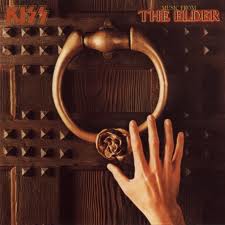
SOUNDTRACK: KISS-Music from The Elder (1981).

Kiss lost me on this one.  I had been a faithful fan for several years, even putting up with all of the haters in fifth grade.  But once I heard that Kiss was releasing an “opera,” well the heck with that noise.

Now, granted, I had no idea it was a rock opera or that Tommy was a rock opera.  I heard the word “opera” (thanks newspaper review that my grandmother showed me) and said, Nope.  Of course, I wasn’t the only one who said Nope.  This record tanked.  It tanked so bad that the band almost went bankrupt.

But the album wasn’t just an album.  It was mean to be a film (there’s even film dialogue on the record!) and Chris Makepeace (Woody the Wabbit from Meatballs) was meant to star in it–I love that the film credit info is left on the record packaging).  What could this film have been like….if only it were made!

At some point I decided to buy the LP (Who even knows where I found it on vinyl) and I was surprised by how much I liked it.  In fact, I find it much more preferable to Dynasty and Unmasked.  It’s less pop oriented, and some of the tracks rock harder than anything since Love Gun.  True, there’s weird pretensions on it, but even those are just experiments.

This album also features Eric Carr on his first Kiss record (what a strange place for such a heavy rocking drummer to start).

So yes the album does open with horns and fanfare (like an opera perhaps?), but the first song, “Just a Boy” is a gentle ballad sung by Paul.  It’s certainly wimpy, but I rather like it (as I’ve said many times, I love Paul and his swelling choruses).  And there’s some nice guitar work from Ace here.

“Odyssey” has strings and strings galore.  It’s a pompous swelling song that harkens to Destroyer, yet goes in a very very very different direction.  As a fan of epic pretentious music, I rather like it, but as a Kiss song it’s a disaster.  Of course, I have always enjoyed the jokey “Once upon….not yet” line.

“Only You” is Gene’s first foray on this album.  And I will state categorically that this period was not good for gene’s songwriting.  His songs are really quite dull and boring (when you think of the crazy, complicated bass lines and things he was throwing on songs just a few years back, dull songs like this are a shock).  What’s also a shock is that this song is a kind of gritty guitar song, again, much less wimpy than anything on Unmasked–fickle fans turned on the band without having heard the songs–sure they weren’t good songs, but they weren’t disco either.

“Under the Rose” is the exception to gene’s malaise.  It begins softly with Gene’s whispered vocals not unlike “Man of 1,00 Faces” but the chorus is heavy and chanted, foreshadowing what they would do on Creatures of the Night (although Creatures was heavier and faster).  The riff is also pretty solid, too.

“Dark Light” is Ace’s contribution to the disc.  It has a pretty heavy opening riff as well.  And the verse reminds me a lot of the kind of verse Ace has been writing for a while–simple chords with lots of words.  The solo is pretty much literally a solo–very little in the way of backing music while Ace wails away. Shame it’s not a very interesting solo.

“A World Without Heroes” is a very gentle ballad by Gene.  There’s a great commercial for this album in which you get to watch Gene sing this song.

The crazy thing of course is that he’s in demon make up.  If this were Kiss without makeup no one would think it was weird, but I mean, look at him, why is he singing songs like this?  It is once again an impressive display of Gene’s range though.  Nice guitar solo, too.

“The Oath” is actually one of my favorite Kiss songs, no irony intended.  I used to laugh at the lyrics, which yes are silly (but this is Kiss, come on).  True, it’s an odd mix of really heavy guitars and pretentious falsettos (along with a bizarre keyboard/swirly third part).  But there’s a bitching guitar solo and as I said, the guitars sound great.  And Paul manages all of those different parts very well.  It’s vastly underrated and worth checking out (especially if you like unexpectedly weird music).

“Mr. Blackwell” feels like a song from a movie.  It tells a bit of a story of a bad guy.  The music is incredibly minimalist (one note bass bits and very sparse guitars during the bridge and chorus).  Lyrically it’s dreadful–“You’re not well/Mr. Blackwell/Why don’t you go to hell”, but at least Gene sounds like a demon delivering it.  The solo is an amazing bit of noise though.

“Escape from the Island” is another high point on the record.  It’s an instrumental, it’s fast and it’s heavy.  And it’s got another great solo from Ace–it’s funny that Ace was dissatisfied with the direction of Kiss at this time because he gets to really show off on this disc.

“I” is another solid anthem from Kiss.  It ends the album in an upbeat way and if it weren’t on this dismissed album it would be on any Kiss anthems collection.  Paul and Gene both take turns singing and the chorus is chantworthy and fist pumpable.  They should release it on a new album.  They’re so into it in the recording that Paul even shouts “you feel it too, don’t you?”

There’s an interesting review of this album at Popdose.  The bad thing is that the site has links to lots of MP3 demos from the album, but they’re all broken links.  I’d like to hear those.

[READ: October 30, 2011] “Homecoming, with Turtle”

This is an amusing piece of non-fiction from Junot Díaz.  I’m grouping it with the Oscar Wao stories because it actually bears an impact on them.  It’s about a visit that Junot took eleven years ago (from 2004) back to his homeland of the Dominican Republic.

He hadn’t been there  in nearly twenty years and he decided to go with his girlfriend.  Of course, like Yunior in the novel, Junot cheated on his girlfriend before their trip and one of her friends told her.  This put some tension on their trip (and one even wonders why he persuaded her to go along after that).

Their trip began with a week volunteering in the DR for a kind of Doctors without Borders (but for Dentists)–they assisted dentists with extracting thousands of teeth.  It’s a strange thing to do and a strange (but generous) way to start a vacation, but the exhaustion and camaraderie at least kept them from killing each other. (more…)

Read Full Post »

SOUNDTRACK: KISS-Unmasked (1980).

It was hard to like Unmasked, but, being an 11-year-old boy, who loved Kiss, I never doubted its awesomeness.  Despite kids in school telling me Kiss sucked and, peculiarly, even the cover of this album telling me they stink (whose idea was that?) I knew in my heart of hearts that Kiss was the best.

In a stroke of marketing genius, this album teased the audience with the idea of finally seeing who was under these “masks” (which is weird since everyone knew they weren’t wearing masks, but whatever).  There’s even a poster that came with my vinyl copy!  Yahoo.

I just recently found out that “Is That You?” is a cover.  I always liked the high-pitched part of the song (“you always get the boys you like”), although in retrospect it’s really not very good–simplistic in a way that Kiss songs weren’t but then became.   I always joke about Kiss doing a tour and playing “Shandi.”  It’s such a cheesy ballad and yet I think it’s really good (for a cheesy ballad–Paul sings this type of song so well).  I constantly have the “there’s another mess I’ve got myself in” line in my head all the time.

I liked “What makes the World Go ‘Round” but even I can acknowledge that the song is pretty poor.  “Tomorrow” sounds like another song off of Paul’s solo album and probably should have been a huge hit.  In fact, they could have re-released it in the 80s and it would have fit right in with their non-makeup success–Paul’s soaring choruses are always a hit.  “Easy as it Seems” is kind of the album encapsulated in one song–very sleek, very soft, lots of choruses vocals and really kind of bland.   There’s even a wimpy keyboard solo (gasp!).

Ace was the star of Dynasty, and he gets three more songs on Unmasked.  “Talk to Me” is one of his repetitive songs that drives me a bit nutty (never liked that “talk to me-e” part).  It’s interesting how much Ace moved into prominence on these albums, especially since he was headed for the door soon.  “Two Sides of the Coin,” is a decent rocker, but listen to those crazy synth drums during the instrumental break.  “Torpedo Girl” is the most interesting track on the disc.  It has the cool opening “man battle stations torpedo,” a really funky (!!) bass line from Gene (who knew he had that in him) and a cool weird riff at the opening.  It’s then got a very catchy chorus (although honestly, “c’mon get your feet wet”?).

Gene has a bit more prominence here.  “Naked City” has a pretty menacing riff to open with, but Gene turns in one of his more melodic turns (with some pretty high notes in the chorus)!  The solo, while not blistering, is pretty great (as with Dynasty, the solos are too short).  “She’s So European” aside from being a really stupid title and lyric is the song that really puts this album over the edge–the twinkly keyboards, the “you ought to see her” falsetto, and, basically the same chord structure as “Living in Sin” on the verses.  Gene ends the disc with “You’re All That I Want,” a rather uninspired song that reminds me of the songs on side 4 of Alive II.

You’ll notice that Peter doesn’t get a vocal turn on this album.  In fact, he didn’t play anything on it at all (Anton Fig on drums again), but he was contractually obligated to appear on the cover (perhaps that’s why they did a cartoon).

No matter how much I listened to it back then, I can still admit that this album isn’t really very good.  Although interestingly, some of the songs and sonmg styles foreshadow the kind of music they’d play on Lick It Up: simple songs without a lot of substance, and that album was huge!

[READ: November 2, 2011] “Wildwood”

After reading “The Brief Wondrous Life of Oscar Wao” in the New Yorker, I saw that they had also published Lola’s “Wildwood” adventure as an excerpt from Oscar Wao the novel.

As you can see, this excerpt came out around the same time as the novel.  And as far as I can tell, this excerpt is exactly the same as the novel except for one line that was in the excerpt but not in the novel (the part in italics):

Hija de Liborio she called you after you picked your tia’s winning numbers for her and when you guessed correctly how old to the day she’d been when she left home for the U.S. (a fact she’d never told anyone).  You assumed….

The only other noticeable difference is that the first section of this excerpt is not really separated from the rest of it.  The first section is told in the second person, while the rest is in the first person.  In the novel, the second person section is set off by itself, so it’s a little less jarring when you jump to first person, but I think any reader could cope with that pretty well. (more…)

Read Full Post »

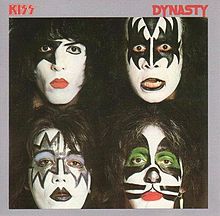
SOUNDTRACK: KISS-Dynasty (1979).

I was pretty excited to buy this album when it came out–a new Kiss album that wasn’t solo albums!  Woo hoo!  And the fact that it was disco?  Well, even though I said I “hated disco,” I didn’t really know what disco sounded like then (and really, aside from the middle “I Was Made for Lovin’ You” it’s not really a disco record) and plus my other favorite band was the Village People (and really, that makes a lot of sense–tw0 bands in over-the-top costumes talking about sexuality that I totally didn’t understand).

So, this album is hard for me to be critical about because it was such an essential part of my childhood, especially “I Was Made for Lovin’ You.”  I love it, and yet I can listen critically and appreciate that it’s really not that good.

But I’ll move on to the other songs.  “Sure Know Something” and “Magic Touch” really don’t seem that out of place chronologically with, say, the Kiss solo albums–they sound an awful lot like something off of Paul’s album.  So, despite the sort of slinky 70’s bass on “Sure Know Something”, they can’t have been that much of a surprise.  The guitar solos are short but have some interesting Ace sounds (I like the harmonics on “Magic Touch”).  It seems that while the other guys were embracing disco, Paul was keeping the Kiss sound alive.

Then there’s the Ace songs.  “2,000 Man” made total sense as an Ace song. I had no idea it was a Rolling Stones cover until fairly recently (and I like Ace’s version much better).  “Hard Times” feels like the sequel to “New York Groove.”  Not the music so much although maybe a little, but the lyrics–now that he’s in the city here’s what happened–the gritty reality. It’s one of Ace’s great, lost songs.  And check it out, Ace sings on three songs here!  (Guess having a #1 hit wasn’t lost on the Kiss powers).  “Save Your Love” has a cool descending chorus and a nice bass feel to it.  Ace certainly wins on this record.

Peter got only one song, “Dirty Livin'”.  In fact, this is the only song that Peter had anything to do with (his drums were re-recorded by Anton Fig).  It reminds me (in retrospect) of the Rolling Stones disco era even more than “2,000 Man,” the backing vocals remind me of something like “Shattered.”  I always liked this guitar solos on this (cool feedback).  Although I liked the song (along with the rest of the album), I don’t think it holds up very well.

Gene only gets two songs.  It amuses me how little he has to do with these late 70s albums even though he is always the leader of the band.  I always liked “Charisma” (I had to look the word up back then) even though it is, admittedly, rather discoey and really not very good.  It is fun to ask “What is my…charisma?”  But “X-Ray Eyes is the better Gene song on this record.  It harkens back to earlier Kiss songs and even has a bit of menace in it.

So, Dynasty was a huge hit for the band.  And they even got to mock it in Detroit Rock City the movie.  Cynical marketing ploy or genuine fondness for disco?  Who would ever know.

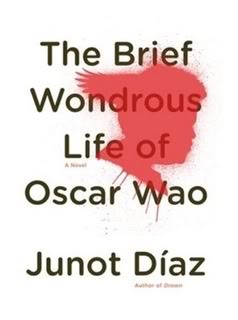
[READ: November 1, 2011] “The Brief Wondrous Life of Oscar Wao”

Readers of this blog know that after finding an author I like, I will try to read everything that he or she has written.  Close readers will know that if a writer is reasonably young and reasonably unpublished, I will try to read his or her uncollected work as well.  Well, I really enjoyed Oscar Wao the novel, so I decided to see what else Díaz had written. There’s really not a lot, to be perfectly frank.  There’s his short story collection Drown and a few fiction pieces published here and there (mostly in the New Yorker) and a few non-fiction pieces as well.

So this “short story” from the New Yorker (with the same title as the novel) is in fact an early, mostly the same, version of the Oscar story in the novel.  The thing here is to note the date: 2000(!).  The novel came out in 2007.  So, Junot had been working with this character for easily five years (giving time for the publishing industry to get a book out and all). The remarkable thing the is just how accomplished and polished this piece is and how much of it was used in the novel.

I’m curious to know whether this was written as a short story (it’s quite a long short story) or if it was always intended as a part of a novel.  Interestingly, when you read this story by itself and you realize that it is pretty much all of Oscar’s story in the novel, you realize just how little of Oscar is actually in the novel.  The novel is about Oscar, obviously, but it is really about his family and the fukú that was placed on them by the Trujillo clan.  Oscar is sort of the touchstone for the fukú, and the person whom the narrator knows most intimately but his story is also brief. (more…)

Read Full Post »

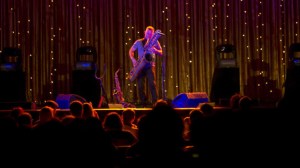
SOUNDTRACK: COLIN STETSON-Live at All Tomorrow’s Parties, October 4, 2011 (2011).

In addition to playing SXSW, Colin Stetson also played All Tomorrow’s Parties, and NPR was there.  Unlike with SXSW, this set appears to be full length (about 50 minutes–which is a pretty amazing amount of time for him to blow that horn).  Like SXSW (and the album) Stetston starts with “Awake on Foreign Shores” and “Judges.”  What I love about this recording is that after Stetson finishes “Judges” a guy in the audience shouts (in a voice of total amazement) “That shit was off the hook!”  And he is right.  It’s not even worth me going into how amazing Steston is once again (check previous posts for  that), but man, just look at the size of that horn he’s playing (seriously, click on the link to see it bigger).

Stetson plays a few more songs from New History Warfare, Vol. 2: Judges like “The Righteous Wrath of an Honorable Man” (which is outstanding) and “A Dream of Water” (which works without Laurie Anderson, although he does say he’s sorry she’s not there).  He also introduces two news songs “Hunted 1” and “Hunted 2” which show new levels and new styles that Stetson employs.

This is a remarkable set, and Steston is clearly in his element (and the crowd is rapt).  The only problem I have is the recording level.  It must be very difficult to maintain recording levels for Stetson’s brand of noise–his louds are really loud–but you can’t hear him talk at all.  And most of the time, the introductions to his songs are worth hearing.  I’m sure if they tried to get the speaking level a little louder the music would have sacrificed though, so I think they made the right choice–I only wish there was a transcript available.

[READ: October 31, 2011] The Brief Wondrous Life of Oscar Wao

Apparently it’s pronounced, “Wow”, by the way.

Because of my new job, I don’t have a  full hour of lunch-time reading like I used to.  And so this book took considerably longer than I intended.  However, once I set aside some time to read it, I flew through the book.

I’m going to get this part out of the way because I was thinking about it throughout the book and I want to mention it without having it bog down the post.  This story reminded me a lot of Roberto Bolaño.  On the surface, sure this is because they are both writers from “Central America” (Diaz is originally from the Dominican Republic but moved to the US, while Bolaño is originally from Chile but moved to Mexico and then Spain).   But I’m not really talking about their origins so much as the style of storytelling.

Without going into a lot of Bolaño here, I’ll just say that Bolaño tends to write very detailed character studies–stories that follow one person throughout his whole life on something of a fruitless quest.  And the details of that person’s life include information about family members and distant relatives.  Further, Bolaño has written about the brutalities of both Chile and Mexico and how a person can survive in such a place.  Similarly, Díaz follows the life of Oscar and his extended family and he talks about the brutalities of the Dominican Republic.

This is in no way to suggest that there is any connection between the two writers. I mean, The Savage Detectives came out in the States in 2007 (same years as Oscar Wao) and while he certainly could have read it in Spanish, I have no evidence that he did (and as I recently found out, the first draft of the Oscar story was written in 2000).  Again, the parallels are only from my reading and have nothing to do with Díaz himself.

Okay, now that that’s out of my system…

This is the story of Oscar de Leon.  But more than that, this is the story of a fukú–a curse that befalls the de Leon family and follows them through several generations.  Oscar is the youngest member of the family and the person whom the narrator knows best.  So we see this fukú as it impacts Oscar.  And although the book is ostensibly about Oscar, it is about much more.

Oscar was born in Paterson, NJ (the town next to where I grew up!) and went to Don Bosco Tech High School (where many of my friends went).  Oscar is Dominican (his mother is from the DR, but he and his sister were born in NJ), but unlike every other Dominican male, Oscar is totally uncool, into geeky sci-fi and D&D and is clearly destined to be a virgin because he is fat with terrible hair and no social skills.

And, (no spoiler), as the title states, his life will be short. (more…)

Read Full Post »

SOUNDTRACK: SLOAN-“Cars” (2011).

When Sloan went to the A.V. Club to record their cover, they were disappointed by the selection.  Of course, that’s the game, so suck it up Sloan.  But they decided to do Gary Numan’s “Cars.”

Now, I feel compelled  to say that Gary Numan’s “Cars” may be my least favorite song of all time (it’s very close to Billy Idol’s “Eyes without a Face”).  I understand that “Cars” was “groundbreaking” or whatever.  But gah, it is boring and monotonous and just awful (and I say that while admitting that I like Phillip Glass, so i know from monotonous).  While I will admit that the riff is pretty great, everything about the song, from the performance to its endlessness (it’s like 8 minutes long, right?) drives me nuts.

And that may be why I love this cover so much.  It keeps the riff but it adds music to it.  All of that horrible “one guy with a cheap keyboard” sound is taken away.  It’s replaced by a great full-sounding band bringing live joy to the song.  I love that the whiny keyboard is replaced by a guitar and that the drummer rocks the hell out of the ending.  I mean really rocks the hell out of it.  Well done, Sloan.  You’ve been a favorite for years, and you’ve now redeemed my most hated song.  I think Billy Idol just peaked on my list.

You can watch it here.

[READ: July 20, 2011] “The Money”

Junot Díaz’ story in the New Yorker’s Fiction Issue is also a Starting Out piece.  This story is about how his mother always sent money home to her family.  No matter how little money they had, she would always scrimp and save and stash away until she had a few hundred dollars to send every six moths or so.

From Diaz’ other work, we assume that he was not a model citizen as a youth, but even he knew not to tamper with his mother’s money.  (Stealing from her purse was one thing, but the wrath of stealing from the “to be sent money” was unfathomable).

Then one week when they go on vacation they return to see that their house has been robbed!  Some of Junot’s things were taken as well as the money.  The Money!   (more…)

Read Full Post »

SOUNDTRACK: CITY AND COLOUR Live at the Sasquatch Festival, May 29, 2011 (2011).

City and Colour have a new album coming out soon.  So it’s kind of surprising that this seven-song show is three songs from their previous album, two from their first album, a cover, and only one new track (“Fragile Bird”).

This is the first time I’ve heard City and Colour live with a band (most of the recordings I have by them are just Dallas Green solo).  It’s nice to hear how powerfully they work together (giving some of those songs an extra push).

Despite the brevity of the set (and the amusing banter about airport etiquette) you get a pretty good sense of what the “pretty-voiced guy” from Alexisonfire can do on his own.   I found the cover, Low’s “Murderer,” to be a really perfect choice–one that suits the band and their slightly-off harmonies, rather well.

I’m looking forward to their new release–“Fragile Bird” is another beautiful song.  But in the meantime, this is a good place to hear what they’ve been up to.

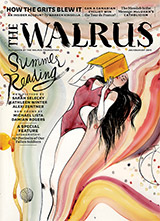
[READ: early June 2011] 2011 Fiction Issues

Five Dials seems to always generate coincidences with what I read. Right after reading the “”Summer’ Fiction” issue from Five Dials, I received the Fiction Issue from the New Yorker.  A few days later, I received the Summer Reading Issue from The Walrus.

I’m doing a separate post here because, although I am going to post about the specific fictions, I wanted to mention the poetry that comes in The Walrus’ issue.  I have no plan to write separate posts about poetry (I can barely write a full sentence about most poetry) so I’ll mention them in this post.

The main reason I’m drawing attention to these poems at all is because of the set-up of The Walrus’ Summer Fiction issue.  As the intro states: “We asked five celebrated writers to devise five guidelines for composing a short story or poem. They all traded lists–and played by the rules.”  I am so very intrigued at this idea of artificial rules imposed by an outsider.  So much so that I feel that it would be somewhat easier to write a story having these strictures put on you.  Although I imagine it would be harder to write a poem.

The two poets are Michael Lista and Damian Rogers.  I wasn’t blown away by either poem, but then I don’t love a lot of poetry.  So I’m going to mention the rules they had to follow. (more…)

Read Full Post »

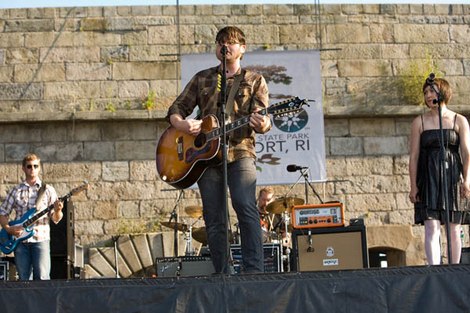
SOUNDTRACK: THE DECEMBERISTS-Live at the Newport Folk Festival [excerpts] (downloaded from NPR) (2010).

The Decemberists played at the Newport Folk Festival this year. NPR audio has an excerpt for free listen/download on their audio site.

They say that they were not going to play the entire Hazards of Love album at this show, as had been their wont on this tour.  I’m not sure what their entire set consisted of, but the three excerpts here include: “The Crane Wife Pt 3,” “Yankee Bayonet” and a very extended “Sons and Daughters.”

It surprises me how well The Decemberists work in a live setting.  I think of their music as  complex and convoluted with strange instrumentation, and yet, perhaps because of the theatricality of it all, it all sounds great in a live setting.

I can’t really imagine them releasing a proper live album, so for those of us who don’t get to concerts much, this is the next best thing (the recording quality is excellent–I only wish it was their whole set).

[READ: October 12, 2010] “Otravida, Otravez”

Junot Díaz is the next writer in the 1999 New Yorker 20 Under 4o issue.

I didn’t like this story in the beginning because I couldn’t tell for quite some time the gender of the narrator.  Normally this doesn’t make a difference, but when the narrator climbs into bed with the man in the room, I had a hard time deciding if this was a subversive act or just a straight act of romance.  [I admit that since the author was male, I assumed the narrator was male, too].

It turns out the narrator is a woman (there is a clue when he says “Yasmin,” but in the first read I was unclear if he was saying her name or just a name in general).

In fact, to me, the entire beginning was very strangely set up and it took a few paragraphs (when she describes her job) before I felt the flow really took off.  However, once it did I found this story fascinating and convoluted in a very good and clever way. (more…)

Read Full Post »

« Newer Posts - Older Posts »