SOUNDTRACK: RHEOSTATICS-Linwood Movie Theatre, Port Dover, ON (December 4, 1999)
This is the final concert on of the 20th century on Rheostatics Live (and I’ll be taking a short break from the Rheos concerts after this one). Even though the site doesn’t list the venue, in the previous show they say they are playing at the Linwood Movie Theater in Port Dover. As with every other venue, I can’t find any information about this, so I’ll just accept it as true.
The last few shows were recorded from the soundboard, so this one is a little jarring to hear the audience so loudly. But the sound is good and clean.
They say during the show that they are going to play songs from all 10 of their albums. And they do a pretty good job. They miss playing something from Greatest Hits (which is kind of a surprise as everyone was shouting for “Wendell Clarke.” Unsurprisingly they do not play anything off of Group of 7, and, in what I think of as a huge surprise—nothing off of Introducing Happiness—they almost always play something from that album anyway.
The set is comprised mostly of Harmeldia and Melville songs and it’s quite a good one.
“I Fab Thee” even invites audience participation.
This show also has one of the great dialogues between fans and band. Someone asks if they have CDs available for sale. Dave says, yes in the lobby. She asks if they have them anywhere else and he replies “Is the lobby not convenient enough for you, ma’am?” to much laughter.
It’s a good show to end the millennium on. And I look forward to seeing what 2000 brings in their live shows.
[READ: March 6, 2014] “We Be Naked”
I have really enjoyed Gartner’s stories in the past but this one rubbed me the wrong way from the start. I do not like stories where language is deliberated misused and not explained. I am fine with dialect and I am fine with uneducated narrators, but when a narrator appears educated enough yet consistently gets something wrong and there is no explanation, that story has a massive strike against it.
So when the story starts
We be naked, not nude. Something to remember as the memory of us moves into the slipstream. Nude is in the eye of the beholder, naked a true enough fact.
I thought the “we be” part was an affectation of that first line. The rest of the language is quite beautiful. But no, the word “be” is used as the verb throughout the story. In more and more irritating ways: “Or demands be modest. We not be asking…” Ugh. So what has caused the slip in the most basic verb use that English speakers have? Especially when two sentences later we get this beautiful piece of prose:
And lay down your arms and pick up your instruments, music being the only true and beautiful man-made thing in this world.
Well, the story begins in April 2014 (which I liked) after the collapse of the Kyoto Protocol after the Pirate Party Bombings. For almost two years since then they be chill. Shudder. (more…)
I have mentioned this disc before, but having listened to some live shows from around this time, it made me want to check out this disc again. I’ve always thought it was kind of a silly goof of a record without a lot to fully enjoy. And while the goofy tracks stand out, there’s also a lot of really good music on it.
“The Pooby Song” opens the song and while it is a slight and silly song, it is a fun folky introduction. What its title means is a mystery to me. The second song is the first version of “The Junction Foil Ball,” a great track that would later get re-recorded for The Night of the Shooting Stars. “Frank” is another interesting song with some cool scratchy guitars and a good riff. It doesn’t get played much live, but it could easily fit into their set.
“Majorca” is a pretty song from Tim, although it is very strange (to me) that these Canadians are singing about Majorca (a song they would play live in a few bootlegs). Another vaguely silly song is the sitar (?) based “Ugly Manhattan,” which makes fun of Wall Street. Perhaps the most unexpected song is “Trans Jam” a rap which features Farm Fresh and The Subliminal Kid. It’s quite good, too.
And yes, there is a lot of really silly stuff. “Henry’s Musical Beard” is a weird 27 second toss off. “Alien Boy” is a goof commercial about mysteries of the unknown. “Baby, I love You” is introduced as being by MC Vanilli and the Sedaka Prince. It’s an absurdly goofy “pop” song which reflects some pop song stylings rather well. “This is Nightlines” is a profane rambling by Dave about the radio show that’s going off the air.
And yet just as you think the end of the disc is going to be nothing but silly, they play a fantastic version of “Stolen Car” (click track notwithstanding).
It really makes me want to hear the some Nightlines shows. And, ta da, I recently found Network Effects, a site where a kind soul has been digitizing his taped copied of Nightlines sessions. That’s pretty cool–more radio stations should take chances like this.
[READ: February 24, 2014] A Wild Stab for It
I found a bunch of Dave Bidini’s smaller books online. And after reading his book about Keon, it seemed complementary to read this book about Game Eight.
Now, if you’re not Canadian or Russian, Game Eight might be meaningless to you. You might even somehow think that a game of Canada vs the USSR is an Olympic event. But it wasn’t. It was the Summit Series. Bidini assumes you know what the Summit Series is–this book is pretty explicitly for Canadian hockey fans (meaning pretty much every Canadian) who were alive in the 1970s. They would all know what Game Eight was and why it was so important. So, here’s some context from Wikipedia, because again, they summarize it better than I could:
The series was played at the height of the Cold War, and intense feelings of nationalism were aroused in both Canada and the Soviet Union, as well as on the ice. Known at the time simply as the Canada–USSR Series, it was an eight-game series of ice hockey between the Soviet Union and Canada, held in September 1972. It was the first competition between the Soviet national team and a Canadian team represented by professional players of the National Hockey League (NHL), known as Team Canada. It was the first international ice hockey competition for Canada after Canada had withdrawn from international ice hockey competitions in a dispute with the International Ice Hockey Federation (IIHF). The series was organized with the intention to create a true best-on-best competition in the sport of ice hockey. (more…)
SOUNDTRACK: An open letter to the Rheostatics (2014).
To Dave, Martin, Tim and assorted drummers:
I’ve been a fan of the Rheostatics for a long time. I recall traveling to Toronto from New Jersey back in the 90s and tracking down Introducing Happiness at Sam the Record Man. And then later driving around the Niagara Falls region listening to the strange and wonderful album. I’ve enjoyed all of the subsequent albums.
You were a unique band with a unique sound. I was sad when you split up, even if that meant that now there were three solo projects to enjoy. Of course, there’s been a lot of bands that have broken up, it’s just part of being a fan. But the thing about the Rheostatics breakup is that you three (or four or five or six) have remained friendly. You’ve done a few reunion shows since the breakup, which I think that’s super cool. It’s especially cool because RheostaticsLive tends to post them after a while so that those of us who don’t make the shows can hear them.
I’ve never seen you guys live, and I imagine I never will. And I’m okay with that. What I’m mostly bummed about is that there will be no more new music from you. You put out approximately ten albums (there’s a few miscellaneous things that are hard to qualify). Those records include soundtracks and live albums and all manner of things, so there’s really seven proper albums (the others are great, don’t get me wrong). Anyhow, my gut feeling is that there needs to be some new Rheostatics music. I know you’ve all been doing solo stuff (and I have it), but sometimes the sum is greater, etc.
Clearly I’m getting at that it’s time for a new album from the Rheostatics. Before you scoff, I’m not talking reuniting for a grand tour, or even any tour, I’m not even talking a live show. Heck, I’m not even talking about you guys hanging out for more than a couple weeks. Just an album of new songs. A decade ago it would have been unthinkable that you would get together for the expense of an album without major label support. But now, the cost is so much lower and with your fan base expanding, I assume it would be easy to recoup the expenses.
So what do you say? Since it seems like everyone is still friendly and creative, maybe you can throw some ideas around in the email, see if there’s anything magical happening. Obviously, if there’s nothing there or you just can’t work together, then don’t continue. No one wants to hear a crappy Rheostatics album. But if there’s even a chance that you guys can throw some ideas together and pull out another “Horses,” or “Northern Wish” or “CCYPA,” or holy cow, “King of the Past,” or, hell, anything you’ve done, then it’s absolutely worth it.
I don’t imagine any of you will read this, but maybe if you google yourselves, Tim Vesely, Dave Bidini, Martin Tielli, you’ll see this and think that, yes, dammit, seven records of Rheostatics music is not enough.
Thanks for the music, Paul Debraski.
[READ: January 26, 2014] Worst. Person. Ever.
I told myself that I wanted to read this book before anyone requested it. And I did. In fact, I wanted to finish it before the weekend was up, which I did as well. It’s nice to meet a minor goal.
The last few Coupland books that I read (see last week) were very dark. Since those books, he has broadened his palette somewhat, including writing a children’s book and some more non-fiction. And then we get this. A vulgar, very funny sendup of modern culture. The introduction to the book says that it was based on a short story that he wrote for McSweeney’s #31 called “Survivior.” That story was written in the style known a biji which they described as
Biji is sort of a notebook, which contains legends, anecdotes, scientific notes and local wisdom. Accounts of everyday life mix with travel narratives as well as lists. It is meant to represent a picture of the culture at the time of writing.
I thought that this style was well suited to Coupland, because he includes all of that stuff anyway. And so he has taken that story and fleshed it out into this full novel.
The worst person ever is named Raymond Gunt. He thinks he’s Jason Bourne, but he’s really just a metaphorical extra in a Bourne movie (one who probably gets killed). Gunt is a cameraman working in England. He is divorced. His wife is a raging harpy (at least from his point of view, which is all we see). Since their divorce, she has become wildly successful in television production. He calls in on her at work and she tells him about a job working as a B cameraman on a show called Survival. He knows that the job must suck or she wouldn’t give it to him, but he needs to work. Of course, he is most upset at the thought of having to work with Americans (Americans are majorly abused in this story). Although by its very nature a B cameraman position is not as good as an A cameraman, Ray needs the work, so he agrees to fly to some godforsaken tropical island to watch beautiful people starve and try to have sex with each other.
On his way out of the building he sees a homeless guy. And since Ray is the worst person ever, he kicks him. But the homeless guy is no pushover and he chases after Ray. He catches Ray in an alley and pummels him, ultimately pushing his face into some garbage. The man is Neal and although he acts crazy, he’s actually quite sharp (why he is homeless is not addressed). After forcing Ray to sing the female verses of “Don’t You Want Me,” Neal gives him this sage advice:
“Stop being a cunt to the world and the world will stop being a cunt to you.”
Advice which Ray simply cannot follow.
When ray learns that he needs a personal assistant, um, slave, he immediately thinks of Neal. So he tracks him down, cleans him up and gives him a job. And off they jet to make some TV.
In the course of the book, a series of crazy things–the kind of things only Coupland thinks of–sidetrack them from Ray’s goal. (His real goal is to get laid, naturally). First, it turns out that Neal, despite being homeless, is a total babe magnet. And throughout the story, as he gets cleaner and fresher, he becomes irresistible This, of course, ruins Ray’s plans of bedding hot women. And as Neal gets cleaner, he becomes less and less Rays assistant and more and more Ray’s equal.
They jet to L.A., (he was supposed to be in first class, but was bumped and is super angry). He also gets in trouble with the airport bartender, Lacey, who comes back to haunt him in ways one could never predict. He gets first class seats on the way to Hawaii and he abuses the privilege. Then, because of unforeseen circumstances, they have to stay in Honolulu (with lots of Spam jokes). And because of those unforseen circumstances, they need to recast the show, which means Ray’s wife has to jet down and be around them. And Ray’s wife, Fiona, is delighted to make Ray’s life miserable. Eventually, they head to their intended island and prepare to set up for the show.
In the meantime, the U.S. has decided to destroy the Great Pacific Garbage Patch–in a very imaginative way. And ray is on hand to witness the destruction. This plan causes all manner of trouble with shipping and airplane traffic. Which has the effect of isolating everyone on the Survivor island–causing a literal survival situation.
Raymond Gunt may not be the worst person ever, but he is pretty darn close. He tries to sleep with anyone. He tries to screw over everyone else (but never seems to get anywhere). And he genuinely likes to torment others. And all the while he repeats his mantra, “I consider myself a reasonable enough citizen.” Despite Gunt’s personality, he (or at least the story) is funny enough that you want to keep reading (and maybe even to succeed in some of his designs). And that made this story a major page turner. And it was very funny as well.
Coupland really gets the feel for writing a British story. It doesn’t read like any of his other books and while it’s not full of crazy accents or overt Britishisms, his main character is defiantly not American. As I said, all Americans are fat, sweaty, stupid and prudish in Ray’s mind.
This is also the worst person that Coupland has ever written. He is such an abominable person with an incredibly filthy mouth. The above quote is just one of just many curses in the book. In fact there’s a whole subplot about how prudish Americans are about people saying “fuck” despite their cavalier acceptance of violence and other things (we say friggin, when everyone knows we mean fucking).
I have to assume Coupland had a ton of fun writing this. And it really comes through. I’m also going to guess that a lot of people’ won’t like this book because Gunt is so reprehensible. But if you can get past that, the story is funny, and makes some pointedly humorous observations about a lot of contemporary life. Like “Survival [sic] is a popular reality TV show… You’re either into this show or you’re not. It’s binary.” or “‘Come on Eileen’ was a single in 1982…What’s weird about this song is that it was so huge at the time and now you listen to it and wonder, what the hell was everyone thinking? Well, that’s pop culture for you.” It even has what seem like Wikipedia entries of things throughout in the book (and a YouTube link which is bizarre to see in print).
I really enjoyed this, and I’m thrilled that Coupland has unleashed his inner black humorist.
Watch him talk about the book with Jian Ghomeshi, a great interviewer
SOUNDTRACK: THE DAVE DOUGLAS BRASS ECSTASY-Tiny Desk Concert #22 (July 20, 2009).
This is the first jazz Tiny Desk Concert. I imagine it was very loud in there!
So the Brass Ecstasy is a five piece band with trumpet, tuba, french horn and trombone (and drums). They play three songs: “Spirit Moves” and “Twilight of the Dogs” two compositions by Douglas (who plays trumpet) and “This Love Affair” a Rufus Wainwright song!
The originals are jazzy and fun with a kind of old school feel. And “Twilight of the Dogs” is even political (and yet instrumental). I don’t know the Rufus Wainwright song, so i don’t know how well they do it, but i never would have guessed it was one of his.
The blurb says that the trombonist left the contents of his spit valve under Bob’s desk. Ew.
To see everything (but the spit valve) click here.
[READ: January 18, 2014] “Greener Grass”
This is a story about Canadian hippie parents, which I rather liked.
The daughter of the story is named Shell. Shell and her parents are house hunting–they currently live in a rental and want to get a proper house–for one where they can have an art studio and a garden. So when they see an interesting house, they stop the Dodge Dart and decide to investigate the place.
They knock on the door and a boy answers. He is drinking Mountain Dew and has a harelip. He calls out “Gare” and a man who Shell calls “Shark Nose” appears. Shark Nose tells them that the house is solid and shows Shell’s dad around. He talks about all the good things in the house and the sad fact that the basement is always damp (the foster kids all have asthma, so they can’t really stay down there). [Interestingly, between this and Douglas Coupland’s Eleanor Rigby, that’s two stories that are critical of the Canadian foster system in the 1970s].
Even though the dad is a hippie (big of beard and seeking places to garden), he is no fool. And he climbs up on the roof. He also gets all of the dogs (who suddenly start barking) to silence with a shrill whistle. But the story really focuses on Shell and the little boy. (more…)
SOUNDTRACK: BILL CALLAHAN-Tiny Desk Concert #21 (July 13, 2009).
Bill Callahan (formerly known as Smog) plays beautiful slow ballads. He has a deep, calming, gorgeous voice. And his songs have a very traditional acoustic feel (even when he plays electric guitar). He is excellent at what he does.
But I’m afraid I just don’t really like his style all that much. I can absolutely appreciate why he is so well-regarded, because even as I’m listening to this Tiny Desk set I keep thinking how good everything he is doing is. Man, his voice is so interesting, and his music is so pretty (the strings add a very nice touch).
But I just can’t imagine myself ever choosing to listen to his album.
In fairness, a song on a mix tape would probably be awesome, and I did enjoy the three songs here: “Jim Cain,” “Rococo Zephyr” (great title, and my favorite of the three) and “Too Many Birds.” And I can imagine if I was ever on a mellow music kick that this would be where I’d start. So if you enjoy pretty, mellow music done incredibly well, Bill Callahan is definitely your guy. I feel like he is not as well-known as he ought to be, so check him out.
[READ: January 23, 2014] Eleanor Rigby
Completing three Douglas Coupland novels in two weeks may seem daunting, and it is especially so when the books are as dark as these have been. (With Coupland’s follow up book, JPod, he would go in a different direction and kind of break the darkness somewhat. And the new book which just came out seems like it is more humorous than dark). This book is perhaps the most insular of his career and perhaps the most insular book I’ve read. The title is puzzling (and is ultimately revealed), although Coupland says that he was inspired by wondering what happened to Eleanor Rigby after the (Beatles, duh) song was over.
So in this story, the main character is named Liz Dunn. Liz is a blank. She claims that she is so dull that if she were an extra in movies, she would be asked to leave the scene because she is too devoid of character to even be an extra. (Actually, Liz lays the self-pity on a little too thickly throughout the book–we got the point). Liz has a brother, who is an accomplished world traveller, and a sister who lives nearby and pops in to check on her once in a while. Both are married and have their lives together, unlike Liz who lives by herself in a room with no personality at all.
Liz’ sister is beautiful and got up to all kinds of trouble in school and William has always been successful, but Liz was…nothing. She didn’t like to do much. And she pretty much holds herself up as the antithesis of her sister. She watches movies all the time in her living room. And then she goes to sleep. She works at a well paying but dull job and she has saved a ton of money because she never spends it on anything.
As the story starts, she is getting wisdom teeth out. She takes a week off from work, but he boss (the Dwarf Whom I Report To) calls to say that someone will bring some work over to keep her busy. She has bought a bunch of tear jerker movies in hopes of riding out the painkillers with them. And then she gets a phone call. A man named Jeremy has her name on his medic alert bracelet and he is in the hospital.
Liz doesn’t know who he is, but then takes a guess and goes to see him in the hospital. And it turns out to be…her son. (more…)
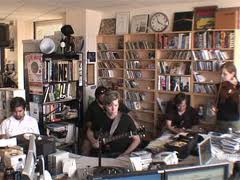
I don’t know Julie Doiron exactly–her name sounds familiar, and I know the band Eric’s Trip (she was the bassist), but I don’t really recognize her.
Nevertheless, I really enjoyed her Tiny Desk Concert. Unlike most of the musicians, she busts out an electric guitar, and although it’s quiet, there’s some good buzzy distortion on it, especially in the first song “Heavy Snow.” And it sounds good with her voice, which is powerful, even if she does seem nervous.
On “Ce Charmant Coeur” she sings in French and then messes up when she admits she’s thinking of other things and is distracted by the intimacy of the setting. Bob and company calm her by saying that she is sweating less than Tom Jones did (and there’s very funny joke about her breasts popping out (they don’t)).
She plays “Tailor.” It seems like she tried earlier and stopped half way through and is now trying again (the Concert itself starts midway through, so I assume that’s what was cut off). It’s a pretty, mellow song (very different sounding from “Heavy Snow”).
For the last song she plays “Consolation Prize” which she says is unlike any she’d written before. There’s a chaotic section in the middle which they agree we can just imagine because shes not going to play it in this setting. The blurb with the show says that she normally rocks out pretty hard–something that I’d like to see.
In looking up Doiron’s past she was on Kill Rock Stars and Sub Pop, so I must have seen her name a lot back in the day. I now see she has recorded with all kinds of bands that I like, and I’m curious to hear her more rocking edge (especially since she is so polite and sweet and nervous here).
After finishing the exciting All Families are Psychotic I moved on to his novel with my least favorite title and with a horrendous cover. You’d think that I would remember these books but I had no memory of this one either, and I’m fairly certain I read it within the last ten years.
Coupland must have been in a very dark place with this book as well.
There are four sections, each from a different person’s point of view. This technique of having a person tell his or her story is something Coupland does very well in all of his works–he loves to tell stories about telling stories.
But the darkness about the book is that it is set in a school just as three student gunman come in and shoot up the cafeteria, killing dozens of students, including the first narrator, Cheryl. This was written with the Columbine shootings in mind, although it has nothing specifically to do with Columbine.
In Part 1, Cheryl has already been killed as she is relating this story to us. She tells us about herself and her decision to join Youth Alive! a religious group in school. She and her friends in the group are very moral and are quite clique-y (and they are not widely liked).
The latest thing in Cheryl’s life which has her preoccupied and which has her Youth Alive! group very upset is that she has been spending a lot of unchaperoned time with Jason. Everyone knew they were dating, but it seems to have gone further now. And Cheryl explains to us (but not them) that she and Jason have started having sex. But not until after they rushed off to Vegas and were quickie-married (which no one knows, not even their parents). (more…)
SOUNDTRACK: MARIA TAYLOR-Tiny Desk Concert #19 (June 29, 2009).
I’d never heard of Maria Taylor before this Tiny Desk Concert. She was part of the duo Azure Ray (who I also don’t know). Then she went solo and as of this recording has released three albums.
Taylor has a pleasant voice (she reminds me of a number of different Lilith Fair singers, although I can’t pinpoint who specifically), but it’s not especially remarkable. The first song “Ladyluck” I found to be nice. The second song “Time Lapse Lifeline” fared better–the guitar melody was a little stronger, and the harmonies really helped.
The final track, “Clean Getaway” is another pretty gentle ballad (the two guitars really help add texture to all of these songs). Although even the end seemed to just stop without actually ending.
I didn’t find Maria Taylor to be terribly memorable. However, the Tiny Desk setting seems to be the best way to hear Taylor as her voice is well suited for an intimate location.
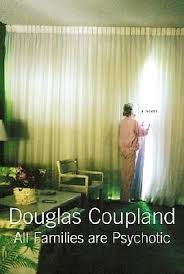
[READ: January 17, 2014] All Families Are Psychotic
I saw recently that Douglas Coupland had a new book coming out in 2014. And I also knew that I had three of his older novels to re-read, so I decided to make this the Winter of Douglas Coupland and read all three of those books before his new one came out. Then I got to work and saw his new book on top of a pile of newly delivered titles. Sigh.
Well, there was still no reason I couldn’t read the other three in a row, possibly even before anyone wanted his new book. So, off I went. And indeed, I finished this book on our little vacation. And even though I’m fairly certain I’ve read it before (it came out just before or after 9/11/01, gasp) I didn’t remember a thing about it.
This book has a title that I’m mixed about. It’s a great sentence, but I’m not sure it’s a great title. And although someone speaks the title in the book, it doesn’t really explain the book very well.
In fact it’s pretty hard to explain the book quickly. (more…)
SOUNDTRACK: BOB & DOUG McKENZIE-“The 12 Days of Christmas” (1981).
This is my preferred old school version of “The 12 Days of Christmas.” It was one of the first parodies of the song that I had heard (and I was big in parodies back in 1981).
I loved how stupid they were (on the first day of Christmas, my true love gave to me…a beer). I loved trying to figure out what a two-four was, and it cracked me up that they skipped a whole bunch of days.
I also enjoyed how they continued to snipe at each other throughout the song. Not comedy gold perhaps (that would be “Take Off” recorded with Geddy Lee, but a nice way to start, or end, the season on these “mystery days.”
Evidently, decades after SCTV went off the air, Bob & Doug got an animated TV show (without Rick Moranis). And they made a video of the song. Hosers.
Five Dials Number 29 was the first issue I had read in a while. (I read this before going back to 26-28). And it really reminded me of how great Five Dials is. I don’t know why this isn’t Part 2 after Number 28’s Part 1 (there was no 28b either), but that’s irrelevant. This is an independent collection of great writing. I was instantly surprised and delighted to see that César Aria was included in this issue (I didn’t even know he had made inroads in England).
CRAIG TAYLOR-Letter from the Editor: In Swedes and Open Letters
Taylor’s usually chipper introduction is saddened by the contents of this one. The discussion centers on Sweden and the city of Malmo, where integration is proving to be tougher than they’d hoped. Black skinned people are profiled pretty explicitly. Taylor talks about meeting the writer Jonas Hassen Khemiri (who they subsequently published in issue 21) who deals with issues of race. In March of 2013, Khemiri wrote an open letter to Swedish Minister for Justice Beatrice Ask after she brushed off concerns about racial profiling. The letter went viral including getting translated into 15 languages. So I guess there is some positivity after all. (more…)
SOUNDTRACK: PINK FLOYD-Live BBC 1970-1971 (1970/1971).
Since I am delving deeply into early Pink Floyd, I came across this bootleg of Floyd on the John Peel show.
The first show is Live at Paris Cinema, London 07-16-1970, just before the release of the album Atom Heart Mother (which we know because Peel says the song will be on their forthcoming album). The first set includes “Embryo” (which only ever appeared on their compilation Works, in a much shorter version), “Fat Old Sun” (from AHM), “Green is the Colour” (from the More soundtrack), “Careful with that Axe, Eugene” (available on Relics and in live formats), “If” (from AHM) and “Atom Heart Mother.”
The version of “AHM” here is interesting because the cello solo is played by a horn instead. The reason for this is because it allowed them to have fewer musicians on tour. It’s the same theme but the horn brings a very different feel than the cello did. It’s also interesting to hear that the horn players are nowhere near as polished as they might be. (In Geesin’s book he does talk about the lack of rehearsal the orchestra had for their live shows).
The second show is Live at Paris Cinema 09-30-1971, just over a year later. They once again do “Fat Old Sun” but in 1970 it was 6 minutes and in 1971 it is now 15 minutes long with a lot of jamming and keyboard stuff thrown on top. Next up is “One of These Days” (from the forthcoming Meddle) a favorite of mine. From this set I learned that the distorted voice that says “one of these days I’m going to cut you in to little pieces” is actually that of Nick Mason (and interestingly, in this version, the quote comes at the end of the song rather than the middle). Then they play “Embryo” again (it was clearly a concert favorite even if it never got a proper release (same length for each show and not drastically different). Then comes “Echoes,” the big side long epic from Meddle. And the set ends with “Blues,” which is indeed a blues. I don’t really expect to hear a blues from Pink Floyd, but here it is, and it’s a good one (Gilmour clearly can jam to anything).
The video below contains the two complete shows running at over 2 hours.
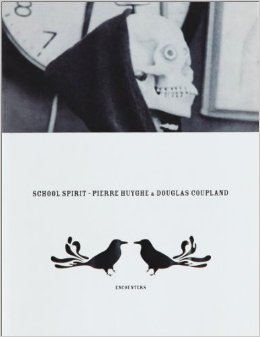
[READ: September 29, 2013] School Spirit
This is the final obscure Douglas Coupland book that I’m aware of and will be the final DC book that I need to hunt down for this blog (I have three other proper novels that I haven’t posted about, but those are proper books and will be dealt with in turn).
This book has about the least amount of information about it that I’ve seen in a book.
The (I assume) official description of the book (which I get from Amazon and Google Books) says
Dis Voir’s Encounters series invites a well-known contemporary artist to choose a subject for a book. The artist also selects a person with “elective affinities”–someone with whom he or she would like to share this exchange. The resulting collaborative volumes serve as an artistic and political laboratory of the present. For this first installment, French artist Pierre Huyghe choose Canadian writer Douglas Coupland, author of Generation X, for the influence that Coupland has had on his generation, and on Huyghe’s own work. Using a high school yearbook as scaffolding for their meditations, they discuss the construction of character, narrative techniques based on chance and the political dimensions of Coupland’s work–themes that are also fundamental questions for Huyghe’s projects. Using a high school yearbook as the framework for a meditation on memory.
But my copy (which has a different cover and limited publication information so may possibly be a different version) does not have anything to say at all about “the construction of character, narrative techniques based on chance and the political dimensions of Coupland’s work.” (more…)
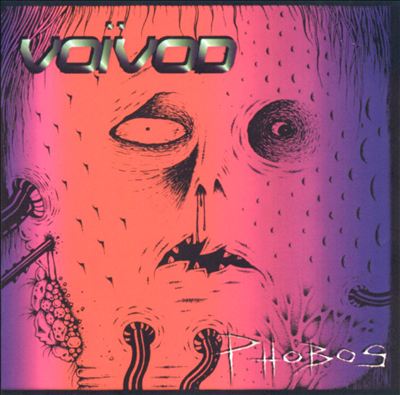
It’s tempting to say that Phobos is a carbon copy of Negatron, but that’s not true. While the line up is the same, and the overall tone is very similar—very heavy, aggressive music—there are subtle differences. The first is that the album sounds vaguely more electronic, as if they were really flirting with industrial after the experiment with Jim Thirwell on the last album. E-Force’s vocals, while still abrasive and screamed have a lot of processing on them which makes them far more interesting and actually quite a bit more understandable. There’s also a lot of weird electronic effects that link the album and make it feel more “spacey.”
And while there are different sections of songs and parts that are actually quiet, this i still a difficult album–the vocals especially are exceedingly harsh and will turn off people who like the instrumental sections. I hate to sound like the band’s declining popular are all down to E-Force, but he is the weakest link in the band at this point. Whats weird about thee two E-Force era albums is that although they are very very heavy with several weird parts per song, the basic structure of them is very conventional. So instead of sounding proggy and weird, they sound more like a bludgeoning metal band. Which didn’t really work for them. Indeed, the band intended to if not call it quits at least take a hiatus after this album.
Phobos opens with “Catalepsy I” an introductory song—noises and whatnot. And indeed, these electronic noises link all of the songs of the record, with different sounds in between the tracks (like the way “Bacteria” opens with spacey effects and electronic drum noises for 35 seconds). But the first proper song “Rise,” has an opening guitar riff that is quite normal—dark, but normal. It’s true that the heaviness of the chugging section is heavier than most (like earlier Voivod), but it’s still not that strange. Until the verses come in. And here’s where E-Force’s vocals are a little different—more processed and robotic sounding. It actually works a lot better. And in the middle of the song while the heaviness is ongoing, that opening normal guitar riff comes back. Rather conventionally.
“Mercury” has a more typical Voivod guitar riff although the pounding heavy chords are still quite heavy. There’s more of the distorted vocals and weird chords for the bridge. It also begins a series of increasingly longer songs. This one is nearly 6 minutes. While “Phobos” is nearly 7. It also has an interesting echoing staccato guitar riff with E-Force’s vocals very distorted (like Nine Inch Nails or Skinny Puppy). The bridge is a crazy noisy monstrosity and yet the middle section is very simple: loud chords delivered at a slow pace with interesting effects and fiddly guitar solo noises. “Bacteria” reaches over 8 minutes long. But it is unlike any of their earlier prog songs. It has an interesting echoing guitar opening and a bunch of staggered parts. But once the song’s major chords start up it sounds probably most like the previous album except for the lengthy instrumental/psychedelic section starting at around 5 minutes.
The album slows down somewhat with the 1:48 “Temps Mort” a short instrumental with what sounds alike an accordion. It’s a weird little time out (which is what the title means), and I like it a lot.
“The Tower” has an underwater kind of feel to it amidst the bludgeoning guitars. The middle and the end have some very cool heavy trippy/spacey metal which is so radically different from the heavy Voivod chords that make up the proper song. Indeed the very end is a minute of mellow spacey guitars. “Quantum” is a pretty straight ahead (for Voivod) metal song with echoed vocals that take some of th edge off (until he screams the chorus). There’s another cool instrumental section. In fact, the whole album has great instrumental sections, it’s kind of a shame the vocals are so offputting (although at the end of this song they are so distorted and computerized that they sound very cool)
“Neutrino” opens with those big loud slow ringing chords of noise before the simple but creepy solo riff comes in. It’s 6 minutes long and has another interesting guitar line amid the noise. It takes 3 minutes (of 7) before the vocals come in and the song gets much darker. “Forlorn” is the closest thing to a hit on the album. The chorus is really easy to sing along to. And the verses are actually pretty straightforward. It’s very very heavy and isn’t going to make the radio anywhere, but it’s still catchy. The album proper ends with “Catalepsy II,” more swirling noises that sound like the beginning.
There are two bonus tracks on the CD. “M-Body” was written by Jason Newsted and is the most industrial mechanized/voiced songs on the album. It’s certainly out of place, although it does hint at what is to come on their next album. “21st Century Schizoid Man” is a cover of the King Crimson song. They’d done Pink Floyd and King Crimson fits pretty nicely. As with the Floyd covers this one is very heavy. Piggy gets the guitars right. But as with the rest of the album, E-Force’s vocals just don’t work. Whereas Snake’s weird pronunciations accented the covers in a cool way, E-Force just seems to be forcing his way through the track (the fact that he puts 3 syllables in “century” is pretty unforgivable. Overall the song is pretty great, although I’m not so sure about the guitar solo which sounds like Piggy doesn’t really know what to do.
And that’s the end of this Voivod lineup. Two albums and a lot of lost fans.
[READ: September 20, 2013] Terry
I have known about this book for a pretty long time. I was never really that interested in reading it because, while I don’t know all that much about Terry Fox, I felt like I knew enough about him to not bother with a full bio.
For those who don’t know (basically anyone from the U.S.), Terry Fox was a young man who developed cancer at the age of 19 in 1977. and had his leg amputated. To draw attention to cancer research he decided to run (yes run) across Canada on the Trans Canada Highway. He had a prosthetic leg, he practiced running every day (he was already a natural athlete) and he decided that in 1980 he would run from the Atlantic Ocean to the Pacific (he even had a bottle of water from the Atlantic that he wanted to pour into the Pacific). His plan was to run between 26 miles a day. Yes, run a marathon every day. He called it the Marathon of Hope.
When he started out, the media coverage was nothing but as he progressed and his friend (who drove the van alongside him) started making media attention, Terry’s cause became more well known. And by the time he made it to Ontario, he was a huge personality—making TV appearances, talking to anyone and, most importantly, making a ton of money for cancer research. (more…)
 SOUNDTRACK: RHEOSTATICS-Linwood Movie Theatre, Port Dover, ON (December 4, 1999)
 This is the final concert on of the 20th century on Rheostatics Live (and I’ll be taking a short break from the Rheos concerts after this one). Even though the site doesn’t list the venue, in the previous show they say they are playing at the Linwood Movie Theater in Port Dover. As with every other venue, I can’t find any information about this, so I’ll just accept it as true.







 I don’t know Julie Doiron exactly–her name sounds familiar, and I know the band Eric’s Trip (she was the bassist), but I don’t really recognize her.






 I Just Read About That...