Feeds:
Posts
Comments

Archive for the ‘David Foster Wallace’ Category

fiddleblack-issue-8SOUNDTRACK: DEFTONES-Adrenaline (1995).

adrenalineMy friend Cindy recently told me that the Deftones were playing nearby. I hadn’t realized that they were still together–there was some personnel issues a few years back.  But indeed they are and even released a new album last year.  So I got their latest album and really liked it.  This made me go back and listen to their earlier stuff too.

I came to Deftones with Around the Fur, so this debut album is less well known to me.  And yet, there are two songs that I absolutely love on this disc and which easily put Deftones above so many other heavy bands of the era (I’m not willing to say nu-metal because it’s stupid and Deftones transcended the genre from their first album).  “Bored” and “7 Words” are masterpieces of controlled rage and tension.  “Bored” opens the album with this aggressive guitar noise, letting you know what you’re in for, but the chorus shows how Chino Moreno is a master of his diverse use of vocal styles.  Especially after a few soaring choruses (he has a great singing voice) when he whispers the final verse.

The way “7 Words” open is practically like Jane’s Addiction–an noisy aggressive guitar with a big bouncy bassline and some intricate drumming.  Chino’s voice comes in like an impatient whisper.  It’s a great start.  Then when the chorus comes in (basically just the word Suck repeated over and over), the guitars bring in a Soundgarden vibe.  It’s really a great track, wonderful to crank loud.  And there’s no long ending.  It’s just done.

The rest of the album plays some interesting textures and sounds.  They are a very riff heavy band with a lot of screaming (that would change over the years), but they are never ordinary.  Some of the tracks aren’t as memorable, but it’s a consistently interesting album.  And, for the time, it was quite original.  The way the riff plays against the vocals on “Minus Blindfold” is very challenging.  The opening guitar riff of “Root” is very punk but the discordant guitars are really very metal.  There’s some great moshing riffs on the album (“Nosebleed”) along with some really interesting guitar sounds (see “Engine No. 9”).  And the drums really stand out for all of their intricacy.  Not all of the songs pack the same punch, and, after knowing their later stuff, the album is a little samey, but it’s a good start and a great opening salvo.

[READ: February 20, 2013] “Hideous Interview with Brief Man” 

My friend Andrew sent me this and described it as a mash up and David Foster Wallace and H.P. Lovecraft.  And indeed it is.  Although I admit my Lovecraftian knowledge is there, it’s not very deep, so I’m not exactly sure how Lovecraftian this is, but it is definitely Wallaceian, as you can tell by the title.

And indeed, the story is constructed like a story from DFW’s Brief Interviews with Hideous Men: there’s a series of answers and a series of questions posed just as the letter Q.

It took me a couple of questions to realize that the Brief Man being questioned is Wallace himself and as the story comes to an end, it becomes apparent that this is an interview with Death.  It’s a fascinating idea, one that will likely ruffle the feathers of Wallace fans.  And yet Mamatas has done some of his homework about Wallace.

There’s some obvious parts, like titles from his books being used in the answers, although they do work very well in context and flow naturally.  The less obvious sections seem very true to the spirit of Wallace.  The writing style doesn’t really ape Wallace or his interviewing style which I think is addressed by the comment: “there could be no worse fate than being known for exactly the sort of person you actually are.” (more…)

Read Full Post »

dtmaxSOUNDTRACK: TOM WAITS & KEITH RICHARDS-“Shenandoah” (2013).

roguesgallery-f8be47f3887d51de57ea842a129f0a722e53ef74-s1This tune comes from the album Son Of Rogues Gallery.  The album is, of all things, a sequel to the album Rogues Gallery.  The full title is Son Of Rogues Gallery: Pirate Ballads, Sea Songs & Chanteys.  The first album was a kind of novelty–I can’t even say novelty hit as I don;t know if it was.  But it must have had some success because here’s a second one (and there’s no Pirates of the Caribbean movie to tie it to).

The album has 36 songs (!) by a delightful collection of artists, including: Shane MacGowan, Nick Cave, Macy Gray, Broken Social Scene, Richard Thompson, Michael Gira and Mary Margaret O’Hara (among many others).  I enjoyed the first one, but I think the line up on this one is even better.

“Shenandoah” is not a song that I particulalry like.  Because it is traditional, I have a few people doing versions of it, but I don’t gravitate twoards it–it’s a little slow and meandering (like the river I guess) for me. And this version is not much different.  What it does have going for it is Waits’ crazed warbling along with even crazier backing viclas from Keith Richards (there;s no guitar on the track).

[READ: January 7, 2012] Every Love Story is a Ghost Story

I had mixed feelings about reading this biography.  I’m a huge fan of David Foster Wallace, but I often find it simply disappointing to read about people you like.  And yet, DFW was such an interesting mind, that it seemed worthwhile to find out more about him. Plus, I’ve read everything by the guy, and a lot of things about him…realistically it’s not like I wasn’t going to read this.  I think I was afraid of being seriously bummed out.  So Sarah got me this for Christmas and I really really enjoyed reading it.

Now I didn’t know a ton about DFW going into this book–I knew basics and I had read a ton of interviews, but he never talked a lot about himself, it was predominantly about his work.  So if I say that Max is correct and did his research, I say it from the point of someone full of ignorance and because it seems comprehensive.  I’m not claiming that he was right just that he was convincing.  And Max is very convincing.  And he really did his research.

It’s also convenient that DFW wrote a lot of letters–Max has a ton of letters to quote from.  And DFW wrote to all kinds of people–friends, fellow authors  girlfriends, colleagues….  Aside from old friends, his two main correspondents were Don DeLillo, whom he thought of as a kind of mentor, and Jonathan Franzen, whom he considered one of his best friends and rivals.  I guess we can also be thankful that these recipients held on to the letters. (more…)

Read Full Post »

SOUNDTRACK: RA RA RIOT-“Is It Too Much” (2013).

raraI loved the first Ra Ra Riot album The Rhumb Line.  This song expands on some of the ideas from that album, but I fear that it goes in the one direction I would have preferred they not go.  The album had strings, nice harmonies and a great singer all melded into an interesting rock structure.

This song retains all of the elements that were interesting, but it removes it from the rock structure, making it  sound much more lightweight.  It’s pushing too far into easy-listening.  And do I hear autotune on the vocals?  The instrumental middle section is the most interesting part of the song.  But Ra Ra Riot seems to have removed the riot part of their sound.  If this is the direction of the album, I’m afraid I won’t be following.

[READ: January 8, 2013] “Consider the Writer”

I just finished the D.T. Max biography of David Foster Wallace.  I was curious what kind of reception it received.  And lo, here’s a review by Rivka Galchen (something I would have read anyhow since I enjoy her so much).

Galchen opens with two main points–the biography is gripping (and it is, I’ll be saying more about that tomorrow, too).  She writes: “In writing a chronologically narrated, thoroughly researched, objective-as-­imaginable biography, Max has created a page turner.”

The second idea is that you keep thinking “that you just don’t find Wallace all that nice”  (which I also thought).  But then she wonders if it is fair to be worried about that.  We should not judge others after all.  Especially since, as she points out, “We don’t always find ourselves asking whether a writer is nice. I’ve never heard anyone wonder this at length about, say, Haruki Murakami or Jennifer Egan.”  So why is that a concern about Wallace?  Because niceness is what Wallace wrote about, tried to encourage.  And perhaps “One understandably slips from reading something concerned with how to be a good person to expecting the writer to have been more naturally kind himself.”  But that is not necessarily the case–people strive for things that they cannot achieve.   I like her example “the co-founder of A.A., Bill W., is a guru of sobriety precisely because sobriety was so difficult for him.”   And her conclusion: “Wallace’s fiction is, in its attentiveness and labor and genuine love and play, very nice. But what is achieved on the page, if it is achieved, may not hold stable in real life.”

And Galchen talks a bit abut DFW himself (the book is a biography after all).  How he wore the bandana because he sweated so much–how self conscious he was about that and by extension nearly everything he did.  This mitigates his not-niceness somewhat.  It also ties in to his alcoholism  drug use and depression.  And his competitiveness, which is obvious in the biography.  She enjoys the pleasure of Wallace’s correspondences, “especially with his close friend and combatant Jonathan Franzen, but also with just about every white male writer he might ever have viewed as a rival or mentor. Aggressive self-abasement, grandstanding, veiled abuse, genuine thoughtfulness, thin-skinned pandering — it’s all there.”  I rather wished that the authors’ own reactions were included (of course it’s not biographies of them, and they are still alive), just to see if they sparred back with Wallace or if they were put off by yet indulgent of his needs. (more…)

Read Full Post »

[LISTENED TO: November 2012] The Ghostwriter Secret

brixton2We enjoyed Brixton Brothers Book 1 so much that we couldn’t wait to listen to Book 2.  And it did not disappoint.

Steve Brixton (who is 12) has set up his own detective agency (after the massive success of his first case) and his chum Dana is actually kind of on board with it this time.  Of course, his mom’s boyfriend Rick (jerk) thinks it’s all for laughs and he chuckles at Steve’s business cards.

With the agency all set up, all Steve needs is a case.  Which he quickly gets.  A local billionaire has had his diamond stolen and he wants Steve to help (he heard all about Steve’s success in Book 1).  Rick makes a joke about a bird stealing it (that was a plot in Book 1), but Steve knows that isn’t the case here.  The diamond is an incredibly expensive and valuable diamond which the billionaire keeps on display in his house (under intense security).  And yet somehow, the thief got in.  And the security system must be broken because the alarm keeps going on and off.

Steve quickly solves that case and the billionaire asks Steve to hold onto the diamond until they can catch the crook (Steve figured out HOW it was done, but is leaving it up to the police to figure out WHO did it).

Steve gets a ton of cash to hold onto the diamond, but he’s bored by the case.  He wants some excitement as a detective.  And then he gets a letter–from none other than MacArthur Bart!  Bart is the author of Steve’s beloved Bailey Brothers mystery stories (which he has read hundreds of times and has based all of his sleuthing skills upon).  Steve has been writing to Bart for years, telling him how much he loves the books with no response.  Once he set up the agency, he wrote to Bart telling him about the cases.  And now, finally, Bart has written back.  But it’s not a thank you letter, it’s a request for help.  Bart thinks someone is after him! (more…)

Read Full Post »

SOUNDTRACK: PINK FLOYD-Alan’s Psychedelic Christmas (1970).

I’ve always loved Pink Floyd’s Atom Heart Mother.  I have no recollection of how I stumbled upon this live bootleg, but when I saw that it contained one of the few live recordings of “Alan’s Psychedelic Breakfast” I had to give it a listen.

So this show is from 1970 and was recorded in Sheffield just before Christmas (Nick Mason evidently introduced the show while wearing a Santa Claus suit).  The sound quality is pretty good given that it is 40 some years old.  There’s a bunch of hiss, and the quieter talking bits are hard to understand, but the music sounds fine.

So the show opens with “Alan’s Psychedelic Breakfast” and what is so silly (and I assume funny to watch (a little less funny on bootleg) is that the band made and ate breakfast on stage.  As Collectors Music reviews writes: “This is the only known live recording of ‘Alan’s Psychedelic Breakfast’ but also hosts an amazing performance by the band which included them making morning tea on stage which is audible. Just like most of their earlier performances, the performance of “Alan’s Psychedelic Breakfast” slightly differs from the album version due to some nice jamming done by the band, especially Gilmour with his delay pedal.” As I said, some of the audio is static and hard to make out in this song–the band is conversing during their tea, but who knows what they are saying.  And who know what is o the radio.

Then the band gets down to business.  One of things I love about this period Floyd which is so different from their later work is that the played really long spacey jams often with very few lyrics.  So we get a 12-minute version of “The Embryo” (the only available studio version is a very short one on Works which is quite a shame as the song is really good).  A 14-minute workout of “Fat Old Sun” which is usually only about 5 minutes.

There’s a great version of “Careful with that Axe Eugene” and “Set the Controls for the Heart of the Sun” (15 and 12 minutes respectively).

Then in a killer version of “Saucerful of Secrets,” just as they get to the end, there’s a power failure (at least according to the song title).  The band is rocking out just hitting the climax when suddenly all you can hear are un-miked drums.  Ha. After a couple of minutes, power comes back and they pick up from just before where they left off.

Then the band launches into a full 31-minute version of “Atom Heart Mother” complete with horns and choir  of voices.  It sounds quite good (the horns seem a little sketchy but that might be expected with such staccato music).

The set ends and the band needs an encore.  Apparently they couldn’t remember anything else because they just re-do the last few minutes of “Atom Heart Mother” again.

One of the things that cracks me up about these shows in the 70s in England, is that the audience is so polite. Their applause sounds like a classical theater rather than a rock show.  And with a bootleg you know they didn’t try to make the audience sound bigger than they are.

The whole package is a fun trip.

[READ: August 17, 2012] Welcome to the Monkey House

So this book is Vonnegut’s second collection of short stories.  But there’s a twist.  This collection contains all of the short stories from Canary in a Cat House except one. It also contains many of the stories he had written since then as well as stories not collected in Canary.  So you get basically 18 years worth of stories here.  And it’s interesting to see how much he has changed over those years (during which he wrote 5 novels, but not yet Slaughterhouse Five).

Since I read Canary a little while ago (see comments about the stories here), I knew that his 50’s era stories were influenced by WWII.  So it’s interesting to see how his stories from the 690s are not.  They deal more with day to day things and, of course, abstract concepts about humanity, although politics do enter the picture again once Kennedy is elected .

  • Where I Live (1964)

This was a good story to open with because it shows the then-later-period Vonnegut’s mindset and location.  This story is about Barnstable Village on Cape Cod (where I assume Vonnegut lived since there are a number of stories set on the Cape).  This is a very casually written story about an encyclopedia salesman who goes to the local library and sees that their two encyclopedias are from 1910 and 1938.  I enjoyed this line: “He said that many important things had happened since 1938, naming among others, penicillin and Hitler’s invasion of Poland.”  He is told to talk to the library directors who are at the yacht club.  I love the attitude that Vonnegut creates around the village which “has a policy of never accepting anything.  As a happy consequence, it changes about as fast as the rules of chess.” For really, this story is about the Village more than the encyclopedia salesman, and it’s an interesting look at people who move into a new place and want it to never change. (more…)

Read Full Post »

SOUNDTRACK: KISS-Animalize (1984).

This year, 1984, was the first time that I saw Kiss live.  Sadly I remember more about the opening band (Loudness) asking if New York was having a good time (and the fans screaming that we were in New Jersey). But I still have my booklet from the show and I do remember a few things from the show (again, sadly they were not in makeup).  So this album holds a special place for me, even though in retrospect it’s not as good as Lick It Up.

“I’ve Had Enough (Into the Fire)” starts the album off with a bang—blistering solos from new guitarist Mark St. John.  But, as with Lick It Up, the album for me is overshadowed by the (massive) single.  “Heaven’s On Fire.”  It’s such a lame little sing-along (and yes I do remember that song from 1984 show—Paul really milked it).  But man it’s such a bad song.  Musically, “Burn Bitch Burn” is interesting, but what were they thinking with those lyrics “I want to put my log in your fire place…burn bitch burn?”  That’s a far cry from “I am the doctor of love.”  “Get All You Can Take” is, to my knowledge, the first time Kiss has said the word fuck in a song (“What fucking difference does it make?” Is sung by the deeper response voices in the chorus.  It’s a catchy song with an interesting riff.  “Lonely is the Hunter” has a kind of 70s southern rock feel.  It also seems to be calling back to some earlier songs in the style of singing—which only reminds you how much better the earlier song was.   The band is relying a lot on call and response vocals on this album.  And they’re okay but seem like a something of a crutch..

“Under the Gun” continues as another sort of generic fast rocker from this era.  “Thrills in the Night” is one of my favorite songs on the disc–it sounds so much like Kiss of the 70s.  And with Paul’s vocals and the guitars, this could have come off of his solo album.  “While the City Sleeps”  is a fairly uninspired Gene song.   None of these songs are bad, really, they’re just not as exciting as they might be.  “Murder in High Heels” has more of that 70s rock swagger that Gene likes to pull off.  It’s just not always clear that the 70s swagger rock works well with the heaviness of other songs on the record, like the band wasn’t sure which direction to go in.  So even though this disc is the one that brought me back to Kiss, it has some good songs, but it doesn’t really hold up all that well.

[READ: August 1, 2012] Desperate Characters

David Foster Wallace, Jonathan Franzen and Tom Bissell have all championed this book.  Bissell was instrumental in getting it republished once it went out of print.  Franzen wrote the introduction to the newly published version.  David Foster Wallace blurbed the book: “A towering landmark of postwar Realism….A sustained work of prose so lucid and fine it seems less written than carved.”  It was also on his syllabus.  Zadie Smith has also written favorably about Fox’s fiction.

So why did it take me so long to read this book?  (I read the original version, which is what the library had.  I’m curious about Franzen’s introduction and will get to it eventually).

S. knows Paula Fox as a children’s author, which surprised me even more when I read the grittiness of this book.

It is submerged in downtrodden New York City of the late 60s, where people throw garbage out their windows, where racial tensions run high and where everything feels dirty.  This powerful description late in the book sums up the attitude about the City:

They drove through miles of Queens, where factories, warehouses, and gas stations squeezed up against two-story, two-family houses so mean and shabby that, by contrast, the ranks of uniform and tidy tombstones rising from cemetery islets that thrust up among the dwellings seemed to offer a more humane future. Sidewalks, brutal slabs of cracked cement, ran for a block or two, then inexplicably petered out, and along the center of the tarmac streets, short lengths of old trolley tracks occasionally gleamed among the potholes. Here and there, the skeletons of a vast new apartment complex sat on the rent ground; tree roots and rocks and earth rolled up around its foundation. Cries of boredom and rage were scrawled across the walls of factories, and among these threats and imprecations, invitations and anatomy lessons, the face of an Alabama presidential candidate stared with sooty dead eyes from his campaign posters, claiming this territory as his own. His country, warned the poster – vote for him – pathology calling tenderly to pathology. [For those ignorant of history like me, that candidate was George Wallace.  This was his third time running, this time as part of the American Independent Party].

But that’s just the descriptions.  What is this story about?  Simply, it is about Otto and Sophie Bentwood, a successful childless couple living in Brooklyn.  Otto is a lawyer, and, Sophie is a successful translator (I liked that Sophie was employed and not “just” a housewife).  But Sophie hasn’t felt up to translating lately and Otto’s successful practice hits a bump when long time partner Charley decides to leave to work on more important causes.

Otto is rather cut off emotionally–Charley has been his friend and partner for decades yet he can barely muster a proper goodbye when he steps out the door.  And while Otto and Sophie are mostly happy, he has more or less pushed her into the arms of another man.  She looks back on this brief affair with fondness.  However, the fact that the affair is never suspected and the fact that it ended the way it did are just more indignities that Sophie has to suffer.

But what sets off the action in the story is an act of kindness.  Sophie sees a cat that is hanging around the alley behind their brownstone.  Amid the people throwing garbage out the window and hanging up sheets to act as curtains, Sophie decides to do a nice deed for this cat.  She brings it some milk. It hungrily laps up the milk and when Sophie goes to pet it, it bites her really hard on the hand.  And literally the rest of the story follows the swelling of her hand. (more…)

Read Full Post »

SOUNDTRACK: INFINITE JEST-“Determinism, But I Mean It When I Say It” and more (2012).

I admit I didn’t know this band existed until I Googled Infinite Jest music about five minutes ago, because, yes, I wanted to put a thematic song here.  Imagine my surprise that there’s a band called Infinite Jest (and that they are based in Boston).

Infinite Jest are an electronic duo (their site says they specialize in live shows with mind-bending visuals).  All of their songs are available for download on their site.  I picked this one because I liked the title (I was honestly hoping for a song title or two that referenced the book, but alas).

All of the music is electronic, but it’s not bass-heavy dance style–it’s more spacey electronic (the kind that I like).  I can’t say I’m a huge fan of the genre, but i like it from time to time and most of this stuff is pretty cool. I rather prefer the instrumentals, although some of the songs with processed and autotuned vocals are okay.  The track “Fuck” uses a sample of a scream which I would have guessed was Trent Reznor, but I assume anyone can scream like that.  They’ve even made a video for their song “Cuddling.”  Like Infinite Boston it shows scenes from around Boston, only set to music.  You can hear and see it all at their website .

[VIEWED: July 2012] Infinite Boston

For fans of Infinite Jest, William Beutler has created a very exciting project: Infinite Boston.

Infinite Jest is set in the Boston Area, specifically in Enfield, a fictional town that is located around Allston and Brighton, MA.  Many people have taken photos of interesting locations (fictional and otherwise) in the Brighton area, but none have approached this task with the steely-eyed determination of Beutler. (more…)

Read Full Post »

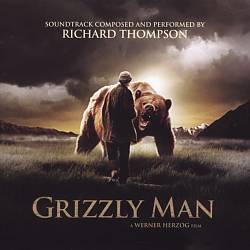
SOUNDTRACK: RICHARD THOMPSON-Grizzly Man Soundtrack (2005).

This is a largely instrumental soundtrack by Richard Thompson.  It features some wonderful guitar work (no surprise there).  There are several slow acoustic numbers (“Tim & the Bears,” “Foxes”–which is in the style of his old traditional folk ballads) there’s also the slow impassioned electric guitar solo (set over a simple beat) of “Main Title.”  “Ghosts in the Maze ” is a dark piece, the exact opposite of “Glencoe” a traditional-sounding song, both of these are under two minutes long.  “Parents” adds a cello, which means a sombre song.  “Twilight Cowboy” is one of the longer pieces, and it really conveys an openness of nature.

“Treadwell No More” is a slow six-minute dirge type song.  “That’s My Story” has spoken dialogue by Treadwell, over a simple unobtrusive guitar.  But as the title of the record says, Music composed and performed by Richard Thompson.  Which means there are other musicians on the soundtrack too.  “Small Racket” is where things start to get noisy and a little uncomfortable.  There’s some squeaks and slashes of sound, but it’s mostly a tense guitar feel.  Then comes the darker, scarier stuff.  “Bear Fight,” is a series of cello noises and swipes.  “Big Racket” is indeed that, with guitar from Henry Kaiser and noises from Jim O’Rourke.  “Corona for Mr Chocolate” is all Jim O’Rourke, it’s also odd noises and moods.  None of these three songs are terribly off-putting but they reflect a very different tone.

The album ends with “Main Title Revisited,” which is what it says and “Coyotes” by Don Edwards which has some coyote yodels.

It’s a good soundtrack, really conveying what the movie is about, and while not essential Richard Thompson, it is still some great guitar work

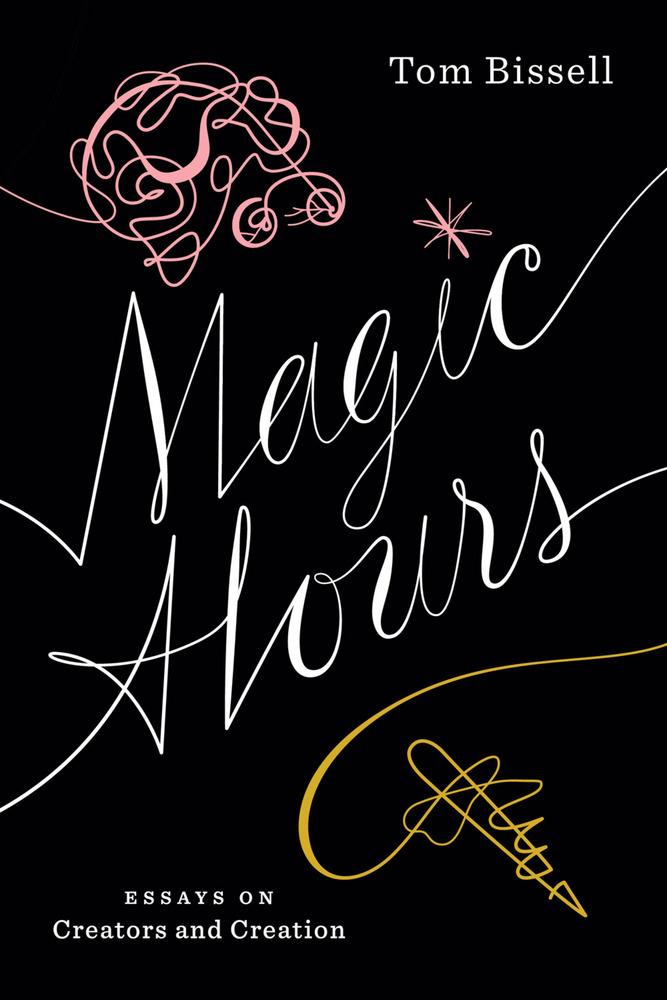
[READ: July 23, 2012] Magic Hours

I thought that I had never heard of Tom Bissell, but I see that I have read three of these articles already (I guess I don’t always pay attention to the author’s name).

This collection of essays comes from the last eleven years (2000-2011).  The articles have appeared in The Believer & The New Yorker (these are the ones I have read) and Boston Review, Harper’s, New York Times Magazine, Virginia Quarterly Review, New York Times Book Review and Outside (which I am starting to think I should really check out more).

Primarily they are articles about writing–he looks at fiction, non-fiction, film or a combination of them.  Bissell is a strong writer and he does not hold back when he sees something he likes or dislikes.  I found his articles (all of which are quite long–about 30 pages each) to be engaging, funny and very persuasive.  I’m really glad I read the book (and was even glad to re-read the articles that I had read before). (more…)

Read Full Post »

SOUNDTRACK: MODEST MOUSE-“Lives” (2000).

This song (quoted in the story) comes from the first Modest Mouse album that I ever bought, The Moon and Antarctica.  I have very vivid memories of listening to this album on a long dark stretch of road–not a bad image to connect with the album.  This song comes near the end of the album after the stomper “I Came as a Rat” and the slow guitar and slightly ill sounding bendy note really set the unease of the song.  After about 45 seconds the tribal drums kick in and change the pace of the song.  But rather than bursting forth, the song kind of falls back in on itself until what feels like a brand new song comes out of this little cocoon–an upbeat acoustic number with strings that tries to remind you to live before you die.  After a brief flirtation with yet another style, the song returns to whence it started.

It’s representative of Modest Mouse’s quieter side, although it barely showcases the extremes that the band is capable of.

[READ: July 11, 2012] Arach nID

My former co-worker Jay is one of the few people I know who is “writing a book” who has actually written most if not all of said book.  He has been writing a sci-fi opus for a few years now and at last count it eclipsed 600 pages.  I mean, sure, I’m “writing a book” but it’s all in my head.  Anyway, I told him about a short story contest and asked if he had any short stories to submit.  We once had a discussion about how novelists shouldn’t really write short stories if what they wanted to write was a novel, so I didn’t know if he had anything handy.  He told me he had this work partially written and, with a deadline in mind, he polished it up and finished it off.

Because the story is unpublished, I’m not going to give away too many details, as that’s not cool (and because he may always revise it).  But I will talk about the basics of the story because I think it’s pretty interesting. (more…)

Read Full Post »

SOUNDTRACK: FEIST-“Femme Fatale” (2011).

The funny thing about The Velvet Underground is that it seems like it would be very hard to fail at covering them.  Their songs are pretty open to interpretation.  But, it’s even more true if you wanted to do it pretty straight.  I mean, while Lou Reeds voice is unique, Nico’s isn’t really.  It’s slow and languorous, sexy and distant.  I would never have thought to describe Feist that way and yet she fits into the Nico mold very nicely.

This cover comes from the Velvet Underground Revisited show from 2011, with a band comprised of members of Radiohead, Air and Supergrass.  Feist did vocals for this one.  It’s not an earth-shattering cover.  In fact it’s pretty spot on.  Maybe everyone who hears this will start a band too.

You can hear it here.

[PLANNED: Summer 2012] #OccupyGaddis

I had my books all planned out for the summer.  A series of smaller books to get through before trying to tackle any really big books that are on my shelf (and there are plenty).

And then came #OccupyGaddis.

William Gaddis is an author, like Thomas Pynchon, who writes large, unwieldy novels which are something of a bedrock for contemporary American fiction–like The Velvet Underground–not many people have read him, but those who have all went on to write wonderful books.  And he forms a kind of continuum of (among many many others) Joyce>Gaddis>Pynchon>Wallace which means that I ought to be reading him.

I read JR about a decade ago.  I remember a few things about it–basic plot details and the fact that you never know exactly who is speaking.  I wasn’t keeping this blog then, so I didn’t exactly take notes on it or anything.  It’s kind of a blur.

So Lee Konstantinou is running #Occupy Gaddis this summer.  It is meant  to be an Infinite Summer type-deal.  Unlike Infinite Summer which was weekly, he’s planning on posting every two weeks.  I’ll try to do my weekly post (work permitting), by picking a midpoint as a Spoiler Line.  Since my recollection is that JR is like one large block of text with no breaks anywhere, my spoiler line will be pretty arbitrary.   But here’s his:

June 29: pp. 150

July 15: pp. 300

July 31: pp. 460

August 15: pp. 610

August 26: done!

(more…)

Read Full Post »

« Newer Posts - Older Posts »