Feeds:
Posts
Comments

Archive for the ‘David Foster Wallace’ Category

actsSOUNDTRACKTINDERSTICKS-What is a Man (2000).

manThis is a soundtrack to a TV mini-series called The Sins (which I know nothing about).  The song (for there is only one) is a cover of a Four Tops song (which I do not know).  The “B-side” is an instrumental version of said song.

And, sadly, that’s all that comes on this disc.  It’s a good song, yes, but at a combined total of about 5 minutes, it’s rather skimpy as a disc (Hey that’s what singles used to be back in the day).  Normally I don’t encourage the downloading of tracks (I’m more of a physical medium kind of guy), but I think if you’re looking for this for this particular song, you’re much better off just downloading it.  I don’t think it’s available on any other discs.

[READ: October 24, 2009] “The Balloon”

[UPDATE: November 25, 2009]  For the new review of the story, click here.

I just received a copy of Unspeakable Practices, Unnatural Acts and have learned that the version of “The Balloon” that I read and which I linked to below is NOT the entire story.

Aside from a couple of inexplicable word changes (!) the version online leaves out the final four paragraphs.  And, with Barthelme’s prose being so dense, that’s quite a lot of information.

This changes my reading of the story quite a lot as there is now a DIFFERENT ENDING!  So I have to more or less disown this review.  But I will leave it up for posterity.  I’ll include a new review when I finish the short story collection.

[original review commences here]

David Foster Wallace in a Salon.com interview, said that this was “which is the first story I ever read that made me want to be a writer.”  I have recently read a few Barthelme pieces (that were in Harper’s) and I found them to be weird, kind of interesting, but nothing inspirational.

But, heck, why not see what got DFW going?

So this story was, in fact, very cool. It was written before the pieces that were in Harper’s, and, as with most artists who end up in a weird and out-there place, he started off in a reasonably normal place.  In other words, this story is actually something of a story with a beginning and sort of an end.  There’s no plot, per se, but the story does lead somewhere. (more…)

Read Full Post »

sonoraSOUNDTRACK: TINDERSTICKS-Nénette et Boni [soundtrack] (1996).

boniAfter releasing two albums of atmospheric brilliance, Tindersticks were called upon to score the music for the film Nénette et Boni.

And this disc answers the question of whether it is Stuart Staples’ voice that is the driving force behind the band.  And the answer is, indeed not.  This disc is almost entirely instrumental (except for “Tiny Tears” which is a different version from the second disc and is here titled “Petites gouttes d’eau”).  The band brings the same atmospheric/noir quality to this disc that they bring to the ir previous works, but you get to hear it in all of its glory (since you’re not trying to figure out what Stuart is talking about).

I haven’t seen the film, so I can’t say how well it works for the film.  But I feel like I know the film quite well from the tone and music (and what I think may be sounds from the film) that are present.  If you like the band musically, you absolutely cannot go wrong here.  There’s not a bad track on the disc.  Even the half dozen or so tracks that are only about a minute (this is a soundtrack after all) are quite evocative.

I read a brief description of the film online, and I’m not entirely sure I want to see it.  But I sure do enjoy listening to the music.

The reissued disc comes with a bonus disc called Marks Moods.  Marks Moods was a promo disc sent out to film producers to showcase just what the band could do (again, without Stuart’s vocals).  So this is another moody instrumental disc.  The difference is that there are many songs from other discs that are done (or re-done, I can’t be entirely sure) as instrumentals.  The four tracks with vocals are “Sleepy Song,” “Don’t Look Down,” and “Buried Bones” which is actually a duet.  And then there’s “For Those…” one of my favorite songs which seems to crop up all over the place but never on an actual album.

This appears to have been something of a find back in the day.  I’m not sure if it was really worth hunting down, but it is a nice bonus to this disc.

[READ: October 18, 2009] “/Solomon Silverfish/”

The last few uncollected DFW stories that I read were a little less than satisfying.  So I wasn’t looking forward to this one very much.  But man, was it good.  It seems to be a hearty precursor to Infinite Jest (without the endnotes).  It even has a character named Wardine!

The story is typographically a little odd.  The title and “section” headings are in backslashes.  (I have no idea if that signifies anything other than a typographical choice of DFW or the magazine).  The section headings are the names of the character whose point of view the section is.  So, when the story opens we see /Solomon/.

But aside from that, the most unusual thing in the story is that it is written in the voice of a very Jewish individual.  For Solomon Silverfish speaks in an almost stereotypical Jewish vernacular.  Solomon is married to Sophie Shoenweiss, a Jewish woman who is dying of breast cancer.  As the story opens, Solomon is fielding a phone call (at 2 in the morning) from Sophie’s brother Ira.  Ira has just been caught with his third DUI and he’s begging his brother-in-law, a fine public defendant, to bail him out (again). (more…)

Read Full Post »

reviewSOUNDTRACK: FIONA APPLE-When the Pawn… (1999).

when the pawnI learned about Fiona Apple from CMJ New Music Monthly before her debut came out.  I was convinced she was just another pretty thing with little talent. But then I heard “Shadowboxer” and I was really impressed by the depth of her voice.  When I got the album, I was pretty much blown away.

When When the Pawn came out it was mocked for its absurdly long title.  (Even Janine Garofalo got in on the mocking, for which, shame on her because even if Fiona made some bad decisions, she was still a young woman who was fighting for the causes of good).

But looking beyond the title, For When the Pawn, shows Fiona’s voice getting stronger and more subtle, and her songwriting is truly amazing.  She used the assistance of Jon Brion, multi-instrumentalist and all around dabbler in fun sounds.  And he creates a soundscape of weird instruments, crazy sounds and an enveloping sounds that keep the album an item unto itself.

I haven’t listened to the disc in quite a while, but playing it again, i was impressed by the audacity of some of the musical choices, especially for a “pretty young thing” with a successful (and disturbing) video on the charts (“Criminal“).

The crazy noises that start off the disc (carnival-like keyboards, electronic squeals) sound a mile away from the jazzy sounds of “Shadowboxer” but Fiona’s voice comes in and you know that she’s still her, and her voice sounds even richer.  There’s a wild disconnect on “To Your Love” with the delicate vibes (!) that fill the bridge and the rough sounds in the chorus (not to mention the crazy wordplay: “My derring-do allows me to dance the rigadoon Around you But by the time I’m close to you, I lose my desideratum and now you”‘).  And then “Limp,” an amazing musical concoction:  more delicate jazzy openings followed by a raucous chorus with the wonderful put down: “So call me crazy, hold me down / Make me cry; get off now, baby- / It wont be long till you’ll be / Lying limp in your own hand.”

And that’s just the first three songs.  The rest of the disc sways between mellow jazzy numbers, beautiful ballads, and rocking scorchers, but it is always fueled by a dissonance that counters Apple’s voice perfectly.

Another can’t miss track is “Fast as You Can,” a wonderfully propelled track that bounces along jauntily until it hits an amazingly fast syncopated chorus.  And the production is so clean, the drum clap before the bridge is striking.  The disc ends with a couple of delicate songs.  “Get Gone” is  delightful jazzy song (complete with brushed drums).  It remains pretty mellow until Fiona breaks from a pause with a brutal “fucking go!”  And finally, the delicate ending of “I Know” brings the disc to a close.

Ten years later, this disc is still a gem.  One can only hope it gets rediscovered so a new legion of fans can enjoy its masterful music.  And for the full title of the disc, check the bottom the post….

[READ: October 16, 2009] “Fictional Futures and the Conspicuously Young”

This article opens with a note that Evan Martin found this article but noticed that it wasn’t online.  It was mentioned in Steven Moore’s essay “The First Draft Version of Infinite Jest.”  So he retyped it and it is now hosted on theknowe.net.  Here’s the write-up & link from The Howling Fantods:

“Fictional Futures and the Conspicuously Young”. The Review of Contemporary Fiction Vol. 8, No. 3, 1988. [NOTES: Read it here.]

This is a fascinating article in which DFW looks at the state of fiction circa 1987.  Specifically, he is responding to criticisms that the popular authors of the day, collectively Conspicuously Young, all fall into three very basic and uninspired cliche-filled boxes:

  • Neiman-Marcus Nihilism
  • Catatonic Realism
  • Workshop Hermeticism (more…)

Read Full Post »

cdSOUNDTRACK: THE TREWS-No Time for Later (2008).

trewsI was surprised by this disc.  The cover is mildly shocking, but more just tasteless (and one that I won’t leave lying around), but it’s mostly shocking because it is so inappropriate for the music contained within.  The music is such basic rock and roll–the kind that I didn’t think anyone made anymore.  It’s almost retro in its boogie woogie Black Crows style of rock.

I had gotten their first disc, House of Ill Fame when it came out.  That disc is also a simple, rocking disc, but it has rough elements that keep the listener interested.  But No Time is so much more polished it practically shines with smoothness.  It’s funny how a little bit of smoothing can make such a difference.

The 21st century music listener is possibly somewhat aghast at this disc because it is so un-raw, un-edgy, so basic.  And yet for all of its weird retro rock stylings, releasing a record like this in 2009 is rather original.  And I  realize that if I had heard this twenty years ago I would have thought it was a great rock record.  So I put that listening cap on and found out that yes, I could rock out to this disc.

In fact, I feel like after track 4 the disc really takes off:  “Paranoid Freak” is a great rocking tune, and hearkens back to the raw writing style of their first disc (even though the song itself is not raw sounding at all).   “I Can’t Stop Laughing” has a great chorus, one built for arenas.  The only really questionable song is their “political” one, “Gun Control.”  Sure, I agree with the sentiment, but such a pointedly simplistic and, frankly, preachy song isn’t really good for anyone.

It’s become something of a guilty pleasure because I can’t think of a record less cool than this one.  There’s simply nothing here for an indie rocker to latch on to.  And yet I still like it.

But the whole time it’s so hard to imagine that this disc came out in 2009.

[READ: September 27, 2009] “Crash of ’69”

This was an early piece by DFW and here’s the write-up from The Howling Fantods (appreciation just assumed at this point) which tells a pretty interesting origin for this story.

“Crash of ’69”. Between C & D, Winter 1989. [NOTES: Between C & D was an experimental literary magazine literally printed on circa 1989 dot matrix printer-paper and sold in a plastic bag. Finding a copy of “Crash of ’69” (in any shape) took work and many thanks go out to those who tracked it down. That being said, it was kind of a mess. A lovingly restored copy is available here.]

Turns out that there is a book of the Between C & D stories.  I can’t find out very much about it, but I’m going to try and interlibrary loan it and see what else I can discover.  If I’m reading what little information I have correctly, it appears that Kathy Acker & DFW may be published in the same book (which is of course funny given his review of her work here).

But on to this short story.

As with much of his short fiction, “Crash of ’69” comes across as rather experimental.  Each paragraph or so is headed by a character’s name (there are three in total, I think, although the female character’s description in the heading changes each time she speaks. (more…)

Read Full Post »

tinI’m popping this updated review into its own post because it’s quite different from my original review and it seems like it should be by itself.

The first time I read this story, I was too conscious of DFW’s own fight with depression and his suicide.  And since this piece is about someone with depression (and it’s in the first person) it really seemed a little too nonfictiony to be actual fiction.

As I thought about it more, though, I realized that this was not a nonfiction piece.  There were obviously things that didn’t happen to DFW; even if they seemed thinly veiled, this narrator was obviously not him.  So I decided to re-read the story with this new attitude. (more…)

Read Full Post »

coprseSOUNDTRACK: ERIC CHENAUX-Sloppy Ground [CST052] (2008).

sloppy

It took several listens before I fully enjoyed this disc.  There’s something about Chenaux’s voice that is very calming, almost soporific.  And, since his general songwriting style is kind of ambient and almost formless–with no real choruses or even rhythms, the disc tends to get lost in the ether.  There’s also some unusual instrumentation (electric harp & guitarjo (!)) too, which continues the otherworldly feel of the disc.

What really hooked me into the disc though was the three “funk marches” that distinguish themselves from the rest of the disc.  “Have I Lost My Eyes” comes in like a raging gust of fresh air after the first three drifting tracks.  It’s got a strong melody and raw drums that propel this fantastic track.  “Boon Harp” & “Old Peculiar” have a similar strong vibe.  And they are really the anchors of this disc.

The rest of the album isn’t bad, I just find it hard to listen to in one lengthy sitting.  The opening three songs tend to drift a round a little too much.  But one at a time, these songs are pretty cool.

[READ: Last Week of September 2009] The Fifth Column & The Flexicon

These two pieces were part of the list of uncollected David Foster Wallace publications.  The difference with thee two pieces is that he plays a small role along with several other authors.  Both of these pieces are sort of a exquisite corpse idea. Although unlike a true exquisite corpse, (in which the author sees only a little of the end of the previous author’s work) it’s pretty clear that the authors had access to the entire work.  The quotes in bold are from The Howling Fantods.

For a delightful exquisite corpse piece that I authored see the untitled comic strip on my website.  About ten years ago I started an exquisite corpse comic strip and sent it to a number of people who all had a lot of fun continuing the story.  I have finally put it online at paulswalls.com/comic.  (See, artists, I told you I’d do something with the cartoons some day!) (more…)

Read Full Post »

rapperSOUNDTRACK: SCHOOLLY D-Smoke Some Kill (1988).

schoolySince this disc is featured so prominently in Signifying Rappers (and the book is named after the best track on this disc) I thought I’d dust it off and listen to it again.  I got this disc probably in 1989 at the suggestion of my friend Al.  He recommended “No More Rock N’ Roll,” I think.

I haven’t listened to the disc in years, probably a decade.  The last time I listened, I think I wasn’t all that impressed by it, which is why it’s funny to me how much significance the book gives this disc/track.  In listening again, I felt more or less the way I did last time, although interestingly, after reading the book, I agreed that some of the tracks are pretty good.

“Signifying Rapper” in particular, seemed better after DFW’s analysis of it (he discusses it in the tradition of the trickster narrator, and I agree it’s a good one).  Although, at one point in the book DFW decries the misogyny in a lot of rap, but he doesn’t mention the homophobia.  And, despite the trickster style in this song, the homophobia is pretty outrageous (even if, in a surprising twist, the “faggot” kicks the “pimp’s” ass).  But really, the thing that upsets the pimp so much, that he went off to fight the faggot about is this rather absurdly childish set of insults:  your dad’s a faggot, your mom’s a whore, your granny’s a dyke and your brother’s a faggot too.  Now, homophobia aside, would these insults really get anyone so angry?   Hard to say.   But regardless of the whole thing, the song is set to the riff from Led Zeppelin’s “Kashmir” so, that’s pretty fun.

The rest of the disc is a mix of kind of lame tracks and a few good ones.  “Here We Go Again” has some great scratching on it (in fact the scratching throughout the disc is quite good), and there’s some really good background samples on “Gangster Boogie II.”  Although I think the best tracks come near the end: “Treacherous” (which samples or reinterprets Gil Scot-Heron’s “The Revolution Will Not Televised”) and “Black Man” which features the cool shout-out “What’s the Word?  Johannesburg!).

A few tracks are kind of flat.  “Mr Big Dick,” is, at best, silly and even the title track “Smoke Some Kill” is sort of uninspired.  What’s interesting about somewhat flat style is that this disc has come out after Public Enemy’s wall of sound changed the face of rap.  But Schoolly is sticking with the very sparse Run D.M.C. style.  The difference is that with Run, you had two vocalists, but Schoolly is by himself.  It’s just not quite as exciting.

And, then there’s the aforementioned “No More Rock N’ Roll” which is a companion to “We Don’t Rock, We Rap”.  The whole anti-rock trope rings hollow especially since he samples from it so freely.

It was still early days, but rap has progressed pretty far from this CD.  It also turns out that this disc is really hard to find.  It’s discontinued and lists on Amazon for $50.  How lucky for me!

[READ: October 2, 2009] Signifying Rappers

I wasn’t planning on reading this book this soon.  (I’m  not turning into a DFW addict, I swear).  But this showed up all because of the whims of the interlibrary loan system.  I put holds on books for people all the time, and usually it’s for new, popular books, so it’s often several weeks, sometimes months before the books come in.  I tend to forget that a 19 year old book that nobody is clamoring to read will show up in about 3 days.

So, those of you thinking about reading this book because you want to complete the DFW ouvre were probably wondering if this co-authored book should really count.  And, like, how would you know what he wrote?  Well, I didn’t immediately figure out the patently obvious system that they used in the book: When Mark Costello writes a section it is introduced with a large M.  When DFW gets a section it starts with a large D (see, obvious).   You can also tell because DFW’s section are laden with footnotes and very large words (no, really?)

I think for all readers, the main question is what are these two white, educated, twentysomethings doing writing about rap.  And, they both answer in their own way that, well, they like rap.  A lot.  In fact, DFW goes on to say that rap circa 1989 is the only musical genre that is interesting after some five years of commercial pap (and he’s pretty accurate with that, actually).  He also notes that as of their writing of the book there had been no real in-depth treatises written on rap.  Oh, and lastly, in the spirit of rap itself, they did it because they wanted to do it. (more…)

Read Full Post »
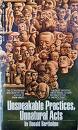
federeerSOUNDTRACK: SONIC YOUTH-The Destroyed Room: B-Sides and Rarities (2006).

destroyedIt’s hard to imagine what gets relegated to a Sonic Youth B-side.  Not that they are indiscriminate in their selections, but unlike many bands, their discs (as of late) haven’t been all that long, so it’s not like they couldn’t squeeze the extra track on there). Of course, I rather prefer when they don’t force extra tracks onto a disc, and so, a collection like this is a good place for these songs.

Fortunately, the liner notes give a context and explanation for all of the songs, which really helps to locate them in time (and in what SY were doing at the time).  The disc opens with the 11 minute jam “Fire Engine Dream.”  It’s loud and raucous and yet also beautiful.  And the liner note comment:  “Let’s see who’s here and who’s not” is just fantastic.

The surprising track for me is “Razor Blade” a folky singalong by Kim (she’s done a few of these, so I’m not sure why I’m surprised).  The next piece is also one of Kim’s.  “Blink” is one of her more ambient/talking pieces.

There’s a couple of interesting noise experiments “Loop Cat” and “Campfire,” and they are followed by the beautiful “Kim’s Chords,” an amazing, amazing instrumental.

The last few tracks are all furniture themed (as evidenced by the cover of the disc).  According to the liner notes, the furniture was essential in that they played them and sat on them.  The titles don’t actually reflect the furniture involved, however.   The instrumentals are surprisingly melodic and, for a first or second take, sound very complete.

The disc ends with a 25 minute version of “The Diamond Sea” (as if the 20 minute version on Washing Machine weren’t long enough!).  It’s not too revelatory, but it is a great song nonetheless, so why not add a few extra minutes to it!

As with most B-side collections, this is mostly for SY fans.  Although anyone interested in esoteric pieces (nothing too outlandish like on the SYR series) would find plenty to enjoy on this disc.  Since the pieces all come from 1994 and later, if you like this period SY, it’s a worthy addition.

[READ: September 27, 2009] Federer as Religious Experience

The anal retentive part of me wishes that I had written about this article in the same post as “Democracy and Commerce at the U.S. Open,” because they would serve as a very interesting contrast in styles from an early essay to a later one. However, this piece is so marvelous that it really does stand on its own.

In the years since DFW was last paid to go to a tennis match (at least I assume that a) he was paid to go to this one and b) that he was actually at this match,) his persona has evolved from the golly-gee, so-much-to-see naif of the first piece to the I’m-here-to-watch-this-phenomenal-guy of this piece. And I have to say, his enthusiasm is infectious. (more…)

Read Full Post »

adidasSOUNDTRACK: TV ON THE RADIO-Dear Science, (2008).

sciencThe problem with TV on the Radio for me is that their first EP is so damned good that anything else they do pales in comparison.  Having said that, Dear Science, comes really close to topping that EP.  I liked Cookie Mountain (their previous disc) but I felt like they put so many elements into the mix that it detracted from the best part of the band: Tunde Adepimbe & Kyp Malone’s vocals.
And so, on Dear Science, the vocals are back up front where they belong.  This disc is a lot less busy, which may seem a little like selling out, but instead, it just heightens the complexity and originality of the band’s work.  The disc rocks hard but it also heightens some really cool jazz and dance elements.    But it all comes back to the melodies and vocals for me.  And on Dear Science, they pretty much outdo themselves.

And you can dance to it!

[READ: September 30, 2009] Shiny Adidas Tracksuits and the Death of Camp and Other Essays

After reading David Foster Wallace’s essay in this book, I looked at the other articles here and decided to read the whole thing.  And I’m really glad I did.  It’s an interesting book full of, funny and often thought-provoking pop culture articles circa 1996.  As with some of the other pop culture/political books that I’ve read several years after they were relevant, it’s often weird to look back and see what things fully occupied the popular landscape at the time.  And, when a piece is completed dated, it’s pretty obvious, and sometimes unintentionally funny.  But there are many pieces here that are timeless (or at least hold up for a decade), and those are still really good reads.

This book also does a good job of summarizing the tenor of the defunct Might magazine.  A dose of irony, a splash of humor and a lot of criticism of what’s trendy.

The strange thing to me about this book, though is the targets that they chose to go after sometimes.  Rather than critiquing right-wing attitudes or corporate shenanigans (which they do touch on), they really seem to be after pop and rock celebrity.  For instance, there are two separate articles which take a potshot at Eddie Vedder (this was around the time of the Ticketmaster fiasco which didn’t put him in the best light but which could hardly be seen as only self-serving).  This seems rather unfair, unless his sincerity could really be called into question by a bunch of ironic jokesters.  Magazines like Radar and Spy used to do snarky articles like this. I’d always thought that Might was a little better than that.  But indeed, there’s one or two pieces here that have a holier- (or perhaps indier)-than-thou attitude.   Which may have been fine in the 90s but which seem petulant now.

But aside from those, the irony-free pieces are very enjoyable.  (more…)

Read Full Post »

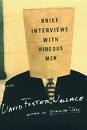
hideousSOUNDTRACK: TOPLESS WOMEN TALK ABOUT THEIR LIVES soundtrack (2006).

topI learned about this soundtrack from a very cool article in The Believer (the beginning of which is online here).  In the piece, the author claims to have never seen the film (he was given the soundtrack by a friend) and he doesn’t want  to change his associations with the music by watching the film.  And now, I too can say I have never seen the film, and likely never will.  And I really enjoy the soundtrack too.

The soundtrack is sort of an excuse to showcase a bunch of bands from New Zealand’s Flying Nun record label.  Featured artists are The 3DS, The Bats, The Clean, Superette, Snapper, The Chills, Straightjacket Fits, and Chris Knox.

It’s nigh impossible to give an overarching style to these songs.  Even when the bands have multiple songs on the soundtrack, they are not repetitive at all.  Even trying to represent a genre would be difficult.  The opener “Hey Suess” is almost a surf-punk song, while Chris Knox’s gorgeous “Not Given Lightly” is a stunning ballad.  There’s a cool shoe-gazer song “Saskatchewan,” and some great simple indie rock (a bunch of other tracks).

The only thing these bands have in common is that they’re all from New Zealand.  And as with any large body of land, no two bands are going to sound alike.  Nevertheless, all of the bands fall under the indie rock umbrella.  It’s a great collection of songs that many people probably haven’t heard.  It’s worth tracking down for the great collection of tunes and, if all you know about New Zealand is The Flight of the Conchords.

[READ: September 24, 2009] Brief Interviews with Hideous Men

After finishing Infinite Jest I wasn’t sure just how much more DFW I would want to read right away (of course, seeing as how I have now read almost all of his uncollected work, that is a rather moot point).  But when I saw that John Krasinski (of TV’s The Office) was making a film of this book, I had to jump in and read it again.

Obviously, there are many questions to be asked about this film ().  Is it going to be based on all the stories in the book?  (Surely not, some are completely unrelated).  Is it going to be just the interviews? (Probably, and yet there’s no overall narrative structure there).  And, having seen the trailer, I know structure is present.  I’m quite interested in the film.  In part because I didn’t LOVE the stories.  Well, that’s not quite right.  I enjoyed them very much, but since they weren’t stories per se, just dialogue, I’m not afraid of the stories getting turned into something else.  The text isn’t sacred to me, which may indeed make for the perfect set-up for a film.

Anyhow, onto the stories.

The obvious joke is that the author of Infinite Jest has created a book with “Brief” in the title!  But indeed, many of these stories are quite brief.  Some are only a couple of paragraphs (which true, from DFW that could still be ten pages).  But, indeed, most of the interviews in the book are brief too (except the final one in the book, which is nearly 30 pages).   (more…)

Read Full Post »

« Newer Posts - Older Posts »