Feeds:
Posts
Comments

Archive for the ‘Audiobooks’ Category

[LISTENED TO: March 11, 2013] The Get Rich Quick Club

grq

I grabbed this audio book because I knew we were taking a longish trip and I wanted something for the kids to listen to.  It’s hard to find a book that both a 7-year-old boy and  5-year-old girl will enjoy (although truth be told, T. and C. are up for just about any story as long as the language isn’t too hard–nevertheless, I try to find stuff that’s age appropriate.  (Which means that the stories I’m excited for them to enjoy are about two years off yet) .  The library has a great online resource (Listen NJ) but the search features are awful–it’s really hard to search by age and it’s also hard to find stories that are a good length (2 hours or so). There’s so many that are 8 hours or 8 minutes.

But anyhow, I knew that Dan Gutman was a fun author (C. loves the whole My Weird School series) but I didn’t know this story.  And it turned out to be great.

The story is set in Maine.  It’s about five kids.   Gina Tumolois the leader.  She says right out that she always wanted to be rich.  Her hero is Bill Gates and she wants to be a millionaire before she is a teenager (she’s 11).  She is unabashed about her love of money.  And she is very bummed that she has none.

The summer starts and she is bored.  Because she has no money.  So she and her friend Robert , who hang out in the branches of the tree in the park behind their house start talking about what to do for the summer.  Then their friend Quincy comes over.  Quincy is my favorite character because she is from Australia and she speaks in Australian slang (which is very helpfully translated every time she speaks–you can learn a lot of great funny slang including some very finny words for “idiot” from this book).  There’s also the Boggle twins, 8 year old boys who are a pain–and unstoppable liars. (more…)

Read Full Post »

[LISTENED TO: March 2013] Chitty-Chitty-Bang-Bang

chittyI knew of this movie (although I haven’t seen it in decades) but I didn’t know it was based on a book.  And I had no idea the book was by Ian Fleming!  The creator of James Bond!  Chitty-Chitty-Bang-Bang is his only children’s novel and it was released posthumous;y (he died a few months before it came out).  I’ve never read any James Bond and I don’t love the films all that much so I can’t really compare this to his more famous works.  But it seemed like it was written by a guy who knew from spies and scary villains (I actually guessed that he had written this before the Bond books and it was a kind of lead in).

So the story starts off simply enough.  We meet the Pott family: Caractacus, the father, a former Navy commander and now an inventory of slightly wacky things–known in town as Crack Pott (ha); Mimsie, the mom, sweet and good natured and up for adventure, and the eight year old twins: Jeremy and Jemima.  Most of Crack Pott’s inventions aren’t very good but he eventually makes up a candy that is also a whistle and sells them to Lord Skrumshus and his candy company for a tidy sum (and Fleming goes into the details of the money saying how it’s a small sum up front but since Lord Skrumshus sells billions of candies it’s  good deal–Fleming is full of grown up ideas like that in the book and is clearly trying to impart some wisdom to his audience).

Since they live near the motorway, they decide to buy a car.  But they don’t want one of those black beetles that you see everywhere.  He wrote this book in 1961 so I’m not entirely sure about what kind of car he was talking about there.  The family decides to buy a one of a kind old car from an old man in a garage.  The man raves about the car and wishes he could keep her, but he has to sell it for scrap.  Pott offers him a few quid (everyone loves the car and its license plate read GEN 11 (like Genii)) to have the car delivered to his garage.  He spends the next several months fixing her up.  And when she starts, the noises she makes gives her the name Chitty Chitty Bang Bang.  Their first test drive is a marvel and they get her up to 100 miles per hour!

WHAT??  100MPH?  In Rural England??  Wow.  And who knew they used miles and not kilometers (it’s pointed out much later in the book that they use kilometers on the continent) in the 60s?  (It became mandatory there in 1978).  The car is  marvel!  She even has all kinds of buttons that Pott hadn’t figured out what they do yet.  And on their next venture they decide to go to the seaside on a warm day.  But so do 20,000 other cars, so there is a massive traffic jam.  Chitty Chitty shows what she can do and takes over the controls–she grows wings and a propeller (which all come naturally from the car parts) and she flies over the traffic!

When they fly to the beach it is crowded so Chitty flies the to an island in the middle of the English Channel.  And they have a lovely picnic together and take a nap.  Until the tide starts to come in.  Chitty escapes and they take off.  But they head away from London and towards France!

And here’s where the story turns into a wild Bondian adventure rather than a cute family story about a magical car.
(more…)

Read Full Post »

[LISTENED TO: December 2012] It Happened on a Train

brixton3After the raging success of Brixton Brothers Books 1 and 2 we were thrilled to get to Book 3.

Twelve-year old Steve Brixton has given up on being a detective.  His hero, the author of the Bailey Brothers mysteries has proven to be a thief and a liar and he wants nothing to do with the man anymore.  So he has bundled all of his Bailey Brothers books–his favorite books in the world–and put them in the trash.

His chum, Dana, is not that upset about the closing of the agency, especially since he has now been dating a girl named Dana (“other Dana” as Steve calls her).  Other Dana has gotten Dana into a book series about wizards and dragons which Steve simply cannot believe.

This 3rd novel proves to adhere well to the title–it does all happen on a train.  Well, most of it anyhow.  The boys have been invited to the Model U.N. meeting in San Diego.  After last book’s fake debate club ruse, Steve’s mother is very suspicious of the Model U.N., especially since no one has ever heard of it.  [It turns out that my school had a model U.N., but most of us had no idea what they did either–imagine my surprise to see that very organization appear in an episode of Community!]  The story checks out and Rick (jerk) takes this as an opportunity to bond with Stevie Brix (what, you don’t get it) by tagging along for the nine-hour train ride.

Before the train ride gets underway, Steve is approached by a surfer dude who is looking for help.  Steve hears the man’s case but tells him that he has retired (a recurring joke).  It took us a while to get to the end of the story and we had all but completely forgotten about this plot point by the time we got to the end.

Anyhow, on the train, Steve winds up talking to a girl, Claire, whose uncle is a private detective.  The girl is nice but thinks it doesn’t make sense that 12-year-old Steve is retired.  Steve is annoyed by her, and has mixed feelings about her.  But he sees that she has left her book behind, so he finds her to give it back.  But she is nowhere to be seen. (more…)

Read Full Post »

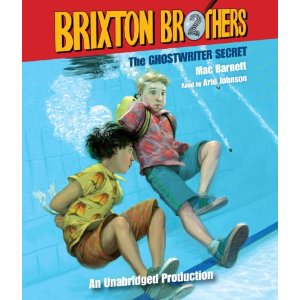
[LISTENED TO: November 2012] The Ghostwriter Secret

brixton2We enjoyed Brixton Brothers Book 1 so much that we couldn’t wait to listen to Book 2.  And it did not disappoint.

Steve Brixton (who is 12) has set up his own detective agency (after the massive success of his first case) and his chum Dana is actually kind of on board with it this time.  Of course, his mom’s boyfriend Rick (jerk) thinks it’s all for laughs and he chuckles at Steve’s business cards.

With the agency all set up, all Steve needs is a case.  Which he quickly gets.  A local billionaire has had his diamond stolen and he wants Steve to help (he heard all about Steve’s success in Book 1).  Rick makes a joke about a bird stealing it (that was a plot in Book 1), but Steve knows that isn’t the case here.  The diamond is an incredibly expensive and valuable diamond which the billionaire keeps on display in his house (under intense security).  And yet somehow, the thief got in.  And the security system must be broken because the alarm keeps going on and off.

Steve quickly solves that case and the billionaire asks Steve to hold onto the diamond until they can catch the crook (Steve figured out HOW it was done, but is leaving it up to the police to figure out WHO did it).

Steve gets a ton of cash to hold onto the diamond, but he’s bored by the case.  He wants some excitement as a detective.  And then he gets a letter–from none other than MacArthur Bart!  Bart is the author of Steve’s beloved Bailey Brothers mystery stories (which he has read hundreds of times and has based all of his sleuthing skills upon).  Steve has been writing to Bart for years, telling him how much he loves the books with no response.  Once he set up the agency, he wrote to Bart telling him about the cases.  And now, finally, Bart has written back.  But it’s not a thank you letter, it’s a request for help.  Bart thinks someone is after him! (more…)

Read Full Post »

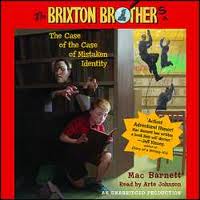
[LISTENED TO: October 2012] The Case of the Case of Mistaken Identity

I found this book because I was looking for audio books for my kids.  When we take longish car trips, they absolutely love audio books (which is pretty frikkin awesome by itself).  Anyhow, I was browsing the shelf and saw this title.  Clark and Tabitha enjoy A to Z Mysteries, so I thought this might be a bit more stimulating (it says it’s for 8-10 year olds, but Tabitha (5) enjoyed it and I didn’t find it too harsh for her).

I had never heard of the author [that is not true…more on that later], but the back of the book had accolades from Jeff Kinney, Dave Eggers and Jon Scieszka a triumvirate of trustworthy praise.

The audio book was read by Arte Johnson (yes, that Arte Johnson).  I don’t know if it was Arte’s delivery, but I enjoyed this book more than anything I have read in a long long time.  I wonder if the book would have been as enjoyable had I read it–I assume so because it was really fantastic, but it was a lot of fun listening with the whole family.

So this story is about 12-year-old Steve Brixton, a regular kid who happens to love the The Brighton Brothers Mysteries, a classic series of adventures (think Hardy Boys) in which two brothers get into scrapes and situations, take out thugs using their combination of brawn and brains and solve the mystery.  Steve loves them so much he has written down all of their suggestions for successful sleuthing which he keeps in his Secret Book Box.  He also got the Detective License for 12 box tops and $1.95.

He and his chum (all good detectives should have a chum) Dana have plans for the weekend until their teacher assigns them an 8 page research paper due on Monday.  Topics are randomly assigned and while Dana gets “detectives,” Steve gets “early American needlework.”  Miss Gilfeather suggests that it might be more interesting than he fears.

And boy is she correct. (more…)

Read Full Post »

SOUNDTRACK: RUSH on Archer (2011-2012).

Not really a soundtrack, but I wanted to mention some of the Rush references in Archer.

I was really hoping to use the Rush in Cleveland DVD as my Soundtrack, but I haven’t finished it yet.  And yes, I am padding this out a bit so that the pictures fit nicely.

Cobra Cobra Cobra (that’s a joke to the book below).

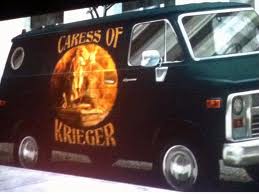
The Archer guys like Rush and they put nods to Rush in occasional episodes–usually through mad-scientist (I want to call him The Professor), Krieger.  Here’s three of Krieger’s vans.

I love the detail that went into “Vanispheres.”  Since Krieger always wears a lab coat, it’s a wonderful detail to have him wearing it as the nude man.  And, of course to have him as both the nude man and the clothed man is perfect.

Since it’s my favorite obscure Rush album, the Caress of Krieger van just cracks me up the most.

And just to add to the fun here’s a video of Krieger’s Neil Peart-like drum set

It’s pronounced “Why Why Zed.”

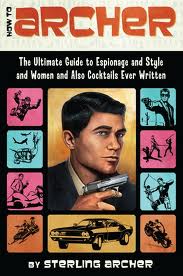
[READ:May 9, 2012] How to Archer

Although the Archie Meets Kiss comic proved to not be the joy I’d hoped, How to Archer easily made up for it.  I love Archer, it is one of my top ten shows ever, I think.  And this book is basically a print version of the show.

It’s designed as a how-to manual written by Sterling Archer himself.  He gives you tips on how to become the world’s best secret agent.  He teaches you how to dress (the details about buying shoes are amazing), how to drink (he provides cocktail recipes and his own opinion of subpar drinks), how to eat (a recipe for Eggs Woodhouse that sounds divine) and even a secret to gambling!

The fact that Archer is an abrasive, cocky, sexist, racist dick only makes the book that much funnier.

If you haven’t seen Archer (on FX), it’s a cartoon about a spy.  His mother, Malory, owns the spy agency and they have a very contentious relationship.  (The fact that his full name is Sterling Malory Archer should be just one clue to that).  Malory gets the introduction to the book, which is pretty darn funny as well. (more…)

Read Full Post »

[ATTENDED: April 11, 2012] David Sedaris

I have enjoyed David Sedaris for a number of years now.  When our friend Melissa went to see him a few years ago, she said he was hilarious.  I’ve heard several readings done by him and had to agree with her–he’s very funny live.

I find that he’s much funnier when I hear him read his stuff than when I read it myself.  Indeed, when I read his stories I try to imagine it in his voice, just so it will be funnier.  Turns out he does a much better David Sedaris than I do.  Each of the stories was very funny (tear-inducingly funny) and very typically Sedaris.

This show was him on stage reading from a number of his pieces and from his diary.  I didn’t know the first piece, called “Understanding Owls,” which was about Owls and taxidermy.  It was also about trying to find the perfect Valentine’s Day gift for his boyfriend of 20 years (wow!), Hugh.  He wanted to buy a stuffed owl because of a long running joke about all of the owl tchotchkes in their house.  The setup alone was hilarious and the sequence in the taxidermist was very funny and rather uncomfortable. (more…)

Read Full Post »

[LISTENED TO: January 12, 2012] Girl with Curious Hair
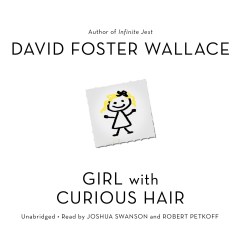
I saw a placeholder on Amazon for this audio book in early 2011.  And then I promptly forgot all about it.  My friend George just asked if anyone had heard it yet, so I decided to check it out.  I downloaded it through Audible.com.

And here’s my two cents about Audible.  Although it was free (for a 30 day trial), it was a lot of work.  The entire book (14 hours) downloaded in two files.  Each was about 7 hours with no breaks or chapters of any kind–just two huge 7 hour files.  Okay, I often download stuff and bring it into Audacity to make my own chapter breaks.  But you can’t import this file into Audacity because it is its own proprietary format and doesn’t want you to put it in MP3 format.  So, I had to burn it to CD (but not in MP3, only in WAV) and then put the CDs back in to iTunes to import them as MP3.  From there I could import them into Audacity and put tracks where I wanted.  That’s a lot of work to save $29.

I’m also going to say that I didn’t want a membership to Audacity because it costs $15/mo and the savings aren’t really that good anyhow.  Even kids books are about $10 each.  Oh, and just see how many hoops they have you go through to try and cancel.   Heavens to Betsy.

And but so on to the actual audiobook.

The book was read by Robert Petkoff (who is Reader A below) and Joshua Swanson (who is reader B below).  I don’t know anything about them, but their websites will give you more info about them.

I found the readings to be simply wonderful.  They were impassioned and articulate and dealt with some of DFW’s tongue twisting word choices with ease.  They also handle DFW’s dialect and accents with ease.  And while Swanson has a much much broader range of voices to play around with (his women voices are far superior to Petkoff’s), Petkoff also pulls of some amazing voices, especially in “John Billy.”  I never questioned what was happening.

Some of these stories are challenging and I admit I found them difficult to read.  But the audio versions seemed to really clarify things.  (There are all kinds of reasons why this could be so, but I’m not going to delve into that, for there lies madness).  Nevertheless, this was a great way to hear these stories.  Especially the ones that had heavy dialect.

“Little Expressionless Animals” [Petkoff] (90 minutes)
Petkoff sounds uncannily like Kyle McLachlan–no bad thing.  Although Petkoff doesn’t work too hard trying to do different voices, he puts in enough distinction to make the characters distinguishable.  (We have been listening to a lot of kid’s audio books, and the narrators of those are amazing with the kind of vocal acrobatics they can do!).  Petkoff is more subtle, but it is also effective–it’s not just a straight voice, which I think might get confusing especially in the dialogue scenes.

There is a hint of Alex Trebek’s voice when doing Alex Trebek, but he’s definitely not trying to mimic the voices of the celebrities.  For the most part, the voices are slight variations of the main narrator.  Indeed, during the later Faye and Julie dialogue section, he does slight differences between their voices to help distinguish the characters.  Which is quite helpful in the story.

This story works very well in audio book format.

One of the things that I loved about this story this time was really piecing together all of the various compnents.  Inclduing things like the revealtion of why Julie does poorly on the subject of animals.  It’s quite obvious when the story ends, but through the whole story you keep wondering, what is it about the animals?  I’m aslo intrigued at the number of gay characters in the book.

And, of course, this story has a major obsession with pop culture, especially TV.  And knowing (from interviews) that DFW sais he would just get sucked in to watching TV all day if it wa svailable, his tone (as is Petkoff’s) is perfect when dealing with the TV issues.

“Luckily the Account Representative Knew CPR” [Petkoff] (18 minutes)
Petkoff sounds slightly differnt than in “LEA.”  Since thist story has no dialogue, there’s not a lot of differentiation in the story.  His deadpan delivery is perfect for all of the details in the story. Although at the end, his “Help”s are quite empassioned, letting you know there’s a little bit more going on.

“Girl with Curious Hair” [Swanson] (50 minutes)
Swanson’s voice is of a much higher timbre, and it’s kind of fun to have two different voices in this book.  This story benefits quite well from an audio format.

The story is deliebrately flat and, I have to admit, is not terribly easy to read.  Swanson handles the flatness very well, he reads it incredibly deadpan and yet he puts enough inflection in it to keep it from being monotone.  I have to assume it wasn’t easy to read this.  I think that he has really made this disturbing character quite real.

Obsevrations about the story.  Hearing this story out loud was more shocking than reading it.  The explicit sex is pretty shocking for DFW and the revelation about what happened to Sick Puppy when he was a kid is prodoundly distrubing, especially when it is read in this non-inflected voice.  It was uncomforatble and very effetcive.

There were times when I wondered about the believability of the charcter.  The use of the word negro, the utter flatness of him. I realize that he is quite damaged, but at times it seemed like maybe this story was too much.  Which is a bit of a surprise, as I find DFW’s charcatersto be very real.

“Lyndon”  [Swanson] [1 hr 45 min]
I didn’t really enjoy “Lyndon” when I read the story.  It’s a little long and had many different things going on.  I kept wondering about Lyndon himself.  About what made DFW write a story based around Lyndon Johnson, around jhis life and politics.

But hearing this story read aloud, with the Swanson’s various voices and accents and newspaper stories all differentiated really brought this to life.  I felt like it was so much more vibrant and alive and passionate in this audio version.  I read in my post that i found the ending quite moving when I read the story, but it felt even more so, with Lady Bird’s quiet, dignified delivery, here.

Observations on the story.  How odd that he chose to make this story that is about a real, and quite famous and well studied person.  I don’t know a thing about Lyndon, so I have no idea how much of this is true (the few LBJ quiotes I looked up seem faked).  I don’t think I spent enough time thinking about the main character when I read the story.  Boyd is so fully realized and amazing that Lyndon is really superflous.  This is awonderfully emotive story.  And Swanson really does an amazing job.

“John Billy” [Petkoff] (1hr 10 min)
I thought “John Billy” was a real challenge to read.  The dialect is pretty crazy.  And the story is not exactly easy to begin with.  But much like Swanson in “Lyndon,” Petkoff’s voices are outstanding here.  The main voice of John Billy is great–he handles the accent and the crazy word choices that John Billy has with ease.  The story flows perfectly.  It’s really impressive.

And while the voice of Glory Joy isn’t wonderful (Petkoff’s women are just softer versions of his voice), he more than makes up for it with the amazing transformation of Simple Ranger.  In the reading, it is clear that Simple Ranger “grows younger” from a quiet, hard to hear older to a youthful loud charcater.  And Petkoff takes that literally so you can really hear him change into a man with a “curious plus haunting voice that was not…of his gravelly, gray-lunged voice somehow, his own, somehow.”  And then, later in the story Ranger’s voice changes again when he “whispered, the big sharp clear new Ranger in a smooth new clear young voice.”   But nothing prepared me for the voice of T Rex Minogue. It is stunning.  It’s an amazingly processed voice that is as malevolent as it is “mechanical.”  It’ s masterful.

As for the story itself, the whole saga of C.Nunn Jr is bizarre and wonderful, a crazy hyperbole of a story.  It also seems crazily over the top hearing it aloud (like in “GwCH”).  The whole story’s end with C Nunn’s eyes is preposterous (what is it with people’s eyes in this book?).  And yet it feels like the nonsense is there as a balance for the heaviness.

The story is funny and silly but by the end it gets incredibly dark and thoughtful.  It’s a challenge to listen to, especially the end, but I think it benefits from an audio version.

“Here and There” [Swanson] (55 min)
I found this story somehow more confusing while listening than when reading.  There’s so much back and forth with voices and the whole conceit that this is some kind of fiction therpay doesn’t really translate easily here.  I also found some of the more academic sections to be kind of dull in his reading.  It’s a challenge to read aloud and keep interesting, I’m sure, but I found this story to be the least successful of the collection.

“My Appearnce” [Petkoff] (58 minutes)
This is written in frist person from a woman.  Petkoff, who has quite a deep voice conveys a woman very well.  This is a great reading for this story.  He does “versions” of David Letterman and Paul Schaffer.  They are not impersonantions by any means, but he has the tone down perfectly.   The male voices whispering in her ear are done in a very simple whisepred voice.  Very effective.

This is a great story and the audio is also wonderful.

“Say Never” [Petkoff and Swanson] (42 minutes)
Petkoff does a very good job with the accents in this story.  Labov’s heavy Jewish accent is very impressive.  And although Mrs Tebof is not very different from Labov, it is different enough to convey the accent and the tone.   He also does Lenny’s voice, which is the bulk of the story.

Swanson also comes in this story as well, doing the voices of Mikey and Louis (two very distinct voices, even if they are both a little Hollywood Gangster from the 40s).  I would have been interesting to hear them interact more in the book somehow.

I was struck by this story more in the listening than the reading.  There’s something about hearing people say these things that makes them more shocking.  Especially the note that he sends to his family (talking about his wife’s lack of sex drive–gasp!).  This is another one of DFW’s stories that ends before something big happens.  It’s funny how many of his stories seem like preludes.

“Everything is Green” [Petkoff] (3 minutes)
It’s also amazing that this whole story is only 3 minutes and thirty seconds long.  Petkoff reads this story in a perfect DFW deadpan style.  He even does May Flys voice with a (slight) accent.

“Westward the Course of Empire Takes it Way”  [Swanson] (6 hours)
Swanson does an amazing job with this difficult story.  There are nearly a dozen charaters in here and he manages to keep them all separate and distinct.  It’s really great.  This is especially true late in the story, when they are in the car on the way to Collison.  He has six people in the car and he manages to make sthem all unique:  J.D. is dark and gravelly while DeHaven has a kind of Midwestern Stoner tone.  Tom Sternberg is neurotic and aggressive at the same time.  D.L. is snotty and presumptuous (although it may be Swanson’s weakest voice, it really conveys the character well).  Magda is exhausted.  And Mark is a solid late teenager.

Let’s not froget the pissed off Fertilizer salesman, the Avis clerk and the bartender.  And the narrator of course.

This story is also fairly complex and hard to follow (when reading).  There so much going on what with the narrator’s interruptions and the metafiction.

What I really noticed this time is how the parts that are not metafictional, the actual narrative of the story is really good, really strong and emotional.  Not to say that the more meta- sections of it are bad, they just don’t have the same kind of impact.  Of course, the whole point of the story is to play around with meta-fiction, so I’m not entirely sure how successful it is in that regard.

Nevertheless, it’s a fascinting look at youth in America.  And I have to say that it really works as a foreshdaowing of issues that he would explore more in his later stories and IJ.

Some things I notice din this listen.  DFW uses the word “plus” instead of “and” a lot.  It’s a fascinating word choice, and one that I think virtually no one uses.  Sometimes it’s effective and other times it’s very clunky.  I never noticed it while reading but it’s very obvious when listening.

I just read my review of the short story collection, which I think was kind of brief.  I feel like I got a lot more out of the book this time around. Of course this is my second reading so that makes sense as well.  It’s also interesting how I enjoyed some stories more and other stories less.

Overall though, this is an excellent audio book.

Read Full Post »

SOUNDTRACK: JONATHAN FRANZEN-Commencement Speech (audio) (2011).

You can hear the entire speech from the Kenyon College site.

[READ: May 28, 2011] Commencement Speech

On May 21, Jonathan Franzen gave a commencement speech to the students of Kenyon College.  When I think about my commencement speech (from Judy Woodruff of CNN), all I can remember is that I had never heard of her (and when I typed her name just now I got it almost entirely incorrect–the only thing right was the “wood” part).  I don’t recall a single thing that she said.  [It’s also fascinating that I can’t find any record of this speech anywhere online–what a different world it was twenty years ago].  I rather expect that most people feel this way about commencement speakers.  I have to wonder, if Jonathan Franzen had spoken at my college, would I have cared?  Is there even a chance that I would have read any of his novels (had they been published of course) when I was in college?  Would I be treating this any differently than my whatever speech in 1991?

But I like Jonathan Franzen and I wanted to read what he had to say. 

His speech is about love.  Love is kind of an odd topic for a commencement speech, isn’t it?   I mean, aren’t they supposed to talk about the Future and Jobs or something?  Or maybe even sunscreen?  But really, what is more useful for a 21-year-old to think about than Love.  Franzen hits the nail right on the head about Love, how it is a dangerous, risky proposition to put yourself out there, to take off your veneer and reveal all of your flaws–and hope someone will love you.  Not new or novel, but still true.

The way that Franzen gets into this subject is through technology.  It seems weird and artificial at first, but it’s a wonderful way to get into a young audience’s state of mind.  They were probably all looking at their iPhones while he was extolling the virtues of his new Blackberry (the old person’s phone, right?).  And when he segues into Facebook (who even knows if he has an account–but he seems to be well-versed with it, so maybe he does) you can imagine students raising their head in familiarity (maybe even updating their status) and wondering (as he puts it) if this 51-year-old guy is going to dis Facebook. (more…)

Read Full Post »

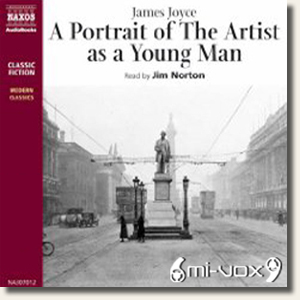
[LISTENED TO: November through December 2010] A Portrait of the Artist as a Young Man

I initially ended this post with: “Even though this audio was unabridged, it felt a bit like hearing an abridged version.  I suspect I shall have to actually read the novel again in 2011 to see what I missed.”  Well, I assumed that the audio was unabridged.  But now I see that there is another recording which is 7 discs as opposed to my copy’s 3 discs.  Gadzooks!  In tiny print on the back of the box, I see now that this is abridged.  NO WONDER I felt like so much was left out of the story.  It actually made me think that the story wasn’t all that coherent.  As such, you can kind of disregard this post until I listen to the unabridged version (which is available free for download here).

So, back to my initial review:

I was listening to this audio book while exercising.  The fact that it took me as long as it did to finish the audio book is more of a testament to my lack of exercising than the book itself.  Although I will say that unlike Dubliners, I found that listening to this book (and again, perhaps it was the distance between listenings) to be somewhat unsatisfying.  And of course, as with all of these Naxos CDs, the vocals are recorded so quietly (except when he starts screaming–the hellfire sermon is so loud it scared my family upstairs) that you really have to try to listen hard to hear the whispers.  The final chapter–Stephen’s diary–is read so quietly it was hard to hear over the exercise machine, even with the sound up all the way.

So this is the story of Stephen Daedalus before Ulysses, when he was, as the title states, a Young Man.  My favorite memory of reading this book was when I read the opening aloud to a sick friend who thought that I was messing with her:

Once upon a time and a very good time it was there was a moocow coming down along the road and this moocow that was down along the road met a nicens little boy named baby tuckoo….

Stephen is of course, baby tuckoo, so this novel is more than just the young man days.   But from this baby story, we quickly jump to Stephen at school and we see an episode that impacted his whole life: boys who were teasing him pushed him into a stagnant pool of water. (more…)

Read Full Post »

« Newer Posts - Older Posts »