Feeds:
Posts
Comments

Archive for the ‘Artists’ Category

SOUNDTRACK: PHISH-Live Bait 5 (2011).

When this was released it was an astonishing free giveaway.  A mix of previously released and brand new recordings that spanned from 1987 to 2009!  Over 6 hours of music!  For free.

It’s fun to hear the really early stuff–like the songs that are from “Ian McLean’s Party at Connie Condon’s Farm” where the band is laughing with the audience (which seems like it’s about 100 people).  And when they invite everyone to another free part coming up.   This was back in 1987 before they had released their official debut Junta (who was taping all this stuff for them back then?  And with such good quality?).  But this one is especially fun because you can hear dogs barking during the quieter parts.

There’s also a big chunk of live Gamehendge material from Townshend Family Park in Vermont (circa 1989).  The middle block features the addition of The Giant Country Horns who play on “Flat Fee” and great versions of “David Bowie” and “Gumbo.”  I wouldn’t want the horns all the time, but they do add something to these shows.

Then there’s a jump to 1996 and a whole series of songs from shows at Loring Air Force base (through 1998).  There’s a 27 minute “Down with Disease” and a fun “Bathtub Gin.”  There’s then a bunch of songs from one show at the Big Cypress Seminole Reservation.

After a few year’s hiatus, they resume in 2003 back at Loring.  There’s a great version of “Waves,” although I found the “Mike’s Song” from this era kind of anemic.  And then, interestingly, there’s a “Split Open and Melt Jam” which is indeed, just the jam from the song and not the song itself.  “Suzy Greenberg” features Sharon Jones–it’s funny to me to hear r&b singers singing about a Jewish woman going to a neurologist. Fish, by the way has some of the funniest lines during the “forgotten my name bit.”  I’m also intrigued by the 2009 version of “McGrupp and the Watchful Hosemasters,” a pretty but kind of goofy song that dates back to 1985!

All in all, this was a very cool freebie to give to fans.

[READ: July 5, 2011] Five Dials 24

The newest Five Dials came as something of a surprise since Number 23 came out not too long ago and there was talk of the next issue being quite large.  But I like the small editions of Five Dials.  And this one is a cool, bite-sized nugget–a little fiction, an interview and an essay.  I have to assume this one was released when it was because it has a remembrance of David Rakoff, making this release rather timely.

…plus bear illustrations like you won’t believe by BECKY BARNICOAT (funny and dark drawings), LIZZY STEWART (beautiful pencil drawings) and NEAL JONES (blue bears). (more…)

Read Full Post »

SOUNDTRACK: BOB MARLEY AND THE WAILERS-Legend (1984).

I’m white, so that means I own a copy of this CD (according to the book below).  And I do, because it’s mandatory in college that you play “Jammin'” at every party.

Now, I like ska (yup, still).  I know that ska came from reggae, but to me reggae is just boring ska.  I couldn’t agree more with Barney on How I Met Your Mother:

Ted: Oh, get this, she plays bass in a reggae band. They’re having a show this Friday. How cool is that?

Barney: Oh, does she know that one song? Mm-hm chaka, mm-hm chaka. What’s that song called? Oh, right, it’s called every reggae song.

Although in fairness, listening to this again, it is a rather nice album (I guess I know every song).  I have a personal aversion to some of the really overplayed songs, like “One Love” (because if you go to any Caribbean location they all act like it’s the official slogan of hot weather.  We even have a Christmas ornament from St. John that says “One Love”  WTF?  And I don’t think anyone needs a 7 minute version of “No Woman No Cry.”

But some of the lesser played its (“Could You Be Loved” and just about anything with The Wailers backing him are pretty great).  Although I’ve got to admit I can’t take more than a few songs.  I had to skip through some of the last songs (thank goodness I don’t have the 2 disc version).

[READ: July 26, 2012] Whiter Shades of Pale

Christian Lander created the blog Stuff White People Like.  It was very funny (it hasn’t been updated since Feb 2011, so let’s assume it has run its course).

Lander had released a first book of SWPL back in 2008.  I didn’t read it (blog to book deals were overwhelming in 2008), but I had seen enough of the site to assume it was funny.  One of the funnier jokes when the blog first came out was wondering if the creator was white or not.  (Well, the author photo gives that away, but I won’t).

We grabbed this book at a Borders going out of business sale (sorry Borders, you are missed).  This book continues where the first book left off (I gather).  I don’t know if every entry from the blog made it into the book (the thanks at the end of the book lead me to think not), but I have to assume most of them made it (and maybe there is new stuff in the book too?) (more…)

Read Full Post »

SOUNDTRACK: ST. VINCENT-Actor (2009).

I had seen St Vincent on Austin City Limits, and her juxtaposition of waif-singer with noise mongering guitar player blew me away.  So I was a little disappointed when this album opened up with this gentle, practically 1950s sounding vocal and string line in “The Strangers.”  It takes two and a half minutes, but the noise eventually comes and it totally changes the texture of the song.  Of course now, “make the black hole blacker” is a fun thing to sing along with (and the lyrics in general are pretty great).  “Save Me from What I Want” is another quiet song with a catchy chorus.  “The Neighbors” has a great melody with interesting strings over the top of it.  “Actor Out of Work” brings in some stranger sounds to the album.

There’s something interesting about the songs on this album, like the way “Black Rainbow” has these sweet string sections but for the end half builds a crescendo of tension. I also love that a seemingly delicate song can be called “Laughing with a Mouth of Blood.”  Perhaps the strangest song on the disc is “Marrow” which has a strange horn section and the chorus: “H.  E.  L.  P.  Help Me Help Me.”  “The Bed,” “The Party” and “Just the Same But Brand New” continue in this vein–like a Disney princess song with a horrible threat underneath: “Don’t Mooooove, Don’t Screeeam.”  But that sense of princess who are slightly askew really resonates on this record.  It’s not as willfully dissonant as her first record, but lyrically it’s a knife covered in cotton candy, it’s still a gem.

[READ: March 20, 2012] McSweeney’s #39

One of the bad things about having a job with actual work is not being able to write complex posts about compilation books.  It’s hard to have your book open while bosses walk by.  So, its been a while since I read this and I’ll do my best to remember it all.  Incidentally, if you’re keeping track I skipped 38, but I’ll get to it.

Issue #39 is a hardcover and a pretty one at that. It has a front cover photo (as well as many interior photos) taken by Tabitha Soren.  Yes, forty-somethings, THAT Tabitha Soren, from MTV who has a new career as a photographer.

This issue continues with the recent return of the Letters column (as the magazine and front matter become more serious the return of the Letters adds an air of silliness). (more…)

Read Full Post »

SOUNDTRACK: MOGWAI-Zidane: A 21st Century Portrait-An Original Soundtrack by Mogwai (2006).

It’s no secret that I love Mogwai.  I like them so much that I even track down soundtracks to obscure films that I’ll never watch.  (Of course, since Mogwai play mostly instrumentals, soundtrack work suits them quite well).

The Zidane of the film is Zinedine Zidane, a French footballer whom many consider to be the greatest ever (don’t yell at me for that, I don’t have an opinion of the man).  I had to look up exactly what the film is about and I have to say I’m intrigued: The film is a documentary focused on Zidane during the Spanish Liga Real Madrid vs. Villarreal CF game on April 23, 2005 at the Santiago Bernabéu Stadium and was filmed in real time using 17 synchronized cameras.  I watched a couple minutes on YouTube, and indeed it is a football match.   How on earth did they decide on that game (in which Zidane is ejected for fighting as the match nears its end).

The music is designed primarily for background and pacing, although there are certainly moments of great melody as well.  There are three songs that are more or less played twice (with different variations): “Terrific Speech 2″ and Terrific Speech” “Half Time and “Time and a Half” are similar piano melodies, and the opener and closer “Black Spider” and “Black Spider 2.”  “Black Spider 2” opens with the same melody as 1, but this song is thirty minutes long.  After a few moments of silence, it tuns into 17 minutes of quiet noise.  The remaining five experiment with distant feedback squalls.  Not loud and crazy, but something that creates a lot of tension, which goes with the end of the film.

Despite the titles, “Wake Up and Go Berserk” and “I Do Have Weapons” are a mellow songs.  They’re very pretty tracks.  Indeed, there’s nothing too wild at all here.  Fans of Mogwai’s wilder music will be a little disappointed.   And indeed, the overall feel is almost kind of sleepy, but it really captures another side of Mogwai, and the music is quite good.

[READ: June 20, 2012] “The Cheater’s Guide to Love”

Not bad… Junot Díaz had a story in the New Yorker just a few weeks ago, and now he’s got another one.

The familiar criticism of Díaz is that he writes the same story over and over (well, the other criticism is that he always writes in Spanish and English, but I think that’s a stupid complaint).  So here’s another story about Yunior and how he cheats on women and is basically a shit-heel.

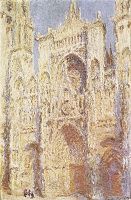
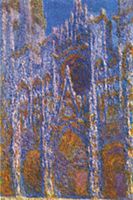
While there is some validity to criticizing an author for retelling the same basic story, it is not unheard of in art.  Monet, for instance painted over 30 paintings of Rouen Cathedral.  And while they are all the same composition, individually they are very different.  Here’s four paintings (not prints a la Andy Warhol):

While I’m not suggesting that Díaz is on par with Monet, I am trying to say that you can work with a similar subject and create very different pieces of art.

So, yes it’s another Yunior story and yes, Yunior has cheated on his girlfriend again.  But this story is constructed differently.  And at this point I’m starting to wonder if maybe there aren’t multiple Yuniors–I’ll even think of them as in alternate realities.  Because Yunior sure has cheated on a lot of women by this time.

It makes him the perfect writer for “The Cheater’s Guide to Love.”

Unlike in the other stories, this one takes place over five years!  In Year 0 you are caught cheating by your girl (the story is set in second person).  She sticks it out with you for a time and then dumps your ass.  I liked how it was revealed just how many women he had cheated in her with over the years that they were together–he really is a shit.

In Year 1, you act like it doesn’t matter, but it does.  And you are crushed.  Your friends try to help out, but how much can they really do?  You think suicidal thoughts and imagine that that will make her forgive you.  It doesn’t.  By year 2, you have met someone.  But you find some bullshit reason (she hasn’t put out yet) and you break it off and go into another spiral.

Year 3 sees you looking after yourself–running and fitness.  In what I think of as a wholly accurate happening, you injure yourself running and are knocked back on your ass for months–momentum and caring are gone.  You look for substitutes but nothing feels as good as running.  So you stop.  And you let yourself go.

What I also liked about this story is that despite this background of the break up, there are other interesting things spiraling around Yunior.   There’s a fascinating look at racism in Boston (perceived or real?); there’s the woman who claims to be the mother of his child, the woman back in the DR who claims to be the mother of his friend Elvis’s son.  Both men act very differently to the news.  Elvis is thrilled to have a son, Yunior is freaked by this woman.  This is probably the first time that I’ve seen Díaz have a woman do behave the way they do in this story.  It’s also interesting to compare Yunior and Elvis by the end of the story.

I also got a kick out of all the women he used to cheat on his girlfriend with star getting married and they all start sending him invitations: “Revenge is living well, without you.”  Year 5 sees a completion of the spiral for all parties.  And a cool resolution to this story.

Much like with the Monet paintings, if  Díaz can keep his Yunior stories interesting (and varied enough), I will keep reading them.

For ease of searching I include: Junot Diaz, Bernabeu

Read Full Post »

SOUNDTRACK: CHUMBAWAMBA-“That’s How Grateful We Are” (1990).

Chumbawamba called it quits this week after 30 years of being a band together.  Most people assume they put out one single and that’s all. And in some ways that is true.  Because most of their other music was way too radical to be played anywhere–even when it was as catchy as this.

This is a six-minute dance-funk song off of the first Chumbawamba album I ever heard (Slap!).  It opens with a little girl saying “Okay, lay some drums on me.”  After some drums and hammered percussion, she says, “gimme some bass” and a funky riff starts.  It’s followed with accordion, horns guitars and, Chumbawamba’s signature–chanting.

It’s a call and response song with a wonderfully catchy chanted chorus.

On first listen you might catch a few unexpected words (black lung, attack, attack, we took to the streets).  But then you get swept up in the chorus again (and maybe the accordion solo).  But on further inspection, the song is about the Hungarian Revolution of 1956:

Working in a forge, black lungs, burnt skin
Callouses, arched back, hammering, hammering
Stalin watching over us pigeon shit head
We’d spit on the floor at this red bastard god.

Not exactly pop music, but you can sure dance to it.  I haven’t listened to too much of their more recent music, but their early stuff is wonderful and worth looking for.  Thanks for the music lads and lassies.

[READ: July 2012] Lucky Peach Issue 4

I can’t get over how much I enjoy Lucky Peach.  I just loaned a past issue to a friend and he loved it too.  He’s looking forward to trying some recipes and he’s been fascinated by the articles, too.  I don’t read any other cooking type magazine, and yet I can’t get enough of this one!

DAVID CHANG & CHRIS YING are still on board with their note “From the Editors” and PETER MEEHAN, JONATHAN GOLD & ROBERT SIETSEMA talk about “American Cuisine, Whatever That Is”

This issue features a choose your own adventure from COURTNEY McBROOM AND ALISON ROMAN–“Voyage of the Taco Belles” in which they travel to Texas and California to compare “Mexican” food.  It’s a fun adventure with many pitfalls and many delicious locations.  No one could conceivably eat that much.

DREW ALTIZER-“Swan Oyster Depot” photos from the independent seller.

DAVID TREUER-“No Reservations” gives a fascinating history of the Objiwe peoples.  How they don’t have a cuisine per se, but they do have specific foods they eat.  Also, that their way of life was not decimated when the white man came because they did not eat bison, they ate from the water and from smaller animals.  But when the white man gave them fatty fried foods, their diet was changed for the worst.  A fascinating look and an unexpected content from a “food” magazine.

PETER MEEHAN, BRIAN KOPPELMAN, ANTHONY BOURDAIN and ELVIS MITCHELL all talk about the movie Diner.  I have never seen it, but it sounds pretty important in a certain range of cinema.  I liked hearing their various opinions of the movie.  Elvis Mitchell (from NPR’s The Treatment) is particularly funny.

TOM LAX-“The Schmitter” talks about The Schmitter a crazy sounding sandwich from Philadelphia that should give the cheese steak a run for its money.  (Cheese, Steak, Grilled Salami, “Special” sauce, Tomatoes, More Cheese and Friend Onions).  Yum!

HAROLD McGEE-“Harold McGee in Outré Space”–He’s back with a lengthy article on eggs and his attempts at peeling hard-boiled eggs without ripping the egg inside–his experiments are pretty out there!

BEN WOLFE–“American Microbial Terroir” How microbes and bacterium form on salami in different regions and how those bacteria inform the flavor of the meat.  Gross but very interesting.

STEVE KEENE-“Portfolio”  He did the cover for Pavement’s Wowee Zowee album and here has a new portfolio of his new style of painting–on plywood.

DANIEL PATTERSON-“We Waited as Long as We Could” He talks about the Rascal House, a restaurant that he went to as young kid with his grandfather.  It’s about the demise of this kind of establishment in general too.
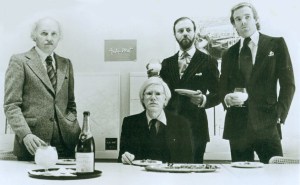
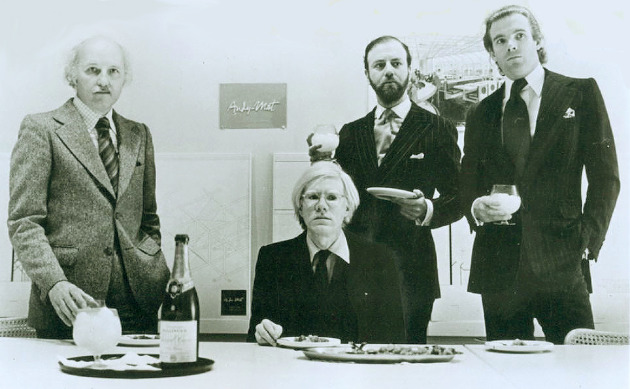
BOB NICKAS-“Someone Has to Bring Home the Bacon” Nickas looks at Andy Warhol and his various accomplishments regarding foot (including the aborted Andymat)

JOHN GALL-“Defrosted Foods” a photo of defrosted foods

NOZLEE SAMASZADEH-“A Modest Proposal”  This clever article talks about eating foods and plants that we consider invasive.  The best idea is to sell back the Asian carp to the Chinese–they love it and we don’t eat it, meanwhile it is invading our waterways.  Seems we could get back all the money they owe us!  Plus, why not eat Nutria?

MATTHEW RUDOFKER-“Knives Out” Look at these amazing knives (that I will never buy).

JONATHAN PRINCE-“Photo-Op Food” A very funny article about politicians trying (and often failing) to blend into regions by eating “local” food.  And the funny photo-ops they often provide.

MARC MARON-“Pan-American” The tale of a used cast iron frying pan and the story behind it.

DOUGLAS WOLK-“Love, Love, and ALE-8 One” This is the story of an independent locally created soda.  It’s based in Winchester, KY and serves more or less the Winchester area.  The soda is in huge demand there.  It’s the story of a brief but failed expansion and a determined independent spirit.  Check out their site and stuff.

DAVID SIMON-“Pickles and Cream” appreciating the only contribution Simon’s grandfather ever made to the culinary arts.

LAUREN WEINSTEIN-“Sushi, USA” a comic about sushi.

MARK IBOLD is still on board (hurray!) bringing culinary fun from Southeastern PA.  This time: John Cope’s Fancy Golden Sweet Corn.

There’s of course lots of delicious (and sometime crazy) recipes written in their own wonderful somewhat disrespectful style.

Oh, and just to put your mind at ease, the picture on the cover is of a cow eating a veggie dog.  Even knowing that it’s still disturbing.

Read Full Post »

I couldn’t find the right cover–this is the right year, wrong issue.

SOUNDTRACK: FOSTER THE PEOPLE-“Houdini” (2011).

My friend Anna was way ahead of the curve on these guys.  She liked them before “Pimped Up Kicks” went huge.  So I listened to the album and liked it but never would have guessed it would have been such a hit!

This song reminds me of a bunch of other bands, and I actually have no idea what the song is about (his vocals are really hard to understand).  But it’s catchy and has a great melody.

And it has a great video.   Whereas I used to look for cool new videos, I really don’t watch videos anymore, unless someone tells me about one.  I felt like bands didn’t make great concept videos anymore.  Well, this one is very cool, indeed.  I just can’t decide if the hidden people are actually how they did it or if it was a lot more high-tech than that.

[READ: July 5, 2012] “The Bonds He Did Not Break”

Everyone knows Houdini, but I didn’t know much about him.  This JSTOR article gives a really good profile of the man.

Harry Houdini was born Erik Weisz in Budapest, Hungary.  After immigrating to the U.S. with his family, his name was changed to Erich Weiss (and for some reason, his birthday was changed from March 24 to April 6) and they settled in Wisconsin.  Wisconsin seems to have been home to many circuses, or at least the circuses always made a point of stopping there, so young Erich was always around fantastic people.  He even joined a circus as a contortionists (and called himself The Prince of the Air) when he was young.

At the age of 12 he left home look for work in the circus.  After a few months, when he heard that his family had moved to New York, he rejoined them there.  He started doing magic as “Eric the Great” and then, with Jacob Hyman, began performing as the Brothers Houdini–named after French magician Jean Eugene Robert-Houdini.  By 1891 the Brothers Houdini were a success.  They even performed the 1893 Worlds’ Fair.  The Brothers parted ways when Erich met Bess, his soon-to-be wife (he was 20 she was 18).  Erich was now calling himself Harry. (more…)

Read Full Post »

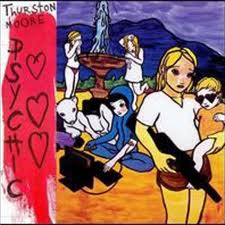
SOUNDTRACK: THURSTON MOORE-“Patti Smith Math Scratch” (1995).

I couldn’t find any archives of Patti and Thurston playing together, so the next best thing is this song named after her.

For a band as dissonant as Sonic Youth and a guy who plays as chaotically as Thurston Moore, it’s amazing how he/they are able to recreate their studio noise live.  There are dozens of versions of this song available on YouTube and while they don’t sound identical, they all sound reasonably close to each other.  And they sound reasonably close to the original studio version.

This is a pretty straightforward song: a simple riff repeated.  It doesn’t have too many crazy guitar pyrotechnics although the solo is pretty awesome.  Especially live.  No idea what the lyrics are about–much like with Patti Smith.

[READ: July 3, 2012] “Patti Smith”

This article just solidified the coolness of my job.  I’ve always enjoyed the JSTOR articles that get passed around here.  Mostly they’re esoteric studies of unexpected topics.  But this one, from BOMB magazine–who even knew JSTOR saved BOMB magazine?–has just boosted JSTOR’s coolness cred by a magnum.

This is an interview with Patti Smith conducted by Thurston Moore.  Already that’s pretty awesome.  What’s even more awesome is that the interview is done in the car while they are driving back from a show in Massachusetts–it’s just Thurston and Patti talking (although obviously edited).

The opening of the article is an introduction by Thurston, which is interesting in and of itself.  He talks about how he got to know Patti’s music (he grabbed her ankle at a concert when he was a teenager) and then how he got to know her .  I didn’t know she was from South Jersey or that she was Robert Mapplethorpe’s lover.  I also never really put together that she married someone with the same last name as her.

First off, it’s very cool to be reading an interview from fifteen years ago in which both musicians are still alive and producing great work. (more…)

Read Full Post »

The edition I’m using.

SOUNDTRACK: RICHARD WAGNER-“Ride of the Valkyries” (1856).

Possibly the most famous piece of music from any opera (known for a billion reasons other than the opera itself).  This song was introduced to be by Bugs Bunny.  And then cemented in my consciousness in Apocalypse Now.

It’s really impossible for me to listen to it without seeing helicopters dropping napalm.

I’ve never seen it performed before.  Most of us think of it as an instrumental, but there are vocals, and they add a lot to the performance.  I also didn’t realize that the whole first minutes is a prelude to the third Act–with a darkened stage.  I just watched this version by the Danish Royal Opera in which the setting is updated.  The Stage is amazing and it’s a pretty powerful image, that won’t leave me head too soon.  And of course, the women sound phenomenal.

Smells like victory to me.

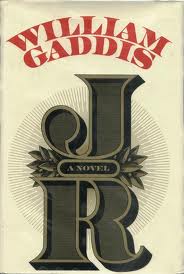
[READ: Week of June 19, 2012] JR Week 1

And so begins the saga of JR.  A little of my background:

I read JR about a decade ago.  I recall the structure and some of what happens, but not enough to actually remember anything ahead of time, plotwise.

Usually for these weekly group reads, I post fairly detailed recaps of the book.  And usually I do that because there’s so much going on in a large book, that it’s one way for me to keep track.  JR is going to be a little different.  If you’ve gotten this far in the book, you’ll notice that there’s not a lot of plot going on.  There’s a few scenes with lots of dialogue and maybe something comes of it, maybe not.  So, I’m certainly not going to try to recap everything that happens in the dialogue, nor am I even going to try to figure out who said what or even who is in every conversation–I’m not even sure that’s possible.  But I am going to talk about each scene a bit and see if I can pick out anything that seems important.

The book strikes me as being like an unedited film.  Or like a Picasso–Gaddis wants to show you everything, and let you pick out the important bits.  And so the book feels like a boom mike has been inserted into a room or scene.  We’re not really sure who everyone is, or even who is talking at a given moment.  But we hear everything that’s said. And then the boom mike pulls out and the camera pans somewhere else and the boom mike goes down and we hear some more.  It’s not always clear even that a scene has shifted–although usually a dense paragraph of prose indicates a shift in scene.

As far as characters, it’s not clear if anyone mentioned early on is going to stay with us through the book.  It’s clear that JR will be here (although his first real scene is right after my spoiler line for this week).  There’s also the Bast family who will no doubt play some ind of important role.  Then there’s a lot of teachers as well. (more…)

Read Full Post »

SOUNDTRACK: BEACH HOUSE-“Myth” (2012).

I‘ve really been enjoying the previous Beach House record.  And in the meantime, he has released a brand new one.  “Myth” was selected as one of the best songs of the year by the folks at NPR, and it’s hard to disagree with them.

It’s not groundbreaking for Beach House (or anyone, really)–nice keyboards and guitars melodies, soaring vocals, a shimmering effect.  But like any band that hits its stride, Beach House makes a simple and beautiful song seem effortless.  How he hits some of those notes I’ll never know.  (Well, because he is actually a woman, duh).

You can see the NPR list here.  Or listen to the song (no video) here.

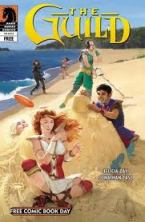
[READ: June 22, 2012] The Guild: Beach’d

My friend told me that the free comic book day was featuring a Buffy and a Guild together.  I misunderstood and thought that the two worlds would be intertwining.  No such luck. Rather, it was a split issue with one half being taken up by The Guild and the other half by Buffy the Vampire Slayer.  Which is still pretty awesome.

The members of Codex’s guild are lost for a place to gather now that Cheesybeards has burnt down.  Of course,  they are squabbling big time about it.  Codex doesn’t understand what the fuss is–just pick someplace. Tink just suggests that they never meet face to face again.  Ever.  But everyone else has some suggestions about where to go.

And when tensions flare up, they decide to battle it out.  Bladez proves the most formidable foe, killing most of his teammates.  The battle is awesome (I’m not sure what this does to their lives in the game, actually).  And he is pretty psyched that his spot–a strip club–will be there new permanent meeting place. (more…)

Read Full Post »

SOUNDTRACK: MASTODON-Crack the Skye (2009).

I’ve really enjoyed Mastodon’s previous records, and this one ranks way up there in intensity and songsmanship. There are 7 songs on the disc, with two over ten minutes long.  “Oblivion” opens with a great minor key chord plucked with single notes and a dropped E.  And when the vocals come in, they highlight the different vocals styles in the band–from a more screamy, almost punk voice to the more melodic/echoey voice of the chorus (kinda like Alice in Chains).  At about 4 minutes the solos play off each other wonderfully, both blistering and then melodic (with almost a Pink Floyd feel at one point).  “Divination” has some amazing guitar play both in the intro and the way the bridge soars with great guitar lines underneath the vocals.  “Quintessence” opens with furious drums and a great prog rock kind of guitar opener.  I love the way the bridge is a gentle (albeit fast) almost trippy section before the chorus bursts in with heavy, heavy chords and chants of “let it go let it go let it go”  It’s the kind of song where the parts work so perfectly together but which wouldn’t seem to.

“The Czar” is a four-part, ten-minute epic.  It opens with a creepy keyboard melody.  The first section is slow and heavy, and when part two comes in the guitars are loud and fast.  Part three has a great riff.  And the end has some gorgeous solos.  It amazes me that ten minutes can pass so quickly. It’s followed by the very heavy (lots of double bass drums) “Ghost of Karelia” the pretty much heaviest song on the record (with a nod to Voivod in the descending guitar solo about three minutes in).  “Crack the Skye” opens dark, but throws in some contradictory keyboard notes that lead to another cool extended guitar riff before jumping into a super heavy death metal verse.  This gives way to some more soaring vocals–the juxtaposition of these two vocalists is amazing.  Imagine the surprise then when the last third of the record has the vocals sounding completely robotic and phased–followed by a mess of guitar solos and concluding with some pretty guitars.

They fade into the final epic, the 13-minute “The Last Baron,” which is one of my favorite metal songs.  It opens with some great guitars and some really cool singing.  The vocals soar, the bass plays a great melody.  There’s a great heavy instrumental section but it keeps returning to the wonderful rising vocal melody line that will get stuck in your head for days.  It’s an amazing end to a great album.

The disc also comes with a DVD that’s all about the recording of the album.   I watched a few minutes and it seemed kind of fun, so I hope to watch it more soon.

[READ: June 17, 2012] The Architect

In the past, Connell’s books have explored all manner of depravity. His books were violent, often sexual and dealt with an otherworldliness that may or may not be internalized. Despite all of this transgressive material, his work was never schlocky, especially his later pieces which show an amazing growth in topics, word choices and imagination.

Connell’s previous books The Life of Polycrates and Metrophilias featured short stories that dealt with all manner of topics.   In Metrophilias, the stories were very short, and it allowed Connell to really explore an idea to its fullest without having to make a “book” about of each one. The short length also allowed him to make the words choices and descriptions more effective.

All of the benefits are reaped in this book, a novella.

Although I enjoyed Connell’s previous longer works, I really loved the way this story started with one idea and stayed with it. Some of his other books are a bit more episodic, which worked for those stories, but in this one, we’re in one place and we are pretty much going to stay there.  And that focus makes this story all the more powerful.

The one thing that hasn’t changed is Connell’s scholarship (both real and fake). For this book is a celebration of Dr Peter Körn (1849-1924), visionary and spiritual scientist. As the story opens, four members of the Körn Society are discussing plans for the new Meeting Place, a central location where all members of the Körn society can gather. They are disgusted by the pedestrian, commercial and rather offensive submissions that they have received for their building—a building that should reflect the spiritual visions of Körn.

Dismayed at the architects who have submitted, one of the members of the Society, Maria Venezuela tells the other three that her nephew Peter De la Tour will soon be arriving with something special.  Peter brings them a book of architecture designs by Herr Nachtmann.  These designs are bizarre and wonderful–organic, amoebic, gravity-defying gorgeous monstrosities–exactly the kind of thing the Society is looking for.  Although one member feels that they are impossible to build, the others are firmly on board.

The challenge then is to find the man. There is some history about the man himself–his genius in and out of school followed by his utter inability to have his work taken seriously by the establishment.  He even had one of his more ingenious ideas stolen by the very teacher who said it was terrible.  And so, when Peter finds him, he is little more than a drunk at the end of the bar.

Yet his ego has never been diminished, and when he is presented to the Society he dismisses their concerns and even tells them that he will not wait for their decision–they have 30 minutes to say yes or he walks.  They agree and he begins working on his masterpiece.

The Society loves the sketch–they know it will be expensive, but Nachtmann promises fast work, effective designs and world-wide acclaim.  Amazingly, he delivers.  He works his men hard.  All through the spring and summer and into the fall, the men work carelessness and the building rises at a phenomenal rate.  Even if it seems to be growing larger than designed. (more…)

Read Full Post »

« Newer Posts - Older Posts »