Feeds:
Posts
Comments

Archive for the ‘Artists’ Category

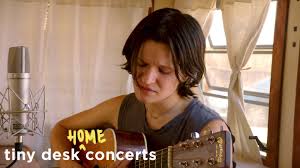
SOUNDTRACK: DON BRYANT: Tiny Desk (Home) Concert #116 (November 24, 2020).

I was not familiar with Don Bryant, although I must have heard his music over the years.

Bryant, almost 80, has been in the music business since the early days of rock and roll; he wrote his first hit, the Five Royales’ “I Got to Know,” in 1960. He went on to his biggest success as a songwriter for Hi Records in Memphis …. For a number of years he only recorded gospel music, until 2017 when he began releasing soul records again, backed by members of the Bo-Keys.

Although

Classic soul music feels best in a club, with a lead singer and big band, preferably with horns, playing off the excitement of a sweaty crowd, drawing them in to stories of love, or love lost, or love reclaimed. It’s a hard feeling to find in our pandemic times.

Bryant manages to play some gorgeous old-school soul with just a guitarist (Scott Bomar) and a keyboardist (Archie “Hubbie” Turner).  And his voice, of course.

Wearing an elegant black and grey jacket matching his salt-and-pepper hair, Bryant evokes style and experience – someone who has been in it for the long haul.

This set is three songs from his latest record, You Make Me Feel, all written by him

His voice is powerful and resonant, deeply rooted in gospel. The keyboard sound is a classic soul sound and the guitar provides a mixture of rocking riffs and mellow accompaniment.

In “Your Love is to Blame” he even gives some good James Brown yelps.

Between songs he sounds like a preacher:  I’m going to give these songs to you as strong as I can.

“Is It Over” is slower and more mellow.  His voice sounds great, hitting high notes and unlike contemporary singers, his grace notes sound great–strong and not whiny.

“Your Love is Too Late” is a classic soul kiss-off track: “I found somebody new to do the things I wanted you to do.”  It opens with an old fashioned guitar riff and moves on from there with grooving guitars and fleshed out keyboards.

I don’t listen to much soul, but I do rather like it.

[READ: December 26, 2020] By the Way 2

This is Ann Lane’s second book about public art in Ireland.  She compiled the first in 2010.  I haven’t seen it, so I don’t know what is in it.

She says that in the ten or so years since the first book, more art has been added and she had been made aware of all of the art that she had missed.

But the fact that there are over 1,000 images in this book, that this is her second book and that in the introduction she says that she pretty much ignores the big cities (due to size constraints of the book) makes me think that Ireland is absolutely amazing with the amount of public art that the country has.  Ireland is about the same size as Indiana, and I would bet a ton of money that Indiana does not have 2,000 (some absolutely gorgeous) piece of public art to look at.

This book is broken down by county.  Lane includes many pieces of art from each county and provides some context for the piece, whether it is the impetus for the creation, some comment about its construction or even an occasional personal reflection.

It isn’t easy to photograph pubic art.  Some pieces absolutely fail when taken out of context or when trying to encompass an entire piece of art with a tiny photo.  Sometimes you cannot do justice to a piece because it must be seen from different angles to be really appreciated.  But Lane does a great job conveying these pieces.  And if her main goal is to get you to want to come to Ireland see them, then she has succeeded.

I marked off dozens of pictures in here because they were either my favorites or they were interesting in some way.

I followed this format.
COUNTY
Town: Title (Artist) Location.  Comments. (more…)

Read Full Post »

SOUNDTRACKADRIANNE LENKER: Tiny Desk (Home) Concert #114 (November 18, 2020).

Adrianne Lenker is the singer and songwriter for the band Big Thief.  I really enjoyed the first Big Thief album, but haven’t enjoyed the rest of the band’s output as much.

NPR’s Bob Boilen loves Lenker.  He has done from the very start (he’s the reason I got their first album).  He loves the new albums by Lenker but to me the songs suffer from exactly what I found less interesting about Big Thief’s later albums.

The newer songs tend to be quieter–really emphasizing her voice which is lot more twangy than it was on album #1.  The new stuff (and solo stuff) also doesn’t rock as hard.  It’s not to say that her voice isn’t good, it’s juts not as interesting to me as it was on that first record.  As Bob says

The songs, the words, the voice of Adrianne Lenker has been at the top of my year-end musical loves for the past five years, more so than any other artist. It began with her work as the singer and songwriter on Big Thief’s electric debut album, Masterpiece, in 2016 and runs through this year’s two sister solo albums, one titled songs and the other instrumentals. Those albums contain nothing more than an acoustic guitar, voice, and the bug, birds, and creatures captured while recording.

Her yearning voice, simultaneously frail and strong, draws me to those songs — songs about people, everyday life, everyday death, and ordinary places. All the while, she picks the tunes out of her guitar or paints the rhythms with a brush.

She plays five songs from songs (I’m curious to hear if I’d like instrumentals).

For her Tiny Desk (home) concert, Adrianne Lenker’s home is a camper trailer parked somewhere in Joshua Tree National Park. It’s the appropriate setting for the five songs she performs from her new album, tunes birthed in a wooden cabin in Massachusetts.

The songs all sound similar in style, with subtle differences that pay off nicely.  “zombie girl” has a very high capo.  All high notes are fingers picked.

For “two reverse” she adds lower guitar notes (and a very cool riff) which sound rich and resonating.

“dragon eyes” is nifty in that she plays the guitar with a brush instead of a pick which gives the guitar a very soft almost delayed sound–I’ve never seen that before.

After a quick shot of the outside of her trailer, she plays “anything,” a song with no capo.  It’s the catchiest song of the bunch with a nice story.

“ingydar” ends the set with an instrumental opening (with pretty harmonics). I thought this was an instrumental but it’s not.

So I came away from the set liking her more than I did, but not enough to get her record(s).

[READ: December 20, 2020] “The Decade I Kept on Getting Stabbed”

This year, S. ordered me The Short Story Advent Calendar.  This is my fifth time reading the Calendar.  I didn’t know about the first one until it was long out of print (sigh), but each year since has been very enjoyable.  Here’s what they say this year

You know the drill by now. The 2020 Short Story Advent Calendar is a deluxe box set of individually bound short stories from some of the best writers in North America.

This year’s slipcase is a thing of beauty, too, with electric-yellow lining and spot-glossed lettering. It also comes wrapped in two rubber bands to keep those booklets snug in their beds.

As always, each story is a surprise, so you won’t know what you’re getting until you crack the seal every morning starting December 1. Once you’ve read that day’s story, check back here to read an exclusive interview with the author.

It’s December 20.  John Jodzio, author of If You Lived Here You’d Already Be Home, can cut straight through a tin can, just watch. [Click the link to the H&O extras for the story].

This super short (barely four pages) story was great and had me laughing out loud.  It packed a great number of funny lines into a small space.

The narrator explains that he kept getting stabbed:

once on the bus, once at the barber, once at the bus stop outside the barber, once accidentally by my Labradoodle Conrad.

His friends told him to stop going to stabby places or to stop taping knives to Conrad’s paws. (more…)

Read Full Post »

SOUNDTRACK: GRACIE AND RACHEL-Tiny Desk (Home) Concert #98 (October 19, 2020).

I only know Gracie and Rachel from a previous Tiny Desk Concert.  I was entranced by that performance and am similarly entranced by this one.

Gracie and Rachel are perfect musical mates. Their styles conjure contrast, with Gracie Coates’ more pop-leaning keyboard melodies alongside Rachel Ruggles’ classical background. They’ve been honing their orchestral pop sound since high school. These days they share space in a NYC apartment and are grateful to be able to “commute from their bedrooms” at a time when so many collaborators can’t be together.

They open with “Strangers.”  Gracie plays the keyboards and sings lead with a wonderfully breathy voice.  Rachel plays the violin and then starts adding in percussion and singing higher (sometime haunting) backing vocals.

They’ve just released their second album, Hello Weakness, You Make Me Strong. The title of the album reflects their positive attitude despite angst.  The duo made much of this music in the past year and a half, in the very room they’re performing this Tiny Desk (home) concert

On “Ideas,” they sing together a classical melody with a tinge of autotune.  Then the song shifts to the delicacy of Gracie’s keys and Rachel’s pizzicato violin.

The lyrics to “Ideas” highlights that attitude by encouraging us to dig inside ourselves and discover our creative spirit” “So take your little ideas / Make them a little bit stronger / Throw out the ones you can’t / You don’t need them any longer.”

When the drums come in they are deep and heavy and there’s a very cool bass slide (triggered by Rachel on the SPD-SX sampling pad).  I love the highs and lows of this song.

“Sidelines” features Rachel playing the drums live (on the sampling pad with mallets) while Gracie sings and plays the keyboard melody.  For the bridge, their voices intertwine in a lovely way, weaving in and out of each others melodies.  Then Rachel picks up the violin and adds some more lovely pizzicato to the song.  When she adds her soaring backing vocals its really quite angelic.

“Underneath” is a song about getting underneath ourselves. Rachel plays squeaky, haunting violin melodies to accompany the keys.  There are several parts to this song and I love the way they sound so different–from the strummed violin in the bridge to the rising vocal line of the chorus.

These songs are definitely poppy but they have an unusual sensibility that must come from Rachel’s classical ideas.  The songs are really wonderful and I’m curious what they sound like when fully fleshed out on record.

[READ: December 1, 2020] “Over the Plum-Pudding”

This year, S. ordered me The Short Story Advent Calendar.  This is my fifth time reading the Calendar.  I didn’t know about the first one until it was long out of print (sigh), but each year since has been very enjoyable.  Here’s what they say this year

You know the drill by now. The 2020 Short Story Advent Calendar is a deluxe box set of individually bound short stories from some of the best writers in North America.

This year’s slipcase is a thing of beauty, too, with electric-yellow lining and spot-glossed lettering. It also comes wrapped in two rubber bands to keep those booklets snug in their beds.

As always, each story is a surprise, so you won’t know what you’re getting until you crack the seal every morning starting December 1. Once you’ve read that day’s story, check back here to read an exclusive interview with the author.

It’s December 1. To officially kick off the 2020 Short Story Advent Calendar, here’s a story about truth, fiction, and characters who can’t tell the difference from the late author and humourist John Kendrick Bangs.  [Click the link to the H&O extras for the story].

This story contains some parodies of other writers and uses them as an excuse for why the editor’s own Christmas collection did not get published on time.

It opens with a note from Horace Wilkinson, the editor at Hawkins, Wilkes & Speedway Publishing.  He sets out to explain why the advertised Christmas book “Over the Plum-Pudding or, Tales Told Under the Mistletoe, by Sundry Tattlers” was never published.  He has been getting questions from the authors who were supposed to be paid for their work when the collection was published.  He wants to publicly set the record straight.

Right off the bat, he places the blame entirely on the shoulders of Rudyard Kipling.  This made me chuckle. (more…)

Read Full Post »

  SOUNDTRACK: OZUNA-Tiny Desk (Home) Concert #97 (October 16, 2020).

Ozuna is described as a global superstar and is one of the most watched and listened-to artists on earth. [That link takes you to a Guiness Records page where he is recognized for how much he has been listened to].

Of course, I’ve never heard of him.

Ozuna is a crown jewel in the global crest of Latin pop, a movement whose modern success in reggaeton and Latin trap is indebted to the Caribbean genres Ozuna heard growing up in Puerto Rico, sounds like old-school reggaeton and reggae en español, dembow, dancehall and more.

This Home Concert apparently brings Ozuna’s sound to a more quiet place.

For someone whose work often operates at galactic proportions, this performance of five songs makes room for Ozuna’s sweet tenor to take center-desk in a love letter to the global communities that supported and streamed him to god tier status.

The Puerto Rican singer kicks it off with a breezy rendition of “Caramelo.”

Breezy is a great word for it.  It feels tropical with a reggae rhythm from Freddie “YoFred” Lugo on bass and Elí Bonilla on drums.  The two guitarists (Carlos Mercader and Benson Pagán) play reggae chords and some lead licks.

that leads into a solo version of the sun-drenched “Del Mar” from ENOC, his fourth album that he’s deemed a return to his roots.

It opens with a cool guitar lick and some pleasant keys (Edgardo Santiago).  But Ozuna’s delivery is much faster than the chill music.    I really like the way the backing singer José Aponte matches his voice so perfectly.

Dancing around in the back is the DJ Erick “Yonell” Pachecho.  I’m not really sure what he’s doing back there but he seems very busy.

This pared-down performance makes good on that promise, reworking star-studded collaborations, like the ballad “Despeinada,” as they should be sung: languorously and with intimacy.

“Despeinada” is a quiet ballad.  You can hear Hector Meléndez on the piano playing pretty fills as the rest of the band grooves.  It segues into the banger “Taki Taki” (which I can’t help but imagine is about those purple-bagged chips that I see at the Wawa).

Even the pop smash “Taki Taki” sounds brand new, buoyed by his alchemical flow and energy.

This is my favorite song of the set, from the bouncing rhythm, to the loopy keyboard melody to the fun of singing “taki taki.”  This song is quite short, so it’s clearly just an excerpt. The same is true for “Mamacita” which is barely 2 minutes.  But the flow of this song is great.

I guess the world is right about him.

[READ: November 24, 2020] Nano

I found this book in the hold of our library.  It’s from 2009, although I believe that we received it in 2012.  This means that it has been sitting in our storage area for 8 years and nobody has asked to see it.

This isn’t the only book in this situation–we have many, many books that are unlikely to be read–but most of them are nonfiction and not really timely anymore.  This book, however, is a cute little (40 page) book of cartoons.  And, best yet, they have no words.

There is an introduction (in Spanish) from Máximo, who I assume is the cartoonist Max.  I assume this because Máximo doesn’t come up in searches and because the introduction talks about how Nano is the tiny everyman.  So Máximo is a funny twist on a tiny person.  Or so I think. (more…)

Read Full Post »

SOUNDTRACK: CARLOS VIVES-Tiny Desk (Home) Concert #95 (October 14, 2020).

This is a hugely fun Tiny Desk (Home) Concert.

Everything about Vives’ music feels uplifting and joyful.  And boy is that a nice feeling.

Carlos Vives kicks things off in high gear on this Tiny Desk (home) concert with his trademark sound: a celebration of the music from his beloved home country of Colombia, mixed with rock and other Latin music styles.

The opening song “Pa’ Mayte” starts out with a ripping accordion melody from Christian Camilo Peña and some wonderfully funky fluid bass lines from Guillermo Vadalá.  Vadalá is my favorite component of this set without question.

Vives’ voice is strong and powerful and he is joined with a chorus of backing vocalist and percussionist, especially Guianko Gómez from Cuba and Mayte and Tato Montero.

The middle of the song has a rap followed by some really fast and complicated lead guitar from Andrés Leal (followed carefully by Vadalá).

Spirited champeta dance grooves from the country’s Pacific coast permeate his classic 1995 hit “Pa’ Mayte,” and if you look closely you’ll see two of his backup vocalists also playing traditional gaitas Colombianas (flutes).

Then comes the flute solos.  First Mayte Montero on the traditional gaita then Tato Marenco joins in.  Of course no song like this would be complete without some excellent drum and percussion and Martin Velilla is fantastic in that role.

Vives speaks in Spanish between songs. He says that “Cumbiana” is dedicated to his country (Colombia) and the people there.  It opens with pretty, echoing guitar and some wonderful lead bass notes.

It starts slowly, like a love song but turns into a bit of a banger in the chorus.  He even plays a harmonica solo.  During the quiet ending there’s just guitar and harmonica as the song fades.

Next is transition between the title cut of his new album Cumbiana and “La Bicicleta” a vallenato fueled by a bit of reggaeton.

It was originally recorded with his compatriot Shakira and he dedicates the song to her–“the bike to travel the whole world.”

The song is upbeat and a lot of fun.  The middle has a lead flute solo which is echoed by the lead guitar–a great combination. It ends with with a solo accordion melody as the song fades out.

Vives says that “cumbiana is that amphibian territory that I call where cumbias vallenatos and porros are born.

Evidently this is Vives’ signature sound:

a celebration of the music from his beloved home country of Colombia, mixed with rock and other Latin music styles.

They end with “No te Vayas” (“Do Not Go”) opens with quiet guitar.  As he sings the two flutes come in playing the melody along with his voice.  It’s a wonderful combination and an altogether fantastic set.

[READ: November 20, 2020] “A is for Alone”

This story has an interesting setup,.

The narrator is an artist and her latest project is inspired by Mike Pence.  She has called it “Interrogating Graham/Pence” and plans to interview a series of men.  She will give them a questionnaire and take their Polaroid.

The two key questions are:

When, prior to today did you last spend time alone with a woman who is not your wife?  Are you aware of the Modesto Manifesto also known as the Billy Graham Rule, also known as the Mike Pence Rule?

The first man she interviews, Eddie, is an old friend from college.  They took a ceramics class together. They both have fond memories of those days, although since school Eddie has become very successful in the investment world.  Eddie is married and has children and admits that he isn’t alone with other women very often.  But he agrees that the Mike Pence rule is weird.

One of the other questions on the questionnaire is “what did you think when I invited you to lunch?” Eddie assumed that she was sick or dying.

She had planned to meet a different man each week, but then realized she didn’t know 52 men.

The next man she invited was her son’s hockey coach.  He is confused and somewhat alarmed at the lunch invitation.  He assumes there will be more people.  He thinks that the Graham/Pence rule makes sense.  He is not willing to contribute to or particulate in her project. (more…)

Read Full Post »

SOUNDTRACK: BORIS-präparat (2013).

präparat is Boris’ 18th album.  It contains a huge variety of styles in its 40 some minutes.  It also features a couple of guests.  Michio Kurihara plays guitar on track 3 and 5 and Gisèle Vienne offers spoken word on track 6.

So this album starts with one of the band’s most beautiful instrumentals.  “december” is slow with a cool bassline and gentle drums. The lead guitar perfectly matches the strummed bass.  It’s a lovely post-rock instrumental complete with a section that manipulates the volume knob to bring in extra soft notes.

The pretty guitars continue to ring in on “哀歌 -elegy-” for about 20 seconds before the ominous distortion means an oncoming crash of chords.  But this is a slow crash of chords with some gentle singing (from Takeshi?) in the melodic verses.  About three minutes in the song jumps into a fast rocking section with a great guitar riff and heavy drumming. It’s excellent.

It segues into the 57 second noise fest that is “evil stack 3.”  It’s just distortion and wild soloing, a noisy interlude that is abruptly ended by the gentle “砂時計 -monologue-”  This song is four minutes long complete with gentle drums, and pretty guitars.  About halfway in, it takes off in another postrock spectacle of pretty guitars and a gentle melody.

“method of error” features Michio Kurihara on guitar and starts with some slow heavy thumping chords.  Church bells come echoing in followed by soaring guitars.  The drums interject crashing sounds from time to time.  Two guitars provide an extra wailing solo as the rest of the band jams a heavy chunky riff.  This song runs over 7 minutes.

“bataille sucre” starts off quietly but then brings in a loud ringing guitar.  Then an old school heavy metal riff begins with some screaming lead guitars.  The guest vocals are whispered (presumably in French) and add texture (if you don’t know what she’s saying).

Then comes two songs in under a minute.  “perforated line” is 34 seconds of fast heavy guitar (and synth) that feels like the beginning of song, but it abruptly ends and jumps into the oddball, almost dance stylings of “コップの内側 -castel in the air-” all SEVEN SECONDS of it.  It’s followed by “mirano” which is a warped, carnivalesque waltz with keys and possibly vibes.

“カンヴァス -canvas-” has the tone of a Kim Gordon Sonic Youth song with fuzzy guitars and an almost whispered vocal, although the chorus is pure shoegaze with layers of soft vocals.  About half way through the band add a noisy wall that sounds like it’s going to explode, but it just drops away for some clear crooning from Takeshi.

The disc ends with the eight and a half minute “maeve.”  It opens with skittery percussion and faraway gongs.  Then comes a distorted slow riff.  It’s a slow drone-like song that lumbers along for about six minutes.  The last two are a wave of distortion that sounds like a slow heavy train echoing through your head. 

I love the diversity of this record and the tracks that are not experimental are just dynamite.  I’m really glad this album is no longer hidden away.

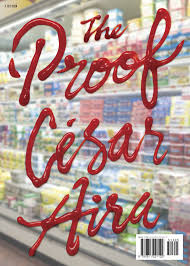
[READ: November 12, 2020] The Proof

The Little Buddhist Monk (written 2005) has been bundled with The Proof (written 1989) together in one book.  Both stories were translated by Nick Caistor.

The Proof is about as different from The Little Buddhist Monk as you could get.  It’s also the most visceral story I’ve read by Aira, whose stories tend to be very “of the mind.”

Indeed, you can tell this story is quite different just from the way it starts.

“Wannafuck?”

This question is asked to Marcia (a senior in high school?–she’s “fourth year”) as she is walking down the street.  There are groups of teenagers hanging around,and this question comes from one of the girls.  (more…)

Read Full Post »

SOUNDTRACK: BORIS-Vein (2006/2013).

Boris continues to reissue their back catalog in streaming format.  Which is pretty amazing since so much of their work is so hard to find.  Possibly not great for collectors, but great for those of us who actually want to hear the music.

Vein is Boris’ thirteenth album.  Because they are Boris, the released two different albums under the same title in 2006.  The packaging was identical on both records and the only way to tell them apart was to check out the surface of the vinyl itself.

The “Hardcore version” had punk, hardcore, and drone.with vocals that are screamed rather than sung.  The  “Noise version” had drone and noise music as well as punk. This version of the album does not include any vocals.

In 2013, the band announced that the album would be released as a 2-CD set not as a reissue, but rather a re-arrangement of both albums combined.

Given all of this, it’s not even entirely clear to me what has been released her on bandcamp.  But it seems like the first two tracks (here labeled “v” and “e” are the hardcore version.  The third and fourth tracks “i” and “n” are a little harder to place.

“v” is 14 minutes long, broken up into several small pieces:

It starts with a wall of noise–static and low feedback swirling and manipulated until 4.01 when it segues into segues into ringing bells and effects that sound like a jet taking off and broken glass swirling and zipping around.   Then some drums and chords are introduced.   At 6:15, there’s a samples from the 1979 film Stalker, by Russian director Andrei Tarkovsky. A man says “И пусть посмеются над своими страстями” (Russian for “Let them laugh at their own passions”) followed by a blistering hardcore song  until 7:52.  After an abrupt halt comes the next screaming hardcore song which is more fuzz than chords with screams and feedback which at 9:06 segues into another super fast song which is distinguished from the others because of a riff where the chords go up and up higher and higher and faster as if they are going to explode, although it rumbles unto feedback at around 10:24 when a new tone of fuzzy nose feedback and a much slower introductory opens before before the pummeling hardcore resumes until 12:03.  This first song ends with a moment of silence and then a woman saying “unpleasant dreams” before a Wata fast high note solo is balanced by slow pummeling chords and drums and cymbals. After a minute or so, the hardcore returns this time with a solo all over the top of the song.  The song ends with a humming and what sounds like car keys jingling

“e” is over 15 minutes long and is one third hardcore punk and two thirds slow lengthy drone.  It starts with an Atsuo scream and hardcore drums. There’s a blistering hardcore song–fast riffage and screamed lyrics (which I assume are in Japanese).  Although the hardcore songs sound similar (and are unnamed) the riffs are distinctive enough to tell them apart.  Some backwards masked sounds come in at 1:05 and a similar riff at 1:15.  I have never seen them play this kind of set–it must be exhausting.  At 2.01 a loud bass comes in with a lot of cymbals and the song is buried under a blanket of distortion.  two minute song starts with.  At 3:04 a buzzsaw sound and a cool riff is coupled with some intense screaming.  At 4:45 it morphs into feedback that contains another sample from an Andrei Tarkovsky film, this time the 1986 film, The Sacrifice.  A man say “I hela mitt liv har jag väntat på det här. Hela mitt liv har varit en enda väntan på det här.” (Swedish for “All my life I’ve been waiting for this. My whole life has been a long wait for this.”)  The rest of the song feels like it might stay a lengthy drone, but at 5:46 after some cracks of the snare, a slow powerful Boris riff emerges.  But the riff dies away for some slow Wata soloing over droning chords.

Track 3 is probably the “noise version” (which is 17 minutes long) or the 2013 re-release (which is 17:25) but this track is 18:04.  Of course, if the “noise” version has no vocals, it can’t be this because it does have vocals.

It opens with a similar kind of noise that opens “v” but more staticky and with distant riffing going on.  At 1:58 a riff comes in.  The songs are like “v.”  A shorter version of the jet sounds are followed by some slow heavy chords.   At 3.22 there’s some chirping feedback that introduces the first hardcore song in “v.”  At 5.22 [#4 above] segues into a scream-filled hardcore song followed at 6:14 by the riff that goes higher and higher.  At 7:36, there’s slow thumping with noise and feedback (this might be new and not on “v”) then a sudden drop off of sound and near silence before the screeching feedback that starts at 8:39 with a blistering hardcore song that sounds unlike anything before. There’s heavy fast riffing with a pause and a big scream before resuming.  At 11:50, warping sounds and a thundering drum compete with a really fast riff which sounds like the first part of “e.”  At 13:05 song 2 from “e” begins–short, fast and loud.  Then at 13:51 comes track 4 from “e” (there’s no track 3) with the buzzsaw opening. At 15.21 there’s some backwards recording which eventually becomes the guitar solo that ended “v,” although this time it’s just under 3 minutes long.

Track 4 is “n.”  Perhaps it’s the “noise version” as there are no words.    It’s 17:59 and is a noisy composition of drone and feedback.  There’s some heavy chords and some quieter moments.  The high soaring notes seem to fit in very nicely with the sludgy bottom parts.  About half way through it turns into a fast, heavy hardcoreish track with a lot of drums, but buried under a wall of feedback and distortion.

[READ: November 12, 2020] The Little Buddhist Monk

The Little Buddhist Monk (written 2005) has been bundled with The Proof (written 1989) into one book.  Both stories were translated by Nick Caistor.

The Little Buddhist Monk is an absolutely bizarre, borderline stream of consciousness story.  It jumps from topic to topic like a fever dream and resolves itself in an even more unexpected way.

The story opens with us meeting the little monk who would very much like to leave Korea (where he was born and where he studied). But he has no money and no reasonable expectation for ever emigrating.  

Then one day a French photographer, Napoleon Chirac, and his wife Jacqueline Bloodymary (!) happened in his path.  They were on vacation and spoke French to each other.  The monk knew French and joined in the conversation.  They were delighted to meet a fellow French speaker in such a foreign land.  He imagined that they could be his ticket out of Korea.  So he decided to help them throughout the day.

They talk a lot about art.  Napoleon photographs empty rooms with a 360 degree camera and then splices it together as one image.  He has traveled the world filming places and he is looking to do a Korean monastery.  What luck, the monk can take them to a good one. (more…)

Read Full Post »

SOUNDTRACK: MAGIC SWORD-Endless (2020).

Not long after the release of the Awakening EP, Magic Sword is back to conclude the story arc that the previous albums have created.

The Keeper (red, keyboard, audio-visual), The Seer (blue, guitar), and The Weaver (yellow, drums) are Immortal and they have seen a story like this one unfold many times.  So they are not surprised by the direction it goes in.

“Depths of Power” opens this chapter with a slow pulsing matched with occasional power chords.  “Invincible” adds a new sound palette to the band’s music.  This song sounds a bit more like Tangerine Dream but with some more contemporary techno type sounds.

“Aftermath” adds some swirling uneasy sounds to the album.  It contains curlicues of sound that wiggle around and segue into “Empress” which has a low rumble underneath the propulsive synths.

“Shores of Oblivion” is a more eerie soundscape of wind and slow pulsing waves of emptiness. When the fast melody comes from out of the waves it feels like something sinister heading right for you.

“rophecy” adds some light to the proceedings with an uplifting melody which is eventually corrupted by “Corruption” and turns into a more threatening tone.

“Ritual” introduces a fairly heavy bassline and some more modern sounding synths.  Then “A New Quest” returns to the pulsing sound of old.  “Hope” starts quietly but brings am uplifting melody that continues throughout the song.

“Endless” ends the disc with strings–ominous at first but which move into a more stately melody that fades out slowly over a long time–continuing endlessly

The band also released a single of “Invincible” with a remix by Waveshaper.  I don’t typically like remixes, because mostly they just dump a new drum beat over an old melody, but this one plays around with the song in interesting ways.  It turns it into something different without losing the original.  I rather like the new bass line they add to the song.

In the comic book, Magic Sword says that this ends the cycle.  Does that mean the end of Magic Sword … or the beginning of a new cycle?

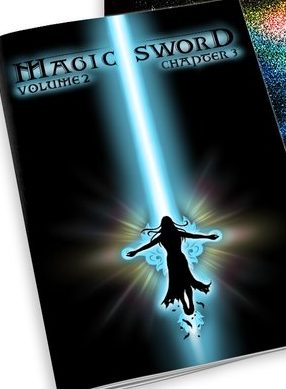
[READ: October 29, 2020] Magic Sword Volume 2, Chapter 3

Chapter 3 concludes this cycle somewhat unexpectedly for me (although it makes perfect sense once it is explained).

When Chapter 2 ended, Nayia came face to face (or more like face to big toe) with The Colossus.  It was the size of a mountain and seemed to be covered in bark.  It quickly grabbed hold of her with its tendrils, trying to burrow into her orifices.

But the power of the Magic Sword was still within her and it fought back where she couldn’t.  With its help she was easily able to best this beast.

But the story doesn’t end there. (more…)

Read Full Post »

SOUNDTRACK: MANNEQUIN PUSSY-Patience (2019).

I saw Mannequin Pussy two years ago and they were dynamite.  I’ve been waiting for a full length to come out and this release (while only 25 minutes) was worth the wait.

“Patience” opens with fast drums and rumbling bass.  I love that the lead guitar is playing some riffs that meld in perfectly with the rest of the band’s chugging along.  At just over two minutes, as it fades out it seems like there should be more, but it segues right into

“Drunk II” is a classic-sounding alt rock song from the 90s.  The guitars are just fantastic–catchy but diverse enough not to be obvious.  Dabice’s voice ranges from screaming to cooing “I still love you, you stupid fuck.”  It’s also got a super catchy chorus. At 4 and a half minutes, it’s the longest song on the disc, and even though their other songs are much shorter, they can keep a four minute song sounding great.  This song also has one of the few (long) guitar solos from Athanasios Paul.

“Cream” is a roaring punk song with screamed vocals, some grooving sliding bass from Colins Rey Regisford and pummeling drums from Kaleen Reading.  I love that even though the song is not even two minutes long they have time for choruses, verses and even an instrumental break.

“Fear /+/ Desire” slows things down with an acoustic guitar and Marisa’s gentlest vocals as she sings clearly this updated lyrics

When you hit me
It does not feel like a kiss
Like the singers promised
A lie that was written for them
…Is this what you wanted?
Holding me down makes you feel desired

“Drunk I” is less than a minute long and lurches between a really catchy guitar riff and gentle vocals and roaring full out choruses (or vice versa).  Again things slow down for “High Horse” with lovely echoing guitars and Dabice’s soft, clear vocals.  Until the loud chorus with anguished screamed vocals–the shift back to delicacy is really well done.

“Who Are You” is a catchy bouncy song with a terrific chorus.  Midway through, the song moves to double speed and gets even catchier.  It’s followed by the thirty eight second “Clams” a blistering screaming duet of noise, chaos and intensity.

It’s followed by the awesome, harshness of “F.U.C.A.W.”  Between the dissonant guitar and the screamed vocals is the middle of the song which is practically shoegaze, before the noise ending wraps things up in under two minutes (with some sounds ringing out for a bout fifteen seconds).

The disc wraps up (already) with “In Love” the second longest song.  It’s got cool sampled sounds and a piano., but the song is still all about the guitars (and terrific bass).  The song has a kind of mellow jam to the end–that nifty sample for the melody and some guitar soloing.

There’s so much packed into these twenty five minutes that you can easily start it right back up for another ride.  I’m really looking forward to seeing them live again.

[READ: September 29, 2020] “The Work of Art”

There was so much going on in this story, I really liked it a lot.

The narrator begins unfolding the story of an incident at an (unspecified) museum.

A guard named Cliff arrives on the scene and his coworker Geraldine tells him that the woman in the burqa has been staring at ths one piece of art for hours–unmoving. (more…)

Read Full Post »

SOUNDTRACK: Æ MAK-“We Have It Right Here” (2020).

Æ MAK is Aoife McCann.  She creates a fascinating tapestry of music.  It feels classical and operatic and yet also feels very electronic and oddly poppy.

This song begins with muted xylophones -sounding electronic tones playing a pretty melody (which reminds me of Björk).

McCann’s voice comes in and lilts and flutters almost bird-like. She sings in English but with interesting emphases on words.

Her vocal delivery and melodies conjure Regina Spektor.

About halfway through the, until now entirely electronic song, adds some soft acoustic guitar and gentle bells.

The second chorus is almost all voice with simple percussion and a kind of Kate Bush vocal trill.

The electronics come back in and suddenly start getting fuller and louder–filling up your headspace with sounds as her voice echoes itself and adds other lines before building to a remarkably catchy ending.

There’s so much going on in this song even though it often feels very minimal.

And wait until you see her on stage.

[READ: September 21, 2020] On Contemporary Art

I have enjoyed Aira’s novels and was intrigued by this short essay about Contemporary Art.

The entire book is 60 pages and it includes and Foreword and an Afterword.  That jibes with the premise of the imprint itself.  Ekphrasis Press reprints works about visual art that are not meant to be academic in nature–but compelling as prose.

In the Foreword Will Chancellor, talks about how language can throw you off.  He recalls bring a child and seeing the Objects in the Mirror are Closer Than They Appear warning.  He wondered how objects and their appearances could diverge.  He continues that Aira suggests this gap between appearance and reality might be the origin of cotemporary art.

~~~

The main body of the book is Aira’s essay, translated by Katherine Silver.

He starts by saying he is a writer who looks for inspiration in painting.  He says that cave painters painted facts, but it took a person relating the adventure, the storyteller, to make the episode come alive.

As a lover of art, he subscribes to many art magazines, namechecking Artforum, Art in America, Flash Art, Frieze, art press and more.  He says the magazines look better every year but that their ability to convey art gets worse every year–they cannot properly convey what an art piece looks like.  You have to read the texts to see what is happening.

His essay concerns the Enemy of Contemporary Art who says that today’s

frauds who pretend to be artists depend on a justifying discourse to validate the nonsense they produce.

They say that contemporary art doesn’t speak for itself–that it needs critics to explain it. (more…)

Read Full Post »

« Newer Posts - Older Posts »