Feeds:
Posts
Comments

Archive for the ‘Animals’ Category

SOUNDTRACK: KISS-Hot in the Shade (1989).

Before this album came out, Paul Stanley did a little club tour.  My friends Matt and Nick and I got to see him in Wilkes Barre, PA. It was a pretty great show, and intimate in a way that Kiss shows can never be.  So we were pretty psyched for this new album.  And yes, this album holds special memories or me because we used to listen to it a lot after the show.

The biggest problem with this album is bloat.  I don’t have any kind of evidence to back this up, but this was the first Kiss album that took advantage of the compact disc’s length.  And so it’s easily twenty minutes longer than most Kiss albums (and the later albums had some filler on the already).  Plus it’s  almost longer than Kiss’ first two albums combined.     That’s just too much.

Even Kiss’ weaker albums usually start with a good song.  Not so much Hot in the Shade.  “Rise to It” is pretty generic even by mid 80s Kiss standards.  They try to make it fun with the Ri–e i-e-i part, but it doesn’t quite make it.  “Betrayed” is a bit more of a rocker and is quite a good song.  Lyrically it’s not so great (it’s funny to think of Gene Simmons trying o be down with the common man), but it rocks pretty hard.  My friend Matt and I liked “Hide Your Heart” quite a bit when it came out.  The chorus: Ah ah ah ah, hey hey hey do do do do do do do do do” is pretty bad though.  “Prisoner of Love” musically sounds like Kiss of old, until the verses come in.  “Read My Body” is really catchy until you realize it sounds just like “Pour Some Sugar on Me.”  That’s embarrassing.  Although the metaphor is well done, at least.  “Slap in the Face” might as well be “Let’s Put the X in Sex” from Thrashes Smashes and Hits.

Then comes the cheesiest ballad in Kiss’ history—actually written by Michael Bolton, yes Michael Bolton.  And man do I love it.  Paul is in full voice, he sounds great, the harmonies are spot on.  It is the cheesiest metal ballad ever, but I never get tired of it.  It even has an acoustic guitar solo—pre-made for Unplugged!  “Silver Spoon” is a good rocker, with a fun chorus.  Although the gospel singers at the end are a bit overkill—it seems silly to have invited them in for 90 seconds of singing.  “Cadillac Dreams” is just a bit too close to a Beatles song for my liking.  “King of Hearts” is a decent song, and “The Street Giveth and the Street Taketh Away” (were Kiss really hard up for money?  what’s up with these lyrics?).  We had an in-joke on my dorm floor, so I can never take this song seriously (that may also be because they steal the “Hey man” right out of David Bowie’s mouth).  Love Me to Hate You” is pretty generic although catchy.  “Somewhere Between Heaven and Hell” is also a decent song.

“Little Caesar” is the first (and only, really) song that Eric Carr sang lead vocals on.  As a singer he’s a really good drummer.  The song is pretty generic too and is unfortunately given the same name as a bad pizza company.  “Boomerang” has a good fast pace (once again, not unlike a Van Halen song).

[READ: August 11, 2012] “The Cryptozoologist”

This is yet another short story broken down into lots of little sections.  What’s neat about the way that this one is done is that because the narrator is a cryptozoologist, each section is headed by a cryptid (animals whose existence has not been proven).  But in addition to discussing these animals, the sections also describe a history of the narrator’s life.  His life in this field started when his grandfather told him about a snake which latched onto the end of its own tail and rolled away from its pursuers (section title: Hoop Snakes).  His grandfather never lied, so it had to be true.

It proceeds through The Mušhuššu (a serpent dragon spoken of in ancient Babylon), through the Jenny Hanivers (jeunes d’Anvers), into The Wolf of Ansbach (believed to be an old Bürgermeister who was transformed into a werewolf), and on to The Batutut, a monkey man in Laos.  Most of these sections describe the origins of the cryptids (and his lack of success at spotting them), but The Batutut section is also about himself and how he was in the war when this particular cryptid entered his life.

Then we move on to The Altamaha-Ha in Southeastern Georgia, while Giglioli’s Whale, which had two dorsal fins dates to 1867.  The Mongolian Death Worm, said to live in the sands of the Gobi desert is a cryptid that he actually experienced in the American desert.  he didn’t see it, but he could feel its presence.  The Madagascar Tree is a killing tree–it looks like a pineapple and eats sacrifices.  This story was told by two adventurers who saw the tree eat a woman.  The best part of is that there is no proof that the two men who are credited with telling the story actually existed themselves. (more…)

Read Full Post »

SOUNDTRACK: KISS-Animalize (1984).

This year, 1984, was the first time that I saw Kiss live.  Sadly I remember more about the opening band (Loudness) asking if New York was having a good time (and the fans screaming that we were in New Jersey). But I still have my booklet from the show and I do remember a few things from the show (again, sadly they were not in makeup).  So this album holds a special place for me, even though in retrospect it’s not as good as Lick It Up.

“I’ve Had Enough (Into the Fire)” starts the album off with a bang—blistering solos from new guitarist Mark St. John.  But, as with Lick It Up, the album for me is overshadowed by the (massive) single.  “Heaven’s On Fire.”  It’s such a lame little sing-along (and yes I do remember that song from 1984 show—Paul really milked it).  But man it’s such a bad song.  Musically, “Burn Bitch Burn” is interesting, but what were they thinking with those lyrics “I want to put my log in your fire place…burn bitch burn?”  That’s a far cry from “I am the doctor of love.”  “Get All You Can Take” is, to my knowledge, the first time Kiss has said the word fuck in a song (“What fucking difference does it make?” Is sung by the deeper response voices in the chorus.  It’s a catchy song with an interesting riff.  “Lonely is the Hunter” has a kind of 70s southern rock feel.  It also seems to be calling back to some earlier songs in the style of singing—which only reminds you how much better the earlier song was.   The band is relying a lot on call and response vocals on this album.  And they’re okay but seem like a something of a crutch..

“Under the Gun” continues as another sort of generic fast rocker from this era.  “Thrills in the Night” is one of my favorite songs on the disc–it sounds so much like Kiss of the 70s.  And with Paul’s vocals and the guitars, this could have come off of his solo album.  “While the City Sleeps”  is a fairly uninspired Gene song.   None of these songs are bad, really, they’re just not as exciting as they might be.  “Murder in High Heels” has more of that 70s rock swagger that Gene likes to pull off.  It’s just not always clear that the 70s swagger rock works well with the heaviness of other songs on the record, like the band wasn’t sure which direction to go in.  So even though this disc is the one that brought me back to Kiss, it has some good songs, but it doesn’t really hold up all that well.

[READ: August 1, 2012] Desperate Characters

David Foster Wallace, Jonathan Franzen and Tom Bissell have all championed this book.  Bissell was instrumental in getting it republished once it went out of print.  Franzen wrote the introduction to the newly published version.  David Foster Wallace blurbed the book: “A towering landmark of postwar Realism….A sustained work of prose so lucid and fine it seems less written than carved.”  It was also on his syllabus.  Zadie Smith has also written favorably about Fox’s fiction.

So why did it take me so long to read this book?  (I read the original version, which is what the library had.  I’m curious about Franzen’s introduction and will get to it eventually).

S. knows Paula Fox as a children’s author, which surprised me even more when I read the grittiness of this book.

It is submerged in downtrodden New York City of the late 60s, where people throw garbage out their windows, where racial tensions run high and where everything feels dirty.  This powerful description late in the book sums up the attitude about the City:

They drove through miles of Queens, where factories, warehouses, and gas stations squeezed up against two-story, two-family houses so mean and shabby that, by contrast, the ranks of uniform and tidy tombstones rising from cemetery islets that thrust up among the dwellings seemed to offer a more humane future. Sidewalks, brutal slabs of cracked cement, ran for a block or two, then inexplicably petered out, and along the center of the tarmac streets, short lengths of old trolley tracks occasionally gleamed among the potholes. Here and there, the skeletons of a vast new apartment complex sat on the rent ground; tree roots and rocks and earth rolled up around its foundation. Cries of boredom and rage were scrawled across the walls of factories, and among these threats and imprecations, invitations and anatomy lessons, the face of an Alabama presidential candidate stared with sooty dead eyes from his campaign posters, claiming this territory as his own. His country, warned the poster – vote for him – pathology calling tenderly to pathology. [For those ignorant of history like me, that candidate was George Wallace.  This was his third time running, this time as part of the American Independent Party].

But that’s just the descriptions.  What is this story about?  Simply, it is about Otto and Sophie Bentwood, a successful childless couple living in Brooklyn.  Otto is a lawyer, and, Sophie is a successful translator (I liked that Sophie was employed and not “just” a housewife).  But Sophie hasn’t felt up to translating lately and Otto’s successful practice hits a bump when long time partner Charley decides to leave to work on more important causes.

Otto is rather cut off emotionally–Charley has been his friend and partner for decades yet he can barely muster a proper goodbye when he steps out the door.  And while Otto and Sophie are mostly happy, he has more or less pushed her into the arms of another man.  She looks back on this brief affair with fondness.  However, the fact that the affair is never suspected and the fact that it ended the way it did are just more indignities that Sophie has to suffer.

But what sets off the action in the story is an act of kindness.  Sophie sees a cat that is hanging around the alley behind their brownstone.  Amid the people throwing garbage out the window and hanging up sheets to act as curtains, Sophie decides to do a nice deed for this cat.  She brings it some milk. It hungrily laps up the milk and when Sophie goes to pet it, it bites her really hard on the hand.  And literally the rest of the story follows the swelling of her hand. (more…)

Read Full Post »

SOUNDTRACK: CORB LUND-“Dig Gravedigger Dig” (2012).

I’m not what you’d call a country music fan.  There’s a lot of reasons for this.  But most of the reasons have little to do with the music itself–some of which (the faster honkier tonkier stuff) I rather like.  Corb Lund is a Canadian country singer who I’ve heard of but don’t know anything about.

This song is a honky tonking, harmonica stomping, group singing song about digging graves.

This is the kind of country I could get used to. Whoo!

[READ: July 19, 2012] Bake Sale

Why not follow a cookbook with a book about cooking.  Bake Sale is a graphic novel about a cupcake who makes cupcakes.  He is friends with an eggplant and all of the residents of his Brooklyn neighborhood come into buy his wonderful baked goods (a bag of sugar loves his brownies and an egg gets coffee every morning).  Cupcake is also in a band with his friends: bagel on banjo, pear on bass, egg on horn, eggplant on trombone.

(After I read it, Sarah pointed out how odd it is that all of the characters are foodstuffs, and that the bag of sugar is eating something that contains sugar.  I noticed that (how could you not?) but I allowed for some cognitive dissonance I think).

Turns out that Eggplant’s Aunt Aubergine knows Turkish Delight, the famous chef.  And Eggplant is traveling to Turkey to visit Aunt Aubergine.  Cupcake would love to meet Turkish Delight, but he can’t afford an airplane ticket.  So cupcake has a choice to make–work longer hours and quit the band or simply not meet his idol.

Cupcake decides to work extra hours.  But not in his shop–he begins selling his cupcakes (and more) on the street.  I enjoyed his table laden with themed items (for a boxing match, for the blessing of the animals at the cathedral, and even dog biscuits for the Westminster dog show). (more…)

Read Full Post »

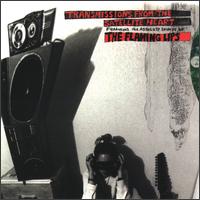
SOUNDTRACK: THE FLAMING LIPS-Due to High Expectations…The Flaming Lips are Providing Needles for Your Balloons EP (1994).

This EP came after the success of Transmissions from the Satellite Heart and the single “She Don’t Use Jelly.”  Naturally that is not the single here, rather it is “Bad Days,” a new song tha sounds of the period.  As does “Jets Part 2 (My Two Days As An Ambulance Driver)” a fuzzed out trip.

“Ice Drummer” is a primarily acoustic but still distorted song.  It’s kind of boppy and light which is odd since it is a cover of a Suicide song.   “Put the Waterbug in the Policeman’s Ear’ is a demo with strings and piano.  It also has a very lengthy introduction in which Wayne explains his brother’s proclivity for drugs and his belief that he can control bugs (and have them attack the policeman who is trying to arrest him).  It was recorded on a boombox.

“Chewin’ the Apple of Yer Eye” is a live version recorded at a record studio.  It has nice guitars with scritchy violins.  “Chosen One” is a cover of a Bill Callahan song at the same venue.  There’s a lengthy introduction explaining that it’s a cover and why he likes it so much.  It’s a nice version, very stripped down.  “Little Drummer Boy” is a travesty, but a good one (and is 1,000 times better than their version of “White Christmas.)”

“Slow-Nerve-Action” is a live version apparently broadcast on a Top 40 radio station.  The squall of noise as the song opens would frighten off anyone listening to Top 40, but the middle of the song’s acoustic section is rather pleasant (if not a little scratchy and staticky).  Although this EP racks in at 44 minutes long, it’s really not that essential (although the live versions are nice).

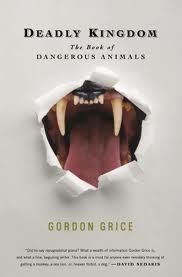
[READ: May-July 2012] Deadly Kingdom

If you have any kind of animal phobias–literally any kind: snakes, sharks, spider, rodents, bugs, stay away from this book.  Indeed, even if you don’t have this kind of phobia, you may after reading this book.  As the title says, this book tells you every single conceivable way that an animal can kill you–from biting to clawing to stomping to crushing to infections to diseases to parasites to long lingering diseases to numbness to elephantiasis (and that’s just chapter 1).  Somehow the author is not afraid of everything that moves, and is even a collector (with his wee son) of all manner of unusual creepy crawlies–tarantulas, hissing cockroaches and the like.

Sarah bought me this book for my birthday because David Sedaris recommended it when we saw him speak.  When Sedaris read from it, it was funny but dark.  Sedaris’ comment that “Monkeys are such assholes “was certainly borne out by the book.  Sedaris’ other comment–if you ever feel bad about eating meat, just read this book–is also completely accurate.  Even cows can be assholes.  This book is hard to digest in large doses.  I found that I had to put the book down after a section or two because there’s only so much you-will-die-if-you-do-this reading that I could take.

Grice has done a ton of research–he has looked into all manner of medical and death records and talked to lots of scientists around the world.  And he breaks the book into five major categories: The Carnivorids, Aquatic Dangers, The Reptiles and Birds, The Arthropods and Worms and Other Mammals.  The introduction more or less explains his origin story for being interested in deadly animals–a cougar was on his Oklahoma panhandle property when he was six years old.  His grandfather dispatched it, but he had to stay safely in the car during the ordeal.  And he has been curious ever since.

The introduction also contextualizes the violence that animals do to humans.  Is it all defensive (as we take over more and more land, it’s hard to know exactly what is defensive) or is it straight out aggressive. But he says the hardest part about this kind of descriptor is that “besides our usual biased views of all the parties involved, is that violence rouses strong emotions.  We are almost forced to take sides with the injured humans or the slandered animals….  Many writers depict virtually all animal attacks as “provoked” by the victim.  On the other side, some writers are at pains to paint dangerous animals as monsters of cruelty.  All of these views are simplistic.” (xxiii). (more…)

Read Full Post »

SOUNDTRACKCHI’S SWEET HOME (new) end credits (2010).

I have yet to watch the anime of Chi’s Sweet Home, so I don’t know how new this is (r frankly even if it is new–of course why would this poster lie).  My kids will love it but it’s only available subtitled so I’m not sure how much they would enjoy that.

This song was a surprise to me because the voice is deep, at least until the ending Meow Meow Meows come in.

Regardless, it’s catchy and I prefer it to the opening theme.

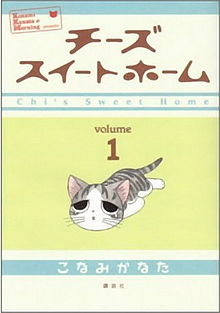
[READ: July 2012] Chi’s Sweet Home 6-8

Ah, this series has been magnificent so far.  And we have now caught up to what is available in the U.S. and almost to what is available in Japan.

If you missed the first post, Chi is a kitten and these are her adventures.  As with the first 5 books, the action in these three takes place over a very short period of time (weeks, maybe).  So Chi remains an irrepressible kitten during these stories.  And that’s just what we like.

Each of the stories is 8 pages long (Book 8 ends with story #146).  Each one follows a short arc with a few of the stories continued in the next story.  In these books, Chi encounters her first pigeon, she sees the neighbor’s dog buring a bone and she wears a collar (very briefly).  She also gets locked out, falls asleep in a park and gets rained on.

Most of these books concern Chi exploring the outside world.  She is well settled in to her new surroundings and she is preparing to explore the world around her house.  She meets a little kitten called Cocchi who is a streetwise kitten and at first wants nothing to do with Chi.  But Chi s so innocent that she tags along, usually bringing out the playful kitten in Cocchi (even as he gets mad that she does so).  When they both get in trouble by sneaking into a garden shed and knockig thngs over, Cocchi even expreses concern about Chi.  Even though she loves her human family, she is starting to make cat friends. (more…)

Read Full Post »

SOUNDTRACK: CHUMBAWAMBA-“That’s How Grateful We Are” (1990).

Chumbawamba called it quits this week after 30 years of being a band together.  Most people assume they put out one single and that’s all. And in some ways that is true.  Because most of their other music was way too radical to be played anywhere–even when it was as catchy as this.

This is a six-minute dance-funk song off of the first Chumbawamba album I ever heard (Slap!).  It opens with a little girl saying “Okay, lay some drums on me.”  After some drums and hammered percussion, she says, “gimme some bass” and a funky riff starts.  It’s followed with accordion, horns guitars and, Chumbawamba’s signature–chanting.

It’s a call and response song with a wonderfully catchy chanted chorus.

On first listen you might catch a few unexpected words (black lung, attack, attack, we took to the streets).  But then you get swept up in the chorus again (and maybe the accordion solo).  But on further inspection, the song is about the Hungarian Revolution of 1956:

Working in a forge, black lungs, burnt skin
Callouses, arched back, hammering, hammering
Stalin watching over us pigeon shit head
We’d spit on the floor at this red bastard god.

Not exactly pop music, but you can sure dance to it.  I haven’t listened to too much of their more recent music, but their early stuff is wonderful and worth looking for.  Thanks for the music lads and lassies.

[READ: July 2012] Lucky Peach Issue 4

I can’t get over how much I enjoy Lucky Peach.  I just loaned a past issue to a friend and he loved it too.  He’s looking forward to trying some recipes and he’s been fascinated by the articles, too.  I don’t read any other cooking type magazine, and yet I can’t get enough of this one!

DAVID CHANG & CHRIS YING are still on board with their note “From the Editors” and PETER MEEHAN, JONATHAN GOLD & ROBERT SIETSEMA talk about “American Cuisine, Whatever That Is”

This issue features a choose your own adventure from COURTNEY McBROOM AND ALISON ROMAN–“Voyage of the Taco Belles” in which they travel to Texas and California to compare “Mexican” food.  It’s a fun adventure with many pitfalls and many delicious locations.  No one could conceivably eat that much.

DREW ALTIZER-“Swan Oyster Depot” photos from the independent seller.

DAVID TREUER-“No Reservations” gives a fascinating history of the Objiwe peoples.  How they don’t have a cuisine per se, but they do have specific foods they eat.  Also, that their way of life was not decimated when the white man came because they did not eat bison, they ate from the water and from smaller animals.  But when the white man gave them fatty fried foods, their diet was changed for the worst.  A fascinating look and an unexpected content from a “food” magazine.

PETER MEEHAN, BRIAN KOPPELMAN, ANTHONY BOURDAIN and ELVIS MITCHELL all talk about the movie Diner.  I have never seen it, but it sounds pretty important in a certain range of cinema.  I liked hearing their various opinions of the movie.  Elvis Mitchell (from NPR’s The Treatment) is particularly funny.

TOM LAX-“The Schmitter” talks about The Schmitter a crazy sounding sandwich from Philadelphia that should give the cheese steak a run for its money.  (Cheese, Steak, Grilled Salami, “Special” sauce, Tomatoes, More Cheese and Friend Onions).  Yum!

HAROLD McGEE-“Harold McGee in Outré Space”–He’s back with a lengthy article on eggs and his attempts at peeling hard-boiled eggs without ripping the egg inside–his experiments are pretty out there!

BEN WOLFE–“American Microbial Terroir” How microbes and bacterium form on salami in different regions and how those bacteria inform the flavor of the meat.  Gross but very interesting.

STEVE KEENE-“Portfolio”  He did the cover for Pavement’s Wowee Zowee album and here has a new portfolio of his new style of painting–on plywood.

DANIEL PATTERSON-“We Waited as Long as We Could” He talks about the Rascal House, a restaurant that he went to as young kid with his grandfather.  It’s about the demise of this kind of establishment in general too.

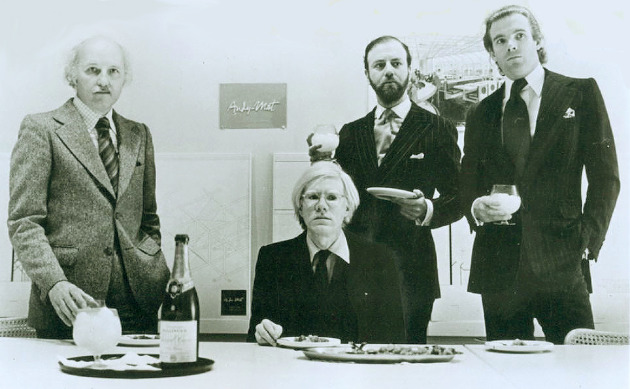
BOB NICKAS-“Someone Has to Bring Home the Bacon” Nickas looks at Andy Warhol and his various accomplishments regarding foot (including the aborted Andymat)

JOHN GALL-“Defrosted Foods” a photo of defrosted foods

NOZLEE SAMASZADEH-“A Modest Proposal”  This clever article talks about eating foods and plants that we consider invasive.  The best idea is to sell back the Asian carp to the Chinese–they love it and we don’t eat it, meanwhile it is invading our waterways.  Seems we could get back all the money they owe us!  Plus, why not eat Nutria?

MATTHEW RUDOFKER-“Knives Out” Look at these amazing knives (that I will never buy).

JONATHAN PRINCE-“Photo-Op Food” A very funny article about politicians trying (and often failing) to blend into regions by eating “local” food.  And the funny photo-ops they often provide.

MARC MARON-“Pan-American” The tale of a used cast iron frying pan and the story behind it.

DOUGLAS WOLK-“Love, Love, and ALE-8 One” This is the story of an independent locally created soda.  It’s based in Winchester, KY and serves more or less the Winchester area.  The soda is in huge demand there.  It’s the story of a brief but failed expansion and a determined independent spirit.  Check out their site and stuff.

DAVID SIMON-“Pickles and Cream” appreciating the only contribution Simon’s grandfather ever made to the culinary arts.

LAUREN WEINSTEIN-“Sushi, USA” a comic about sushi.

MARK IBOLD is still on board (hurray!) bringing culinary fun from Southeastern PA.  This time: John Cope’s Fancy Golden Sweet Corn.

There’s of course lots of delicious (and sometime crazy) recipes written in their own wonderful somewhat disrespectful style.

Oh, and just to put your mind at ease, the picture on the cover is of a cow eating a veggie dog.  Even knowing that it’s still disturbing.

Read Full Post »

SOUNDTRACK: SATOMI KŌROGI-“Home is the best!” Ouchi ga ichiban (おうちがいちばん) (2008).

Sweet, over the top and not as catchy as one might expect, this is the theme from the animated Chi’s Sweet Home.  You can watch all 104 (!) episodes (they’re 3 minutes each) at Crunchyroll.  They’re in Japanese, subtitled in English, which is only a shame if your four-year old can’t read.

The show is basically the episodes from the books.  And the animation looks just like the books.

The theme song is sung in Japanese, which isn’t the problem–it’s just not as adorable as Chi is.

[READ: June 18, 2012] Chi’s Sweet Home

I saw Chi’s Sweet Home at the library and grabbed books 1 and 2.  I didn’t realize that there were 8 books!

Clark loved books 1 and 2 very much (it was quite his obsession for about three days–that’s pretty good for a seven-year old).  I wanted to read it too, and I am totally hooked.

Each book is comprised of twenty episodes, each is 8 pages long.  And they follow the adventures of Chi, a small kitten.  Kanata Konami is renowned for her cat manga, and it’s obvious why.  Chi is incredibly expressive–I love the way her feet go crazy when she is excited and the big smile she gets when something pleases her.  Of course, her angry face is also precious.

But unlike so many other animal stories, the adventures of Chi are simply the realistic adventures of a little kitten as she explores her new home and her environment.  The whole five that I’ve read so far seems to cover about a month, so Chi never grows up (although the family goes through quite a lot in that short time). (more…)

Read Full Post »

SOUNDTRACK: KATHLEEN EDWARDS-Voyageur (2012).

This is Kathleen Edwards’ latest album.  And every time I listen to it, it gets better.  Her songwriting has reached amazing heights.  The lyrics are wonderful and the melodies are just outstanding.  “Empty Threat” (“I’m moving to America…it’s an empty threat), opens the disc with a bouncy acoustic guitar and, eventually, a full band.  The lyrics for “Chameleon/Comedian” are wonderful: the juxtaposition between these two ideas is just amazing—each verse gets more complex.  I would quote them, but the whole song is great.  And, amazingly, the “I don’t need a punchline” is easy to sing along to as well.  “Soft Place to Land” is a nice ballad—a full band that never gets overwhelmed by any of the instruments—the violin adds a nice texture as do the military drums mid way through.  “Change the Sheets” is one of my favorite songs of the year.  It starts out slow, with simple guitars and more great lyrics.  As it builds (of course it builds) it grows into an amazing bridge/chorus that just dares you not to tap your feet.

“House Full of Empty Rooms” is like a minor palate cleanser before “Mint.”  “Mint” opens like a classic 70s rock song (Bad Company or Tom Petty), but she brings in her unique voice and phrasings and changes the song into something very different.  But again, that chorus–how can you not sing along to the catchy/voice-breaking chorus after the minor key verses?  The tension builds wonderfully.  “Sidecars” is a fun poppy track (“You and I will be sidecars, we chase down the hard stuff”).

“Pink Champagne” is a five-minute piano ballad.  It’s more akin to her earlier more country songs.  It’s a wee bit long but never overstays itself.  It’s followed by “Going to Hell,” which features some great screaming guitars in the midst of more delicate singing.  “For the Record” closes the album with a seven minute slow burner.  It begins quietly, and builds and builds–never the ecstatic heights–but with a chorus that is as catchy as it is mournful.

I have this CD in my car and every time it comes up, i just can’t stop listening.

[READ: June 18,2012] I Dream of Zenia with the Bright Red Teeth

I received this limited (autographed!) chapbook from The Walrus when I re-subscribed recently.  That’s pretty cool.  It has been sitting around because I thought it was a much longer piece.  When I received the latest issue of The Walrus, and saw that the same story was in there, well, I realized that this was just a short story and could be polished off pretty quickly.  The issue of The Walrus also told me that this story is a kind of follow-up to The Robber Bride.

I have never read The Robber Bride (I like Atwood quite a lot and yet have never read her most iconic books!).  So I would never have known that this was a sequel (of sorts).  As I said, I don’t know The Robber Bride, (and hope to read it maybe this year).  I don’t know exactly how it ties to the novel (the first line of the Wikipedia entry tells me that the three main characters are the same), and given the tone of the story, I assume it is simply catching up on them some twenty-five years later.

In this story, Claris, Tony and Roz (who are all women, I didn’t realize that right away) are going for their weekly walk in the woods together (because it’s good for you and Roz hopes to increase their cellular autophagic rates).  Tony and Roz bought (from a shelter) a dog for Claris called Ouida.  Ouida is a wild terrier mix (who hops on Roz’s orange coat and leaves footprints).

It quickly becomes apparent that Claris is something of a hippy—organic, vegetarian, communing with spirits and whatnot.  Claris just had a dream about Zenia.  Zenia (who I assume is in The Robber Bride, because why wouldn’t she be), was a woman from their past.  She stole a man from each one of them—with varying outcomes in each woman’s case.  Zenia died about twenty years ago but she has come back, Claris believes, to tell her about Billy. (more…)

Read Full Post »

[ATTENDED: May 18, 2012] Ringling Bros. and Barnum & Bailey Circus

The last time I saw Ringling Bros. and Barnum & Bailey Circus was in the mid 70s.  My parents took me two years in a row (and I still have the program books somewhere to prove it).  I didn’t realize that the circus was still around, to be honest.  I knew about all of the other circuses, but RB&B&B (what an awkward name) seemed like maybe it just went away.  Well, that is not the case—apparently once you have kids who are old enough to enjoy it, the circus comes to your town.

Or more specifically, to Trenton.  We thought about going to the show back in March when it was in East Rutherford and Newark but that seemed too far (and pricey).  When it came to Trenton (which was actually further than we anticipated) and I could get tickets for $15/ea, that was all I needed to hear.

If anything was worth $15 it was this circus.  Indeed, the joy we got out of it was worth much more than $15.

If you’ve been following along here, you know we’ve been to a number of circus-type shows over the last few months, so we are jaded circus-goers at this point.  But this show was called Dragons, and that’s hard to pass up, especially if you have a soon to be 7-year-old boy (and you used to play D&D).  When as the show opened and several performers came out with dragons attached to the front of Segways, I knew this was going to be fun.  And that it wasn’t the circus from 1977.

And yet, it kind of was.  Because once the circus proper started, it had all of the elements of circuses of yore:  elephants, tigers, trapeze artists, springboard jumpers, hoops of fire and more.

The theatricality was quite spectacular both old school (the ringmaster and clowns) and new school (remote controlled (I guess) platforms and floating screens to project pictures).  And, yes it was all about Dragons–the ringmaster sang a long over the top song about being a dragon (I think–the sound was really quite poor).  And they explained the four qualities of being a dragon (or maybe the four qualities you needed for the dragon to come out?  That’s what seemed to happen anyhow).  Each of the four qualities (Courage, Strength, Wisdom, Heart) was represented by a color and, tenuously, by the performers in a certain section.

And I cannot keep straight who exemplified which quality so, as my memory allows, here’s what we saw. (more…)

Read Full Post »

SOUNDTRACK: ANI DIFRANCO-“Hearse” (2012).

I used to really like Ani DiFranco.  Back in the 90s, she was a personal hero of independent spirit–self releasing records, gaining a huge fan base (while living in Buffalo(?)), speaking her mind, and basically not kowtowing to the man.  And all along she was making great music–folky yes, but also alternativey, with rebellious, fighting lyrics.

Then at the dawn of 2000, I lost interest in her.  I didn’t enjoy the kind of music she was making anymore.  She seemed to be writing much longer compositions (not a good sign for a girl from the punk side of the tracks.  And her arrangements were growing bigger and bigger.  The occasional funk jam was fine, but once she started really letting her experimental side go, her songs were buried by smooth sounds.  And they were hard to listen to.  Especially since as she started embracing more interesting sonic sounds and textures, she seems to relax her grip on melody.  Her early songs were easy to sing along to but by 2005, mmm, not so much.

The funny thing to think about is that once you stop listening to an artist, you kind of think they must stop making music.  But that’s not the case, most of the time.  So imagine my surprise to see that since the last Ani album I listened to, she has released eight new ones!  This track comes from her most recent album, Which Side Are You On?  I can’t speak to the content of the rest of the album, but this song is a pretty ballad.

It’s a romantic song, even if her metaphors aren’t so pretty and romantic after all (hence the title).  But for some reason this song just doesn’t grab me.  It has all of the elements of Ani DiFranco songs of old, but it doesn’t make me want to sing along.

But the most surprising thing for me is just how different she looks in that picture (from NPR).  It’s not that she looks older or has grown her hair out, she looks completely different.  I don’t see anything of her old self in this photo.  That’s bizarre!

[READ: May 11, 2012] “Nero”

Warning (but not spoiler), there’s a dog death in this story.

This story shows us a world that (I assume) doesn’t exist much anymore.  It’s full of Midwesterners (of German descent) from many years ago when certain things were done a certain way and roles were very strictly defined.

The narrator is a woman and the story is set during her childhood.  She was sent to go live with her grandparents while her mother was having a new baby.  They figured she’d be there a couple weeks so her mother could adjust.  Her grandparents run a butcher shop and market; they live upstairs.  As the story opens, the narrator tells us about Nero, the attack dog who lives in the backyard, but “works” in the store at night.

She also explains How It Is in the house.  Nero is an employee.  He is not treated with kindness.  He is fed scraps and lives outside.  The other dogs who live inside are there to keep the humans feet warm.  The other animals outside are meat, except for the chickens, which provide eggs and then become meat.  That is How It Is.

The story settles on the narrator’s attempts to bond (somewhat) with Nero.  She begins feeding him gingersnaps and saying the word aloud.  And Nero starts to respond to the word.  But Nero is pretty much feral.  And Nero’s man enjoyment in life stems from leaping the (now) seven-foot fence and running down the street to get to the Cocker Spaniel. (more…)

Read Full Post »

« Newer Posts - Older Posts »