Feeds:
Posts
Comments

Archive for the ‘Animals’ Category

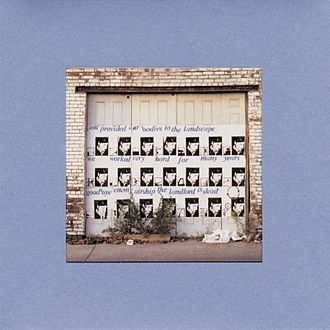
6SOUNDTRACK: DO MAKE SAY THINK-Goodbye Enemy Airship the Landlord Is Dead [CST010] (2000).

330px-DmstgoodbyeenemyAfter their debut album, Do Make Say Think made this second album which sonically fits together perfectly and really explores instrumental post-rock.  Most of the songs were recorded in a barn giving it a very big sound (complete with insects chirping).  While there were horns in the debut, they seem to be punched up a bit more on this record, and they really seem to help the record rock more.

“When Day Chokes the Night” song is 6 minutes long and I love the way the opening is a simple guitar melody slowly picked and strummed for 3 or so minutes. Then at 3:30 there’s a noisy “drum solo” that sets you up for the second half of the song which introduces wailing saxophone and it all really rocks out.

“Minmin” is 8 minutes long.  It opens slower but adds a steadily propulsive bass and drum pattern. Around 5 minutes the drums become martial and a new rhythm and bass pattern enters as the song gets bigger.  The riff is a solid rock riff and there’s some interesting feedback behind it.  It’s some of a classic construct of a slow building song that shifts gears midway through.

“The Landlord is Dead” (at a brief 5 and a half minutes). opens with a similar echoing riff, this one is more catchy than the others. Some horns fill out the background.  The song builds properly to a screaming guitar soloing wild ending.  It’s easily my favorite song on the record.

“The Apartment Song” is slower, with echoing guitars and a more trippy feel.  I love the way the really noisy guitars blast out for 8 notes and then recede again.  It’s the first of two songs under four minutes

“All of This is True” starts out with a noisy drum beat, open chords and a distant horn.   This song slowly builds for about two minutes before pausing entirely and then resuming as something else—more slow horns layering on each other the horns drift away and guitars take over again.  There’s something of a dancey beat on the drums all along.  The song ends with crowd noises and someone shouting “Merry Christmas Everybody” before seguing into “Bruce E Kinesis.”  “Kinesis” opens with a heavy bass line and insistent drum beat before the interesting guitar counterpoint plays over the riff.  For the first time, really, a keyboard riff takes over  It feels slightly sinister.  This song has a kind of claustrophobic feel, but with a kind of funky drum all the way through.  At only 3:40 this song feels compact and efficient, and as something of a lead in to the 12 minute album closer “Goodbye Enemy Airship”

The final takes a while to get where it’s going.  After some introductory drumming there’s plenty of one-note guitar and horns which keep growing louder and more insistent for the first 4 minutes.  It turns into a very bright guitar melody–bouncy and fun.  (This is one of the two songs not recorded in the barn).  It develops a distinctly jazzy feel.   The song gets bigger with some great bass chords alongside the repeating riff on the guitar.  At around 9 minutes the song morphs into the third part of this exploration of similar riffs and textures. This one is a bit trippier. The disc ends with some mildly dissonant keyboard notes as the guitar echoes to halt.

While I do enjoy their debut, this album feel like a giant stride forward in terms of composition and cohesion.

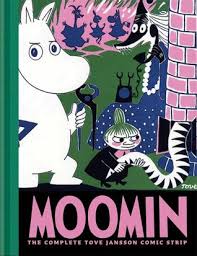
[READ: February 3, 2015] Moomin Volume 6

Moomin Book 6 is composed entirely of strips written and drawn by Lars Jansson.  Lars was 12 years younger than Tove.  He was a writer, translator and gold-miner (!).  He wrote his first novel at fifteen and then proceeded to write 8 more.  Lars translated the earlier strips into English as Tove wrote them in Swedish.  Tove’s contract was to expire in 1959, so he began teaching himself how to draw Moomins (Tove didn’t know).  Tove’s creative fatigue set in and so Lars wrote his first comic in 1956 and by 1960, he was ready to take over.  The newspaper syndicate approved the switch and so these final strips all belong to him.  He created Moomin for fifteen years–twice as long as Tove worked on it.  These stories originally ran in the Evening News, London 1960-1975.

I love that they must have agreed that each strip would open with a big Moomin behind as well.

The chapters are “Moomin’s Lamp” “Moomin and the Railway and “Moominpappa and the Spies” “Moomin and the Circus”

(more…)

Read Full Post »

moomin5  SOUNDTRACK: JAMES VINCENT McMORROW-Tiny Desk Concert #151 (August 25, 2011).

mcmorrowI don’t know McMorrow. He is an Irish singer who plays acoustic guitar.  His singing voice switches between a kind of raspy voice and a keening falsetto.

He plays four songs and his style and voice reminds me a lot of Bon Iver.

I don’t find any of his song especially compelling. They’re all nice–the humming part of “This Old Dark Machine” is pretty memorable.  As the part in the middle where he seems to get pretty intense.

“Sparrow And The Wolf” has some nice chord changes.  I think my favorite song is “Follow You Down To The Red Oak Tree,” which opens a little differently.

I have to say it’s a little awkward watching him up close as he does some pretty unusual things with his face when he sings.

The final song, “Red Dust” really shows off his falsetto.  I found his songs to be entirely pleasant and think they would sound great in a coffeeshop on a Sunday afternoon.

[READ: February 3, 2015] Moomin Volume 5

Moomin Book 5 is composed entirely of strips written by Lars and drawn by Tove.  These are the final strips that she contributed to.  And, as such, there are only three chapters in the book.  As with the others these stories originally ran in the Evening News, London 1953-1959.

The chapters are called “Moomin Winter” “Moomin Under Sail” and “Fuddler’s Courtship”

(more…)

Read Full Post »

primatesSOUNDTRACK: OTIS TAYLOR-Tiny Desk Concert #120 (April 13, 2011).

otisOtis Taylor is a big, burly, bearded man who plays the banjo. His band consists of fiddle, drums and electric guitar and bass.

The songs are bluesy without being like the blues, and they are folky without really being like folk music.  And the way he plays the banjo is unlike any typical banjo song I’d heard before.

The blurb explains what makes his songs sound so different:  He plays a style of music he calls trance blues.

Taylor’s music is trance-inducing, and he achieves that effect by playing songs that are modal: Sometimes, they sit on one chord for the entire song. Taylor says that by doing that, by eliminating chord changes, you also eliminate reference points, so songs can run as long as 10 or even 15 minutes in length.

And it’s true.  The basic melody of he first song, “Ten Million Slaves” (which is only 4 minutes) stays the same throughout the song.  It’s the fiddle (played by Anne Harris) that throws the new notes and riffs into the song that keep it so interesting,

He does throw in a simple but affecting solo at the end of “Ten Million Slaves” but it’s more fun to watch him rock out the end of the song.  That song also appeared in Public Enemies, the Michael Mann movie.

He calls his music trance blues music, came from Mali and Mississippi Hill Country.

The main riff of “Ran So Hard The Sun Went Down” is instantly familiar and a little dark.  I love the middle jam section where it just seems to gets bigger and bigger (I guess that’s the trance).

For the third song, “Talking About It Blues,” Taylor switches to acoustic guitar.  This is a fairly simple blues song, but I love the guitar riff that punctuates the verses.  The verse is simple enough “my daddy cut down a tree, make a guitar for me.”  This song features a lengthy solo by J.P. Johnson.

The drums (by Larry Thompson “Bryant Gumball of the drummers,”) and bass (by new bassist Todd Edmunds) are really simple but they sound great and really punctuate the song.

It’s a short song that segues into the final song, “Think I Won’t” which has a heavy five note riff to open with.  I love that it takes him forver to end this song.  Saying one more time even though they do more than one more time.

I don’t really like blues songs that much.  But this band is really tight and the addition of the fiddle really makes these songs stand out. Plus after those cool droning blues songs I was hooked.

[READ: December 15, 2015] Primates

I had been planning to post magazine stories this week.  Then I learned that it is First Second’s ten-year anniversary and they are trying to promote it with the cool hashtag #10yearsof01.   Since I’ve read a bunch of First Second books in the last couple of months, I’m going to give them a deserved shout out by posting a few in a row and including that hashtag.

This is a non-fiction graphic novel from First Second and it is outstanding.  In a wonderfully kid-friendly style, it talks about the incredible work done by Jane Goodall, Dian Fossey, and Biruté Galdikas.  And the man behind their success, Leonard Leakey.

The story opens on Jane Goodall.  After visiting a friend in Kenya, she spoke to Dr Leakey (who tells of his childhood growing up in Kenya).  Through their meeting, Leakey gained funding and sent Goodall to Gombe to study chimpanzees in 1957.  She soon discovered them using tools and eating meat.   Her work caused them to, as the book puts it, “redefine tools, redefine Man or accept chimpanzees as human.”

Then she went further and learned so much more about chimpanzees, using techniques that were not exactly scientifically approved (sifting through dung, setting up places for them to eat) but wound up being amazingly effective.

Jane married Hugo, her photographer and then they were visited by Dian Fossey. (more…)

Read Full Post »

moomin3  SOUNDTRACK: THE BLIND BOYS OF ALABAMA-Tiny Desk Concert #139 (July 5, 2011).

bboaI have of course heard of The Blind Boys of Alabama, but they only came on my radar maybe a decade or two ago.  And I never knew these things about them:

  • They formed under a different name in 1939.
  • The band has understandably experienced many lineup changes in the 72 years since.
  • Singer Jimmy Carter is the only participant in this lineup billed as a founding member, and even that term is up for debate.
  • They have released 60-plus albums and received a Grammy Lifetime Achievement Award
  • And that wherein these Blind Boys are young and old, blind and sighted.

There are six players for this Tiny Desk–a guitarist, a bassist and a barely visible drummer as well as three singers.

It makes me laugh that the guy on the far left sings much less than the others and seems to be less happy about being there.

They play four songs and, no surprise, they sound fantastic.  Their harmonies are outstanding and the music is quiet and subtle–a mellow accompaniment for this soulful music.

But their rendition of “Amazing Grace” is indeed amazing–they do it to the tune of “House of the Rising Sun” and it must be heard to be believed.  I happen to really like the original of “Amazing Grace” and I hate when it is done poorly.  But I love this interpretation–it’s original and still moving.

  • “Take The High Road”
  • “I Know A Place”
  • “Jesus Built A Bridge To Heaven”
  • “Amazing Grace”

[READ: January 23, 2015] Moomin Volume 4

Moomin Book 4 changes things pretty dramatically.  Because starting with this book, the stories were written by Tove’s brother Lars!

The colophon explains “[Chapters 14-17 were written by Lars [Jansson] and drawn by Tove.  Chapter 18 was to be run before Chapter 14 and be Tove’s farewell strip but she stayed on to draw 7 more chapters].”

So that means that the first four chapters in this book were written by Tove’s brother but she drew the art.  How fascinating.

This book contains the stories: “Moomin Goes Wild West,” “Snorkmaiden Goes Rococo,” “The Conscientious Moomins,” “Moomin and the Comet,” and “Moomin and the Golden Tail.”  As with the others these stories originally ran in the Evening News, London 1953-1959. (more…)

Read Full Post »

moomin3  SOUNDTRACK: PAUL JACOBS-Tiny Desk Concert #148 (August 12, 2011).

pauljacobsPaul Jacobs is an organist.  In fact he heads the Julliard School’s organ department.  For this Tiny Desk Concert they moved in Jacobs’ massive organ–complete with foot pedals.  I feel like he should have played for an hour for all the work that must have gone into moving this.

I had thought about describing the way the Tiny Desk Concert has changed as I went through the Concerts.  But I have gone out of sequence so often that it’s kind of moot.  Nevertheless, it’s fun to marvel at how in the first few shows, it was one camera, there was little editing and what you got is what you saw.

Well, for this, the 148th Concert, they have three cameras.  And that is perfect because one is on Jacobs’ face.  One is on Jacobs’ hands as he plays these amazing Back pieces.  But the best one is on Jacobs’ feet.  Jacobs play a melody with his hands and a separate melody with his feet.  Watch as he looks like he’s tap dancing all over these massive foot pedals. The mind boggles watching him.

He plays four Bach pieces:

  • J.S. Bach: “Gigue” Fugue
  • J.S. Bach: Arioso
  • Bach/Reger: Invention in F Major
  • J.S. Bach: Fugue in A Minor

The Arioso is recognizable to me as a familiar piece.  It’s low and beautiful with washes of foot pedals.  But even more familiar is the Invention in F minor which most piano students try to play.  This version was arranged by Max Reger who turned the left hand melody into a foot pedal melody–so Jacobs is all over the keyboard on this one.  It’s stunning.

The final piece is somewhat recognizable (well, to me its recognizable as Bach, since his stuff is so elaborate and cool).  This piece is really fun to watch his hands and feet at work.  Especially at the end when he plays an intense “foot solo” before returning to an incredibly fast finger coda.

It’s such a neat instrument and he’s an amazingly talented player.

I prefer to watch on the NPR site, but its easier to embed the YouTube version:

[READ: January 13, 2015] Moomin Volume 3

Moomin Book 3 is slightly different n that it has four stories instead of three.   The stories feel shorter too, although I don’t have the other books handy to compare.

This book contains the stories: “Moomin Falls in Love,” “Moominvalley Turns Jungle,” “Moomin and the Martians,” “Moomin and the Sea,” and “Club Life in Moominvalley.”  As with the others these stories originally ran in the Evening News, London 1953-1959. (more…)

Read Full Post »

milos moo2SOUNDTRACK: MILOŠ-Tiny Desk Concert #138 (June 30, 2011).

Miloš is Miloš Karadaglić, a 28-year-old from Montenegro.  He says he wants to bring classical guitar to a younger audience–to make it cool.

The first piece is a lovely ballad called “Romance” although the author is anonymous.  It is sweetly pretty and everything you might expect from a slow classical guitar piece.  It rings familiar to me, although it’s hard to know if I’ve heard it before or not.

The second piece is where his guitar really comes to life.  Asturias by Isaac Albeniz which Miloš describes as most flamenco and most familiar.  Interestingly, eh says that this was originally written for piano. The introductory riff should indeed be familiar and Miloš plays it passionately.

For the final piece he plays the first movement of a piece by Carlo Domeniconi: “Koyunbaba – moderato.”  This piece has a strange tuning: C sharp minor.  It’s a Turkish song with extraordinary techniques.  He says it reminds him of home–the song is about the sea and the waves by his home.  Whether it’s the tuning or the structure of the song, it is enchanting and exotic and really lovely.

[READ: January 13, 2015] Moomin Volume 2

I enjoyed Moomin volume 1 so much that I was excited to read vol 2.  And it did not disappoint.  This volume was full of the same whimsical, often bizarre stories that were sweet and funny (and a bit cruel, which makes them funny).  It also added some new characters.

This book contains the strips: Moomin’s Winter Follies, Moomin Mamma’s Maid, Moomin Builds a House and Moomin Begins a New Life.  Each one seems to tackle a big idea and pushes it to crazy conclusions.

These stories originally ran in the Evening News, London 1953-1959. (more…)

Read Full Post »

S2008_01_21OUNDTRACK: BASIA BULAT-Tiny Desk Concert #106 (January 24, 2011).

basiaFor some sad reason, this video cuts off about half way through the second song, so you need to watch it on YouTube instead.  Basia Bulat is a Canadian singer of Polish descent.  She’s adorable and plays weird instruments.  What’s not to like?

The first song “The Shore” is done entirely on a pianoette–she may be the only singer to play one.  The pianoette is a zither-like instrument with a strummed section and a hammered section.  Her voice is low and breathy.  And when, during the second verse, her backing band’s harmonies come in, it’s quite breathtaking.

The second song is done on guitar. It’s a Polish folks song–she says it was a big hit in the 60s in communist Poland.  She sings it in Polish and says it was a great way to learn her Polish words and pronunciations.  “W Zielonym Zoo” means “In The Green Zoo.”  It’s cute how happy and smiley she is as she explains this song.  It begins with just her on guitar and it’s quite a delight when Holly Coish on ukulele, Allison Stewart on viola and Ben Whiteley on bass join in.

pianoetteHer brother Bobby Bulat joins her on percussion for “Heart Of My Own.”  This song is louder and more dramatic and a lot of fun. The final song  “In The Night” is one she normally plays on the autoharp (see, unusual instruments) but she didn’t have it so she plays a rollicking guitar version with the full band (there’s some great violin solos in it).  Just before it starts she says that if it sucks, don’t use it.  It doesn’t suck at all.

I really like Bulat’s music a lot and this is a great way to witness it up close.  And here’s a picture of a pianoette.

[READ: January 8, 2015] “Ash Monday”

I wasn’t sure how much I would like this story (same old intro from me) because I didn’t like the main character (or one of the two main characters).  Dill is a delinquent.  He’s 13 and with a car (well, he has the car, he just cant drive it).  And hes loves the smell of gasoline.

When his mother tells him to goes outside to light the grill (as he does most nights–his mom doesn’t cook in the house apparently), he puts gasoline in it to light it up.  On this night he discovers a rat in the grill, so he takes the opportunity to dose the rat with the gasoline and set it on fire.  (If you’re squeamish, there is also the death of hundreds of chinchillas although that is from natural causes).

We don’t learn much about Dill’s mother except that her husband is gone and she is looking to date someone new.

The scene cuts to the next door neighbor, Sanjuro Ishiguro (Dill calls him “Itchy-goro” and once called him a motherfucking gook).  Ishiguro is a respectable businessman.  He works long hours often getting to work before everyone else.  And although he gets along with his workmates, he is definitely not one of them.  They like to ask him about sports when they know he knows nothing about it. (more…)

Read Full Post »

SOUNDTRACK: BALLAKE SISSOKO AND VINCENT SEGAL-Tiny Desk Concert #104 (January 17, 2011).

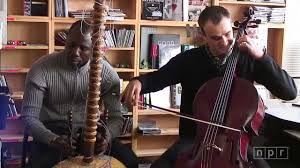
moomin 1sissokoBack in April 2010, another kora player with the same last name (Yacouba Sissoko) played a Tiny Desk Concert with Regina Carter.  Sissoko plays the kora and he is mesmerizing to watch (and to listen to).  Vincent Segal plays the cello and he does things with that instrument which I’ve never seen anybody do before.  It’s a great duo.

Together, the play some beautiful music.  On the first song, “Chamber Music,” Sissoko provides both the lovely backing music as well as some fast plucking.  And Segal keeps up and often outplays his partner.

For the second song, “Balazando,” Segal plays the cello like an upright bass and even plays a little bass solo (including some harmonics).  Then when Sissoko starts playing Segal, plays such high notes that it sounds almost like a flute and even has a Chinese feel to it.

Before the third song starts watch as Sissoko tunes the kora (by twist ting the ropes that hold the strings in place).  “Niandou” opens with Sissoko playing a fast melody (with an up close camera to really show his fingers).  Then Segal play a lovely riff of high notes on the cello.  The song ends with a very fast section–some quick bass playing on the cello followed by some very fast bowing before returning to the slow opening.

The fourth song features some cool harmonic bowing, the likes of which I’ve never seen on a cello before.  The end of the song sees Segal strumming the bowl like a guitar–he can do it all.

Together, they make some beautiful music.

[READ: January 5, 2015] Moomin Volume 1

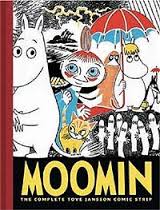
Inspired by reading the D&Q 25th anniversary book, I decided to check out the books that have been sitting in the children’s section of my library every time I go–Moomin!  They are oversized and lovely books and since I’ve paused on Peanuts I thought I’d read some Moomin–which I have never read before.

It was fascinating to read in the D&Q 25th Anniversary book that Moomin started because Jansson tried to draw the ugliest creature she could think of.  And it eventually morphed into the adorable round creature that we know as Moomin.

This book contains four stories.  I feel like the strips are printed like an every day four panel strip.  Each four panel strip is signed and numbered (but not dated) and most of them (but not all) read like they have a punchline at the end.  So I’m not entirely sure what to make of the publishing run.  Although the front pages state that it originally ran in the Evening News, London 1953-1959.

The four stories are Moomin and the Brigands, Moomin and Family Life, Mooim on the Rivera and Moomin’s Desert Island. (more…)

Read Full Post »

1969  SOUNDTRACK: ABIGAIL WASHBURN-Tiny Desk Concert #101 (January 3, 2011).

abigailAbigail Washburn had plans to study law at Beijing University in China.   Before she left, she bought a banjo—she wanted to take something to China that was American.  Then Washburn went on a road trip to study the banjo and to learn some tunes. She found her way to the Augusta Heritage Center in West Virginia, then to North Carolina and then Kentucky to the International Bluegrass Association. It was there that she sat down with a few women to play music, and right then and there was offered a record deal. She blew off China ans has made a career as a banjo player–typical story.

In the ten years since then, she has been to China (with her banjo) where she learned Chinese folk music.  She now mixes American bluegrass and folk with Chinese folk music.  For this Tiny Desk, she plays three songs with her band Rob Hecht on fiddle, Jared Engel on bass, Jamie Dick on drums and Kai Welch on keyboards and trumpet.  She uses two different banjos, a normal sized one and, om the final track, a great big-bottomed one.

The first song “City of Refuge” she says is done in hop high tuning (in case you were interested).  It’s fun seeing how fast her right hand is moving while her left hand is fairly still and her vocals are fairly slow.

“Taiyang Chulai” is a traditional Chinese song meaning “The Sun Has Come Out and We Are So Happy.”  She sings in Chinese (and plays no banjo).  Her Chinese sounds amazing (and it’s really funny to see her speaking/singing it).  She says that taught American folk music in China and learned that she needed to do arm gestures since all Chinese folk songs have accompanying arm movements.  She also wore armbands which her grandma made for her.

“Bring Me My Queen” is the final song.  I found it interesting that her songs are rather slower than the Chinese song, at least in tempo.  This song is even slow for a banjo song.  But it’s quite beautiful.  In addition to being a great banjo player, Washburn has a lovely voice, too.

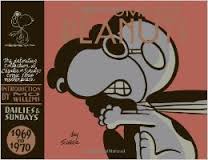
[READ: December 8, 2015] The Complete Peanuts 1969-1970

I was excited to get to this book to see which strip was published on my birthday (it’s sort of like seeing the headlines from the New York Times on your birthday).

Well, sadly, my strip was kind of boring–part of an annual be kind to animals or national dog week or something like that.  Nothing life-changing or earth-shattering.   Good grief.

I also decided that I’m taking a break from Peanuts for a time.  I have really enjoyed what I’ve read, but I need a breather.  I have read twenty some years of the strips over the last few months and, even if Schulz never rested, he didn’t condense twenty years into a few months either.  So sometime later in 2016 I’ll resume the books.

This book is notable for revealing Woodstock’s name!  I feel like that was the last big revelation that we’ll see for a while.  I am curious to see if the 70s added any new characters. (Well, there is Marcie.  I wonder when she comes along).

1969 starts out with Lucy saying that this is her year, “it’s all mine.”  Although a few days later she asks for a refund.  Lucy finally gets fed up with Schroeder and not only kicks his piano but throws it into the kite eating tree.  In March of 1970, Lucy says “I’m a new feminist.”

There’s a lot of Lucy/Snoopy rivalries.  In May 1969 we see the first an only reference so far to tether ball–Lucy is great at it (until Snoopy beats her).  There has been a somewhat recurring joke about Lucy beeping Snoopy on the nose (which he hates).  She does it in April and says it has been 384 days since she did it last (I wonder if anyone confirmed that).  In June, Charlie and his family go on vacation and Lucy is in charge of Snoopy (and she is particularly harsh).

Los of things happen to Snoopy this year.  As is per usual, Snoopy is skating in the winter time.  He is planning to win trophies (skating with Peppermint Patty–although she has to break the news that she is not interested).  He is also in preparation (in March 1969) to be the first beagle on the moon (wearing an astronaut helmet).  Surprisingly, there is no acknowledgement when the first man does land on the moon.

In April 1969, Snoopy goes on a two-week journey looking for his mom (but doesn’t find her).  In July of 1969 Snoopy takes up roller derby (for a very brief time).  In September of 1969 Snoopy finishes his first novel and submits it for publication. But he is rejected!  In Sept 1969 there are a lot of football jokes involving Snoopy and the little bird (the bird being too small to move a football of course).  March 1970 shows the return of the Easter beagle.

1969 sees a lot of talk of “Head Beagle.”  First Frieda reports Snoopy to the Head Beagle for not chasing rabbits.  Later Snoopy is appointed Head Beagle but can’t handle the workload.

In the summer of 1970, Snoopy goes to give a speech at the Daisy Hill puppy farm and a riot breaks out with tear gas!  And in September 1970 Snoopy wears a cooper bracelet to cure his arthritis.

In July 1970 Snoopy reveals a good truism “If you think about something at three o clock in the morning and then again at noon the next day you get different answers.”  Also in July is the first mention of “The Six Bunny-wunnies” fictional series of books.

For a few weeks in August of 1970 Snoopy pretends to be a grocery clerk (butter 28¢, bread 39¢, eggs 59¢, tea 79¢).

Lots of things seem to happen on the baseball field this year.

And in April 1969 Charlie Brown’s team wins two games in a row–neither team could make it so they both forfeit (Franklin is on one of those teams).  Later in June of 1969 Snoopy wins the Rookie of the year award for the baseball team.

In March of 1969 Linus make a sports drink which “replaces the body stores and prevents and diminution of vitally needed electrolytes and nutrients.”  (Gatorade was invented in 1965 and became popular with athletes in 1967).

Some great moments in this book:

In May of 1969 (on the baseball mound, of course) the team is talking about the costs of college “it can cost almost sixteen thousand dollars to go to college.”  The joke comes that Charlie is hoping for a baseball scholarship and every one busts out laughing.

In May of 1969 the school nurse is going to weigh them and Linus says he’s going to as about his hurting shoulder, “never pass up a chance to get a little free medical advice.”

In August, Linus’ gramma says she’ll donate $10 to his favorite charity, “ten dollars is a lot of money.”  (He ultimately decides not to accept).

In July of 1969 the little red-haired girl moves from Charlie’s street!  And Charlie never says anything to her.  Later in December 1969 Linus Charlie and Snoopy go skiing (on a school ski trip).   Charlie sees the little red-haired girl and falls off the ski lift.

Charlie makes a funny joke when he offers to shovel Lucy’s snow.  He asks for a quarter and she says “What if it snows tomorrow and covers up our walk again.  Do we get our quarter back?”  He replies, “No by then I will have spent it on riotous living.”

Peppermint Patty gets a lot of strips in these two years.  In Nov 1969 she talks about school: “I signed up for Folk Guitar, computer programming, stained glass art, shoemaking and a natural foods workshop.  I got spelling, history, arithmetic and two study periods.  I learned that what you sign up for and what you get are two different things.”  (I would TOTALLY sign up for those classes too).

She returns a lot in 1970–she’s a great character allowing Schulz to explore all different kinds of kids and ideas.  In the beginning of 1970 she is called to the principals’ office because she’s not allowed to wear sandals to school any more.  She cries and calls Charlie Brown for advice.  It takes Snoopy to kiss away her tear to snap her out of it.  The strip series ends with Franklin saying, “All I know is any rule that makes a little girl cry has to be a bad rule.”

Patty also says that she got an F on a test because she has a big nose–if a teacher doesn’t like your looks there’s nothing you can do.  Franklin looks at the paper and says “you turned in a blank test paper.”  She sighs, “there’s nothing you can do.”

In December 1970 Peppermint Patty invites Snoopy to a “turn about dance” (where the girls ask the boys).  They have a good time until a boy asks who her weird-looking friend is.  She punches him out and feels guilty about it until Snoopy says he had a great time and he’s the one who bit the chaperone.  Their friendship is great.

In Sept 1970 Patty has a crisis–thinking she’s not beautiful  (then Snoopy gives her a kiss).  The following week her dad gives her a dozen roses and says that the boys will be calling on her when she grows up and he wants to be the fist one in her life to give her a dozen roses.  It brought tears to my eyes.

In June of 1970, Peppermint Patty asks to borrow Charlie Brown’s glove for a kid on her team named “Thibault.”  Which leads to Charlie asking “Thibault?” at least twice.  Then Thibault (who has sideburns), refuses to give the glove back.  But Charlie Brown is happy by this because Thibault accuses him of “thinking you’re better than us.” And Charlie gleefully says “Me?  Better than someone else?”

1969 ends for Charlie when he buys a ticket to a sports awards dinner.  He gets a seat right next to Joe Shlabotnik…who never shows up.

This strip really sums up why Charlie Brown is so likable.  On October 26 in which Linus describes an amazing football game in which a team makes an amazing come from behind victory with seconds left in the game .  He describes the great plays and then Charlie’s response is “How did the other team feel?”

Sally is starting to become a more fully developed character–opinionated but often horribly wrong.  In May of 1970 she buys a fish tank saying “This is the age of aquariums.”  And she has no tolerance for school.  In Sept 1970 she asks why they have to learn all of these things in school.  Why does she have to learn the names of rivers?  “I’ve never even seen a river!  They could at least take me to see a river.”  Later she writes a theme for school, “If I had a pony:”  “If I had a pony I’d saddle up and ride so far from this school it would make your head swim.”  Then she crumples it up and says “That’ a good way to get a D-minus.”  In Nov she shows the class a document that is written by “an actual caveman.”  The punch line: “Show and Lie is my best subject.”

The best Great pumpkin joke comes in Oct 1970 when Lucy says “Santa Claus has elves to help him…what does the great pumpkin have, oranges?”

There are a couple of topical jokes.  In July 1970, when it rains during a game Lucy starts singing “Raindrops Keep Falling on My Head” (which was a hit in early 1970).  And in December 1970, the kids use a Ouija board which had been released as a game earlier that year.

And then on June 22, 1970 the little bird reveals his name to be Woodstock!  (strangely it was a year after the concert).  With a name he acts no differently.  In Nov 1970 Woodstock tries to fly south but gets lost.  So Snoopy walks with him.  After a week they get grabbed by a girl who say “Ma, I found a stray dog!”  Then Snoopy is tied up for a few days while Woodstock tries to rescue him.

The year ends with Sally doubting whether you really have to be good for Santa to bring you presents “the old rascal is bluffing…I know that [he] will bring me presents whether I am good or not.”  Then on Christmas Day, ”I was right!”

This was a great book, with some excellent strips and character developments.

Mo Willems, beloved children’s author, wrote the foreword.  Mo says he started his career by selling black market drawings of Snoopy and Charlie Brown in second grade.  He learned that even bullies liked Charlie Brown.  He says he could utterly relate to Charlie’s world, “For me, an immigrants kid, recently plopped into the middle of a small school in the insular world of uptown New Orleans, Charlie Brown was the only one who understood how confused and unhappy I felt.”

He says he aspired to Linus-ness: to be wise and kind and highly skilled at making gigantic structures of playing cards.  But he knew he was always a Charlie brown.  “Sometimes when I am in a deep funk and feel like my life if is an uphill battle…I try to stop and imagine someone reading the comic strip of my frustrated life and laughing.”

All of his characters are an homage to Schulz in some way.  And the greatest lesson her learned from Schulz, is “never let the characters know they are funny.”

He concludes by saying that Peanuts isn’t Art… it’s better.  He toured the Charles M. Schulz Museum and Research Center and held an original comic but he found it anti-climatic.  They were too precious to be enjoyed…they became Art.  The magic that you get from having them in a book or newspaper was missing.

Read Full Post »

1967 SOUNDTRACK: JULIAN LAGE TRIO-Tiny Desk Concert #140 (July 7, 2011).

lageJulian Lage is a jazz guitar prodigy.  he normally plays with a quintet but for this set he brought only a trio which includes bassist Jorge Roeder and percussionist Tupac Mantilla.

This was my first exposure to Lage and he does some really impressive lines and riffs.  He plays a hollow-bodied electric guitar that sounds an awful lot like an acoustic guitar. He does some phrasings that are really pretty or really interesting

But I was more impressed with Mantilla on percussion.  He uses thick brushes, he uses his hands on bongos and cymbals.  He uses his hands on his body–playing his lap and chest).  He even uses little dusts brooms (which must be unwieldy).  He’s also got some kind of drum (perhaps a loose snare?) with a great sound and even a bell.

They play three songs.  “Welcoming Committee” is a new song not recorded as of then.  At the end of the song, they all laugh as an office phone rings the end.  Julian is a sweet funny guy with some interesting stories about his songs.

“However” is an upbeat bouncy song (with some less noodling).  Interestingly, it was written by their saxophonist who is not playing in the trio today.

Before introducing the final song “Untitled (No. 24)” he says he started a blog for inspiration–to get people to bounce ideas off each other–healthy peer pressure with incentives for song writers.  The most recent one was a song a day for 30 days.  This was number 24.  (Hhe jokes that the first 23 sucked).  It’s a really fun piece that doesn’t feel incomplete at all.

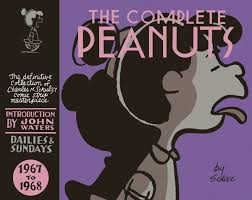
[READ: December 8, 2015] The Complete Peanuts 1967-1968

It’s 1967 and Schulz has had huge success with Snoopy’s Red Baron plots.  In December 1966 The Royal Guardsmen made a song called “Snoopy Vs the Red Baron” which made it to number 2 on the charts.  So The Red Baron plot takes over a lot of this year.  And while I enjoy seeing him like that and I get how it’s funny, I don’t really like it all that much–the jokes are too samey for me.  But despite all of the Red Baron excitement there are other things going on this year too.  Like the introduction of the Easter Beagle.  And of Franklin!

The kids get involved in many different sports this year.  In Feb 1967 Lucy begins arm wrestling (and beating) everyone.  She even takes on the Masked Marvel (Snoopy).  In Oct 1967 Snoopy plays hockey for the first time (I think).  He references Bobby Hull).  Later in Jan 1968 all the kids play hockey together.  Lucy beats everyone up and say how much she likes the game.  And at one point Snoopy smiles and is missing teeth.  In Oct 1968 Snoopy shoots and scores (on his doghouse) and says “they’re not sleeping well in Montreal tonight.”

In December 1967 Snoopy considers going to the Olympics in France for his ice skating.  He says he misses skating with Sonja Henie).  In April 1968 Snoopy is going to the Masters in Augusta.  When that doesn’t work out (we never see him there), later in April Snoopy is a wrist wrestler who is going to go to Petaluma for the world competition.  (There are many jokes about Petaluma).  Snoopy is disqualified because he has no thumbs.

In August 1968 Snoopy says “jogging is my thing.”  And in Nov 1968 we learn that Snoopy has a pool table but that Minnesota Fats won’t play him.

And of course there is baseball.

Peppermint Patty comes back in March 1967 to play against Charlie’s team.  She has a new player, Jose Peterson, who doesn’t really hang out in the strip for very long, but who is an awesome slugger.  In November of 1967, there’s a reference to the lousy New York Mets.  I didn’t realize it but at the time of this strip, the New York Mets were a recent expansion club with a terrible record.

In summer of 1967 Charlie and snoopy return to camp and they see Peppermint Patty is there.  Patty strikes out Charlie a whole bunch and says she considered letting him hit one but he wouldn’t want that, right?

In march of 1968 snoopy takes over as manager and is really mean.

And of course, Snoopy has a lot going on too.  We learn that August 10 is Snoopy’s birthday.  He also says a lot of things are gauche.

In a very funny skit, in May 1968 Snoopy watches a bird chomp a worm and then says “I’m going to be very very very very very very very very sick.”

June 1968 introduces Lila again, and how Snoopy pines for her.  Then in August she writes to Snoopy again.  And finally on Aug 24 we meet Lila for the first time.  Lila is a girl in the hospital.  But it’s not until the end of the month that we learn that Lila was Snoopy’s previous owner who lived in an apartment and had to get rid of him.  AND THAT’S ALL THAT’S SAID ABOUT IT!

On a lighter note, in March Snoopy pretends to be a piranha for a few strips.  In April 1967 there’s some Cheshire cat jokes from snoopy (who is only a smile)  April 1968 sees the first mention of the Easter Beagle (Lucy doesn’t believe Linus who is the only one to see him).

Linus and Lucy pop up a lot of course.  They revisit a lot of the same ideas with variations.  In August Linus’ grandma agrees to give up smoking to get Linus to give up his blanket.  He thinks she’ll never do it, but he goes through the real withdrawal.

In Dec 1967 Lucy ups her psychiatrist booth’s price to 7 cents (winter rates).  And then as the book ends in Dec 1968, Linus is taking shorthand notes for her.

Father’s Day this year had Peppermint Patty writing a card.  She says that her dad calls her a “rare gem,”  This phrase is used as a joke in the strip and then a few more times.

It seems like summer is a good time for new things as well.  There are two weeks of strips starring Peppermint Patty at camp!  She is a counselor of littler kids.  There is a little girl who looks like Marcie but isn’t (her name is Clara).  And then later that week another little girl, Sophie, calls her “Sir.”

And then July 31, 1968 introduces Franklin!  He and Charlie play at the beach for a few days.

Religion pops up from time in the strips, especially with quotes from the Bible.  But in March 1967, Violet asks Charlie if they go to church.  He says yes, but she says her family “used to…now they belong to a coffee house.”  And in April Schulz revisits the “here’s the church gag.”

[From the Peanuts wikia] On February 8, 1963, Sally watches while her big brother uses his hands to illustrate that old rhyme: “Here’s the church…here’s the steeple…open the door…and see all the people!” After carefully examining his closed fingers, she announces, “It looks like a rather small congregation!” Four years later, on April 8, 1967, Sally watches as Linus delivers the same rhyme…and then she provides an almost exact response: “Sort of a small congregation.”

Most of the strips are totally timeless, with me even thinking that I read some of them when I was much older than I did.  I can’t say as I remember a lot of specific strips, but I always remember the one from Dec 5, 1968 (which is from before I was born, so I obviously read it in a collection).  Peppermint Patty says that it snowed last night Her dad says that “when it snows you should always take a slice of bread out for the birds.”  She places a whole slice on the bird’s head.

I think the timelessness of the strips are what make reading these volumes so much fun.

In May 1967, Charlie asks Linus if he wants to be the first man on the moon.

In July 1967, the bird (unnamed yet) has “long hair” and Snoopy calls him a bird hippie.

Charlie writes to his pencil pal in Nov 1967 and says, “According to what I read, your country hates my country and my country hates your country.  I don’t hate you, and I don’t think you hate me.  I think about this a lot.  It makes sleeping at nigh very difficult.”

In Jan 1968, the girls are going to have a “crab-in.”

Dec 18 1968 Snoopy has a sled and Charlie looks at it and says “Rosebud?”

In June 1968, Snoopy says he thinks he is in love with Twiggy.

In August, Snoopy says that you never hear anyone sing “Chloe” anymore (although which song that is, I’m not sure.  Perhaps the Al Jolson one).

In Nov, Snoopy says he is feeling groovy (the Simon and Garfunkel song came out in 1966).

There are references to the election year with the birds holding ups signs that say ? and !!  Snoopy say he’ll vote for the one with the paw print on it.

My two favorite jokes in the book have to do with math.

Sally is trying to learn her times table and guesses answers like “Four-thousand six? elventy-twelve? fifty quillion? overly-eight?  twiddelty-two?”  Then she  asks “Am I getting close?” And Charlie responds, “Actually it’s kind of hard to say.”

In Dec 1968, Peppermint Patty says she loves numbers.  “Twos are sort of gentle, threes and fives are mean, a four is always pleasant.  I like sevens and eights too, too but nines always scare me.  Tens are great.”  When a classmate asks if she has prepared her division homework, she says “Nothing spoils number faster than a lot of arithmetic.”

~~~~

In my edition the May 1 strip is repeated instead of the May 3rd strip! (The missing strip will apparently be printed at the end of the next book).

John Waters give the best foreword yet.  He actually references strips in this book!

He says he became obsessed with peanuts when he had mono in 6th grade.  He loves the depression paranoia and delusions.   But John was all about Lucy.  He loves her politics, her manners “Get out of my way!” her narcissism and her rants.   He says he has a niece named Lucy and Schulz got the expression perfect when she yells “No” on page 61.

He also says that for the most part the strips don’ age at all (with a few exceptions).  He talks about Lucy shouting “police brutality” at Charlie as a crossing guard!  He also says that Schulz was criticized for including the minority characters (which is shocking).  Waters is also fascinated by characters like Roy who are rarely if ever heard.

Pig-Pen was an inspiration for Dingy Dave in A Dirty Shame; Divine cutting up her daughter’s jump rope in Female Trouble is inspired from a Peanuts strip.

He sums up with the attitude that Peanuts presents:

You are dealt a hand.  Deal with it.  But most importantly he teaches all ages that if you can learn to laugh at the things that cause you the most pain, you will be the strongest of all.

Read Full Post »

« Newer Posts - Older Posts »