Feeds:
Posts
Comments

Archive for the ‘Animals’ Category

walrusaprilSOUNDTRACK: GODSPEED YOU! BLACK EMPEROR-Allelujah! Don’t Bend! Ascend! [CST081] (2012).

330px-Godspeed_You!_Black_Emperor_-_Allelujah!_Don't_Bend!_Ascend!After ten years, GY!BE came back with a new album.  It fits on one CD, but, just to be different, the band released the vinyl as one 12″ and one 7″ record.  The 12″ contains the two longer songs and the 7″ contains the two shorter ones.

“Mladic” (20 minutes) opens with sampled voices: “with his arms outstretched.”  Then comes a hurdy-gurdy and violins and droning sounds with incidental guitar notes.  This goes on for about 4 minutes before the drums and ringing chords slowly enter the song.  By about 6 and a half minutes, a buzzy guitar starts playing a feedback-squalling riff, while a second guitar follows along (in the other ear).  And by 7 and a half minutes, the drums begin and the song really takes off.  At around 9 minutes a new riff begins, slightly Middle Eastern sounding.  The whole band joins in, including some fierce drumming and the song gets bigger and bigger.  Then around 11 minutes, everything drops off except for bass and drums.  And that’s when the noisy chaotic guitar solos begin.  Things slow down, but don’t great less intense.   And then at 14 and a half minutes, everything pretty much drops out save a cello and feedback.  But that’s only a precursor to the big riff that follows.  Things slow down one more time, although it’s more of a quiet rumble with the drums going throughout.  And then they launch into the final cascade of music, saving the last 2 minutes for echoes, feedback and a rackety percussion section.  It’ fantastic.

“We Drift Like Worried Fire” (20 minutes) opens slowly with pizzicato violin notes and other sounds in the background.  A guitar riff starts at around 3 minutes which leads the song in a very different direction.  A slow violin plays over the top of the guitar riff.  The violin and drums grow more complex and at 6 minutes, the ringing guitar overtakes the rest of the music.  At around 8 minutes a series of ringing guitar “solos” enter the song. Combined with the percussive noise and the bass, it’s surprisingly catchy.  When everything drops out and there’s simply a violin playing, it seems like the song will end, but no.  Guitars play around the violin and then at 12 minutes, a new section develops around a two-note motif and complex percussion.  I love the ominous direction the song takes those two notes, and when the steady beat kicks in at 15 minutes, it makes the whole thing that much more intense.  It resolves itself into a wonderfully catchy melody.  At 17 minutes everything drops away except for a ringing guitar and strings. It seems like it might be an ending coda, but soon enough the drums come back and the song picks up again heading towards a proper climax, complete with crazed drumming that takes us until nearly the end of the song.  Another really satisfying conclusion.

The two shorter pieces are on the 7″ disc.  “Their Helicopters’ Sing” begins with a droning sound in the background.  And nearly all of its 6 minutes sound like screechy violins trying to break through the rumbling drone.  It more or less resolves itself by the end of the song into something a bit more tuneful.

“Strung Like Lights at Thee Printemps Erable” is the final 6 minute song.  Like “Helicopters” it is primarily a drone song.  This one is a little prettier at the beginning, with some delicate notes punctuating the noise, but it’s the screeching violin and feedbacking guitar that really create the noise.  By four and a half minutes that all drops away into a gentle, but still disconcerting, drone.

I don’t really love the droney stuff compared to the longer songs.  I find the two long songs to be some of their best work.  Perhaps if the droney parts were actually a part of the whole piece they would work better.

  • Thierry Amar – bass guitar, double bass, cello
  • David Bryant – electric guitar, dulcimer, Portasound, kemençe
  • Bruce Cawdron – drums, vibraphone, marimba, glockenspiel
  • Aidan Girt – drums
  • Karl Lemieux – 16mm frames artwork, photography [new]
  • Efrim Menuck – guitar, hurdy-gurdy
  • Mauro Pezzente – bass guitar
  • Mike Moya – guitar [replaced Roger Tellier-Craig]
  • Mauro Pezzente – bass guitar [new]
  • Sophie Trudeau – violin, Casio SK-5
  • [exit Norsola Johnson – cello]


[READ: April 10, 2016] “Hackles”

This issue of The Walrus was pretty bleak and this story is similarly bleak (what’s going on in Canada?).

The story is about a woman (told in first person) and her reflections back on a summer when she was fifteen, living in Enniskillen.  Her memories revolve around two dogs: Mort and Julie.  When she first encountered them they were guarding a farm house.  They saw her and snarled and growled at her causing her to trip and fall, but they would not cross their property line.  She says the thing that amazed her was their self-restraint–they never put one paw onto the road.

She began stopping by, looking at the dogs, for six or seven visits when the farmer’s son happened by.  He had come to tell the dogs to stop barking and then her saw her. (more…)

Read Full Post »

janfeb2016SOUNDTRACK: GODSPEED YOU BLACK EMPEROR!-“lift yr. skinny fists like antennas to heaven!” [CST012] (2000).

330px-LiftyrskinnyfistsSo far GYBE had released an album and an EP, so why not follow up with a double album/double CD.  This collection has either 4 songs with multiple parts or many many songs.  (The CD release suggests 4 songs–two per disc each over 20 minutes).

Although on the accompanying sheet, there’s a diagram in which Efrim has mapped out each of the four tracks and indicated where each part (with its own title) begins.

The first song “Storm” opens slowly.  Part one “Lift Yr. Skinny Fists, Like Antennas to Heaven…” has strings and simple, quiet guitar riff which build for about three minutes.  Then the guitars kick in and the song soars to majestic heights.  The guitar riff continues through this section and then horns add to the music to make it feel even bigger.  It’s an amazing start to a disc.

“Gathering Storm/Il Pleut à Mourir [+Clatters Like Worry]” slows things down as the last cymbal crashes fade and a violin remains the sole sound.  Then a new guitar riff begins, slow and sweet, once again with a kind of nod to “Amazing Grace” in the melody. Then the strings swell and take over.  When the bass line begins, it heralds the arrival of the drums and the song rocks along.  After a few minutes, the strings bring in the real tension of the storm.  The drums really come to the fore with lots of pounding and cymbal crashes.  The intensity begins to slow down until it thuds to silence.

     “‘Welcome to Barco AM/PM…’ [ L.A.X.; 5/14/00]”  opens with a staticky voice welcoming you to Barco and then lets you know not to associate with people washing windows or soliciting.  This track is about a minute before the piano begins indicating the start of the final part “Cancer Towers on Holy Road Hi-Way.”  Behind the piano are simple mournful chords, although the staticky voices continue until the end of the song.

Track two “Static” opens with “Terrible Canyons of Static.”  There are truck horns and train noises followed by ominous chords.   The noise and static continues through “Atomic Clock,” and the recording “at the tone 3 hours, 21 minutes according to universal time.”  This merges into “Chart #3” which contains a clear speaking preacher (who says ‘penetrate’ a lot) with a very sad violin melody.  A guitar starts playing a different melody which indicates the beginning of “World Police and Friendly Fire.”  A bass line takes over and is accompanied by a violin and guitar.  There’s tension in the music as it builds and builds.  But the drum beat means the start of a new violin melody complete with glockenspiel.  This staccato rhythms keep up for a time until it is replaced by a loud feedbacking guitar solo.  It’s followed by a fairly conventional section of drums and bass complimented with strings.  This section feels like it is building to something and it all coalesces in the cathartic crashing of the start of “[…+The Buildings They Are Sleeping Now]” (this particular release is outstanding as they really drag out the climax).  The riff for this is fast and heavy with more screaming guitar.  It only lasts for a minute or so, but it’s fantastic.  The rest of this section is primarily feedback and silence.  There’s some percussive sounds and moments of louder noises, but at over 5 minutes this section is a little too long.

Disc Two, track 3 “Sleep” has only three parts.  “Murray Ostril: ‘…They Don’t Sleep Anymore on the Beach…'” is a one-minute opening with a man (Murray?) talking about how Coney Island used to be so amazing.  “Monheim”  opens with some slow guitar and mournful strings playing over the top.  When the violin fades, a new guitar melody, more upbeat, begins.   The song stays pretty quiet until about 7 minutes in when the drums enter and an interesting guitar section continues to build in waves, but stays fairly mellow and upbeat.  Around 8 minutes the same motif grows to supersize.  And the wavery guitar? violin? that runs through this whole section grows louder and louder as the music swells and swells until a martial beat takes over and the melody is repeated (albeit much faster) which acts as an unexpected and satisfying conclusion to all that tension.  This section starts to deconstruct, leaving only a siren like guitar and lots of static which indicates the beginning of the third part, “Broken Windows, Locks of Love Pt. III.”   Out of the noise comes a simple two note pattern.  The song grows more complex with as the rhythm is kept by a single chime.  When the drums kick in (all of a sudden) the song gains momentum.  And the cool bass line that propels the rest oft he song (complete with horns) is great.  At about 18 minutes the song quiets down with just the guitar and drums keeping things afloat for a bit until it settles down into a very pretty string melody.  Soon enough, the rest of the band kicks in and the song starts to build again.  But rather than reaching a huge crescendo, it begins to fade out, leaving just a hi-hat and some feedback to fill out the last minute.

“Antennas to Heaven” is the shortest piece at only 18 minutes.  It opens with “Moya Sings ‘Baby-O’…” which is (I assume) Mike Moya (who is not credited on the record, I don’t think) singing “Baby-O” and playing the acoustic guitar.  As that fades, waves of noise swell as the 58 seconds of “Edgyswingsetacid” rumbles through.  It is then replaced by the 47 seconds of “[Glockenspiel Duet Recorded on a Campsite In Rhinebeck, N.Y.]” which sounds otherworldly.  The final short section is “‘Attention…Mon Ami…Fa-Lala-Lala-La-La…’ [55-St. Laurent]”  which is one minute long and consists primarily of children chatting ion French.

The main body of this track is the nearly ten minute “She Dreamt She Was a Bulldozer, She Dreamt She Was Alone in an Empty Field.”  It begins with gentle waves of music pulsing in and out.  After about 90 seconds of this, the song bursts into a rocking section–drums and electric guitar playing a propulsive beat.  This doesn’t last long though as the sound of wind howling takes over the song and an ominous almost metallic ticking sound rings out.  This resolves into a two note motif with strings.  It turns onto more of a song proper with all of the instruments supporting a pretty guitar solo.  As the song fades to just violins, “Deathkamp Drone” picks up with various unsettling washes of sounds.  The final section “[Antennas to Heaven…]”  is a strange screechy-sounding guitar solo that echoes through to the end.

This disc is very big and very long, but aside from a few moments where the noise or drones lingers a bit too long, there’s just so much going on that the music never gets dull.  It’s quite an achievement.

Godspeed You Black Emperor has had a few lineup changes over the years.  For this double LP, they added a new guitarist (and a lot of supporting musicians), they changed violinists and lost the french horn. 

  • Thierry Amar – bass guitar
  • David Bryant – electric guitar
  • Bruce Cawdron – drums
  • Aidan Girt – drums
  • Norsola Johnson – cello
  • Efrim Menuck – guitar
  • Mauro Pezzente – bass guitar
  • Roger Tellier-Craig – guitar [replaced Mike Moya]
  • Sophie Trudeau – violin

[READ: January 26, 2016] “The Shomer and the Boreal Owl”

I find that Stephen Marche likes to really push boundaries.  And I find that some of his stories I like and others I simply do not.

And this one I did not.

The whole premise is weirdly unsettling.  Ephraim wakes up one day and finds that he gets really turned on by wild animals. He gets an erection when he sees a deer running through the woods.  What the fuck?

We meet this man who has had many troubled events in his life–the death of his daughter, his divorce soon after, the loss of his job and livelihood.  And now this. (more…)

Read Full Post »

silentSOUNDTRACK: HOSPITAL SHIPS-Tiny Desk Concert #177 (November 23, 2011).

hospital shipsHospital Ships is a band created by Jordan Geiger, who was in the band Shearwater, among others. In 2011 he released his second album as Hospital Ships.  The blurb describes the album as “packed with poppy folk songs and brash rockers enhanced with instrumental flourishes and bursts of guitar feedback,” but for this recording, they strip everything down to the basics: a guitar, banjo, ukulele and a drum with a towel over it to muffle the sound.

Geiger has a rather high-pitched, delicate, almost talking-singing voice and his songs are rather pretty.  The band plays 3 songs in just over ten minutes.  The first one, “Phantom Limb,” (once my lover, now my friend, you are my phantom limb) has a recurring motif of them saying/singing “ha ha” which is rather catchy.

“Carry On,” features a four-letter word (technically a seven letter word), which might be one of the first times on a Tiny Desk Concert that such a word is uttered.  It’s especially funny given how sweet the band sounds.  The sentiment of the song is nice though: “To all the women I’ve loved, When I was with you I would say I was better off….  And when I’m gone, carry on, carry on.”  There were harmonies in the first song, but they are more prominent in this one (three part) and are quite nice.  The banjo player also does a whistling solo.

“Let Me In” made me laugh because he uses the word baby a lot (which Ben Folds said in his Tiny Desk that he has never said in real life, so why would he put in it a song?).  But this song is very gentle and sweet–just Geiger on his guitar singing “baby, let me in.”

Geiger’s voice reminds me of a few different people–Ben Gibbard from Death Cab for Cutie especially on the final track; perhaps the Mountain Goats or the Weakerthans.  And his songwriting is very good.

[READ: December 26, 2015] Silent But Deadly

I really enjoyed the first Liō collection, and was pretty excited that I could find the second collection so quickly (my library doesn’t have any more collections for some reason, so I’ll have to track the rest down elsewhere).  This book collects the strips from February 25, 2007 – December 2, 2007.

Not much has changed from that book to this one, but I think Tatulli’s comic chops have gotten even better.

The strip won me over immediately with the first one in the book. Lio draws a monster and it comes to life.  He looks at the marker and it says “magic marker” and he gets a big grin and goes back to work.  So simple yet so funny.

It is that big grin–wide open-mouthed just unfettered mischievous delight that occurs in nearly every strip. (more…)

Read Full Post »

lio1 SOUNDTRACK: JOE HENRY-Tiny Desk Concert #176 (November 21, 2011).

joe henryI had never heard of Joe Henry, so imagine my surprise to find out that he was releasing his 12th album in 2011.  For this Tiny Desk, it’s just him at a stool playing his guitar.  He has a very easy vibe, telling stories between songs and playing them with very little fuss.

He opens the show by saying this is, “not exactly like Woody Guthrie playing for the union members but you are working people.”

He plays four songs, “Sticks and Stones,” After the War,” “Odetta” and “Piano Furnace.”

Between the first two songs, he says he first became aware of Tiny Desk Concerts when his friend Vic Chesnutt was on the show (amusingly, he was the second person on the show).  He says he has a song on his new record about Chesnutt (Chesnutt had recently died).  He doesn’t play it though.  At first it seems like he might not be allowed to play it, but then it seems like maybe he just doesn’t get to it.

Rather he plays “After the War” where his guitar sounds like it has an incredible echo on it.  That echo is also present on the third song.  After which Bob asks him about his guitar.

Joe says he’s had the guitar for 6 years.  But the guitar dates back to 1932.  He says that he heard things differently with this guitar.  It’s got a smaller body and was actually sold as a budget guitar by Gibson (for $19 in 1932).  He also jokes that it’s black and looks a bit like a World Wrestling Federation belt.

Then someone asks him about Sam Phillips.  Joe says he sold her husband a guitar about 20 years ago.  She and her husband have split and Sam got the guitar and has been playing only that guitar for the last 20 years.  He says that he loves that she doesn’t plug in her guitar.  She plays into a microphone where you can hear the whole guitar and which makes the other players lean in to hear her.

I love the chords he plays in the final song, “Piano Furnace,” even if I don’t know what the song is about.  Henry’s voice is familiar.  I think he sounds a bit like a number of different singers.  And overall, nothing really stands out in his performance, except that everything sounds great and hiss songwriting is really solid.  That’s not a bad thing.

[READ: December 20, 2015] Happiness is a Squishy Cephalopod

Mark Tatulli is the author of the Desmond books.  I liked the stories, but I didn’t love the drawing style so much.  Imagine my surprise to find out that Tatulli has been drawing comics featuring this little boy Liō since 2006 (going forward, I’m leaving off that line over the o, because it’s a real pain).

And even more surprising is that I like the drawing style in the comic quite a bit–it is slightly refined over the Desmond books and is all the better for it.

I am also really surprised to find out that this strip appeared in newspapers across the country.  I’ve certainly never heard of it (but then I don’t read newspapers anymore, either).

So Lio is strip about a boy named Lio.  Lio is a dark, dark kid.  He has a pet squid, he loves monsters and he’s delighted by chaos. (more…)

Read Full Post »

nessSOUNDTRACK: BEN WILLIAMS & SOUND EFFECT-Tiny Desk Concert #170 (October 24, 2011).

ben williasmBen Williams is a jazz upright bass player (I didn’t realize bass players made band leaders, but clearly they do).  In 2009, he won the Thelonious Monk Jazz Competition.  And is an up and coming star.

He plays two original songs from his album State of Art.

It’s not often that the blurb describes a song, but it does a better job than I could have so for the first song, “Home”

the guitar (Gilad Hekselman) and drums (John Davis) lay down an aggressive, snappy foundation. The bass and electric keyboard (Christian Sands) fill out the polyrhythms. That groove, with its snappy hip-hop flavor, feels at home cruising down Georgia Avenue, then turning right on U Street NW, the historic African-American commercial district of Washington [D.C. where Williams is from]. Then the saxophone (Marcus Strickland) enters, and it’s game on.

That saxophone really runs the show on this song.  There’s an interesting keyboard solo (I like the sound he chose, very Stevie Wonder-ish, but it’s a little quiet).

The sax switches to a smaller sax for the second song, “Dawn of a New Day.”  The song is much slower and is more than twice as long as “Home.”

There’s a pretty lengthy bass solo (which sounds very old-school to me).  It’s followed by an electric guitar solo that has an interesting effect on it which made me think at first that it was a horn.  The horn comes next with a lengthy sax solo.  The final solo comes from the keyboard (which now sounds like a piano).  And then the song returns to that interesting main riff.

[READ: April 20, 2016] The Rest of Us Just Live Here

Sarah brought this book home and told me the premise–imagine what the stories of the other kids in the Buffy Universe would be like–wondering about all of those weird kids fighting vampires or whatnot.

At first I thought she meant that the other kids didn’t know what was going on, which would have been funny.  But in this story, the kids know that there are vampires and other mystical things, they just aren’t any part of the action–they are not the Chosen Ones.

It’s a very funny premise for a book, and I looked forward to how Ness would create a story around people who aren’t “doing” anything.

But that’s not the only thing that the story is about.  Ness makes the lives of the other kids so compelling and so, human (even if one of them is a quarter god). (more…)

Read Full Post »

feb20156SOUNDTRACK: ANTHONY HAMILTON-Tiny Desk Concert #517 (March 28, 2016).

anthamI don’t know Anthony Hamilton, probably because he is a soul singer and I don’t listen to soul music.  He’s won Grammy’s and everything!  He and this band The Hamiltones (nice) had just played for the Obamas, and they came to the NPR offices afterward.

The first song, “Amen,” is new and he says was his attempt to write an R. Kelly song.  The other three songs are apparently the ones that have made him famous.  The songs are “Best of Me,” “Cool” and “Charlene.”

I love his American Flag jacket/sweater or whatever it is.  And his voice and the voices of The Hamiltones are pretty sweet.  No doubt if I listened to soul music, I’d have a lot of Hamilton’s discs.

[READ: January 26, 2016] “Family Business”

This essay was an interesting mash-up of two writers that I’d like to read more of.  I am a fan of Nabokov’s although I have read but a smattering of his work.  And I have enjoyed what I’ve read by Lipsky, although I have yet to delve into his fiction.

This is a book review of the recent publication of Vladimir Nabokov’s letters to his wife Vera throughout the length of their mostly happy fifty-two year marriage.  Sadly, Vera’s letters were destroyed (by her), although as it turns out, she didn’t write very much back to him anyway.

This is the kind of book review that I find exceedingly enjoyable. It sums up what the book has to say and then lets me know that while I might enjoy reading it, I don’t actually have to.  Not that he gives away spoilers–are their spoilers if you know what their life is like already?  But he really gets the gist of the letters and their life. And frankly, I don’t need to be that intimate with the writer, even if I do enjoy his works. (more…)

Read Full Post »

fableSOUNDTRACK: CALLmeKAT-Tiny Desk Concert #152 (August 29, 2011).

callmekatKatrine Ottosen is CALLmeKAT and she is from Copenhagen.  I’m unclear what her sound normally is–if it’s fuller than it is here–but for this show, it’s her on a couple of synths and a drummer.

I like the interesting synth sound she gets in the beginning of “Tigerhead,” but, despite the two synths, the whole song feels a little thin to me. Nevertheless, she hits some admirable high notes.

She wrote the second song, “Going Home” at Newark airport—she says always miserable there, it’s “so depressing” (no argument there).  She samples herself on a tiny keyboard (Bob asks her what she’s doing singing into the tiny Casio–this has to have been before everyone was looping everything).  The song is very pretty but feels very slight again–even more so because there is no percussion.

The third song, “Glass Walls” also has a sample of her voice–the sample is just an “ooooooh” note.  She says she wrote this one in the Copenhagen airport (which must be nicer than Newark)  This song is a bit more robust.

I liked her voice but the whole show I wanted a bit more oomph, which is not a typical reaction from a Tiny Desk where I know things are usually stripped down somewhat.

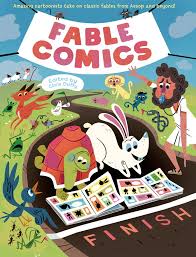
[READ: February 15, 2016] Fable Comics

Following up on First Second’s 2011 collection of Nursery Rhyme Comics, comes this new collection of Fable Comics, also edited by Chris Duffy.

Duffy says that for this collection they wanted to use mostly Aesop’s fables (because they are the most widely knows).  But the book also includes a sampling from other traditions.  He says that cartoonist were allowed to embellish the stories but we asked that the lesson remained.

And so there are 28 fables and the artists are pretty much a who’s who of contemporary comics.  I’ve broken down the Fables by their creators:

Aesop

The Fox and the Grapes-James Kochalka modernizes this a bit with a jet pack, which is hilarious.

The Town Mouse and the Country Mouse-Tom Gauld is back, and it’s great to see his work as he keeps the story fairly traditional

Hermes and the Man Who Was Bitten by an Ant ; Hermes and the Woodsman ; The Frogs Who Desired a King ; Hermes and the Sculptor. George O’Connor is responsible for the First Second Olympians series, so it’s no surprise that he tackles these stories about Hermes.  He remains faithful to the original and keeps up his very cool drawing style.

The Belly and the Body Members–Charise Harper has a wonderfully stylized look for this story about how the body parts need to work together or it can’t do anything.

Lion +Mouse–R. Sikoryak’s Mad Magazine style works very well for this familiar story about a mouse helping a lion (he has modified it somewhat of course).

Fox and Crow-Jennifer L. Meyer’s style is gorgeous.  This fable has a fantastic look to it with pale colors and circles of details.  I could look at it for hours.

The Old Man and Death–Eleanor Davis’s art is boxey and stark.  It works very well with this dark and Communist-looking story.

The Boy Who Cried Wolf–Jaime Hernandez.  I love when Hernandez does kids’ stoires because his characters are so perfectly cartoon and his colors are bright and fun.  His telling of this story is very good.

The Crow and the Pitcher–Simone Lia  I didn’t know this fable.  And I don’t really know how the beginning sets up the end. It shows crow as being very smart for others but the end has the crow being extremely smart for himself.   It’s a weird fable although it rings rather true.

The Dog and His Reflection–Graham Chafee does an awesome job of showing greed in others and leaving the dog’s story to be un-narrated.  He witnesses greed and acts accordingly.

The Dolphins, The Whales and the Sprat–Maris Wicks.  I was completely unfamiliar with this fable.  I’m also curious about how much Wicks has added.  I love that she adds some very funny factual details like that dolphins are actually a type of whale and that there are detailed asides about all of the animals throughout this story.  The moral is that they’d rather die than take advice from a sprat.  Still true today.

The Milkmaid and Her Pail–Israel Sanchez  This fable was also unfamiliar.  Sanchez’ drawings are stark and work well to tell this story of greed.

The Great Weasel War–Ulises Farinas.  This comes from a longer fable called The Mice and the Weasels.  I love Farinas’ art in this story.  The colors are spectacular and the creatures are great   And I love the moral is that they build these giant machines that cannot fight against nature.

The Sun and the Wind–R.O. Blechman. This fable was in Ava and Pip, so its funny to read it there and then see it here. Blechman’s simple drawings complement the story well.

The Hare and the Tortoise–Graham Annable’s art is great for this.  The tortoise is so crabby looking.  I’m unfamiliar with the deus ex machina that happens though.  It’s funny how many of these fables we may know without knowing them in total.

The Grasshopper and the Ants–John Kerschbaum’s art is so busy and full of detail, it’s really wonderful.  I’m unfamiliar with the ants asking the grasshopper to play for them at the end of the story tough.

The Thief and the Watchdog–Braden Lamb & Shelli Paroline. I really enjoyed the way these two created this fable.  The art is great–angular and simple but really powerful.  Having the dog explain why giving him meat won’t work is a great idea.

Demandes and His Fable–Roger Langridge.   I love Langridge’s clear lines and distinctive colors. He tries to get people’s attention and only succeeds by telling them a fable about Demandes.  I’m intrigued that his fable gets interrupted by himself.

The rest of the fables’ origins are mentions in parentheses after the title:

Leopard Drums Up Dinner (Angolan Fable)–Sophie Goldstein makes a fun visual of this story about animals trying to capture others with music.  I wonder how closely this aligns to the original, as its pretty crazy.

The Hare and the Pig (Indian Fable)–Vera Brosgol.  I didn’t know this fable at all.  Rabbit and Pig are arguing about who is best.  Leave it to fox to make the declaration.

The Demon, The Thief and the Hermit (Bidpai)–Keny Widjaja illustrates this amusing tale of a thief trying to join with a demon to rob a hermit

The Elephant in Favor (by Ivan Krilov)–Corinne Mucha.  I love that Corine modernizes the fable (the lion says Dude).  This is all about how everyone talks about the elephant.  He works slow but gets a raise. What makes him so great?  All the other animals speculate.  But it turns out that his ears are the real reason–for reasons other than the obvious.  This may be my favorite fable of all.

The Mouse Council (medieval European fable)–Liniers. This is the story of putting a bell on a cat and how no one wants to risk their life for the good of all.  Liniers’ art is spectacular.  I love the subtle shading of his drawings and then the rough drawings by the mice.

Man and Wart (Ambrose Bierce)–Mark Newgarden.  I love Ambrose Bierce but had no idea he wrote fables.  This one about people’s need for privacy and not belonging to a club is pretty strange.

The Hen and the Mountain Turtle (Chinese Fable)–Gregory Benton. I was unfamiliar with this story about a wise turtle saving a farm.

These collections of short pieces are quite wonderful. I wonder what genre First Second will tackle next.  #10yearsof01

Read Full Post »

fairytaleSOUNDTRACK: JOE BOYD AND ROBYN HITCHCOCK-“Tiny Desk Concert #142 (July 18, 2011).

robynThis is one of the more unusual Tiny Desk Concerts because it is not just music.  It is music and a recitation.  Joe Boyd (who I didn’t know) is a producer of many classic 1970s albums, including albums by Pink Floyd, Syd Barret and Nick Drake.  Robyn Hitchcock is an unusual and often funny singer songwriter.

Hitchcock opens the concert by stating (in his wonderfully British broadcaster’s voice) “All my life I’ve been Robyn Hitchock [and I’m here with] Joe Boyd who has been Joe Boyd even longer than I’ve been me.”

Joe and Robyn were doing a tour together in which Joe would talk about his experiences with these artists and then Robyn would play a representative song.

Robyn plays two songs.  The first is Syd Barrett’s “Terrapin,” a song I’ve always like.  His cover sounds a lot like Barrett’s version while still retaining Hitchcock’s distinctive singing quality.

The second song is one that Hitchcock wrote for the tour called “I Saw Nick Drake.”  It was planned as the first encore. It’s very much a Hitchcock song, a little trippy and strangely  catchy about him seeing Nick Drake and Nick being fine.

Between these songs, Boyd talks for about fifteen minutes, telling about working with Syd and how amazing he was…until he wasn’t.  And then about working with Nick and how every recording he did was perfect and how big his hands were.

If you care about either of these musicians or about British rock from that era, this is a great performance to check out.  It’s informative and a little funny too.

[READ: January 19, 2016] Fairy Tale Comics

This book follows on First Second’s Nursery Rhyme Comics book. Perhaps because this was a thinner volume or perhaps because Fairy Tales are a bit more substantive than Nursery Rhymes, I found this book even more enjoyable than the other.

And even though I (and possibly you) think that you know every a fairy tale, there were quite a few in here that I didn’t know.  In his editors note, Chris Duffy notes that he encouraged the artists to pick stories other than Grimms (although Grim is well represented).

Brothers Grimm stories include:

“Sweet Porridge,” which I’d never heard of.  This is done in a classic cartoon style by Bobby London.

“The 12 Dancing Princesses” seemed vaguely familiar.  This was done in a very pretty style by Emily Carroll.

“Hansel and Gretel” I did know, of course.  It’s fun to see Gilbert Hernandez doing a children’s story since I think of his stories as very adult.  But his simple drawing style works perfectly for this story.

“Little Red Riding Hood” has a very simple almost anime style from Gigi D.G.  It ends with a happy ending.

“Snow White” was done by the other Hernandez brother, Jaime.  His style is so peculiar and yet so perfect for this tale (the fact that the baby is actually white is a wonderful touch.

“Rumpelstiltskin” is done by Brett Helquist whom I know from the Lemon Snicket stories.  I can see his style a bit in these drawings but the colors really bring his interesting style to life.  It’s a great version.

“Rapunzel”  I have recently become a huge fan of Raina Telgemeier, and I love what she does with this story.  Although as I finished it I had to wonder if this is how the story is usually finished.  This seemed much more positive than what I imagine the Grimms intended.

“Bremen Town” I had never heard of this story.  And I can’t believe that this was how it was originally written. In this story a group of animals forms a band.  They frighten away bad guys so that they can jam.  How weird.  Karl Kerschl’s style suits it well.

“Give Me the Shudders” is another Grimm story that I had never heard of.  It’s about a boy who can’t shudder or shiver and so every one assumes he is fearless. He keeps asking people to teach him to shiver, but when they see he can’t they keep promoting him to better stations in life. David Mazzucchelli’s style works nicely with this because of the simplicity of his design amid the craziness of the story.

In addition to stories from Grimm, there are these fairy tales

From Charles Perrault:

“Puss in Boots” makes me wonder if I don’t know the story all that well.  I was quite intrigued by the way this one turned out.  Vanessa Davis has a kind of sloppy style.

From 1001 Nights Tales:

“The Prince and the Tortoise.” I had never heard of this story.  It’s pretty wild and weird.  The drawing style by Ramona Fradon reminds me of adventure comics from the Sunday papers.

From a Japanese Tale:

“The Boy Who Drew Cats” is a wonderfully cool and interesting story about the powers of fantasy and doing what you are meant to do.  Luke Pearson’s drawing is perfectly old school and nearly monochromatic for the Japanese landscape.

From Bre’r Rabbit”

“Rabbit Will Not Help”  I don’t know this tale but I do know some Bre’r Rabbit.  He’s such a bastard, and the drawing style by Joseph Lambert works nicely with that.  It’s a little weird and dark–perfect for this tale.

From an English Tale”

“The Small Tooth Dog”  I had never heard of this tale.  It’s pretty weird from start to finish, and that includes the art by Charise Mericle Harper whose style is very dramatically cartoony and also a little weird.

“Goldilocks and the Three Bears” I didn’t realize that this wasn’t a Grimm story.  This was my favorite in the book because of the way Graham Annable chose to do it.  There are no words just wonderful illustrations and great looks by both Goldilocks and the bears.  I suppose it helps if you know the story already–it may not be ideal for those who are seeing for the first time (whoever that may be) but as an interpretation, I loved it,

From the Russian Tale:

“Baba Yaga”  Russian Tales are always so dark.  And Jillian Tamaki represents this very well. This story has a house with chicken legs, wolves, talking cats and much more.  I really like Tamaki’s work a lot and I enjoyed her interpretation.

From The King and His Storyteller:

“Azzolino’s Story Without End” is another story I’d never heard of.  In it, a boy king wants to be told a story without an end.  And the king’s story-teller think of a great way to do it The story is short but Craig Thompson’s style is right on.

I really enjoyed this collection a lot.  And I love getting introduced and reintroduced to these stories that I’ve known for quite some time.

Thanks First Second. #10yearsof01

Read Full Post »

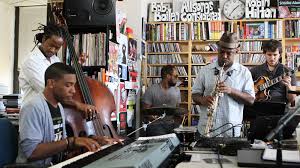
dragonsbewareSOUNDTRACK: GIVERS-Tiny Desk Concert #144 (June 22, 2011).

giversGivers play a light on poppy tropical kind of music.  Their music feels summery and light.  Between the sorta reggae guitar and the tons of percussion, the songs are fun and danceable.

As “Meantime” opened the show, I was really struck by the bass.  The bass plays a lot of high notes and some seamless riffs.  It’s really the lead instrument.  And there’s also percussion all over the place.  The sound the great is really full for so few instruments.  Of course, it really comes as no surprise to hear there’s a flute solo, even though it wasn’t apparent that anyone had a flute–it’s as if a wandering flute minstrel happened by just at the right time.

The band has two singers, Taylor Guarisco and Tiffany Lamson.  On “Up Up Up” the two duet in the beginning and then switch off vocal lines.  Taylor’s voice is higher, while Tiffany’s is deeper, raspy and interesting (although I’m not quite sure it works with their sweet music, or perhaps she’s just not loud enough).  There’s more fun bass lines in this song (I’m intrigued that he switches from a pick to pickless playing).  This song features some xylophone which also sounds perfect with their music.  Perhaps it’s the way he sings the “up up up” part but it definitely gives the song a reggae feel (especially with that afropop bass).  I really like this song, especially the surprise ending of one, two, three, four-xylophone slide-five.

For the final song, “Atlantic” there’s much switching around.  Tyler and the bassist switch instruments and Tiffany picks up a large ukulele.  She sings lead and you can really hear her raspy voice (again, not loud enough).  This song is mellow and as such the bass isn’t quite as fun (although Tyler does have a similar bass sensibility).  I’m curious to hear what they sound like when they are not unplugged.

Although frankly, I can do without Tyler’s crazy faces.

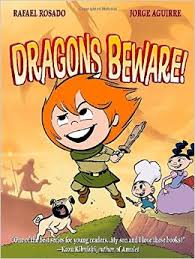
[READ: March 27, 2016] Dragons Beware

After the successes of Claudette in Giants Beware, everyone is back (with a new problem created by Claudette) in Dragons Beware.

As the book opens, Claudette is telling the story of a great sword made by the great blacksmith Augustine (her father).  The sword was called Breaker and no magic could defeat it.  One day Augustine went to fight the fearsome dragon Azra the Atrocious.  Sadly for him, the dragon is the one who did the damage that we saw in the first book (missing an arm and a leg..and the dragon swallowed the sword too).

When she finishes the story, she says that she can go fight Azra herself, with her own little wooden sword.

In the next scene we see that the evil Grombach is amassing an army–he has been magically converting ravens into giant walking gargoyles.  So although Claudette has invented a problem to solve, the village has a real problem coming their way. (more…)

Read Full Post »

cst053webmoomin7SOUNDTRACK: THE DEAD SCIENCE-“Throne of Blood (The Jump Off) 7” single [CST053] (2008).

This was a tour only 7″ that Constellation picked up before releasing The Dead Science’s Villianaire album.  There are two songs, “Throne of Blood (The Jump Off),” which is the lead song from the Villainaire and “The Duel of Iron Mike” which is unavailable elsewhere.

“Throne of Blood (The Jump Off)” opens with some lovely harp playing before the eccentric vocal styles of The Dead Science take over.  Everything about this song is unexpected–the weird staccato guitars, the crazy falsetto, wavery vocals.  The song seems totally random until you hear all of the intention in it all where it all gels at the chorus. I love the part where the backing vocal comes in and sings “Villainiare Ice Grillianiare” (or whatever the heck it says).

“The Duel Of Iron Mike” (not to be confused with the Wu Tang Clan track which is what you’ll find if you look up the song n YouTube), opens with an interesting riff.  There’s that low bass and that falsetto vocal that you either love or hate.

The chorus is almost catchy–it’s a little too minor key to be catchy but it’s very intriguing because it’s not quite what you expect and after one or two listens, you can’t stop playing it.  The end section with the two layers of falsetto vocals is weird and very cool, too.  The Dead Science are a unique band.  I wish they’d put out more music.

[READ: February 12, 2015] Moomin Volume 7

Moomin Book 7 and every subsequent book is made entirely of strips written and drawn by Lars Jansson.  These stories originally ran in the Evening News, London 1960-1975.

These four stories continue with the themes that Tove wrote about.  And Lars’ drawings look very much like Tove’s as well.  I have noticed a few things that look different–sometimes he does the eyes differently, and certain angles don’t look quite right.  But otherwise, it’s a pretty seamless transition.  Oh I aslo noticed that in this book, he has begun signing his name much bigger in each strip.

The chapters are “Moomin the Colonist” “Moomin and the Scouts” “Moomin and the Farm” “Moomin and the Goldfields”

(more…)

Read Full Post »

« Newer Posts - Older Posts »