Feeds:
Posts
Comments

Archive for the ‘Anarchy’ Category

CV1_TNY_02_10_14Hanuka.inddSOUNDTRACK: AGES AND AGES-“Divisionary (Do the Right Thing)” (2014).

agesagesI’ve enjoyed this song in a couple of formats so far–studio version and Tiny Desk version.  Now here’s another one. Here’s how it was set up according to front man Tim Perry:

“We surrounded ourselves with friends, family (my mom is one of the violinists), and all of our favorite musicians from all of our favorite Portland bands,” says Perry. “We reached out to people who’d inspired us over the years: other artists, activists, organizers. We reached out to Northwest Children’s Choir. We reached out to PHAME, a choir of adults with disabilities. We reached out to a lot of other people we didn’t know but wish we did. It was all over and done in four short hours. And it was one of the best days of my life.”

If the song was inspirational before, it’s crazy emotion-inducing now.

[READ: June 10, 2014] “Moonlit Landscape with Bridge”

This title is surprisingly calm and pretty for what the story is really about.  The previous story of hers that I read was set in a kind of dystopian land.  And this one is set in an unnamed country after a life-altering storm.  Either she is writing a post apocalyptic type of novel, or she is exploring very dark themes indeed.

As this story opens we see the Minister of the Interior packing his things.  Slowly it is revealed that the country has been decimated.  He thinks to himself that he was prepared for crippling winds, but not for the water that came with the winds.  Consequently, most of the country is apparently underwater (the details of the storm and the details of the aftermath are incredibly vague).

There is no more Ministry, so his title is superfluous, but because of his title he is given an opportunity to flee the country in a government jet (all other airplanes have been grounded).  On his way to the airport, he sees people struggling, crying, looking for… anything.  They crowd his car and he longs to help them.  His driver, Ari, tells him to ignore them, there’s nothing that he can do for all of them.  But the Minister insists that they pull over so he can dole out the bottles of water he has in the trunk. (more…)

Read Full Post »

momentSOUNDTRACK: NICK BUZZ-Circo (1996).

nickbuzzNick Buzz is a side project of Rheostatics singer/lead guitarist Martin Tielli.  This album was reissued in 2002, when I bought it  But it came out in 1996, right around the time of the concerts I’ve been posting about.  Martin says that this album is pure pop, and that he is genuinely surprised that people don’t see this.  Of course, when your album has screeching monkeys, cars honking and circus music, pop is not the first thing that comes to mind.  There are certainly pretty songs on here, but it is an album that resists easy entrance.  There are short manic pieces, slow, languorous, almost lounge music pieces, and an improved cover of Joni Mitchell’s “River.” And then there’s the instrumentation: piano, violin, guitar, voice (no drums, although there is percussion on some tracks) and other weird sound effects.

“Step Inside” opens the disc.  It seems like a normal, mellow song (with slightly falsettoed vocals).  But 34 seconds in the circus music starts—a deviant and unsettling circus that pushes its way into the song briefly then vacating and allowing the pretty melody to return.  It’s like a mild form of Mr Bungle (with more actual circus).  It’s unsettling at first but then strangely catchy after a few listens.  There is fanfare as the song ends, interrupted by the sound of a tape speeding up (or going backwards) until song two bursts in.

“That’s What You et for having Fun” is less than three minutes and while weird, it is certainly accessible and funny.  The guitar sounds like he is slapping the strings rather than strumming them.  The refrain of “there’s a monkey in my underwear” gives a sense of the absurdity (especially when the President of Canada (sic) says he has one too).  “Just Because” mellows things out a lot—simple guitar with a kind of lullaby feel (it’s a bout wishing on stars).  It’s so slow after the craziness of the first two songs.  After  3 minutes of a lounge type song, it ends with a distant radio sound of an even more loungey song which melds into the live version of “River.”

The mellow “River” is followed by a raucous bass clarinet solo and wild guitar solo that is interrupted by the long (nearly 6 minutes) “Sane, So Sane.”  This is the most conventional song on the record—a simple piano melody with repeated lyrics (conventional aside from the weird distant music in the background of course).  Although it does gone on a bit long.  “A Hymn to the Situation” is an eerie two-minute wobbly song.

“Fornica Tango” is indeed a tango presumably sung in Italian. This song features a crying baby, an interesting sounding “Italian” chorus and the screeching monkey at the end.  “Love Streams” is a pretty, slow ballad.  “Aliens Break a Heart” is another pretty song.  Although this is the song that ends with traffic sounds.  “The Italian Singer/Just Because I’m Nick the Buzz” has a kind of Kurt Weill atmosphere to it with spoken words and falsettos.

It took me several listens before I could really find purchase with these songs.  I find that I really enjoy most of them now–some of those slow ones are a little too meandering for my liking.  But it seems like a fun outlet for Tielli’s songcraft.

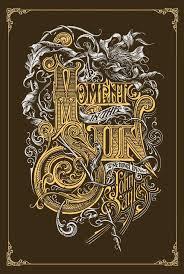
[READ: October & November 2013] A Moment in the Sun

I read this book last year…finished it just before Thanksgiving, in fact (I was proud of my pacing).  But it was so huge that I didn’t want to write about it until I had a good amount of time.  And now here it is four months later and I probably have forgotten more details than I should have and the post will be nowhere near as in depth as I was saving time for in the first place.  Bah.

When people see this book, they say, “That’s a big book.”  And it is a big book.  It’s 955 pages (and they are thick pages, so the book itself is nearly three inches thick–see the bottom of this post for an “actual size” photo); it’s got three “books” and dozens of characters whose stories we read about in full.  It is about the United States, racism, The Gold Rush, the assassination of a President, the Spanish American War, a World’s Fair and even the exploration of moving pictures.  This is a fairly comprehensive look at the Unites States from the 1890s to the early 1900s.  And, man was it good.

John Sayles is known more for his movies than his books (18 films directed, nearly as many different ones written and only 4 novels), but the cinematic quality that is clearly in his blood comes through in this book as well. (more…)

Read Full Post »

youdont SOUNDTRACK: INSANE CLOWN POSSE-“Bang! Pow! Boom!” (2009).

icopSince I have posted about Phish already, it seemed like time to listen to an ICP song.  I admit that when their first album came out, they seemed goofy enough to check out their album.  I love a cartoony band that is going to “ruin America.”  But I had heard that their music was just too awful to enjoy ironically, so I never bothered with them (if I had been a few years younger, I probably would have embraced them wholly).  In the book below, Rabin says that their newer stuff is not only a ton better than their early stuff (which he admits is raw and pretty terrible) he says that it is quite poppy.

So I listened to a few of the songs that he mentions (and there are some funny lines), but I decided to focus on this one which Rabin describes as “a groovy throwback number that finds ecstasy in a bleak moral reckoning…finding the joy in the macabre and the celebration in the gothic.  Also, it’s catchy as fuck.”

That’s a highfalutin way of saying that they sing about blowing shit up.  Lyrically the song seems to be about ICP talking to their fans (in the harshest terms possible, which I guess is affection: “Cuz you’re the evilest pedophiles, rapists and abusers/All together we’ve got fifty thousand of you losers”).  It’s an insider tract and if you don’t like it or get it, well, you’re not supposed to.

But aside from the lyrics about rapists and all the cursing, this song could easily be a big hit.  It is, yes, catchy as fuck.

But I won’t be listening to more from them.

[READ: January 2, 2013] You Don’t Know Me But You Don’t Like Me

Every year my brother-in-law gets me cool and unusual books, most of which I’ve never heard of.  This year, he got me this book which I’d never heard of.  I was confused by the title (which is confusing).  The author’s name sounded familiar, but I wasn’t sure—until I saw the A.V. Club connection.  So, at first I thought this was going to be about going to interesting shows or basically having something to do with the A.V. Club.  But, as the subtitle says, this book is exclusively about Rabin’s travels following Phish for a summer and also going to some ICP Gatherings of the Juggalos.

The theme of the book is how most people have never heard the music of either band, but they have formed opinions not only of the bands, but their followers.  Rabin points out plenty of exceptions to the stereotypes, but you won’t be leaving this book thinking much more of the preexisting stereotypes than you already do.  Sure, some Phish heads are doctors, and some Juggalos are employable, but the majority are (despite his best efforts) what you think they are.  But one of the main messages that he seems to promote in the book is that each of these groups have created tribes around them.  And those who aren’t part of the tribe may scoff, but they secretly wish they could be having as much fun as the members of the tribes.  And that may in fact be true.

I’ve enjoyed Phish’s music for years, although I’ve never seen them live.  And as for ICP, I didn’t even realize they were still around—although that Workaholics episode should have clued me in.  Naturally these two bands could not be more polar opposite in terms of music and fanbase (although Rabin did encounter some crossover). So he sets out to show how he can enjoy both groups. (more…)

Read Full Post »

CV1_TNY_09_16_13Tomine.inddSOUNDTRACK: SAM PHILLIPS-Tiny Desk Concert #3 (June 25, 2008). 

Isamt took a month and a half to get the second Tiny Desk player in, but it took only 20 days to get Sam Phillips to come in after Vic Chesnutt.  Sam Phillips plays four songs (in what is sauna-like conditions apparently) all from her then new album Don’t Do Anything.

Phillips has had a couple of incarnations as a performer (first as “Leslie Phillips” Christian singer).  This incarnation sees her as a kind of folky troubadour with dramatic flair.  She played a lot of the music on the Gilmore Girls (she does the la las), so of course I’m a fan.

Sam is a funny performer, introducing herself (and then asking is she is allowed to talk) and later playing Bob Boilen’s cow in the can (and even questioning the way to say This is NPR).  She is accompanied by Erik Gorfain, who plays a Stroh violin which you can sort of see in this picture (there’s a better one below) and which Phillips suggests is plenty loud enough thank you.

Her first song, “Sister Rosetta Goes Before Us” opens with big strumming guitars and a bouncy melody.  It’s a great song that is a lot of fun–that violin brings great counterpoint.  “No Explanations” is a bit more rocking (with Gorfain on electric guitar).  It has a catchy chorus.  “Signal” returns to that kind of bouncy tin pan alley style which she does very well.  “Little Plastic Life” ends the set with… a screw up, which she handles wonderfully, and which makes the song seem all the better when she plays it again.

I really enjoyed this Tiny Desk and am going to have to listen to more of her work.

Check out what a Stroh violin looks like:

stroh

[READ: September 25, 2013] “By Fire”

Here’s another story about unemployment.  I had intended to post this back in September, so when I originally typed that this story is more dramatic than “yesterday’s,” I meant Lisa Moore’s story from September which was also about unemployment.

I wasn’t sure where this story took place (it was originally written in French).  The story is about Mohammed.  He graduated from University a few years ago with a degree in history.  It has been useless thus far.  When his father dies, and he is once again incapable of getting a teaching job, he gives up and burns all of his paperwork.

Then he sets out with his father’s fruit cart, determined to make some money selling fruit so he can move out of his house and in with his girlfriend.

There is ample back story in this piece.  We learn about Mohammed’s family—his mother has crippling diabetes, his brothers work but not very hard (one is downright lazy).  And we learn that the person who Mohammed’s father bought his fruit from was a crook who demands more and more money from Mohammed.

But the bulk of the story shows the daily life of Mohammed.  He is routinely harassed by the police for not having the proper paperwork or for being in the wrong place or just for being.  They start with simple harassment, but soon they turn to beatings.  Mohammed refuses to bribe anyone, even when the police give him the opportunity to turn in his former students. (more…)

Read Full Post »

McSweeney’s #13 (2006)

13SOUNDTRACKPARTS & LABOR-Stay Afraid (2006).

partslaborParts & Labor have changed t heir style over the years going from noisemakers who have a melody to being melodious noisemakers.  This album is one of their earlier releases when noise dominated.  Right from the opening you know the album is going to be a challenge.  The first song has pounding drums (electronics that sound like bagpipes) and heavy distorted shouty vocals.  By the end of the songs there is squealing feedback, punk speed drums and screaming distorted vocals (complete with space sound effects).  It’s an aggressive opening for sure.  Song two opens with a long low rumbling and then “Drastic Measures” proves to be another fast-paced song.

“A Pleasant Stay” is 5 minutes long (most of the rest of the album’s songs are about 3 minutes).  It continues in this fast framework, although it has a bit more open moments of just drums or just vocals.  The way the band plays with feedback in the last minute or so of the song  very cool.

“New Buildings” has a hardcore beat with a guitar part that sounds sped up.  “Death” is a thumping song (the drums are very loud on this disc), while “Timeline” is two minutes of squealing guitars.  “Stay Afraid” has a false start (although who knows why–how do these guys know if the feedback sounds are what  they wanted anyhow?).  The song ends with 30 seconds of sheer noise).  The album ends with the 5 minute “Changing of the Guard” a song not unlike the rest of the album–noisy with loud drumming and more noise.

The album is certainly challenging, it’s abrasive and off putting, but there;s surprising pleasures and melodies amidst the chaos.   Indeed, after a listen or two you start to really look forward to the hooks.  If you like this sort of thing, this album s a joy.  It’s also quite brief, so it never overstays its welcome.

[READ: April 15, 2011] McSweeney’s #13

I have been looking forward to reading this issue for quite some time.  Indeed, as soon as I received it I wanted to put aside time for it.  It only took eight years.  For this is the fabled comics issue.  Or as the cover puts it: Included with this paper: a free 264 page hardcover.  Because the cover is a fold-out poster–a gorgeous broadside done by Chris Ware called “God.”  And as with all Chris Ware stories, this is about life, the universe and everything.  On the flip side of the (seriously, really beautiful with gold foil and everything) Ware comic are the contributors’ list and a large drawing that is credited to LHOOQ which is the name of Marcel Duchamp’s art piece in which he put a mustache on the Mona Lisa.  It’s a kind of composite of the history of famous faces in art all done in a series of concentric squares.  It’s quite cool.

So, yes, this issue is all about comics.  There are a couple of essays, a couple of biographical sketches by Ware of artists that I assume many people don’t know and there’s a few unpublished pieces by famous mainstream artists.  But the bulk of the book is comprised of underground (and some who are not so underground anymore) artists showing of their goods.  It’s amazing how divergent the styles are for subject matter that is (for the most part) pretty similar: woe is me!  Angst fills these pages.  Whether it is the biographical angst of famous artists by Brunetti or the angst of not getting the girl (most of the others) or the angst of life (the remaining ones), there’s not a lot of joy here. Although there is a lot of humor.  A couple of these comics made it into the Best American Comics 2006.

There’s no letters this issue, which makes sense as the whole thing is Chris Ware’s baby.  But there are two special tiny books that fit nearly into the fold that the oversized cover makes.  There’s also two introductions.  One by Ira Glass (and yes I’d rather hear him say it but what can you do).  And the other by Ware.  Ware has advocated for underground comics forever and it’s cool that he has a forum for his ideas here.  I’m not sure I’ve ever read prose from him before. (more…)

Read Full Post »

SOUNDTRACK: JENS LEKMAN-Tiny Desk Concert #173 (November 7, 2011).

I have enjoyed Jens’ skewed take on pop folk for some time. He plays great folk music and there’s wonderful backing vocals by Addison Rogers.  What’s funny about this Tiny Desk concert is that he talks a lot about the song before singing it.  But he pretty much gives away everything in the song (especially if there is a punch line).  For the first song, “I Want A Pair Of Cowboy Boots,” the explanation is pretty good, he says that if you have the same dream for two years you may want a new one…with cowboy boots.  The song explains that the boots will help him walk back to the girl of his dreams.  Sweet.

What’s cool about the second song, “The End Of The World Is Bigger Than Love”  (in addition to the song) is that you can hear a car driving away before it starts, just showing how intimate the Tiny Desk shows are.

But it’s the final song in which Jens gives away so much about the origin of the story that the song itself is almost redundant (although it’s still great).  When you finally get to the punchline of “Waiting For Kirsten,” you’re charmed and smiling.  Jens explains that Kirsten Dunst once said that she likes his music.  So when she was filming with Lars von Trier in Scotland, he couldn’t help but stalk her day and night.

He’s a charming guy.  You can check it out here.

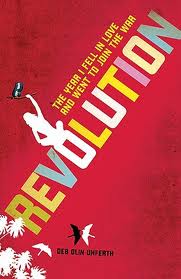
[READ: November 7, 2012] Revolution

Deb Olin Unferth has now published three books and I’ve read them all, even though I’m not a huge huge fan.  I enjoyed her novel Vacation, which was delightfully peculiar.  Her other book was a collection of flash fiction, a genre I’m really on the fence about, although Unferth’s is really quite good.

This book is a memoir.  And, as the subtitle indicates, it’s about the year that Unferth spent looking for a revolution in Central America.  The book proves to be about much more than Central America and revolutions–she talks about religion, family, morality, relationships, youth, idealism and reality.  Not bad for 200 pages.

It’s also about the man she fell in love with, George, who encouraged them to go to Central America and vive the revolution.  George is a Christian, Deb was an atheist Jew.  But she falls for him and his Christian ways and “converts” (much to the detriment of her younger sibling who had the family’s faux Jewishness now thrust upon her to avoid a similar thing happening.  (Poor Deb’s younger sister really is the victim in this saga).  George and Deb flee the comforts of home and all 80s capitalism and head to Central America.

As with Unferth’s short stories, these chapters are almost all very short.  And they often feel as unfinished as some of her flash fiction.  They are also mostly jumbled up in an utterly non-narrative way.  It’s entirely possible that you could shuffle some of these chapters and it wouldn’t matter at all (that’s not entirely true, as some do flow one in to the other, but many are jarringly out of sequence). (more…)

Read Full Post »

SOUNDTRACK:  PUBLIC ENEMY-Live at All Tomorrow’s Parties, Convention Hall, October 2, 2011 (2011).

NPR was cool enough to record and provide as a download most of the shows at the All Tomorrow’s Parties festival in Asbury Park, NJ.  (Portishead wouldn’t allow their show to be recorded, sadly).  But Public Enemy was a welcome surprise!
This tour is in celebration of the anniversary of Fear of a Black Planet.  And they play most of Fear and a lot of other things too (with almost nothing from their 2000 era CDs.

I can remember back in the early days of rap that it was hard to imagine what a rap show would be like live since they didn’t play instruments and much of the music was sampled.  Well, PE has musicians on stage and they have DJ Lord filling in for Terminator X behind the turntables (big shoes to fill, but done largely well–especially his fun “solo” in which he samples The White Stripes and Nirvana–although he should have mixed in Portishead, no?).  And mostly they have the personalities of Chuck D and Flavor Flav.

I suspect that this show would be a bit more fun to watch than it is to listen to–Flavor Flav’s antics don’t always translate well without his visuals.    Like when he asks the audience if that can all say “Ho” (which he eventually holds for 33 seconds!), it seems like a delay tactic in audio, but is probably fun to witness.

What’s especially cool about the show is that PE play so many songs, including small snippets of songs as segues to other ones (like the seventy second version of “Anti-Nigger Machine” that intros “Burn Hollywood Burn” which is practically hardcore) or the minute and a half of “He Got Game” that follows “Night of the Living Baseheads.”  I like that they even threw in some skits from the record like “Meet the G That Killed Me” and “Incident at 66.6FM.”

But of course the real joy is the full length songs, “Brothers Gonna Work It Out,” “911 is a Joke,” and of course “Bring the Noise” and “Fight the Power.”

Some of the improv sections don’t work all that well, the guitar solo in “Power to the People” leaves something to be desired (Khari Wynn maybe a legend, but he;s no Vernon Reid),  although the  “Jungle Boogie” riff is cool.   But the improv with guest drummer Denis Davis was pretty bad ass.  Flavor Flav hopped on the drums and was quite good for “Timebomb.”  We also got to meet Flav’s daughter Jasmine.  And Professor Griff was there too.

It’s also interesting that they keep saying they have no time left in the set (Portishead is next) but they play for at least 30 minutes after this.  Including a wonderful “By the Time I Get to Arizona and the set ending “Fight the Power.”

Chuck D has still got it and Flav is just as crazy and fun as ever (even if his screams and yos seems out of tune from time to time).  Of course, Flav has to get the last word in by raging  on for six and a half minutes  at the end (and about six-minutes in the beginning as well where he gave himself props about his reality show.

It’s a really good set–a little distorted from time to time, but really solid.  Here’s a link to the downloadable show.

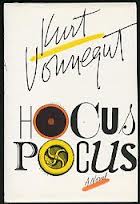
[READ: October 2, 2012] Hocus Pocus

This book may have put me over the edge in terms of Vonnegut exhaustion.  I bought this book some time in 1992, but I never read it. It’s been in my house for twenty years and it was about time I read it.

But as I’ve been noticing, each Vonnegut book has been getting darker and more misanthropic.  And this one is no exception.  The construction of the book follows Vonnegut’s cut and paste style but it feels even more shuffled and indirect than usual (more on that later).  In many of Vonnegut’s books, the “climax” occurs somewhere in the middle and he fills in the details later.  For this one, the climax came around h.and I wouldn’t have felt like I missed anything.

In this book, the main character, Eugene Debs Hartke  is a Vietnam vet (usually his protagonists are military men, and Vonnegut has criticized Vietnam a lot, but this is the first time he’s had a Vietnam vet as protagonist).  He married his wife and had a wonderful family until he learned that his mother in law had a disease that made her crazy–but it only kicked in later in life, after he married her daughter.  And that his wife has the same disease–so by the middle of the story both of the women in his life are crazy “hags.”  And, like in his other stories, his children hate him. (more…)

Read Full Post »

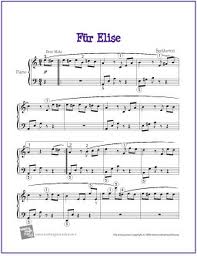
SOUNDTRACK: LUDWIG VAN BEETHOVEN-“Für Elise”

I didn’t know a lot of the music mentioned in this book, but like most people, I know and enjoy “Für Elise.”  It’s an interesting choice of music to end such a crazy chaotic story, although I suppose there are some less than peaceful moments ion the song too.  It’s a shame Bast never gets to play it.

I find the most engaging moments to be when the lone high note comes before the reintroduction of the initial melody.  The middle, minor key section that sounds kind of menacing is also neat–a big switch from the delicate opening.

Why not take 3 minutes and enjoy it now:

[READ: Week of August 20, 2012] JR Week 10

The end is here.  After endlessly interrupted conversations, the book has actually hit a period.

As the last week ended, Bast was being dropped off at the hospital by Coen.  And the bulk of the end of the book takes place in the hospital.  There are many similarities between this book and a big 60s/70s comedy romp, and here is another one–all the characters seems to pile into one location for a big finale.  (Technically the finale happens at Bast’s house, but you get the idea). (more…)

Read Full Post »

SOUNDTRACK: DJANGO DJANGO-“Default” (2012).

This song was featured in a post on NPR’s All Songs Considered site on July 31.  Django Django are a Scottish duo and they sound very retro.  The two guys sing in close harmony that is more of an echo than a harmony.  The music is mostly very old-sounding guitars–big and unprocessed–and yet the rest of the track is quite processed and electronic.

It’s a simple, straightforward song (with some cool effects).  The NPR write up about them says that they are more of an electronic band, although this song doesn’t really suggest that (except in the middle section where the sounds are manipulated in a cool way).  I’m not sure if I’m all that interested in the rest of the album  In fact, after a few listens, I’m not as excited by this song as I initially was.  But it’s still fun.

[READ: July 31, 2012] The Rector and the Rogue

The Collins Library is back!  And since this seems to be the summer of non fiction, I decided to read it now.  I have loved every Paul Collins book so far in the Collins Library (old, out of print and forgotten titles that Collins resurrects) and this one–which I admit seemed questionable–was just as wonderful as the others.  The Rector and the Rogue details a much-forgotten episode of a grand-scale prank–the systematic public abuse of Dr Morgan Dix, Rector of Trinity Church by a trickster known as “Gentleman Joe” in 1880.  Yes, 1880.

Swanberg told the story, eighty years later, as a rather gripping tale.  The afterward explains that he just happened upon some information about the story and needed to know more.  So, he did the research and compiled first an essay and then this (reasonably short) book.

And so he begins his tale without letting the audience know what they are in store for (just like Dix had no idea what he was in store for).  One morning in February 1880, Rev Dix opened the door to see a safe salesman from Acme Safe in downtown Manhattan.  The salesman says that Dix inquired about safes.  Dix had done no such thing and sent the man on his way.  Then a man from a local girls’ school rang the bell and said that Dix’ charge was more than welcome to attend.  Dix had no daughter or interest in the school. The schoolmaster showed him a postcard from Dix which asked for information.  The postcard was not his own (obviously) and was not in his handwriting (obviously).  Then came a man selling two horses, replying to his postcard….  This went on all afternoon.

The afternoon mail was full also of responses to similar inquiries–about wigs, dance lessons, kitchenware, etc.

And so began the botheration of Dr Dix. (more…)

Read Full Post »

SOUNDTRACK: NOW,NOW-“Thread” (2012).

I really enjoyed Now, Now’s last single “Dead Oaks” quite a lot, and here’s another one.  A beautiful shoegazer song, hints of My Bloody Valentine, hints of early Lush.  The singer has a great voice soaring over the chugging and swirling guitar chords.

The song is smooth and dreamy, but when the guitar solo comes in, it’s kind of jagged and really unexpected–a nice treat to keep a sing from becoming too obvious.

“Now, Now” is kind of a crazy name for a band–i assumed that it would be difficult for search engines to find them.  But no.  Type in now now and there they are.

[READ: June 20, 2012] “Monstro”

I’ve read a bunch of stories by Díaz, and I was a little surprised to see him in a sci-fi issue.  Although his characters are typically nerdy sci-fi fantasy geeks, his stories are pretty much all about reality–scoring women, losing money, fighting cancer, getting women back.  And, that’s what this story is about too.

One thing that I especially liked about the story is that it is such a conventional Díaz story–his main character g0es to the Dominican Republic to be with his ailing mom.  (They live in the States but her medical costs would be much cheaper there).  So he goes to the DR for the summer.  And he meets up with a fellow Brown student who just happens to be a Very Important Person in the DR (he’s related to the 99th most wealthy person on the planet).  And this guy, Alex, hooks him up well–he gives the narrator the royal treatment all over the country.  Alex also introduces him to Mysty, the most beautiful woman he has ever seen.

And so they spend the summer together.  The narrator knows that Mysty is out of his league, but he lusts after her anyhow.  He confirms with Alex several times that the two of them are not an item, and that seems to be true. It’s clear that Mysty likes him–he doesn’t put up with Alex’s shit or with hers, but it’s also clear that they will never be together.

Díaz doesn’t skimp on the story either–we learn all about Alex’s background (and the fact that despite all of his wealth, he’s not coasting–he’s pulling down a 4.0 from Brown).  We also learn all about Mysty–her history, her desires and her disdain for the Dominican Republic.  And, naturally we learn all about the narrators mother–what’s wrong with her, how she’s coping and how she’s tells him that he doesn’t have  to stick around–he’s not doing her any favors.  And so he leaves her to have fun with his friends.  As he says, “What an asshole, right? What a shallow motherfucker.  But I was nineteen–and what is nineteen, if not for shallow?” (more…)

Read Full Post »

« Newer Posts - Older Posts »