Feeds:
Posts
Comments

Archive for the ‘19th Century’ Category

I very rarely deviate from my usual topics of books, music and TV.  But today, Father’s Day, the family and I went to a local(ish) restaurant that was so good (and so local(ish)) that I wanted to shout about it.

It’s called The Brothers Moon.  It’s in Hopewell, NJ.  It seems pretty clear that they don’t need the business, as they were pretty hopping today, but it’s pretty far off the beaten path, so I think they can use the publicity.

I had first heard of them when I was looking up local sustainable food places.  While I was searching for a local CSA, I discovered The Brothers Moon because, as their site states, “Support Local, Go Local! The Brothers Moon proudly supports sustainable farming and local businesses.”  Which gets my vote on principle alone. (more…)

Read Full Post »

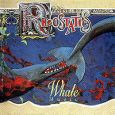
SOUNDTRACK: RHEOSTATICS-Whale Music (1992).

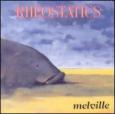
The Rheostatics are from Etobicoke Canada.  Their second album was called Melville (named after a town in Saskatchewan, but it has a whale on the cover so…).  Their third album (this one) is called Whale Music (inspired by the novel by Paul Quarrington).  When they made a film of Whale Music, the Rheostatics were asked to make the soundtrack for it, which they released as Whale Music.  So, the band have 2 albums called Whale Music and one called Melville.  Perfect soundtrack to Moby-Dick.

The album is chock full of all kinds of music: country tracks, folky tracks, metal tracks, and hooks galore.  And it’s all wrapped up in the oddity that is the Rheostatics.  This album features guest spots by the Barenaked Ladies and Neil Peart as well as horns, strings, spoken word parts, and “power tools”.

“Self Serve Gas Station” is a great opening.  It begins with swirling guitars and a beautiful solo (Rheostatics guitar lines sound so elemental as to seem like they’ve always been around).  But just as the vocals begin, the song becomes a sort of country track: a folkie song about adolescnece.  But it returns to a good rocking (and falsetto fueled) rock track.

“California Dreamline” is a wonderfully weird track, with more gorgeous guitar melodies.  It also has a disjointed section with squealing guitars.   While “Rain, Rain, Rain” opens with a lengthy percussion section (played by Neil Peart of Rush) with a weird time signature.  It’s a fun singalong.  “Queer” meanwhile has some great chugga guitars that turn into a rocking tale of an ostracized brother (and features the great line: “But I wish you were there to see it/When I scored a hat-trick on the team/That called you a fucking queer.”

“King of the Past” is another great track, with a wondrous string sound near the end.  It’s a gorgeous song with (again) different sections conveying shanties and jigs (and you can dance to it).  Like Moby from last week, Rheostatics, also bust out a fast metal track, but this one works well: “RDA (Rock Death America)” has a major hook and name checks everyone from The Beatles to The Replacements.

“Legal Age Life at Variety Store” is a great folky singalong (and features the piercing harmonies of Martin Tielli).  “What’s Going On Around Here?” is the most traditional song of the bunch, a poppy little ditty which avoids complacency with a rocking coda.

“Shaved Head” is a moody piece, wonderful for its roller coaster sensibilities, which is followed by the beautiful Tim Vesely sung ballad “Palomar.”  This track is followed by the humorous (but serious) shouted-word piece “Guns” which also features Neil Peart.

“Sickening Song” is an accordion based shanty song.  Followed by another pretty, poppy-sounding track, “Soul Glue.”  Drummer Dave Clark sings “Beerbash,” an upbeat song.  And tye final track is the epic, “Dope Fiends and Boozehounds.”  It opens with a beautiful acoustic intro and a wonderfully catchy wheedling guitar solo.  It ends delightfully: “Where the dope fiends laugh And say it’s too soon, They all go home and listen to
The Dark Side of the Moon.”

I had been listening to the band live a lot recently, and they play these songs a lot.  So it was quite a treat to go back and hear the original with all its full instrumentation.

[READ: Week of June 14, 2010] Moby-Dick [Chapters 62-86]

I never thought I’d ever say this, but I really enjoyed Moby-Dick this week.  So far, these twentysome chapters have been my favorite (even the gruesome whale sections), there weren’t any chapters that I thought really dragged.  So, good for me!

This week’s read begins with Ishmael stating that harpooners should not have to paddle and then be expected to harpoon as well.  They should save their strength for that last, all important act.  And that seems logical to me, although one also expects that the harpooners would feel kind of bad while everyone else is paddling. (more…)

Read Full Post »

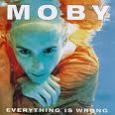
SOUNDTRACK: MOBY-Everything is Wrong (1995).

I suppose that everyone knows that Moby (the musician) is Herman Melville’s great- great- great- grandnephew.  And that’s why he has the middle name Melville and had the nickname Moby.

Moby started out as a techno guy. He even made the Guinness Book for the fastest bpm ever recorded (since then, many have surpassed that) with the song “Thousand.”  It’s an interesting song, although more for its novelty than anything else.  He also had a cool hit called “Go” that sampled music from Twin Peaks.  And in 1999 he took over the world with his album Play, which featured some 18 songs that were all licensed for commercial use (many of which were ubiquitous that summer).

But this disc, Everything is Wrong, came out before Play, and it was considered a high water mark for dance music (before the next high water marks of Fatboy Slim and LCD Soundsystem came out, of course).

So this disc was hailed as the big breakthrough for Moby.  And it has something for everyone.  It opens with a pretty piano piece ala Philip Glass which is, as its name implies, a “Hymn.”  From there we get a heavy techno beat and “Feeling So Real” kicks off.  Gospel-like vocals soar above the dancing (this foreshadows Play quite a bit).  It sounds very 1994 to me, although I don’t think it sounds dated, necessarily.  And then comes his stab at punk.  “All That I Need is to be Loved” is a fast blast of aggro music.   The problem is that Moby doesn’t do punk very well.  His guitars are too trebly, his vocals aren’t very strong and despite the beautiful melodies he creates, he doesn’t write very catchy hooks.

“Every Time You Touch Me” returns to the style of “Feeling So Real” and is another stellar dance track.  While “Bring Back My Happiness” runs even faster.

“What Love” is another screaming punk track.  This one is closer to Ministry.  It’s quite a slap in the face after the rest of the disc.

“First Cool Hive” slows things down with a groovy almost ambient track.  And “Into the Blue” is a moody song that sounds like it could also have been taken from Twin Peaks.

“Anthem” returns to the fast beats with ecstatic moans sprinkled over the faster and faster beat.

The album ends with two tracks, “God Moving Over the Face of the World” which is a beautiful instrumental (again ala Philip Glass or more likely Michael Nyman) that weaves in and around itself for 7 minutes.   (It, too, hints of Twin Peaks).  And, “When It’s Cold I’d Like to Die,” while not exactly uplifting is coldly beautiful (kind of like a long lost Eurhythmics track)..

The disc is such a mishmash of styles, that it’s hard to really know what to classify it as.  Some of it works wonders.  Other tracks (notably the punk experiments) are less successful (even though I did enjoy them then, I think they just didn’t age well…or maybe I didn’t age well).  Of course, over the course of his career, Moby has attempted all of these genres in more detail, so this was almost like a sampler of what he would be doing later.

Sixteen years later it holds up quite well (although I still think Play is better).

[READ: Week of June 7, 2010] Moby-Dick [Chapters 42-61]

The reading this week opens with a chapter about whiteness.  And how somehow Moby-Dick is even more fearsome for being white.  As the chapter opens whiteness (even in skin color) is lauded.  But by the end, he cites it as being particularly creepy: white whales, polar bears, albinos.  (I think that this was my very least favorite chapter so far–I was uncomfortable reading it and I didn’t get a lot of humor from it either).

Some more down time passes, with Ishmael describing how Ahab is able to plot a course to find Moby-Dick.  It’s not just looking for a needle in an ocean–there are pathways that whales follow, for instance.  This is followed by a chapter that allows Ishmael to swear, absolutely swear! that whalers can recognize the same whale even years later if you tried to kill it but failed (and that he himself remembers one whale that got away from a mole under its eye). (more…)

Read Full Post »

SOUNDTRACK: LED ZEPPELIN-The Song Remains the Same (1978).

I don’t normally try to have my soundtracks correspond to the book. But since Andrew suggested that Mastodon’s Leviathan was a good match, I decided I’d try to have all six Soundtracks relate to the book some how.

The obvious starting point was Led Zeppelin’s “Moby Dick” and where better to look than at the over-the-top live version contained here.

As a classic rock guy, I grew up worshiping Led Zeppelin.  And I have no way of objectively talking about their music, really.  However, when I was in college, some guys in my dorm played this particular release all the time and claimed it to be the best CD in the history of music.

And thus, I have a delightfully convoluted relationship to this live album.  I used to really dislike it: extended jams of silliness rather than rocking live tracks.  However, as I’ve gotten older, and I’ve begun enjoying jam bands more, I see the enjoyment of this kind of show.  And yet I read a review of this very disc the other day that described it as being a few shows past Led Zep’s prime, and I think that’s pretty valid.

I haven’t heard any of the other recently released live discs (which are supposed to be amazing).  But this one feels overblown and pretentious.  And there’s nothing wrong with that if that’s the kind of band you are, but Led Zep was not that (until later);  they were meaty and heavy.

This version of “Moby Dick” is 12-minutes long.  Over 10 minutes of it is a drum solo.  This always reminds me of the line from Dazed & Confused: “Man, I ain’t belivin’ that shit about Bonham’s 1-hour drum solo…I mean, 1 hour on drums…you couldn’t handle that shit on strong acid, man.”  The rest of the disc is the same way: long solos that don’t really showcase virtuosity, they just sort of go on and on.  I do like the kevboard solo in one of the songs, but the “ah ah” part in “Dazed and Confused” is pretty silly.

In some ways, the song “Moby-Dick” (and the album itself) is like the book: a product of its time.  In 2010 , if you played a ten-minute drum solo (even Rush have added electronic horns and a swing number  to Neil’s drum solo) you’d be mocked.  But back in the 70s, it was a badge or honor.  Similarly, Moby-Dick seems quaint and weird to most contemporary readers.  And yet, put in context, it’s funny and surprisingly forward thinking.  And I suppose the music does make a good background for reading it, too.

[READ: Week of May 24, 2010] Moby-Dick [Chapters 1-18]

So, the instigators at Infinite Zombies are hosting a read along for Moby-Dick (and yes, the hyphen is supposed to be there).  I’m going to be a contributing writer to this shindig, so I’m going to curtail what I say here somewhat [see my post about religion, here]. Also, unlike Infinite Jest and 2666 which had difficult, multi-charactered, multi-layered, confusing plots, Moby-Dick is fairly straightforward.  And so, there’s not a great need for in-depth story summary (not to mention each of the 100+ chapters is titled, so you know what’s going to happen in each one!).

But with that out of the way, let’s see what I can say about this book.  Oh, one more thing, I’ve been trying to include page numbers in my citations, but there are just too many versions of this book (and I am using one for my reading and another for my copy-and-paste-quotes–the whole book is available at that link), so I’m just going with Chapters.

I was joking with some friends recently that their sister thinks Moby-Dick is very funny.  And I have to say I was surprised about how funny it was, too.  Not gut-busting funny, mind you, but funny enough. (more…)

Read Full Post »

SOUNDTRACK: THE FLAMING LIPS & STARDEATH AND WHITE DWARFS featuring HENRY ROLLINS and PEACHES doing The Dark Side of the Moon (2010).

You’ve got to have balls to cover the most popular album of all time.  Everyone knows Dark Side of the Moon, according to Billboard charts everyone probably owns a copy of Dark Side of the Moon.  So, you’re taking on a pretty big task here.  But the Flaming Lips aren’t called The Fearless Freaks for nothing.

What delights me about this album is that it is utterly unfaithful to the original.  There’s nothing worse than a cover song that just apes the original version.  With that in mind, the Lips have put their bizarro stamp on the classic album, oftentimes rendering the songs almost unrecognizable–but more on that in a moment.

The two guest stars on the disc are Henry Rollins and Peaches.  Rollins recites all the spoken word bits from the original.  He actually makes a lot of those weird ramblings clear for me for the firs time.  The originals were spoken by a (presumably) high Englishman.  Rollins’ delivery is much more abrasive (but then so is the music).  It works pretty well, especially since Rollins’ laugh is maniacal, although if he sounded a bit more drunken I think it would work even better.  Peaches sings a few of the female vocal bits.  I’ve never been much of a fan of hers but, man, she does an awesome job in covering “The Great Gig in the Sky,” the track from the disc that features a wondrous diva singing and screaming her heart out.  Peaches really lets loose and showcases the power of her voice.

The Lips play on 7 songs and StarDeath play on 6.  They work together on 2 tracks.

StarDeath is fronted by Wayne Coyne’s nephew, Dennis.  I’d only heard one track from them before, and I liked it.  Dennis’ voice is a higher register, like Wayne, but he’s also a bit more subtle. Musically they are less noisy as well, and it’s a good counterpoint to the static of the Lips’ tracks.

So the opener, “Breathe” (Lips) is distinct right away, because the main focus of this version is a loud throbbing bassline. “On the Run” (Stardeath) is completely indistinguishable from the original.  You would never suspect it was a cover.  It’s a bass-propelled, very cool song, but there’s almost no similarity.

“Money” (Lips) stays fairly faithful to the original, except that the vocals are totally auto-tuned.  It makes the song sound really alien, as if coming, yes, from the other side of the moon.

“Time” (Stardeath) on the other hand, is a very delicate, acoustic track, (sounding somewhat like Mercury Rev, actually).  It is something of a counter to the rocking version on the original.

“Us and Them” (Lips) is probably the closest sounding to the original.  It has simple washes of sound and Wayne’s delicate voice.  But, once again, the louder sections of this song are left out.  “Any Colour You Like” (Stardeath) is a much closer instrumental to the original than “On the Run” was.  And “Brain Damage” (Stardeath) is really quite spot on (and may be even creepier than the original).

The ender, “Eclipse” is like a distorted indie rock version of the original.  It works pretty well.

There’s surprisingly little in the way of sound effects (which are all over the original).  I’d have thought they’d populate the disc with all kinds of fun things, but no, they actually play it pretty straight.

My one real complaint about the disc (and actually about Embryonic as well).  The Lips have always pushed the envelope of music.  But lately, they seem to be redlining  a lot of their sounds, making them distort and crackle.  Now, I love distortion when it’s used well, but this “too loud” distortion actually hurts my ears, even if the volume is low.  I find the sound to be unpleasant, and not in a good way.  And I think it’s a shame because the Lips write such great music, that I hate to have it obscured by clouds of noise.

So, yeah, this will never replace the original for anyone.  But it’s a fun experiment and actually sounds a bit like a rough demo for the final release.  In fact, in many ways it sounds like it’s coming from outer space and may be conceptually more accurate for the title.

I saw The Lips and Star Death on Jimmy Fallon.  They played “Breathe” and all eight (or more) guys were on stage.  It was a big wonderful mess.  And they sounded really good together.

[READ: May 11, 2010] ; or The Whale

In 2007, a book was published called Moby Dick in Half the Time.  And, as the title implies, it took Herman Melville’s Moby Dick; or The Whale and truncated it.  The editors basically kept in all of the “plot” and excised most of the “wandering” parts of the story.

So, in 2009, Damion Searls decided to print all of the excised material as a book itself.  This exercise was published in The Review of Contemporary Fiction, Summer 2009 | Vol. XXIX.  So, this “book” is Moby Dick without the “plot” or as the introduction puts it, “all Moby, no Dick.”

This book includes “every chapter, sentence, word, and punctuation mark that Anonymous removed to produce [Moby Dick in Half the Time]” (10).

And so what we get is a very surreal story indeed.  It comes across as a fascinating look into the mind of the (in this version) not named until Chapter 11 or so narrator (since we’ve obviously lost “Call me Ishmael”).  It also comes across in many sections as bizarre poetry.

; or the Whale’s opening line is:

“methodically.” (31). (more…)

Read Full Post »

SOUNDTRACK: THE DEAD MILKMEN-Bucky Fellini (1987).

C’mon, I’m the walrus, damnit.

Bucky Fellini ups the ante from Eat Your Paisley in that the band sounds really accomplished at this point.  The songs are still silly, but they’re not quite as jokey (except for the hit single, but more on that in a second). There’s even lap steel guitar, violin and backing vocals!

Dave Blood’s bass is really something of a force at this point, propelling songs with interesting riffs.  Rodney  “Cosloy” Anonymous sounds great.  And, Joe Jack Talcum gets quite a number of songs to sing: the mellow (and very twisted) “Watching Scotty Die” and the more rocking “Rocketship.”

“Big Time Operator” is a supremely silly song based on a very simple blues riff.  It features the first (utterly wretched) DM guitar solo (look out Stevie Ray Vaughn!) and even showcases a “humming” solo from Rodney (just me!).  While  on the other end of the spectrum, “Surfin’ Cow” is mostly instrumental which is catchy and full of surprising intricacy.

“Instant Club Hit (You’ll Dance to Anything)” was indeed a club hit.  It’s snarky and silly (complete with a drum machine) and it name-checks some of the most prominent college radio bands of the time.  You could easily have built a good collection of British college rock from their list of who you’ll dance to. (instead of giving your money to a decent American artist like himself).

The Dead Milkmen keep getting better and better.  They’re still funny, but they’ve proven themselves to be far more than a novelty act.  Blow it out your hairdoo cause you work at Hardees.

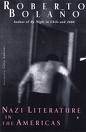
[READ: April 1, 2010] Nazi Literature in America

I’ve read a lot of books that are, shall I say, weird.  But this one is definitely the most unusual when I think:  what would possess a person to write it?

Nazi Literature in the Americas is written as an encyclopedia of Nazis writers who have lived in North, Central and South America.  Except that all of the writers are fake.  So, essentially Bolaño has invented 30 characters, and created rich, fully detailed biographies about all of them.

Some of them are very short (a couple of pages) while a few are over ten pages long, with details of books/poems published, critical reception and even untimely deaths.   The biographies are grouped according to categories (The Mendiluce Clan; Itinerant Heroes or the Fragility of Mirrors, Forerunners and Figures of the Anti-Enlightenment; Poètes Maudis; Wandering Women of Letters; Two Germans at the End of the earth; Speculative and Science Fiction; Magicians, Mercenaries and Miserable Creatures; The Many Masks of Max Mirebalais; North American Poets; The Aryan Brotherhood; The Fabulous Schiaffino Boys; The Infamous Ramírez Hoffman).

And although they are not chronological, Luz Mendiluce (whose bio I read separately) features prominently as a constant “reference point” and creator of one of the prominent Nazi publishing houses.  She had created a publishing empire where Nazi works were spread throughout the continent, and it seems that everyone had a title published by her company Fourth Reich.

What’s so weird about the book is that the people are fake, everything about them is fake (although they are placed firmly within history) and yet their stories are still compelling.  Bolaño has employed a mildly sympathetic tone to these people.  Not sympathizing with the Nazi aspect, but sympathizing with them as humans.

There were one or two who I didn’t really enjoy.  And I admit that I enjoyed the North Americans more; since I know more about North than South America, the facts surrounding these authors resonated more.  But I thoroughly enjoyed most of these biographies.

Of course, just when you think the book is all the same, the final biography changes everything.  In this one, Bolaño himself appears as the writer of the book.  He writes about Ramírez Hoffman in the first person, mentioning himself by name and getting personally involved in the story of this final, skywriting author.  It completely subverts the work before it and leaves you more confused than when you started (although a lot happier for having read it).

The final section of the book is an Epilogue foe Monsters.  It provides a brief biography for all of the secondary characters mentioned in the main body.  It also details the publishing houses and magazines, and finally lists  a bibliography of all books published.  The amount of detail that Bolaño created here is staggering.

But aside from all the Nazism, the book can be quite funny.  Like the conclusion for Luz Mendiluce Thompson, which ends with her driving a car into a gas station.  The final line: “The explosion was considerable.”

It’s tempting to say that this “novel” is not representative of Bolaño’s writing, but I think that’s false.  From what I’ve read so far, Bolaño doesn’t conform to any style in his books: each book is designed differently.  But like this one, they all deal with South America, with violence, with politics and are filled with humor.  So, yes, I guess this is pretty representative.

Oh, and the translation by Chris Andrews is, once again, fantastic.

For ease of searching I include: Bolano

Read Full Post »

SOUNDTRACK: RUSH-A Farewell to Kings (1977).
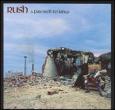
Although I recently said that Caress of Steel is one of my favorite Rush albums, I’m really torn between a number of their albums from the 1970s.  I’ve loved A Farewell to Kings since the time I got it: it’s over the top, and it showcases all of the band’s strengths.

The opener “A Farewell to Kings” features a wonderful classical guitar intro that morphs into a heavy rocking masterpiece.  There’s time changes galore and it’s all over in just about 5 minutes.

It’s followed by “Xanadu,” one of Rush’s all time great epics.  Tubular bells, cool guitar effects, Rush’s first great use of keyboards-as-effects, even a cowbell solo all open this song with sufficient grandeur for what’s to come.  A slow vocal intro leads to a super fast exploration of Coleridge’s “Kubla Khan.”  Whenever people wondered why Neil’s drumset was so big or why Alex (and Geddy) had doublenecked guitars, they needed only listen to this to be amazed that three men could play it all.  11 minutes long and not a wasted second.

One of Rush’s biggest hits and perennial favorite “Closer to the Heart” comes next and it still sounds pretty fresh all these years later.  “Cinderella Man” is an overlooked track on this disc, but it showcases Rush’s drift away from the individualism vs state of 2112, and move toward the individualism of doing what’s right for all: “he held up his riches to challenge the hungry.”  It also features a blistering solo from Alex.  “Madrigal” is a very short acoustic song, quite a departure for the time but a nice delicate track before….

“Cygnus X-1.”  The other epic on this disc.  And right from the start you know you’re in new territory here.  A fully distorted voice, bells echoing like they are floating at sea (or in outer space), all kinds of build-up lead to a noisy bass line coming from far away in the depths of space.  And after 2 and a half minutes of build up, the whole band kicks in with this off kilter heavy rocker.  It’s basically the story of a space ship flying into a black hole. It also features some of Geddy’s most screechy vocals.  I wish I could remember the exact quote, but my friend Joe’s bandmate had a wonderfully derogatory description of the end of this song.

But aside from the end, the main body is great.  From the 5 minute mark, the song is a catchy, driving song as the Rocinante flies through the galaxy.  From the 7 minute mark, the song is seemingly caught in the black hole, as the song drifts about, compressing the song into a manic session of fast fast fast riffs and Geddy’s tortured screams.  It’s pretty intense, and guaranteed to alienate as many people as it wins.

The album features so much experimentation, and it’s wonderful to see a band with so much creative energy release a disc with so many fantastic moments.  Very few records take risks like this anymore.

[READ: March 21, 2010] The Color of Heaven

This final book of the Kim Dog Hwa’s trilogy is a wonderful conclusion to this sweet story.  If you’ve read my previous two posts about these books, you know that this is the story of, Ehwa, a young woman as she matures in rural Korea several generations ago.  By this third book, she has turned 17 and has met the love of her life.  Sadly for her, Duksam has had to leave suddenly.  At the end of book two, he set sail in part because he was fleeing an angry mob, but also in an attempt to make money as a fisherman so that he can save up for his beloved Ehwa. (more…)

Read Full Post »

SOUNDTRACK: BLUE OYSTER CULT-Club Ninja (1986).

My roommate Glen is the only person that I know who not only owned this record but also played it a lot.  No doubt it was his relentless playing of this disc that now leads me to think of it rather fondly, even if it is pretty poorly regarded as far as BOC discs go.

It has a very poppy/80’s metal feel to it, there’s no denying.  Some of the songs are beautiful keyboard-rich tracks (“Perfect Water” which is close to cheesey but I don’t think ever crosses the line), some of them are pummeling 80s metal with chanted choruses “Make Rock Not War” (boom), and “Beat ‘Em Up” (which is as delightfully silly as it sounds).

It also featured a song that could have been a hit called “Dancing in the Ruins.”  The less bombastic metal songs are also quite catchy, like “Shadow Warrior.”  And the final song, “Madness to the Method” reminds me of one of their 70s songs, “The Marshall Plan” as it’s complete with spoken word sections and seems to be about rocking out.

I suppose compared to their 70s heyday, this falls a little short, but as an 80s metal album it’s quite solid.

[READ: March 12, 2010] The Color of Water

This is the second part of Kim Dong Hwa’s trilogy of the maturation of Ehwa (a character loosely based on his mother).  It is beautiful, engaging and very very real.

Ehwa is growing up in rural Korea. Her father died many years ago, so it is just her and her mother living together.  Her mother owns the local tavern, and for much of the day Ehwa is free to roam around and learn things from her friends.

This second part of the trilogy focuses on Ehwa’s budding sexual maturity.  She learns  more and more about what her mother and the “picture man” are feeling when he arrives at their house.  She learns, through her friend Bongsoon, what it feels like to experience individual pleasure.  She also learns what it feels like to fall heavily for someone when she meets the handsome and strong Duksam. (more…)

Read Full Post »

SOUNDTRACK: BLUE ÖYSTER CULT-Fire of Unknown Origin (1981).

This was the first BOC album that I bought.  The video for “Burnin’ for You” was all over MTV (although I don’t remember it at all, now).  And I was an instant convert to BOC.  I listened to this disc constantly.

It took going to college and meeting my roommate before I got any other BOC discs (he was a diehard fan).  And while I like most of their releases, this one still ranks as number one for me.  BOC had been getting poppier and lighter over the years, there’s no question.  But this album perfected this mix, making for a supremely catchy recording that still exhibited all of their metal trademarks: wild guitar solos, bizarro futuristic lyrics (although there’s no weirdo titles on this one) and heavy heavy chords.

The opener, “Fire of Unknown Origin” is a wonderful rocking song.  It sets the tone for the disc: keyboards, yes, but of the atmospheric/spooky variety, not the poppy/hit single variety.  “Burnin’ for You” seems like an obvious single, and so it was. It also screams early 80s to me, which I guess isn’t necessarily a bad thing.

But the album’s wonderful weirdness kicks in with “Veteran of the psychic Wars” written by Michael Moorcock. It was featured in the movie Heavy Metal, and is weird and creepy, propelled by thunderous drums and a great guitar riff: a sci-fi masterpiece.  “Sole Survivor” is in the same vein, Eric Blooms ragged voice and the awesome bass line really sell the song.

The middle track is “Heavy Metal (Black and Silver)”  It is heavy heavy heavy and it rocks like all get out with a screaming feedback solo.  It’s an awesome song that seems more than a little out of place on this rather light sounding disc (although even on their later discs, they have included an occasional heavy track).

“Vengeance (The Pact)” is a keyboard-fueled track.  But the greatness is that it’s Lanier’s spooky keyboards.  It also features an awesome middle section with heavy heavy guitars and dark lyrics.  “After Dark” is another wonderfully creepy keyboard song.  The underlying riff is sinister and cool, and the lyrics (and harmonies) meld the “band vocals” on some of their more “hit single” songs, with the oddness that keeps BOC interesting.

But by far the creepiest, most sinister and flat out weird song is “Joan Crawford.”  When I first heard this song back in 1982, I had no idea who Joan Crawford was.  Finding out later that she was a real person has messed with my head for my entire life.  I have never seen a film with her in it and am just convinced that she’s a scary, scary woman (the whispered “Christina…mother’s home” really did me in).  Interestingly, I don’t find the song spooky (although I do get chills if I’m paying attention), but I still find her spooky.  It opens with a pseudo-classical piano riff and then bursts out with menacing metal chords.  The chorus “Joan Crawford has risen from the grave!” complete with squeaky violins proceeds until and the break with sound effects that imply Crawford’s life, I assume: car crashes, race tracks, telephones, babies crying and the whispered “No.”   And it’s all catchy as hell.

“Don’t Turn You Back” ends the disc as something of a mellowing out after Joan Crawford.  It features a great solo and rather soothing choruses (despite the warning that you shouldn’t turn your back).  And it features the ever confusing line: “You use that special option in your car”  (what could that BE?).

Why on earth hasn’t this disc gotten a deluxe reissue from Columbia>?

[READ: March 3, 2010] Abraham Lincoln: Vampire Hunter

I received this book as a prepub Advanced Readers Copy and hoped to have it finished before the book actually came out, but I was shy of it by a couple of days (rats).

So Grahame-Smith wrote Pride and Prejudice and Zombies.  His was pretty much the first in what has become an ever increasing series of literary mash-ups: using “classic” texts as a basis and inserting a seemingly random (usually horror) element.  The genre is already close to jumping the shark, although realistically, you never know when a combination is going to work wonders.

I wasn’t really that interested in the follow up to P&P&Z: Sense & Sensibility & Sea Monsters.  When I first heard of it I was intrigued, but watching the promotional video for the book actually turned me off of it.  I’m intrigued that a new title: Pride and Prejudice and Zombies: Dawn of the Dreadfuls is written by a different author, but I have to assume that it will be all original as there’s no prequel to P&P itself.  And I have to admit I like the title of the upcoming Jane Slayre (for Jane Eyre).

But the things about P&P&Z were that it kept the original text (mostly) intact, and there were a number of things in the original that actually led to inserting zombies into the text.

Plus, Grahame-Smith matched the tone of the original perfectly.  The forthcoming mashups will have a lot to prove but I think some cream will definitely rise to the top.

So, Grahame-Smith’s new book Abraham Lincoln: Vampire Hunter is sort of a mashup.  Unlike P&P&Z, there is no source text to blend.  Rather, Seth Grahame-Smith, who is a character in the introduction of the book is given the “secret” diary of Abraham Lincoln, under provision that he write up the real story of our 16th president.  The secret diary reveals not only that our country was plagued by vampires but that Lincoln himself was personally impacted by them. (more…)

Read Full Post »

SOUNDTRACK: THE TRAGICALLY HIP-Live from the Vault-Volume 4 (2009).

Faithful reader will recall that this disc got trapped in my car’s CD changer.  When I had it the player replaced, they sent the old one back to mysterious Toyota offices far away.  And, about a month or so after sending it out, I received a package from Toyota with my three lost discs (this one, a Black Sabbath disc and, a promo disc I took from the library to try and wedge into the player to get it to eject the other discs (that doesn’t work, by the way) which was, embarrassingly, Ozzy & Kelly Osbourne doing a duet of something or other).

Thank you random Toyota person for keeping this disc, which is not easily replaced, in good condition.

So this concert is from 1994 and was recorded in Brussels on the Day for Night Tour.  I think many fans feel that this is a high point in The Hip’s recording career, and this concert attests to it.  The band sounds fantastic, energetic and really tight.  And the music from this era is just great: dynamic and dramatic.

This disc also adds to speculation that lead singer Gord Downie is a weird guy.  His between song banter is quite peculiar, to say the least (apropos of nothing: “Do you think of your pet as a pet or a member of the family?”).  Which also leads me to wonder if fans in non-English speaking countries (and yes, I know that many people in Brussels do speak English) think or care or even mind when lead singers babble in English to them.  Just curious.

I don’t have any other Vault discs from The Hip, but this one is certainly great.

[READ: During an ∞ of minutes during December 2009 & January 2010] Everything and More

As part of my pledge to read all of DFW’s works, I skipped the fiction and moved straight to this.  I hadn’t heard all that much about this book, except that it was pretty dense.  And, yup it is.

I’m going to give a comparison for any other DFW fans who are thinking about reading this.  If you have read Infinite Jest (and if you’re interested in DFW you should certainly read that before this book), and if you recall Endnote 123: Pemulis’ high tech math formula for calculating Mean Value w/r/t Eschaton, then you will have a fair idea of what you’re in for with Everything and More.  So, if your eyes glazed when you started to read that endnote, you’ll likely want to skip this book altogether.  However, if you plugged through with that endnote and you didn’t care that you didn’t get it, but you kind of enjoyed it because despite the math, it is very funny, well, then you might enjoy this book too.

If you’re a hard core math dude and you understand what things like: ∃ and ∈ and ∉ and ∏ and ℜ and even ∀ then you’ll have no problem with this book.

But math aside, there’s a lot of funny things in this book.  And DFW is in full conversational tone, with several places where he says things like “not sure if this has been mentioned in the book yet” implying that he never proofread the thing, which we know he did.  There’s even a funny observation as to the placement of a picture (“it’s not entirely clear to me why they put [this pencil sketch] here”).  There’s also tons of footnotes.  And most of them are labeled IYI (meaning If You’re Interested), and he totally lets you off the hook if you don’t feel compelled to read these.  Although as with most things DFW does, the footnotes are always tons of fun.

He also shows his great undying affection for his math professor, Dr. Goris (Dr. G).  He quotes liberally from Dr G’s classes, citing examples, funny quotes and the amusing joke that Irrational Numbers are called ‘surds.  There’s also great joke about schnitt (which I’ll explain later).  It even opens with a hilarious (or maybe not) section about the inability to get out of bed in the morning when you think about infinity.

As in for example in the early morning, especially if you wake up slightly before your alarm goes off, when it can suddenly and for no reason occur to you that you’ve been getting out of bed every morning without the slightest doubt that the floor would support you. Lying there now considering the matter, it appears at least theoretically possible that some flaw in the floor’s construction or its molecular integrity could make it buckle, or that even some aberrant bit of quantum flux or something could cause you to melt right through. Meaning it doesn’t seem logically impossible or anything. It’s not like you’re actually scared that the floor might give way in a moment when you really do get out of bed. It’s just that certain moods and lines of thinking are more abstract, not just focused on whatever needs or obligations you’re going to get out of bed to attend to.

And but so, what is this thing about?

Okay, so it’s about ∞ and the history of ∞.  It begins with a great section about the ancient Greeks (Zeno’s Paradox and all that) and slowly moves up through to Aristotle.  I myself have always been a Platonist (yes, in fact, I have made that distinction in my life, which may say more about me than many people know), and have always been kind of anti-Aristotle.  And, for the purposes of this book, that’s a great position to take.  Aristotle turns out to be like the arch-nemesis of ∞. (more…)

Read Full Post »

« Newer Posts - Older Posts »