 SOUNDTRACK: ALSARAH & THE NUBATONES-Tiny Desk Concert #585 (December 9, 2016).
 The Tiny Desk Concerts have introduced me to a ton of bands I’ve never heard of before. They’ve also introduced me to styles of music I’ve never heard before. Alsarah and the Nubatones play music inspired by her home country of Sudan. But I believe she (they) include pop elements to make the music more accessible (and danceable).
And this Concert was great–I listened to it over and over.
The instrumentation is all fairly simple: Rami El Aasser plays all kinds of percussion. I love the sound that he gets out of that hand drum. Brandon Terzic plays an amazing oud and Mawuena Kodjovi’s bass holds the whole thing together in an incredible way–something that I think this traditional music lacks.
But most important are the singers’ voices. Alsarah sounds great by herself but when she and Nahid harmonize, it is enchanting. Especially in the chorus of the first song, “Ya Watan” when their voices work together so perfectly
But what’s Alsarah’s deal? The blurb is really helpful:
When singer Alsarah left her native Sudan, she was just a child who’d shown an interest in music. She’s said it served as her coping mechanism during a subsequent transition to life here in the U.S. That passion led her to a university degree in ethnomusicology.
It also drew her to musicians who were passionate about the intersection of culture, music and migration. Together, their one-of-a-kind expression has been called “East African retro pop.” But that tag only scratches the surface: In their hands, the music pulses, breathes and comes alive with a mix of tradition and contemporary influences.
I don’t know what the song names mean, but I love “Ya Watan.” The song is really catchy, but when the bass did a big slide at the end of the middle slow section to announce the final part, I was hooked.
I have no idea why there’s a 3 in this titular word, but that makes me even more intrigued by “3roos Elneel.” Before the song she says (in perfectly unaccented English), “I’m going to tell a story because I think I can do whatever I want.”
She says that the song is inspired by “girls music” performed at wedding ceremonies in Sudan. But she tries to merge it with an old myth. The Nile River would flood every season because the gods were angry and lonely. So the Sudanese people would sacrifice the most beautiful maiden in the village. But she wonders what happens after she goes in the river. And what happens next season when there’s a new girl–that’s a lotta wives. So, she likes to think there’s trade off. You go in to the river and do 3 months as a Nile god bride and then you swim off. Maybe the bottom of the Nile is full of ex-Nile-god-divorcees giving birth to mermaids. Yes, she claims mermaids as a Nubian invention.
The song begins with a call and response. It sounds rather traditional. But after a few lines, the song stops with a four-beat clap-along section. And then everything shifts. First the bass plays a cool riff then the oud joins in with some fast playing and then the percussion makes it utterly danceable. There’s even a cool oud solo.
The first section of “Fulani” is the chorus repeating the word Fulani over and over (in call and response style), but it’s done in wonderfully melodious fashion, including a catchy stop start section with more clapping.
The song is really great and I love the way all the instruments are able to make the song fade out.
This music was totally captivating.
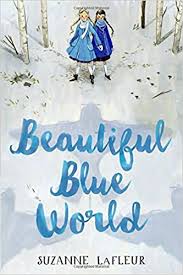
[READ:January 27,2017] Beautiful Blue World
Sarah brought this book home and read us a little bit of it and I decided I had to read it, too.
The part she told us about was about a girl taking a test to see if she would be useful for the army. But it was no ordinary test, it was more like Bletchley Circle–puzzles and observations more than facts. That sounded great.
What she didn’t tell us was the general set up of the story.
So, this story feels like a World War II story, with a country like England being attacked by a country like Germany. But what makes this book special is that these are not the countries. The countries are called Sofarende (the attackees) and Tyssia (the attackers). But despite these countries having fantastical names, the story feels very real.









 I Just Read About That...