 SOUNDTRACK: BOB ATCHER AND THE DINNING SISTERS-“Christmas Island” (1950).
 There is something so charming and wonderful about white people co-opting Hawaiian music in the 50s. I know fully well that there is nothing ‘authentic” about the whole AH-LOH-HA-AY business and that they have made it smooth and “sexy” for “bachelor pads” and all of that. I know that I should be offended on everyone’s behalf. And yet I can’t be.
I find bachelor pad kitsch to be fun (Esquivel’s Christmas Album is a perennial favorite), and so I was delighted to be introduced to this song from the 2007 NPR Holiday show. I actually don’t know anything about Bob Atcher or the Dinning Sisters, but this song is a delightful trip through faux Hawaiian music–slide guitars and a very hula-feeling rhythm.
It even features Santa arriving on a canoe. Yup, the whole simplification of Hawaiian/island culture is in poor taste, but man, it’s such a swinging and trippy take on a Christmas song. And I’m sure no islanders were hurt in the making of the recording. Aloha-ay.
[READ: December 15, 2013] Kawaii!
I’m fascinated by manga and the whole, as the subtitle says, Japanese culture of “cute.” I don’t really get it. I mean, I get it, that cute things are cute, but the whole cultural love of cute is so peculiar to me–especially when reading this book and seeing that it is a cultural explosion of cuteness. This book was a great introduction to so many different aspects of this culture.
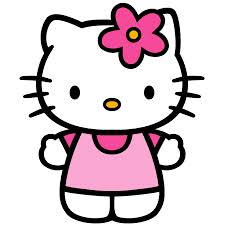
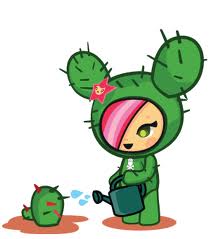 It begins with some of the roots of the culture and answers a question that I’ve always had–why do manga characters have such big eyes–especially when they look so…Western. Evidently there is a two part answer. One is a kind of veneration for European culture. But the more reasonable and satisfying answer came from an early artist who said that eyes were so expressive that by making them so much bigger it was simply easier to emote with them. And that I find absolutely believable.
 The book also talks about the proportions of cute–a big round head, a small “face” on a large head–basically anything that is reminiscent of babies or small animals is instantly cute.
  So Hello Kitty works as a n icon of the genre.
And yet, within the culture of cute there are also many sub genres like guro-kawaii (grotesque cute), kimo-kawaii (creepy cute), busu-kawaii (ugly cute), ero-kawaii (sexy cute) and shibu-kawaii (subdued cute). And they are literally what the genres sound like–cute characters engaging in non-cute behavior. The most fascinating ones to me were the guro-kawaii, in which Hello-Kitty type cute animals are covered in blood or have big scars or fangs. (check out Gloomy Bear who actually attacks his owner). The book shows examples of each one.
 Kawaii! has several sections in which ample pictures are shown and documented. And each “chapter” is an interview with a famous creator of kawaii culture.
S0, the first section “Cute Design Overload” looks at Hello Kitty (and the Hello Kitty theme park and hotel!), but also San-X and their ubiquitous rilakkuma (that brown bear whose simple face is on everything!), the creepily popular Gloomy Bear, the wonderfully named tokidoki, MonsterGirls and Paro the Seal, which is a seal pup stuffed animal that has actually been used as a therapy creature. The section looks at the creatures created– how they sell and who they are marketed to. Most of the interviews ask the designers what their understanding of kawaii is, which is interesting in the way each was similar but had different angles.
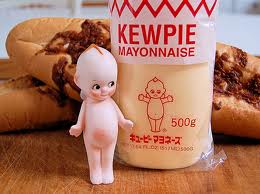
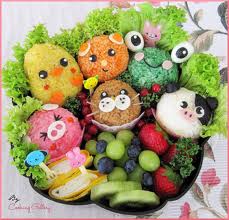 “Adorable Eats” looks at really cute food like kewpie mayonnaise and bento boxes that are made adorable.
 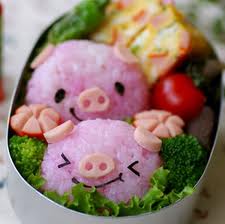 I mean, look at how cute these sushi are–little piggies and pandas. Imagine if your mom made you this for school!
“How to Dress Kawaii” is where things start to get pretty weird for me . There is talk of cosplay but also of people who dress like this beyond cosplay. Like the people who walks around in full body costumes, or dressed like manga characters–and if I understand the book correctly, they will do this at any time, just walking down the street.
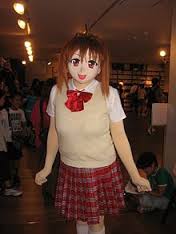 It’s a bit much for me, although I imagine it would be awesome to see a real person with a manga head. There is talk among the designers about repressive culture and delayed childhood, and I can see that being true for why you might do this. But what a strange outlet.
Almo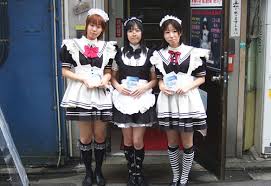 st as strange as Maid Cafes. I recently wrote about a “co-sleeping” cafe in Japan in which men literally sleep next to women for a price. In Maid Cafes, women dress like maids and act subservient to their clients (both men and women).
I am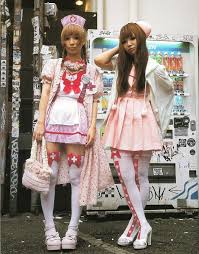 made quite uncomfortable at what seems like objectification of women, and yet the people they talked to don’t seem to feel objectified, so cest la vie, I guess.
“Cute Crafts” returns more towards created creatures. Although these are more DIY creations, rather than the huge corporate characters from the beginning of the book. It’s pretty fascinating that there is such a culture of cute that so many people can be entrepreneurs in making cute things.
 The final section is “kawaii visual art” and this section really seems to push the boundaries of what I’ve learned about kawaii from the book. Some of these artists really try to get people to think about kawaii and why it is popular. Some of the women, like Shojono Tomo talks about Japanese men, saying “Japanese guys like things that are weaker than them–which makes them feel superior–and girls pander to this.” Her work is not quite as kawaii as the rest.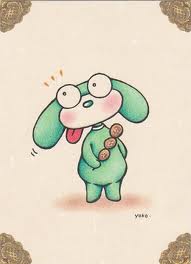
There’s also the character Useless, by Ai, the green dog thing with its tongue out.
I don’t know if it was the translation, but some of the artists said odd things like the artist Chikuwaemil who opened her interview by saying “For a long time, I was scared to be alive.” Or Yosuke Ueno who says “my mum didn’t show much affection to me.” She makes psychedelic kawaii (see the painting at the bottom).
So this 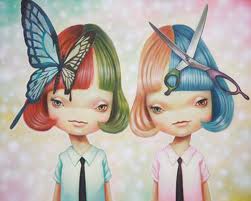 book proved to be fascinating. And yes, I would totally buy some of these cute characters–they’re just so cute! (And my daughter just LOVED this book).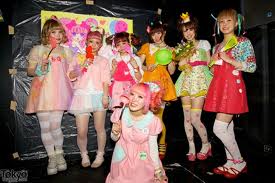

 I Just Read About That...
[…] And your mind will explode when you watch it. The video shows the three girls doing their best kawaii–being adorable, in school girl outfits–while headbanging. And the musicians behind […]