Feeds:
Posts
Comments

Archive for October, 2013

harper septSOUNDTRACK: LINDA THOMPSON-“Love’s for Babies and Fools” (2013).

lindaAfter two pop songs, here’s a major bummer from Linda Thompson.  Thompson is a fascinating figure.  She was married to Richard Thompson and made many albums with him.  They split very acrimoniously and them Linda suffered from psychogenic dysphonia, which rendered her incapable of singing.  She stopped singing for 11 years.  Now with botox injections into her throat she can sing again, but cannot perform live. She released an album n 2002 (Richard played guitar on a track) and another album in 2007.  Now’s she’s back and Richard plays on this song as well.

In the grand tradition of folk music, Linda’s lyrics are achingly straightforward and powerful:

My father is a traveler, he has a cuckold’s luck,  my mother is a queen but her hands are tied with blood. I’ve a brother in the graveyard, my sister has the blues.  I care only for myself.  Love’s for babies and fools.

The guitar work is beautiful, the song itself is beautiful and depressing at the same time.

Linda’s voice has always been unique—almost otherworldly and yet ordinary at the same time.  It’s strange and mesmerizing.  Welcome back Linda.

[READ: October 1, 2013] “A Different Kind of Father”

This is an excerpt from a new book by Franzen. The book itself is fascinating.  It is a translation of a “Nestroy and Posterity” a somewhat obscure essay from 1912 by the Austrian satirist Karl Kraus.  Franzen’s book is called The Kraus Project and in addition to the translation, Franzen includes a ton of footnotes that are all personal, like this one.  The book is 300 some pages and it sounds like the majority of it is footnotes.  [For those who like to keep track of Franzen’s connections to David Foster Wallace, of course this collection with footnotes does make one think of DFW.  Interestingly, Franzen talks about a book he was writing in 1981 (long before he met DFW which had a main character whose name was Wallace Wallace Wallace].

This footnote (no context is given) is all about the concept of thriving as a man by surpassing your father.  Be that literal or figurative (or literary).  In the case of Kraus, Franzen says, he is denying false paternity.  It was believed that Kraus was the literary son of Heinrich Heine, but Kraus tries to annihilate Heine by dismissing his successes and impugning his character.  However, Johann Nestroy was also a precursor to Kraus but Nestroy was a somewhat neglected and undervalued one, and so Kraus seeks to place Nestroy as his surrogate father. (more…)

Read Full Post »

I Just Read About That favorite Alice Munro just won the Nobel prize for Literature!alice I love this picture (from 2009).

Munro is the 13th woman (shocking) and 2nd Canadian born writer to win the Prize.

Read about it at the CBC.

Fantastic news.

Read Full Post »

ifonlySOUNDTRACK: THE BLOW-“Make It Up” (2013).

blow2This song from The Blow is what Bob Boilen played the other day on NPR.  He had just seen them live and liked the show so much that he listened to the whole album three times in a row on the way home.  He said the live show was amazing—Khaela Maricich is on stage singing and talking to the audience all by herself.  He thought that the music was all backing tapes, but then he realized that her partner was back at the soundboard—creating the music and doing the lights at the same time.

Yesterday I said that The Blow’s “Parentheses” was the perfect pop confection.  “Make It Up” is far more complicated anc more challenging.  It has many elements of pop perfection but it is nowhere near as immediate as “Parentheses.”

The song, despite its simplicity, has many complicated elements—the opening drum sequence is elaborate with all kinds of rhythms and sounds.  But when the verse starts, the vocals are delicate and simple and the keyboards are single notes.  Until the chorus when the complexity jumps in again—in addition to the drums, we get several versions of Maricich‘s voice doing background vocals, singing leads, making sound effects and then they disappearing again.  The third part introduces a new, simple, very pretty melody with beautiful voices playing counterpoint to each other.

The song feels so busy but it is really just a few simple elements piled on top of each other.  It’s simultaneously pretty and mind-boggling.  More pop songs should do that.

[READ: September 25, 2013] If Only

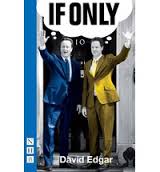
You shouldn’t judge a book by its cover, but sometimes a cover grabs you.  I have no idea what it was about this cover that made me look at this book twice, but I did.  And when I investigated the author, I discovered that Edgar is a prolific playwright and that this play is a contemporary political story set in current and future England.

What struck me immediately was this disclaimer at the bottom of the character page:  “The second half of the play concerns the future of the coalition government.  This text went to press before the end of rehearsals and so may differ considerably from the play as performed.”  How interesting is that?  First that they would do that and second that it might actually be a different play that I have read.

The opening of the play takes place in the spring of 2010, right after the eruption of the Icelandic volcano which grounded European air traffic to a halt.  In the airport are three politicos: Peter, who works for the Conservatives, Jo, who works for the Liberal Democrats and Sam, who works for Labour.  They are all fairly high up in the party (but not name recognized). They are stuck because of the volcano and are seeking any way to get back home as the general election is but a few weeks away.  I really enjoyed the continual jokes about charges for their phones and devices.

Most of the first act concerns their attempts to get back home and their discussions about the upcoming election.  Thy can’t get back home despite their various clever ideas, until they learn that they can by a car for a few hundred pounds and can all drive together back home.

The political discussion is far more complicated—and it certainly helps if you know more about British politics than I did [I had no idea what UKID was or who Clegg was, for instance]. (more…)

Read Full Post »

ailisSOUNDTRACK: THE BLOW-“Parentheses” (2006).

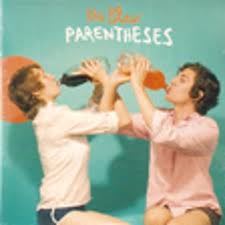
blow1I learned about The Blow from NPR Music.  The lads played a new song by them, but this song, which is also available on NPR, is from 2006.  I don’t know anything else about The Blow.  But I do know that “Parentheses” is a delightful little pop confection (with enough elements of weirdness that explain why it was never a hit).

“Parentheses” immediately sounds like something I’ve heard before.  That chorus is just so perfect—“when you’re holding me, we make a pair of parentheses” that I can’t believe no one has thought of it before.  Of course, the bit in the verses about the deli aisle is certainly unexpected.

I normally don’t like the bap bap // bap drum beat, but it’s perfect here.  The stripped down nature of the music (simple chords on a few different keyboard sounds) accompanies this perfectly.  It’s sung with Khaela Maricich’s sweet and almost fragile (but not) voice.

It is so catchy I have now listened to it three times in a row.  And that little guitar tail at the end is very inviting as well.  I can’t believe this song wasn’t huge.

[READ: September 26, 2013] Desolate Heaven

I read this play because of my friend Ailish—I’ve never seen anyone with a name almost like hers—Ailís—before.  And, given the Irish name it is no surprise that the story is set in Ireland.  But rather than Dublin, it is set on a desolate beach.  We see two young girls: Orlaith (13) and Sive (12) messing about.  They are acting like adults—complaining about the beach and “the kids” and how everything is awful.  Despite some tensions, the girls bond over their difficult lives.  Each lives with a single parent and in each case, the parent is an invalid.  Each girl has to do everything for her parent in addition to going to school.  And in the next few scenes we see just how desperate their situations are: Sive’s mother has broken her pelvis (and has been unable to move for two years) and Orlaith’s father didn’t get up at all today because he didn’t feel he was able to.

In the next scene, we see the girls acting out a plan—to meet at the beach with as much money as they can grab.  And just like that, they are off on a road trip. (more…)

Read Full Post »

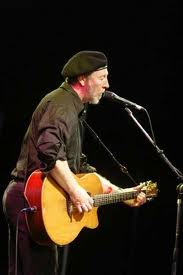
[ATTENDED: October 4, 2013] Richard Thompson at the McCarter Theatre

Back again for the (semi) annual Richard Thompson show at the McCarter Theatre.  RT himself said this was his 15th year playing there more or less every year.  And it seems like quite a lot of the concertgoers were multi-year attendees.

This time, Richard Thompson’s son Teddy opened.  About fifteen years ago I saw Teddy open for Richard in Boston.  That set was really enjoyable and I bought Teddy’s debut album.  But I haven’t thought all that much about him since (he has released a number of albums since 2000).

I spent some time at this show thinking about how strange it must be to tour with your father if he is a guitar wizard.  Teddy is not a guitar wizard and doesn’t try to be one.  [There’s an article that I’m going to be posting about in a few days by Jonathan Franzen which  deals with coping with successful fathers, so it was on my mind].  Indeed, in an article from a few years ago, Teddy said that at first he never listened to his parents music because it was folkie and he like rock.  But after a while: “I started to be more aware of how much people loved [my parents],” he said. “When I started doing (music) for a living, I felt, ‘I’m not as good a guitar player as my dad. My voice isn’t as good as my mother’s.'”  His mother is Linda Thompson who does have an amazing voice.  So it must be intimidating to be on with a guy that is so good and so beloved.

But Teddy has a great voice as well (more powerful than Richard’s), he sounds a bit like Neil Finn from Crowded House.  Teddy played about a dozen songs.  I actually didn’t recognize any of them, but I enjoyed them all.   As I said his voice is strong–and is really the selling point, because while the melodies are very good, they are also rather simple.  I don’t know that anything was as catchy as the songs by his dad, but of course plays a very different style of music–a kind of country folk with an occasional hard edge (both Thompsons only played acoustic guitar for this show).

I don’t know what their relationship is like (I always assume that famous (relatively) people’s children hate them.  But it was clear that Richard was proud of his son when he came out.  (more…)

Read Full Post »

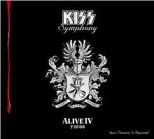
CV1_TNY_09_23_13Brunetti_spine.indd 220px-Alive_IV_KISSSOUNDTRACK: KISS SYMPHONY-Alive IV 2/28/03 (2003)

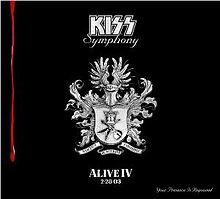
This CD is a bit out of order in the Kiss chronology, but since I’ve just looked at a few live Kiss albums and looked at “Atom Heart Mother,” the ultimate orchestra rock, it seemed like a good time to throw this in.

This is from a Kiss concert in Melbourne Australia.  The disc (and I assume the concert) is broken into three sections: regular Kiss, Kiss with the Melbourne Symphony Ensemble and Kiss with the Melbourne Symphony Orchestra.

The first six songs rock pretty hard.  It’s an interesting collection of songs from throughout their career.  “Deuce” and “Strutter” sound good.  “Let Me Go, Rock n Roll” is a surprise and one that I like a lot, (although I find it weird that Peter Criss says exactly what he said at the end of the song on Alive! –it was in audible then and it is inaudible now).  Of course I wish they hadn’t chosen “Lick It Up” but it is better than on Alive III (I like the way he turns the “I want you, I need you” into a simple plea “to clap your hands”).  It makes me laugh that Paul is still using the “rock and roll pneumonia” schtick thirty years after I first heard it to open “Calling Dr. Love”.  And then there’s the new song, “Psycho Circus,” I haven’t mentioned that album yet but it’s a new song and they play it with verve.

The one thing about the disc that is especially obnoxious is how proud of themselves they are about doing this tour with an orchestra.  Paul says, ““Some people said we were crazy to attempt this Maybe we are crazy but that’s what makes us Kiss.”  And yet, clearly it’s not an original idea (I mean even Metallica, the most obvious comparison did theirs three years earlier).

When the Ensemble comes out, they play 5 mellow songs.  The first (and most obvious) is “Beth”.  But man does it sound lousy here. Peter doesn’t seem to have any of the oomph to make it sound any good.  (The orchestra sounds good though).  The next obvious song is “Forever.”  What I find odd about these “Ensemble” songs is that it sounds like the band is using acoustic guitars which just add a strange percussive sound (since you can barely hear the guitar over the orchestra).  I understand being unplugged for the Ensemble, but it sounds weird.

The huge surprise comes with “Goin’ Blind” in which Gene sings in a quite pretty falsetto.  He sounds old (for sure), but it’s a surprisingly pleasant voice.  Another huge surprise is the inclusion of “Sure Know Something “ from Dynasty.  And then the craziest surprise of all is “Shandi.”  “Shandi” is one of those songs that I used to joke asking if Kiss played it live.  I cannot believe they played it (even with an orchestra)  I wonder if Australia especially liked the Dynasty/Unmasked era.  Of course, I love that era as well and am thrilled to hear this song live (even if Paul sounds a little stilted singing it).

Then comes the bloat.  Disc two brings in the full orchestra and the sound is…weird.  The orchestra is sort of playing along with the band (mostly like added strings to pop songs and swells as needed). The big surprise is that the strings don’t play the iconic solos—which would be frankly amazing–imagine the whole string section playing the solo to “Detroit Rock City.”  Rather, the sounds that we hear most from the orchestra are the horns, which make it sound kind of like a marching band playing Kiss.  But the real problem is that the band seems to be fighting with the orchestra.  Since the guitar and entire orchestra are playing the same thing, you can’t really hear one or the other very well.  Worse yet, by the end, both Paul and Gene seem to be screaming to be heard over the orchestra, which makes them sound quite bad.

It’s not a total disaster.  Some songs work just fine.

“King of the Night Time World” had orchestration on the album, but in this version, they just seem to be throwing in strings everywhere.  “Do You Love Me?” works great in this setting for the exact opposite reason that I didn’t work in Unplugged—the orchestra brings up the chorus to higher levels.  “Shout It Out Loud” is pretty successful with the orchestra although Gene seems really flat.  The orchestra works well on “God of Thunder” probably because the music itself is so spare that the orchestra fills in the gaps nicely.

I’m always disappointed when Paul plays around with the vocal styling in popular songs—he does it a lot in “Love Gun.”  I’m not saying that every song should sound just like the record, but it’s weird unsettling when he mixes things up in weird ways as he does here. The orchestra is good for this one though.  And, the strings work great with “Black Diamond.”

On the other side of things, It is very creepy to have a children’s choir sing to the groupie-anthem “Great Expectations” but it does sound good—until the end when Gene doesn’t even seem to care a bout the spoken words.  “I Was Made for Lovin’ You” gets less disco and a bit more rock here.   And the set ends with “Rock n Roll All Nite” which is something of a throwaway here.  It’s the inevitable conclusion to the show, with the orchestra being little more than accents.

So the orchestra is not really a very successful addition to the set.  It may have been great to see live (the orchestra in Kiss makeup and all), but the recording leaves something to be desired.  The set list, on the other hand is pretty great and I would love to have these songs in any future show that I see.

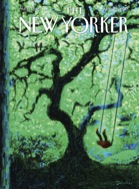
[READ: September 25, 2013] “Bad Dreams”

I’ve enjoyed most of the Tessa Hadley stories I’ve read in the New Yorker.  And most of them have had similar themes.  But this one is quite different.

I’ve been finding with a lot of stories lately that I really like the way a story starts out and that I kind of wish it would keep doing whatever the story is doing, but that the author has something else in mind.  It’s hard to complain about that because it is the author’s story, not mine, but it still bums me out a little even if I ultimately like where the author went with the story.

So in this one, a child wakes up in the dark.  We get a glimpse of the house and where she is at, but the crux of her waking up is that she had a dream about her favorite book, “Swallows and Amazons.”  The really cool and spooky thing about the dream is that she dreams an epilogue to this story that she has read so many times.  And the epilogue is disturbing—not horrifically, but just enough to freak out a young girl.  She dreams that that one of the boys drowned, that her least favorite girl, the plainest girl went on to a long happy life, etc.

This is such an interesting idea tha I couldn’t wait to see where it went.  Of course, I can’t even imagine where you could go with that, and maybe Hadley couldn’t either.  Because instead we leave the girl’s room and head to her father’s study.

We learn about her father but during her visit she decides to upend all of the furniture in the room.  Not out of malice, but in a dreamlike state.  And then she imagines her parents’ reaction to this and thinks it will be very funny.   She vows to never admit that she did it.  Then she goes back to sleep. (more…)

Read Full Post »

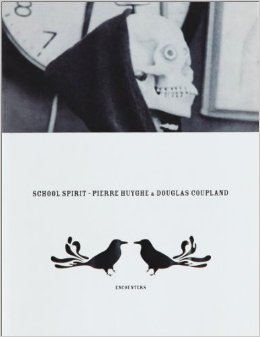
school spiritSOUNDTRACK: PINK FLOYD-Live BBC 1970-1971 (1970/1971).

pink-floyd-paris-theatre-london-bbc-archives-back-cover-17638Since I am delving deeply into early Pink Floyd, I came across this bootleg of Floyd on the John Peel show.

The first show is Live at Paris Cinema, London 07-16-1970, just before the release of the album Atom Heart Mother (which we know because Peel says the song will be on their forthcoming album).  The first set includes “Embryo” (which only ever appeared on their compilation Works, in a much shorter version), “Fat Old Sun” (from AHM), “Green is the Colour” (from the More soundtrack), “Careful with that Axe, Eugene” (available on Relics and in live formats), “If” (from AHM) and “Atom Heart Mother.”

The version of “AHM” here is interesting  because the cello solo is played by a horn instead.  The reason for this is because it allowed them to have fewer musicians on tour.  It’s the same theme but the horn brings a very different feel than the cello did.  It’s also interesting to hear that the horn players are nowhere near as polished as they might be.  (In Geesin’s book he does talk about the lack of rehearsal the orchestra had for their live shows).

The second show is Live at Paris Cinema 09-30-1971, just over a year later.  They once again do “Fat Old Sun” but in 1970 it was 6 minutes and in 1971 it is now 15 minutes long with a lot of jamming and keyboard stuff thrown on top.  Next up is “One of These Days” (from the forthcoming Meddle) a favorite of mine. From this set I learned that the distorted voice that says “one of these days I’m going to cut  you in to little pieces” is actually that of Nick Mason (and interestingly, in this version, the quote comes at the end of the song rather than the middle).  Then they play “Embryo” again (it was clearly a concert favorite even if it never got a proper release (same length for each show and not drastically different).  Then comes “Echoes,” the big side long epic from Meddle.  And the set ends with “Blues,” which is indeed a blues.  I don’t really expect to hear a blues from Pink Floyd, but here it is, and it’s a good one (Gilmour clearly can jam to anything).

The video below contains the two complete shows running at over 2 hours.

[READ: September 29, 2013] School Spirit

This is the final obscure Douglas Coupland book that I’m aware of and will be the final DC book that I need to hunt down for this blog (I have three other proper novels that I haven’t posted about, but those are proper books and will be dealt with in turn).

This book has about the least amount of information about it that I’ve seen in a book.

The (I assume) official description of the book (which I get from Amazon and Google Books) says

Dis Voir’s Encounters series invites a well-known contemporary artist to choose a subject for a book. The artist also selects a person with “elective affinities”–someone with whom he or she would like to share this exchange. The resulting collaborative volumes serve as an artistic and political laboratory of the present. For this first installment, French artist Pierre Huyghe choose Canadian writer Douglas Coupland, author of Generation X, for the influence that Coupland has had on his generation, and on Huyghe’s own work. Using a high school yearbook as scaffolding for their meditations, they discuss the construction of character, narrative techniques based on chance and the political dimensions of Coupland’s work–themes that are also fundamental questions for Huyghe’s projects.  Using a high school yearbook as the framework for a meditation on memory.

But my copy (which has a different cover and limited publication information so may possibly be a different version) does not have anything to say at all about “the construction of character, narrative techniques based on chance and the political dimensions of Coupland’s work.” (more…)

Read Full Post »

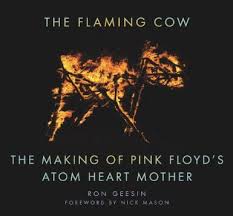
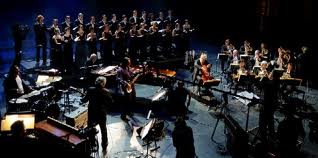
flamingSOUNDTRACK: RON GEESIN & L’ORCHESTRE PHILHARMONIQUE DE RADIO FRANCE-“Atom Heart Mother Suite” (2012).

geesin“Atom Heart Mother” is one of my favorite prog rock songs.  And it’s amazing how much I didn’t know about it (which is what this book is for).  This recording of the “Suite” is an extended version that Ron Geesin created for Radio France.

I’m fascinated by this version of the song because while it is basically the same (Geesin added a few extra measures for the cello solo), it sounds so “professional.”  The original (as the book points out) was kind of slapdash and it has a very loose feel.  This version is almost too perfect (although it’s not perfect as you can tell by the guitar solos).  Nevertheless, I love that this song has broken free of an obscure Pink Floyd album with a cow on the cover.

You can see and hear the extended 2012 version here:

[READ: September 27, 2013] The Flaming Cow

Big news (to me) is that Ron Geesin created the orchestral score for Pink Floyd’s “Atom heart Mother.”  He had nothing to do with side two of the album Atom Heart Mother (although he does say where the album title came from, and shows the proof–the first woman with an atomic pacemaker was in the news that day), but he was instrumental (ha) in creating the 23 minute epic.

I actually knew of Geesin from his score with Roger Waters for The Body (a vinyl album I own from when I was really into Floyd, but which I haven’t listened to in decades).  But so here is the full explanation of how the crazy beast (which my high school friend Kevin deemed the number one “seriously drug induced” song) came to be.

Except that Geesin has a lot to say about himself first.  The book is 120 pages (about half of those pages are pictures) and he doesn’t get to the song until Chapter III.  At first I wasn’t all that interested in his biography, but it actually pays off when you see what his musical background was and how it was ideal for him to create the score for “AHM.”  His musical background is interesting in his DIY approach and “one man band” esthetic.  But really, we got this book to hear about this Epic (which is what it was called first).

And on that front, well, he doesn’t have a ton to say, believe it or not.  We learn that Nick Mason (who was friends with Geesin and who wrote the Foreword to this book) and Waters had created the basic structure of the song.  And they called on Geesin to flesh it out.  So Geesin used his understanding of writing scores to create some really unexpected tones for this otherwise fairly simple song.  It also turns out that (for me) recounting someone else’s recounting of recording a song is kind of boring, especially since there were no astonishing revelations.

I did enjoy reading that the band would make more money if the suite was broken up into various parts rather than one 20 minute song, so that’s where the arbitrary section names came from.  And Geesin does give a fairly detailed explanation of why he did what he did in the score, but it only last for about three pages.  Suffice it to say that although it was a very hectic schedule (and Geesin almost did come to blows with a horn player) the recording was not too dissimilar to other recording sessions that I’ve read about.

What was interesting was that the band had gone from really liking it to dismissing it.  And that the band seemed to want to distance themselves from it because they wanted to go in a different direction (Meddle, their next record, also has a 23 minute song (the awesome “Echoes”) but it is very different from AHM).

Perhaps the most interesting thing to me was the life that the song has taken since the recording.  In 2008 Geesin wrote an extended version of the suite for the Chelsea festival.  The song was performed on two nights and on Sunday,  June 15 2008, David Gilmour played guitar for the piece (he wasn’t able to make the Saturday night show).

There is a lengthy video from this concert as well (just below).  For the first 20 minutes Geesin introduces the piece (which is basically a prelude to the book).  The introduction is a little more dramatic than the book (but not all that much).  In this video, the audio is quiet (and not that great) and there’s no actual video (just stills), but it is still entertaining.  Then there’s the song itself.  And it includes a reprise (with more Gilmour slide guitar) of the end of the song.

Someone also nicely recorded the Gilmour version (and included some video at the end of the piece)

The Radio France version above was commissioned for an entire evening of Geesin works.  As I said above I only have his “music from The Body” which he recorded in 1970 and which was his second album.  I have no idea what the rest of his work sounds like.  But he was on hand to play the piano for “Atom Heart Mother” and the rest is history.

This book proves to be more about Geesin than “AHM,” but it’s still an interesting read.

Read Full Post »

yodaSOUNDTRACK: PINBACK-“Fortress” (2004).

pinbackMy friend Jay just introduced me to this band.  I’m surprised I didn’t know them since they have been on Touch & Go Records and now Temporary Residence, two labels that I like.

He didn’t suggest any particular songs to start with, but this was the first one that came up with a search.

Over a simple guitar line a quiet voice sings near-whispered lines.  The bridge moves up an octave or so, but keeps the gentle sway of the song.  The chorus adds an angular dimension to the vocals but doesn’t change the gentle guitar melody–it’s an interesting example of contrasts working well together.

It’s a very pretty song and what I like about it is that based on just this one song, their other songs could go in any direction from here–more angular, more mellow, even heavier.  I’m looking forward to hearing more from them.

[READ: September 29, 2013] The Strange Case of Origami Yoda

Clark brought home the second book in this series (Darth Paper Strikes Back) and seemed to enjoy it.  I didn’t really know anything about the series so I decided to check it out, especially since we enjoyed Angleberger’s other books so very much.

This is a fairly simple story of some kids in 6th grade.  Tommy is a sort of uncool kid.  He’s shy and has no luck with girls.  He’s not picked on (I liked that this story never got really nasty), but he’s certainly not a cool kid or a jock.  He’s the perfect underdog character.  For this book, he is assembling a case file about Origami Yoda.

Origami Yoda was created by Dwight.  Dwight is a weird kid.  We hear from his neighbor that she used to see him digging holes in his back yard and then sitting in them for hours.  Dwight doesn’t seem to care about much–he wears crazy clothes, doesn’t do great in school and, weirdest of all, he wears an origami Yoda puppet on his finger.  Seemingly all the time (possibly even in the bathroom).

But the thing is that people have been asking Yoda questions and he (well Dwight, with the worst imitation of Yoda ever) answers them.  And, weirder still, the advice seems to be very good.  Which is especially weird because Dwight is not very smart and doesn’t seem to follow any of the advice that Yoda gives to others.  So what gives? (more…)

Read Full Post »

CV1_TNY_08_26_13Drooker.inddSOUNDTRACK: KISS “God of Thunder” (country version from MTV Unplugged) (1996).

unpluggedIn my post about Kiss Unplugged, I mentioned that there are videos online of the entire uncut show.  There’s also a video of this–a country version of “God of Thunder”

Three things: One, it’s weird how hokey Gene gets at the end–for a demon he’s quite goofy.  And two, it’s amazing how good this song sounds when turned into a country song.  On the Kiss covers album Kiss My Ass, I was surprised how much I liked Garth Brook’s rendition of “Hard Luck Woman and now I see that maybe all great Kiss songs are just country songs at heart.  And three, it absolutely does not sound like Gene singing–he does an impressive falsetto.

[READ: September 18, 2013] “Victory”

This is a simple story of infidelity.  The fact that the characters have such similar names bothered me a bit, but it wasn’t terribly confusing.  Lin Hong (the woman) finds a key which her husband Li Hanlin has secreted away in a drawer.  He is away on business, and she tries to figure out what the key is for.  Eventually she realizes it is for a drawer at his office.  I actually would have preferred that the story was mostly about the searching, which I think would have been more interesting.

When she opens the drawer she finds evidence of his infidelity—photo and letters from a woman named Qingqing.  One of the letters includes a phone number.  So she calls it.  She tells Qingqing to leave her husband alone and that she has ruined their marriage.  But Qingqing says that they wouldn’t have gone any further anyway and that she’s not really interested in Lin.

Li calls some of his friends but they deny any awareness of an affair.  Finally, she calls one of her fiends to complain and the friend gives some advice about how she should behave when Lin gets back. (more…)

Read Full Post »

« Newer Posts - Older Posts »