Feeds:
Posts
Comments

Archive for June, 2013

CV1_TNY_06_03_13Hall.inddSOUNDTRACK: DJ KOZE-“Track ID Anyone?” (2013).

koze-electronic-beats-amygdalaThis album was selected as one of NPR’s favorite of 2013 (so far).  I really don’t know what to make of it. It opens with what sounds like a massage going on–there’s talk of things feeling good.  And then the music kicks in, or shambles in.

The main riff is weird and stifled, awkward.  But in a way that’s hard to look away from.  Then after almost 3 minutes of a 5 minute song the vocals come in.  They are quiet and harmonied.

The write up of the album says that it is quirky and compelling.  It’s definitely quirky, I’m not entirely sure ho compelling it is.  I was really intrigued where a song with that opening would go, but I wasn’t really that excited by the route it took to get there,

[READ: June 10, 2013] “We Didn’t Like Him”

This was a fascinating story about the growth of a bully named Manshu.  The narrator (I honestly couldn’t tell the gender of the narrator—I assumed it was a girl until much later when I changed my mind.  Actually I see now that the opening says “boys his own age” so I guess the narrator is a boy, but it was never really explicit) is embarrassed by Manshu.  Manshu is “my father’s sister’s husband’s sister’s son” and as such, he is “family” with the narrator.  But Manshu doesn’t play with boys his own age—he plays with the younger kids (like the narrator) and he always beats them—in whatever.  For example, in cricket he would keep batting all day.

There was some degree of sympathy for Mansu because his father died when Manshu was six and his mother had diabetes, but he was still a pain.  Then Manshu’s mother unexpectedly died.  And Manshu changed.  He lived with the narrator’s aunt’s husband who did not like him.  Manshu became quiet and, if possible, spiritual.

The rest of the story concerns Manshu’s spirituality and the community’s temple.  The narrator’s father was on the committee which oversaw the temple and when their current pandit, Gaurji, was deemed to be doing an insufficient job at the temple, he was kicked out and Manshu took over the position.  Of course, there were cries of nepotism, but Manshu seemed to be very holy now.

Until he started to go seemingly against their Brahmin ways.  Well, first he married a woman out of his caste.  Then he started asking about how to get on TV.  Then he started promising that praying in his temple could cure cancer. (more…)

Read Full Post »

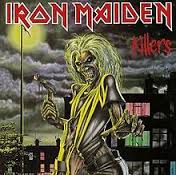
43SOUNDTRACK: IRON MAIDEN-Killers (1981).

killersKillers picks up right where Iron Maiden left off–indeed many of these songs were written at the same time as the first album.  The difference is new guitarist Adrian Smith.

It opens with the great (but simple) instrumental “Ides of March” which segues into the blistering “Wrathchild.”  And it’s on this song that you can tell some of the rawness has been removed from the recording.  The guitars sound a wee bit more polished.

And you can tell the band are getting a bit more symphonic with the bass harmonics that intro the wonderful “Murders in the Rue Morgue” a song that feels long but actually isn’t.  It has several parts that all seem to signal the end until Clive Burrs drums come pounding in to restart the song.  Very cool.  “Another Life” is another fast punky song, and while I like it, it is probably one of the weaker songs on the album.  But that’s okay because it is followed by one of Maidens greatest instrumentals–“Genghis Khan” which has beautiful symphonic soaring solos over a cool propulsive beat.

“Innocent Exile” opens with another great noisy slappy bass riff that only Harris was doing at the time.  “Killers” is a classic track: fast and yet complex, with a very cool riff.   “Twilight Zone” sees Di’Anno reaching for higher more operatic notes.  He makes it, but you can just tell that the band needs more from their vocalist.  “Prodigal Son” opens with a pretty acoustic guitar intro.  I used to like this song quite a bit (whatever Lamia is), but I can see that it’s actually quite long and meandering (maybe this one is more like “War Pigs”).  It’s pretty but could probably be a bit shorter.  “Purgatory” sounds like track off the first album–fast raw and punky with screaming riffs.  “Drifter” ends the disc with a cool bass line and some more thrashing.  It’s a solid ending for an album that overall works pretty well, but which kind of shows that the band had to either do something big on the next album or get stuck in a rut.

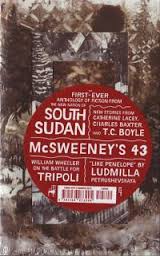
[READ: June 1, 2013] McSweeney’s #43

And with this issue I am almost all caught up with my McSweeney’s.  More impressively, I read this one only a few days after receiving it!

This issues comes with two small books.  And each book has a very cool fold-out/die cut cover (which is rather hard to close and which I was sure would get caught and therefore ripped on something but which hasn’t yet).  The first is a standard collection of letters and stories and the second is a collection of fiction from South Sudan.  Jointly they are a great collection of fiction and nonfiction, another solid effort from McSweeney’s.

Letters (more…)

Read Full Post »

42SOUNDTRACK: IRON MAIDEN-Iron Maiden (1980).

Steve Harris was on That Metal Show recently.  Harris is the baimssist and primary songwriter for Iron Maiden and has been since their first album in 1980.  When I was in high school Iron Maiden was my favorite band hands down.  I had all their albums, I had all their singles, all their hard to find British vinyl 12 inch singles, even a few pictures discs.  Wonder if they’re valuable?

Every album was an epic event for me–I even played “Rime of the Ancient Mariner “off of Powerslave to my English class (not telling anyone it was 13 minutes long).

And then, after Somewhere in Time, I just stopped listening to them. Almost full stop.  I did manage to get the first four albums on CD, but the break was pretty striking.  I actually didn’t know that they’d had personnel changes in the ensuing years.  I’d vaguely heard that Bruce Dickinson  left, and that others followed, but I don’t think I quite realized that they were back to their big lineup these days.

Anyhow, Harris was so earnest and cool that I had to go check out some of their new stuff. Which was okay.  I’d need more time to digest, but then I had to listen to the first albums again.

And wow I had forgotten how much the first Iron Maiden album melds punk and prog rock into a wild metal hybrid.  There’s so much rawness in the sound and Paul Di’Anno’s vocals, not to mention the speed of some of the tracks.  And yet there’s also some epic time changes and starts and stops and the elaborate multipart Phantom of the Opera….  Wow.

The opening chords of “Prowler” are brutal.  But what’s surprising is how the second song “Remember Tomorrow” is a lengthy song that has many ballad-like qualities, some very slow moody sections–although of course each chorus rages with a great heavy riff and a blistering solo.  On the first two albums Paul Di’Anno was the singer.  He had a fine voice (it was no Bruce Dickinson, but it was fine).  What’s funny is that Bruce does the screams in “Remember Tomorrow” so much better in the live version that I forgot Paul’s vocals were a little anemic here.

However, Paul sounds perfect for the rawness of “Running Free” a wonderfully propulsive song with classic Harris bass and very simple metal chugga chugga riffs.  And this has one of the first real dual guitar solos–with both players doing almost the same riff (and later Harris joining in on bass).

“Phantom of the Opera” is the band’s first attempt at an epic multi-secton kinda-prog song.  It opens with a memorable, if slightly idiosyncratic riff and some wonderfully fast guitars/bass.  There’s a great slow bit that morphs into an awesome instrumental soloing section with bass and twin guitars playing a wonderful melody.

“Transylvania” is an instrumental that is challenging but probably not one of the best metal instrumentals out there, although again when Dennis Stratton and Dave Murray play in synch solos it’s awesome.  This track segues into “Strange World” a surprisingly trippy song (with effects that seem like keyboards but which aren’t).  It’s slow in a “War Pigs” kind of way, but it doesn’t entirely break up the album, because there are other slow bits on the disc.  It is a little out of place though.

Especially when “Sanctuary” blasts forth.  True, it wasn’t originally on the album (in the UK), but man, blistering punk or what!  “Charlotte the Harlot” was always one of my favorite songs (it taught me what a harlot was after all), it’s quite proggy, with a lot of stuttered guitar work and a middle section that features some loud and complex bass.  The disc ends with the by now almost immortal “Iron Maiden.”   A great raw riff opens the song, a harmony guitar partners it and the band blasts forth.  Who even knows what the lyrics area about, the song just moves and moves–There’s even a great chaotic bass/drum break in the middle.  And listening to the guitar noises in the solos at the end.  Amazing.  It’s quite the debut.

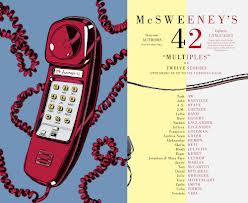
[READ: June 7, 2013] McSweeney’s #42

I have made it a point of (possibly misguided) pride that I have read every word in every McSweeney’s issue.  But this issue has brought that to an end.  As the title states, there are twelve stories in the book.  But there are also sixty-one authors writing in eighteen languages.  And there’s the rub.  One of my greatest (possibly misguided) shames is that I don’t speak any other languages.  Well, I studied Spanish and German, I know a few dozen words in French and I can read the Greek alphabet, but none of these would help me read any of these stories.  So, at least half of this book I didn’t read.

But that’s kind of the point.  The purpose of this book is to make a “telephone” type game out of these stories.  Stories are translated from one language to another and then re-translated back into English.  The translators were mostly writers rather than translators and while some of them knew the second language, many of them resorted to Google Translate or other resources to “read” the story.  Some people read the story once and then rewrote it entirely, other people tried to be as faithful as possible to the original.  And so what you get are twelve stories, some told three times in English.  Some versions are very similar and others are wildly divergent.

I normally write about the stories in the issues, but that seems sort of beside the point as the original stories were already published and were selected for various reasons (and we don’t even see any of the original stories).  The point here is the translation(s).  So, in a far less thorough than usual way, I’ll list the contents below. (more…)

Read Full Post »

gidwitzSOUNDTRACK: “WEIRD AL” YANKOVIC-“Headline News” (1994).

HeadlinenewsThis single was released to coincide with Al’s box set Permanent Record (the only other place the song appeared at the time).  It’s a parody of Crash Test Dummies’ “Mmm Mmm Mmm Mmm.”

The song was very funny in 1994.  Now, twenty (holy cow) years later, it loses some, well, really all of its topicality.  If people even remember the subjects [Singapore caning American delinquent Michael Fay, figure skater Tonya Harding’s then-boyfriend attacking her rival Nancy Kerrigan, and Lorena Bobbitt severing her husband’s penis with a knife] that just goes to show that al was right in joking that he “wanted to write a song about these people because [he didn’t] think they’re getting quite enough media attention.”

The second track is an “Alternate Mix” of “Christmas at Ground Zero,” one of Al’s better Christmas songs.  I’m not sure what is Alternate about it, and I was really hoping that it would include the voice of Ronald Reagan, like it did in the video, but I suspect even Al has limits of access.  Nevertheless, the song sounds a lot better than the original, so there’s nothing wrong with that.

[READ:April 20, 2013] A Tale Dark and Grimm

Sarah gave me this story to read because she loved it.  It’s a re-imagining of Hansel and Gretel.

The narrator tells us that we we don’t really know the original story all, that’s it (and many fairy tales) are much much darker than one expects.  I know that Grimm’s stories are more violent than the versions we tell our kids, but I don’t know exactly how different these stories really are.  As such, I don’t know how much of the this Gidwitz is making up.  In many respects, that doesn’t matter at all because the story is great either way, but it is a point of curiosity wondering whether or not these stories really did say this back then.

Anyhow, this story begins with bold print, bold print in which the narrator talks to the reader directly: “Once upon a time fairy tales were awesome.”  And he prepares to tell us about Faithful Johannes, the precursor to Hansel and Gretel.  We learn how Hansel and Gretel’s parents met (primarily through thievery and greed) and were eventually married (despite the literal curses against them).  It turned out that Faithful Johannes, their servant, stayed with them all along, as all of the curses came true.  But then Johannes died, and then it was revealed that if the king cut off Hansel and Gretel’s heads their blood would restore Johannes to life.  So he did.

Hansel and Gretel came back to life (obviously) but they were so distraught when they overheard what had happened to them (they didn’t remember and of it) they ran away.  And that’s how they met the witch. (more…)

Read Full Post »

makegoodartSOUNDTRACK: AMANDA PALMER: The Art of Asking (TED Talk, February 2013).

palmerAmanda Palmer is Neil Gaiman’s wife.  She was the singer in The Dresden Dolls and has a solo career.  I actually don’t know that much about her music.

But I linked to this TED speech after reading Gaiman’s book.

In this talk, Palmer talks about asking for things and how it’s hard to ask, to beg., but how it makes for a real connection, especially between musicians and fans.

And she talks about crowdfunding–she’s going to give away all of her music but she’s asking for help from fans along the way.

It’s a pretty inspirational talk–how asking for things helps you connect with people.  It also made me feel a lot better about Palmer, who I’d heard negative things about.

Check it out here.

[READ: June 5, 2013] Make Good Art

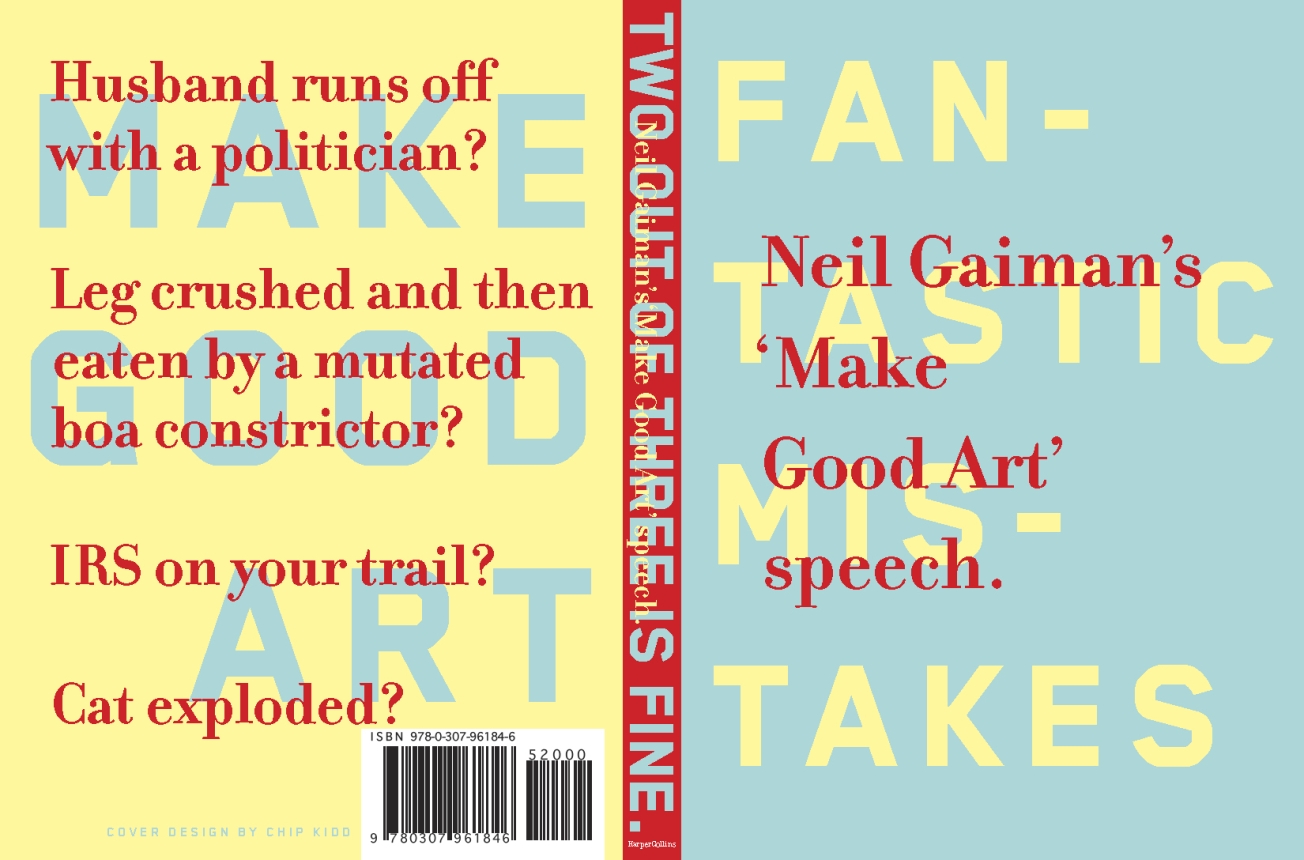
As with David Foster Wallace’s This is Water, this book is a short speech padded out to 80 some pages. The difference is that while This is Water is a rather boring-looking book, this title was designed by Chip Kidd, fabulous designer extraordinaire.  So every page looks interesting.  It’s not so much illustration as design—with shapes and text twirling and twisting upside down and what have you.

As with most inspirational works, this book is indeed inspirational.  But it is especially so if you are an artist or an aspiring artist.  Because this speech was given to the graduating class of Philadelphia’s University of the Arts in May 2012.  You can watch the whole speech here as well.  http://vimeo.com/42372767

Gaiman explains how he never went to college and never even really had a career, he just had a list of  things that he wanted to do: write an adult novel, a children’s novel, a comic, a movie record an audiobook, write an episode of Doctor Who.  And how he set about achieving these things is pretty great.

So some advice from Gaiman:

1. It’s better not to know the rules so that you’re not afraid to go beyond them.  If you don’t know something is impossible, it’s easier to do. (more…)

Read Full Post »

220px-The_Invention_of_Morel_1940_Dust_JacketSOUNDTRACK: RODRIGUEZ-“Sugar Man” (1971).

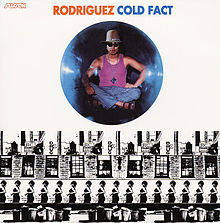
RodriguezcoldfactThis song was played a lot on WXPN, and when I first heard it I couldn’t imagine what new artist was talking about “sweet Mary Jane.”  So it turned out that this song was over 40 years old but it had been resurrected for a movie called Searching for Sugar Man, which is a documentary about Sixto Rodriguez and how he released two albums and then disappeared.

There’s something extremely catchy about this song–the loud down strums that stand out over the quieter strumming, the crazy high frequency sound that sails throughout the song and that hint of horns that gives more depth to this simple folk song.   All of these elements make this song more complex than it might have been.  In fact, the song seems like it’s going to end after about two minutes but there’s the instrumental section full of crazy sounds and electronics.

And even though it seems over after that there’s one more verse and chorus to go.  And then the song just drifts away echoing into nothingness.  It’s quite a catchy little number.

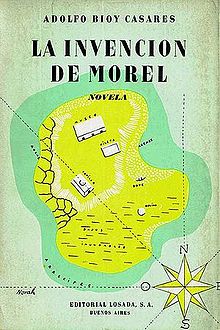
[READ: June 4, 2013] The Invention of Morel and Other Stories

Roberto Bolaño recommended this main story (the other ones as well, I assume).  He’s a big fan of Bioy Casaraes.  But also, Jorge Luis Borges has a prologue to the story in which he states of “The Invention of Morel”

“I have discussed with the author the details of his plot.  I have reread it.  To classify it as perfect is neither an imprecision nor a hyperbole.”

Holy crap.

I can’t say exactly that it I perfect although it is quite fine.  It deals with all kinds of interesting issues and is inspired by (maybe that’s not exactly the right word) The Island of Dr Moreau.  The funny thing is that Morel is neither the main character, nor even a major character for half the book.

The story starts on an island with the narrator writing this book down to leave a  record of “the adverse miracle.”   We learn that the narrator is a fugitive and he was told by an Italian rug seller in Calcutta that the only possible place for a fugitive like him is an uninhabited island.  And on this particular island in 1924 a group of white men built a museum, a chapel and a swimming pool.  But no one dares to go there—not Chinese pirates, not even the Rockefeller Institute because there is a fatal disease located on the island—anyone who has visited there has been found later dessicated. (more…)

Read Full Post »

CV1_TNY_04_15_13Sorel.inddSOUNDTRACK: AKRON/FAMILY-“Sand Talk” (2013).

akronfamThe folks on NPR played this song as part of a “new songs” segment and I couldn’t get over how noisy and chaotic it was.  I had always thought of Akron/Family as being kind of an indie folk outfit (I know they were on Swans’ label, but I still thought of them as more folkie than noisy).  So I was surprised by just how chaotic and wild this song was.

It opens with a distorted, echoey guitar that settles into a ringing sound which reminds me of Fucked Up.  Then the drums come in (tribal and various) until it all settles down into a thumping song with a kind of spastic guitar riff.  Then the vocals come in–full bodied and sounding like more than one person.  And after the first verse, it seems like everything that happened before happens again–this time all at once.  But now, the music occasionally pauses to let the vocals come to the fore.  And at one point everything stops and a chorus of voices sings a nice melody as the band slowly resumes playing.   And this echoing fugue-like music continues apace until it all kind of slows down and then ends.

It’s quite a challenging song and one that I found rewarding after just a few listens.  I have to reevaluate what I think this band sounds like, and I definitely have to listen to the rest of this album.

[READ: May 1, 2013] “The Night of the Satellite”

What I really liked about this story was the way that Boyle plays with two ideas of randomness.  The first is the possibility of a piece of a satellite falling out of the sky and landing on you.  The second is of running into a couple in several different and unrelated locations.

As the story starts, a couple (graduate-school aged) are excited that the summer is upon them.  They plan to take a trip to visit some friends (with their dog) to get away from it all.  En route they see a car pulled over at the side of the road facing the wrong way.  The young man is sitting on the hood, the young woman is crying near the road.  Mallory tells him to stop the car.  He is reluctant but does so (childlocking the doors).  The girl says that her boyfriend is a jerk.  She is crying but says she is not hurt.  The boyfriend is yelling across the road that she should just get in the car and leave with them.  But after a few minutes, she decides not too.  So he drives on despite Mallory’s protests. (more…)

Read Full Post »

htthinkSOUNDTRACK: DEPECHE MODE-“Fly on the Windscreen” (1986).

flyonEvery time I use the phrase ‘death is everywhere” (which I don’t do often, but which I do do below) I think of this song.

I forgot how synthy this song sounds when it opens–two different very synthy sounds.  After the vocals (which feature Dave Gahan’s voice at its strongest) the guitars come in and the song sounds a bit more complex.

It’s funny how the song which starts with the dark verses and  “death is everywhere” can have the cool and rather sweet bridge of “Come here, touch me, kiss me, touch me, now.”  (Gahan’s o’s are so wide when he sings, it’s great).

This song really marks the transition of Depeche Mode from synth pop to darker more angsty music.  Indeed, all of Black Celebration, with its noisy percussions and unusual instrumentation and of course, Martin Gore’s dark lyrics, shows a band transitioning to new levels of greatness.

[READ: May 30, 2013] How to Think the Unthinkable

This play was created and produced for the Fringe Festival.  I tend to think of the Fringe Festival as, you know, stuff on the Fringe, so I imagined that this play that was “After Sophocle’s Antigone” would be a modern and possibly weird update of the story.  And it starts off that way with a guard coming back with three clothespins.  He explains that he always draws the short straw and he was the one sent off to get clothespins to block the noses of the other guards.  You see, they have been sitting watch over this body for a few days and he is starting to smell pretty bad.

But when the guard, Tom, arrives, he discovers that the other two guards (Roy and Bo) have fallen asleep and the body is gone.  Tom freaks out, he tells them (and us) that the body (of Polynices) cannot possibly be given a proper burial.  Polynices was a traitor to King Creon and his punishment is to be left to rot outside of the city walls.  How could they have let someone take and bury his body?  They were tired.  See, it’s funny.

Indeed, the other guards have no answer and are more or less comic relief.  Until Haemon shows up.  Haemon is Creon’s son.  He is super annoyed because he was the one who vouched for Tom and the others.  Now he looks bad and Creon will be pissed.

Cut to Creon ensuring the City Elder that he plays no favorites and if even his son is found guilty of a crime—like burying Polynices–well, the full force of punishment will come onto him as well.  Like any Greek tragedy, you can see the set up. (more…)

Read Full Post »

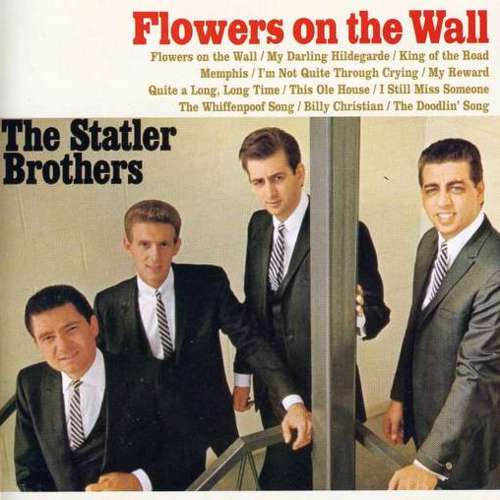
200px-FatesWorseThanDeathSOUNDTRACK: THE STATLER BROTHERS-“Flowers on the Wall” (1965).

flowersonthe Vonnegut mentions this Statler Brothers song in Palm Sunday as well.  I know this from Pulp Fiction–a song that I found very amusing and never would have guessed was a classic country song.  Country music was very different in 1965 than it is now.  I don’t even know if there was a folk or bluegrass category back then, and this song, with its banjo and bouncey acoustic guitar is a great example of the kind of country music I like.  And those harmonies!

This song certainly seems to be about insanity–about a man counting flowers on the wall, playing solitaire with a deck of 51 cards, smoking cigarettes and watching Captain KAN Kangaroo.  Don’t tell him he’s nothing to do.  What a weird little song.  And man is it catchy.  No wonder it was a #1 hit.

[READ: May 31, 2013] Fates Worse Than Death

After reading Palm Sunday I learned that Fates Worse Than Death was a kind of autobiographical sequel to that non fiction book.  I also learned that the two essays that make up Nothing is Lost Save Honor which is impossible to find (and for which I can’t even find a cover) are available in FwtD.  However, since there is no real contents or index, you do have to read the whole thing to find out which chapters contain the essays.  Or you can just look here and see that “The Worst Addiction of Them All” (which was published in The Nation) is in Chapter XIV and “Fates Worse Than Death” appears in Chapter XV.

The last time I read a bunch of Vonnegut together I got a bit burnt out on him and the same thing happened here.  The problem with Vonnegut’s nonfiction is that he tends to repeat himself.  A lot.  And while this book is ostensibly about the 1980s, he talks an awful lot about his family and his friends from the war and his other literary acquaintances., like he did in Palm Sunday.  In a number of places, he says that he doesn’t like to read himself in English, and it would seem that he doesn’t proofread to see if he said something already either.

This is not to say that the book is not worth reading.  Indeed, if you read Palm Sunday in the 80s and then this one in the 90s, you might not remember all of the details that pop up again, but when you read them days apart…well. (more…)

Read Full Post »

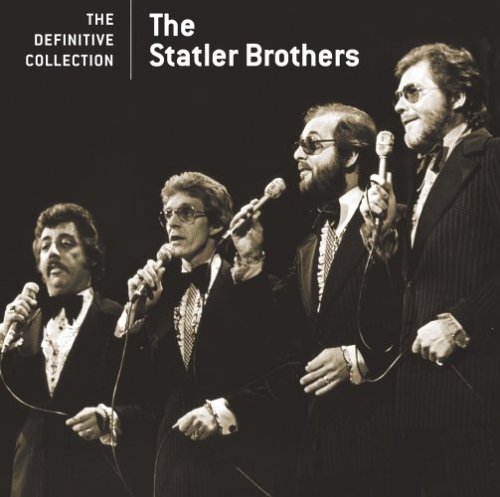
PalmSundayFrontandBackSOUNDTRACK: THE STATLER BROTHERS-“Class of ’57” (1972).

stalerI don’t know much about The Statler Brothers.  They are considered country, although this song is hardly country–it’s more folk with some bluegrass and, the real selling point–great harmonies (especially the bass singer with the big mustache).

The song is a wonderful coming of age song, sad and funny with a list of what happened to everyone in the class of ’57.  Like:

Betty runs a trailer park, Jan sells Tupperware,
Randy’s on an insane ward, Mary’s on welfare.
Charlie took a job with Ford, Joe took Freddie’s wife,
Charlotte took a millionaire, and Freddie took his life.

John is big in cattle, Ray is deep in debt,
Where Mavis finally wound up is anybody’s bet.

But the kicker comes at the chorus:

And the class of ’57 had its dreams,
Oh, we all thought we’d change the world with our great words and deeds.
Or maybe we just thought the world would change to fit our needs,
The class of ’57 had its dreams.

And then at the end:

And the class of ’57 had its dreams,
But living life from day to day is never like it seems.
Things get complicated when you get past eighteen,
But the class of ’57 had its dreams.

Vonnegut quotes the entirety of this song in the book and I’m glad he did, it’s a very moving song and really captures American life.

[READ: May 26, 2013] Palm Sunday

After writing several successful novels, Vonnegut paused to collect his thoughts.  And Palm Sunday begins: “This is a very great book by an American genius.”  It is also a “marvelous new literary form which combines the tidal power of a major novel with the bone-rattling immediacy of front-line journalism.”  After all the self praise, he decides that this collage–a collection of essays and speeches as well as a short story and a play which is all tied together with new pieces (in TV they would call this a clip show)–this new idea of a book should have a new name and he chooses: blivit (during his adolescence, this word was defined as “two pounds of shit in a one-pound bag.”  He proposes that all books combining facts and fiction be called blivits (which would even lead to a new category on the best seller list).  Until then, this great book should go on both lists.

This book is a collection of all manner of speeches and essays, but they are not arranged chronologically.  rather they are given a kind of narrative context.  What’s nice is that the table of contents lists what each of the items in the book is (or more specifically, what each small piece is when gathered under a certain topic).

Chapter 1 is The First Amendment in which he talks about Slaughterhouse Five being burned and how outraged he was by that–especially since the people so anxious to burn it hadn’t even read it (and the only “bad” thing is the word motherfucker).  The first speeches included are “Dear Mr. McCarthy” to the head of the school board where his books were burned and “Un-American Nonsense” an essay for the New York Times about his book being banned in New York State.  The next two are “God’s Law” for an A.C.L.U. fund raiser–it includes his confusion as to why people don’t support the A.C.L.U. which is working for all of our own civil liberties. (more…)

Read Full Post »

« Newer Posts