Feeds:
Posts
Comments

Archive for 2012

SOUNDTRACK: ROCKET 00000-What Women Want (2010).

This is the second band that I have discovered because of this novel.  I was looking for images to paste in last week’s post for Rocket 00000, and I came across this EP.

Rocket 00000 are a trio from Cincinnati and this is their first (and only) release.   It’s got a kind of 80s punk vibe–I can’t really make out the words, but I like the feel.

There’s something very raw and almost amateurish about the record–but that seems deliberate, because the album sounds very professional–it’s recorded well and the band is very tight.  And since I like the bandcamp site quite alot, I’m going to provide the link with extras here so you can listen to the album, too.

There’s four songs–two are 5 minutes and two are around 3 minutes.  The two longer ones have intros and outros that extend the music to those long (for punk songs) times.  And I really like these instrumental sections. In fact, when I first listened, I thought maybe the whole first track was an instrumental.  Since  I liked the tone of the album I was okay with that.

The “Summer City” part of “Summer City/Conspiracy Theory” has a simple but effective guitar solo as an instrumental.  After about a minute and a half “Conspiracy Theory” kicks in, the vocals bring a new texture and a punk element into the song.  “Lethal Weapon 2 & 4” has a great title, but it doesn’t sound all that different from the other songs (although the lyrics, “We’re not perfect…but neither are you” are pretty clear).

“Signs” has some cool drum breaks and fills, and the end of the song is musically interesting.    “Braveheart: Forever Young” probably combines the music and vocals  best–I like the  upbeat music with the dark words.  The song ends with about 2 and a half minutes of instrumental (with interesting feedback) that works really well together.

It’s not the best punk EP, but it’s got some good qualities and the band has a good name.  I wonder how they “say” it?

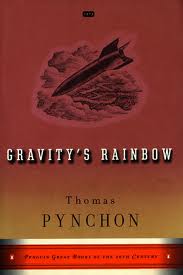
[READ: Week of April 2] Gravity’s Rainbow 3.11-3.15

After last week’s breezy read, I figured that this week’s would be a bit rougher.  But for the most part, it wasn’t–aside from the very end which was a little hard to stomach.  There was a lot of technical discussion in this section–which was a  bit hard to comprehend.  There was a also a return of Franz Pökler–where we learned his story and what happened to him.  We assumed that he was killed by a police truncheon, but that turns out to be untrue.  His story is pretty dark and sad.  Sorry, as Marco points out below, it was Peter Sachsa who was killed by truncheon.  My conspiracy has been called out!

Section 3.11 opens uncomfortably with Franz Pökler… copulating with Leni in an aggressive and rough manner.  He has just come back from showing of Alpdrücken and imagines that it’s Margherita underneath him.  He assumes that men all over the country are doing the same thing because of the movie.  He calculates that it was that night that Ilse was conceived–they’d barely had sex around that time.  This flashback brings us forward to the scene of Franz waiting for Ilse to return to Zwölfkinder—a kind of children’s fantasy playground which would prove to be a very significant location for them. (more…)

Read Full Post »

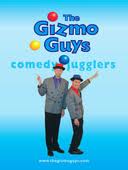
[ATTENDED: April 1, 2012] The Gizmo Guys

Our friends were going to see the Gizmo Guys, so we bought (surprisingly cheap) tickets and went to the same show as them.  I was under the impression that the Gizmo Guys were kind of science-tellers–doing “magic” with sciencey things.  Well, that was utterly wrong.

The Gizmo Guys are jugglers.  That’s it.  Well, they are comedians AND jugglers and they are very funny and very talented.    But there’s no science and, I have to say, very few gizmos.

The show opened with some jokes.  But these were jokes from the kids in the audience.  And our brave friend’s 7 year-old went on stage and told a joke! (while Clark cowered so he wouldn’t be chosen).  The joke section was cute and served as a nice warmup. (more…)

Read Full Post »

SOUNDTRACK: TOKYO POLICE CLUB “Cheer It On (Trey Told Em Remix)” and “Cut Cut Paste” from Viva Piñata! (2008).

Tokyo Police Club released one of the best LPs of short blasts of rock in a long time.  “Cheer It On” is a great song that name-checks the band and which I could listen to over and over.  It’s a hot punk blast.  This remix totally changes the song (which is better than just tweaking it or repeating the chorus over and over).  Trey makes it a discoey song (with the wah hoo! from “Celebration,” I believe) and big rubber disco bass lines over the music.  It really changes the sound. I like the original a lot better, but I enjoy a remix that actually remixes.

“Cut Cut Paste” is a studio release and it shows TPC in their element–a short fast song.  I love the way it starts out with a shifting guitar sound.  It has a great manic intensity.  Tokyo Police Club is definitely one of my favorite new bands.

[READ: March 20, 2012] Science News Letter

I’ve mentioned before when my company sends out links to articles that are interesting or cool.  Most of the time they are highly academic (that’s the kind of work I’m in), but they also do more general information as well.

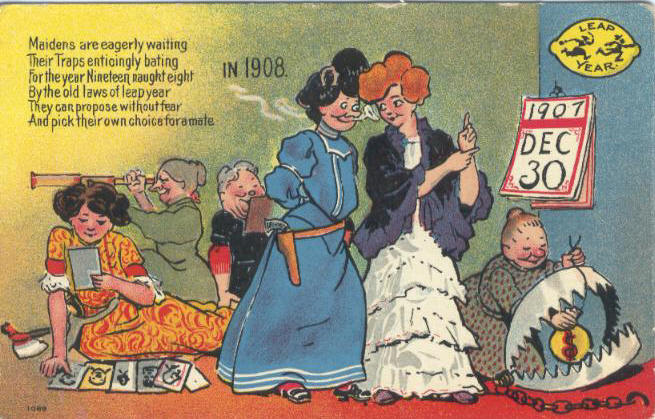
So this particular page was sent to us because of the article “Marriages Are Seldom Higher in Leap Year” (since this is a leap year).  There was a tradition in Britain and Ireland that on a leap year, women could propose to men (see the postcard below).

But this article (really only three paragraphs) which is addressed to “Marriage Shy Bachelors” says that only twice since the Civil War has the marriage rate been higher in a leap year (1896 and 1920) in America. And that in 1952 the supply of available unmarried persons has been depleted by the spurt in marriages following World War II.  Rest easy single guys! (more…)

Read Full Post »

SOUNDTRACK: BROKEN SOCIAL SCENE-“Complications” from Score! 20 Years of Merge Records: The Covers (2009).

I liked Broken Social Scene’s first album quite a lot.  This is their cover of a song by The Clean.  I know of The Clean from the Topless Women Talk about Their Lives soundtrack although not this particular song.  (What’s with all these New Zealand bands being on Merge?)  I found the original song online.  Interestingly, the original version is only 2 minutes long.  But Broken Social Scene always does things by double, so their version is 4 minutes long.

The cover version opens with a young person saying “This song was written before ‘Born to Run,'” although as far as I can tell “Complications” was written in 2001. So who knows.

The cover is a fuzzy, ramshackle mess of a song, which is not to say that it isn’t good (the original is kind of ramshackle, too).  The prominent melody doesn’t exactly remind me of “Born to Run” but I can see the connection.  The big question is, what does BSS do with the extra two minutes?  Well, mostly they jam, with some wild soloing–but it’s all mixed just under the fuzz of the noise.

This is another strangely faithful cover (5 in a row so far) for this covers album.  And once again, I think I like the cover a little better.

[READ: April 1, 2012] “Once an Empire”

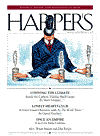
Clearly I wasn’t reading every story that came in Harper’s back in 2010, because I know I skipped this one.  But now that I’m quite fond of Rivka Galchen, I decided it was time to go back and check it out.

How can you not like a story that starts out: “I’m a pretty normal woman, maybe even an extremely normal one.”  You know that normal things will not be afoot by the end of the story, right?  And so it is, by the second paragraph: “I never thought I’d be the victim of an especially unusual crime.  Or of any crime, really.”

You’re totally hooked, right? Me too!

The narrator takes her wonderfully sweet time getting to the crime: dithering over whether or not it was Tuesday night (“Every Tuesday night I go and see whatever is playing at the movie theater nearby.  I’m not choosy.  I’m happy to see what everyone else is going to see.”) or Wednesday morning. Talking about the giant clock/thermometer on the Jehovah’s Witness Watchtower that keeps her company.  And then describing her walk home.

She notices that her windows are dark–she always leaves her lights on.  And then, she notices that some thing–not something, some thing–is emerging from one of her windows.  And as she focuses, she realizes it is her ironing board. (more…)

Read Full Post »

SOUNDTRACK: THE SHINS-“Plenty is Never Enough” from Score! 20 Years of Merge Records: The Covers (2009).

The Shins have taken this song and completely turned it into a Shins song.

It is bouncy and poppy with some nice tempo changes.  It could easily fit onto any Shins album.

The original (I’d never heard of Tenement Halls) is very similar to The Shins’ version.  The big difference is that it doesn’t have The Shins’ vocals and musical sensibilities.  The original feels kind of flat, the highs just aren’t as high.  But it serves as a good stepping off point for the cover.

[READ: March 30, 2012] “Chapter Two”

This story is about A.A.  But, amusingly, Hil is tired of telling her own stories at A.A., so she starts telling the story of her fifty-something alcoholic neighbor (with the wonderful name of), Bergeron Love (the story is set in Houston).

Interestingly, no one at A.A. complains that she is talking about someone else (in fact the blind guy just seems to smile politely).  This is just as well because Bergeron’s story is pretty funny.  Bergeron arrives at Hil’s door, stark naked and invites herself in.  This is not atypical for Bergeron who crashes neighborhood parties and plays ridiculous pranks.  But not everything she does is funny: she also reports overgrown lawns and loose dogs.

Hil lives with her son and a roommate, Janine.  Janine is a very fat woman (see my diatribe about fat characters yesterday).  But Janine is not the victim or the pity-case in this story (well, maybe a little).  Hil figures Janine must eat all day to be as big as she is, but she has never seen her eat.  But then Hil’s son, Jeremy, a shy teenager enjoys playing video games with Janine more than going out with his peers (and more than being with his mom, I believe). (more…)

Read Full Post »

SOUNDTRACK: LES SAVY FAV-“Precision Auto” from Score! 20 Years of Merge Records: The Covers (2009).

This is a cover of a Superchunk song.  The Superchunk song is fast and furious with screamed vocals.  The Les Savy Fav version is faster and more furious with screamed vocals.  It doesn’t sound very different from the original except that they use a high guitar playing a repeating motif which seems to increase the pace and intensity of the song.  They even keep it up through the moody instrumental break

Usually I don’t like a cover that sounds so much like the original, but it’s a great cover.  It basically just intensifies the song, and that’s a good thing.

I don’t know much about Les Savy Fav, so I don’t know if this is why they normally sound like, but it’s pretty darn good.

[READ: April 3, 2012] “P.E.”

Sometimes a title can impact ones desire to read a story.  This title is, well, it’s not bad, it’s just…uninspired.  I can’t see myself saying, “I really want to read, “P.E.”  What’s surprising is that the title is so blah, when the story is so interesting.

I like my short stories to be light and fluffy (even if I read heavy duty novels).  So this one was kind of fun.  In the beginning.  It starts with Freddy waiting for his dad at the airport.

Freddy is fat.  I have to admit right off the start that whenever a character is described as really fat (like really fat, as Freddy is), it irks me.  First off, I always assume that writers are not fat (not really a fair assumption but author photos are often glamorous, right?) so they aren’t writing from a location of truth.  Second, whenever a character is really fat, it always signals that something bad has or will happen to him.  And so it is with this story.

But before we get to that point, we have some more amusing scenarios.

Or, well, really not amusing so much as disturbing (but funny).  Freddy’s mother hanged herself when he was seven.  And his father took it badly (not unusual).  He even took to wearing the noose around his neck like an article of clothing (unusual!). (more…)

Read Full Post »

SOUNDTRACK: QUASI-“Beautiful Things” from Score! 20 Years of Merge Records: The Covers (2009).

I’ve had this CD for a pretty long time just waiting for me to devote some time to listening to it.  The collection is a compilation of non-Merge label bands covers songs by Merge bands.

Quasi was a great band (I guess they are still together, so they are a great band).  I have their records from around the turn of the century (I love writing that!).  Sam Coombs and the wonderful Janet Weiss comprise the band (there’s a bassist, Joanna Bolme, added in 2007). And they sing wonderful, political alt-pop.

This is a cover of a song by the New Zealand band The 3Ds.  I don’t know the original (although I do know (and like) a few songs by them–mostly from the Topless Women Talk about Their Lives soundtrack.  This version has heavy keyboard prominence, but he sweet verses (sung largely by Janet with Tom doing backing vocals) are interspersed with some cool buzzy guitar solos.

  I just found the original online, and the cover is pretty accurate–although the Quasi version is a bit more dynamic.  Nevertheless, it makes me want to listen to The 3Ds a bit more.

[READ: March 15, 2012] “A Cup of Hot Chocolate, S’good for What Ails Ya”

Have you ever wanted to read about the history of hot chocolate?  No, of course not.  No one has.  And yet, when I started flipping through this article, Theobald introduced plenty of ideas that I found not only interesting but compelling.

Theobald explains how the Aztecs called this (at the time) very hearty, spicy and bitter) drink cacahuatl.  The Aztecs got the drink from the Mayans, who got it from the Olmecs.  The first Europeans to try this drink loathed it (one even called it a drink for pigs).

It was the conquistadors who mixed cacahuatl with sugar to make what we now know as chocolate.  Chocolate was a luxury back then–time consuming and difficult to make.

The Spaniards found the drink very hearty–hearty enough to be considered a meal.  This put Catholics in a tizzy about the state of the item.  They feared that if it was food it could not be consumed on fast days–it was ultimately deemed a drink.  The drink made its way through Europe and into England.  The first known English recipe called for sugar, long red pepper, cloves, aniseed, almonds, nuts, orange flower water and cacao. (more…)

Read Full Post »

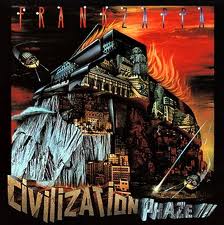
SOUNDTRACK: FRANK ZAPPA-Civilization Phaze III (1994).

There were a number of choices for soundtracks for this week’s read.  I could have chosen the Andrew Sisters (and their wonderful “Don’t Sit Under the Apple Tree”) who get a mention in the book.  And, of course, I could have chosen Elton John’s “Rocket Man.”  But, when I read Trudi tell Magda about her boyfriend Gustav who wants to live inside a piano, well, it was hard not to think of this, Frank Zappa’s final work.

Civilization Phaze III is an opera-pantomime.  According to the libretto, “The speaking characters all wear oversized masks, gloves and shoes.  They live in an abstracted grand piano….”  And musically opens with this introductory spoken passage:

FZ: The audience sits inside of a big piano and they listen to it grow.
Spider: People are going to sit inside of a piano. They’re going to listen to this piano grow.
John: They’re going to listen to the piano grow?

Civilization Phaze III was released posthumously in 1994.  But here’s the weird thing.  Most of the sessions of “piano people” dialogue were recorded in 1967.  Zappa had a bunch of people come into the studio, sit under a piano that was miked and improvise dialogue (sounds like the 60s to me).  He released some of this dialogue on his  late 60s albums, but as far as I can tell, the parts about the piano were never included (in Lumpy Gravy someone talks about wanting to live in a drum).  I’m also not sure how well-known the “piano sessions” were at the time.

So, here’s the question…did Zappa influence Pynchon or did these two people come up with the same idea at roughly  the same time.  The reason Zappa put off using the material recorded in 1966 was because technologies were simply not advanced enough to let him manipulate the dialogue so it would sound decent, much less coherent.  So Civilization Phaze III became his exploration of the past with contemporary technology.

He also recorded new spoken dialogue in 1991 and merged the two.  It’s an interesting idea, but I fear that the new dialogue absolutely misses the vibe of the earlier dialogue.  In the early dialogue, they all sounds like they’re stoned and are talking crazy nonsense about horses, smoke and music.  The later dialogue is much more abrasive (especially Michael Rappaport, the only person who has since gone on to renown).  At the time, Rappaport had been on one TV show as a guest, but by now he is too famous for this.  I find him a distraction (not Zappa’s fault obviously), even more so because he talks as if he is black (he says “Nobody said nothin’ when y’all bought my people, right?”) while he is demonstrably not.  And then ruins it contextually by mentioning Yo MTV Raps, the only thing that places the story in time.  It’s weird that Frank wouldn’t have a black person say these lines, especially since he has so many other races and nationalities represented in his music.  But maybe that’s me intellectualizing that I just don’t like Rappaport.

So, what’s this monstrosity about?  I have no idea.  Improvised stoner dialogue from the 60s is pieced together into a kind of story.  Occasionally Frank’s voice chimes in and prompts them to talk about certain things (which is quite  disorienting).  And the whole “plot” well, I’m not even sure if it can be called a plot, but Frank tries to cobble something together–again, the 1991 dialogue seems to be more pointed, more about conflict, possibly something about overcrowding and racism, and there’s certainly some social criticism at work, but as for a story, well, not so much.

The music, on the other hand, is the culmination of Zappa’s more experimental, atonal “classical” music.  Most of the first disc is performed on the synclavier while most of the second disc contains more actual musicians.  The music is difficult and not to everyone’s tastes, for sure.

Atonal music is far more intellectual than visceral, so it’s hard to “enjoy” this music.   Zappa obviously knew how to write catchy poppy friendly music, so this is a deliberate attempt to write something more challenging.  I like Zappa’s crazy music in small dozes, so listening to this entire thing (over 2 hours) can be a tough in one sitting.  But each piece (especially the two really long pieces “N-Lite” (18 minutes) and “Beat the Reaper” (15 minutes) ) showcases something interesting or satisfying.

The libretto that Zappa includes with the discs explains the story in far more detail and shape than one would ever get from listening to the music.  Without the book, you would know that this is a dark and moody piece, but with the book, you can actually see what the music is showing.  That may be a flaw, or that may be the way of a staged performance.  I have no idea if it was ever staged.

There are certainly easier introductions to Zappa’s music.

[READ: Week of March 26] Gravity’s Rainbow 3.6-3.10

Last week was a bear of a read for me, but this week was so fast (and short) that I just kept going because I was so into the Slothrop story (I won’t go past the spoiler line, I promise).  And yes, it’s (almost) all Slothrop this week.

Section 3.6 begins with Slothrop violently ill.  [I admit I don’t think of novel characters as getting ill very much–unless it’s a plot point–but surely characters get colds and tummy aches just like everyone else, right?].  He drank out of an ornamental pond in the Tiergarten–but, duh, everyone knows to boil water before drinking these days.  This also introduces Slothrop as Rocketman, something we won’t get more details on until later. (more…)

Read Full Post »

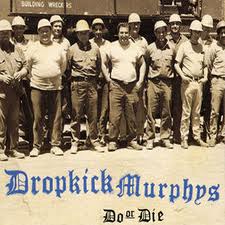
SOUNDTRACK: DROPKICK MURPHYS-“Finnegan’s Wake” (2005).

This song has been around forever and there are dozens of different versions of it.  For your more traditional versions, you want The Dubliners of Christy Moore (if you really want to hear the words).

But The Dropkick Murphys do it the way I like my traditional Irish songs–fast and loud and full of punk.

Although to be honest, The Dubliners’ version has a bit more swagger and fun (it’s hard to beat Ronnie Drew for a hard living singing voice).

Whichever version you choose, be sure to have your favorite ale or lager (or whiskey punch) on hand.

[READ: April 1, 2012] Finnegans Wake

I decided it was time.  How many times have I read the opening line of this book:

riverrun, past Eve and Adam’s, from swerve of shore to bend of bay, brings us by a commodius vicus of recirculation back to Howth Castle and Environs.

And as many times I have read the end of the book:

A way a lone a last a loved a long the

But now it was time to read the other 620-some pages of it.  So I set aside some time this weekend, and, in the spirit of Joyce’s stream of consciousness, I stayed awake until I finished it. And having digested the book, I now get to write all my thoughts about it.

(more…)

Read Full Post »

SOUNDTRACK: FIGURINES “The Air We Breathe” from Viva Piñata! (2008).

Figurines are from Denmark.  This song has a very distinctive Mercury Rev feel (late-period  Mercury Rev) with high pitched vocals and delicate intertwining melodies.

The verses are done on simple piano and the bridge has some nice harmonies.  This is a cool alt rock song that stands up to repeated listens.

[READ: March 28, 2012] “Into the Unforeseen”

The timing of this article is quite amazing.  Having really enjoyed Galchen’s short story, I decided to see what else she had written.  It’s not a lot, but she has written three things published in Harper’s–two essays and one short story.  This first essay is all about César Aira.  I didn’t even know who Aira was when it came out in 2011, but now, I get to read it again having just finished another of his novels.  (The essay concludes with information about Varamo, a novel that was just recently translated into English which I picked up at the library, yesterday).

This essay is about the week that Galchen spent with Aira in and around Aira’s home (but not his birth town of Coronel Pringles which he kind of jokingly forbids her from seeing.  Galchen loves Aira’s writing (and has a kind of crush on him, although they’d never met before).  She doesn’t say in this article but she was a Spanish language major, so she has clearly been reading his books in Spanish.

She lets us know that the day before she met Aira, her ten-year relationship ended (she hints at the reason but is quite discrete).  She brings this up because of an emotional moment later in the article.  And that’s what I loved about this article–it was personal and really invited the reader in to experience this meeting with her.   (more…)

Read Full Post »

« Newer Posts - Older Posts »