 SOUNDTRACK: MERCURY REV-Deserter’s Songs (1998).
Me rcury Rev has changed a lot as a band over the years. They began as a noisy punk outfit who was getting kicked off of airplanes, and by this album (seven years after their debut), they’ve turned into a kind of sweet orchestral pop band (a transformation not unlike The Flaming Lips). I got into them with their album before this See You on the Other Side with the seriously rocking song “Young Man’s Stride.” This album came as something of a shock, it is often so delicate.
I used to really love this album a lot and then one day I thought that it was a little irritating sounding, and that has stuck with me ever since. The irritation comes from a combination of the really high-pitched vocals and the musical saw that seems to accompany most songs. However, I hadn’t listened to it in quite some time and hearing it now, I found it enjoyable once again.
It opens with “Holes” a five-minute song that layers many different instruments (musical saw, of course, and horns) over Jonathan Donohue’s timid and wavery voice and gentle keyboard washes. “Tonite It Shows” continues in the pretty vein–a beautiful song that name checks Cole Porter. “Endlessly” features more unearthly soprano singing (there’s a lot of high-pitched music on this disc). It has a lovely melody and references “Silent Night” on the flute.
The first highlight has to be “Opus 40” which tempers all of the potential irritants but maximizes the beauty and wondrous songwriting. It soars to the heavens but stays grounded with a cool retro organ solo. The other major highlight is “Goddess on a Hiway.” “Hiway” is even better than opus 40 at blending the wonderful elements of this album.
“Hudson Line” is an anomaly on the disc–raw saxophone solo and low vocals change the pace of the album quite a bit. “The Funny Bird” actually sounds like a Flaming Lips song circa 2008. The Flaming Lips comparisons aren’t all that surprising since Donahue played with the Lips back in the early 90s. And “Delta Sun Bottleneck Stomp” is a pretty raucous song (“stomp” is correct). It has a traditional feel and ends the disc on an upbeat note.
So, yes, although some of the effects on the disc veer into annoying, it’s still a great disc overall.
[READ: Week of April 16] Gravity’s Rainbow 3.25-3.32
We have finally exited The Zone this week. The lengthy Section 3 has come to a close with an unceremonious send off to Slothrop, who I assume we’ll see in Section 4, with the reintroduction of old characters and with a chance meeting that made me go wow!
I’m really amazed at the interconnectedness of the book. While I didn’t think that things would be unrelated, the number of unexpected connections is really tremendous. And while I missed many of the other characters, seeing the occasional one pop up is pretty exciting.
I’m happy to leave the Zone, not because I didn’t like it (although I admit I Slothrop’s slog from one place to another was getting a little tiring), but because I really want to see how he wraps all this stuff up. Connections are popping up everywhere, and I feel like he’s doing a whole lot more than I initially thought.
Section 3.25 opens with Slothrop waking up in a burned out store and realizing it’s going to be another shitty day for him. He trudges along long expanses of emptiness until he finally comes across humanity. He sees these are people basically migrating to and fro after the war. There’s a nice moment about Volksdeutch moved out by Poles seeing the Poles returning home as well and the haunting of their eyes.
There is another great line about the potato fields being stripped clean of potatoes which were turned into alcohol–not to drink, but to fuel the rockets. And, in a quote full of pathos, “so the populations move, across the open meadow, limping, lurching, shuffling, carried, hauling along the detritus of an order, a European and bourgeois order they don’t yet know is destroyed forever” (551).
Eventually, south of Rostock, Slothrop falls asleep in a chair at a farmhouse and dreams about Tantivy Mucker-Mafflick. And he dreams of a celebration for Tantivy’s return. He asks Tantivy if ghosts hang around looking for people. Sometimes, Tantivy says “Are you looking after me?” “No, Slothrop. Not you…”(552).
 Slothrop has a moment of remorse over the killing of trees that his family did–the pines tell him to remove the oil from a truck at the next logging operation he comes across.
And then there’s the partial list of wishes on evening stars for this period. A few examples:
- Let Tantivy really be alive
- Let this fucking zit on my back go away
- Let Bianca be all right a-and–
- Let me be able to take a shit soon.
 The list ends with “Let that Ludwig find his lemming and be happy and leave me in peace” 553. Ludwig is a young boy who is indeed out looking for his pet lemming. The lemming is named Ursula and he has had her for two years. But she has run away, he fears, to the Baltic. [In Red Dwarf, uber-dork Arnold Rimmer had a pet lemming which threw itself off a cliff…I wonder if the Red Dwarf joke is an allusion to this or if it’s just fun to make lemming jokes].
Ludwig thinks Slothrop is a Russian (he still has on Tchitcherine’s uniform, although he has removed all the insignia), but rather than protest, Slothrop simply helps Ludwig look for Ursula. Even while he believes that Ludwig may be delusional about this lemming anyway.
While Slothrop is thinking (and looking for the lemming) he thinks back to William Slothrop who headed west from Boston in 1634 or 1635, convinced he could preach as well as anyone. He started a pig operation with his son. They would drive the pigs for miles to get to market–by which time they were too skinny to sell. But the pigs seemed so happy on the walk, until the slaughterhouse, of course. This made William write a book called On Preterition (which was banned AND burned in Boston). The preterite were the many whom God passed over when he chose the few for Salvation. William believed these second sheep were holy, because without them, there’d be no elect. And where Jesus stood for the elected, Judas Iscariot stood for the Preterite. It goes on a bit more, with the amusing ending, “How William avoided be burned for heresy, nobody knows” (555).
There’s an interesting philosophical question about what America might be like had people actually followed William Slothrop’s writings: “Might there have been fewer crimes in the name of Jesus, and more mercy in the name of Judas Iscariot?” (556). [In light of recent electoral gains, it shows this question still resonates]. All of these interesting thoughts occur to Slothrop while he is looking for Ursula, until one day he loses Ludwig in a village near the sea. They spied a girl with Ursula around her neck–as a fur! Ludwig freaks out until the girl calms him and shows that it is a fox. They help her carry the furs to the church. And in the church is…Major Duane Marvy (awesome moment!)
 Section 3.26 opens with Slothrop screaming at the site of Marvy. But Marvy doesn’t recognize him, especially in the Russian uniform. He calls him over and offers some o’ Duane Marvy’s Atomic Chili (557). Marvy even defers to Slothrop, hoping that he’s not doing anything illegal in the Russian zone “‘Not at all, Major'” trying a Russian accent, which comes out like Bela Lugosi” (557). He sees Marvy’s Zone pass with Tchitcherine’s name on it and remarks that he has also worked with Tchitcherine before.
Marvy asks if “Slothrop” has heard what happened in Peenymunde? That a buncha ‘suckers [every time the word “suckers appears here it has an apostrophe. Why?] hijacked Der Springer right out from under Tchitcherine’s nose. This doesn’t leave much in the way of free enterprise for Marvy and his buddy Old Bloody Chiclitz. Chiclitz is full of scheme and owns a toy factory in Nutley NJ. His toys are all outrageously offensive like the Juicy Jap (filled with ketchup, he bleeds when bayoneted), or Shufflin’ Sam (shoot the negro before he gets back over the fence with the watermelon).
 The furs are going to be capital for his next scheme (which has to do with V-weapons). Kids keep bringing in furs and Chiclitz says he wants to bring them all back with him to Hollywood, so Cecil B DeMille can use them all in “religious scenes, orgy scenes” (559).
Then they test the chili. Well, Slothrop isn’t stupid enough to test the chili. The other two are dripping from evey orifice after tasting it. But that seems to make them all pile into a green grinning Ford staff car. They take it for a spin. But when the reach their destination, Marvy realizes that the damn Rooskies have stolen everything (no offense to Slothrop). In the car, Slothrop spies the Schwarzkommando medal with KEZVH on it. Marvy seems him notice that and panics. But Slothrop says he is also looking for the Schwarzkommando which makes Marvy ever so happy. Marvy won’t take him there, so he hitches a ride to the Russian camp.
And there’s a great recap, for those who forgot what Slothrop was there for:
Yeah! yeah what happened to Imipolex G, all that Jamf a-and that S-Gerät, s’posed to be a hardboiled private eye here, gonna go out all alone and beat the odds, avenge my friend that They killed, get my ID back and find that piece of mystery hardware but now aw it’s JUST LIKE-LOOK-IN’ FAWR A NEEDLE IN A HAAAAY-STACK! (561)
When he sees the first start of the night he changes his wish: “Let me be able to warn them in time…” (562).
And as he thinks this. the Schwarzkommando capture hm. Enzian isn’t there but Andreas is. He knows of Slothrop and invites him to dinner and a meal. Andreas says the Schwarzkommando go where Mukuru tells them. And he hides everything for them, like the 00000 rocket . Slothrop offers up information about the S-Gerät, and he tells them about the life of Greta Erdmann and her life with Blicero and how she told him about The Heath, where they tested the Imipolex on her.
In exchange, he asks for the explanation of the mandala. It actually just resembles their village:
“Klar,” touching each letter, “Entluftung,” these are the female letters. North letters. In our villages the women lived in huts on the northern half of the circle, the men on the south. The village itself was a mandala. Klar is fertilization and birth, Entluftung is the breath, the soul. Zundung and Vorstufe are the male signs, the activities, fire and preparation or building. And in the center, here, Hauptstufe. It is the pen where we kept the sacred cattle. The souls of the ancestors. All the same here. Birth, soul, fire, building. Male and female, together (563).
They see this connection and can’t help wonder if there’s something Spiritual going on between the camp and the mandala: “You can see how we might feel it speak to us” (563). When Slothrop returns the mandala to the Schwarzkommando he hopes it will protect them (as Enzian once told him–they well be passed over by Marvy).
Section 3.27 opens with the revelation that although the Schwarzkommando have gotten to Achtfaden, Tchitcherine has gotten top Närrisch (although it cost him Der Springer and a number of injuries to his men). But what he got out of Närrisch was three important details (two of which (a & c) were meaningful to me):
(a) there was a radio link from the ground to the S-Gerät but not the other way round,
(b) there was an interference problem between a servo-actuator and a special oxygen line running aft to the device from the main tank,
(c) Weissmann not only coordinated the S-Gerät project at Nordhausen, but also commanded the battery that fired Rocket 00000.
Letter b is significant on technical grounds but since Tchitcherine doesn’t have any propulsion men (do the Americans have them all?) he can’t investigate further. Marvy would tell him if any propulsion men have arrived, but he’s in no mood for Marvy. And,yes, he can sense that Enzian is still out there.
He also wonders who is that mysterious Soviet agent with no insignia that Marvy talked to (I love that Slothrop is just appearing all over the places and confusing everyone). Tchitcherine also knows that if he gets court-martialed again, it won’t be to a cushy location–it’ll be “Last Secretary to the embassy in Atlantis” (ha) (564). But while he is thinking about that Marvy asks again, “when we gonna git those ‘suckers” (564).
The drunken pair of Marvy and Chiclitz have a drunken chat about politics, Hoover, G.E., Jews and Swope. There’s some funny nonsense–Marvy thought I.G. Farben was a person and Chiclitz does an Eleanor Roosevelt impression–“My son Idiot–uh Eliot…” (566). While they are babbling, Tchitcherine remembers Närrisch mentioning a Siemens representative at the S-Gerät meetings in Nordhausen (and Carl Schmitz of the IG was on the Siemens board). Then he looks down ans sees a very large white finger pointing to A Rocket-cartel (ID Raketen).
The section ends so cryptically with Tchitcherine thinking: “And when they find out I’m not what They think…and why is Marvy looking at me like this now, his eyes bulging… oh don’t panic, don’t feed his insanity, he’s just this side of…of… (566).
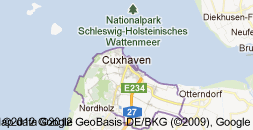 Section 3.28 opens in Cuxhaven with Slothrop and thoughts of Analysis and Analytics. But by nightfall, he’s in town near Wismar where he hears the story of Plechazunga, the Pig-Hero who, in the 10th century routed a Viking invasion. And every summer a Thursday is set aside to celebrate the town’s deliverance from the Norsemen. (Thor sent the pig, Thor=Thursday). But this year the celebration is in jeapordy because Schraub, the shoemaker got drafted and never came back. So, since Slothrop is big in all the right places…could he be Plechazunga? And sure enough he gets dressed like a pig for the Schweinheldfest. [So now he’s been dressed as a rocket and a pig in addition to all of his uniform changes].
And Slothrop spends the rest of this section in the pig costume.
The scene with Plechazunga is pandemonium–bottle rockets and costumes and general mayhem. But it soon settles down to a happy party in which the town is saved for another year. There’s drinking and food and nice ladies and, then, suddenly, cops. The people disperse, wisely, because the police have their truncheons out and are ready to use them. I like the sentiment of this sentence: “The War must’ve been lean times for crowd control, murder and mopery was the best you could do, one suspect at a time” (570).
The police start attacking civilians and Slothrop in his (padded) suit. He wonders if he is expected to actually protect the town from these invaders. Slothrop attacks a policeman but when the shooting starts, he takes off. While hiding in a cafe a girl informs him that the Russians found his uniform and think he’s a deserter. She takes him home, but he doesn’t ever remove his pig costume…he “only wants to lie still with her heartbeat awhile…isn’t that every paranoid’s wish? To perfect methods of immobility?” (572).
She knows the police will come for him so she shows him how to escape. She offers to come with him, but he tells her not to and they have a genuinely touching moment.
 He continues in the costume, across the countryside, sleeping outdoors. Then one morning he is awoken by an actual pig kissing him. So he follows her. They go in search of food. The pig finds potatoes which will do Slothrop no good. But Slothrop finds a hen house and steals some eggs. [We have chickens and the only way that the chicken is upset about you stealing the eggs is if she was brooding and believed the eggs to be fertile, so I’m not too sure of this scene. But I do like the rooster: “in the doorway hollering Achtung, Achtung” (574)].
Slothrop and the pig spend the next day together and then enter a city perishing from an absence of children. The sign over the city gate in burned bulbs and empty sockets reads ZWÖLFKINDER. And my note on this page is simply “Holy shit,” because when a man calls to the pig (whose name is Frieda) and he sees Slothrop he shakes hands and says “‘I am Pökler.’ Thank you for bringing her back” (575).
And then keeping the chess theme alive, Pökler asks if Slothrop plays. Slothrop plays more by superstition than strategy (that’s a nice line) and works solely on protecting his knights. Then, eventually, Slothrop realizes something, and asks, “Did you say Pökler?” (576).
Pökler whips out a Luger aimed at Slothrop’s head. Slothrop thinks that Pökler thinks he had his way with Frieda. But Pökler says that he’d better leave (he’d have been beaten in two moves anyway). Slothrop tells him what he knows about the Zürich information with Pökler’s name on it and the Russian-American-Hereo search for the S-Gerät, But Pökler says he was never interested in the S-Gerät and doesn’t really know what it was. When Pökler asks if he’s really interested in it, Slothrop admits
“Don’t know. Except for this kind of personal tie-in with Imipolex G…” ( 576).
Pökler says it’s an aromatic polyimide. But then tells him all about Ilse, which makes Slothrop think of Bianca and (does this refer back to the scene on the boat that I thought was Margherita?–“Bianca’s dead flesh?”) All of which leads to the bizarre and somewhat creepy idea that Ilse and Bianca are the same child (spiritually, I gather).
 Section 3.29 continues with Pökler, who talks a bit about Lazlo Jamf. In his later life, when Pökler was his student, Jamf seemed to develop a hostility to the covalent bond–that the bond must be “transcended” to be of any use. He hated that the covalent bond was “shared” while the ionic bond was “captured.” The capturing is like a lion–bold and absolute, no relativity–not like the Bolsheviks or the Jews. Pökler was in this class and heard these stories and so he put a face to this lion. He loves movies, indeed, he’s a real movie buff, he says he thought that on D-Day the voice of Eisenhower was provided by Clark Gable. So he chose an actor–Rudolf Klein-Rogge–as the face of the “lion.”
Klein-Rogge was in Metropolis and played the mad inventor that Pökler and his classmates longed to be. He was also in the Dr Mabuse films (also by Fritz Lang). After a lengthy look at Klein-Rogge (as an actor) we get this summary: “all their yearnings aimed the same way, toward a form of death that could be demonstrated to hold joy and defiance” (579).
Pökler tells Slothrop that Jamf’s last lecture ended with him stating that the students have two choices:
stay behind with carbon and hydrogen, take your lunch-bucket in to the works every morning with the faceless droves who can’t wait to get in out of the sunlight–or move beyond. Silicon, boron, phosphorus-these can replace carbon, and can bond to nitrogen instead of hydrogen…move beyond life, toward the inorganic. Here is no frailty, no mortality–here is Strength, and the Timeless (580).
The scene ends with what cannot be a coincidence, Jamf erases C–H and replaces it with Si–N.
And yet Jamf himself did not move beyond C–H, he took his lunch bucket to America and was under the influence of Lyle Bland.
Section 3.30 is about Lyle Bland. And I noted to myself that the narrator is interesting here, saying things like: “Imagine the fellow’s plight” (580) and “–saw him on? isn’t that a slice of surplus paranoia there? Not quite justified, is it” (587).
 We learn that before Bland joined the Masons,he had a ton of money. He established Bland Institute and the Bland Foundation and has been monitoring America’s day-to-day life since 1919. He personally scuttled the 100-mile-per-gallon carburetor (it’s not an urban legend). He also created the Killer Weed stories of the 1930s and the guy-goes-to-the-doctor-can’t-get-a-hardon jokes. Why? Because “an unacceptable 36% of the male work force weren’t paying enough attention to their cocks-not enough genital obsession there, and it was undermining the efficiency of the organs doing the real work” (581).
He also got FDR elected–“Harvard, beholden to all kinds of money old and new, commodity and retail, Harriman and Weinberg: an American synthesis which had never occurred before” (581). He also worked for Swope at GE. All of this under the aegis of “control.”
Bland also controlled parts of Pökler’s life with this fascinating saga: The Alien Property Custodian “had sold Bland a few of Laszlo Jamf’s early patents, along with the U.S. agency of Glitherius Paint Dye…in1925…Bland got cash, securities, and controlling interest in a Glitherius subsidiary in Berlin being run by a Jew named Pflaumbaum, yesyes, the same Pflaumbaum Franz Pökler worked for till the place burned down and Pökler went back out on those streets (582-583). [And note the narrator there… yesyes].
And although there is no evidence, the narrator assures us that Bland has something to do with Pökler meeting Kurt Mondaugen, as well as connections with Achtfaden and Närrisch and, in a very big way, to Slothrop.
 And then we see the story of Bland’s becoming a Mason. Alfonso Tracy, Bland’s friend, has been complaining about a bum shipment of electronics. Bland promises he’ll get him a good electronics man (turns out to be Fibel, see below). Then Tracy shows Bland a Masonic hall full of dead pinball machines–machines that tilt as soon as you look at them. Tracy is pissed that he was totally taken on the deal (and they sing a reprise of “Bright Days for the Black Market”).
There’s a pretty insane dream sequence that ultimately ends with a focus on Bland’s expert Bert Fibel. Fibel worked for Siemens and worked at the GE plant in Massachusetts. Bland had Fibel in the Berskshires to keep an eye on adolescent Tyrone Slothrop. And all these years later, IG Farben still subcontracts the surveillance of Slothrop to Lyle Bland. Last we saw Fibel, he was running shock cord for Horst Achtfaden, but now he begins working on all the broken pinball machines and gets them working again–lots of happy masons in Missouri. In exchange for the help, Bland is made a Mason.
 There’s a little section about Masons then–secret societies, founding fathers, Illuminati, the eye and pyramid on the dollar bill. There’s even a story about Dr Livingstone (“living stone? oh yes” 587). In sum, Dr Livingstone “ambles up to the village chief [in the darkest of dark Africa] and flashes him a Masonic high sign-the chief recognizes it, returns it, all smiles, and orders every fraternal hospitality laid on for the white stranger” (587). The narrator then tells us to look for Ishmael Reed (“he knows more about it than you’ll ever find here” 588).
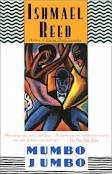 [Turns out Reed wrote a couple of books in the late 60s that sound great, he also wrote a book in 1972 called Mumbo Jumbo which seems like it might parallel certain sections of Gravity’s Rainbow]. The narrator also mentions the Missouri Mason Harry Truman (in office because of death in this August 1945).
Of course, by the time Bland joined up, the Masons were just another businessmen’s club, “a real shame” (588). And yet Bland was affected by the ancient magic of the Masons. He lost track of time and his mind could not place himself. He even started to leave his body! He began spending more and more time out of his body (his wife didn’t notice–ha!). He is amazed to find that the Earth is a living thing, not a dumb rock. He feels like a child again.
To find that Gravity, taken so for granted, is really something eerie, Messianic, extrasensory in Earth’s mindbody (590).
Then one night Bland called all his family to him. He explained that he had been taking these “voyages,” leaving his body for longer and longer times. And now he was leaving for good. He’d made sure all of his family would be taken care of financially. He said good-bye to everyone, sank into the davenport and left.
 Section 3.31 returns us to Cuxhaven and introduces us to two new characters (almost 600 pages into the book!): Doctor Muffage and Doctor Spontoon. They look like London respectability amid benighted Cuxhaven. Spontoon gets an ace of spades stigma on his cheek during high stress.
They have been asked by Pointsman to perform a most strange operation..which will not be revealed until the end of the section. Muffage says he hasn’t done one since ’27. And while they’re happy no one will watch them do it, they know that Pointsman is obsessed–possibly losing his grip.
Turns out that they are after Slothrop (the Yank in the pig suit–he’s still in the pig suit). Spontoon asks if they could find General Wyvern as well, but he’s no doubt at the bar. When they get to the bar Wyvern is leading a group song. It is a wild scene. Except for Seaman Bodine, who is not participating. We last saw him (“you recall” says the narrator (594)) in a bathtub in Säure Bummer’s place.
 Tonight, Bodine is promoting the First International Runcible Spoon Fight between Avery Purfle and an English commander named St John Bladdery (at 50/50 odds).
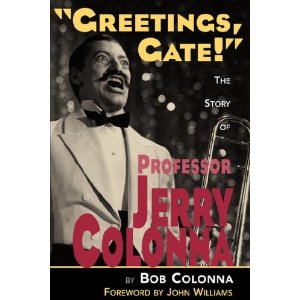 For the second time this section we get a reference to “Greetings, gate.” This time, Albert Krypton asks, “Greetings gate, need an opiate?” (594) and later, “Greetings gate, let’s inoculate” (595). [I knew this expression from Daffy Duck, of all things. But the origin is Jerry Colonna whose famous introduction was “Greetings gate, let’s osculate”).] Bodine refuses the codeine on the grounds of his cold. But he says he’ll be going to Putzi’s later that night.
Slothrop comes in and asks Krypton about Springer. He knows nothing but says to go to Putzi’s that’s where he usually is. Krypton invites him to Bodine’s Fight tonight. When Slothrop hears Bodine’s name, Slothrop tells him to say Rocketman sez howdy. Krypton taken aback says “the hash?” and Slothrop nods. Krypton heard the hash was legendary and didn’t even really believe that Rocketman existed–could this guy be copping on the name? Krypton finds Bodine and says Rocketman’s here, but Bodine says he must be a fake.
And then a sergeant comes in and looks at the pig and says “Slothrop?” Slothrop looks at Krypton, hurt, but it wasn’t him who ratted. The lights go out and Slothrop escapes and another chase ensues (Krypton tells him to follow the yellow brick road and begins skipping). They race to the Badass where the spoon fight is under way. We gets some quick scenes of the fight and the witnesses most of whom have no idea what’s going on. The fight grows bloody and builds to an intense pitch, with spoons at jugulars, when they suddenly look around, see no one is watching and realize that no one said it was a fight to the death. They dissipate, just as an MP car pulls up.
 Krypton and Bodine take off and grab Slothrop “Rocketman, holy shit, it really is” (598). They take off and hop in a Red Cross Clubmobile or canteen truck (with keys in it). The pretty girl asks if they want anything, but the car speeds off before they answer. Just as they peel away two civilizations approach, one with an ace of spades on his cheek.
The girl is unperturbed by the kidnapping until Krypton pulls out the cocaine. She calls them dope fiends and shrieks. Bodine has words with her over the price of coffee at the Battle of the Bulge and they exchange threats and insults. She reveals her name is Shirley. They speed along until the get to a road block. Then they turn around (with Shirley’s help on the gear shift) and escape. She settles down and does some coke with them.
When Bodine asks why he’s going to Putzi’s, Slothrop tells him about Springer. But Bodine says he didn’t know Springer was supposed to be there (“Why does everyone keep saying that?” (601)).
They arrive at Putzi’s, a sprawling, half-fortified manor house. Nobody even knows if Putzi is a real person. Slothrop flashes his white knight and they are all let in. Inside it’s a bar, opium den, cabaret (a woman is picking up coins with her “prehensile lips,” brothel and casino–everyone raising hell.
Springer isn’t there and may not be at all. But this is the date that Slothrop is supposed to get his discharge papers at this very place. Slothrop gets really paranoid that this is all a setup (cops?) and sits in the closet chewing on his costume. Bodine finds him and brings him a nice girl named Solange, the masseuse. She leads him to the baths.
Meanwhile, Bodine goes in search of the man he’s selling coke to tonight–who happens to be Major Marvy. He can’t find Marvy anywhere until he comes out of the bathroom talking about the Iron Toad:
lurking at the bottom of a rank shit-stained toilet and hooked up to the European Grid through a rheostat control rigged to deliver varying though not lethal surges of voltage and current. No one knows who sits behind the secret rheostat (some say it’s the half-mythical Putzi himself), or if it isn’t in fact hooked up to an automatic timer, for not everybody gets caught, really-you can piss on the Toad without anything at all happening. But you just never know. Often enough to matter, the current will be there-piranha-raid and salmon-climb up the gold glittering fall of piss, your treacherous ladder of salts and acids, bringing you back into touch with Mother Ground (604).
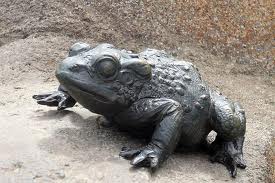
Marvy sees tells Bodine that Toad tried its best, but he’s alright, and he gleefully takes the cocaine. The Toad has got him horny though so he goes to find a whore. Marvy wants “a nigger” (that’s a nice touch) but he settles for Manuela who’s “pretty sunburnt herself, Aint’tcha?” (605). Manuela isn’t going to react to Marvy’s awful behavior, she just does her job, hanging up his clothes and climbing on him in the bath. Marvy gets to business (while Manuela thinks about anything else) until the alarms sound: “Raid!”
Marvy freaks (he has 2 1/2 oz of coke in his pocket, after all), throws Manuela off of him and runs to the closet. He finds not his uniform, but a multicolored pig suit. He figures it’s better than a uniform with coke in it so he climbs in and acts as natural as one can in a pig suit. Until a man with an ace of spades on his face handcuffs him. Marvy is about to announce just who the hell he is, until again, he remembers the coke is in his pants with his ID, and he decides to remain silent.
They throw Marvy in an army lorry. Doctors Spontoon and Muffage talk about the “operation” they’ll be doing. Marvy freaks out so they sedate him (they were under the impression that Slothrop would be pretty mellow). Marvy finally tells them who he is but they don’t believe him. The lorry pulls over and they prep for the surgery. Soon after, Marvy’s balls have been removed and he is stitched back up.
Back to Slothrop at Putzi’s. He is asleep with Solange. He’s dreaming of Bianca and Zwölfkinder. Solange is dreaming of Bianca too, although really she is dreaming of her daughter Ilse, for she is really Leni Pökler (holy shit!).
At the front door, Bodine asks Herr Möllner about Mr von Göll, but is told that von Göll is always busy and had no plans to arrive that night–there’s no discharge papers for anyone. Möllner also happens to be the man who stole Marvy’s clothes, papers and cocaine. As Bodine returns to his friends, Shirley comes over and tells him it was only ten cents per coffee at the Battle of the Bulge.
Section 3.32 ends this week’s read and Section 3 of the book. We are leaving the Zone. After the hilarity and chaos of the last section, this one returns to the calmness of Tchitcherine. He has traced Weismann all across Holland to find…this crazy scene described below (if he knew Martin Fierro it would make sense). He sees two men, one white, one black holding guitars–just like the male female singing contest in Central Asia a decade ago.
But he knows that Weismann installed the S-Gerät and fired the 00000 somewhere close by. And so Enzian can’t be far behind either. “It will be here.” (611). Tchitcherine will just wait–he’s freaked that Marvy has disappeared and is still worried about the unknown Russian (who was, as we recall, Slothrop in Tchitcherine’s uniform).
Tchitcherine is also freaked because he had recently seen Mravenko, one of the VIAM people, in Berlin. Mravenko was very crass when it came to chess, he even liked playing it blindfolded (“which Russian sensibilities find unutterably gross” (611)). Mravenko tells Thcitcherine that They found out about his trip to Kirghiz Light. Tchitecherine dismisses it at ancient history, but Mravenko says that he’s now regarded as “useful,” They’re both spooked by this. No one knows what makes you “useful” but it’s akin to a death sentence.
Thcitcherine was going to flee to Moscow until he heard that Weismann’s battery was at the Heath. And where there’s Weismann, there’s Enzian.
And what Tchitcherine saw was: a dozen nationalities dresses and Argentinian Esnciaros around a commissary. El Ñato is on a horse, gaucho style; Felipe is there too worshiping the rock where a century ago Maria Correa followed her lover carrying their newborn child . She died but the baby survived nursing from her corpse for a week (and a shrine was built there); Graciela Imago Portales is bored, playing cards by herself, although she notices that Beláustegui is watching her more closely than before.
They are all on the set of the movie to be. It’s all real buildings (with real liquor and food). When von Göll leaves (if he ever comes) nothing will be removed. All are invited to move there (or stay there)–a weird community in the middle of a garrison state. But it’s not the strangest village in the Zone. Squalidozzi speaks of Palestinians who have strayed from Italy and started a Hasidic community. There’s even a village in Mecklenburg taken over by Army dogs (who play Kill the Stranger).
There’s a lengthy bit of detail about the dogs. It transpires that people want to study the dogs. The research has been contracted to Mr Pointsman! Pointsman has been reduced to a small office in Twelfth House after the castration of Major Marvy.
The section ends with a shift to Clive Mossmoon and Sir Marcus Scammony. They are discussing the Polyvinyl Chloride Raincoat (“imagine the look on some poor bastard’s face when the whole sleeve simply falls out of the shoulder” (615)).
Clive wants to talk about Pointsman, but Sir Marcus keeps interrupting about thigh high boots which would look so good on his naked thighs (and other insinuations). Clive actually thinks about it since Scorpia has been so bitchy lately. But Clive wants to talk about the crisis. Sir Marcus sums things up nicely for us:
there isn’t going to be any crisis. Labour wants the American found as much as we do. We sent him out to destroy the blacks, and it’s obvious now he won’t do the job. What harm can he cause, roaming around Germany? For all we know he’s taken ship for South America and all those adorable little mustachios. Let it be for a while. We’ve got the Army, when the time is right. Slothrop was a good try at a moderate solution, but in the end it’s always the Army, isn’t it? (615)
The section ends with a strange note about homosexuality. How in the first World War:
English men came to love one another decently, without shame or make believe… But the life-cry of that love has long since hissed away into no more than this idle and bitchy faggotry… Homosexuality in high places is just a carnal afterthought now, and the real and only fucking is done on paper (616).
I can’t quite imagine what Pynchon is getting at with that ending, but I look forward to opinions on it.
—–
I’m going to give thoughts about the book as a whole at the end of the final week’s read, but I’ve got so many things floating round in my head. I’m not willing to speculate until it’s all done, but this book really seems to be tackling dozens of different subjects in really unexpected ways. I also don’t know if Section 4 is going to wrap things up, tie things up or just leave us hanging. But the conclusion is in reach.
For ease of searching, I include: S-Gerat, Narrisch, Zwolfkinder, Mollner , von Goll, El Nato, Belaustegui

 I Just Read About That...
Leave a comment