Feeds:
Posts
Comments

Archive for March, 2011

SOUNDTRACK: PJ HARVEY-4-Track Demos (1993).
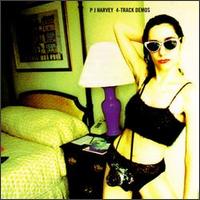
After the intensity of the Steve Albini produced Rid of Me, Harvey releases this collection of demos.  The amazing thing is that these versions actually seem more intense than the Albini version. Or if not more intense, then certainly more raw.

The songs definitely have an unfinished feel about them, and yet they only vary from the final version in polish (and Albini’s stamp).

“Rid of Me” is just as quiet/loud, and has those high-pitched (and scary) backing vocals.  Speaking of scary vocals, her lead screams in “Legs” are far scarier here than on Rid of Me–like really creepy.  (Which sort of undermines that idea that this was released because Rid of Me was too intense for fans).   “Snake” actually features even creepier vocals–Harvey must have had a field day making these sounds!

I admit that I like the finished version of “50 Ft Queenie” better,”but there’s something about this version of “Yuri-G” that I like better.

The disc also has some tracks unreleased elsewhere.  “Reeling” is an organ-propelled song of female strength with the nice lyric: “Robert DeNiro sit on my face.”  “Hardly Wait” is a slow grinder that is fairly quiet for this time period.  “M-Bike” is a cool angry rocker about a guy and his motorcycle which is one of my favorite tracks on the disc.

It’s a great companion to Rid of Me.

[READ: end of February to early March]  original articles that comprise A Supposedly Fun Thing I’ll Never Do Again

As I mentioned last week, I decided to compare the articles in A Supposedly Fun Thing I’ll Never Do Again with the original publications to see what the differences were.  It quickly became obvious that there were a lot of additions to most of the articles, and it seems rather pointless (well, actually it seems exhausting and really outrageously time-consuming) to mention them all.  But what I did want to note was the things that are in the articles that have been removed from the book.   There’s not a lot but there are a few juicy tidbits (especially in the early articles) that are fun to note for anyone who read only the book and not the original articles.

My process for this was rather unthorough: I read the article and then right afterward I read the book.  If I noticed any changes, I made a note on the article version.  Many of them were surprisingly easy to note as DFW’s writing style (especially his idiosyncratic phrases) really stand out.  This is especially true in the Harper’s articles.  The academic ones were less notable, I believe, and I’m sure I missed a bunch.

I’m not sure in any way how these pieces were dealt with initially by the magazine or DFW.  I assume that DFW handed in the larger article (like we see in the book) and the magazine made suggested edits and DFW edited accordingly.  Then the book copies are probably the originals, bt which have also been updated in some way.

In most cases, it’s not really worth reading the original article, but I’m including links (thanks Howling Fantods), for the curious.

As for length, it’s hard to know exactly what the conversion from magazine article to book is.  The “Tornado Alley” tennis article is 8 pages (more like 4 pages when you take out the ads) and the book is 17.  Perhaps more accurately it seems like one Harper’s column = just under one book page.  I’ll try to figure out what the conversion is if I can.

One last note, whenever I say “article” I mean the original magazine version.  And obviously “book” means ASFTINDA. (more…)

Read Full Post »

SOUNDTRACK: MOGWAI-Young Team (1997).

When Mogwai released Young Team there was quite a bit of buzz around them.  I remember when I bought the album, that I had no idea where they were from.

With the Asian-looking characters on the cover and a picture of Fuji Bank (and no band members names listed) I assumed they were Japanese.  Of course, a closer listen reveals a lot of Scottish voices quietly chatting away during some of the songs (which doesn’t necessarily mean they are Scottish…but indeed, they are).

Young Team is a great debut and Mogwai shows a lot of versatility.  It opens with a spoken word bit about Mogwai (If the stars had a sound it would sound like this).  It’s a slow instrumental, actually quite pretty, with picked guitar and continual bass and even harmonics.   It gets loud by the end, yet even that is restrained.  But just when you think that Mogwai is going to be another post rock instrumental chill out band, they hit you with “Like Herod.”

“Like Herod” is one of the more amazing songs in instrumental rock.  It plays with loud and soft dynamics like nobody’s business.  Opening with a slow rumbling bass, the guitars pick out intricate melodies.  Then at 3 minutes, all hell breaks loose in the form of big guitar chords and screaming guitar notes.  Things slow to a crawl about 6 minutes into the song. But we’re only half way done.  And those quiet notes are once again blown away by those same chords and screaming notes.

You could pretty much end the disc right there and call it a success.  But “Katrien” shows off another side of the band: a spoken word side.  Behind some gorgeous melodies there’s something of a rant.  It’s followed by “Radar Maker,” a 90 second piano-based instrumental.  It’s quite delicate and it leads right into “Tracy” a beautiful 7 minute song with a pretty melody and lovely washes of sound.

The middle of the album has two shot songs: “Summer [Priority Version]” is a condensed version of that quiet/loud dynamic that Mogwai does so well.  And “With Portfolio” plays havoc with a pretty piano song by throwing in washes of noise and sound effects which completely take over by the end.

The unfortunately titled “R U Still In 2 It” belies its bad name with some beautiful quiet guitar work played behind a vocal turn by Aidan Moffat.  There’s even a sung chorus!

“A Cheery Wave from Stranded Youngsters” is a two-minute sort of intro to the final track on the disc, the amazing “Mogwai Fear Satan.”  A 16 minute instrumental that is quite beautiful as it opens: distorted chords that don’t overpower the melody.  They bolster it as it builds and builds until it reaches a moment of silence which is filled by…a flute (!).  The song continues to build with a gorgeous repeating motif.  Then it slows down again to let the flute really sync with the song until it reaches its beautiful end.

It’s a great debut, deserving all of the praise that was heaped on it.

[READ: March 3, 2011] To Ruhleben and Back

This is a true account of one man’s escape from Ruhleben prison in Germany during WWI.  I admit that I had never heard of Ruhleben before (and frankly I’m really surprised I never have, as roughly 4,000 British citizens were interned there from 1914-1918).

This story was published in 1916 as one man’s account of his escape from the prison.  And then it quietly went out of print. McSweeneys’ Collins Library has now (well, in 2002), seen fit to get it reissued once again.

The introduction explains the historical veracity of the book, and also promises a rather ripping yarn.  And indeed, Pyke does not disappoint.

Well, maybe a little in the beginning.  The early parts of the book are a little slow.  It explains who he was and how he wound up in Germany during the war.  The short version is that he was a journalist who was frustrated that he wasn’t hearing proper news from the war, so he volunteered to go to Germany (even though at this point all English men and women were being incarcerated).  He moved there and since he spoke fluent German, he was able to blend in.  Until he was caught. (more…)

Read Full Post »

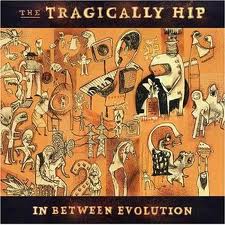
SOUNDTRACK: THE TRAGICALLY HIP-In Between Evolution (2004).

The Hip are still putting out solid rock records.  And “evolution” is a good word in the title, for the Hip are clearly no longer the band they were.  And yet there is a sense they are returning to something…if not their own roots necessarily, perhaps a more basic sound.

The opener, “Heaven is a Better Place Today” is so upbeat it’s almost shocking.  It’s bouncy and catchy with some very cool riffs.  It’s followed by “Summer’s Killing Us, a raucous, rocker with another great chorus.

This album has some of my favorite tracks of recent Hip albums.  The best song on the album is “Gus: The Polar Bear from Central Park.” Between the riff and the way Downie sings the song, it’s got a brooding intensity that I can’t resist.  “Vaccination Scar” has a really rocking slide guitar.  And it continues in the vein of the album in which the band sounds more like Pearl Jam than R.E.M.

“It Can’t Be Nashville Every Night” is another song that sounds typically Hip and yet with a bit more oomph.  Even some of the later tracks (tracks which tend to be less than stellar on Hip discs–am I wrong?) are really strong.

“Makeshift We Are” has a great stuttery quality to the chorus, and “You’re Everywhere” has an unending power with a great chorus.  “Mean Streak” sounds like a pretty typical Hip song until about half way through when it throws in a minor chord break that really surprises.

“The Heart of the Melt” and “One Night in Copenhagen” are two late album tracks that are short and urgent.  “Melt” is a speedy loud rocker and “Copenhagen” screams along until it comes to a catchy end.

This isn’t really a return to the Hip’s roots, but it is a return to an urgency that the Hips early albums possessed.

[READ: February 16, 2011] “If Things Happen for a Reason”

This story starts in a fairly shocking way: the narrator wakes up from blacking out to hear a man she doesn’t know saying that their kids will laugh over this someday.

We pull back to see that the woman was in a bicycle accident (face first into the pavement–ouch) and the man helped her up and brought her to a hospital.  The story proceeds with his declaration and her belief that indeed, they will have kids together (even though she hadn’t met him before that moment).

Her family believes she is too young for anything like that so she hides him from them.  Eventually the truth comes out and she introduces him.  And they settle down into a happy stability (even if they can’t always pay their bills on time). (more…)

Read Full Post »

SOUNDTRACK: THE TRASH CAN SINATRAS-Cake (1990).

Back in college I had all kinds of disposable income.  And so rather than buying beer or smokes, I bought CDs.  And I bought a few CD’s based on the band’s name or cover (not a great idea).  Some paid of handsomely while other, eh, not so much.

Anyhow, this is one of those bands that I bought based on their name.  I stumbled upon the disc the other day and decided to give it a listen (it gets very high marks on allmusic).

This disc is very much of its time, a jangly UK band that could have been the Charlatans or any other band that was huge in the early 90s.  The album has a more acoustic feel to it than the big college bands of the time.   In fact, they seem to be trafficking in the same style of music as that other huge Scottish band (at the time) The Proclaimers: harmonies, jangly guitars and upbeat choruses (although nowhere near as upbeat as The Proclaimers).

[READ: March 3, 2011] “Paranoia”

This was a really engaging story. And what I especially liked about it was that there were two threads that intermingled, but it wasn’t obvious which was the “main” story.  So the story lulls you into thinking one thing and then slams you with something else.  It was very effective.

The story is about a young white man, Dean, who befriends a young Chilean boy, Roberto.  Roberto is an illegal alien.  His father (and family) was invited here to complete an advanced degree; however as soon as he finished it, the family were sent home.  But Roberto did not want to go back home, he wanted to finish high school, so they let him stay by himself (he was about 17).  He made some money, learned English and made friends with Dean, who was willing to help him out financially.

The second thread concerns the war.  I assume it’s the current Iraq war, (it is described as being a quick, in-and-out operation) but that is never specified.  So it could be the 90’s Iraq war.  There are news flashes about it, flags are everywhere, and there’s even a fourth of July parade timed to coincide with the troops’ departure. (more…)

Read Full Post »

SOUNDTRACK: MOGWAI-4 Satin EP (1997).

Mogwai seemed to thunder onto the scene back in 1997.  I missed this disc when it came out but I was on board with their debut.  And then it seemed like a whole bunch of stuff was released right away: a collection of early EPs and a remix album.  It was a little hard to keep everything straight including what the band actually sounded like.

This EP is pretty representative of their early sound: it has three songs that are less “songs” than they are soundscapes (or something).   It’s something of a noise fest.  Unlike their later songs which have discernible melodies (and are actually quite catchy) the three songs on this EP are more percussion and effects than actual melodies.

“Superheroes of BMX” is a series of washes over a simple series of electronic-sounding beats (it actually seems appropriate that they were on Chemical Underground records).  Although by around 5 minutes the minimal guitar structures do come out.  “Now You’re Taken” is closer to a proper song.  It has a beautiful understated structure and vocals (!) by Aidan Moffat of Arab Strap.

But it’s “Stereodee” that really stands out: 13 minutes of noise and crashing and feedback.  At about the ten minute mark, my five year-old son said, “I like this song daddy, it sounds like monsters crashing through a small hole.”  I couldn’t agree more.

[READ: March 7, 2011] “Honor”

Golly, this story is dark.  How’s this for an opener: “My father was supposedly dead, and I found out only years later that he’d left walked out when I was eighteen months old….”  Yipes.

And I’ll say that the story doesn’t get any brighter.

So the narrator, born in the late 50s, tells the story of her mother raising a daughter (with the help of her mother who lives close by), and somehow making ends meet.  Of course she would never even consider moving back home with her mom, but she is happy to have her so close.

The mother and the narrator are strong-willed and hard to stop.  And when they are on the same side, they are formidable together. But when they disagree with each other (which they did pretty much all the time once she was a teen), it was tough being in their house.

The story unveils a plot about half way through.  The plot concerns her Aunt Andy.  Aunt Andy is her father’s brother’s wife.  And she comes to stay with them for a period of time.  In the past, Andy was shy but a little superior.  Her husband is a used car salesman and quite wealthy.  But on this visit she is pale and visibly shaken.  She is quiet and doesn’t mention her son at all.  In the past, her son was a real jerk, so she’s somewhat relieved that the boy isn’t staying with them.

Andy won’t say what the problem is and her mother refuses to tell her anything serious.  But even at the young age the narrator knows something is wrong.  And then there’s the trial. (more…)

Read Full Post »

SOUNDTRACK: DESCENDENTS-Everything Sucks (1996).

My three-year old daughter brought this CD out of the shelf of CDs in my house.  I have no idea why she did; she didn’t say.  But I decided to listen to it as I haven’t in many, many years.

The Descendents have been around for a long time and their early records were mostly 1 or 2 minute blasts of punk.  This disc (their first after a nine-year hiatus) doesn’t deviate too much from that track record.  Although the best song on the disc, “I’m the One” actually has a verse-chorus structure and feels like it’s a full length pop song (when in fact its only 2:15).

“I’m the One” more or less set the stage for the kind of pop punk that Epitaph records (who released this record) would bring to prominence with Bad Religion and Rancid (and the rise of emo).  This record offers a fun mix of ludicrously short songs (35 seconds for “Coffee Mug” and 20 seconds for “Eunuch Boy”) and slightly longer songs.  Six of the songs are under two minutes.  And it’s amazing to hear just how much song you can pack into two minutes.

I haven’t really listened to much punk in the last few years, so this is strangely nostalgic even though it doesn’t really sounded dated.  In fact, the slower songs (the 2:30 “When I Get Old”) has a real Bad Religion feel to it–and they never go out of time.  Interestingly they feel a lot longer than 2 minutes after a whole bunch of 90 second songs.

Even after all these years, “I’m the One” stands up as a great song–funny and catchy, and I’m glad to have heard it again.

[READ: February 17, 2011] “The Miraculous Discovery of Psammetichus I”

Following right after Ladies and Gentlemen, The Bible!, is this short story which “fleshes out” The Histories of Herodotus.  In fact Part I of the story is, I assume, an excerpt from Herodotus.

There are Ten Parts, and each part is designed to add more to the simple history that Herodotus gave us.   Indeed, Psammetichus I was a real King of Egypt.

Herodotus tells us that Psammetichus I was curious whether the Egyptians were the most ancient race.  So he took two children, isolated them and made sure no one spoke to them.  They were fed and cared for just not spoken to.  Finally, the children began saying a word over and over, which the wise men determined was a Phrygian word.  This obviously meant that the Phrygians were an older civilization.

The rest of the story is different examples of studies that Psammetichus I did to determine things.  Many of them are kind of funny (absurd, obviously, and sad but sort of funny): raising two children with birds or apes etc.  After a few sections, one of Psammetichus I’s queens (he had twenty-three who were all infertile (!)) asks why he’s so curious. (more…)

Read Full Post »

SOUNDTRACK: WAVVES-“Post Acid” (2010).

Wavves’ King of the Beach CD made many Top Ten of 2010 lists.  I listened to a track somewhere and wasn’t all that impressed.  Right now there’s a live show on NPR, which I listened to a bit (and which made me investigate them further).

They have a few songs on their My Space page and I really like this one.  It is short and fuzzy and catchy and cool.  It’s a fast blast of punk nonsense.  I have no idea what it’s about (and I rather like the weird break in the song where the singer can barely get words out).

I’m not sure if I’d listen to a whole record of them (although I love their hair).  But this was sure a fun track.

[READ: February 17, 2011] Arkansas

John Brandon did a pretty amazing thing with this book.  He took two rather unlikable characters and made them sympathetic and, eventually, compelling.  The unlikability may have come from the detached style of their introduction.  Each of the main characters is introduced separately with a brief anecdote that seems to end abruptly.  In fact, I wondered if it was going to be a series of brief character sketches and nothing more.  I’m thankful that that wasn’t the case since, each character’s “section” could have been a complete (but very unsatisfying) story.  When I saw more of Swin, I was pleased, even though I didn’t really “like” him.

First we meet Swin Ruiz, a very intelligent guy who makes it to college.  While in college a foolish mistake (resubmitting an essay to a teacher) costs him his scholarship, which essentially means he’s out of school.  He scams some money from the rich students and then takes off, leaving his family and his beloved younger sisters with their jerk of a stepfather.  From there, he drifts aimlessly until he meets a bartender who sets him up with someone to help “break the laws of the land.”

Kyle Ribb is the other main character. He’s a harder man, something of a bastard.  He tries to go legit by working in a bike store.  When that doesn’t pan out (the story of that is pretty funny) he reverts back to his “no boss” ways.  He eventually meets a guy who introduces him to Colin, a man with criminal connections.

The third character we meet differs from these two.  First, a date is given as an introduction (1974).  Second, the whole section is written in second person (“You are Ken Hovan”).  We learn about his life and his background and how, eventually, he took the nickname Frog and became a shop owner, a dealer of unusual merchandise (which begins with bootleg tapes and, naturally, transforms into drugs).

The story of Frog’s life from 1974 to the present intersperses the main story (which is really about Swin and Kyle).  And each time frame jump ties together some of the mysteries of the book (Frog, being the boss, ties the thread together).  And there are many mysteries.

Kyle and Swin move up the ranks of the ne’er-do-well scale, until they land a job in an underused state park in Little Rock, Ark.  They get a “legit” job manning the booth, checking visitors in and out, and cleaning up the brush, but their “real” job is to deliver packages to random locations in different states.  They drive a car to a parking lot, wait for a person to get in and then drive off in a different car with a package for the other end.  And that’s pretty much it. It’s obvious they’re doing illegal work, but they don’t ask questions and don’t know too many details.

Their boss at the park is Bright, a man who seems to really enjoy the park and genuinely likes to take care of it.  He is a middleman for Frog, but a rather benevolent one.  There are some other characters as well.  The first is Her, (that’s the only name she gives out), she gives Bright the details about the packages.  Bright’s boss at the park is Wendy, she knows what they do and receives a cut.  She only wears pink and wishes to be a painter.  She recites a quotes from a different painter before she leaves. (more…)

Read Full Post »

SOUNDTRACK: PJ HARVEY-Rid of Me (1993).

For Rid of Me, PJ Harvey jumped to the big leagues (relatively) by enlisting maniac Steve Albini as a producer.  And he takes the rawness of Dry one step further into a sound that is both raw and sharp.  He really highlights the differences between the highs and lows, the louds and quiets.  And man, when this came out I loved it.

Like NIN’s “March of the Pigs,” the opening of “Rid Of Me” is so quiet that you have to crank up the song really loud.  And then it simply blasts out of the speakers after two quiet verses.

“Legs” turns Harvey’s moan into a voice of distress, really accentuating the hurt in her voice.  And Harvey hasn’t lightened up her attitudes since Dry, especially in the song “Dry” which has the wonderfully disparaging chorus: “You leave me dry.”

“Rub Til It Bleeds” is a simple song that opens with a few guitars and drums but in true Albini fashion it turns into a noisy rocker.  “Man Size Quartet” is a creepy string version of the later song “Man Size” (I’ll bet the two together would sound great).  And the wonderful “Me Jane” is a great mix of rocking guitars and crazy guitar skronk.   Albini really highlights the high-pitched (male) backing vocals, which add an element of creepiness that is very cool.

For me the highlight is “50 Foot Queenie”.  It just absolutely rocks the house from start to finish.  The song is amazing, from the powerful…well…everything including the amazing guitar solo.  “Snake” is a fast rocker (all of 90 seconds long) and “Ecstasy” is a song that feels wrung out, stretched to capacity, like they’ve got nothing left.

It’s not an easy record by any means, but it is very rewarding.  This is a CD that really calls for reamastering.  Because it is too quiet by half, and could really use–not a change in production–just an aural boost.

[READ: end of February and beginning of March] A Supposedly Fun Thing I’ll Never Do Again

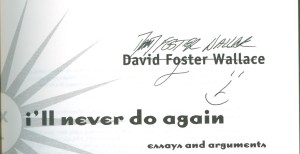
This is a collection of 7 essays that DFW wrote from 1990-1996.  Three were published in Harper’s, two in academic journals, one in Esquire and the last in Premiere.  I devoured this book when it came out (I had adored “Shipping Out” when it was published in Harper’s) and even saw DFW read in Boston (where he signed my copy!).

click to see larger

[Does anyone who was at the reading in Harvard Square…in the Brattle Theater I THINK…remember what excerpts he read?]

The epigram about these articles states: “The following essays have appeared previously (in somewhat different [and sometimes way shorter] forms:)”  It was the “way shorter” that intrigued me enough to check out the originals and compare them to the book versions.  Next week, I’ll be writing a post that compares the two versions, especially focusing on things that are in the articles but NOT in the book (WHA??).

But today I’m just taking about the book itself. (more…)

Read Full Post »

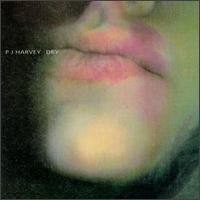
SOUNDTRACK: PJ HARVEY-Dry (1992).

This first PJ Harvey album was a revelation in 1992.  It was angry and loud and awfully disconcerting. And, perhaps most importantly, it showed a strong woman, unafraid to point fingers at foolishness around her. (Yes, I miss the 90s).

It was also raw and abrasive and, at times, scary.  The opening track featured discordant music and vocals that were more than a little uncomfortable.  “O Stella” has more uncomfortable vocals with super cool and slightly off harmonies.  The guitar is a great distorted mass and the bass is low and heavy.  A great track.

“Dress” is one of the least abrasive tracks musically, which really lets the lyrics come to the fore. And her lyrics are wonderful throughout the disc–she attacks conventions of femininity and flips expectations.  And although “Dress” has a very simple chorus–just the line “If you put it on”–it is catchy as anything.

But it’s not all loud songs, either.  The wonderfully titled “Happy and Bleeding” features some intriguing quiet guitar work and whispered verses.  It grows in strength but never wails like the other songs.  For real wailing, “Sheela-na-Gig” is your song. Terrifically rocking and obscene, it’s a funny, clever awesome alt rock song.

Harvey experiments with falsetto (although nothing like she will on Let England Shake) on “Hair,” a cool twist on the Samson and Delilah story.  “Plants and Rags” makes exquisite use of a creepy violin to bring some extra sounds to an already cool song.

It’s a stunning debut and showed that Harvey was a fearless singer.

[READ: February 27, 2011] Misadventure

This is Millard Kaufman’s final novel (after the very cool Bowl of Cherries).  The Afterword (written by Kaufman’s son) seems to suggest that Millard actually wrote this back in the 60s.  There are elements of this book that make me thing that he did write it in the sixties (and then obviously updated particulars to make it contemporary).  It just feels circa the 60s and it feels like the book of a younger man (Kaufman was 92 when he died).

The story opens with a dead body and a real estate agent.  And it quickly develops into a tidy noir fiction with double-crossing and undermining and all kinds of interesting twists.  I don’t read noir or “mysteries” as a rule, so this is kind of a novel novel to me.  Accordingly, I can’t compare it to the genre. (more…)

Read Full Post »

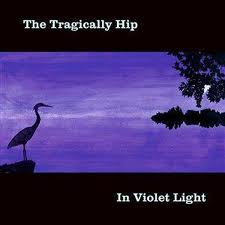
SOUNDTRACK:  THE TRAGICALLY HIP-In Violet Light (2002).

Back in 2000 or so, I was a little down on The Hip’s releases.  I may have even decided to give them a break for a while. But then I heard bits of In Violet Light and I felt that they were back to their strengths: anthemic rock with interesting hooks.  And the disc scales back the total time to about 45 minutes, so there’s less bloat.

“‘Use It Up'” is a pretty standard fast rocker but there’s nice subtle sounds in the bridge that make it a bit more.  But their two best songs in years come on this disc:  “The Darkest One” and “It’s a Good Life if You Don’t Weaken.” “Darkest” brings back that smooth low end that gets you moving and Downie’s voice just soars above the music.  And “Good Life” is a great slow builder, the kind they haven’t really done in a few albums.  Again, the bridge is great.

It’s followed by “Silver Jet” which features some of the most unusual sounds that Hip guitarist have made.  Squealing feedback sounds, which build to a great chorus.  “Throwing Off Glass” is one of their infectious ballads.

There’s a couple of okay songs towards the end, but the album comes back to life with “Beautiful Thing” a catchy, building rocker and “Dire Wolf” a great ballad in which Downie’s voice and lyrics (along with some interesting country tinged guitar) make this a great track.  And the album closer “Dark Canuck” is a slow builder.  It starts off somewhat plainly, but it keeps ratching itself up over 6 minutes to end the disc on a high note.

The Hip are definitely moving into a more mature period at this point, but they’re still writing interesting songs that are full of intensity.

[READ: February 15, 2011] “Wireless”

This story has a few components that tie together very nicely.  The major component is alcohol, for this is a story about an alcoholic.  And what I liked about the construct of the story is that it seems to take a while to gain focus, like the alcoholic herself.

It opens with observations about people who collect or obsess over something (her friend has a Glenn Gould obsession –glennerd she calls herself).  The story then tries to get us to meet the antagonist of the story, but, the story plays coy, making a joke out of how the two meet.  Finally, Joan and Ned meet in a bar in Toronto.  She’s from Vancouver, he’s from Newfoundland.

She is charmed by his east coast/Irish/Newfie ways and even though he hates to be seen as charming he assumes that this is a pick up so he lets it pass. Ned is in a trad band which plays lots of vulgar trad songs (sounds like a lot of fun,actually).  They have many drinks together.  He figures the night’s going well for him until we learn that Joan doesn’t like burly, hairy men, which Ned is.  She doesn’t invite him back to her room, but he invites her to visit him in Newfoundland any time.

She can’t get him out of her head, so she plans an excursion to Newfoundland, under the guise of writing a piece about the east coast for her magazine.  She argues that since that movie was filmed there and its very touristy now, it will be of interest to their readers.  (I don’t know what that movie might be).

Ned is excited to see her and they quickly get to drinking.  Ned’s Newfie hospitality makes him insist that she stay at his place that night, but frankly, her hotel is ever so much nicer than his house.  Rather, after much internal debate, she invites him to stay in the hotel room.

The next day they do some sight-seeing together–the go for a hike to the icebergs.  Ned is not as interested in the outdoors as Jane is, and Jane starts talking about how they (alcoholics) need to stick together and take care of each other (Ned is on his fifth cigarette by now).  Ned is put off by this, and their relationship gets strained very quickly.

But Ned is not willing to let her go and he makes some promises to her which she is not sure how to read.

It’s a dark story, that’s for sure.  I liked it, especially the way it came alive just before the end, but I had some complaints.  There was too much in the way of grand proclamations about “alcoholics.”  I got as annoyed by it as Ned.  But the really complaint is that, by the end, Jane is clearly the only person who doesn’t see what Ned is doing (readers figured it out a page earlier than she did), and it makes the ending all the more disappointing because although there is resolution, it’s rather unsatisfying.

But I did enjoy the story, and the ending threw in some wonderful surprises.  It just felt like the actual end missed a great opportunity to blow us away.

Read Full Post »

« Newer Posts - Older Posts »