 SOUNDTRACK: THE DIVINE COMEDY-Liberation (1993).
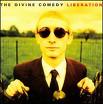 This is considered by many to be the “first” Divine Comedy album, even though Neil Hannon released a previous album under the name Divine Comedy (Fanfare for the Comic Muse). He disowned that album, but, as you do, he reissued it several years later after much demand.
This is the second Divine Comedy album that I bought (after Promenade). And so, because I just reviewed Promenade, this review works as something of a comparison, which is of course, unfair, as Promenade should be compared to this, but so be it.
What I was most struck with, when listening to this disc after Promenade is how, even though the album covers are designed similarly, and everything about the discs suggests they should be similar, just how dissimilar the music is. Not in a global “who is this band?” sense, but just in the particulars of the orchestration.
With Liberation, there’s no Michael Nyman influence. Rather, you get some beautifully written orchestral pop music. Although the orchestra is not terribly conventional: with harpsichord and organ being among the top instruments heard.
In a comparison to Promenade, Liberation is less thematically consistent but has more singles to offer. “Bernice Bobs Her Hair” (the title of an F. Scott Fitzgerald story, so the literate songwriting is clearly in evidence) is a wonderful pop song. As is “The Pop Singer’s Fear of the Pollen Count,” (“Even when I get hay fever I find, I may sneeze, but I don’t really mind… I’m in love with the summertime!”) the catchiest ode to summer this side of the Beach Boys. “Your Daddy’s Car” speeds along on plucky strings and is just so happy, even when they crash the car into a tree. “Europop” is a fantastic dressing down of Europop songs while still being hugely catchy.
Because I really enjoy Promenade (and Casanova) I tend to overlook this disc, but really it is just as good, and in some cases better than those two. An air of pastoral glee pervades the record making it a real joy to listen to. Especially in the summer.
[READ: December 8, 2008] Then We Came to the End
This book has the great distinction of being written in the first person plural (the narrator is “we,” for those of you who don’t remember eighth grade grammar). This, of course, brings the reader into the story almost against his or her will. Really, though, as you read it, you don’t think of yourself as being in the book, but rather, that the company that the unnamed narrators work for is something of a collective mentality. And so it is.
The narrators work at an unnamed advertising agency in Chicago. The time frame is the late 1990’s to early 2001 and there are lots and lots of layoffs. Any time someone is laid off, “we” say they are “walking Spanish down the hall” (from a Tom Waits song). And slowly they watch as one by one, staff are let go.
What is interesting about them getting laid off is that the story is not told in chronological fashion, so you will get a fairly lengthy story about a character only to find out that this happened several months ago and he got fired last week. What else is interesting is that since the narrator is we, there is no danger of the narrator getting fired–that is, regardless of who gets fired, as long as there is more than one person left, there’s enough for a we. [True, the very last line of the book says who the “we” are, but it’s not really applicable to the rest of the story.]
Despite the unnamed narrators, we do learn the names of many of the co-workers in the office, and what characteristics they have. There’s Benny Shassberger, the teller of stories, who can hold court to many people because he knows gossip about everything and everyone. There’s Marsha Dwyer who is a huge fan of 1980s hair metal bands, and on whom Benny has a crush but can’t fess up to. She is brusque and honest and not afraid to hurt people. Especially Jim Jackers. Jim is something of a lost cause at the agency. He doesn’t have particularly good ideas and he always says something inappropriate. There’s also Amber Ludwig who has gotten pregnant with Larry Novotny’s child (which Larry’s wife better not find out about). There’s also Tom Mota, who tends towards lunatic behavior. And Frank “Old Brizz” Brizzolera, the only smoker left in the building and who never seems healthy. And, of course, there’s Hank Neary, the perpetually frustrated novelist. Karen Woo is a go-getter, a smart creator who doesn’t suffer fools. She also knows exactly what the next hip restaurant will be and once everyone else goes there, she never goes back to it. We all hate her. Chris Yop gets laid off but continues to show up to work on our latest assignments (even though he’s been threatened with trespassing if he is caught again), and gets pissed when no one emails the updates to the project. Carl Garbedian is deeply depressed: his wife is a successful oncologist who takes business calls during their personal moments. He tries self-medicating, by using someone else’s drugs rather than admitting to his wife that she is right about him being depressed. But really the saddest character is Janine Gorjanc, whose daughter was missing for some time. The office coordinated to have a billboard with her missing daughter put up on the highway. It has yet to be replaced even though she already received the bad news about her daughter. And she must drive past it every day. There’s also Genevieve Latko-Devine who is kind and sweet and would be totally forgettable if everyone didn’t confide in her.
There’s also the two authority figures: Joe Pope, who was one of us until he got moved up put of a cubicle and into an office. He is now despised even more than before. And there’s Lynn Mason, the boss. She doesn’t laugh, is all business, and has very little in the way of a personal life. There’s also a rumor that she has breast cancer.
One segment of the book is not written in the second person, and that is the story of Lynn and her attempts to deal with the lump that she has discovered. Her on-again off-again boyfriend agrees to help, but really she is simply too scared to face the truth. The whole chapter is written from her point of view and is a stark contrast to the rest of the story. It humanizes the woman that we see as a monster. There is also a wonderful play on events as the whole story comes to an end. A delightful synchronicity that may change the way you view Lynn and her story.
Aside from the slow whittling away of the staff, and the hilarious stories that Benny and cohorts get up to, the real drama off the novel comes when Tom Mota gets shitcanned. As mentioned, Tom may not be all that stable. Amber convinces herself and some of the rest of the staff that Tom is going to return for revenge. Some of us are so sure of this that they put his face up on a poster for security to keep an eye out for him.
But in the meantime, the reason everyone is getting laid off is because there’s simply no work, so when the firm accepts a pro-bono account for a breast cancer foundation, they jump on the chance to do some work and to seem busy. Even when the assignment morphs into the impossible.
And then suddenly, people’s fears about Tom Mota are realized. Or at least, they think he might be in the building. The story suddenly gets very suspenseful. When I started reading this part, I was a little disappointed that Ferris chose to go this way, until he revealed an awesome twist that was hilarious and cathartic. It also works as a natural ending point for the workers at their company (happening in the beginning of 2001).
The epilogue comes five years later. Some of the us are working together. Some of us have found surprising success, and one of us has achieved something that no one thought possible. The ending is very satisfying even if it doesn’t wrap up the story into a neat bow.
Even though the story may not seem funny what with the depression, abduction and potential stalking, overall the book is quite funny. There are many funny vignettes within the book. And the tone is generally amusing. The whole question of who has whose chair (and that the office manager has each serial number written down somewhere) is wonderful. And who could forget the story of Old Brizz’s totem pole.
Excerpts abound online. But I like this one enough to post. It follows a by now familiar trope of sending an email to EVERYONE, but the particulars are very clever:
Marcia Dwyer became famous for sending an e-mail to Genevieve Latko-Devine. Marcia often wrote to Genevieve after meetings. “It is really irritating to work with irritating people,” she once wrote. There she ended it and waited for Genevieve’s response…. But the e-mail Marcia got back was not from Genevieve. It was from Jim Jackers. “Are you talking about me?” he wrote. Amber Ludwig wrote, “I’m not Genevieve.” Benny Shassburger wrote, “I think you goofed.” Tom Mota wrote, “Ha!” Marcia was mortified. She got sixty-five e-mails in two minutes. One from HR cautioned her against sending personal e-mails. Jim wrote a second time. “Can you please tell me – is it me, Marcia? Am I the irritating person you’re talking about?”
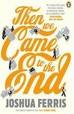 The book has a fun and interactive website, and also an interesting timewasting website for the British edition of the book (and this time, the US cover is better! Hurray!). I’ve written a lot about this book, and yet even with all of that, I don’t really give anything away. If you enjoying mocking corporate culture, or are at all intrigued by the premise, then check this book out. I really enjoyed it.


Leave a Reply