Feeds:
Posts
Comments

boogerpt1SOUNDTRACK: “WEIRD AL” YANKOVIC-“Weird Al Yankovic” (1983).
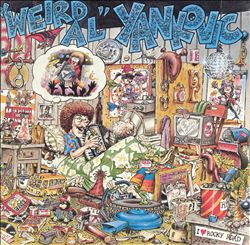
wayI have evidently always loved parody.  When “Weird Al” first came out I heard about “Another One Rides the Bus” (from where?  where could I have heard about this in like 1981 or 1982, I didn’t know about Dr. Demento), and really wanted to hear it.  I knew (and loved) “Another One Bites the Dust” but I had no information about the “Weird Al” song.  And there was really no way to learn about it in 1982 or 1983.  My only source of record buying was Pathmark.  And asking the clerks for “Another One Rides the Bus” inevitably brought me to the Queen album.  I’m somehow astonished that even at the tender age of 13, I was more hip and indie than “mainstream records stores” (or at least Pathmark).

I’d be lying if I were to say that “Another One Rides the Bus ” has stood the test of time (although really, hand farts never go out of style).  Indeed, no matter how much I love  “Weird Al” (and I have seen him on every tour  for the last several tours), that first album just doesn’t really do it for me anymore (although I know I loved it when I got it).  It may have something to do with the song parody choices or just the fact that I’ve heard them so many times.  But I think part of it is that Al has matured into a really consummate recording artist–his songs are as full and complex as the originals he parodies (and his originals are comparably full).  By contrast, this first album is very sparse–focusing on the accordion and sound effects more than trying to recreate the song.  And hey, I know he had no budget, it’s totally understandable.  It’s just that now all these years later, it sounds more like a demo than anything else.

I also have to wonder if I ever thought these songs were actually funny–at this point Ricky seems just as preposterous a song as Mickey (And, yes, Ricky is better).  “I Love Rocky Road” holds up better than “Ricky” (hand farts you see) and is actually better than the original too.  “Stop Dragging My Car Around” is a pretty funny parody in theory–I like the idea of deflating the original, although I’m not sure that the new lyrics actually work.  There’s some funny car jokes, but I’m not sure that the chorus is actually right.  I do love the way Al plays with his voice (and the backing hey hey heys are great).  Somehow “My Bologna” still holds up surprisingly well–certainly as good as the original.

Al’s originals are a mixed bag.  I’ve always loved “Gotta Boogie” even if I didn’t quite get the double meaning until a few years after hearing it.  “Buckingham Blues” is a weird topic choice, although I guess the Charles and Diane wedding was a big enough deal to mock it.  “Happy Birthday” is a pretty funny song and it could easily stand up to a re-recording.  (Lyrically the song is very dark and not really kid-friendly (birth and death and all that).  “The Check’s in the Mail” is another song I didn’t “get” until many years later–why would I know these business cliches?  Nevertheless, I knew the words quite well and think of it whenever I hear someone spouting a cliche.  “I’ll Be Mellow When I’m Dead” is a fun song that mocks the “self-help” scene.  This was probably funnier for older people who might actually know what he’s talking about (Like wow, man can you relate).  But even if you don’t get all the references, the chorus is sure fun to sing along.  The lyric, “I don’t want no part of that vegetarian scene” is a funny line since he is a vegetarian (although I don’t know when he became one).  Musically it’s interesting though because he throws different styles of music into the one song, something he would definitely play with later.  “Such a Groovy Guy”  tries a little too hard.  And the final song “Mr Frump  in The Iron Lung” is just bizarre (and something I didn’t get for many many years–did they even still use iron lungs in 1983?)

In retrospect this isn’t a great indication of what Weird Al would eventually achieve, but there’s a lot of fun stuff and songs that I still remember the lyrics to thirty years later–not a bad thing at all.

[READ: February 22, 2013] Captain Underpants and the Big Bad Battle of the Bionic Booger Boy Part 1

Every Captain Underpants book ends with “Here we Go Again” and an assumed next book.  But this is the first book in the series that ends with an actual stated next part (see title).  This is also the first book where events of the previous book impact this one.  Ms Ribble is still nice!  And she is still making cookies every day.

Two things struck me in this book: the language that Pilkey uses is a little more difficult.  He’s using bigger words and some harder ideas and I wondered if the audience was getting older with Pilkey or if he just wanted to stretch his audience a bit.  Conversely, George and Harold’s spelling is getting worse.  It initially bothered me that their spelling was so bad (I don’t want kids to learn bad habits), but now Pilkey points out how bad their spelling is and it is so bad (they spell “once” wrong), that I guess it’s more funny than anything else.

This book also introduced me to squishies.  I don’t know of this prank ever took off in schools  but of all the things that this series had done that might get parents upset, squishies has to be the worst.  Basically you put packs of ketchup under the toilet seat so when someone sits on it–splat.  I could see that catching on and causing a lot of trouble.

The bad guy in this book proves to be uber-geek Melvin Sneedly.  Melvin has a appeared before.  He is a rule-follower and a tattle-tale.  He’s also really smart and makes cool inventions like the Combine-O-Tron 2000 (it cracks me up that every thing is still “2000” even though the books were written in 2003).  The Combine-O-Tron in this case combines a hamster and a robot to make a cyborg hamster.  But the kids in class are too interested in squishies to care about this cool cyborg.  Which really angers Melvin. Continue Reading »

[LISTENED TO: March 2013] Chitty-Chitty-Bang-Bang

chittyI knew of this movie (although I haven’t seen it in decades) but I didn’t know it was based on a book.  And I had no idea the book was by Ian Fleming!  The creator of James Bond!  Chitty-Chitty-Bang-Bang is his only children’s novel and it was released posthumous;y (he died a few months before it came out).  I’ve never read any James Bond and I don’t love the films all that much so I can’t really compare this to his more famous works.  But it seemed like it was written by a guy who knew from spies and scary villains (I actually guessed that he had written this before the Bond books and it was a kind of lead in).

So the story starts off simply enough.  We meet the Pott family: Caractacus, the father, a former Navy commander and now an inventory of slightly wacky things–known in town as Crack Pott (ha); Mimsie, the mom, sweet and good natured and up for adventure, and the eight year old twins: Jeremy and Jemima.  Most of Crack Pott’s inventions aren’t very good but he eventually makes up a candy that is also a whistle and sells them to Lord Skrumshus and his candy company for a tidy sum (and Fleming goes into the details of the money saying how it’s a small sum up front but since Lord Skrumshus sells billions of candies it’s  good deal–Fleming is full of grown up ideas like that in the book and is clearly trying to impart some wisdom to his audience).

Since they live near the motorway, they decide to buy a car.  But they don’t want one of those black beetles that you see everywhere.  He wrote this book in 1961 so I’m not entirely sure about what kind of car he was talking about there.  The family decides to buy a one of a kind old car from an old man in a garage.  The man raves about the car and wishes he could keep her, but he has to sell it for scrap.  Pott offers him a few quid (everyone loves the car and its license plate read GEN 11 (like Genii)) to have the car delivered to his garage.  He spends the next several months fixing her up.  And when she starts, the noises she makes gives her the name Chitty Chitty Bang Bang.  Their first test drive is a marvel and they get her up to 100 miles per hour!

WHAT??  100MPH?  In Rural England??  Wow.  And who knew they used miles and not kilometers (it’s pointed out much later in the book that they use kilometers on the continent) in the 60s?  (It became mandatory there in 1978).  The car is  marvel!  She even has all kinds of buttons that Pott hadn’t figured out what they do yet.  And on their next venture they decide to go to the seaside on a warm day.  But so do 20,000 other cars, so there is a massive traffic jam.  Chitty Chitty shows what she can do and takes over the controls–she grows wings and a propeller (which all come naturally from the car parts) and she flies over the traffic!

When they fly to the beach it is crowded so Chitty flies the to an island in the middle of the English Channel.  And they have a lovely picnic together and take a nap.  Until the tide starts to come in.  Chitty escapes and they take off.  But they head away from London and towards France!

And here’s where the story turns into a wild Bondian adventure rather than a cute family story about a magical car.
Continue Reading »

CV1_TNY_01_14_13Mattotti.inddSOUNDTRACK: DEFTONES-Deftones (2003)

defTypically when a band has a self titled album in  the middle of their career a change is taking place–a re-imagining, perhaps or a return to roots.  Deftones is something of a return to roots.  Since I loved White Pony’s diversity so much that’s a little disappointing for me, and yet while there aren’t as many interesting sonic ideas, the songwriting is still top notch and there are some really catchy and clever ideas too.  The first song, “Hexagram” is a very heavy (and very screamy) song.  And although the guitars during the verse are bright and ringing (nods to alt rock) this song is all about being heavy (the vocals seems like Chino Moreno’s throat is literally shredding as he songs).  “Needles and Pins” has a cool complex drum patter (Abe Cunningham, fabulous) and the guitars (Stephen Carpenter, also fabulous) are staggered and interesting.  And when the bass really comes in on counterpoint (Chi Cheng, doing some amazing stuff on the bass), the song is far more complex than the screamed heavy chorus might indicate.

“Minerva” has all of the trappings of a hit–a big chorus in a major key, and great verses.  And yet, the song’s production is very claustrophobic (it kind of has a Tool feel).  That doesn’t detract from the song at all, but it’s interesting that they would take something that could have easily been huge and yet made it a little less user friendly.  “Good Morning Beautiful” has some really heavy guitars (especially in the chorus) but the vocals are kind of soaring here–more of that contrast adding up to something wonderful.

After the heavy onslaught of these songs, “Deathblow” slows things down.  The guitar and bass are slow and kind of stretched out(and sound great together).  They really let Chino’s voice show off.  “When Girls Telephone Boys” is a heavy blast from the start.  And like a lot of these songs the distortion might actually be a little too much–it kind of makes the song less pleasant than it might be–which is obviously intentional.  “Battle-axe” opens with a mellow guitar intro (not unlike Metallica’s “One”) but the verses immediately introduce the heavy guitars again.

And yet, just as this albums seems like it will be all heavy and relentless, the band throws in “Lucky You” a song with electronic trip hop drums and effects.  It is a creative song and quite interesting, it just seems so odd to throw this in almost all the way at the end of the disc.  It stays moody throughout with layers of vocals and guitars.  But “Bloody Cape” snaps you out of that with a pummeling guitar intro, although as with White Pony, the verses open up with some interesting guitar sounds making this song more than it seems at first.  But make no mistake, this is a punishing, pummeling song by the end.  “Anniversary of an Uninteresting Event” throws another curveball, though. It opens with a slow piano riff and stays as a slow ballad (complete with gentle percussion and washes of sound).

The disc ends with “Moana” probably the most conventional (which is not a bad thing) song on the record.  It doesn’t have the heavy downtuned riffs, just big guitars and Chino’s whispering voice.  So in some ways this album is a disappointment–especially coming after the experiments of White Pony.  And yet the album is not un-experimental it is simply experimenting within a much smaller genre pallete.  I’d read that it seemed like this album came before White Pony, and it does, as if they were stepping back from their crazier impulses.  But the quality of the songwriting is till strong.

[READ: February 28, 2013] “The Women”

I had started this story last month and then lost the magazine.  I thought that maybe I could pick up where I left off, but it turned out I only remembered the part about the two women, not the main character, so I had to start over again.

The story is about Cecilia Normanton who grew up in the 1908s with her father but didn’t know her mother.  Mr Normanton and his wife had a happy, laughter-filled marriage for two years and then she was gone (which in this case means she left–not that she died).  The first section of the story talks a lot about Cecilia in her daily life–she was very pretty for her age but also very naive and she was permitted a rather carefree life.

Until she was sent to boarding school.  Which she hated at first.  Then she grew to like it and her father was relieved about that.  The school is nice, she is well treated and she makes good friends   Although she hates being forced to go to the field hockey games–especially since her least favorite person is on the team (and the team never loses).

At one game, two older women are watching–Cecilia noticed them at one previous game as well.  She can’t figure out who they are–they’re not former students, they’re not for the other team, their presence is weird.  And at that game they almost interact when Cecilia drops her watch and the women narrowly avoid stepping on it, but really there is no connection.

Nevertheless, the narrative follows the women as they return from the game by train.  We learn about their lives and their history together–they used to work together and call each other by their last names.  Continue Reading »

wedgie

SOUNDTRACK: CAPTAIN SENSIBLE-“Wot” (1982).

wotCaptain Sensible was a founder of The Damned.  And then sometime in the 1980s he had a solo career.  And, inexplicably, this song was a hit.  Well, I assume it was a hit, it was included on a New Wave Hits collection.

I never actually realized that there were verses as the whole song seems to consist of: “He said Captain, I said Wot.”  But there are indeed verses (the video explains the lyrics rather well) and they seem to be about the Captain being awoken by a noisy street repairman.   I assume that this was a hit because it was oddly funny, but the bass line is really quite infectious.  There are no real guitars to speak of and the drums are simple (probably a drum  machine), but the bass is big and bouncy with a cool slinky line.  I won’t say that the bass line sold the song, but it’s still pretty interesting.

Novelty hits are a fascinating genre of music and I often wonder what makes a whole nation of people like the same goofy thing.

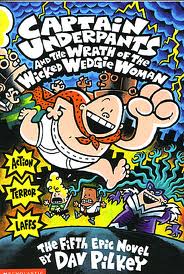
[READ: February 26, 2013] Captain Underpants and the Wrath of the Wicked Wedgie Woman

As the fifth book opens Ms Ribble (the lady with the beehive hairdo) says that she is retiring.  The kids cheer.  But not today  Aw maaaan.  She insists that the class all write her a goodbye card (and she composes the lines herself).  George and Harold decide to make her a comic book instead (what could go wrong?).

So they create Captain Underpants and the Wrath of  the Wicked Wedgie Woman.  In it Ms Ribble (who is evil) gets crushed under a stack of book reports.  The doctors rebuild her bionically.  Now she is evil and she has super powers (like claws that come out of her hair).  This comic is important because it reveals Captain Underpants’  one weakness–starch!  And once Wedgie Woman sprays the Captain with starch, he is helpless.  A little fabric softener saves the day though.

Naturally Ms Ribble is not amused.  And she sends them to the office.  The most unbelievable things about these stories are the preposterous things that the teachers allow George and Harold to do (that’s right, more preposterous than Captain Underpants himself).  As if Miss Anthrope would let George and Harold photocopy the weekly schedule (which they rearrange when they see her computer is left open).  But even more crazy is that Mr Krupp would sign a “card” for Ms Ribble that George and Harold have not written yet.

What I loved about this story was the huge surprise of what George and Harold write in the card that Mr Krupp has signed.  Nothing bad,  Indeed, it is quite nice–Mr Krupp proposes marriage!  (and then spends the rest of the week saying nothing but “B-b-bbubba bobba hob-hobba-hobba Wah-wah.”)  Ms Ribble doesn’t seem too happy either, but the teachers set about making the wedding plans for that Saturday. Continue Reading »
Harpersmaerch13SOUNDTRACK: DEFTONES-White Pony (2000).

Iwhitepony had forgotten how much I loved this album when it came out.  It’s been a while since I listened to it but it still sounds great.  I remembered thinking Around the Fur was the album that blew me away but it proved to be White Pony.  I have the “limited edition” red cover for whatever that’s worth (not much really, although I did get a bonus song).  This album really explores their more alternative side, with quiet guitars and very non-metal sounding songs including some trip-hop drums on a track.  But there are three or four really heavy songs showing they’re not giving up their heavy roots by any means.  It’s a really accomplished and complex album and is definitely a high point in alt-rock.

The album starts with “Fieticeira” which has a cool alt guitar sound (Stephen Carpenter really displays an amazing range on this album) and some lurching verses.  The choruses get big and loud (in the way that the Foo Fighters do now), although there is a weird noisy section that keeps it from being a totally polished track.  “Digital Bath” is a dark creepy song where the guitars are nearly as menacing as Chino Moreno’s whispered voice.  The drums are actually the loudest instrument and you can hear how intricate the Deftones drumming can be.  I haven’t mentioned the other members in the other two write ups and shame on me.  Abe Cunningham’s drumming is great–far beyond most metal drummers.  But when the bridge kicks in the song lifts up and by the chorus it’s a big vocalled song.  “Elite” shows that the Deftones haven’t given up their heavy side–it’s a loud screaming distorted fast thrasher.  It never lets up and by the end the voice is distorted almost beyond human sounds.  “RX Bath” is one of my favorite songs on the disc.  It’s slow but with a cool slinky bass (Chi Cheng, always outstanding).  “Street Carp” is a short song–with loud guitars for the verses and a creepy slow chorus that I’ve always loved: “Here’s my new address…six six four oh I forget.”

“Teenager” is the biggest surprise  it has a slow acoustic guitars and a kind of trip hop drum beat with glitchy effects.  It’s followed by “Knife Party” a song that opens with flanged guitars until the big chords crash in.  It’s probably their most commercial sounding song yet, except when after the second chorus Rodleen Getsic starts singing a wild vocal solo (like a crazed version of Pink Floyd’s “Great Gig in the Sky”), some of the notes she hits are inhuman.  “Korea” returns to the heavy dropped D sound with big noisy guitars and screams.  It’s one of their mist abrasive tracks.

“Passenger” is one of two songs that’s over 6 minutes long.  It’s a duet with Maynard from Tool–it’s unusual how their voices are so similar  They don’t sound alike but they have that same wavery tenor and vulnerability   It’s a perfect match.  “Change (In the House of Flies)” starts as a slow slinky song with a big chorus (and a great chorus of Ah ahs which somehow make the song seem even more claustrophobic.  It proves to be surprisingly catchy.  “Pink Maggit” ends the disc proper with a beautifully, agonizingly slow guitar and vocal intro–the guitars are buzzy and slow and sound almost out of tune (but aren’t).  Chino’s voice strains itself before the song proper starts.  I love songs like this when the chorus does one thing and the vocals play a slightly different melody (as if he;s singing a minor note and the guitars are playing a  major note), it’s very cool and a little spine tingly. At seven minutes this is a wonderfully claustrophobic alt rocker.   The album ends with what sounds like a heart beat (again, another Pink Floyd nod).

The red version has a bonus track called “The Boy’s Republic,” a big heavy song that encapsulates a lot of the album down into one track–the great vocal/guitar interplay, swelling chorus and interesting interplay of the instruments.  Even though it’s clearly a bonus song (you don’t have a song that ends with a slow heartbeat and not have it actually end your album), it fits in perfectly with the set and is a real treat.

Even though this album is 13 years old it still sounds fresh and amazing.  It really is a masterpiece.

[READ: February 25, 2013] “So Who Could I Tell the Story To”

According to Harper’s this is an excerpt from City of Angels: Or, the Overcoat of Dr. Freud.  It was translated by Damion Searls.

The excerpt begins in the middle of a question: “–the story that now needed to be told, even though it wasn’t a story at all?”  A very strange opening to be sure, and not as compelling as one might want.  And that was how I felt about this whole thing.  I wanted to be more excited by it but I never was.

There was something confusing about the whole setup.  The narrator is talking to Francesco.  But the narrator is talking about and apparently to “you.”  So there are lots of you’s floating around but we also know she’s talking to someone.  And while it’s all about clandestine behavior, the whole proceeding was confusing. Continue Reading »

Harpersmaerch13SOUNDTRACK: DEFTONES-Around the Fur (1997).

furOn this album, the band sounds older than they did on Adrenaline.  And they are, obviously, but it sounds like they grew up a bit–maybe that’s Chino Moreno’s voice.  I kind of thought that I loved this album.  Turns out I like it a lot, but that I love their next album more.  This album is a marked improvement over the first one, but doesn’t quite get to the experimental nature of their later music.

Having said that, “My Own Summer (Shove It)” is the quintessential early Deftones song.  The verses are creepy whispered (nobody whispers like Chino) with a really neat and unexpected slinky bass.  And then the chorus is huge–big loud guitars  screams and shouts of Shove It.  The post-chorus keeps that whispery style of vocal but with the heavy guitars.  It’s dramatic and really unsubtle and nobody does it like they do.  It’s hard to follow that song but “Lhabia” does an admirable job.  “Lhabia” also features Chino’s quite singing.  I love that he stretches out his words over fast chugging guitar, seemingly contradicting their sound.  “Mascara” slows things down, making for a very creepy song.  There’s no real bridge or even chorus but when the song slows down and he quietly sings “it’s too bad.  it’s too bad.  you’re married.  to me.”  It’s packs a punch.  “Around the Fur” brings in some real heaviness including some rage-filled screams at the end.

“Rickets” has some of that oddball guitar signature that bands like Korn would also play (Korn and Deftones are sort of the founding fathers of this genre of metal so they are allowed some similarities.  “Be Quiet And Drive (Far Away) is the most melodic thing the band has done yet.  Big full guitars and an upbeat bridge–it introduces some alt rock elements and a hint of shoegazer guitar.  It’s followed by loud guitars and real guttural screams.  I really like the ope tuning of the guitars that sound almost metallic   “Dai the Flu” opens with a great full bass sound.  “Headup” features a duet with Max Calavera of Sepultura.  The song has Calavera singing the word “Soulfly” which is the name of the band that he formed around the same time.  I wonder which came first.  The final song “MX” features a female voice questioning Chino during the chorus (and some really crazy sounds).  There’s something strangely sexy about the whole song even if the crazy sounds have it veer towards the creepy.  “MX” is listed as 35 or so minutes but it’s really only 4 minutes.  There’s two bonus things stuck in the dead air space.  A goofy thing called “bong hit” at around 19 minutes (which is indeed, a bong hit) and a hidden track at 32 minutes called “Damone.”  “Damone” is a fast song that never really lets up.

In hindsight it’s easy to see that the band were heading towards something amazing but hadn’t gotten there yet.  But at the time, this was pretty revolutionary on its own.

[READ: February 25, 2013] “#37 Guy Bleeding All Over Skype”

According to Harper’s this is an excerpt from “More Little Tales of the Internet” that was published in Conjunctions.  I’m curious to know more about the whole thing, but figured I’d write this before investigating further.  So, are there #37 of these little snippets?  Are there lots more?  Are there just a few random numbers?  I wonder.

This story is told from the point of view of a man at a business meeting.  The “guy” of the title is a big man, calling into the business meeting via Skype.  He seems to be big in terms of the company, but he also big in that he has positioned his head to be very large (mostly forehead and crown) on the screen.  The guy seems oblivious to this as he talks about the important stuff he needs to discuss (of which we learn nothing).

The narrator muses that he assumes everyone noticed things exactly when he did but nobody compared notes or anything.  Unless, he says, you thought it was some kind of technological glitch on screen, then you had to notice what happened. Continue Reading »

TV 2013

2013 has been cruel to TV that I like.  Between the shows that have been cancelled and the shows that are ending, there’s not much to look forward to for the Spring.  Ben and Kate is gone, the US version of The Inbetweeners is gone, Don’t Trust the B—- is done (but we had stopped watching anyhow), 30 Rock is done, The Office is finishing up, Parenthood & Bunheads have budget issues which means there is some amount of question about their future and The Mindy Show is awful.

And yet, after that introduction, it’s not like there’s nothing on.

So here’s what’s on our schedule as February draws to a close.  I never bothered to tally shows by network before but let’s see:
NBC: 4  FOX: 3   CBS: 3  Comedy Central: 2  FX: 2   PBS: 2  ABC: 1  Lifetime: 1 SyFy: 1  IFC: 1 Continue Reading »

goof1SOUNDTRACK: CAT DOORMAN-“So Many Words” (2012).

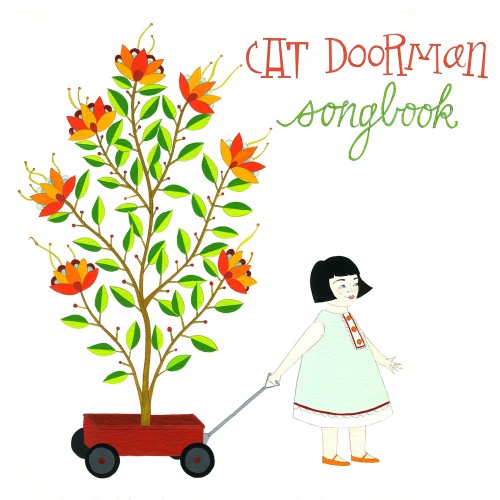
CatDoormancover1-500x500This is a fun folkie kids song about unexpected ABC words.  There’s a line about “flipping through my OED” and indeed the list of words for A is impressive : archipelago, allosaurus, abacus.  I actually thought she might do all As, in the song but then she moves through the alphabet (bandicoot, eavesdrop, yarmulke).

The song has some big fiddles, which sound fun, and Cat’s voice is lilting and fun too.  I’m led to understand that Cat has a number of alt rockers on the album (Chris Funk from the Decemberists, for example) although I can’t find too many details about the album.

You can hear the track here.

[READ: February 11, 2013] Goofballs #1 The Crazy Case of Missing Thunder

As faithful readers know, I love Tony Abbott and so does C.  We’re still waiting on another series to come in from the library, but in the meantime I found this book on the shelf: Goofballs #1.  It appears to be a brand new series from Mr Abbott and it is aimed at a slightly younger audience than Droon and the other series.  The print is bigger, there are lots of pictures and there’s only 8 chapters.  So I decided to read it to both kids at bedtime.

I fear that they just weren’t quite as into it as I thought they might be.  And I fear I wasn’t really that into it either.  It feels a little forced.

The story is about Jeff, Mara, Brian and Kelly, four kids who are silly and who get called goofballs all the time.  So they decided to join together and become a detective agency.  Well, first they had solved some mysteries around town together–like the mysterious pizza problem (which got them their own pizza named after them, The Goofball Pizza: cheese garlic pineapple and peanut butter).

Then the kids get a call for a real mystery–Randall Crandall has lost his thunder.  Turns out that Thunder is the beloved pony of Randall Crandall and he has gone missing from his stable. Continue Reading »

fiddleblack-issue-8SOUNDTRACK: DEFTONES-Adrenaline (1995).

adrenalineMy friend Cindy recently told me that the Deftones were playing nearby. I hadn’t realized that they were still together–there was some personnel issues a few years back.  But indeed they are and even released a new album last year.  So I got their latest album and really liked it.  This made me go back and listen to their earlier stuff too.

I came to Deftones with Around the Fur, so this debut album is less well known to me.  And yet, there are two songs that I absolutely love on this disc and which easily put Deftones above so many other heavy bands of the era (I’m not willing to say nu-metal because it’s stupid and Deftones transcended the genre from their first album).  “Bored” and “7 Words” are masterpieces of controlled rage and tension.  “Bored” opens the album with this aggressive guitar noise, letting you know what you’re in for, but the chorus shows how Chino Moreno is a master of his diverse use of vocal styles.  Especially after a few soaring choruses (he has a great singing voice) when he whispers the final verse.

The way “7 Words” open is practically like Jane’s Addiction–an noisy aggressive guitar with a big bouncy bassline and some intricate drumming.  Chino’s voice comes in like an impatient whisper.  It’s a great start.  Then when the chorus comes in (basically just the word Suck repeated over and over), the guitars bring in a Soundgarden vibe.  It’s really a great track, wonderful to crank loud.  And there’s no long ending.  It’s just done.

The rest of the album plays some interesting textures and sounds.  They are a very riff heavy band with a lot of screaming (that would change over the years), but they are never ordinary.  Some of the tracks aren’t as memorable, but it’s a consistently interesting album.  And, for the time, it was quite original.  The way the riff plays against the vocals on “Minus Blindfold” is very challenging.  The opening guitar riff of “Root” is very punk but the discordant guitars are really very metal.  There’s some great moshing riffs on the album (“Nosebleed”) along with some really interesting guitar sounds (see “Engine No. 9”).  And the drums really stand out for all of their intricacy.  Not all of the songs pack the same punch, and, after knowing their later stuff, the album is a little samey, but it’s a good start and a great opening salvo.

[READ: February 20, 2013] “Hideous Interview with Brief Man” 

My friend Andrew sent me this and described it as a mash up and David Foster Wallace and H.P. Lovecraft.  And indeed it is.  Although I admit my Lovecraftian knowledge is there, it’s not very deep, so I’m not exactly sure how Lovecraftian this is, but it is definitely Wallaceian, as you can tell by the title.

And indeed, the story is constructed like a story from DFW’s Brief Interviews with Hideous Men: there’s a series of answers and a series of questions posed just as the letter Q.

It took me a couple of questions to realize that the Brief Man being questioned is Wallace himself and as the story comes to an end, it becomes apparent that this is an interview with Death.  It’s a fascinating idea, one that will likely ruffle the feathers of Wallace fans.  And yet Mamatas has done some of his homework about Wallace.

There’s some obvious parts, like titles from his books being used in the answers, although they do work very well in context and flow naturally.  The less obvious sections seem very true to the spirit of Wallace.  The writing style doesn’t really ape Wallace or his interviewing style which I think is addressed by the comment: “there could be no worse fate than being known for exactly the sort of person you actually are.” Continue Reading »

scarletSOUNDTRACK: ERIC CHENAUX-Guitar & Voice [CST088] (2012).

chenauxThis album is indeed just guitar & voice.  Chenaux is a performer who grows on me.  His music is incredibly slow and drawn out.  And I often find that his vocal melodies don’t always have much to do with the guitar parts he plays.  It feels like everything is improv.  And it’s unsettling at first.  As is the fact that half the songs are pretty ethereal songs with words and the other half is wild and chaotic guitar solos, in which the guitars sound like anything but guitars.

But when you actually listen to the lyrics (which aren’t always easy to follow, he sings them so languidly) they’re quite lovely.  Like, “With the clouds in the sky and the bags under my eyes I wrote your name a thousand times with an old flashlight last night.”  But the more notable thing is the guitar work.  In “Amazing Backgrounds,” he plays a simple, plucked acoustic guitar but the solo is a crazy electric guitar that is played backwards and sounds completely from outer space.  “Dull Lights (White or Grey)” is another beautiful piece with overdubbed guitars playing some great low bass sections while the other guitar plays pretty, high notes (an a cool wah wahed section too).

“Put in Music” sounds the most traditional–the vocal melody is pretty straightforward and his vocal actually has weight (it’s usually up in the ether somewhere).  And I think it works very well as a grounding for the album.  Although the guitar solo sounds like he’s playing more with the tuning pegs rather than bending the strings–it’s cool and disconcerting at the same time.  “However Wildly We Dream” is a very jazzy feeling song–upbeat finger plucking.  It’s the most conventional song and it really packs a wallop (a gentle, airy wallop but a wallop nonetheless).

The second track “Simple/Frontal” is an instrumental.  I assume it is all guitar but it sounds like slightly discordant violins playing against each other.  “Sliabh Aughty” is a nearly nine minute solo that sounds reversed and is a wild meandering piece (played over a constant drone).  It has an Irish feel, which makes sense as the Slieve Aughty (Irish: Sliabh Eachtaí) are a mountain range in the western part of Ireland.  “Le Nouveau Favori” is a short instrumental–two minutes with what sounds again like a bowed violin/drone.  And how can one not enjoy a piece called “Genitalia Domestique” another 2 minute droney instrumental. Chenaux definitely plays with sounds that don’t quite go together, often making an eerie collection of tunes.  Especially when they are compared against the pretty acoustic of the songs with words.

The final track is “Glitzing for Stephen Parkinson” and it continues with that weird bagpipe/organ drone that he pulls out of his guitar (I’d love to see him perform this stuff live–although how would he do the overdubs?)

The stuff takes a  few listens to get used to, and it’s certainly not for everyone, but the sounds he gets out of a guitar is truly amazing.

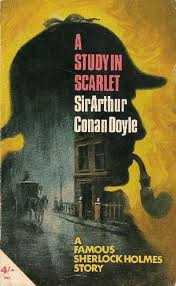
[READ: February 16, 2013] A Study in Scarlet

I mentioned recently that we have been watching a lot of Sherlock Holmes items.  So it seemed appropriate to read some of his stories as well.  I brought home a collection of the short stories not realizing that there were two novels written before the stories.  Sarah read the stories, but I held out for the debut novel.

The show Sherlock laid an amazing ground work for the books because the show (despite being set over 125 years after the books) is quite faithful to the stories.  Indeed, the way that Holmes and Watson meet is pretty much straight out of the book.  And, also indeed, the first episode took much of the story form this first book.  There were some very key changes to the story, ones that made the show very very different in the end, but the foundation is certainly there.  Interestingly, the way the murder is performed in the book (which we learn very very late in the story) proves to be the same methodology used in a different episode of Sherlock.  Two episodes from one book!

So in this book Watson opens it by giving a little backstory about himself and his quest to find cheap lodging in London (he’s back from the war in Afghanistan–a fascinating coincidence in terms of timeliness of wars) and he has blown through a lot of his stipend.  A mutual friend introduces Watson to Holmes and they agree to live together   I was a little concerned about the pace of the book at first, as it seemed like Watson was going to go into a lot about himself–but he doesn’t.  It’s a brief chapter that gets all the details out of the way.

Then we meet Holmes.  He explains his own eccentricities and how he is a consulting detective (Watson wondered why these people kept appearing and asking Hiolmes questions about who knew what).  And then finally we (the reader and Watson) are invited into a case.  A man was found murdered in a house.  There were no stab wounds, although there was blood.  The only other evidence was a word scratched in blood on the wall: Rache.

If you saw Sherlock this will sound familiar (except that the victim was a woman).  It deviates quite a bit from here (Rache is used in a very different way from the show, which I really liked), but Holmes recognizes the tobacco and is able to deduce a ton of things just from the surroundings.  He doesn’t tell the police right away, for fear that if the criminal knows the police know about him, he will flee).  And as the first half of the book draws to a close, the murderer is apprehended.

Imagine my surprise though when the next chapter opens up in the American Southwest.  All of a sudden the story has shifted utterly to a man and a girl trudging through the mountains,  lacking food and water and clearly near death   What?   Continue Reading »